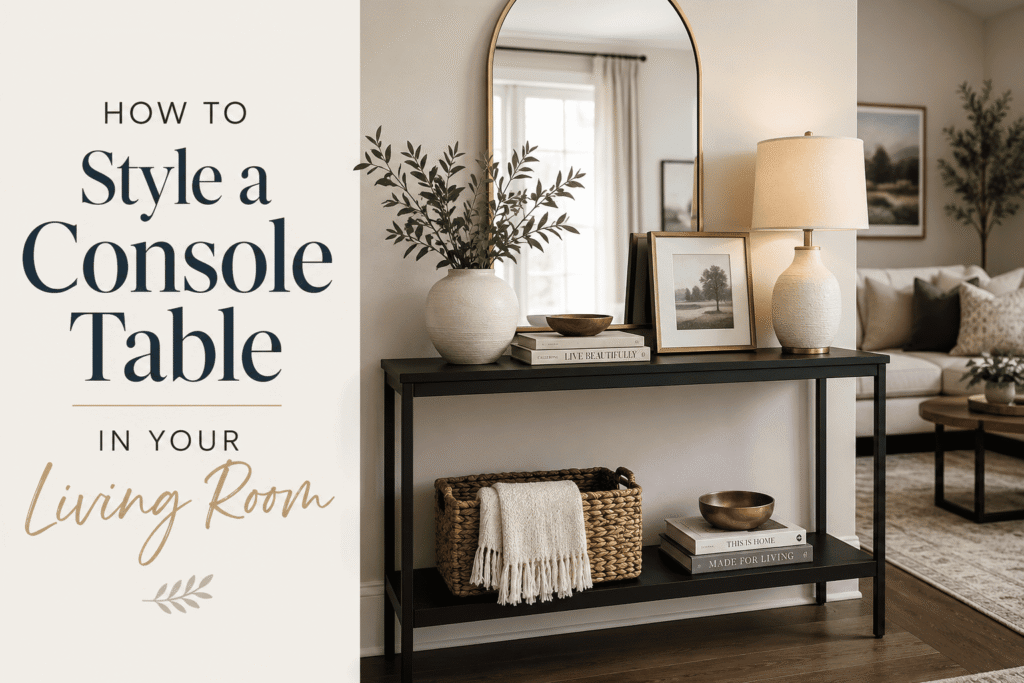

Renting limits the things you could change about the home movement-wise, but it is much less restrictive than many renters think. The most prevalent belief is that a rented living room can only be changed superficially: pale walls, plain carpet, little personal touch. This belief drastically gives up a lot of design liberty needlessly.
The reality is that most of the things that make a living room beautiful — textiles, rugs, lighting, plants, art, freestanding furniture, mirrors, and curtains — require no permission, no drilling, and no permanent changes whatsoever. Even elements that seem to require wall alteration (wallpaper, picture hanging, curtains) have fully reversible alternatives that leave walls in exactly the condition they were found.
This guide covers the full range of renter-friendly living room transformation techniques — from the most impactful interventions down to the finishing details — all with complete confidence that every change can be reversed when you move.
Start With What You Can Do Freely
Before focusing on workarounds for what renting restricts, it is worth being clear about the vast territory that renting leaves entirely unrestricted. The following changes require no landlord permission, no drilling, and no permanent alteration of any kind:
- Furniture: you can bring in any freestanding furniture you want. A sofa, armchairs, shelving, side tables, console tables, coffee tables — all can be placed, arranged, and removed without any impact on the rental property.
- Rugs: a large rug transforms the feel of any living room floor, covers existing carpet or hard flooring you dislike, and can be rolled up and taken with you when you move.
- Textiles: curtains on freestanding tension rods or curtain wire, cushions, throws, and other soft furnishings are entirely portable and entirely within your control.
- Lighting: freestanding floor lamps and table lamps require no wall fixings and no electrical work. Smart bulbs change the colour temperature and brightness of any existing fixture without alteration.
- Plants: any number of houseplants in any size, placed anywhere in the room.
- Freestanding storage: bookshelves, sideboards, ottomans, and storage units that rest on the floor rather than being wall-fixed.
These elements alone — fabric, rugs, lamps, plants, and freestanding furniture — account for the vast majority of what makes a beautiful living room. The constraint of renting affects mainly the walls, and even there the modern renter has more options than the previous generation did.
Walls — The Reversible Revolution
Peel-and-stick wallpaper
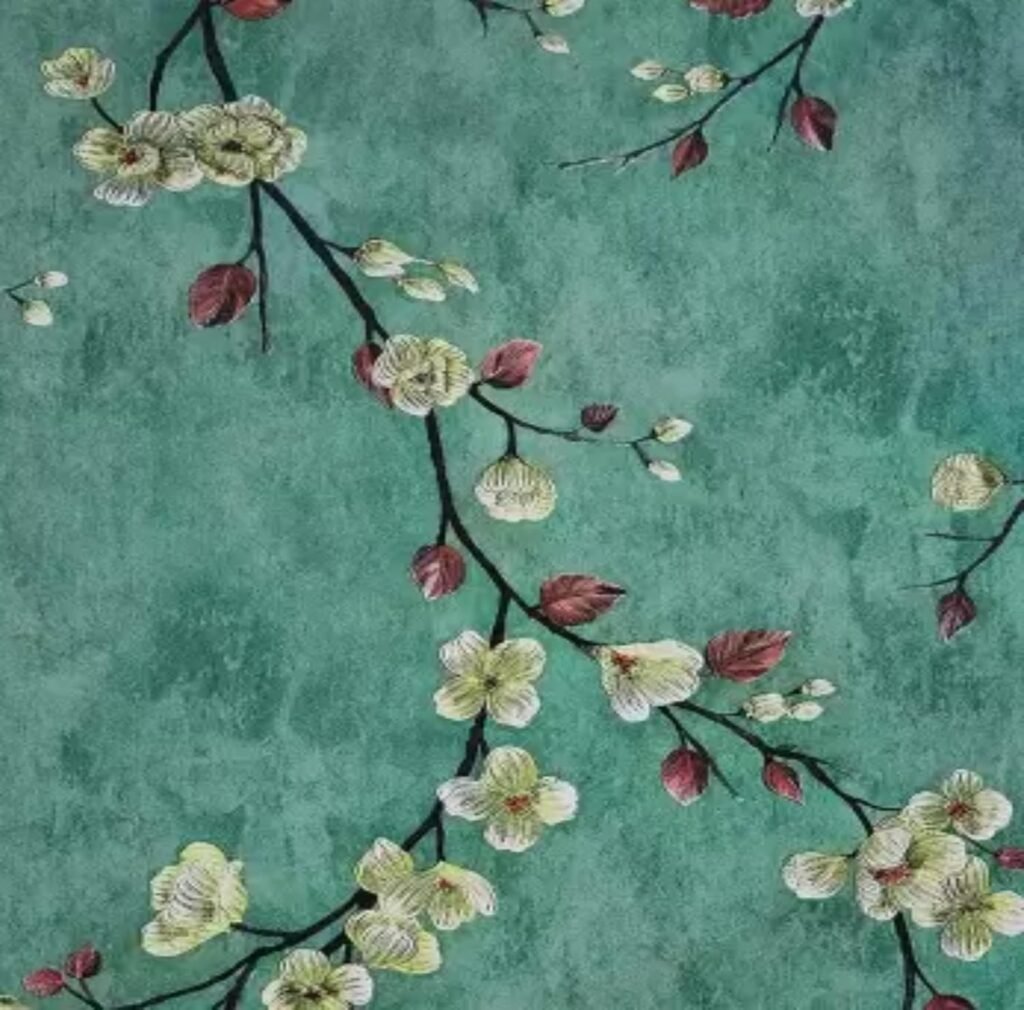
Peel and Stick Wallpaper For Living Room
Peel-and-stick wallpaper — adhesive wallpaper that applies directly to the wall and removes cleanly without damaging the paint or plaster beneath — is the most transformative single renter-friendly product available. A single feature wall in a botanical print, a geometric pattern, or a textured neutral can completely change the character of a rental living room in an afternoon, and remove in under thirty minutes when moving out.
Quality has changed dramatically in the last five years. The top peel-and-stick wallpapers today look so similar to traditional pasted wallpaper that you cannot tell them apart visually, and they also come off cleanly from well-prepared painted walls. The main thing is to go for a product with a high-quality repositionable adhesive instead of a permanent one, and to make sure the wall surface is clean, dry, and even before putting the wallpaper on.
⚠ WATCH OUT: Always test peel-and-stick wallpaper on a small inconspicuous section of the wall before applying to a full feature wall. Some wall paint finishes — particularly very flat or chalky matt paints — can lift when adhesive wallpaper is removed, even when the wallpaper is described as damage-free. A test patch confirms the wall’s reaction before full commitment.
Command strips and adhesive picture hooks
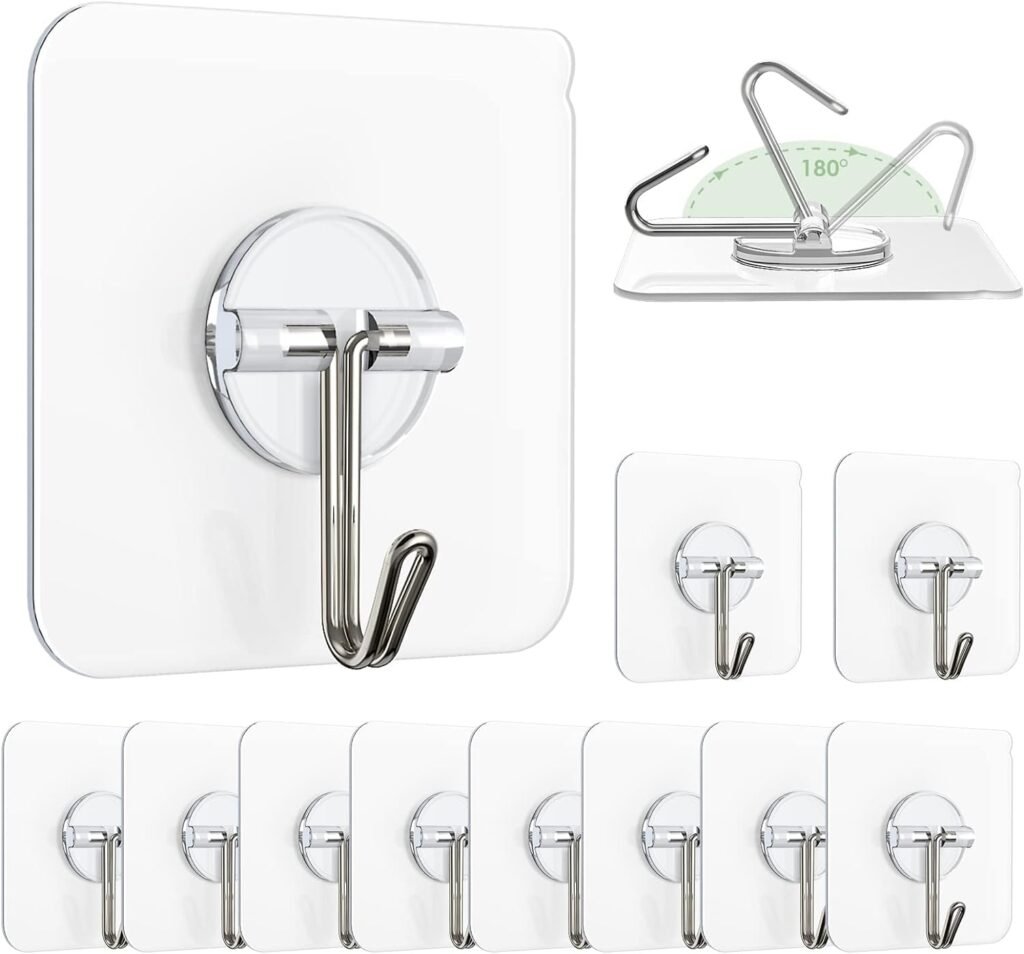
Command strips and adhesive picture hooks (from 3M and other manufacturers) allow pictures, mirrors, and decorative objects to be hung on walls without drilling or nails. They hold significant weight — the heavy-duty Command picture strips hold up to 7.3kg per pair — and remove cleanly without damaging the wall surface when pulled downward at the specified angle.
This means that a full gallery wall, a large mirror, a piece of artwork, or a collection of decorative objects can be hung, moved, and removed as many times as needed without any wall damage. The only practical limitation is the weight of very heavy mirrors or large-format framed prints, which may exceed the strips’ rated capacity.
✦ PRO TIP: For a gallery wall in a rental, arrange the frames on the floor first until the arrangement is perfect, then transfer the arrangement to the wall using Command strips. Mark the intended nail positions with small removable sticky notes before applying strips — this avoids the frustration of repositioning after the strips are already on the wall.
Removable wall decals and stickers
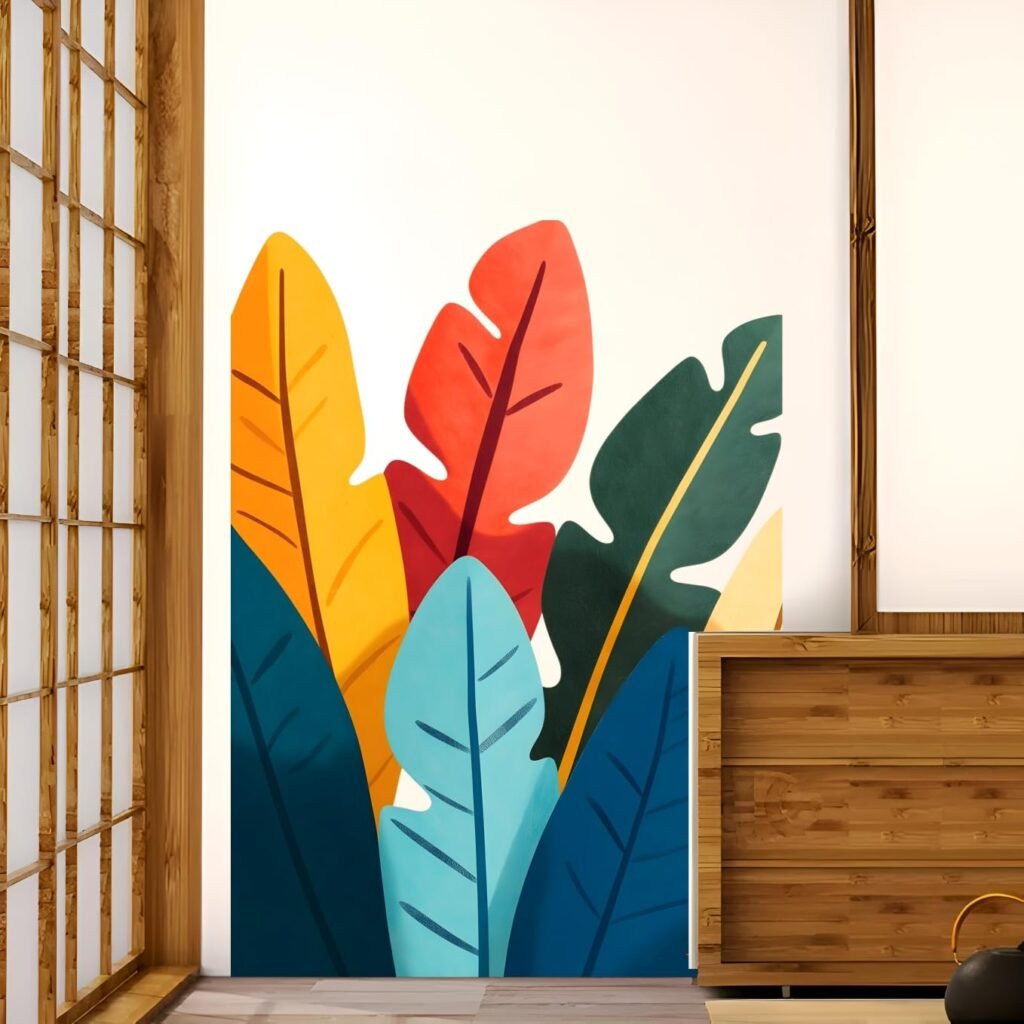
Removable Wall Decals Living Room Botanical
Large-format removable wall decals — botanical illustrations, geometric patterns, abstract shapes, or typographic designs — provide an alternative to wallpaper for adding visual interest to blank rental walls. They apply without adhesive residue and remove cleanly, making them completely renter-safe.
Washi tape geometry

Washi tape — a decorative paper masking tape from Japan, available in hundreds of patterns and colours — can be used to create geometric patterns, frames, or shapes directly on walls without leaving any adhesive residue. A geometric triangle pattern created with washi tape, or a tape-bordered gallery wall arrangement, reads as a deliberately designed wall treatment rather than a shortcut.
Curtains — Beautiful Windows Without Drilling
Landlords frequently install horizontal venetian blinds or basic roller blinds — functional, private, and entirely joyless. Replacing or supplementing these with beautiful floor-length curtains is one of the highest-impact improvements available in a rental living room, but it seems to require drilling brackets into the wall. Or the question arise here of how to hang curtains without drilling. Here are some points which can be considered while decorating the house.
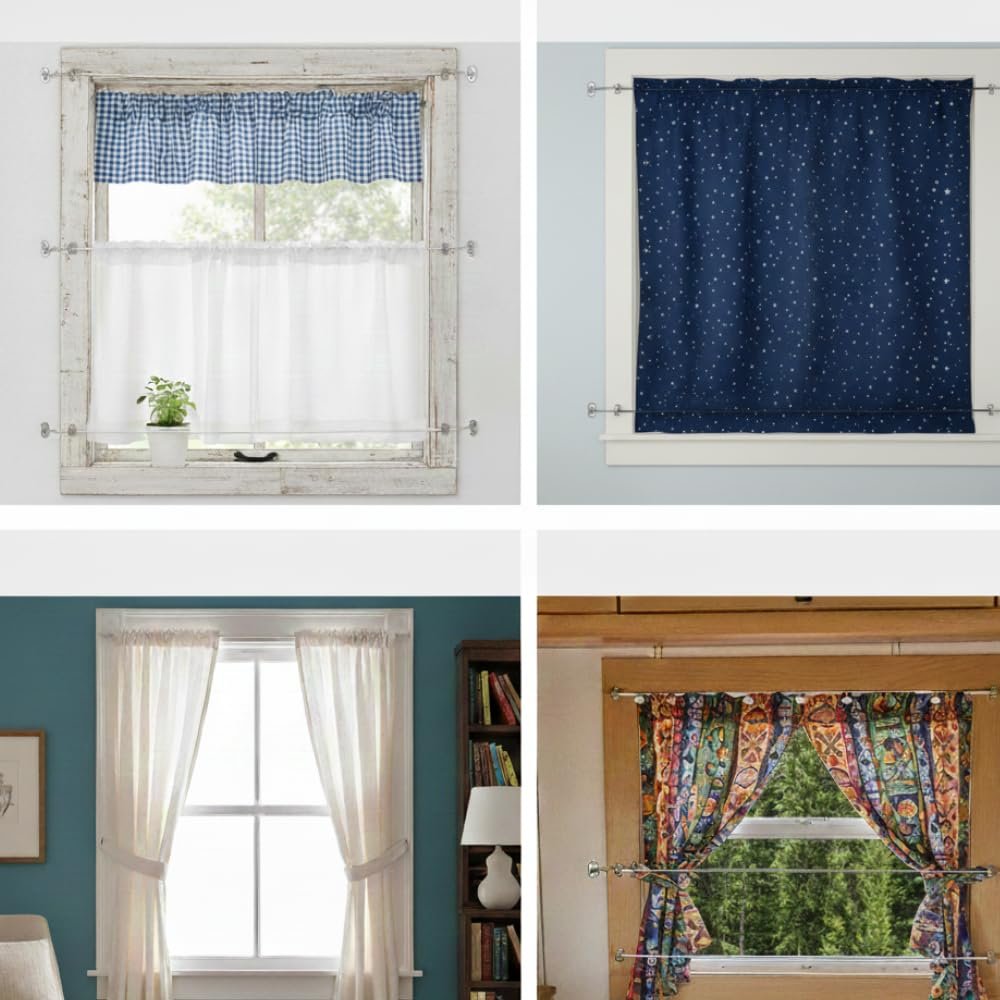
Curtain Wire System No Drill Window
Several genuinely effective no-drill solutions exist:
- Tension rods: spring-loaded rods that press outward against both sides of a window frame, holding position through friction pressure. They support light to medium-weight curtains and are completely removable without any wall contact. Best for lightweight linen, cotton voile, or unlined curtains.
- Adhesive curtain hooks: Heavy-duty adhesive hooks are those stuck on the wall above the window, from which a rod for curtains can be hung. They are more reliable than tension rods and can hold heavier curtains. One downside is that they will work best with a smooth, clean wall surface and thorough
- Curtain wire systems: a thin tensioned wire stretched between two adhesive or screw-in wall fixings, on which lightweight curtain panels are threaded via rings or clips. Creates a minimal, contemporary curtain hanging that works well for sheer or lightweight panels.
- Freestanding curtain frames: freestanding floor-to-ceiling curtain frame stands that require no wall contact at all. Less widely available than other solutions but the most thoroughly damage-free option.
Floors — Covering What You Cannot Change
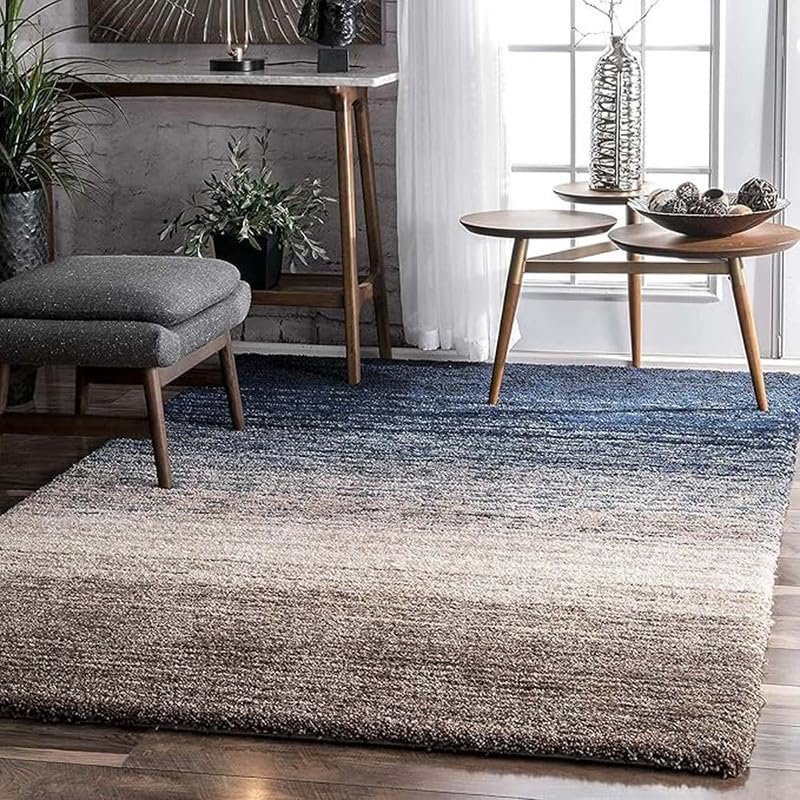
Floors are often one of the most challenging features of a rental living room: old carpets in a disagreeable colour, ripped or dirty floors after the last tenant, or just bare hard floors that really put you off. A big, decorative floor rug is the renter-friendly flooring answer.
Using a rug on your current floor doesn’t need any sort of permission or change on your part. A rug can hide beneath it whatever is on the floor, give a feeling of warmth, bring in a different texture and colour, center the furniture layout, and keep the original floor as it was originally. If you relocate, the rug will relocate with you.
For a rental living room, sizing the rug generously is particularly valuable — a large rug (200 x 290cm minimum for most living rooms) covers more of the existing floor and makes the underlying flooring almost irrelevant to how the room feels. So here choosing the right rug size to cover a rental floor becomes very important.
Lighting — Transform the Atmosphere Without Touching the Wiring
The fixed ceiling light in most rental living rooms — typically a basic pendant fitting with a cool white bulb — is one of the most atmosphere-killing elements in rented accommodation. Two changes that require no permission and no electrical work:
- Replace the bulb: You can change the current bulb to a warm white (2700K) one, or you can go for a smart bulb that lets you change the colour temperature and brightness through an app. It is a change you can make with the budget of £5-15 that most likely brings a significant enhancement to the atmosphere of the Return the original bulb when leaving.
- Add floor and table lamps: freestanding floor lamps and table lamps don’t need any wall or ceiling work and offer the layered, warm lighting that makes a living room truly inviting. Use the main ceiling light sparingly; instead, depend on two or three freestanding lamp as layered lighting for living room.
The Most Impactful Renter Transformations in Order of Effect
- Floor-length curtains (tension rod or adhesive solution) — highest single visual impact. Transforms the windows and the entire wall they occupy.
- Large area rug — covers existing flooring, anchors the room, adds warmth.
- Warm light bulb replacement + floor lamp — transforms the evening atmosphere immediately.
- Peel-and-stick wallpaper on one feature wall — dramatic colour or pattern introduction.
- Gallery wall using Command strips — fills blank walls with personality.
- Layered textiles (cushions, throw, additional rug) — adds comfort and visual warmth.
- Plants — adds life, organic form, and the quality of aliveness that decoration alone cannot achieve.
- Leaning mirror — reflects light, adds visual depth, requires no wall fixing.
The Leaning Mirror — The Renter’s Best Friend
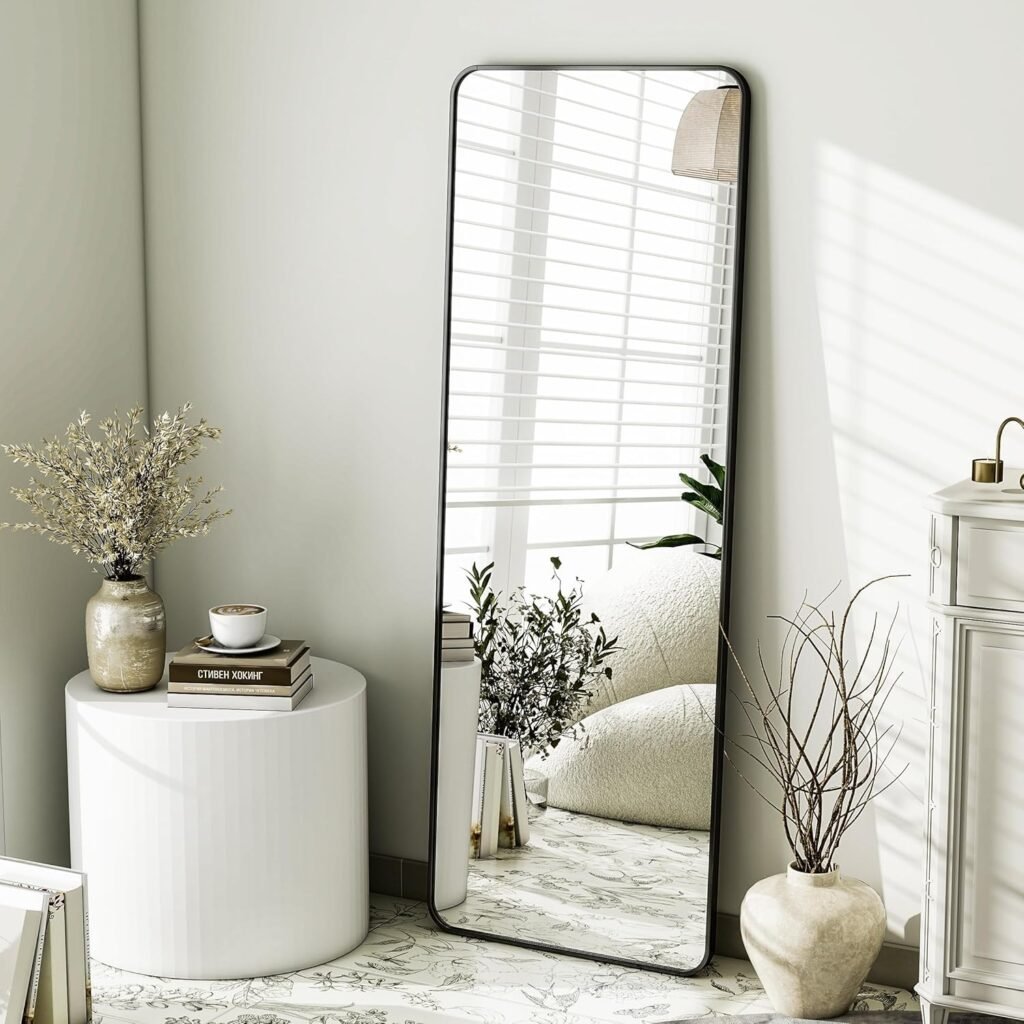
Large Leaning Mirror Living Room Floor
A large leaning mirror — positioned against a wall rather than hung on it — is one of the most widely useful renter-friendly decorating tools. It bounces light, adds a third dimension to a room visually, the space seems larger, and it is completely independent of the walls. There is a huge selection of styles of lean-on mirrors including full-length, arched, rectangular, and for the more natural look, rattan-framed ones.
Working With Existing Landlord Furniture
Many furnished rental properties come with furniture chosen by the landlord — often generic, often beige, and often not to your taste. Short of replacing it (which you may or may not be permitted to do), the most effective strategies for disguising or improving landlord furniture:
- Sofa throws: a large throw in a warm colour or interesting texture, draped generously over a beige landlord sofa, changes its visual character almost completely without any alteration to the piece itself.
- Cushion cover replacements: replacing the existing cushion covers with covers in your preferred colours and fabrics completely transforms the appearance of a sofa or armchair without any modification.
- Furniture rearrangement: furniture belonging to the landlord will almost always be moved around. Changing pieces from a wall-hugging perimeter arrangement to a floating, conversation-focused layout makes a quite noticeable difference in the atmosphere of the house. Rearranging rental furniture for maximum effect is the point to be thought of.
- Temporary slipcovers: full sofa slipcovers in a fitted or relaxed style cover landlord sofas completely, transforming their appearance. They are washable and remove completely when leaving.
Final Thoughts
The constraints of renting are real but narrower than most renters assume. The majority of what makes a living room genuinely beautiful — textiles, rugs, lamps, plants, freestanding furniture, and the character that comes from personal objects and carefully chosen accessories — is entirely within the renter’s control.
The particular restrictions imposed by walls and fixed elements do matter, however, they come with solutions which have really seen a step-up in quality and presence. Renters can now use peel-and-stick wallpaper, Command strips, tension rods, and other adhesive methods to get the kinds of visual changes that until recently would have necessitated the owner’s consent, i.e., owner-occupier permissions.
The rented living room that feels genuinely personal, warm, and well-designed is achievable without a single nail hole. It requires prioritising the right elements — readymade curtains, rug, lighting, textiles — and approaching them with as much care and intention as any homeowner would.
Frequently Asked Questions
Q: Can I hang pictures in a rented flat without losing my deposit?
A: Yes — using Command picture strips or adhesive hooks rated for the weight of your pictures, which remove cleanly without wall damage when pulled at the correct angle. Test any adhesive product on a small inconspicuous section of the wall first, as some paint finishes respond less cleanly than others. Always follow the manufacturer’s removal instructions precisely — removing the strips before they have been on the wall long enough to bond fully can sometimes cause paint to lift.
Q: Can I put up wallpaper in a rented flat?
A: Not traditional pasted wallpaper without explicit landlord permission — it is very difficult to remove without wall damage. Peel-and-stick removable wallpaper, however, is designed specifically for this purpose — it applies without paste and removes without damaging the wall beneath. First of all test on a small area only and make sure the product is described as removable or repositionable and not permanent.
Q: How do I hang curtains in a rented flat without drilling?
A: The big curtain solutions without drilling are: tension rods (spring-loaded rods that press against both sides of the window – they stand on their own and don’t touch the wall, are only suitable for light curtains), adhesive curtain hooks (very strong adhesive hooks that are applied above the window and from which a curtain rod hangs – capable of holding heavy curtains, needs smooth wall surface), curtain wire systems (a thin wire between two adhesive wall points). A full guide to all no-drill curtain solutions is available at mintblues.com.
Q: Can I paint a rented flat?
A: Only with explicit written permission from your landlord. Most UK assured shorthold tenancy agreements prohibit painting without permission, and unauthorised painting typically results in deposit deductions for repainting costs. If you want to change the wall colour, ask your landlord in writing — some will agree, particularly if you offer to repaint it back when leaving. The alternatives of peel-and-stick wallpaper and decorative washi tape provide colour and pattern without painting.
Q: How do I make a rented living room look nice on a low budget?
A: Low-cost, high impact renter modifications could be changing the ceiling bulb to a warm white one (cost: £5–10), positioning a floor lamp in the room’s darkest corner (cost: £25–60), purchasing a big jute or neutral rug to cover the existing floor (cost: £30–60), and updating current cushion covers by choosing the ones in your desired colors (cost: £20–40 for a set).These four changes — achievable for under £150 total — transform the atmosphere and comfort of a rented living room more than any other combination at this price point.