
In the bedroom is where curtains truly become valuable fixtures in any household. While living room curtains merely frame windows and add style, bedroom curtains play an integral part in sleep quality, room temperature regulation, and creating the atmosphere from when you first wake up to when it is time for bedtime.
Curtains can make an incredible statement in a bedroom – more so than new bedding, more permanent-feeling rugs, or paint! A beautifully tailored curtain transforms any space into something truly luxurious and lovely.
These ideas encompass various styles, budgets and practical needs – as the ideal bedroom curtain may differ for each space in which it will be placed; similarly minimalist interiors might call for different curtains than maximalist ones.
Idea 1: Ceiling-to-Floor Panels in a Warm Neutral
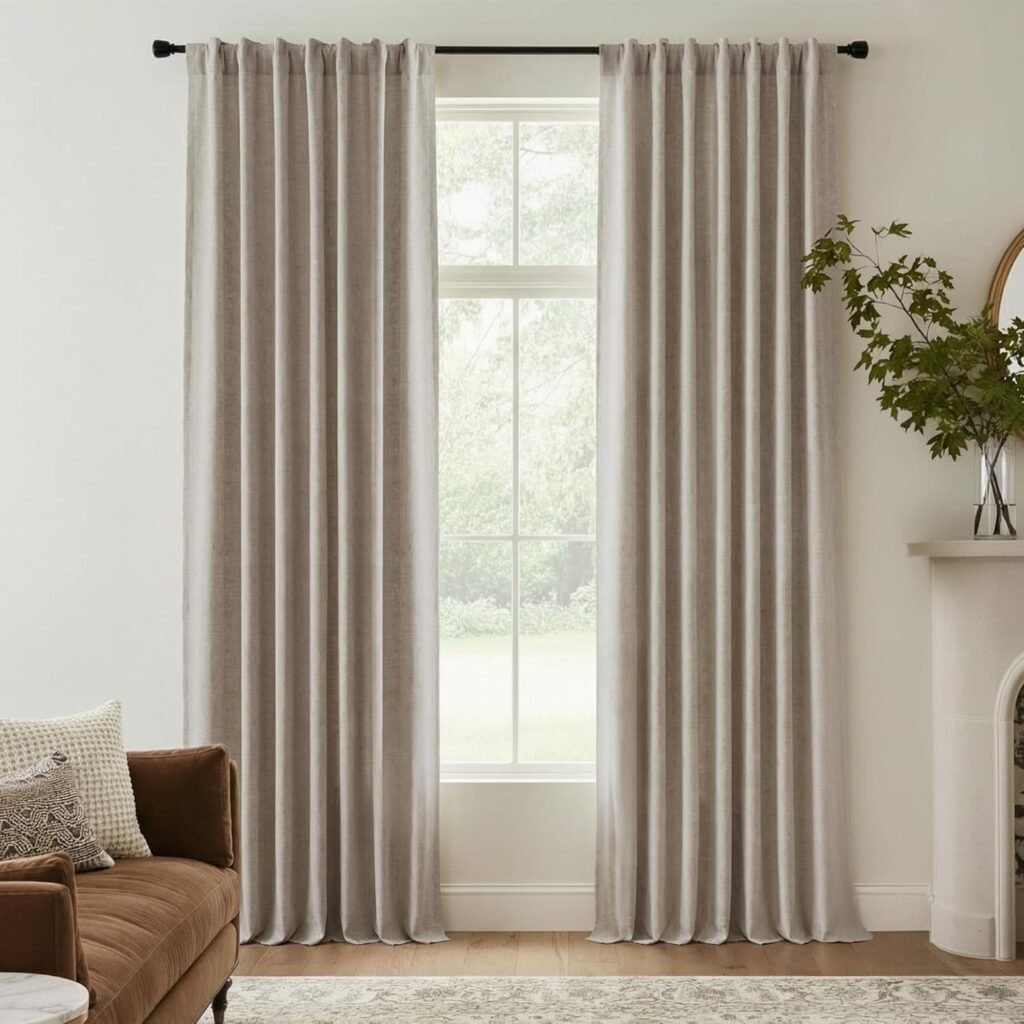
Ceiling to floor panel curtains
If there is one bedroom curtain idea that works in virtually every room regardless of size, style, or budget, it is this one: ceiling to floor length panel curtains in a warm neutral — cream, oatmeal, warm white, or natural linen — hung from a rod positioned as close to the ceiling as possible.
The effect is immediate and dramatic without being bold. The curtains create a soft, clean vertical line from ceiling to floor that makes the room feel taller, the windows feel grander, and the whole space feel more considered. It is the curtain equivalent of a classic white shirt — it goes with everything and always looks right.
The method is effective in contemporary minimalist bedrooms as well as in classic ones, and actually it suits any style along the spectrum. Because the colour is neutral, the curtains simply fade into the background and allow the rest of the room elements — the bed, the art, the furniture — to be the focus.
- Best fabric: natural linen or linen-look polyester for a relaxed feel; heavier cotton for more structure
- Best colours: warm white, cream, oatmeal, natural, pale stone
- Best for: any bedroom style — this is the universally safe and universally flattering choice
- Rod position: as high as possible — within 5 to 10 cm of the ceiling cornice if space allows
✦ PRO TIP: If you want warmth and texture without adding colour, this is the idea to go for. Warm neutral shades of linen or cotton not only look great in photos but also create a peaceful atmosphere to get up to, and harmonize with any bedding colour you may own.
Idea 2: Rich Velvet in a Jewel Tone
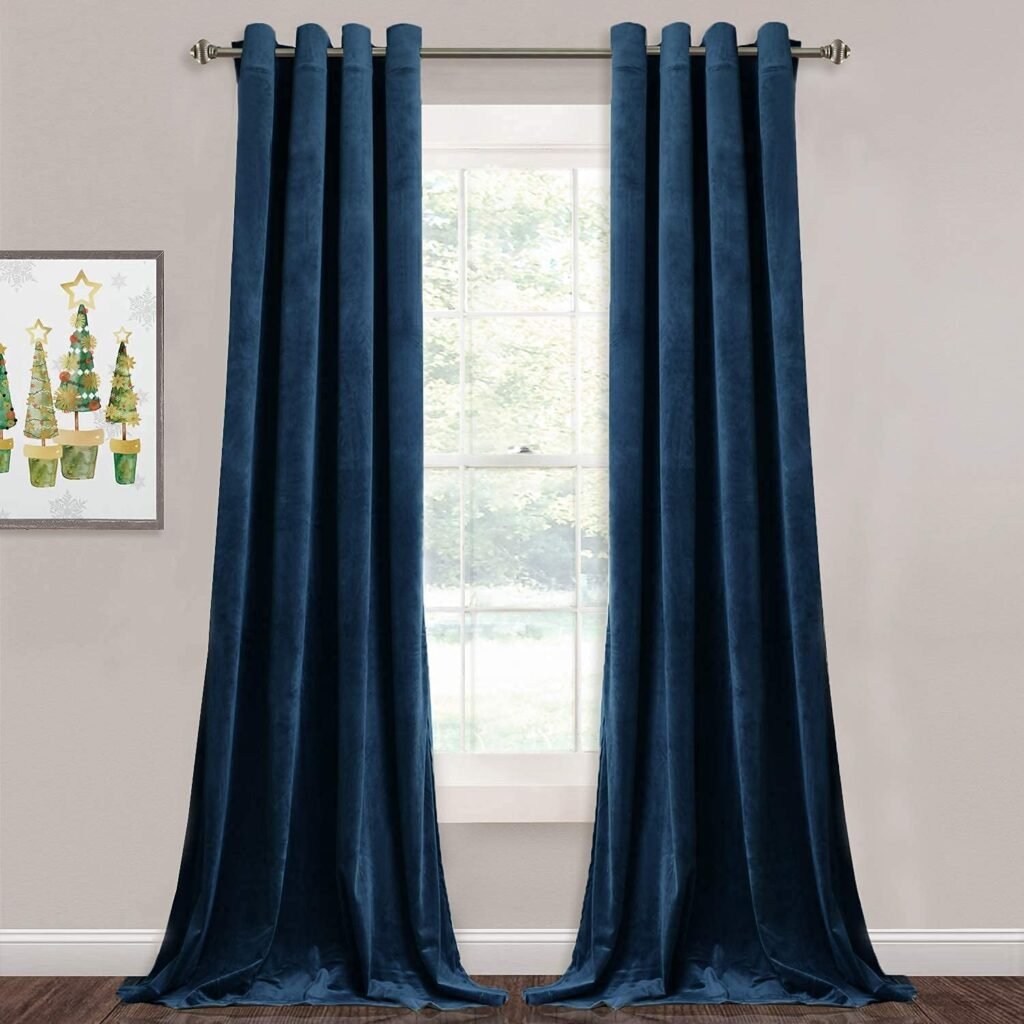
When you want a bedroom to feel lavish, comfortable, and wrapped-up, the velvety rich curtains in a jewel tone will not only have a stunning effect but also offer an incomparable coziness. Velvet colors like forest green, navy, deep plum, burgundy, sapphire blue, and dark teal have a kind of warmth and depth that other fabrics simply cannot match.
Velvet’s practical benefits in a bedroom are as significant as its aesthetic ones. The dense pile blocks light better than most fabrics, absorbs sound to create a quieter sleeping environment, and provides excellent thermal insulation — keeping rooms warmer in winter and cooler in summer. Beauty and function, perfectly combined, need to know everything about velvet curtains.
In a master bedroom, velvet curtains in a rich dark shade, hanging from the ceiling to the floor in a master bedroom, totally alter the atmosphere of the room at night. The flip from day to night (curtains open, fresh and light) to (curtains closed, cosy and intimate) is among the most pleasurable home change oppositions that one can get.
- Best fabric: cotton velvet or poly velvet in a dense weave with visible pile depth
- Best colours: forest green with cream or terracotta walls; navy with white or warm grey; plum with pale pink or warm grey; burgundy with cream or warm white
- Best for: master bedrooms, adult bedrooms, rooms where you want a strong design statement
- Avoid: very small bedrooms without natural light — go for a lighter velvet colour (dusty pink, sage) rather than a dark one
Idea 3: Relaxed Linen for a Natural, Airy Feel
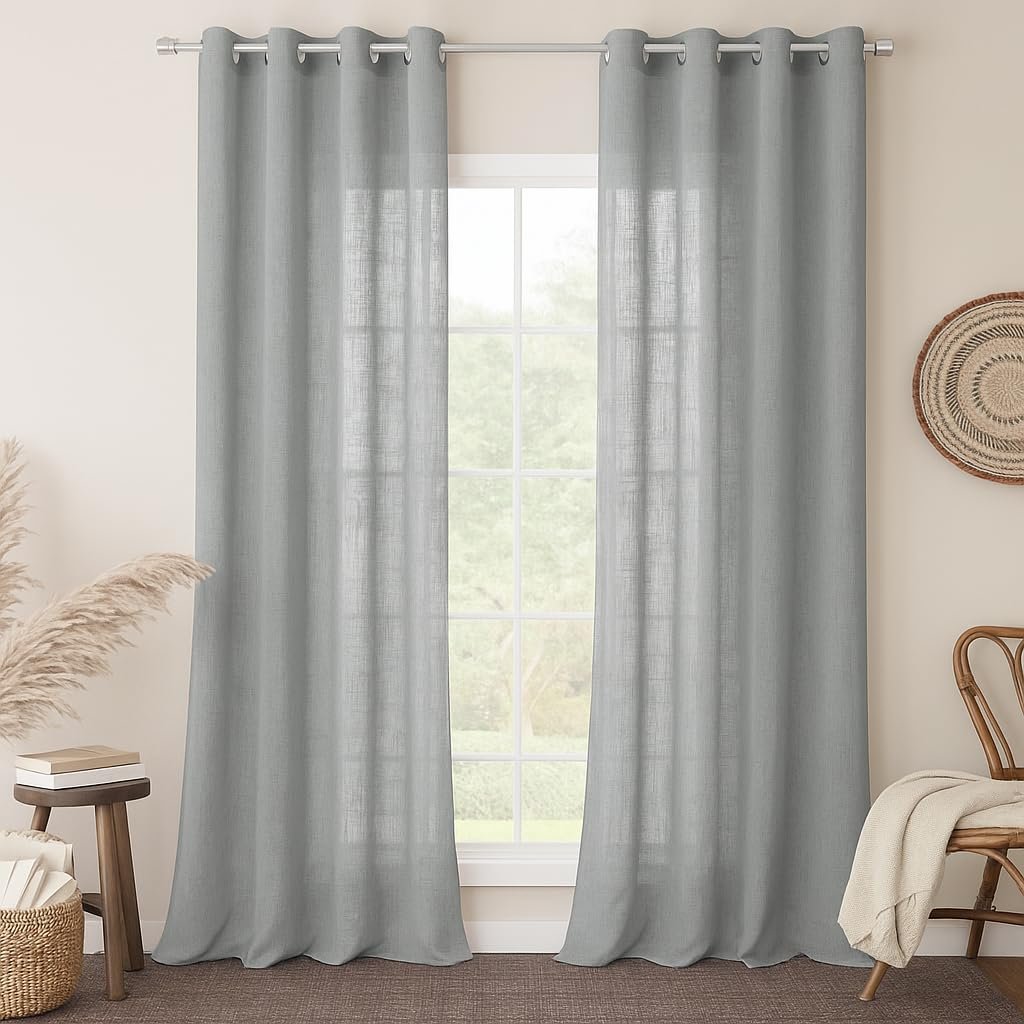
Linen curtains have become synonymous with home interior design since 2026’s natural-interior movement swept home design trends, and this trend remains as prominent as ever today. Linen’s texture — irregular weave patterns, movement during use and its gentle crinkle that is part of its character rather than flaw — cannot be accurately replicated through synthetic fabric alternatives. That is why the linen curtain is worth it.
Linen fabrics make an especially great choice for bedrooms because of their breathability; unlike polyester which holds heat close to the skin and may feel slightly synthetic, linen allows airflow while maintaining a pleasant sleeping temperature for those who like sleeping warmly. Curtains made of linen contribute greatly to a more pleasant bedroom atmosphere for anyone sleeping warmly.
Linen curtains in a bedroom look their best when they’re a bit imperfect — not being stiffly ironed, but lightly steamed and draping naturally with their texture showing. The effortless sophistication of carefully selected linen is one of the longest lasting fashion trends in home decoration.
- Best colours: natural undyed linen, warm white, oatmeal, pale grey, soft sage, dusty blue
- Best for: relaxed contemporary bedrooms, Scandinavian and Nordic-influenced interiors, coastal and country styles
- Care note: linen wrinkles — this is intentional and beautiful, not a fault. Embrace it or steam lightly for a more formal look
Idea 4: Blackout Curtains That Look Beautiful, Not Clinical
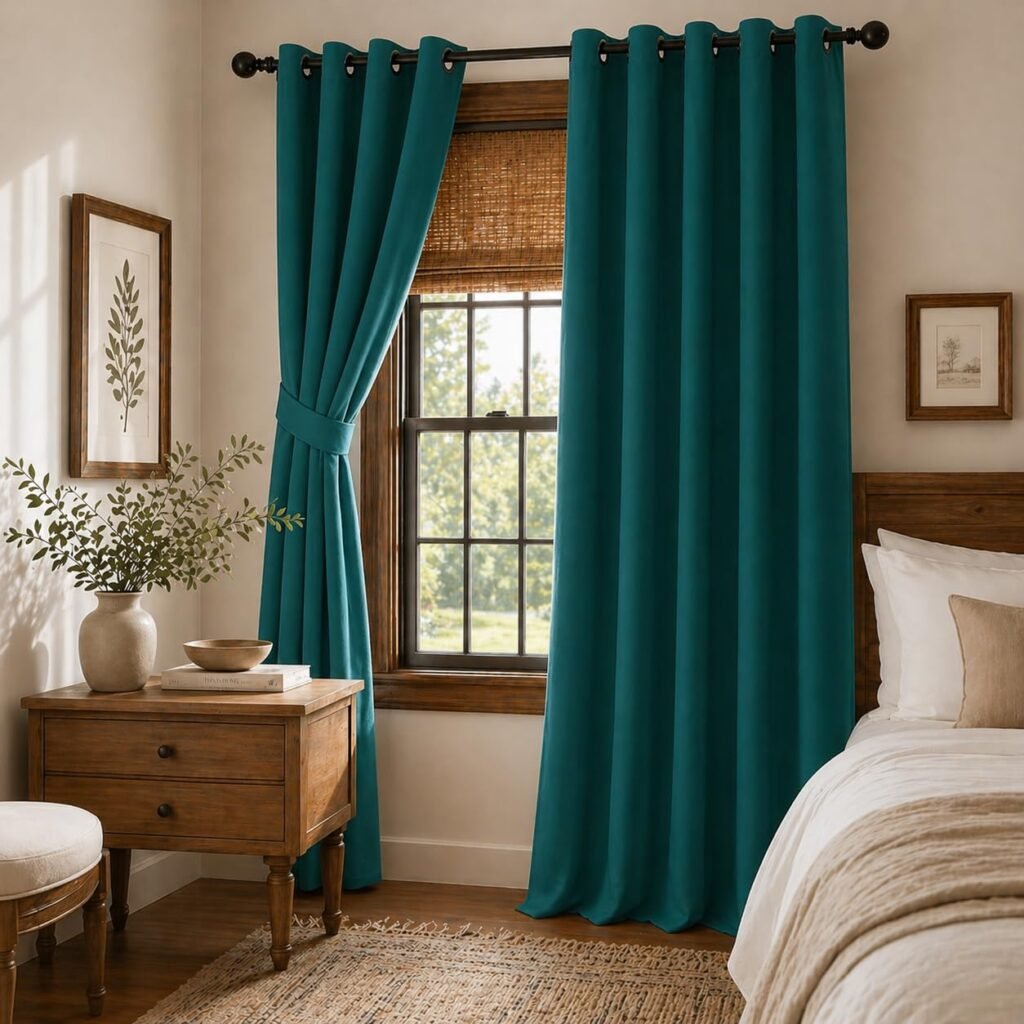
For years, blackout curtains had a reputation problem: they worked perfectly but they looked functional rather than beautiful. The market has shifted dramatically, and the best bedroom blackout curtains in 2026 are genuinely attractive — in velvet, in lined linen, in patterned fabric, and in a full range of colours that includes everything from classic white to deep jewel tones.
The principle is simple: the blackout performance comes entirely from the lining or the weave construction on the reverse side. The face fabric can be anything — velvet, linen, cotton, textured polyester, printed — and the curtain looks exactly like any other decorative curtain from the front.
Master bedrooms prioritize good sleep so a gorgeous blackout curtain that does not scream blackout curtain is really the best solution. You get the total darkness that you need for sleep and at the same time, a curtain that elevates the look of the bedroom instead of spoiling it. You should have bit knowledge about how to choose the best blackout curtains for bedrooms or living rooms.
- Best fabric: velvet or lined linen blackout for a luxury bedroom; polyester blackout in any colour for a practical approach
- Best colours: whatever suits your bedroom — the blackout element does not restrict colour choices at all
- Installation note: hang wide and high, and use a return rod to close side gaps — where the curtain is hung matters as much as the fabric for true blackout performance
Idea 5: Layered Sheer and Blackout for Total Flexibility
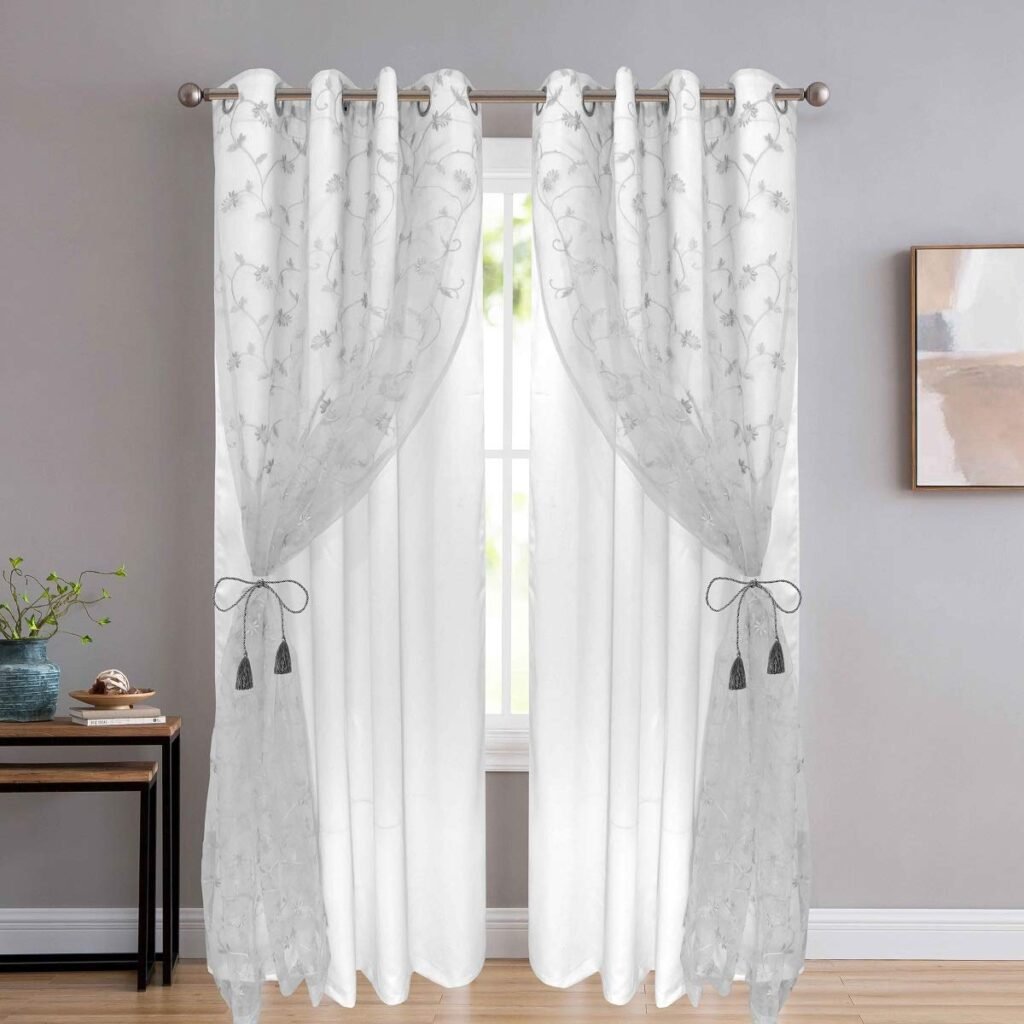
Layered Sheer and Blackout Curtains
This is the most versatile bedroom curtain setup available, and the one most often used by interior designers for master bedrooms layering sheer and blackout curtains. Two layers: a sheer or semi-sheer inner panel on a second rod closest to the glass, and a heavier blackout or opaque outer panel on the main rod.
During the day, draw only the sheer panels. The room is softly lit, gently private, and the window looks beautiful with the light coming through the sheer fabric. At night, draw the outer blackout panels as well. The room is completely dark, private, and warm.
The practical investment is slightly higher — two sets of curtains and a double rod — but the flexibility makes it genuinely worth it. It is the only setup that gives you everything: light, privacy, darkness, and decorative appeal, all in one window treatment.
- Best sheer fabric: fine voile, lightweight cotton lawn, or sheer linen
- Best outer fabric: blackout-lined velvet, blackout-lined cotton, or thermal blackout polyester
- Hardware: double curtain rod or double track — both the inner and outer rods should be fitted before buying curtains so you can measure both layers accurately
Idea 6: Bold Colour with Minimalist Everything Else
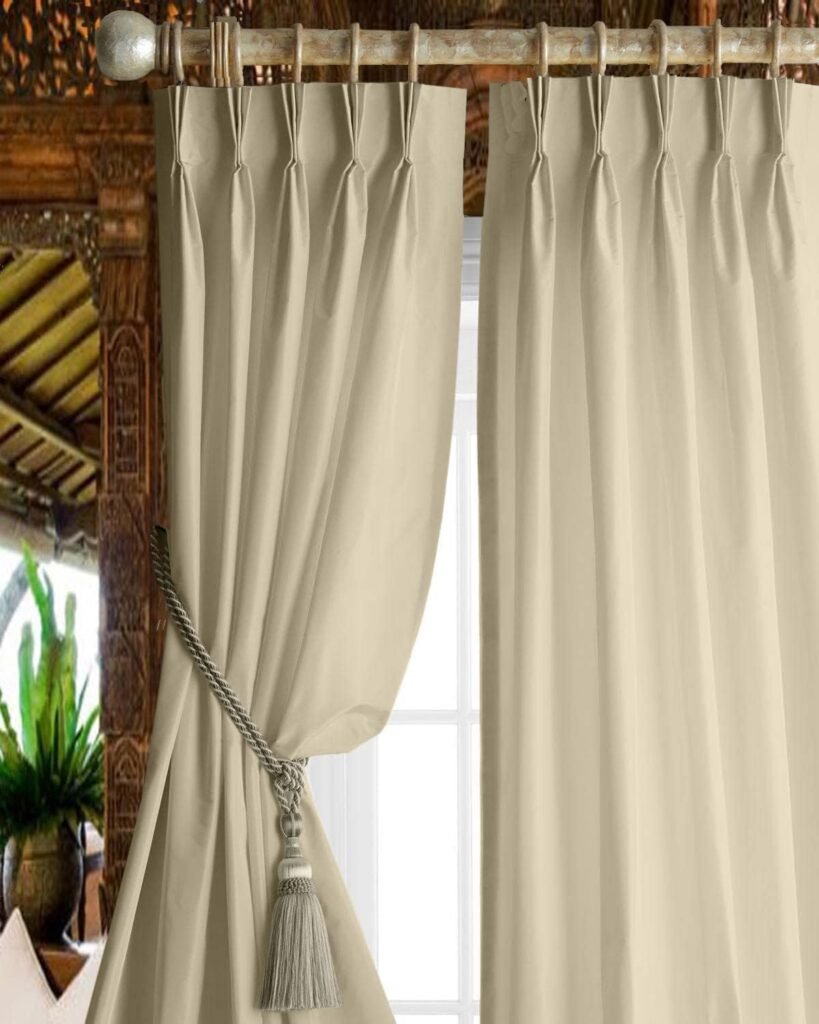
This bedroom curtain concept is for those who desire a real design statement even they don’t redecorate the whole room. The principle is very simple: a pair of striking coloured curtains in floor-length panels in a bedroom that is neutral otherwise. White walls, white or linen bedding, natural wood furniture — and then one bright, self-assured curtain colour for room that characterizes the entire room.
Emerald green, cobalt blue, deep burnt orange, warm terracotta, rich burgundy — any of these in a quality fabric against a completely neutral backdrop creates a bedroom that feels designed and intentional in the best way. The curtains become the focal point and the art simultaneously.
This idea works particularly well in master bedrooms where there already exists an interesting headboard or piece of art on one of the bed walls, adding striking curtains at each window can help create two focal points which complement rather than compete.
- Colour matches that never fail: emerald curtains matched with white walls and linen bedding; cobalt curtains with light grey walls and white bedding; terracotta curtains paired with cream walls and natural cotton bedding
- What to avoid: bold curtains with busy wallpaper — the two patterns and colours compete. Keep walls plain if using bold curtain colours
Idea 7: Curtains as a Bed Canopy — the Boutique Hotel Look
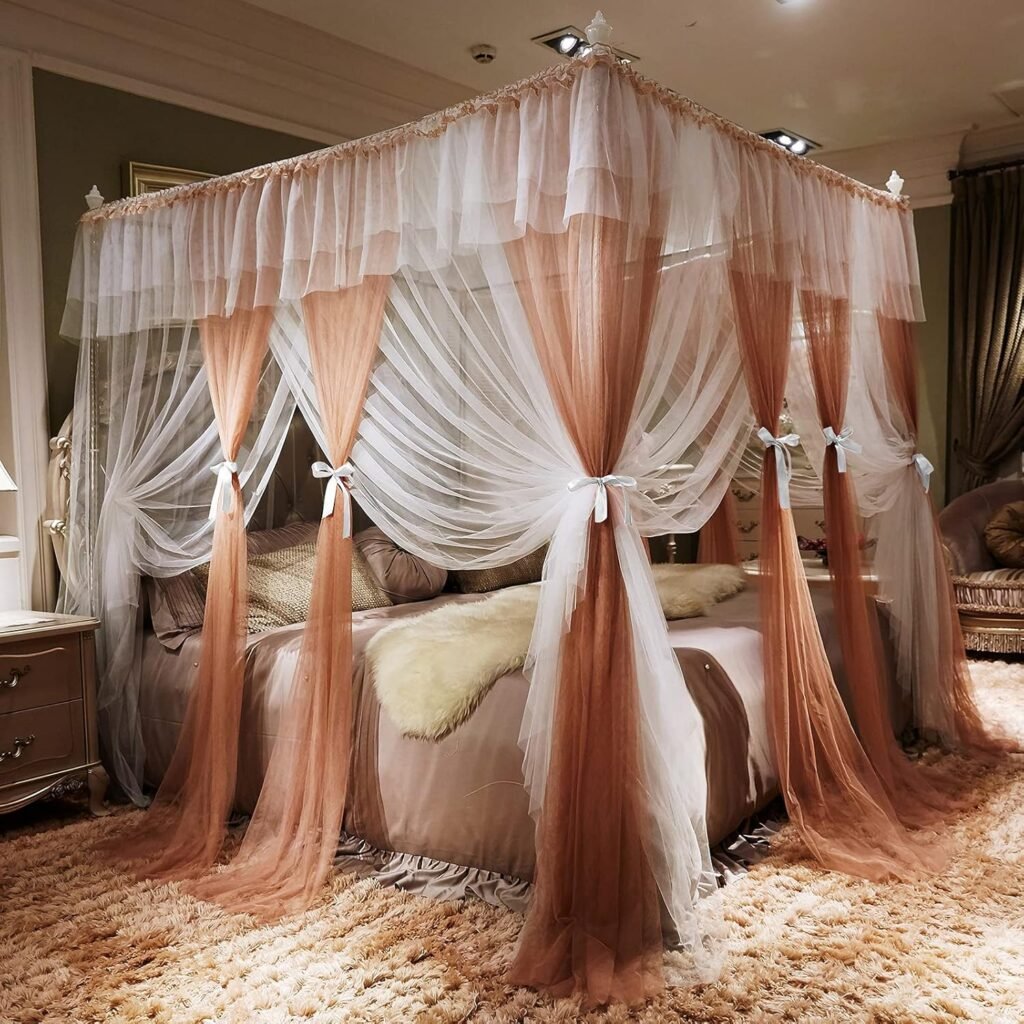
One of the bedroom curtain ideas that is both visually striking and fairly doable is to put a curtain rod directly above the bed on the ceiling or use a ceiling track, and then use curtains that fall down on each side to frame the bed, not the window.
The result is just the plush, boutique-hotel cocoon that most people think of when they describe truly aspirational bedrooms. Fabrics like white voile or gauze that are transparent give a canopy of romance and drama that beautifully softens light. Fabrics like linen or velvet that are heavier give a feeling of warmth and more enclosure.
This is especially good for high-ceiling rooms where a bed canopy helps to bring down the scale of the room to a human level and adds warmth to a space which might otherwise seem very large. It also is a solution in rooms where the windows are not well placed — the canopy becomes the main curtain element of the room and the window treatment can be quite simple.
- Best fabric for canopy: white or cream sheer voile for a romantic look; linen for a relaxed natural feel; velvet for maximum drama
- Hardware: ceiling-mounted curtain track or a free-standing four-poster frame if the ceiling cannot be drilled
📌 NOTE: If you are going to put up a rod or track on the ceiling, make sure you find out first if this can be done in your particular room and property type before buying the fabric.
Idea 8: Japandi-Style — Minimal, Natural, and Deeply Calming
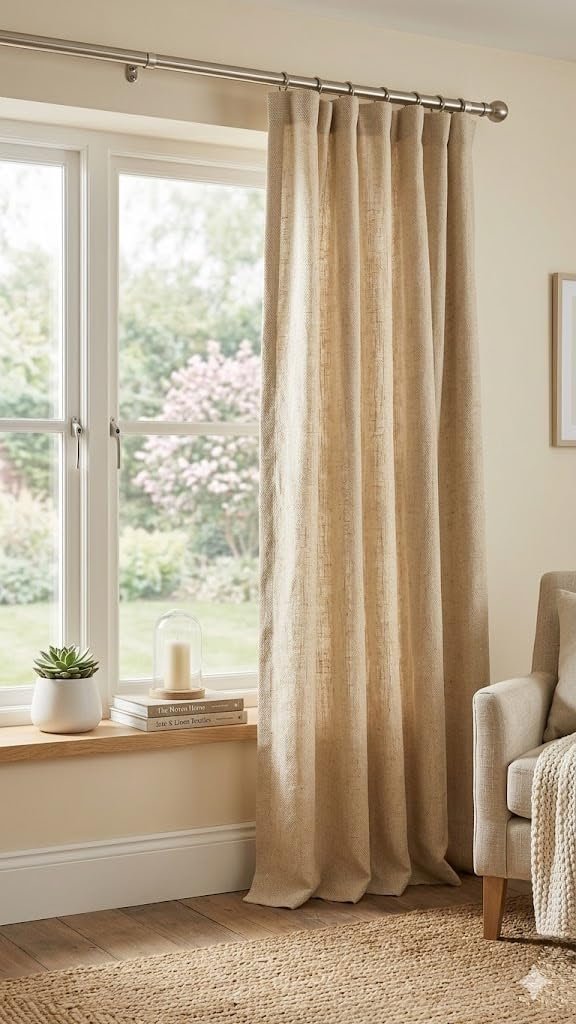
Japandi — the increasingly popular design aesthetic that blends Japanese minimalism with Scandinavian warmth — has a very specific approach to bedroom curtains. Simple, natural, unstructured. No heavy pleating, no bright colours, ornate hardware – very simple and clean panel of natural fabric linen, cotton, or fine wool that doesn’t take up loud and allows the room to stay fresh.
Japandi curtains for bedrooms are in most cases natural, non-dyed or very lightly coloured: raw linen, warm white, pale mushroom, soft clay, or very rarely a very muted sage or smoky blue. Fabric weight is medium — heavy enough to hang with presence, light enough not to dominate. Hardware is minimal and often hidden.
The overall effect is a bedroom that feels genuinely restful. Not bare or cold — the natural textures and warm tones prevent that — but uncluttered in a way that allows the mind to decompress. For anyone who struggles to switch off at night, a Japandi-influenced bedroom environment has real practical benefit.
- Best fabric: undyed or naturally pigmented linen, raw cotton, fine wool blend
- Best colours: natural, warm white, pale stone, dusty clay, very muted sage
- Hardware: concealed ceiling track, thin black metal rod, or wooden rod in a natural finish
- What to avoid: ornate rings, tiebacks with tassels, or heavy headings — keep everything as clean and simple as possible
Idea 9: Two-Tone Curtains for a Contemporary Edge
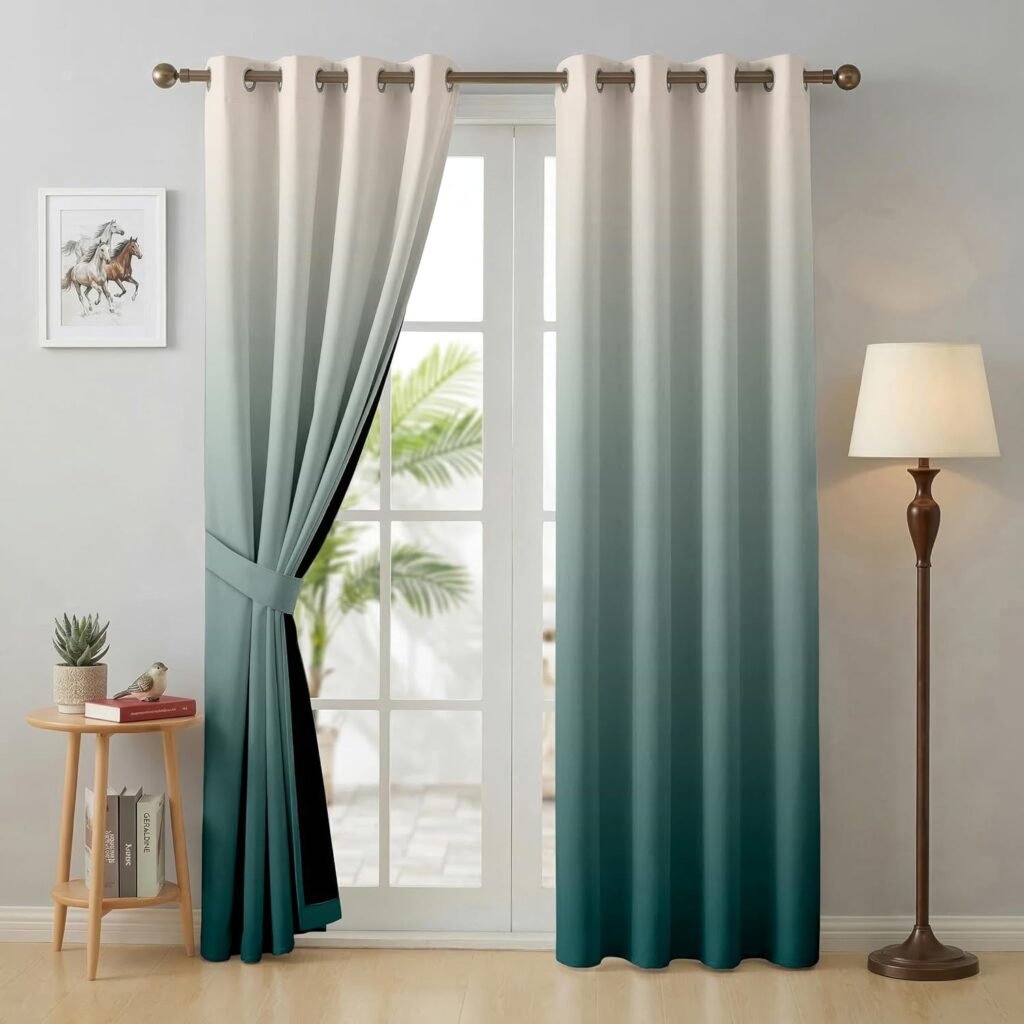
Two-tone curtains — panels that feature two distinct colours or two distinct fabrics, usually divided horizontally — are one of the more distinctive curtain trends of 2026 and one that works particularly well in bedrooms.
The most common configuration is a lower section in a heavier, more private fabric (such as velvet or cotton) and an upper section in a lighter, more sheer fabric — allowing light in through the top while maintaining privacy and warmth at the lower level. Alternatively, two solid colours in the same fabric type, divided at two thirds of the curtain height, create a graphic, contemporary panel that functions as both curtain and wall art.
Two-tone curtains are really best if you custom order them — most ready-made options are single-colour. If you are making curtains out of fabric, selecting two complementary fabrics and having a seamstress or curtain maker join them is not only quite simple but the result is also really unique.
- Colour combinations that work: cream upper, forest green lower; white upper, dusty pink lower; pale grey upper, charcoal lower
- Best for: contemporary and eclectic bedrooms where you want something unusual and personal
Idea 10: The Relaxed Puddle for a Romantic Master Bedroom
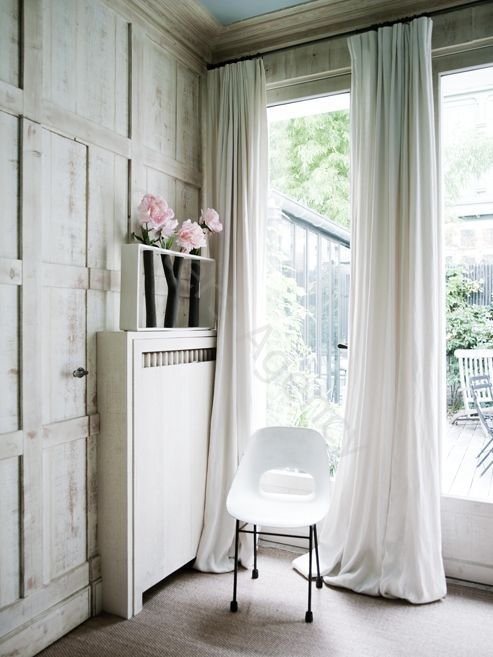
The puddle curtain — where the fabric rests deliberately on the floor by 3 to 5 centimetres — is the most romantic of all bedroom curtain looks and one that most people underuse because it sounds more complicated than it is.
A little puddle of fabric on the floor at the bottom of the curtains in the bedroom makes a style that is instantly linked to luxury, purpose, and timeless charm. It communicates that the one who decorated this room didn’t rush. It also gives a feeling of gentleness and richness at the window base which no other curtain length is capable of having.
For master bedrooms, a puddle of 3 to 5 centimetres is the sweet spot — enough to create the effect visually without being a trip hazard or a dust collector. Velvet and linen are the best fabrics for a puddle because their weight means the excess fabric pools naturally rather than flopping.
- Best fabric: velvet or heavyweight linen — both pool beautifully
- Best for: master bedrooms, rooms used primarily for relaxation and romance rather than high activity
- Practical note: the puddled section needs to be vacuumed regularly as it collects dust from the floor
- Avoid in: rooms with pets, young children, or high foot traffic — the puddled fabric gets stepped on and pulled
Putting It All Together — Choosing the Right Idea for Your Bedroom
The ten ideas above cover a wide range of styles, budgets, and practical needs. Here is a quick guide to matching the idea to the bedroom:
- Master bedroom, maximum luxury: Ideas 2 (velvet jewel tone), 5 (layered sheer and blackout), or 10 (romantic puddle)
- Spare bedroom or guest room: Ideas 1 (warm neutral ceiling-to-floor) or 4 (beautiful blackout)
- Teenager’s bedroom: Idea 6 (bold colour against neutral) or Idea 4 (blackout that looks good)
- Japandi or minimalist bedroom: Ideas 3 (relaxed linen) or 8 (Japandi minimal)
- Small bedroom: Ideas 1 (neutral ceiling-to-floor — the most space-expanding) or 3 (relaxed linen in pale colour)
- Budget-conscious bedroom: Ideas 1 or 4 — both deliver high impact at moderate cost
No matter which idea resonates, the key principles remain constant: hang the rod higher than feels natural, choose panels wider than the window, select floor-length curtains over shorter ones and prioritize fabric quality over quantity – one beautiful pair at an important window is much more effective at elevating a bedroom than three mediocre pairs!
Final Thoughts
Bedrooms are where most of us spend about one third of our lives — making it an ideal place for curtains that have been carefully selected to enhance its ambiance and suit the specific conditions present in each space. Not just functionally chosen; rather carefully considered options tailored specifically for its light conditions and desired atmosphere are required for maximum effectiveness.
No matter the style you desire – from timeless neutral linen to jewel-tone velvet or flexible sheer and blackout panels – investing in finding bedroom curtains that suit you will pay dividends every morning when you wake up to an area that looks and feels just right.
If you are planning to implement an idea, the first practical step is always the same: accurately measure the window and ceiling height, change your mind on rod position first, and only then go for fabric and color choice. Make these initial decisions correctly and other things will happen effortlessly.
Frequently Asked Questions
Q: What type of curtains are best for a bedroom?
A: Good bedroom curtains are those that mix functionality and beauty equally well. The majority of people would, therefore, opt for curtains that can block a significant amount of light — either complete blackout or at least darkening — and at the same time, come in a fabric that is lovely to the eye and adds to the overall mood of the room. Velvet, lined linen, and cotton with a blackout backing are perfect options for main bedrooms. If it is a guest room and light control is not very important, then simple linen or sheer panels could be used as a cheaper and lighter alternative.
Q: Should bedroom curtains go to the floor?
A: Yes – floor-length curtains are usually the right choice in bedrooms, as they add height and grandeur to a space. Children’s bedrooms or rooms with very short windows may benefit more from sill-length curtains; for master bedrooms it should not only reach the floor but should have their rod mounted as close to the ceiling as possible in order to achieve maximum vertical impact from them.
Q: What colour curtains are best for a bedroom in 2026?
A: The most popular bedroom curtain colours in 2026 are warm neutrals (natural linen, oatmeal, warm cream) for a calm and versatile look, and deep jewel tones in velvet (forest green, navy, dusty plum) for a luxurious and dramatic feel. Earthy tones — terracotta, warm rust, burnt clay — are the strongest trend of the moment for bedrooms where warmth and personality are priorities. For bedrooms that need to feel calm and restful, warm neutrals are consistently the most satisfying long-term choice.
Q: How do I make my bedroom curtains look more luxurious?
A: At first glance, bedroom curtains may appear less luxurious; but by taking four steps – mounting the rod at ceiling level rather than window frame level; using wider panels than you think necessary to allow fullness when drawn; opting for heavier fabrics like linen cotton velvet rather than basic polyester; and allowing curtains to just touch the floor or form a small puddle – everything changes immediately and makes an immediate impactful statement about luxury in any bedroom.
Q: Are velvet curtains too heavy for a bedroom?
A: Not in most cases. Velvet curtains in a bedroom provide excellent blackout performance, thermal insulation (keeping the room warmer in winter and cooler in summer), and sound dampening; all of which directly improve sleep quality. One important consideration with velvet is weight; thus an appropriately rated rod and bracket set with sufficient anchor points is essential. When used properly velvet curtains can become both beautiful and practical pieces for any bedroom space.
Q: How do I stop light coming around the edges of my bedroom curtains?
A: Light can still seep through even high-quality blackout curtains because their edges do not seal against the wall, which necessitates using return rods – rods which curve back towards each wall at each end to allow the curtain to wrap completely around and close any side gaps completely. Also ensure curtain panels extend well past window frames on either side, with minimal gapping above curtain top. A pelmet or deep valance at its top can help close this upper gap as well.