
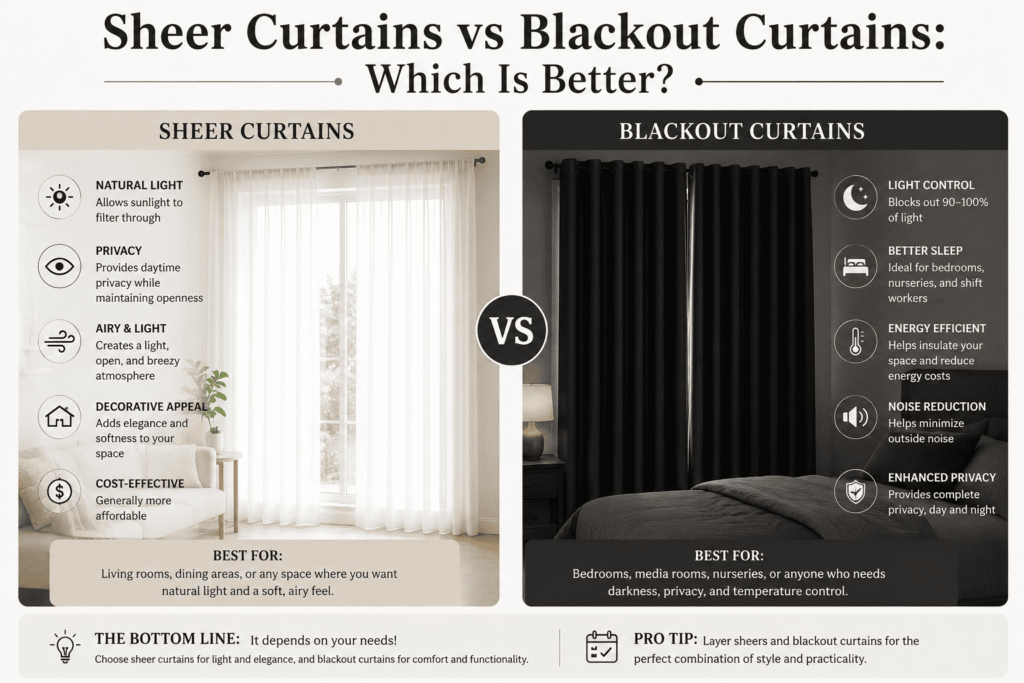
Sheer curtains or blackout curtains? This is the question almost always raised in a debate about home decorating, and it usually divides people into two strongly opposing groups. And usually, behind that very question there is a whole bunch of other questions: What about privacy during daytime? What if I like having natural light but at the same time I need to sleep in the mornings? Can I have both? Or does my decision depend on the particular room?
Honestly, sheer curtains and blackout curtains don’t compete against each other; they really serve totally different purposes. And for many rooms, the right choice turns out to be using both. However, first comprehending what each type of curtain is for, its strengths, and also its weaknesses will let you select the right one without spending money on curtains that are outside your actual needs.
This guide covers the full comparison — not just the obvious stuff about light and privacy, but the questions that most curtain guides skip over entirely.
What Are Sheer Curtains, Exactly?
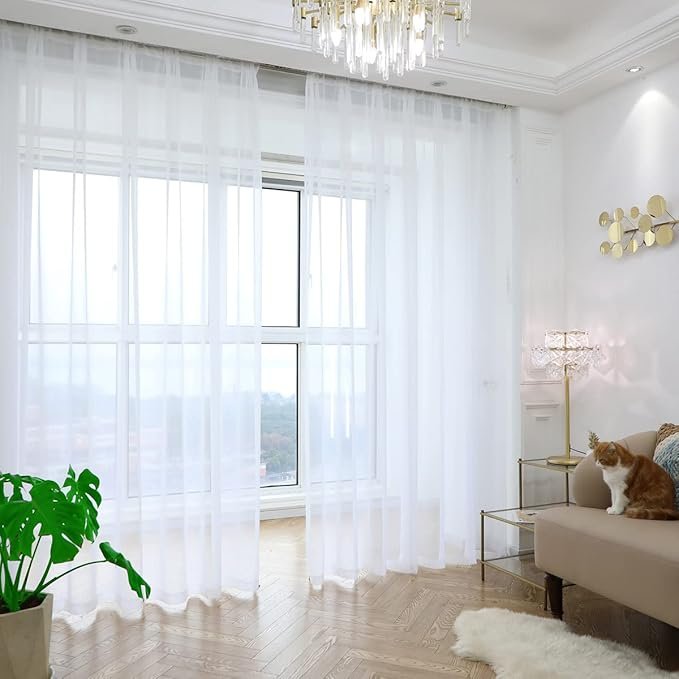
Sheer Curtains – Buy Now
Sheer curtains are generally of light and translucent fabrics such as polyester, voile, chiffon or fine linen which let light come in but from the other hand create a visual barrier between inside and outside. They turn strong sunlight into mild, soft light while making a room look airy and spacious at the same time.
The transparency level varies between different sheer fabrics. Fine voile is almost completely see-through. Heavier sheer linen is more opaque — it filters light significantly and provides reasonable privacy in daytime from a street-level view, while still allowing a glow of natural daylight into the room.
Sheers are almost always used in combination with another curtain — either a heavier decorative curtain pulled to the sides or a blackout curtain for nighttime privacy. On their own, they provide daytime privacy from outside but essentially no privacy at night once lights are on inside.
What Are Blackout Curtains, Exactly?
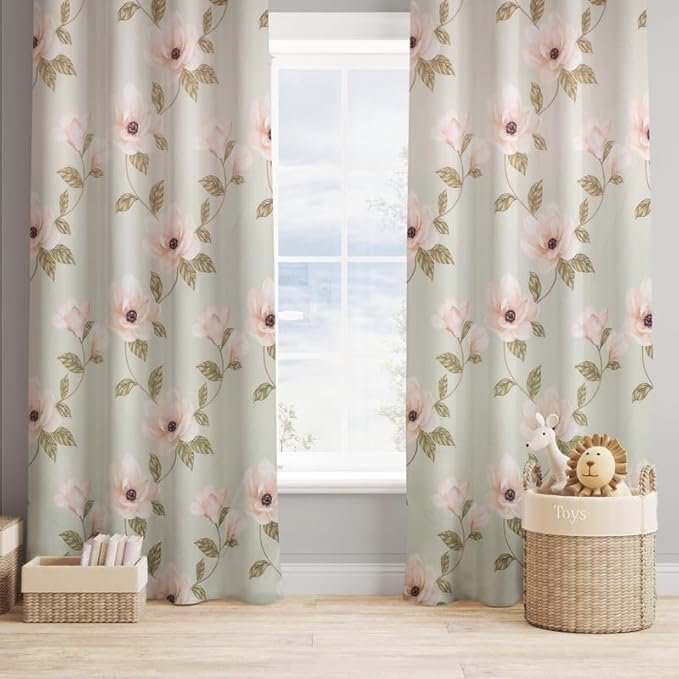
Blackout Curtains – Click here to buy
Blackout curtains are made from densely woven, multi-layered fabric — or a face fabric with a separate blackout lining — that blocks light from passing through. True blackout curtains block 99 to 100 percent of light through the fabric itself. The same density that blocks light also provides excellent thermal insulation and meaningful noise reduction.
Blackout curtains are entirely opaque unlike sheers. When pulled closed, they block out all light and make the room dark at any time regardless of how bright it is outside. You will get a total visual privacy at all times with them.
Blackout curtains range widely in style — from plain functional polyester panels to beautifully textured velvet or patterned designs. The blackout performance comes from the lining or the weave construction, not from any visible feature of the curtain’s face.
Sheer Curtains vs Blackout Curtains — The Direct Comparison
Light Control
At its core, sheer curtains differ significantly from other forms of decor by filtering light: reducing glare, softening harsh sunlight and diffusing direct light into something gentler. Sheers don’t block out light — instead they transform it so a room with sheers drawn on a bright day still feels light and open.
Blackout curtains block light. A room with blackout curtains drawn on the brightest summer day can be made as dark as midnight. This is not a subtle difference — it is a complete difference in what the curtain achieves.
- Sheer curtains: soft, diffused natural light during the day. Beautiful and gentle, but no darkness.
- Blackout curtains: complete control over the room’s light level at any time of day or night.
- Winner for maximum natural light in daytime: sheer curtains
- Winner for sleep, cinema rooms, sensitive sleepers: blackout curtains
Privacy
Privacy is one issue where sheers can be a bit tricky. In the daytime, when it is brighter outside than inside, sheer curtains more or less keep your privacy — people outside won’t be able to see your room clearly if they look in from the street. However, at night, when you have your lights on inside and it’s dark outside, the situation turns 180 degrees. Nights with lights on inside, sheer curtains hardly give you any privacy — basically, you can be seen from the street.
Blackout curtains give you total privacy 24/7 since they are completely opaque. Not a single beam of light goes through them, from any side.
- Sheer curtains: good daytime privacy, essentially no nighttime privacy
- Blackout curtains: complete privacy day and night
- Winner for full privacy: blackout curtains — no contest
⚠ WATCH OUT: If your only window covering is sheer curtains, people outside will be able to see inside your room when your lights are turned on at night. This is one aspect that quite a few people really do not realise until it is pointed out by a neighbour.
Thermal Insulation
Sheer curtains are not really contenders in this category. Very thin, loosely woven fabrics do not offer any substantial insulation. In fact, during the cold season, a room featuring just sheer curtains on the windows will experience heat loss through the glass almost at the same level as a room with no window coverings at all.
Blackout curtains — particularly thermal blackout curtains — provide significant insulation. Their dense multi-layered construction traps air and forms a thermal barrier, helping reduce both heat loss in winter and gain in summer, providing valuable savings both in terms of heating bills and bedroom comfort in summer months. In particular in the UK and Canada this can make an impactful difference for heating bills as well as bedroom comfort during hotter seasons.
- Sheer curtains: no meaningful thermal insulation
- Blackout curtains: good to excellent thermal insulation, especially thermal-rated versions
- Winner for warmth and energy saving: blackout curtains
Noise Reduction
Because sheers are made of thin, open fabric, they don’t offer any noise reduction — in fact, they raise noise level slightly. Blackout curtains are thicker and heavier, so they indeed reduce noise to some extent. The level of noise reduction is usually less than people anticipate, however. Such curtains can muffle traffic noise and other sounds from outside, but they won’t turn a noisy street into a quiet one.
- Sheer curtains: no noise reduction
- Blackout curtains: modest noise reduction — noticeable difference, not a complete solution
Aesthetics and Style
Sheer curtains truly excel when it comes to elegance and softness in a room, unlike heavy blackout curtains which cannot match them. A room full of natural light with sheer panels moving gently in an open window creates an airiness and warmth which heavy curtains cannot match.
Inexpensive blackout curtains, especially, tend to look heavy and somewhat like something you’d find in a hospital. That doesn’t mean all blackout curtains look that way – you can get really beautiful velvet, linen or patterned blackout curtains – but in general, sheers are inherently more decorative.
- Sheer curtains: add lightness, movement, and an airy quality to rooms — naturally beautiful
- Blackout curtains: vary enormously by style — from functional and plain to genuinely luxurious, depending on fabric and price
- Winner for natural daytime aesthetics: sheer curtains
- Winner for dramatic evening or bedroom atmosphere: blackout curtains
Cost
Sheer curtains are generally less expensive than blackout curtains of comparable quality. The simple lightweight construction costs less to produce. Good sheer panels in standard sizes are widely available at lower price points than equivalent blackout panels.
Blackout curtains at the budget end are also affordable, but the best-performing and best-looking ones — thermal blackout, velvet blackout, lined linen — are more expensive. The thermal and sleep benefits they provide make this a worthwhile investment for bedrooms, but it is a real cost consideration.
- Sheer curtains: generally lower cost for comparable quality
- Blackout curtains: wider price range; budget options exist, but best performance comes at higher price points
Which Rooms Need Which Type?
Living Room

It is the living room that probably sees the most debate over sheer-vs-blackout curtains, and usually, the solution there is a bit of both. For daytime sheers are perfect: they let in a lot of light, keep the street out of view, and create a warm and welcoming atmosphere. At night, the richer curtain – which doesn’t necessarily have to be a blackout one, but normally is – ensures privacy and a snug, enclosed feeling.
Designers are used to treating this kind of problem by using a double curtain track or a double rod: sheer panels are hung just next to the window on the inner track, and the heavier curtains are put on the outer track. Only the sheers are drawn in the day. At night, both are closed.
Bedroom
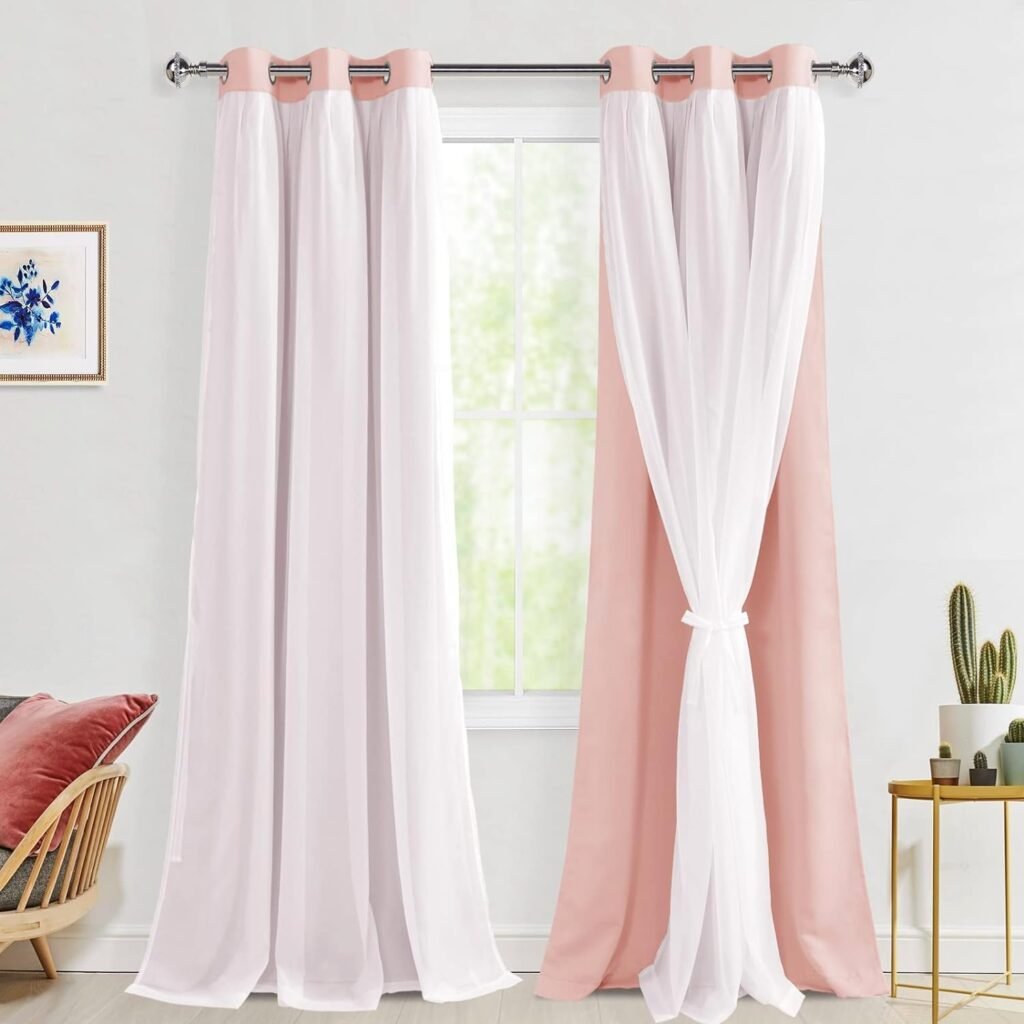
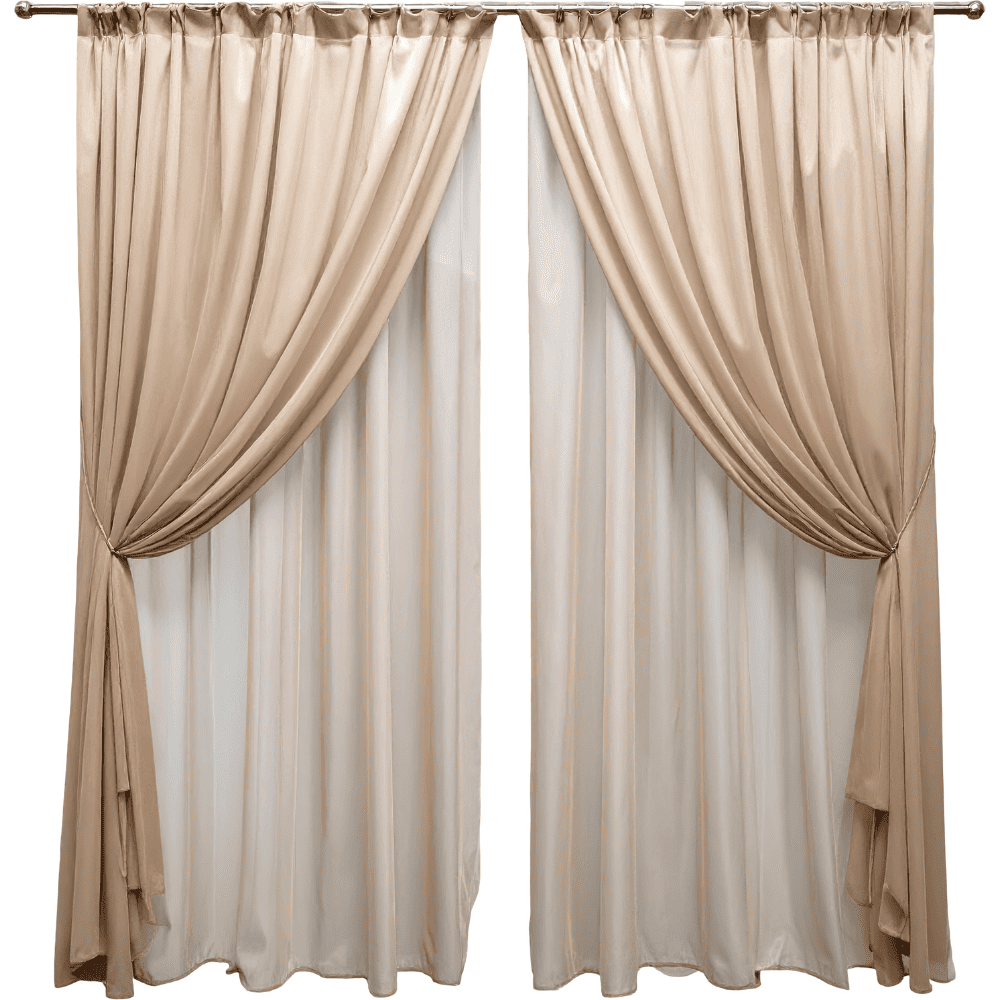
Bedroom Curtains – Sheer and Blackout Curtains – Buy Now
Bedrooms are often considered the primary locations for installing blackout curtains, especially by those who sleep very lightly, have kids at home, or work at odd hours, among others. The degree to which the sleep changes in a pitch-dark space as opposed to one that is exposed to early morning light is quite a fact.
However, many people prefer their bedrooms to feel bright and welcoming during the day rather than permanently dim. Layering curtains is one way of accomplishing this goal: sheer or semi-sheer curtains for daytime light and softness can be combined with blackout panels closed at night for total darkness – many manufacturers now provide complete sets with matching sheer and blackout panels specifically for this purpose.
Kitchen
Kitchens typically benefit from using sheer curtains over blackout options. Kitchens require natural light – both for practical reasons (cooking in a dim kitchen is often unpleasant), and psychological ones (being welcomed into an airy space by light). Sheer panels or cafe curtains covering only half the window are an ideal choice when dressing a kitchen window.
One exception may arise if the windows of a kitchen receive intense direct sunlight in the afternoon, leading to uncomfortably hot conditions in the room. Then, a plain blind or light-filtering cellular shade probably will be more effective than blackout curtains.
Bathroom
Bathrooms follow the same idea as kitchens: good lighting and functionality are key. Sheer cafe curtains which only cover the bottom part of the window so as to maintain privacy while the top part allows light, are not only a trendy but also an efficient option. Blackout curtains are hardly ever needed in bathrooms unless it is a changing room located next to a very overlooked area.
Home Office or Study
This depends entirely on screen usage. If you work at a computer with a screen facing toward a window, you will almost certainly have glare problems with sheer curtains alone — and on bright days, even moderate light can make a screen very difficult to read. Blackout curtains or a combination of blackout and sheer that can be easily adjusted are more practical for screen-heavy workspaces. For reading desks and non-screen work, sheers are usually sufficient.
Children’s Bedroom
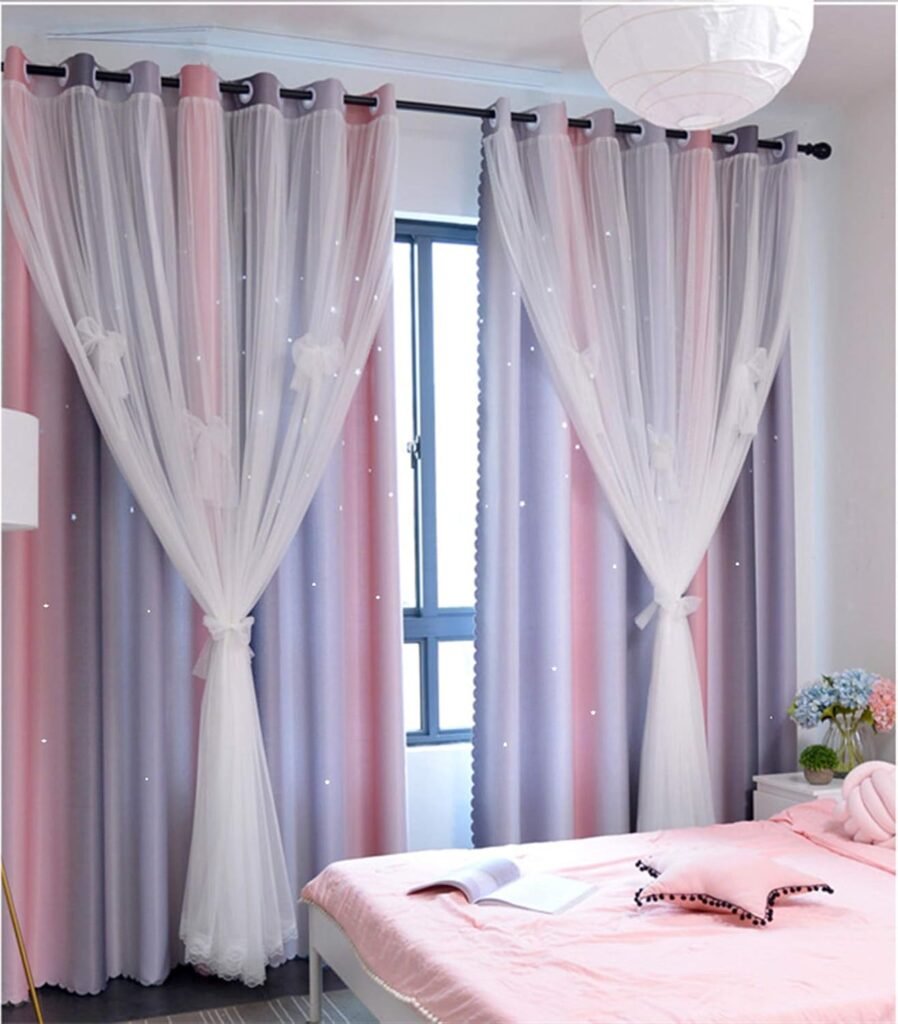
Children Bedroom Curtains – Buy Now
Children’s bedrooms — and particularly nurseries — benefit enormously from blackout curtains. Young children sleep better in genuine darkness, daytime naps are much easier to achieve, and in summer the early morning light that wakes adults at 5am also wakes children. Blackout curtains in a child’s room are one of the most practical and most appreciated investments a parent can make.
The Best of Both: Layering Sheer and Blackout Curtains
In most cases, the real solution is not one or the other — it is both. Layering sheer curtains with blackout curtains will provide you with great versatility: natural diffused light and privacy during the day, complete darkness and insulation at night. Designers of interiors resort to this method in almost every living room and bedroom they design, and after a try, one-layer curtain solution seems like a compromise.
How layering works in practice
It’s a pretty simple setup really: a double curtain rod or double track with two sets of curtain rings, or a double bracket that holds two rods at different distances from the wall. The sheer panel is on the inner rod next to the glass. The heavier or blackout panel is on the outer rod, the one nearest the room.
At home, close the blackout curtains during the day while drawing back sheers for maximum light control, creating privacy, gentle illumination and an airy aesthetic. By evening time, close them back over your sheers for optimal darkness and warmth!
Choosing sheers and blackout curtains that work together
At their core, curtains in a similar colour family create the smoothest window dressing experience. White or cream sheers go perfectly with nearly every outer curtain color imaginable; navy, gray or green blackout curtains look especially sleek when placed behind white sheers; avoid layering patterned sheers over patterns outer curtains as this would add another visual layer that makes windows appear busy and disorganized.
A sheer panel need not be exactly the same length as the blackout panel but the proportion should at least be within centimetres so as to avoid an awkward step-like effect when both panels are drawn simultaneously.
✦ PRO TIP: If you’re buying curtains to layer, opt for eyelet or ring-top curtains rather than rod-pocket curtains. Rod pocket curtains don’t glide easily along a rod and that’s annoying when you’re drawing open and closed two layers of curtains several times a day.
What About Privacy Film — Is It an Alternative?
Window privacy film — an adhesive frosted or reflective coating applied directly to glass — has increasingly become a viable solution for daytime privacy, though there are certain drawbacks worth understanding before investing. It would be worthwhile conducting an in-depth evaluation.
The advantage is permanent daytime privacy without any curtain covering the window at all — maximum light, maximum privacy. The limitation is that reflective and frosted films only provide privacy when it is lighter outside than inside. At night with interior lights on, many privacy films become less effective or entirely ineffective. They also cannot be drawn back to allow a clear view out, and they permanently change the appearance of the glass — which matters in rental properties.
Privacy film works well as a supplement to curtains in windows that need permanent privacy — a bathroom window facing a neighbour, for example — but it is not a direct replacement for the versatility that curtains provide.
Buying Tips — What to Look for in Each Type
Buying sheer curtains
- Fabric weight: lighter sheers allow more light through; heavier sheers provide more privacy while still filtering light — choose based on your privacy and light needs
- Panel width: sheers should be at least 2 to 2.5 times the window width to hang with proper fullness — flat sheers look wrong
- Length: sheers work at any length, but floor-length gives the most elegant result — sill-length sheers in a living room can look incomplete, you can go through curtain length guide
- Fabric content: polyester voile is most affordable and easiest to wash; linen sheer has the most beautiful natural look; cotton voile is soft but can wrinkle
Buying blackout curtains
- Light-blocking percentage: look for 99% or 100% blackout — ‘room darkening’ is not the same as true blackout
- Fabric: consider thermal lining for colder climates — it adds insulation in addition to light blocking
- Heading type: eyelet or grommet tops make opening and closing heavy curtains much easier than rod pocket
- Width: blackout curtains need to extend well past the window frame on each side — light leakage at the edges is the most common complaint
Final Thoughts
Sheer curtains and blackout curtains don’t compete; they work together. Rooms which feel most complete, considered, and liveable often employ both styles: sheer for daytime viewing purposes while blackout provides darkening as you transition into evening. When selecting sheers or blackout curtains as part of their decor scheme for their space or lifestyle needs. It often depends on both factors which works better.
If the budget or window situation only permits one curtain layer, room type should dictate your selection: bedrooms may need blackout curtains; kitchens need light; living rooms require flexible options. Start from each room’s purpose to find its appropriate curtain type.
Once you know which style best meets your needs, the next step should be determining which fabric works for you: sheer linen or polyester voile? Velvet blackout or thermal blackout? Cotton or polyester outer curtains? Fabric choice has just as great an effect on how a room appears as type; therefore it must be treated seriously.
Frequently Asked Questions
Q: Can sheer curtains provide enough privacy on their own?
A: During the day, yes, decent privacy from street views. With lights on inside at night – no. At night, when the room is brighter than the outside, sheer curtains become effectively transparent. For privacy at night you need a second layer – either opaque curtains over the sheers, or a separate blind. Sheer curtains alone are not an entire privacy solution for most rooms.
Q: Do sheer curtains block UV rays?
A: Some do – check the product description to see if there are claims of UV protection from standard polyester voile fabric, special UV-filtering sheer fabrics provide greater UV blockage while still allowing visible light through. If you’re concerned about protecting your furniture, flooring or artwork from fading, look for UV-filtering sheers specifically.
Q: Can I use blackout curtains in a living room?
A: Absolutely, many people use blackout curtains in living rooms — particularly rooms used for watching films and television shows or getting direct afternoon sun. To choose decoratively appealing blackout options such as velvet, linen or patterned options that also provide effective light control is key – velvet, linen and patterned blackout curtains all look beautiful while providing effective light control!
Q: Are sheer curtains easy to wash?
A: Generally yes — most polyester sheer curtains are machine washable on a delicate cold cycle. They should not be tumble dried as heat causes polyester voile to shrink and distort. Air dry or dry on a gentle setting and rehang while still very slightly damp so the weight of the curtain pulls out creases as it dries. Linen sheers need more careful handling — some require hand washing.
Q: Can I hang sheer curtains behind existing curtains I already have?
A: Yes — if your curtains already hang from one rod, adding tension rods within window recesses to hold sheer panels independently can add value and save money by expanding a room that already features curtains with sheers at a fraction of their original cost. Or replace one single rod with two layers – an effective and cost-efficient method to add sheers into an already decorated room!
Q: Which is easier to maintain — sheer or blackout curtains?
A: Sheer curtains are easier to maintain in most cases. They are lighter and usually machine washable. Blackout curtains — particularly velvet or lined versions — require more careful handling and some cannot be machine washed at all. The blackout lining or coating needs cold water and gentle cycles to avoid damage. If ease of maintenance matters, check the washing label on any blackout curtain before buying.