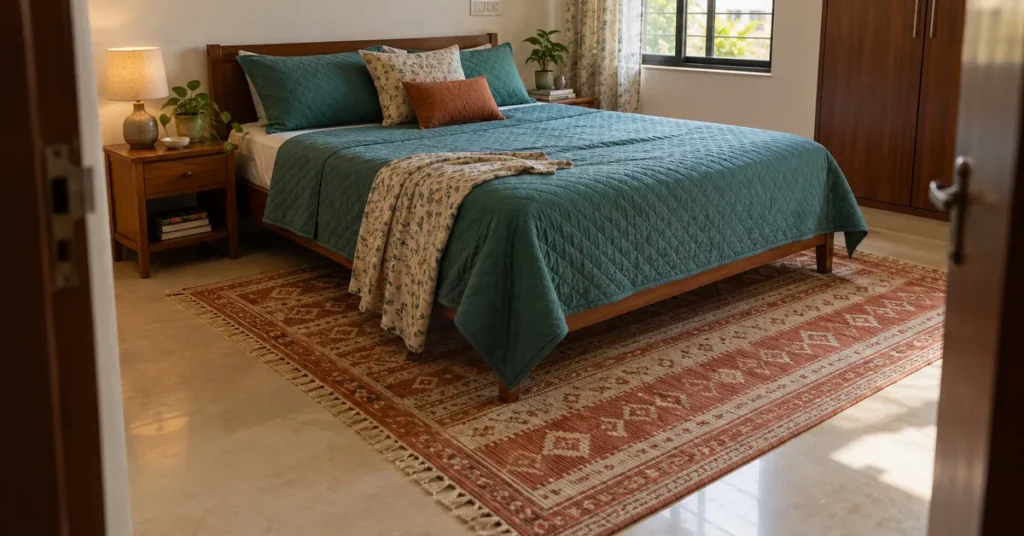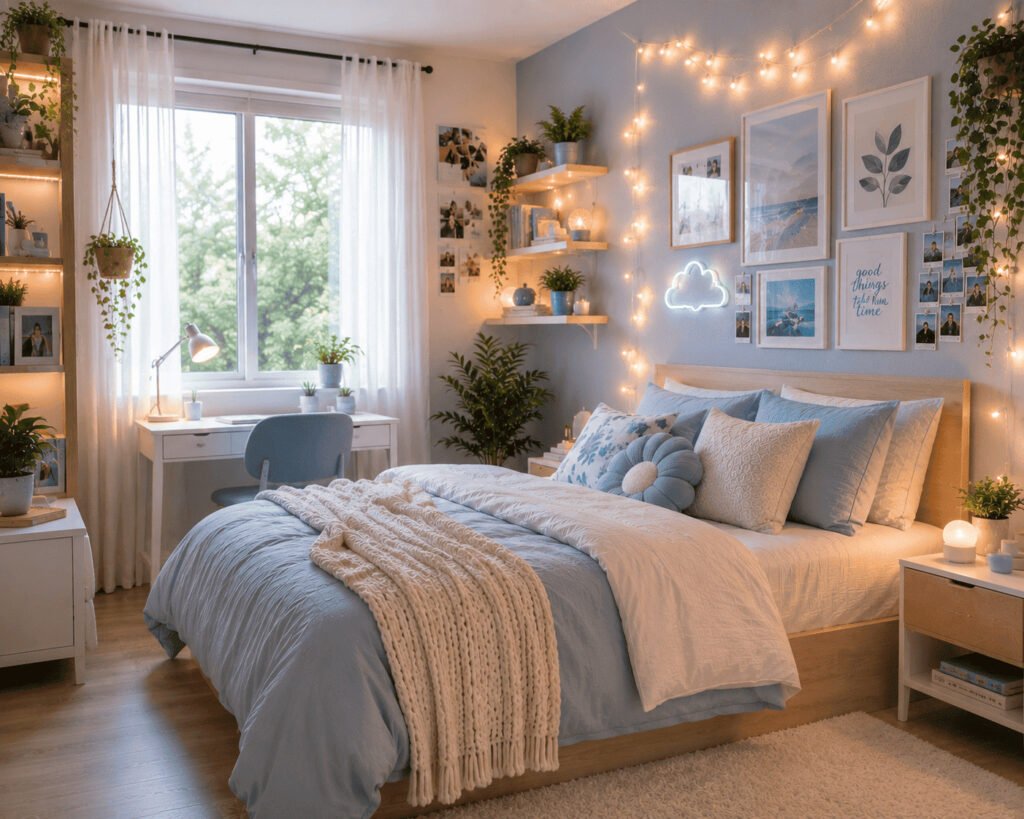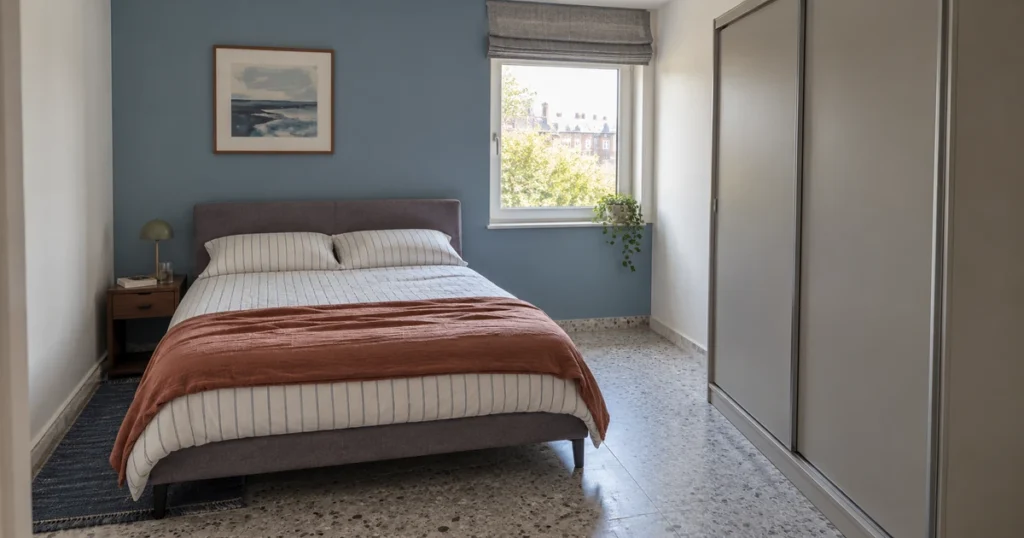
The bedside table is the bedroom’s most personal and most visible detail — the surface that is seen from the bed every morning and every evening, touched multiple times daily, and photographed in almost every bedroom image that captures the room at its best. It is small enough to be easily styled, close enough to be examined in detail, and important enough to significantly affect the bedroom’s overall feeling of being designed or merely furnished.
Most nightstands suffer from one of two problems: they have just a lamp on them which, while functional, leaves the space looking unfinished, or they are piled with so many things that the surface looks like clutter rather than an artful arrangement. A beautifully styled bed stand is the happy medium: a few carefully selected pieces that offer functional utility as well as visual delight, placed following a straightforward pattern that gives a feeling of a well-chosen scene rather than a corner filled through habit.
This guide covers the formula, the alternatives to traditional bedside tables, the specific objects that work, and the common mistakes that make bedside tables look wrong regardless of the individual quality of each item.
The Core Formula: The Four-Object Rule
The most reliably successful bedside table styling approach uses exactly four distinct objects, each serving a different function within the composition:
- Object 1 — The Lamp: the tallest element, positioned toward the back of the surface, providing the vertical anchor of the composition and the practical primary light source. The lamp’s base should be proportionate to the bedside table — not so large that it dominates the surface, not so small that it looks undersized.
- Object 2 — A Book or Small Stack: one or two books, positioned flat or leaning, providing a medium-height element and a strong signal of personal character. A deliberately chosen book — cover facing outward, chosen for its visual quality as well as its content — makes the bedside feel alive and personal.
- Object 3 — A Natural Object: a small ceramic vase with a single stem, a smooth stone, a small plant in a simple pot, or a beautiful candle. This element introduces natural material and organic form that the lamp and books cannot provide.
- Object 4 — A Practical Item: a glass of water, a phone and charging cable on a small tray, or a tiny notebook with a pen. A practical item confirms the use of the surface and stops the composition from being just
✦ PRO TIP: Use a small tray to corral the most practical items (phone, lip balm, small personal objects) into a defined unit. The tray acts as a boundary — everything within it reads as organised and intentional; the same objects scattered across the surface without containment read as clutter.
The Height Principle
The same height principle that applies to console table styling applies directly to the bedside: vary the heights of objects to create visual movement and avoid the flat, uninteresting quality of objects all the same height.
The lamp provides the tallest point. The book or small stack provides a medium height. The ceramic object or small plant is lower. The tray and practical items are lowest. This progression from tall at the back to low at the front creates depth and makes the arrangement readable from the resting position in bed, which is the primary viewpoint from which the bedside is experienced.
What to Put on a Bedside Table — Complete Object Guide
The lamp — always present
A bedside lamp is the single item that should always be present. The lamp’s presence confirms the bedside’s function, provides practical evening light, and creates the vertical anchor that every composition needs. Without a lamp, the bedside looks unfinished regardless of how beautiful the other objects are.
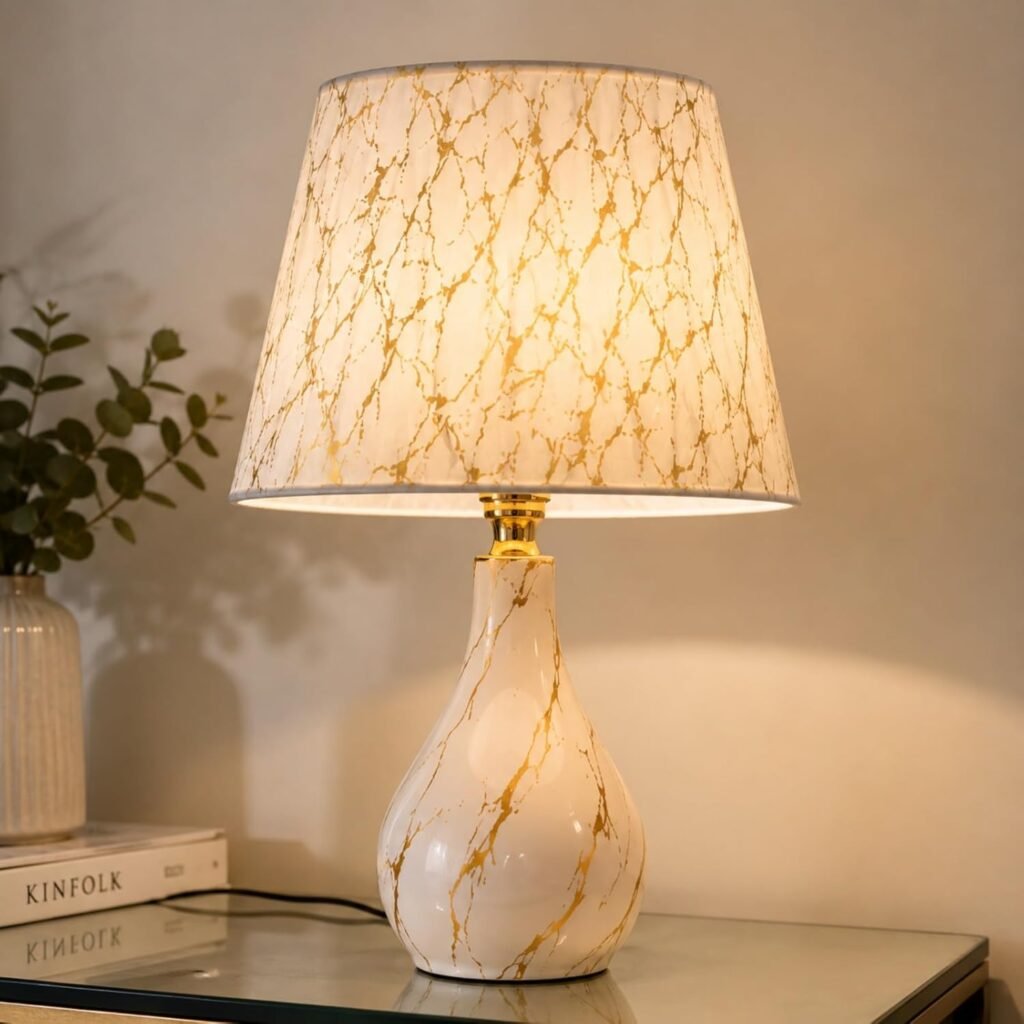
Ceramic Bedside Lamp Warm Base
Books — personal and beautiful
One or two books, chosen with care and positioned cleverly, are some of the most persuasive bedside items. This is because they communicate personality and an area of interest in a way that purely decorative items cannot. The composition counts a lot: a lone book with its cover turned outward (picked as the cover is visually attractive) makes a bigger impression than a pile of three books without a particular visual quality. A small pile of two or three books makes a nice base for a small object placed on top.
Ceramics and vessels
A small ceramic bud vase with a single stem (a branch of dried botanicals, a small flower, or nothing at all — an empty beautiful vessel has its own presence), a ceramic bowl holding a key or a stone, or a small ceramic dish used as a tray are all excellent bedside objects. The key quality is that the ceramic should be beautiful in itself — hand-thrown, with visible making marks and natural asymmetry, rather than mass-produced and uniform.
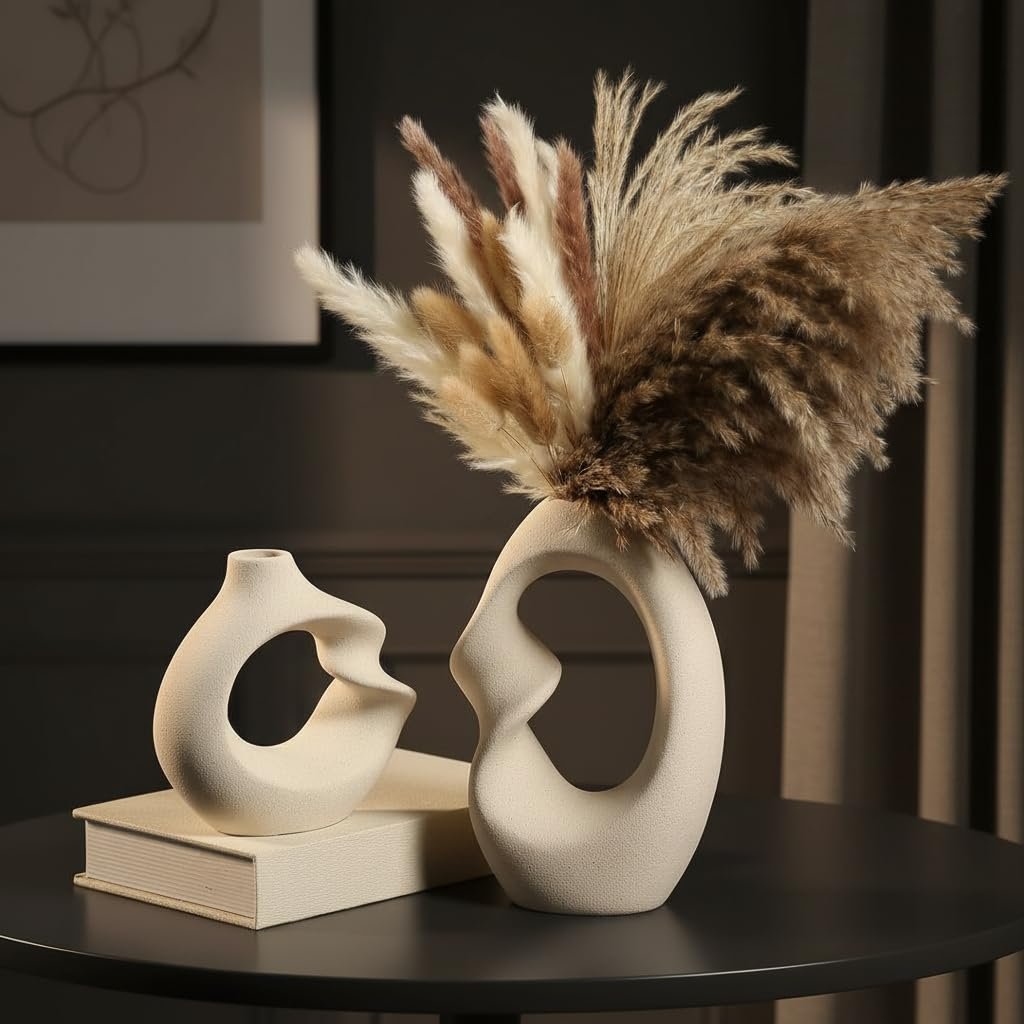
Ceramic Bud Vase Single Stem Bedroom
Plants — small and considered
A very small plant — a succulent, a tiny trailing pothos in a miniature pot, or a small cactus or mosaic plant – adds organic life to the bedside without consuming significant surface space. The plant should be genuinely small (under 15cm) and in a beautiful pot. A large plant on a small bedside table overwhelms the composition.
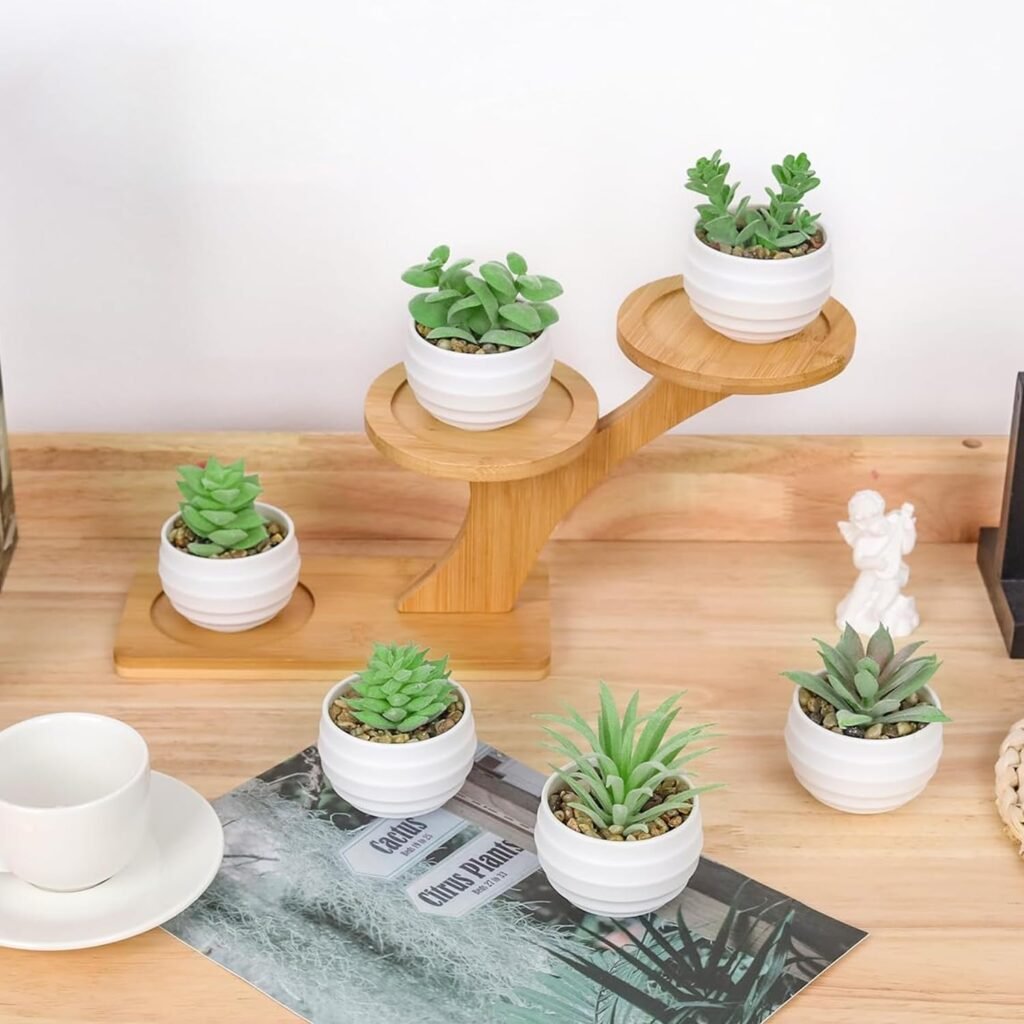
Mini Plant Pot Set Succulent Bedroom
Candles
A lone tall candle or a tiny one in a ceramic cup provides a touch of coziness and an organic element to the arrangement next to the bed. A candle that is ignited during the night (in a safe manner and only if the person is awake) offers the most intimate and relaxing layer of light that can lead to sleep. Choose an unscented or very lightly scented candle — strong scent in a closed bedroom at night can be disruptive rather than relaxing.
The practical items — trayed and contained
Phone charger, lip balm, reading glasses, a glass of water — every bedside has some practical items that must be there. A small tray made of marble, ceramic, rattan, or wood is the one to put all of these together within a limited space, so they don’t get scattered over the surface and become visually clutter. The tray also serves as the decor: even a phone charger looks like a planned thing when placed on a lovely small marble tray.
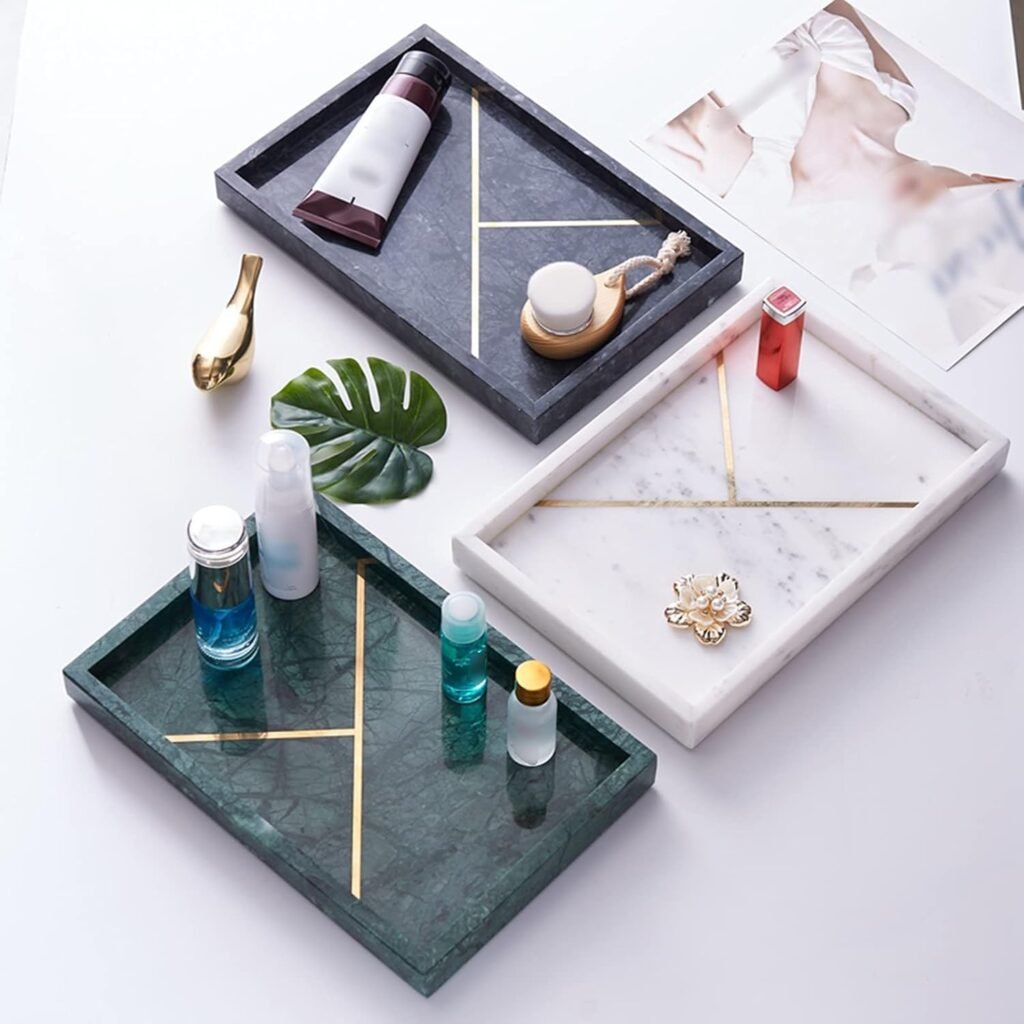
Small Marble Tray Bedside Table
Bedside Table Styles — From Minimal to Characterful
Japandi bedside
One lamp (natural wood base, simple linen shade), one ceramic object (hand-thrown, asymmetric), one book. Nothing else. The surface is mostly empty; negative space is the primary design element for Japandi Bedroom Decor.
Warm neutral / classic bedside
Warm linen-shaded ceramic light, small pile of two books, ceramic vessel with dry stem, water glass on small tray. Four-objects-formula applied in its most versatile variant.
Boho bedside
A rattan or wicker lamp, a trailing plant in a small macramé hanger hung above, a small stack of books with interesting covers, a crystal or smooth stone, warm fairy lights wound around or above the arrangement, also known as boho style bedroom decor. More elements, more character, more colour — but still organised around the core formula.
Dark academia bedside
A vintage-style brass lamp with a warm shade, a stack of hardcover books, a small botanical print in a simple frame leaning against the wall, a ceramic or glass candlestick, a wooden tray holding a fountain pen and a small notebook.
Alternatives to Traditional Bedside Tables
A traditional bedside table — a small table with a drawer — is the conventional choice but not the only one. For small bedrooms, unusual rooms, or anyone wanting something more characterful:
- Stack of books: three to five large hardback books stacked flat, topped with a tray, create an immediate and deeply personal bedside surface. Entirely free, entirely moveable, endlessly personalised.
- Small stool:a wooden stool, a rattan pouf, or a small upholstered footstool not only serve as a surface but some even come with storage. Very visually interesting, it especially complements the boho and eclectic kind of rooms.
- Floating wall shelf: just one floating shelf positioned at mattress + 30cm height can totally get rid of the floor footprint, hence it frees up the floor area and results in a neat, wall-integrated appearance. Perfect for small bedrooms or Japandi style.
- Drum table: a round drum-form side table provides surface area without a drawer — cleaner visually, particularly effective in contemporary rooms.
- Rattan side table: the most characterful ready-to-buy bedside table alternative, works beautifully in boho and natural aesthetic bedrooms.
- Crate or vintage wooden box: a wooden crate or vintage storage box used as a bedside table carries immediate character and sometimes storage — the visible patina and provenance tells a story.
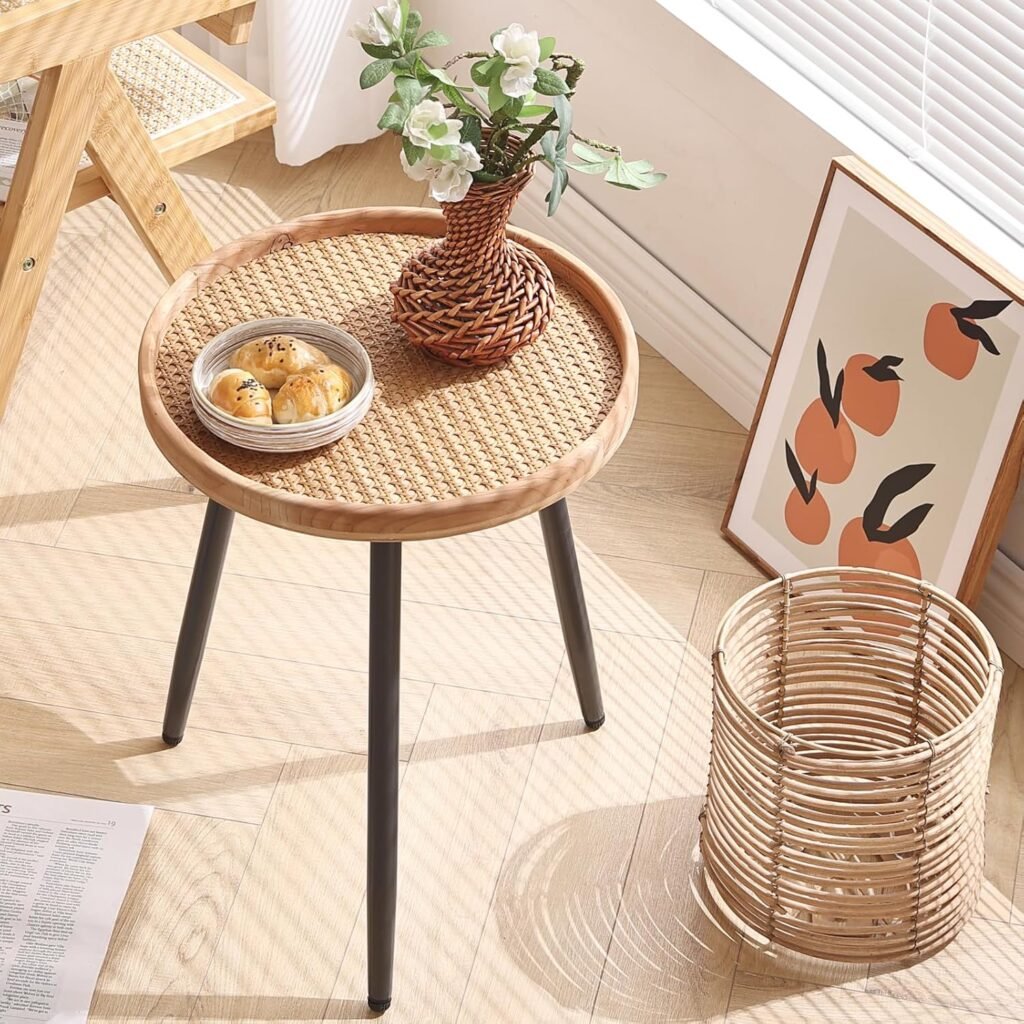
Round Rattan Bedside Table Bedroom
The Bedside Edit — What to Remove
One of the easiest ways to make your whole bedroom look cluttered and messy is by having an overstuffed bedside table. So, before you decide to put anything on your bedside, do the opposite: take away everything from the surface and see what really deserves to stay.
- Remove: anything that has not been touched in the past week (not really useful), several items that can be merged (from three lotions to one), any item that was put there without a deliberate decision (collection of objects rather than selection), wires that can be organized with a tray or hidden routing
- Keep: the lamp (always), whatever you genuinely use in bed or immediately before or after sleeping, one or two objects chosen because they are beautiful or meaningful
The bedside table after this edit will typically have 40-60% fewer objects than before. The immediate visual improvement is almost always striking.
Sizing — Getting the Bedside Table Height Right
The bedside chair height in relation to the mattress determines not only its practical use but also its visual harmony with the bed. Generally, the bedside table level surface is advised to be roughly the same height or slightly higher than the top of the mattress – usually 50 to 65cm for a standard mattress height.
Too low and reaching for items requires an uncomfortable lean; too high and the bedside looks out of proportion to the bed. For platform beds (which sit lower) or very high divan beds, the bedside table height should be specifically checked against the mattress height rather than assumed to be standard.
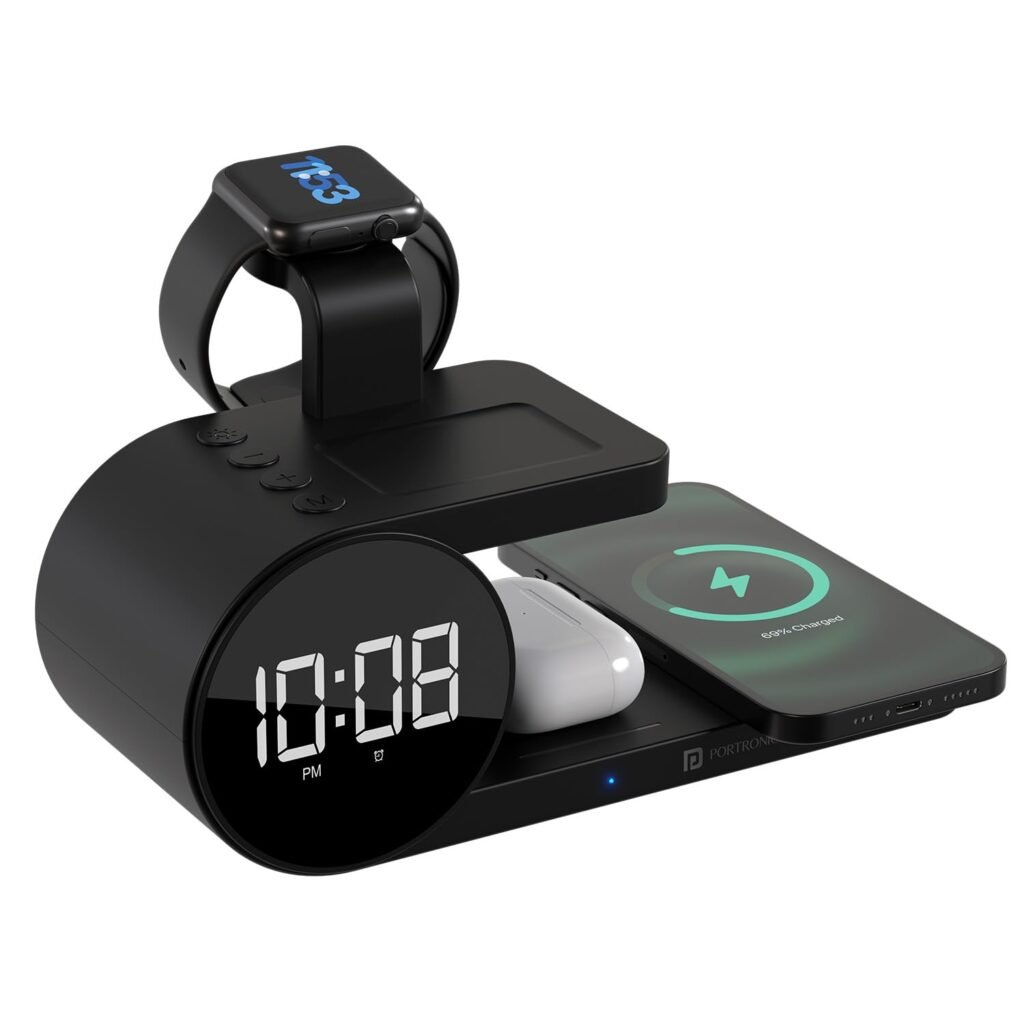
Bedside Charging Tray Wireless Phone
Final Thoughts
The bedside table is small enough to style completely in thirty minutes, personal enough to genuinely express character, and visible enough to meaningfully affect the bedroom’s overall quality. The investment of a few minutes of intentional editing and arrangement — guided by the four-object formula and the height principle — produces a bedside that consistently looks more designed and more beautiful than one assembled by accumulation.
Start with the lamp. When the lamp is just right — the right size for the table, equipped with a warm bulb and a good shade — constructing the rest of the arrangement correctly becomes a lot easier. Clear the surface entirely, and then bring back only those items that are truly necessary and truly lovely.
Frequently Asked Questions
Q: What should you put on a bedside table?
A: The best bedside tables equipped with a lamp (usually a bit tall, giving a vertical focal point), one or two books (medium height, displaying some personal character), a natural object such as a ceramic vase with a stem or a small plant (organic shape, natural material), and a practical item such as a glass of water or a small tray containing a phone and a charging cable. This combination of four objects offers not only practical use but also adds visual appeal without becoming cluttered.
Q: How many things should be on a bedside table?
A: Three to five distinct objects is the range that works best for most bedside tables. Fewer than three can look unfinished (especially without a lamp). More than five starts to read as clutter rather than composition. The number matters less than the principle of intentionality — every object should be there because it serves a genuine function or because it is genuinely beautiful, not because it accumulated there by default.
Q: What height should a bedside table be?
A: It’s a good idea that a bedside table be either at the same level as the top of the mattress or just a bit higher, which would generally be 50 to 65cm for a standard UK double or king mattress. A lower bedside table (40-50cm) will continue the right proportional relationship for low-profile or platform beds. A taller side table (65-75cm) might be necessary for very high divan or ottoman beds. Do find out the exact height of the mattress prior to buying.
Q: What are the best bedside table alternatives for a small bedroom?
A: The best bedside alternatives for small bedrooms, which save the most space, are: a floating wall shelf (completely removes the floor footprint), a wall-mounted bedside lamp without a table (only if a light source is needed), a small stool ( compact and moveable), or a stack of hardback books (free, characterful, zero floor footprint when not layering up). These alternatives free the floor space which is especially valuable in small bedrooms.
Q: Should bedside tables match or be different?
A: Matching bedside tables create visual symmetry and a sense of considered pairing that suits traditional and formal bedroom aesthetics. Mixing different bedside tables – either by using pieces that are somewhat different styles but still belong to the same material family, or completely contrasting pieces – will give a more eclectic and personal touch that characterizes boho and collected aesthetics. Both styles are effective; the main point is that the difference should look by design and not like a coincidence. The best advice would be: as long as they share one major character (same material, same height, or same color), they will go well together.