
The mattress is the single most important piece of furniture in any home, and it is reliably the most underthought. People spend weeks or months choosing a sofa, a kitchen, or a bedroom colour scheme — and then buy a mattress in twenty minutes based on price and whether it was comfortable for the three minutes spent standing on it in a showroom.
This is important since a person generally lays on a mattress for eight or more hours every night and a mattress usually lasts for eight to ten years. A mattress that is not suitable for your body, your sleeping position or the place where you sleep does not lead to a onetime, highly recognizable problem – it results in a slow but steady deterioration of sleep quality, back condition and morning energy which people usually think is due to stress, aging or lifestyle rather than the mattress they have been sleeping on every night.
Getting the mattress choice right is one of the highest-return improvements available to any aspect of daily life. This guide covers every decision point clearly.
The Most Important Question: What Is Your Primary Sleep Position?
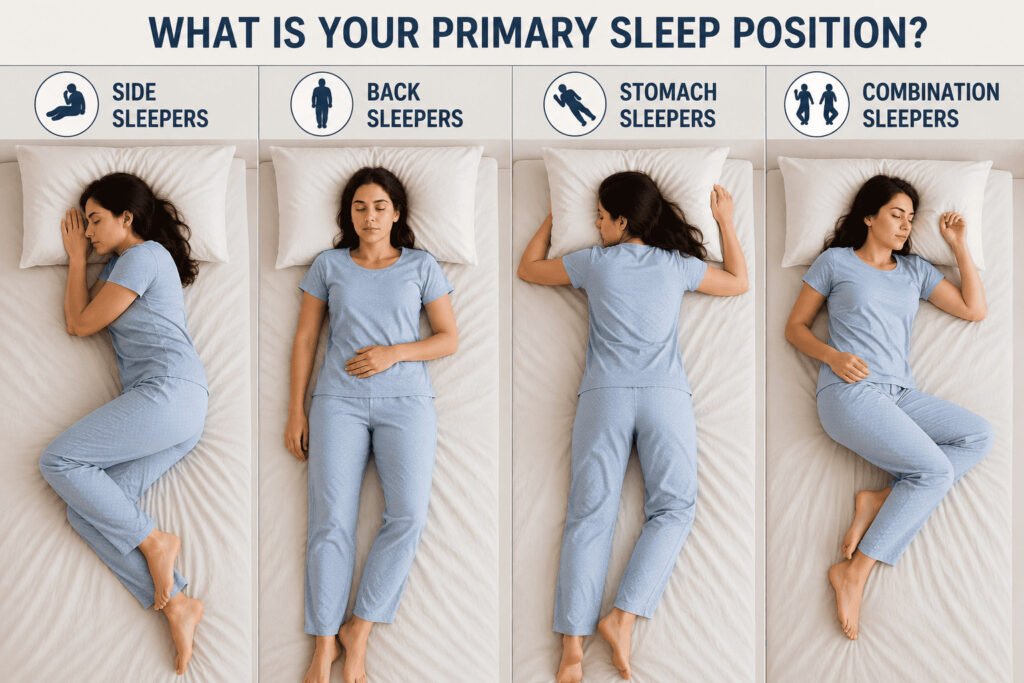
Sleep position is the single most important factor in determining the correct mattress firmness for any individual. The mattress needs to support the spine in neutral alignment — the natural S-curve without excessive bowing or flattening — and the correct firmness for neutral spinal alignment varies significantly depending on how the body is positioned during sleep.
Side sleepers
Side sleepers need a softer to medium mattress. When sleeping on the side, the hips and shoulders are the two widest points and need to sink slightly into the mattress surface to allow the spine to remain straight. An excessively firm mattress may end up causing pressure points at the hips and shoulders for a side sleeper and also the spine will be forced into a lateral curve – which will cause hip pain, shoulder pain and stiffness of lower back.
- Recommended firmness: soft to medium (3-5 on a 10-point scale)
- Best mattress type: memory foam (( hugs and supports the hip and shoulder contours), soft pocket sprung, or hybrid with a soft top layer
Back sleepers
Back sleepers require a mattress ranging from medium to medium-firm. When one is lying on the back, the lumbar area slightly arches away from the mattress surface.
A mattress that is too soft lets the hips sink deeply and flatten the lumbar curve; a mattress that is too firm keeps a space between the lower back and the mattress which leads to prolonged muscle tension. Medium firmness gives the balanced support that enables the lumbar curve to be nicely supported without an extreme depression.
- Recommended firmness: medium to medium-firm (5-7 on a 10-point scale)
- Best mattress type: pocket sprung, hybrid, or medium-density memory foam
Stomach sleepers
A firmer mattress is necessary for stomach sleepers. The front sleeping position usually causes the hips to go down deeper than other parts, which in turn makes the lower back arch into an extension that may result in major back pain later on if the mattress enables too much sinking. A firm mattress gives the opposite force needed to maintain the hips at a height which stops the lower back from getting into an extended position
- Recommended firmness: medium-firm to firm (6-8 on a 10-point scale)
- Best mattress type: firm pocket sprung or firm hybrid; memory foam is generally not recommended for stomach sleepers as it conforms too closely around the hips
Combination sleepers
Most people change position during the night to some degree. For combination sleepers — those who regularly shift between back and side sleeping — a medium firmness that serves both reasonably well is the most practical choice. Those who switch between all three positions may benefit from a zoned mattress (see below) or a mattress with a responsive surface that adapts quickly to position changes.
The Main Mattress Types
Pocket Sprung Mattress
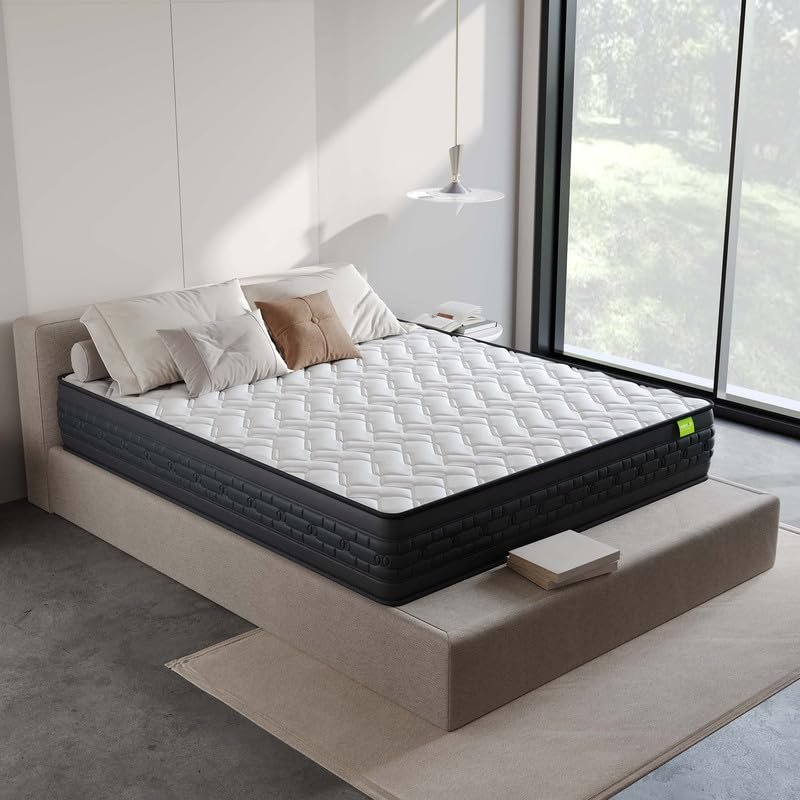
Pocket Sprung Mattress Double Medium Firm – Buy from Amazon – Brand – Wakeup India Store
Pocket sprung mattresses have the springs separated from each other by enclosing each spring in a fabric pocket, unlike the traditional open-coil mattresses that have the springs interconnected. Since every spring is independent, a pocket sprung mattress adapts to the pressure and positioning of various parts of your body rather than moving as a whole. As a result, they are far superior to open-coil mattresses in reducing the sharing of movement in double beds (one partner’s movement is less likely to disturb the other) and also in giving varied support to different parts of the body.
Pocket sprung mattresses are the most widely sold and most widely recommended type in the UK market. They are available across the full firmness range from very soft to very firm, in a wide price range from budget to luxury, and they breathe well — maintaining a cooler sleeping temperature than foam-only alternatives.
- Pocket count: A mattress with a higher pocket count (1000+ for a double) consists of tighter, highly responsive springs which offer better body contouring. Economic versions might have 400-600 pockets; luxury ones 2000+.
- Best for: back sleepers and combination sleepers primarily; available in soft versions for side sleepers
- Price range: £200-£1500+ for a UK double
Memory Foam Mattress
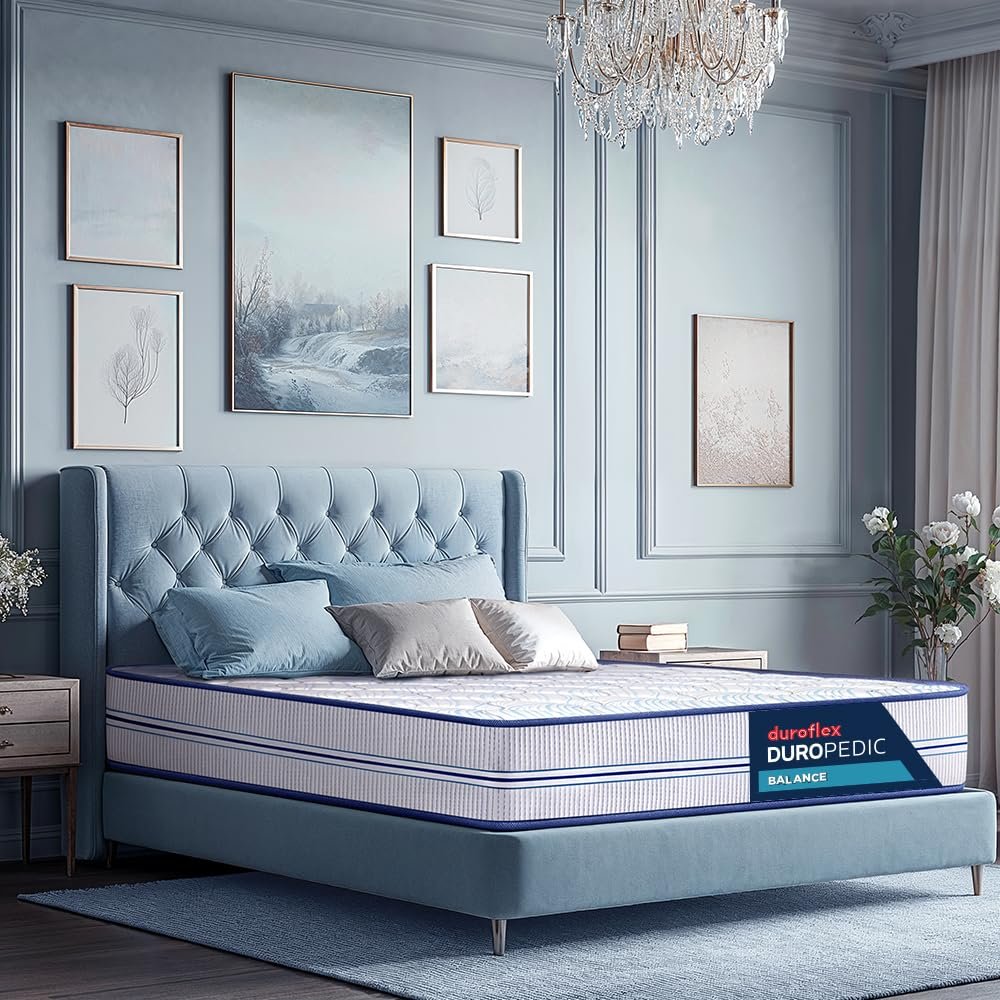
Memory Foam Mattress Medium Firm Double – Buy from Amazon – Brand – Duroflex Store
Memory foam mattresses contain viscoelastic polyurethane foam which reacts to bodyheat and pressure by becoming softer. This high-level of body-conformance property allows it to cradle the sleeper’s body accurately while also spreading weight uniformly on the surface of the mattress. Thanks to this feature memory foam alleviates pressure points – especially in the areas of shoulders, hips, and knees – which is why memory foam is an excellent choice for side sleepers who are prone to feel pressure point aches on hard surfaces. Many a times bedroom decor looks excellent with Japandi bedroom decor, an ideal bed frame for the quality mattress.
The biggest drawback of memory foam is probably that it retains heat. The conventional type of memory foam actually captures and holds the body heat, so the surface where you sleep might end up feeling quite warm as the night goes on. The newer types of memory foam try to fix this problem by using open-cell foam structures and adding gels, but still, foam mattresses usually tend to be a bit warmer compared to pocket spring ones.
- Best for: side sleepers who need pressure point relief; people with joint or hip pain
- Avoid if: you sleep hot or in a warm bedroom
- Price range: £150-£800+ for a UK double
Hybrid Mattresses
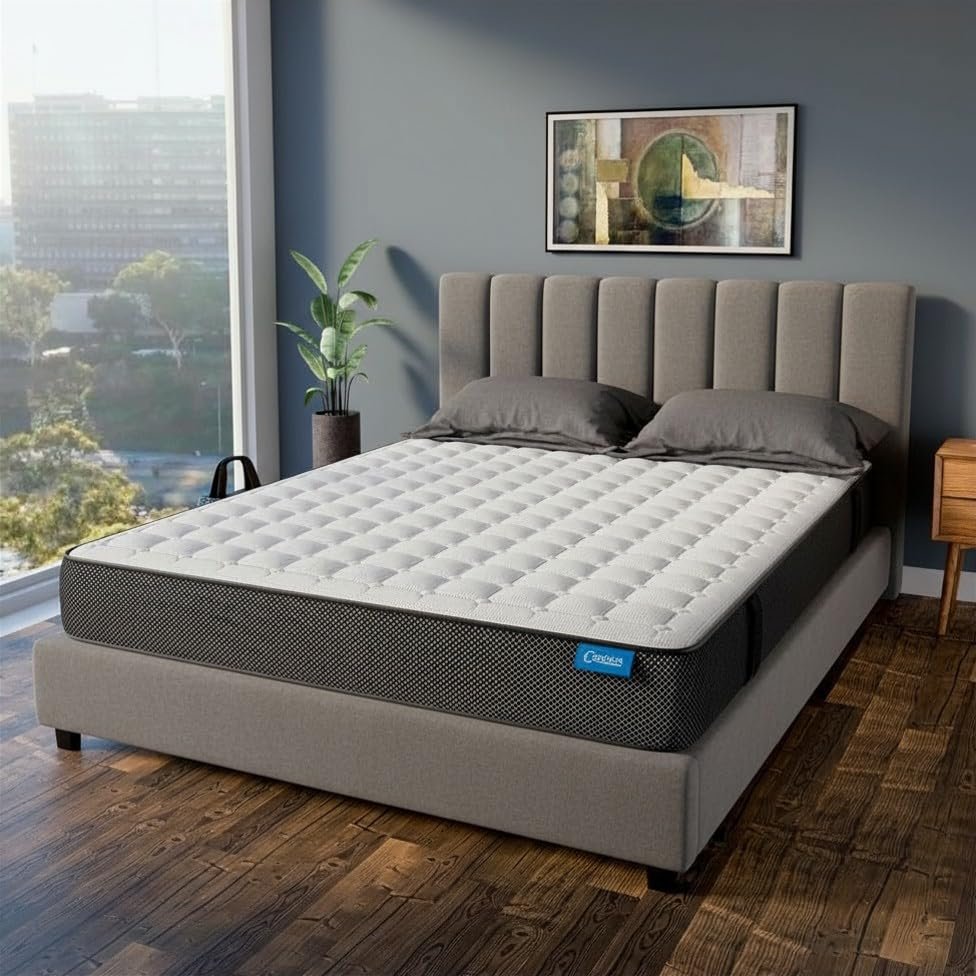
Hybrid Mattress Pocket Spring Memory Foam Double – Buy from Amazon – Brand – Comforto Store
Hybrid mattresses have a layer of pocket springs as a base and a layer of memory foam or latex as a comfort layer on top. Their goal is to get the pressure relief that comes from foams body-contouring feature combined with the breathability, springiness, and motion isolation features of pocket springs. They can be considered the most flexible type of mattress for most sleepers since each technology only has one major limitation: the pressure points of the pure springs and the tendency of pure foams to retain heat.
Quality hybrids are typically more expensive than equivalent single-technology mattresses, but represent good value for sleepers who have found pure spring mattresses too firm and pure foam mattresses too warm.
- Best for: combination sleepers; anyone who has found pure spring too firm or pure foam too warm
- Price range: £250-£1200+ for a UK double
Latex Mattresses
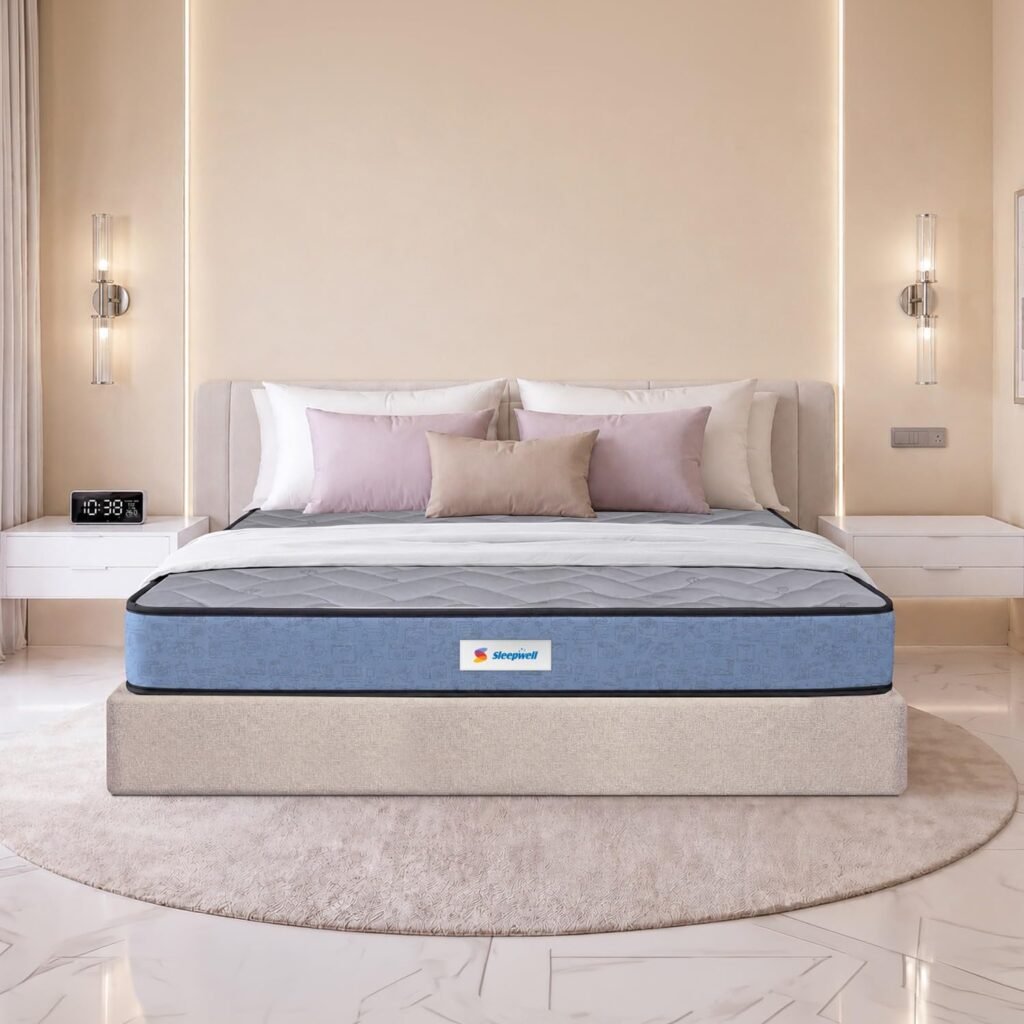
Latex Mattresses – Amazon Buy – Brand – Sleepwell Store
Latex mattresses use natural or synthetic rubber foam, which shares the body-contouring quality of memory foam but with a more responsive, springier feel — latex pushes back against pressure rather than absorbing it. This attribute gives latex mattresses a support quality that some people call ‘buoyant support’. In addition, natural latex is much more ventilated than memory foam and it is naturally dust mite resistant, therefore it becomes an excellent option for those who are allergic.
As one of the pricier mattress materials, natural latex; however, synthetic latex, with its akin performance, is a more economical choice.
- Best for: side and back sleepers who want contouring support without the slow-response feel of memory foam; allergy sufferers
- Price range: £400-£2000+ for a UK double (natural latex)
Firmness — Understanding the Scale
Most mattress retailers use a firmness scale from 1 to 10, or descriptive labels from ‘soft’ to ‘extra firm’. These scales are not standardised across brands — a ‘medium-firm’ from one manufacturer may feel different from a ‘medium-firm’ from another — so firmness labels should be treated as a guide rather than a precise specification.
- Soft (1-3): suitable for lighter sleepers (under 65kg) and side sleepers. Not recommended for heavier people as the mattress provides insufficient support.
- Medium (4-6): the most popular firmness range, suitable for most back sleepers and many side sleepers of average weight. The ideal and most adaptable option for partners who have different sleeping
- Medium-firm (6-7): suitable for back sleepers, heavier sleepers (over 90kg), and most stomach sleepers. Provides firm support with a degree of surface comfort.
- Firm (7-9): The mattress can support stomach sleepers, heavier sleepers, as well as those who like a firmer sleeping Provides maximum support with minimal surface contouring.
- Extra firm (9-10): a specialist choice for very heavy sleepers, those with specific back conditions, or those who prefer to sleep on a very hard surface.
✦ PRO TIP: Heavier people (over 90kg) will experience any mattress as effectively softer than lighter people because their greater weight causes more depression into the surface. If you are above average weight, choose one firmness category firmer than the general guidance for your sleep position suggests.
How Long Does a Mattress Last?

Waterproof Mattress Protector Fitted Sheet
A quality mattress can be expected to remain reliable for 8 to 10 years before the layers of support and comfort are sufficiently worn out to justify getting a new one. Lesser quality mattresses might require replacement after 5-6 years; high-end pocket sprung or latex mattresses can continue to serve one well for 10-15 years if cared for properly.
Indicators for replacing a mattress are sunk areas or the trace of body shape that doesn’t disappear when the mattress is empty, spring noise, waking up with back or joint pain that disappears during the day, regularly sleeping better in hotels or other places, and the mattress just not feeling as comfortable as it was 3-4 years ago. Mattress gives amazing effect with quilted bed covers, it enhances the look of the bedroom.
Mattress Size Guide
- Single (90 x 190cm): suitable for one adult in a small bedroom; standard children’s and teen bedroom size
- Small double / three-quarter (120 x 190cm): fits two people in a small room but is crowded for two adults sleeping comfortably
- Double (135 x 190cm): the standard UK size for a couple’s bedroom; minimum practical size for two adults
- King (150 x 200cm): the most popular bedroom size for couples in the UK; provides meaningful additional width and length compared to double
- Super king (180 x 200cm): the largest standard size; provides the most sleeping space but requires a large bedroom (ideally 4 x 4.5 metres minimum)
📌 NOTE: US and UK mattress sizes do not correspond directly. A UK King (150 x 200cm) is approximately equivalent to a US Queen (152 x 203cm). A UK Super King (180 x 200cm) is approximately equivalent to a US King (193 x 203cm). If purchasing a mattress online from a US retailer for a UK bed frame, check dimensions carefully.
Mattress Toppers — An Alternative to Replacing
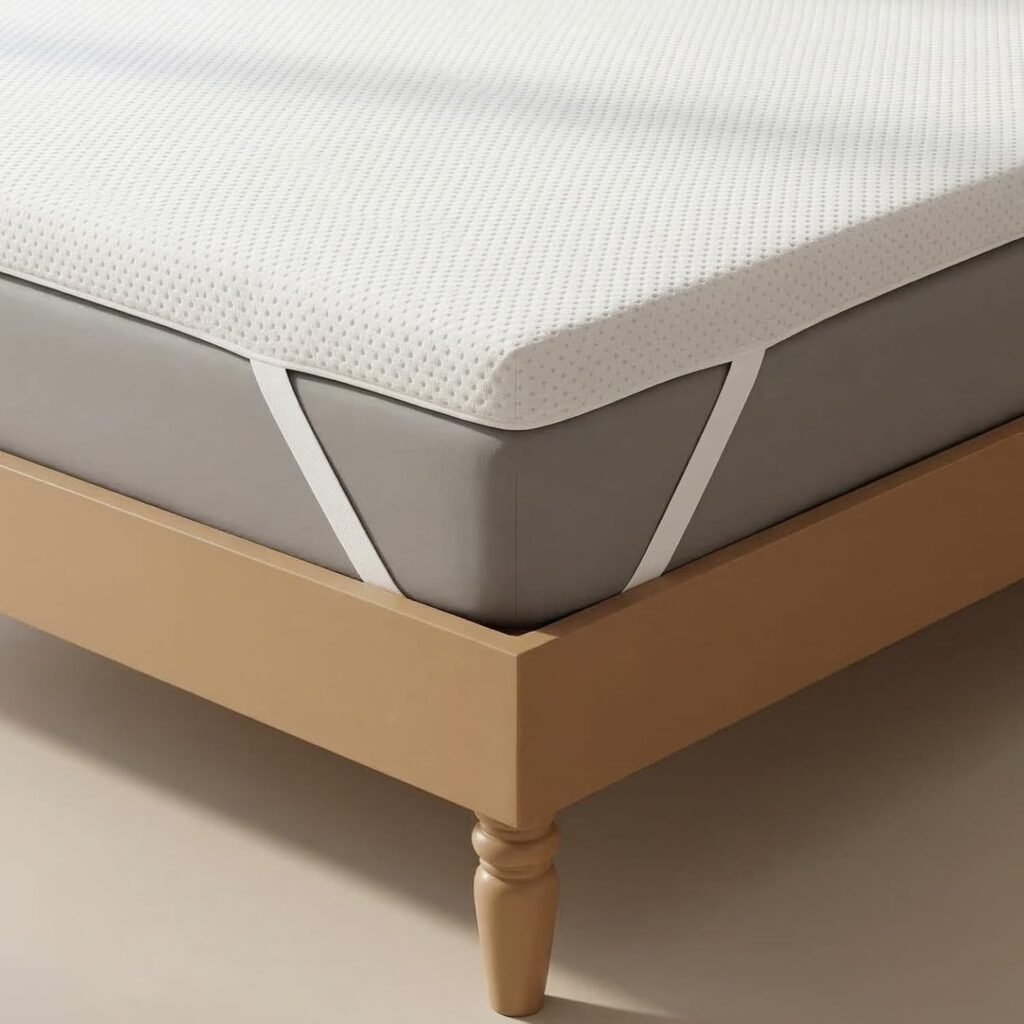
Mattress Topper Memory Foam Double
If an existing mattress is structurally sound (no sagging, no spring noise) but the comfort level is slightly wrong — too firm or not quite soft enough — a mattress topper can adjust the feel without the cost of a full replacement.
Memory foam toppers (typically 5-10cm thick) soften the feel of a firm mattress and add pressure-point relief. Mattress toppers do not work in the opposite direction — they cannot make a soft mattress firmer. A firm mattress with a memory foam topper is one of the most effective and most affordable ways to achieve the ‘medium’ comfort level for a side sleeper without buying a new mattress. Also it is important bedroom lightings ideas to be taken into consideration also, good lighting supports good sleep quality.
Budget Guidance
- Under £200: budget entry level. Typically open-coil or basic memory foam. Acceptable for occasional guest bedroom use; not ideal as a primary sleeping surface for more than 2-3 years.
- £200-£400: mid-range. Quality pocket sprung or memory foam. A reasonable primary mattress choice for most people.
- £400-£700: premium mid-range. Higher-specification pocket sprung, hybrid, or natural latex. Will perform significantly better and last longer than budget options. The recommended spending level for anyone who sleeps on the mattress nightly.
- £700+: luxury. Very high pocket count, quality natural latex, or premium hybrid. Meaningful additional performance and longevity benefits. Worth the investment for anyone who sleeps poorly or has specific back or joint health needs.
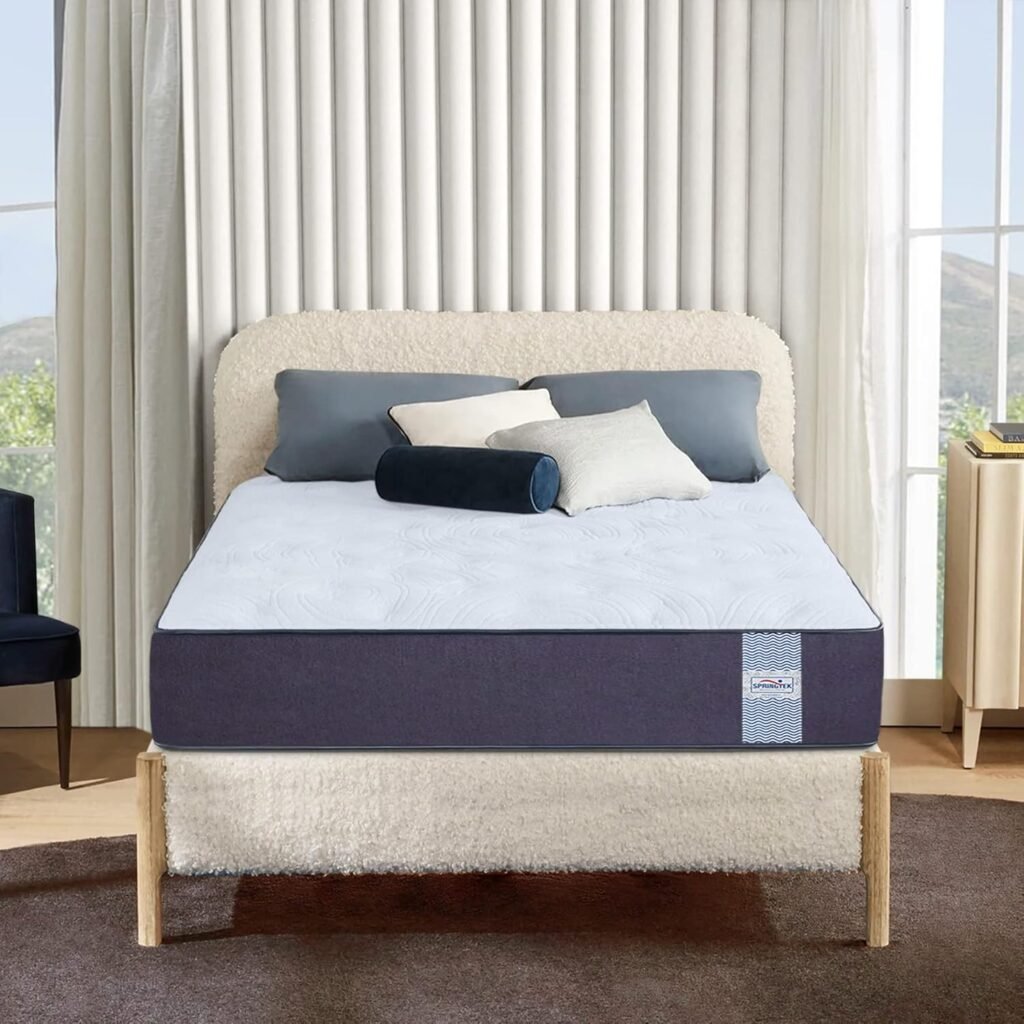
Single Mattress Medium Firm Budget – Buy From Amazon – Brand – Springtek Store
Final Thoughts
A mattress is not a decorating decision — it is a health decision with significant consequences for eight or more years of daily life. The investment of time and money in choosing the right one is consistently returned in better sleep quality, better morning energy, and less back and joint discomfort.
The approach to decision-making is really quite simple: figure out what your main sleeping position is, pick a firmness range that matches that position, go for the mattress type that aligns with your temperature and pressure relief requirements, and then, depending on your budget, get the most expensive one you can afford in the premium mid-range (between £400 and £700 for a UK double). This purchase won’t just look better; it will really work better and last a lot longer than any budget option.
Use the 30- or 100-night trial periods offered by most online mattress companies — the only reliable way to know whether a mattress is right for your body is to sleep on it for several weeks, not to lie on it for three minutes in a showroom.
Frequently Asked Questions
Q: What firmness mattress is best for back pain?
A: Typically, a medium-firm mattress (6-7 on a 10-point scale) is the best choice for most individuals with generalised lower back pain as it offers a good deal of support and alleviates pressure simultaneously. Studies about mattress firmness and backache keep demonstrating that medium-firm mattresses bring about less pain and better sleep quality when compared to both soft and very firm ones. Nevertheless, your sleeping position does matter: if you are a side sleeper with back pain, you could do well on a softer mattress that alleviates pressure on hips and shoulders, while back pain in stomach sleepers calls for a firmer mattress to stop the sinking of hips.
Q: How do I know if my mattress is too soft or too firm?
A: If your mattress is too soft: you might wake up with lower back pain (hips sinking too deeply), feel ‘stuck’ in the mattress while changing your position, or feel springs through excessive foam compression. If your mattress is too firm, you might wake up with hip, shoulder, or joint pain (pressure points), feel the urge to move in order to relieve pressure one or more times in your sleep, or to feel overall stiffness especially if you prefer sleeping on your side. The right firmness is one that feels comfortable immediately upon lying down and also allows for easy position changes.
Q: Memory foam or pocket sprung — which is better?
A: Neither is always better – the right decision depends on what you value most. Memory foam: great for pressure point relief (side sleepers, joint pain), very body-contouring. Pocket sprung: good breathability (cooler sleeping), more lively feeling, less disturbed by movements in double beds, also a larger price range. A hybrid mattress is a combination of the two. For example: if you tend to sleep hot or have a partner who moves a lot, pick pocket sprung or hybrid; if you have pain in your hip or shoulder areas, go for memory foam or a soft hybrid.
Q: How often should you replace a mattress?
A: It is recommended to replace your mattress every 8 to 10 years if it’s a high-quality one; for a cheap mattress, replacement is needed every 5 to 6 years. However, a practical test is a lot easier than relying on a calendar: if you wake up feeling more tired than at hotels or other places, if there are sagging or body impression marks on the mattress surface, or if you hear spring noises, these are strong indications that you need a new mattress regardless of its age.
Q: What is the best mattress for couples with different sleep preferences?
A: When it comes to couples with very different tastes in mattress firmness, the best solution is a dual-firmness or zip-and-link mattress (two single mattresses of different firmness joined together under one fitted sheet). For couples who have only minor differences in their preferences, choosing a mattress that is medium firm and adding a topper of memory foam on one side is a fair trade-off. Taking a mattress from the medium range (5-6) will allow the greatest variety of body types and sleep positions than either soft or firm and it is the most neutral choice in terms of risk.