
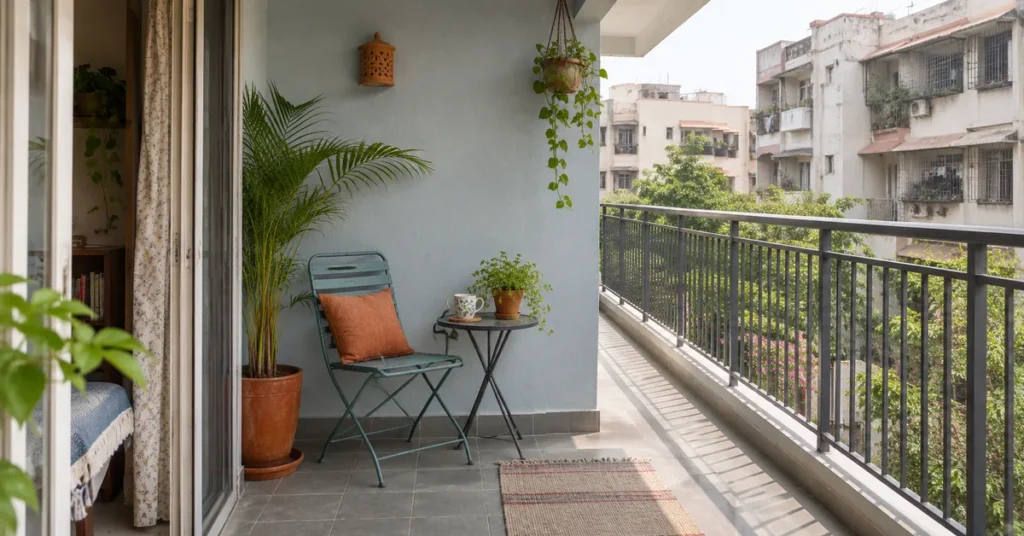
When a neighbour’s window looks straight onto your balcony, covering the whole railing can leave you with the same problem and less daylight. Start with the spot where you want privacy: your morning coffee chair, a dining corner or the glass door into your living room. Then work out where someone would be looking from.
A railing screen can help when the view comes through the bars or glass. A panel beside your chair can do more when the next balcony is at the same level. And if the main concern is people seeing into your flat after dark, a curtain inside the door may be all you need.
Find the view you want to block
Sit where you normally sit and look back towards the street, nearby balconies and windows. Then stand in the same spot and check again. A screen that hides you while seated may leave you visible when you’re standing. Check the view from just inside the balcony door, too, especially if your sofa or dining table faces it.
- From below: Look for a clear view through the open bars or glass below the top of your railing. This is where a railing screen may help.
- From the side: Look towards the balcony next door. If you can see it from your chair, a screen along one side or a seat closer to a solid wall may help.
- From across or above: Look towards the windows that face your balcony. A low screen may do little for a view from an upper floor, especially if you sit near the outer edge.
Before shopping, measure the usable floor space with the door open and the chair pulled out. Leave room to walk through and reach the drain. For a railing screen, measure only the section you want to cover and check what mounting points the product requires. Glass panels, metal bars and solid parapets offer different mounting options.
7 balcony privacy ideas worth considering
1. Cover the part of the railing people can see through
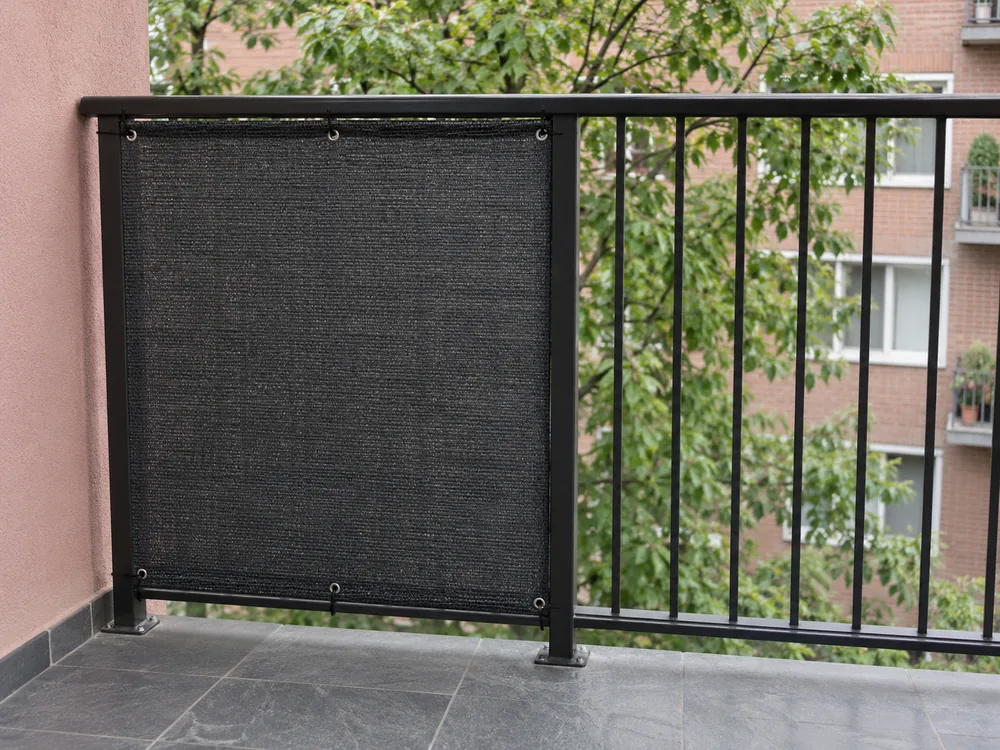
A railing screen takes up very little floor space, which makes it worth considering on a narrow balcony. Look at it from the seat you want to screen. If the sightline crosses the railing above the top edge, covering the glass or bars underneath will make little difference. If the view is mainly through the railing, you may only need to cover the section in front of your chair.
Compare fabric or mesh samples in daylight before choosing the colour and density. Open mesh can preserve more of the view, but you may still see movement and shapes through it. Check that the manufacturer allows the proposed fixing on your railing type.
As an Amazon Associate I earn from qualifying purchases.
Compare balcony railing privacy mesh on Amazon India
2. Screen one side of the seating area
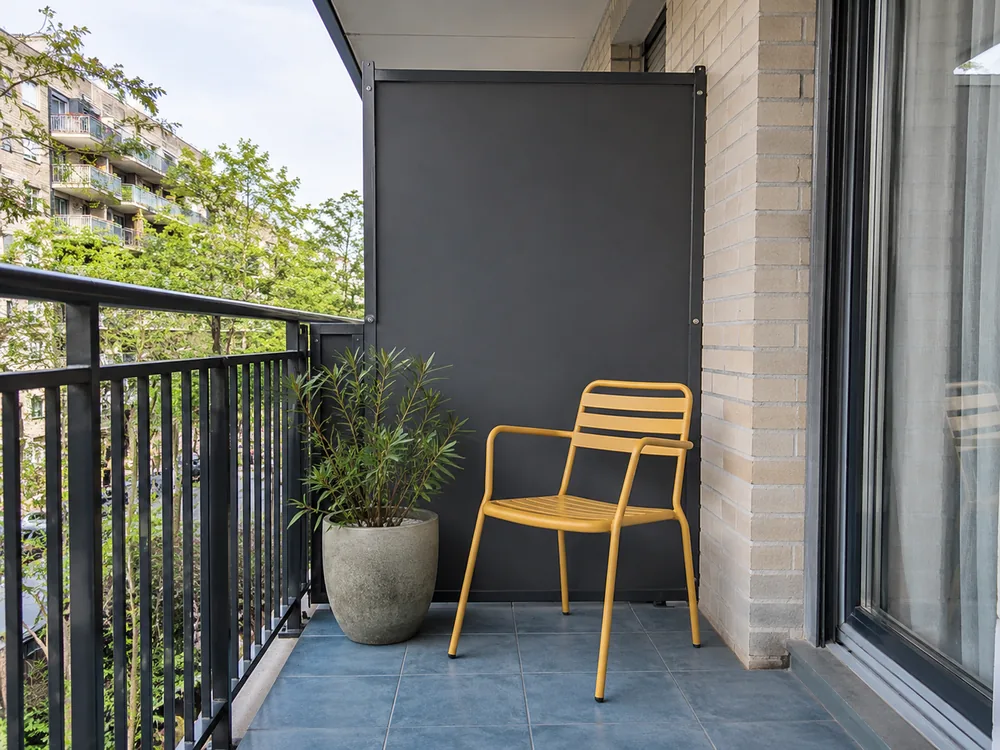
If the neighbour next door can see your chair, concentrate on the shared side. A narrow outdoor panel between the chair and that view can leave the rest of the balcony open. If there’s already a solid wall or a deep recess, try moving your chair into it first. On a balcony barely wide enough for two chairs, one chair tucked into the corner may be more comfortable than fitting a screen stand into the walkway.
Check how much room the feet or approved fixings need. Some products that look freestanding in photos still require anchoring. The IKEA YTTERSKÄR instructions, for example, require it to be secured and say to avoid use in strong winds.
3. Use one leafy planter where you need cover
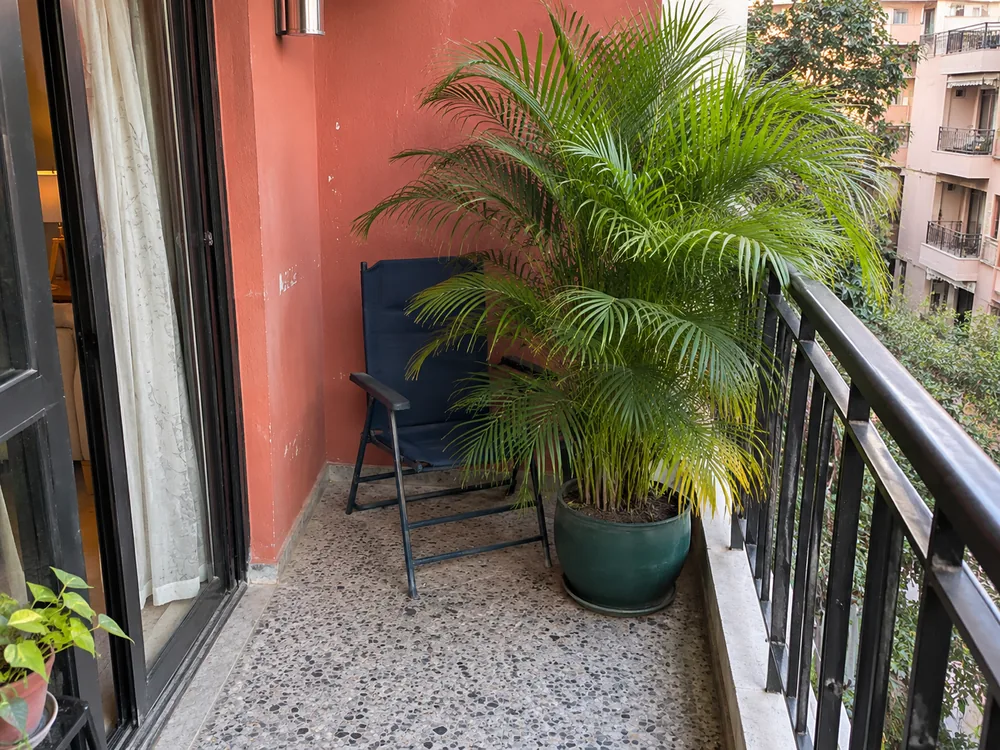
A leafy planter can soften a view from next door and make a seating corner feel less exposed. Look for foliage at your seated eye level. A tall plant with a bare trunk may look impressive in the shop and still leave a clear view underneath. Pick a plant that suits your balcony’s light and exposure, and judge how much cover it offers at its current size.
Work out the footprint of the actual pot, including its saucer, before buying. Keep it clear of the door and drain. If you are considering a large container, check with building management first because a pot filled with wet soil can be heavy. Avoid placing pots on the railing or where they could be knocked over the edge.
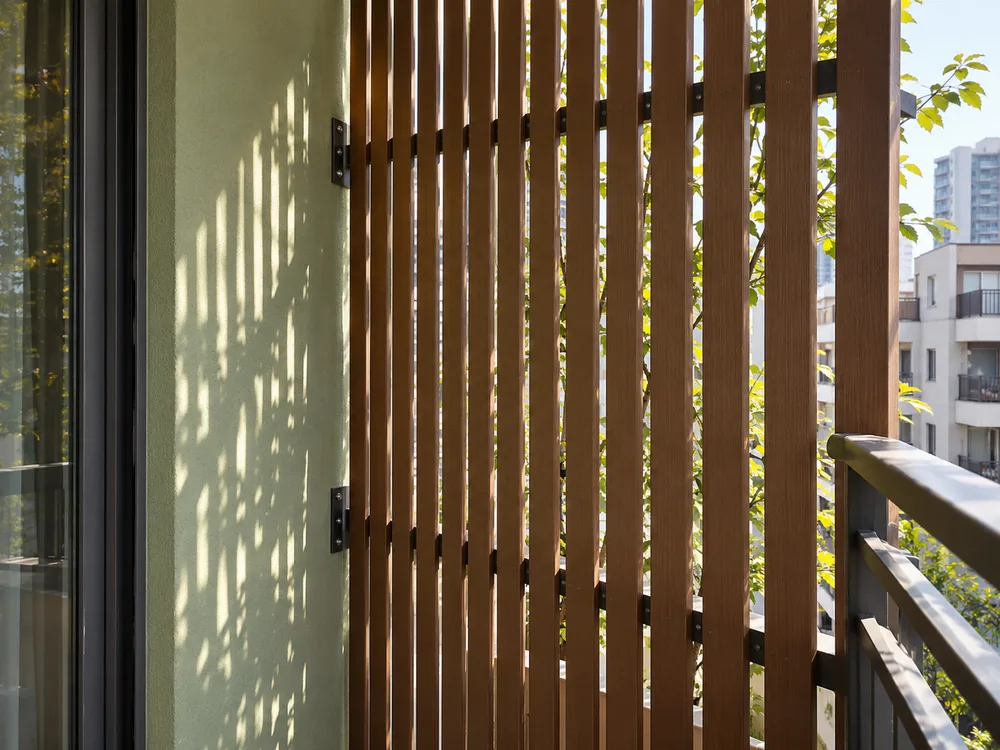
4. Try a slatted screen for partial cover
Slats can break up a direct view while leaving some gaps for light. They make sense if you still want to see trees or sky from the chair. The angle matters, though. Straight gaps may give someone across from you a clear view, even if the screen looks solid from the side. Look at the slats from the direction you are trying to screen before settling on a panel.
Compare the footprint with a railing screen if floor space is tight. On an exposed balcony, confirm that the product, mounting method and location are suitable before buying. A screen with gaps still needs to be installed as directed.
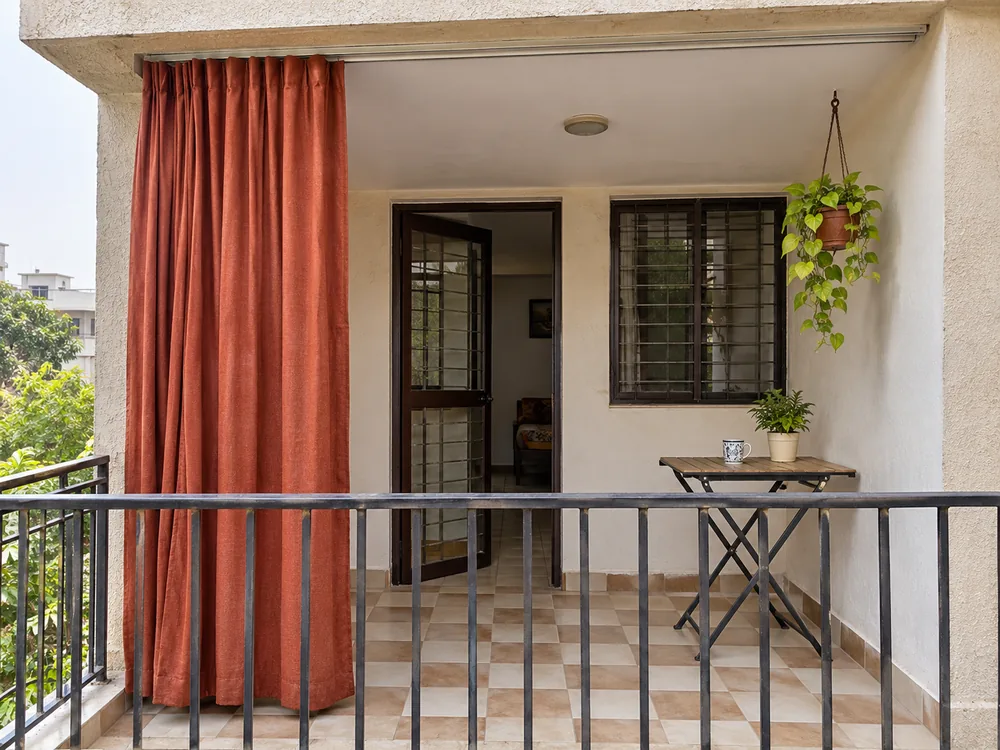
5. Add outdoor curtains to a sheltered recess
A curtain is useful on a recessed balcony when you want more privacy at certain times, such as during dinner. You can draw it across the exposed side, then pull it back to get the light and view again. Check where the fabric will sit when open, so the stack stays clear of the door and doesn’t crowd the seating.
Choose outdoor-rated fabric and hardware suited to the location, and follow their guidance on wind and securing the curtain. If wind regularly funnels through the balcony, loose fabric may be a poor fit. If you’re also dressing the door from indoors, MintBlues’ curtain length guide can help with that measurement.
Browse outdoor curtains on Amazon India
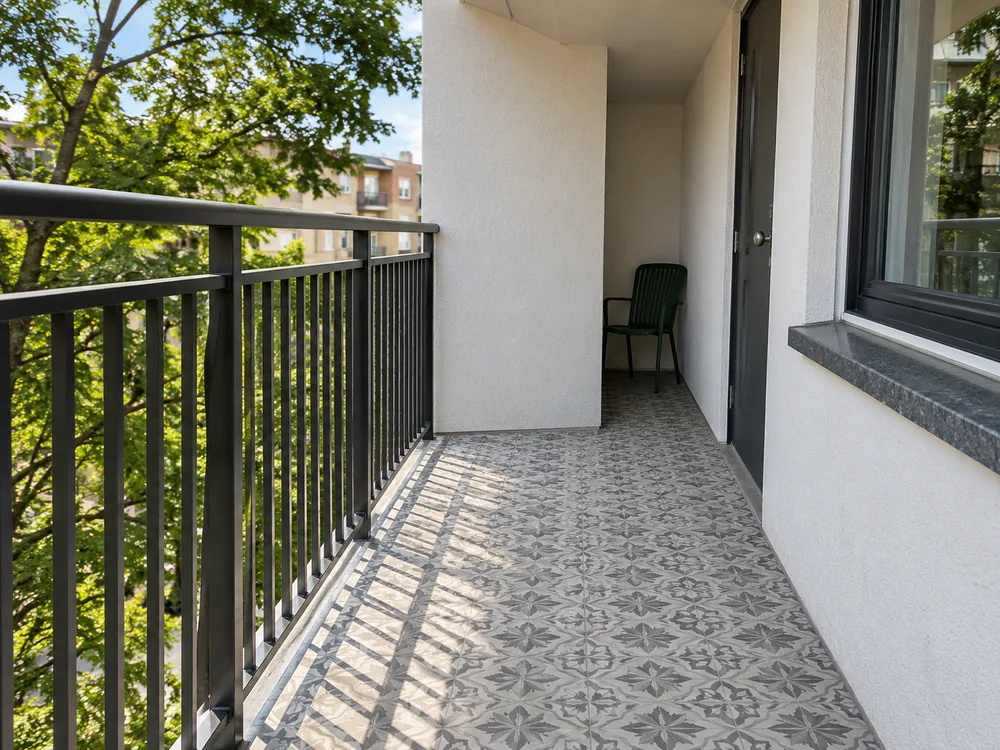
6. Put the seat deeper inside the balcony
If you rent and the building limits what you can attach outdoors, change the layout first. On a balcony with a solid side wall, turn the chair so its back sits closer to the wall, then check the sightline again before adding anything. A low side table can be easier to fit than a wide planter or a second chair.
This works best when the balcony already has some shelter or a corner to use. A shallow balcony facing another block may offer very little room to retreat. For a tight balcony, try the new position with your existing furniture and make sure the door and walkway still work before spending money.
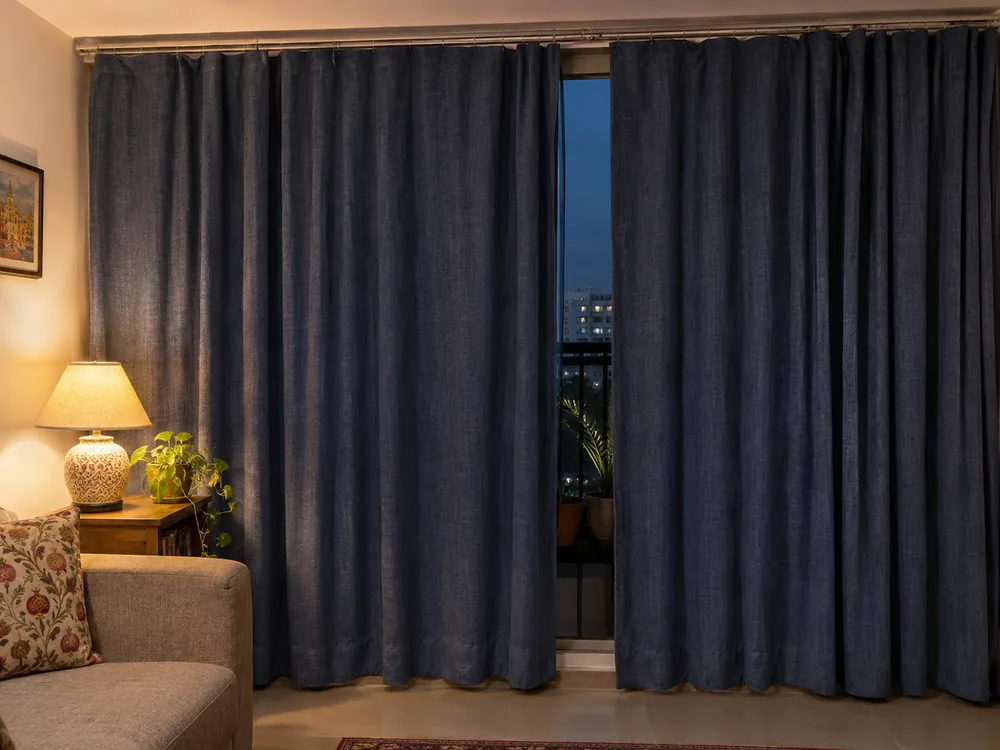
7. Cover the glass door from inside after dark
If the problem is an illuminated living room visible from outside, deal with the glass door separately. Sheers soften daylight, but how much they conceal depends on the fabric and the lighting on each side. If you want more cover after dark, add a denser layer and check the view with the room lights on.
The sheer curtain guide explains where light fabrics work well, and the sheer versus blackout comparison helps when you want to keep daytime light. For rental-friendly options on the room side, see how to hang curtains without drilling.
Which option fits your balcony?
| What you want to screen | Start here | Check before buying |
|---|---|---|
| The view through front bars or glass | A railing screen, where allowed | Mounting points, coverage, daylight and wind exposure |
| The balcony next door | Move the chair, then consider a side panel | Panel footprint, mounting and seated sightline |
| A seating corner with space for a pot | One leafy planter | Foliage height, pot weight and drainage |
| A sheltered side you want to open and close | Outdoor curtain | Approved mounting, wind limits and space for the fabric when open |
| The living room after dark | An indoor curtain with a denser layer | Coverage around the glass and how it looks with the lights on |
What to check if you rent or live in an apartment building
Ask your landlord or building management which screens, colours, heights and fixings are allowed before ordering. In an Indian housing society, ask whether balcony changes visible from outside need approval. A screen can be removable and still count as an exterior change under your building’s rules.
On an exposed balcony, use the product’s mounting and wind guidance for the exact model. If the guidance doesn’t cover your railing or location, ask building management or a qualified installer before mounting it. On a balcony that gets frequent rain, check how easily you can clean or dry the screen and keep access to the drain. Leave doors and shared or required access routes clear.
Start with a five-minute layout test. Move the chair, open the door and check what you can still see from where you sit. If you still need a screen, you’ll know which part of the balcony it needs to cover.
Balcony privacy FAQs
How can I make a rental balcony more private without drilling?
First try moving your chair behind a solid side wall or screening that seat with a leafy planter. If you need more coverage, ask whether your building allows a removable screen that attaches to your railing using the fixing method specified by its manufacturer. Check permission before buying, even if the screen comes off easily.
Can people see through a balcony privacy screen at night?
They may be able to, especially through open-weave mesh when the balcony is lit and the area outside is dark. Check a sample with a light behind it. If you need privacy after dark, compare denser materials and confirm that the product is suitable for your balcony’s mounting points and wind exposure.
How do you get more privacy from upstairs neighbours?
First try moving the seat deeper into a recessed balcony, where the slab above may interrupt some of the view. Sit in the new spot and check the angle to the upstairs window. A low railing screen is unlikely to help when someone is looking straight down. If your balcony is open overhead and moving the seat makes little difference, ask building management what overhead changes are allowed before shopping for any structure.


