The bedroom is the room where colour decisions matter most and where they are most persistently underestimated. People spend significant energy choosing the colour of their living room — a room they share with guests, a room that is seen and judged by others — while their bedroom receives the leftover decision: safe, neutral, easily reversed.
This is a miscalculation. Wherever you are, the bedroom is the one space that you practically only find yourself there – the big 8 hours or more of your day. One main component that dictates your mood from getting up to going to bed is the colour of your walls. The results of scientific studies on sleep and color are quite telling: certain hues do help you sleep better and relax your mind; on the other hand, certain colours will hinder your sleep. It’s something that interior designers have caught on to for quite some time, which is why the bedroom colour palettes in their works are totally different from the usual neutral magnolia of a standard rental property.
This guide covers the ten bedroom colour directions that interior designers are specifying in 2026, the reasoning behind each choice, and the practical guidance for applying each one in your own bedroom.
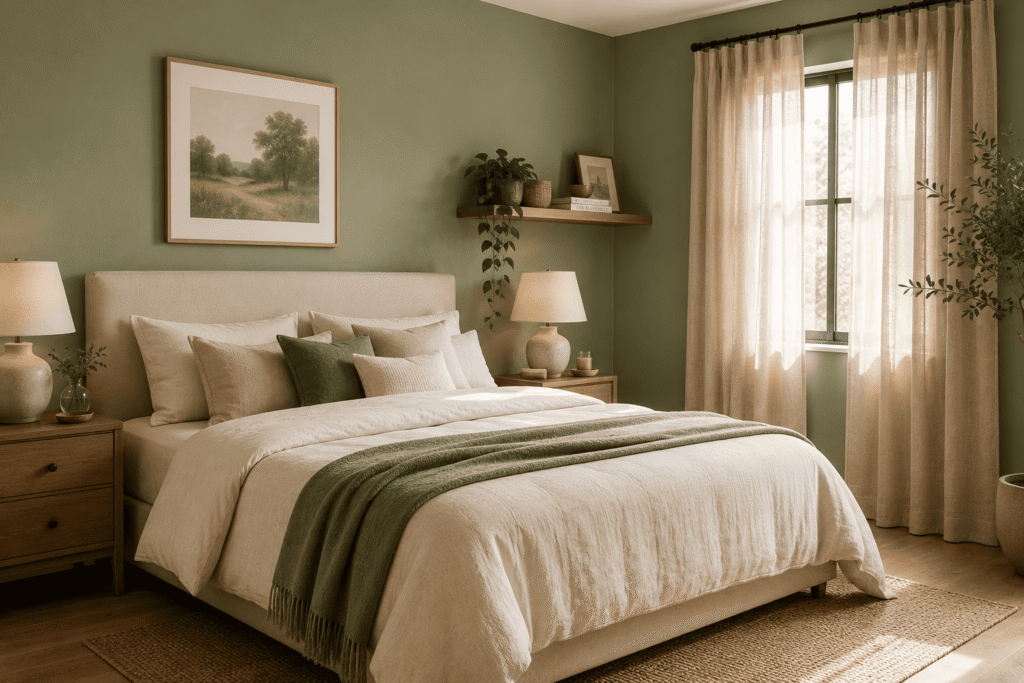
1. Soft Sage Green — The Defining Bedroom Colour of the Decade
Sage green has been the top choice for bedroom colours in professional interior designs for almost five years now, and this trend still seems to be getting stronger in 2026. The main reason is that it matches the psychological, aesthetic, and practical aspects of a space like no other colour.
Psychologically, green in all its forms connects to nature, growth, and calm — associations that are particularly supportive of the rest and restoration that bedrooms exist to provide. Sage specifically — muted, grey-inflected green — achieves this without the energy of brighter greens or the darkness of forest tones. It is a colour that quiets the mind rather than stimulating it.
In fact, sage green can be paired with an exceptional variety of materials almost effortlessly: cream and linen bedding in natural, warm hues, wood of any tone in warm shades, accents of brass and gold metals, small dosages of terracotta and almost any colour of curtain from ivory to deep sage or warm grey.
- Best sage paint shades: Farrow & Ball Mizzle, Dulux Sage Whisper, Little Greene Sage, Benjamin Moore Pale Laurel
- Best bedding with sage walls: cream, warm white, natural linen beige, or soft blush
- Best curtain colour: natural linen or warm cream — the contrast between the soft green and the warm neutral is one of the most naturally beautiful combinations in bedroom design, and one of the best combination is linen curtains for a sage green bedroom.
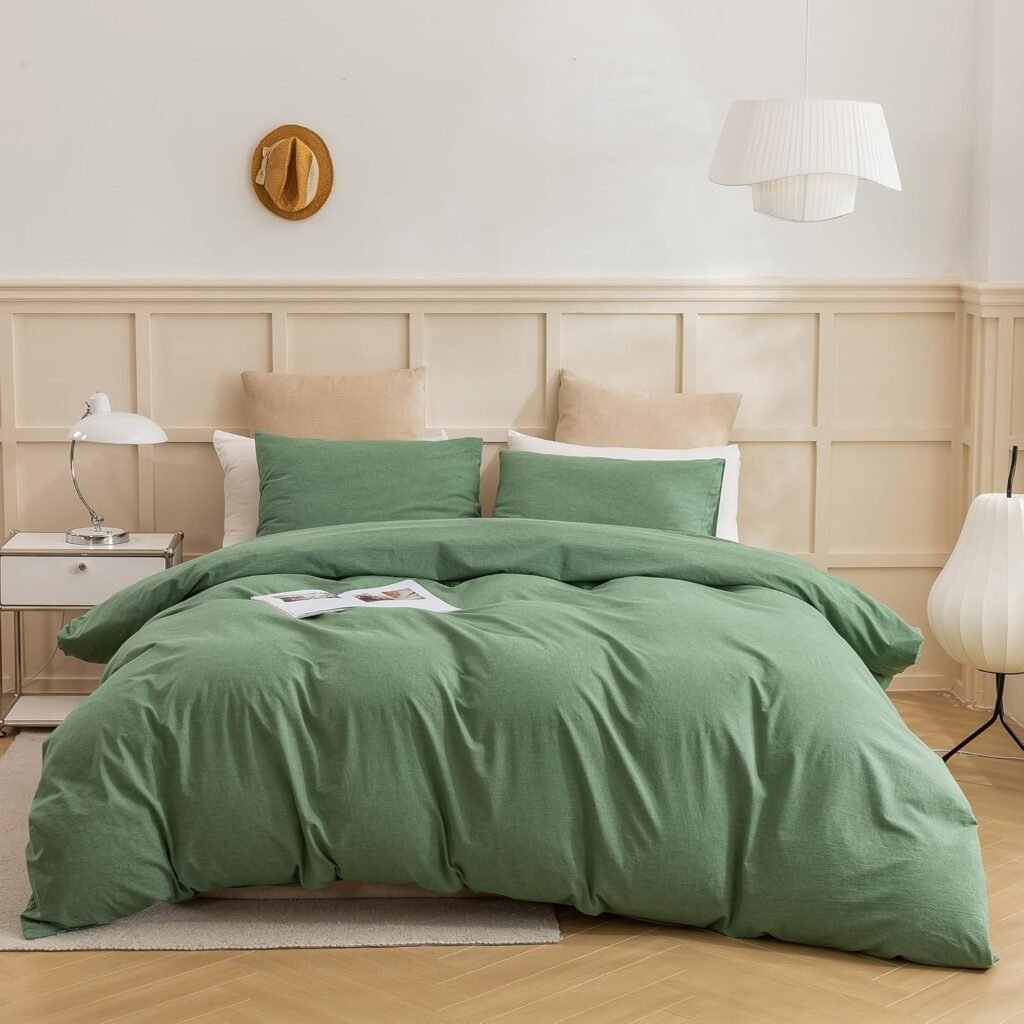
Sage Green Bedding Set Cotton Duvet
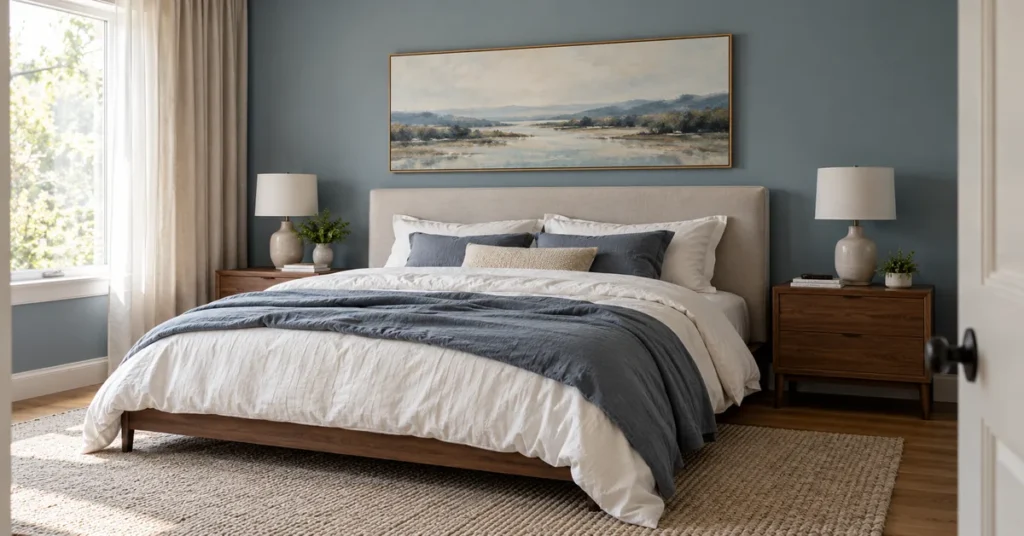
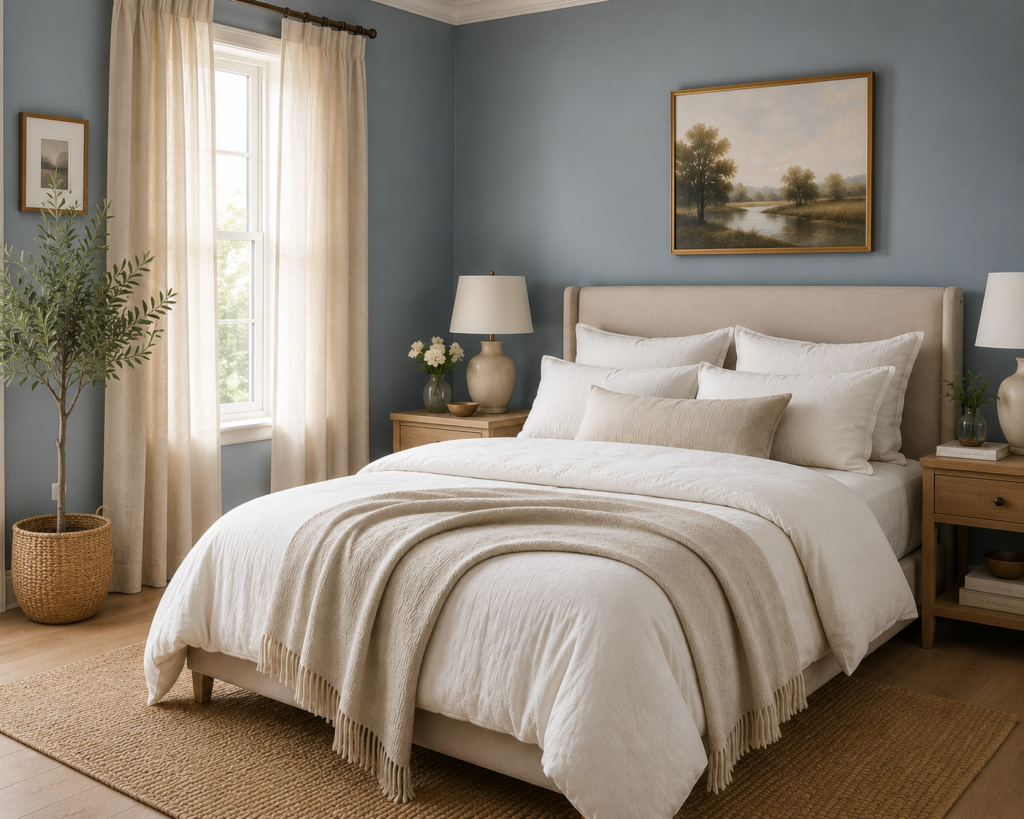
2. Dusty Blue — Calm, Considered, and Deeply Restful
Dusty, muted blue — not sharp primary blue or bright cobalt, but the blue of sky seen through cloud, of faded denim, of weathered coastal walls — is the bedroom colour combination choice that most reliably produces a sense of calm and spaciousness simultaneously. Blue is consistently associated with lower heart rate, reduced blood pressure, and improved sleep quality in environmental psychology research, and the dusty, unsaturated versions of blue achieve this without any sense of coldness.
Dusty blue walls in a bedroom, together with soft ivory bedding, wood furniture that is in its natural state, and warm white for ceiling and trim, make the room so restful that it looks as soothing as it feels to sleep there.
- Best dusty blue paint shades: Farrow & Ball Borrowed Light, Dulux Denim Drift, Little Greene Pale Wedgwood, Benjamin Moore Dusty Miller Blue
- Best bedding: warm white, ivory, or soft warm grey
- Best curtain colour: warm ivory or natural linen — the warmth of the curtain prevents the dusty blue from reading as cold
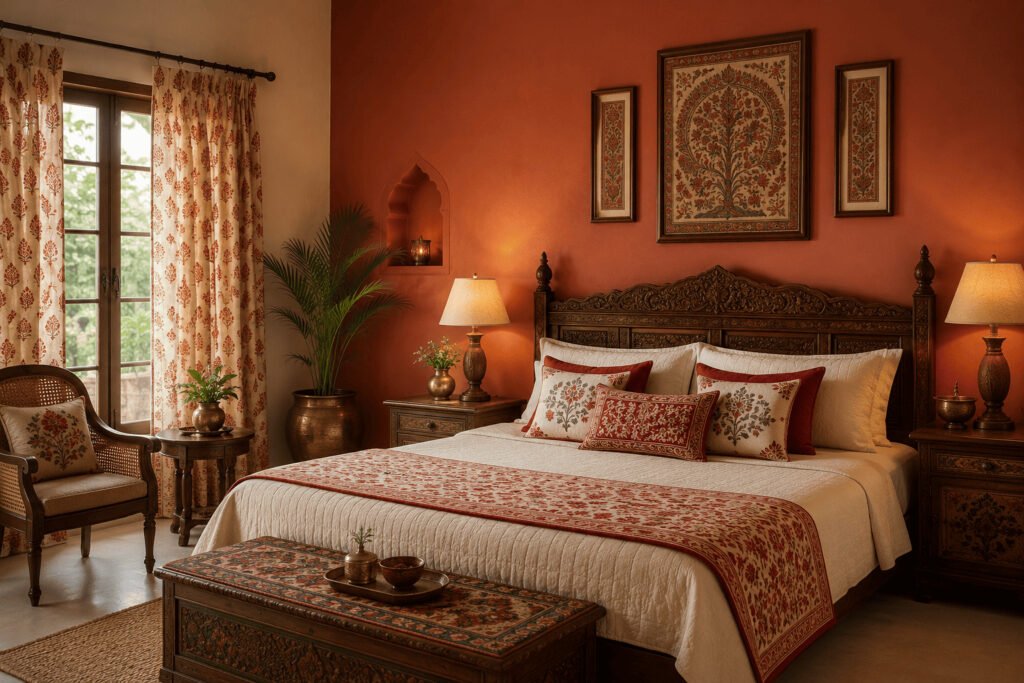
3. Warm Terracotta — the Grounded, Enveloping Bedroom
Compared to sage or dusty blue, terracotta in the bedroom is a much stronger color and it changes the mood of the room in a totally different way: warmer, more wrapping, more intimate. A terracotta bedroom is like a loving embrace – the warm earth-red colour encloses the room in a degree of warmth that the cool colours just cannot achieve.
This colour is especially good in north-facing bedrooms – those rooms that get cooler, indirect light and can often feel cold or grey. Terracotta effectively neutralizes this and, by contrast, it brings the room to a warm level that the absence of the sun’s direct warm light would otherwise cause.
- Best terracotta paint shades: Farrow & Ball Red Earth, Dulux Terracotta Spice, Little Greene Tangerine Dream, Benjamin Moore Pueblo
- Best bedding: cream, warm white, oatmeal, or a complementary warm rust
- Best curtain colour: warm cream or warm white linen — keeps the room warm without adding another competing colour
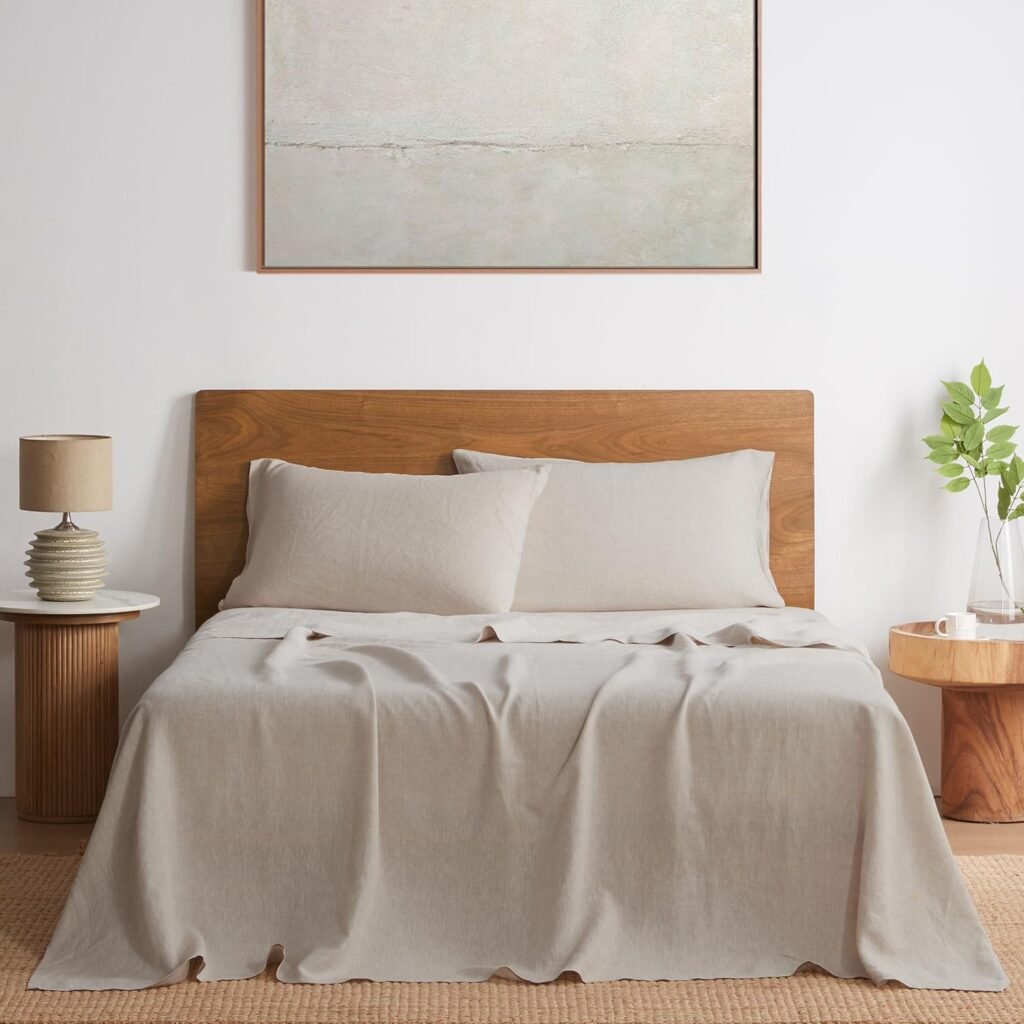
Linen Bedding Set Cream Natural King
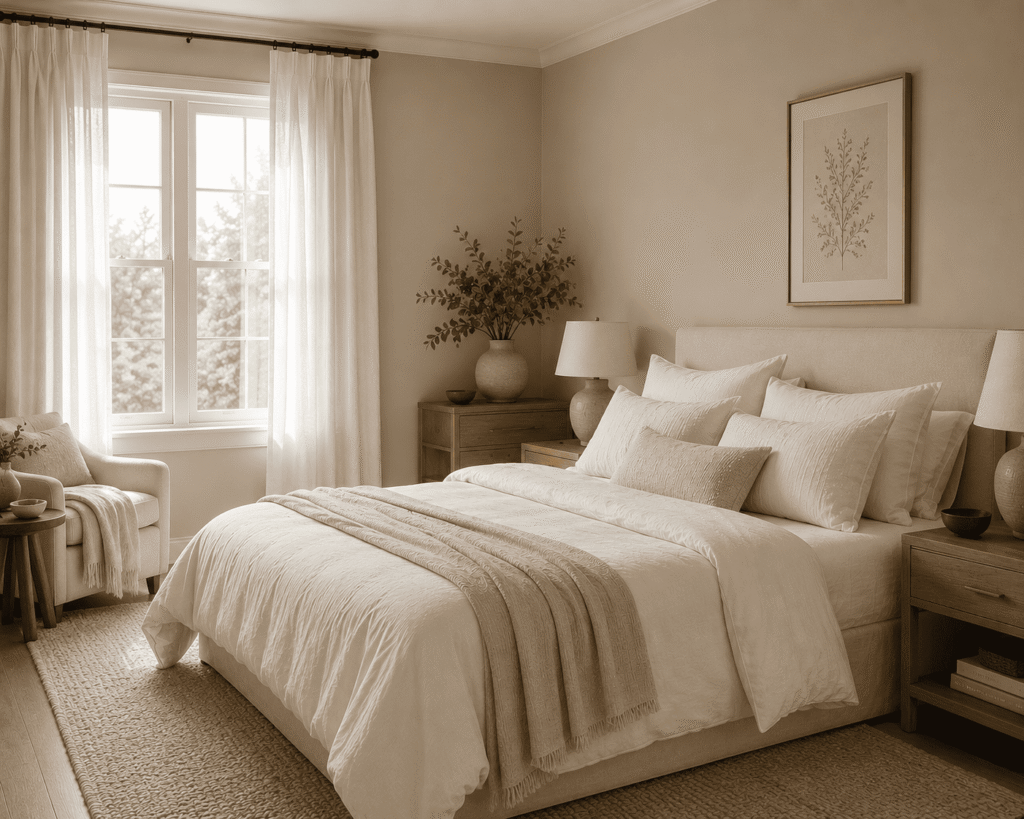
4. Warm Stone — Understated Luxury
Warm stone — the pale, slightly warm neutral that reads as neither white nor beige but somewhere precise and sophisticated between the two — is the bedroom colour choice of people who understand how colour works and prefer its effects to be felt rather than noticed. A warm stone bedroom looks immediately expensive without being obviously decorated.
The key is choosing a stone with warmth in its undertone rather than a cool grey — the difference is subtle on a paint chip and dramatic on a full wall. Warm stone reads as natural, restful, and luxurious; cool grey reads as corporate and slightly cold.
- Best warm stone paint shades: Farrow & Ball Skimming Stone, Dulux Egyptian Cotton, Little Greene Pale Timber, Benjamin Moore Revere Pewter
- Best bedding: this palette is entirely about the texture and quality of the bedding rather than colour contrast — choose the best linen or cotton you can afford in warm white or ivory
- Best curtain colour: warm white, warm cream, or a very soft warm grey — the subtlety of the wall colour is its strength; a bold curtain colour would overpower it
✦ PRO TIP: Warm stone walls photograph particularly beautifully in morning natural light. If your bedroom faces east or south-east, warm stone will change character through the day in a way that makes the room feel alive and dynamic — shifting from the soft warmth of morning light to a more complex, deeper tone in evening artificial light.
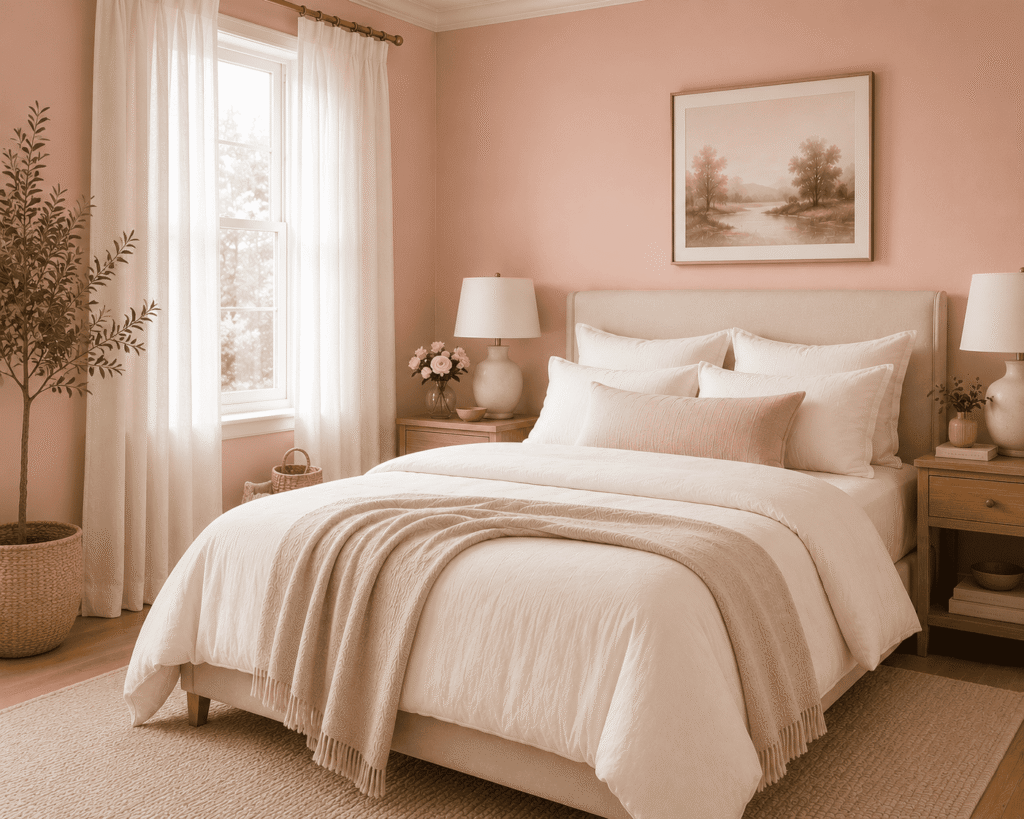
5. Soft Blush Pink — Warmth Without Sweetness
The word ‘pink’ suggests sweetness, juvenility, or the kind of self-conscious femininity that most bedroom occupants want to avoid. Soft blush pink — dusty, muted, almost neutral — is an entirely different proposition. At its best, it is a warm neutral with a very light rosy tinge, which evokes warmth and human complexion more than candy.
Blush pink especially suits bedrooms that have south or west-facing windows because it catches the sunlight and warms the rooms with the light of late afternoon and evening. It then creates an exceptionally inviting ambiance at the time of one going to bed.
- Best blush paint shades: Farrow & Ball Setting Plaster, Dulux Blush Pink, Little Greene Pink Slip, Benjamin Moore Peach Cobbler (at dilution)
- Best bedding: warm cream, ivory, or white — simple, clean, uncluttered
- Best curtain colour: warm white or natural linen
6. Midnight Navy — the Sleep-Optimised Bedroom
Dark bedrooms sleep better. This is not design preference — it is physiology. Our brain’s sleep hormone, melatonin, diminishes when exposed to light and increases when it is dark. A bedroom painted with dark colors absorbs light more efficiently, thereby even when the house is artificially lit, it creates a sense of deeper darkness, and the room becomes a place that by instinct one feels is suitable for sleep whereas a bright and light room generally wouldn’t.
Midnight navy is the kind of dark bedroom color which is the warmest and most elegant one. It has none of the chilliness of black, no harshness of charcoal and it has a natural link with night, sleep, and depth. When paired with white linen bedding or bed quilt cover, the color contrast is one of the most attention-grabbing and in line with the hotel-style that the bedroom gives home.
- Best midnight navy paint shades: Farrow & Ball Hague Blue, Dulux Midnight Navy, Little Greene Dark Lead, Benjamin Moore Hale Navy
- Best bedding: white or ivory — the high contrast between the dark walls and white bedding is the signature of this approach
- Best curtain colour: white, ivory, or the same navy as the walls for a monochromatic enveloping effect
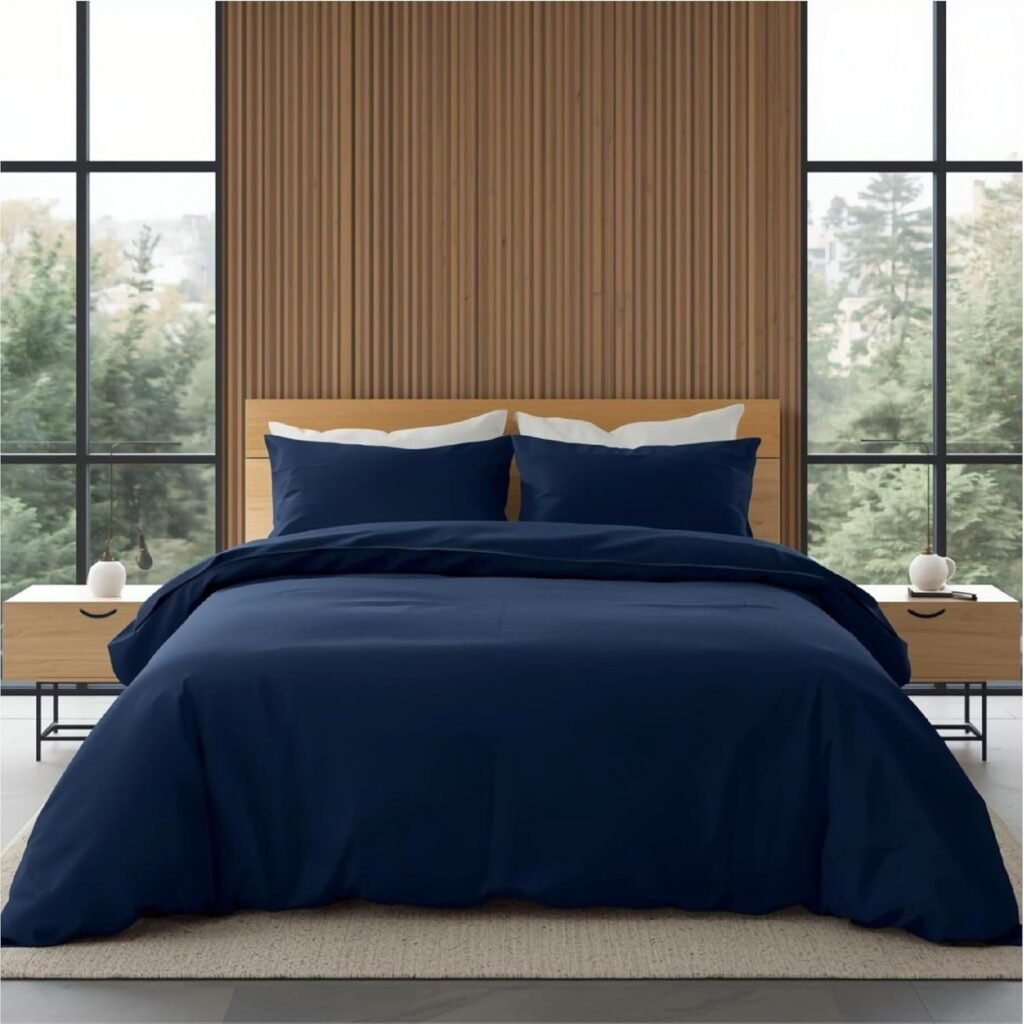
Navy Bedding Set Cotton Duvet Double
7. Forest Green — Nature Brought Inside
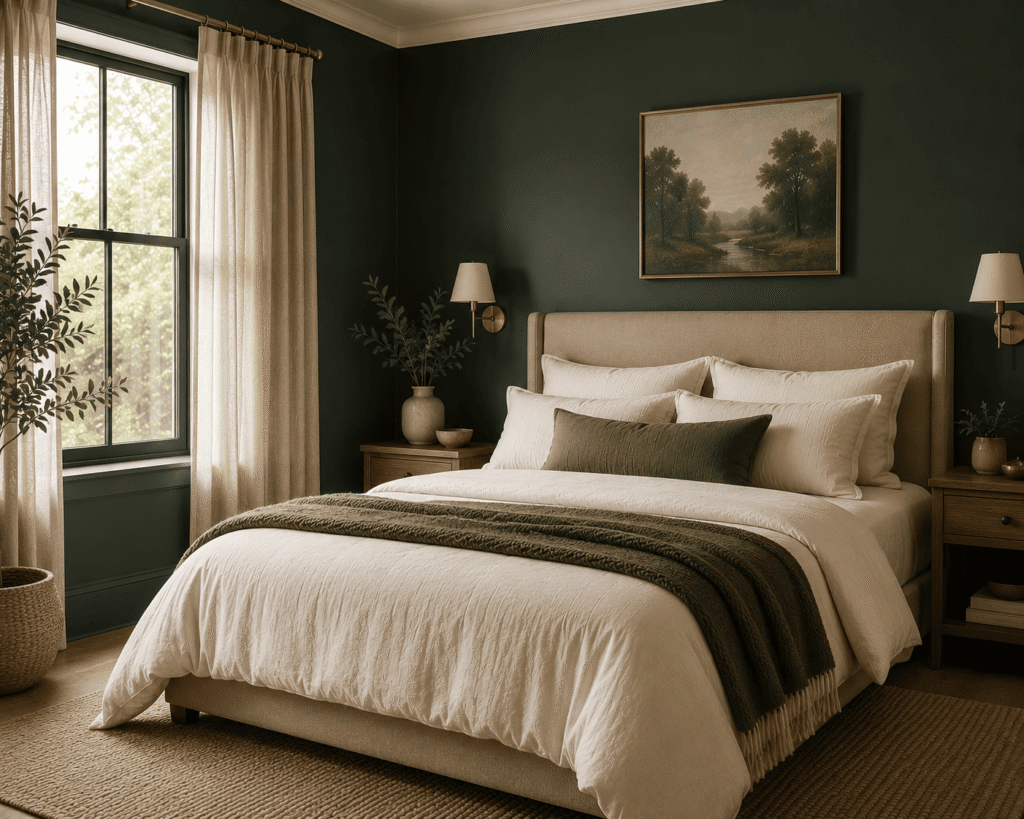
Where sage green is calm and restful, forest green is immersive and enveloping. Deep, saturated forest green — the colour of old woodland, of botanical illustration backgrounds — creates a bedroom that feels like a retreat into nature. The richness of the colour adds a visual depth to the room that lighter greens cannot achieve.
One of the best places to use forest green is in bedrooms with wooden floors or furniture. The green-and-wood combination creates such an overwhelmingly organic and natural atmosphere that it will be hard to take your eyes off the room. Plus, forest green is just as amazing when paired with brass and warm gold accents.
- Best forest green paint shades: Farrow & Ball Calke Green, Dulux Forest Fern, Little Greene Sage Derby, Benjamin Moore Hunter Green
- Best bedding: cream, ivory, or warm white — again, the warmth contrast is essential
- Best curtain colour: natural linen or warm cream for a natural contrast; matching deep green velvet for maximum immersive drama
8. Warm Ochre or Mustard — the Unexpected Warmth
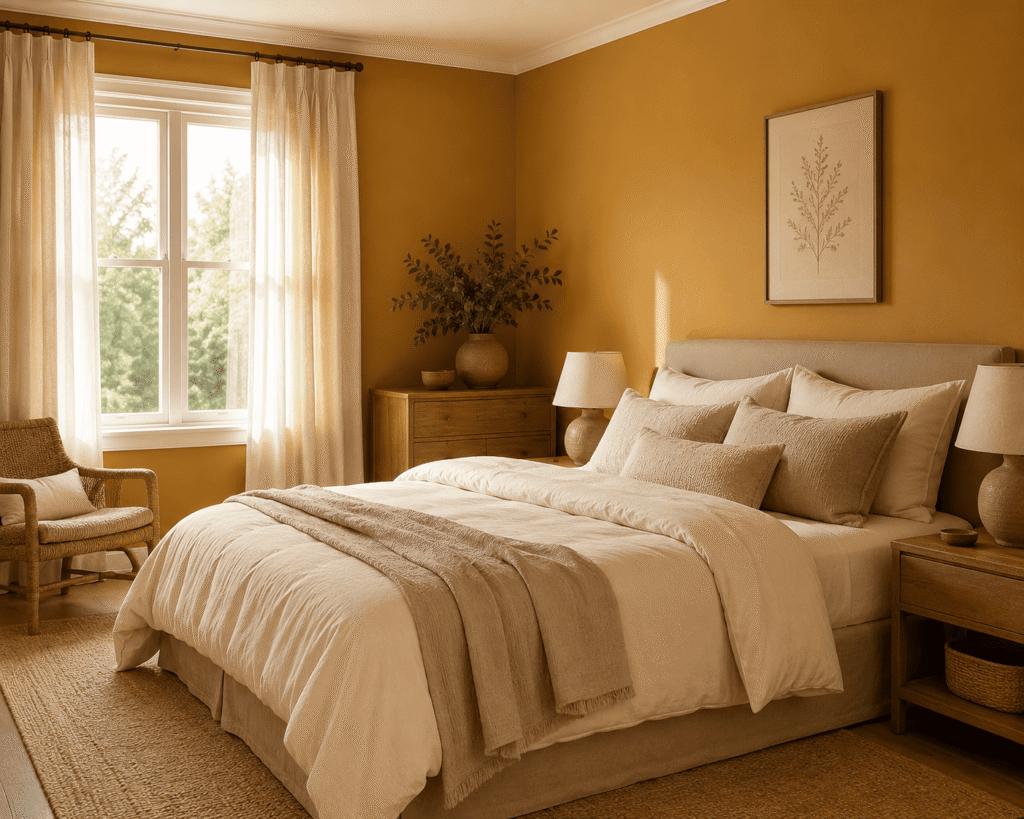
Yellow in a bedroom seems counterintuitive — energising rather than restful. Warm ochre and muted mustard, however, operate quite differently from bright or clear yellows. These earthy, low-saturation yellow tones have a quality of aged warmth — like sunlight on old stone, like the light through thick beeswax candles — that reads as extraordinarily cosy and genuinely restful.
Ochre bedrooms tend to look gorgeous especially during evening artificial light when the warm colour of the walls and the warm colour of the lighting harmoniously blend together to give a golden, radiant atmosphere. This is a room that you’ll be craving to stay in.
- Best ochre/mustard paint shades: Farrow & Ball India Yellow, Dulux Warm Ochre, Little Greene Ochre, Benjamin Moore Suntan
- Best bedding: warm cream, oatmeal, or natural cotton white
- Best curtain colour: warm cream or natural linen — keeps the warmth consistent
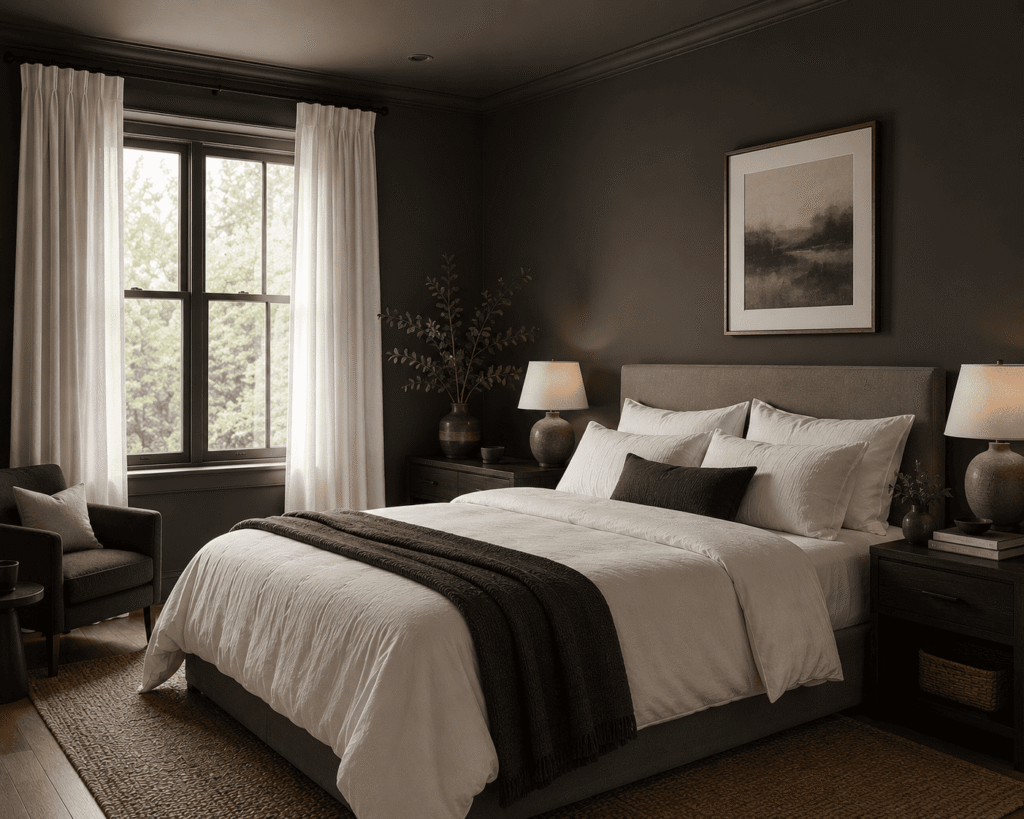
9. Warm Charcoal — the Sophisticated Alternative to Black
Charcoal is the dark bedroom colour for people who want the sleep-optimising benefits of darkness without the starkness of navy or the severity of black. Warm charcoal — charcoal with a slightly brown or warm undertone rather than a blue one — creates a bedroom that feels sophisticated, cocooning, and deeply adult in the best sense.
A warm charcoal bedroom with warm white ceiling, white linen bedding, and warm wood furniture achieves the graphic, high-contrast look associated with professionally designed interiors while remaining entirely accessible and entirely liveable.
- Best warm charcoal paint shades: Farrow & Ball Down Pipe, Dulux Pepper Dust, Little Greene Harissa, Benjamin Moore Kendall Charcoal
- Best bedding: white or warm ivory — maximum contrast
- Best curtain colour: white or warm ivory; or matching charcoal velvet for full colour-drenching
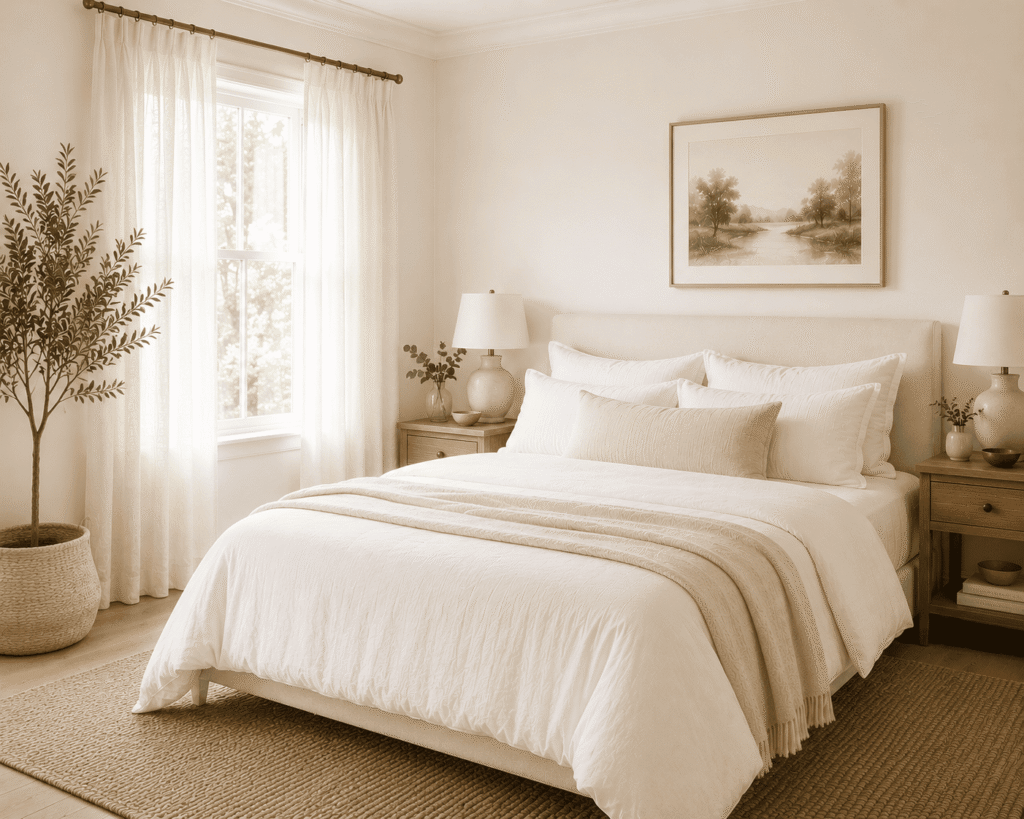
10. Warm White — the Perfected Classic
There is a version of white that is absolutely right for a bedroom: warm, soft, with a hint of cream or the faintest warmth, applied to all four walls and the ceiling in a combination that creates a space that feels clean, light-filled, and genuinely restful. This is not the cool or brilliant white of an office or a hospital — it is the warm, living quality of white that has always been associated with the best kind of sleep environment.
A warm white bedroom done well — with genuinely quality natural fibre bedding, warm wood furniture, a soft natural rug, and floor-length linen curtains — is one of the most enduringly beautiful and most consistently satisfying bedroom environments possible. It is the colour of hotel suites, of country house guest rooms, of the best bedrooms in the world.
- Best warm white paint shades: Farrow & Ball All White, Dulux Ivory White, Little Greene Linen Wash, Benjamin Moore White Dove
- Best bedding: the finest quality natural linen or Egyptian cotton in pure white or warm ivory you can afford — the bedding is the room’s centrepiece
- Best curtain colour: warm white or natural linen — the simplicity of no colour contrast is the whole point
How to Choose Your Bedroom Colour
The decision between these ten colours comes down to four considerations:
- How bright is your bedroom? North-facing rooms get indirect light so they can be beautifully enhanced with warm colours (terracotta, ochre, warm stone) that will make the room feel less cold. With south-facing rooms which get direct sunlight all day, you can pretty much paint the walls whatever colour you want – even the cooler ones like dusty blues and forest greens – as the warm light will balance the colours in the
- Do you want to feel calm and spacious or enveloped and cocooned? Lighter colours (sage, dusty blue, warm stone, blush, warm white) feel more spacious. Darker colours (navy, forest green, charcoal) feel more enveloping. Neither is objectively better — both serve the bedroom’s purpose, differently.
- What is the quality of your existing or planned bedding? The bedding is the largest single area of colour in the bedroom after the walls. Warm cream or ivory bedding works with everything in this list. Pure white bedding is best with the darker wall colours. Grey or cool-toned bedding conflicts with the warmer palette.
- How confident are you? The lighter, warmer neutrals (sage, warm stone, warm white) are the most forgiving choices — hard to get wrong, difficult to dislike. The bolder choices (midnight navy, forest green, charcoal, terracotta) are higher risk and higher reward — spectacular when right, uncomfortable when wrong.
The Curtain Question — Completing Every Bedroom Colour
Curtains in a bedroom are usually quite a heavy item since they cover a large part of the wall, need to be capable of giving the homeowners a certain degree of privacy and controlling the light, and belong to the room’s atmosphere even when it’s daytime (they filter or frame the window) and nighttime (they provide darkness and insulation). Curtain colour should be selected as a part of the entire bedroom colour scheme, and not decided at the last moment.
The guiding principle for bedroom curtains: they should contribute warmth rather than cool the room further. Warm white, ivory, or natural linen curtains work with every colour in this list. Bold curtain colours can work — deep green curtains against navy walls, for example — but require more confidence and more commitment. The full bedroom curtain guide for every style, everyone should go through this for the best for our homes.
Final Thoughts
Choosing the colour for your bedroom is a really personal and significant design choice that you can make. Different from a living room, where colours are enjoyed only momentarily and socially, a bedroom colour is a deeply and continually experienced element – it affects the quality of your morning, the peacefulness of your evening, and it is the particular light colour that you see every day.
The ten colours featured in this guide depict the entire spectrum of methods interior designers intend to use in 2026: calm and soothing sage and blue, warm and cosy terracotta and ochre, dark and elegant navy and forest green, and absolute simplicity of warm white. All these colours are perfect; the question is which one suits you!
Frequently Asked Questions
Q: What is the most calming colour for a bedroom?
A: Soft sage green and dusty blue are the two most commonly recognized calming bedroom colours, not only a result of environmental psychology research but also interior designers have widely adopted them for this very purpose. Sage green is a connection with nature and growth but at the same time it is a muted colour and thus less likely to cause stimulation. Dusty blue is associated with lower heart rate and reduced blood pressure. Both work best when paired with warm natural materials — linen bedding, wood furniture — that prevent the colours from reading as cold.
Q: Should bedroom walls be light or dark?
A: Both can be effective — yet they belong to different types of people and fulfill different kinds of needs and priorities. When one makes a light wall color in the bedroom (sage, dusty blue, warm stone, warm white) it is generally considered that the room may look bigger and be lighter, and such a setting is great for smaller bedrooms and people who want to wake up to light. Whereas with dark bedrooms walls (navy, forest green, charcoal) one can get a more intimate and sleep-enhancing environment because such colors can absorb a lot of light and make the room seem naturally fit for sleep. In fact, several sleep experts are in favor of darker bedrooms for better sleep quality.
Q: What colour bedroom is best for sleep?
A: Dark, cool colors are really the ones that work best for sleeping since they absorb light instead of reflecting it. This helps in strengthening those darkness signals which lead to melatonin production, a sleep hormone. Midnight navy, deep forest green, and warm charcoal are all excellent choices. However, any colour can work in a bedroom that is well-curtained and properly darkened at night. The psychological comfort of the colour — choosing something that genuinely feels restful to you — is at least as important as the theoretical sleep-science case.
Q: What colour curtains go with sage green bedroom walls?
A: Natural linen or warm cream curtains are the best choice for sage green bedroom walls — the warmth of the natural linen provides a gentle, organic contrast to the cool-warm balance of the sage, and the combination has a naturalness that coordinates without appearing calculated. Warm white or ivory also work well. Avoid cool grey or pure white curtains which can make the sage feel cold. Deep sage or forest green velvet curtains work for a more immersive, colour-drenched approach.