A small bedroom is one of the most common design challenges in UK housing particularly — Victorian and Edwardian properties, converted flats, modern apartments, and student accommodation all tend to feature bedrooms that are significantly smaller than most people would ideally choose. The typical UK double bedroom is approximately 3 x 3.5 metres; single bedrooms can be considerably smaller.
The positive aspect is that the perceived size of a bedroom – the way big it feels to you when you are there – can be really changed by different things even though the real size of the bedroom doesn’t change. If you make the right choices in the bedroom through different things such as its color, furniture, lighting, etc., you can create a place that feels free, peaceful, and thoughtful and not squeezed and limited. These 15 tips include the whole range of interventions, from the most effective one to the last details.
Tip 1: Floor-to-Ceiling Curtains at Ceiling Height
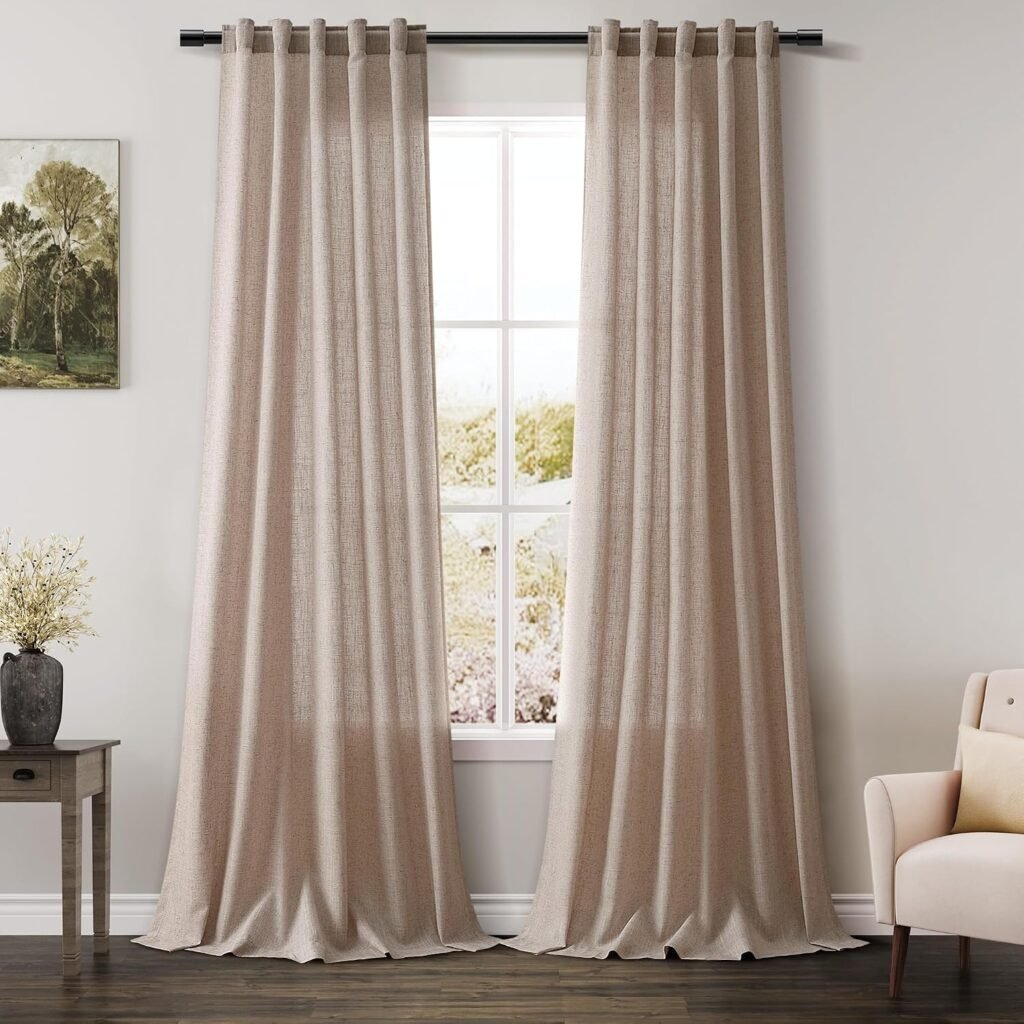
Linen Curtains Floor Length Natural Small Bedroom
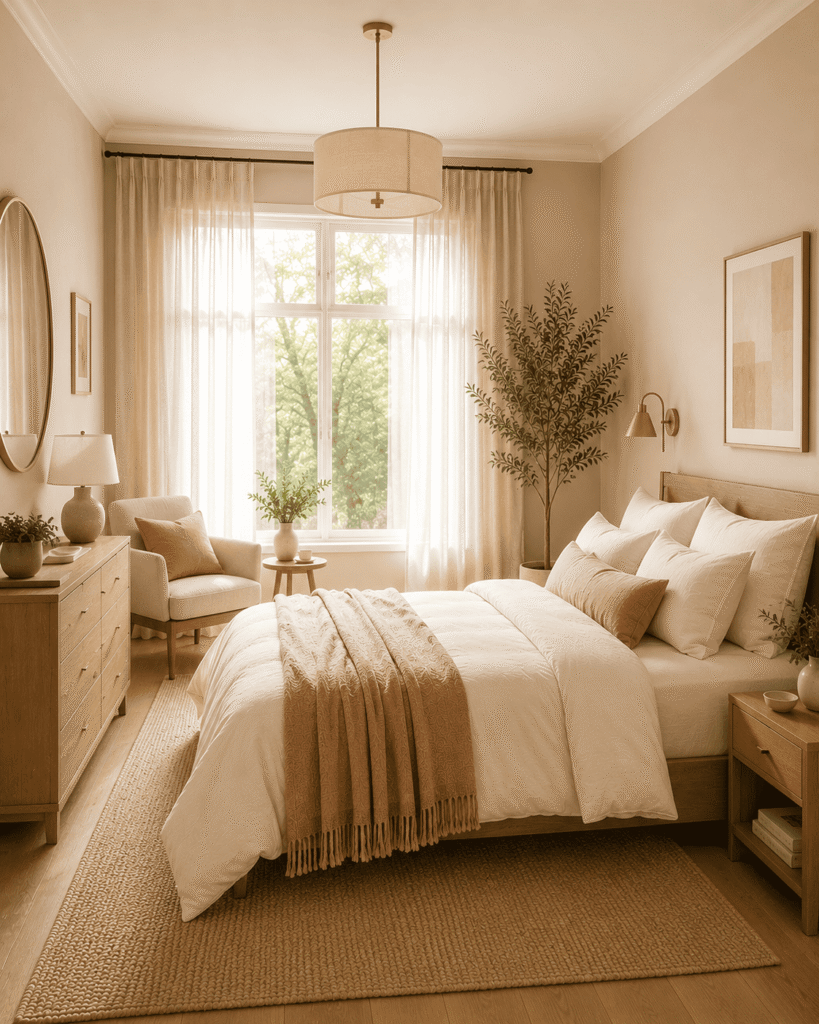
This constitutes the only change of major impact in a small-bedroom setting, and it just hardly costs you anything apart from the extra effort of hanging curtains at the normal window-frame height. Conceptually, you just need to do the following: Mount your curtain rod or track as high as you can in the ceiling area, no matter where precisely the window frame is located, and then get curtains that are long enough to touch the floor.
When a curtain begins at ceiling height rather than 10–15cm above the window frame, it creates a continuous vertical line from ceiling to floor that makes the wall appear taller, the ceiling appear higher, and the room appear significantly larger than it is. The eye reads the tall curtain panel as evidence of a tall room rather than registering the actual ceiling height curtains transform a small bedroom.
✦ PRO TIP: For the most powerful visual impact in a cramped bedroom, make the curtains span more than the window’s width — have them extend by 20-30 cm past the frame on each side and, on top of that, go from the ceiling all the way down to the floor. When the curtains are drawn, the material is completely outside the window’s glass region, so the window looks a lot wider than it really is.
Tip 2: Mount Bedside Lights on the Wall
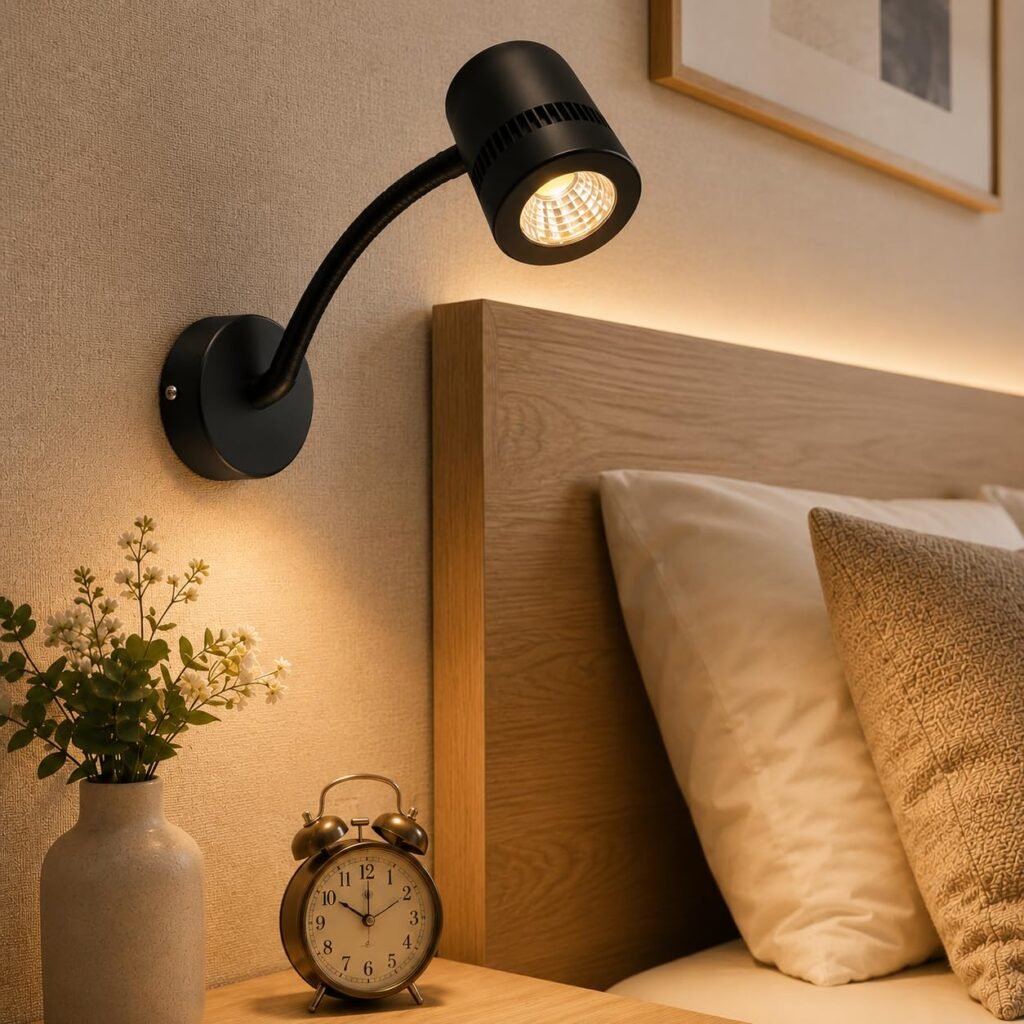
Wall Mounted Reading Light Bedroom
Freestanding bedside lamps require bedside tables to stand on. In a small bedroom, two bedside tables consume a significant proportion of the available floor space along the bed wall. Replacing them with wall-mounted bedside lights — plug-in sconces with adjustable arms — eliminates the need for large bedside tables entirely.
Wall-mounted lights, combined with a small floating shelf at bedside height (for a glass of water, a book, a phone), provides all the functionality of a conventional bedside arrangement in a fraction of the floor space. The visual effect is also cleaner and more designed — the walls appear less cluttered and the floor reads as more open.
Tip 3: Choose a Low-Profile Bed Frame
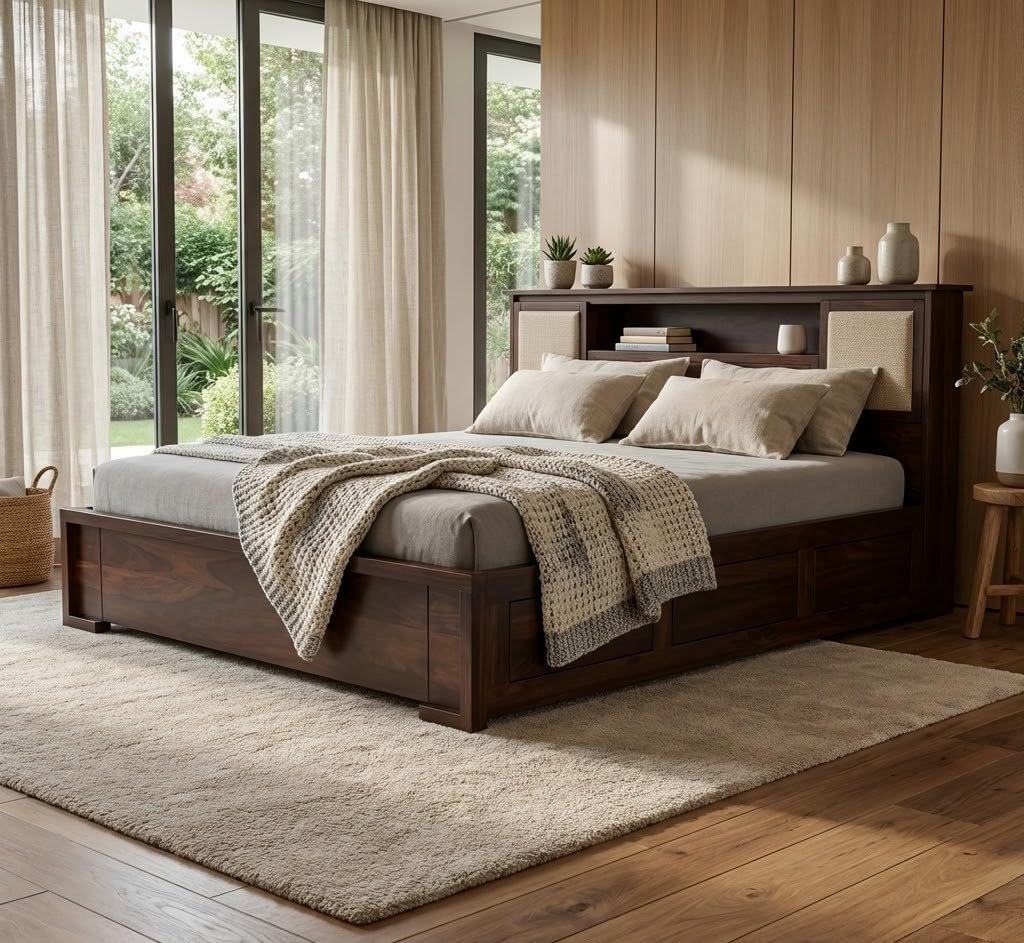
How high a bed frame can change how tall you think a room’s ceiling is. A very tall bed frame that even has a high headboard going up towards the ceiling can make the ceiling look lower and the room more cramped. A low-profile bed frame, with a headboard that sits at or below mattress height, allows the ceiling to read at its full height and the room to feel more open.
Storage beds — which incorporate drawers in the base — are particularly valuable in small bedrooms because they consolidate under-bed storage within the bed frame itself, eliminating the need for additional storage furniture. The drawers are usually accessed from the sides or foot of the bed.
Tip 4: Use Under-Bed Space Productively
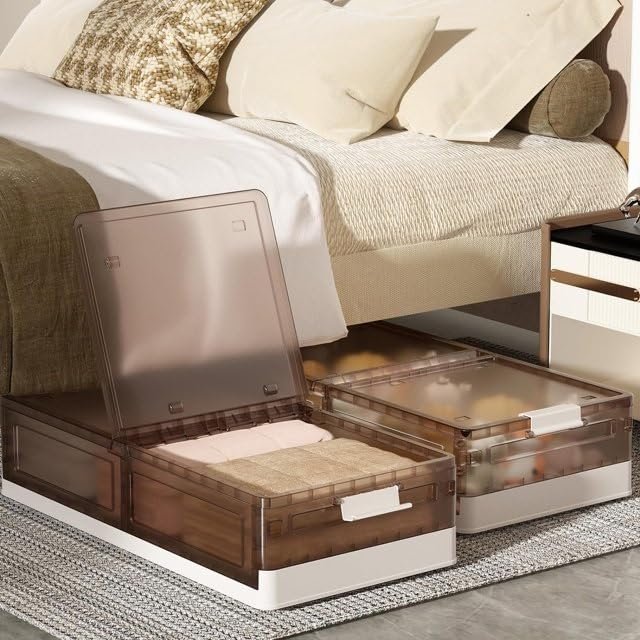
Under Bed Storage Drawers Rolling
Under-bed floor space is usually the biggest and most ignored storage spot in a bedroom. If it’s a tiny room, and every surface and wall of the room has a limited amount of space available, then the under-bed area can be used to store a rather big quantity of items: clothes of different seasons, extra bedding, suitcases, and anything else that is rarely used and can remain hidden.
Shallow rolling storage boxes — designed specifically to fit under standard bed frames — are the most practical solution for under-bed storage without a storage bed. They roll out for access and back under the bed without needing to be lifted.
📌 NOTE: For under-bed storage to look neat and not cluttered from the room, bed frames with a base skirt or valance that reaches to the floor conceal the storage boxes entirely. Alternatively, a shallow bed skirt in the same colour as the bedding serves the same purpose.
Tip 5: Replace Wardrobe Doors With Mirrored Alternatives
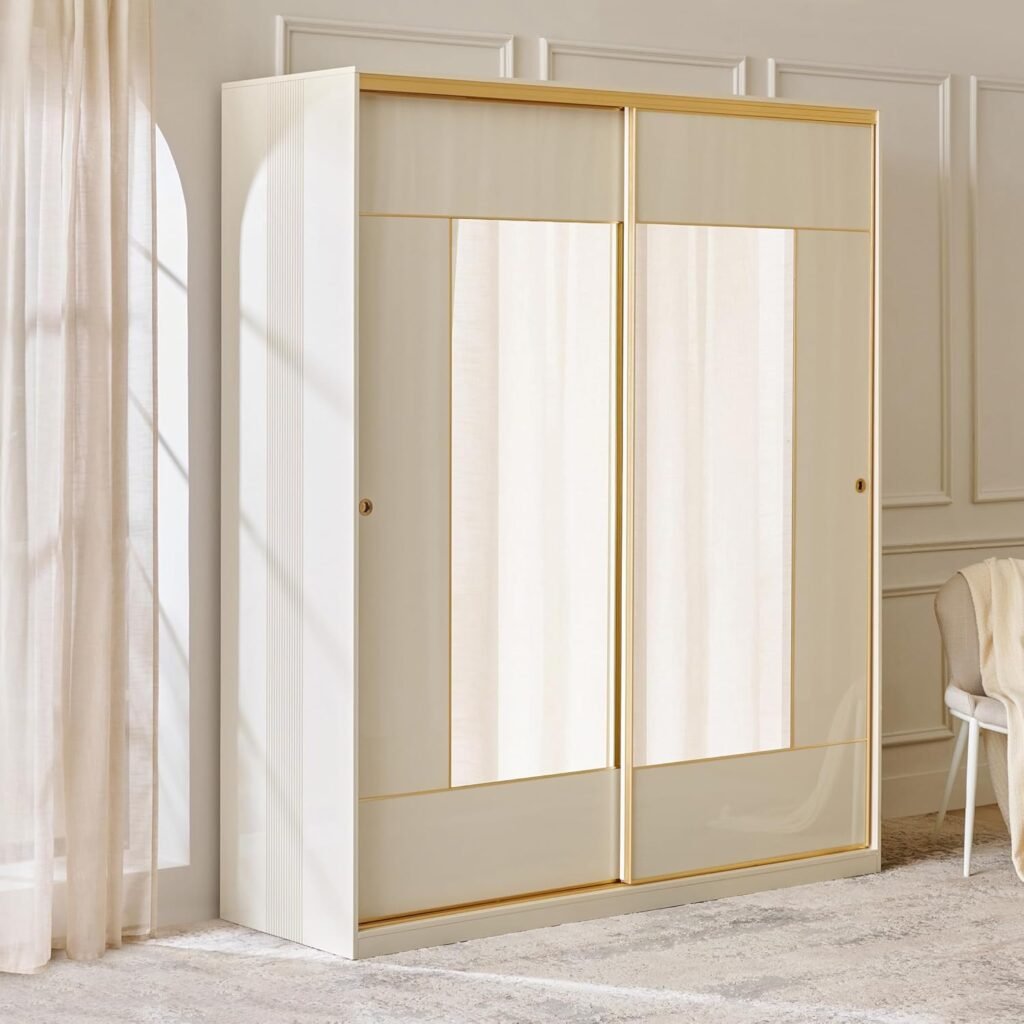
Sliding Mirrored Wardrobe Doors
A mirror on a wardrobe door serves two purposes at the same time: it acts as a full-length mirror (thus doing away with the need for a separate mirror which would take up more floor space) and it visually enlarges the room by reflecting the space behind the person. In a small bedroom where even a few centimetres matter, this double use is what makes mirrored wardrobe doors one of the most efficient ways to enhance space.
The reflection should be placed in such a way that it reflects the room’s best feature — a window, a nicely dressed bed, or the most attractively styled part of the room. A door with a mirror on it that is facing the window, or next to the window, throws the natural light back into the room and makes the bedroom feel considerably brighter.
Tip 6: Paint Walls and Ceiling in the Same Colour
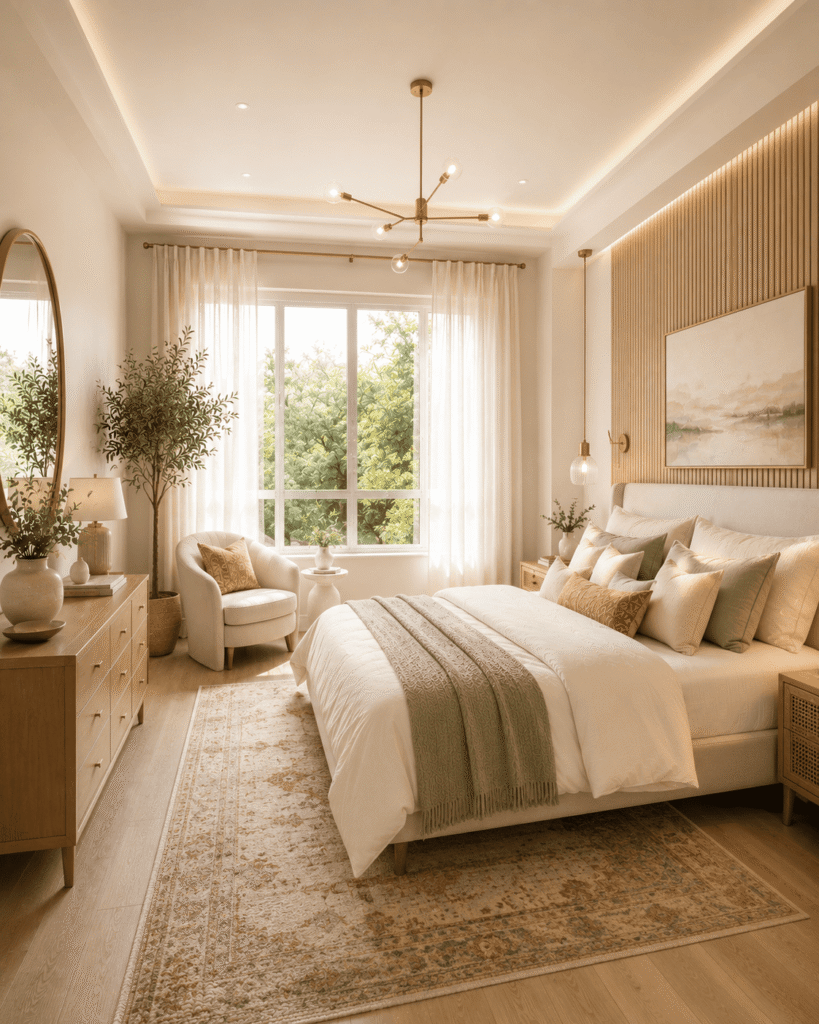
The visual boundary between wall and ceiling is one of the cues the eye uses to measure room height. Painting both the walls and ceiling in the same colour — or in very closely related tones — removes this boundary and creates a continuous colour-drenched effect that makes the ceiling height appear less defined and the room feel taller.
This technique is particularly effective with light colours (warm white, pale sage, dusty blue) as the colour-drenched effect in these cases feels airy rather than enclosed. However, it can also work with slightly deeper tones if one wants to create a more intentional, cocooning atmosphere — but in a very small bedroom, lighter colours help keep the sense of openness. The best colours for making a small bedroom feel larger is the best decision taken for our interiors.
Tip 7: Keep the Floor as Clear as Possible
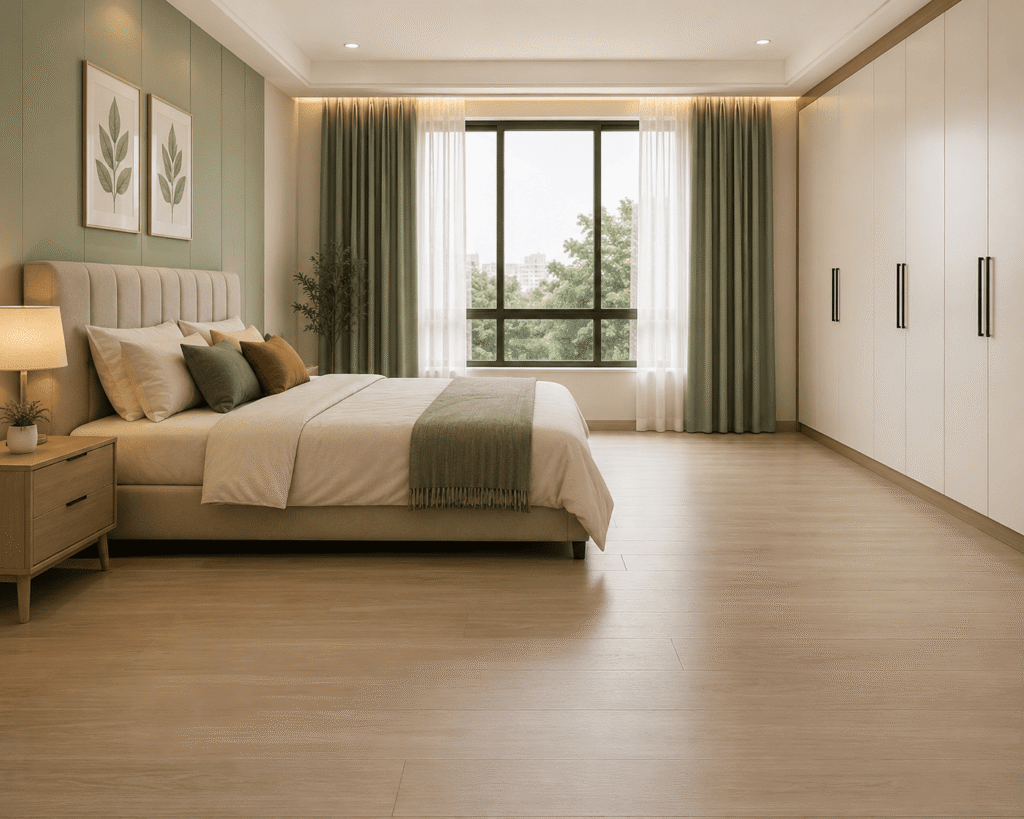
The amount of visible floor in a bedroom directly affects how large it feels. A floor cluttered with items — shoes, bags, laundry baskets, scattered books, a freestanding laundry basket, a bedside table that extends into the circulation route — reads as cramped and insufficiently sized. The same floor cleared of everything except the bed and essential furniture reads as significantly more spacious.
This is primarily a discipline rather than a purchasing decision. Shoes are tucked in the wardrobe; laundry is kept in a tall, slender laundry bag rather than a wide, round basket; everyday items are stacked on shelves or put in drawers instead of being left on the floor. The visual advantage of an uncluttered floor in a small bedroom is instantly noticeable.
Tip 8: Choose Furniture With Legs
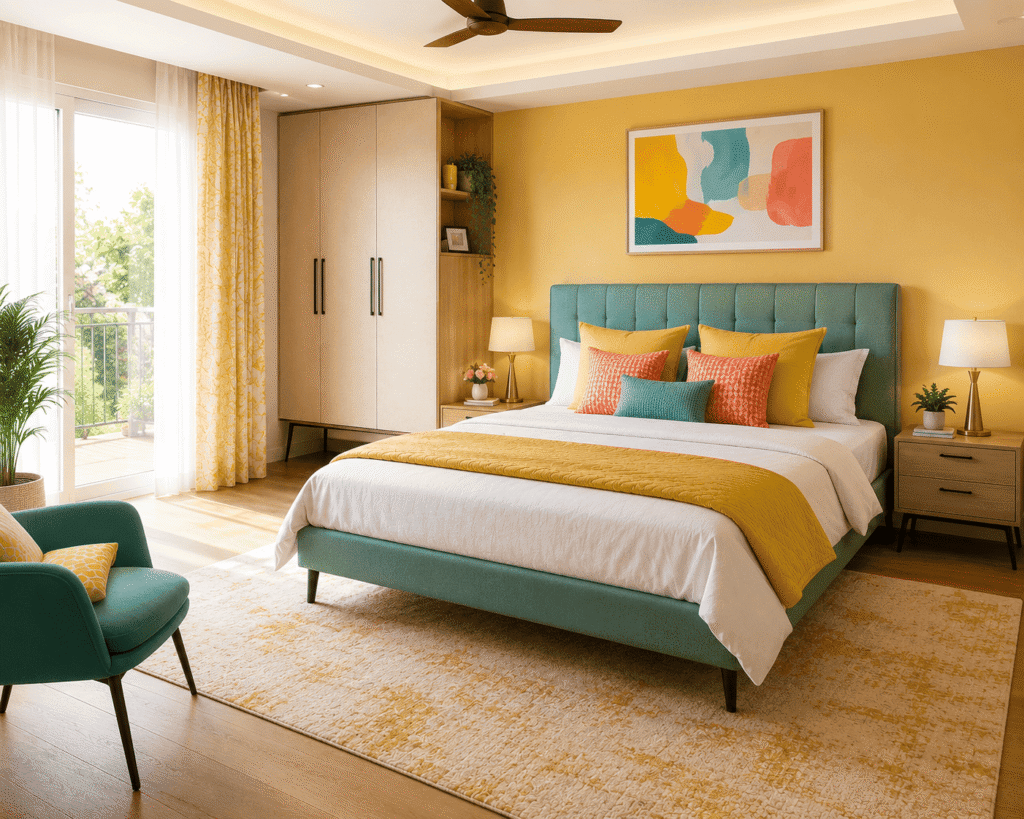
Furniture that rests directly on the floor — bases that extend to the floor with no gap — reads as heavier and more space-consuming than furniture with visible legs. A bedside table with legs shows floor beneath it; a divan-style base bedside table sits as a solid block. The visual effect of visible floor beneath furniture makes the room feel more open even when the actual amount of floor space is identical.
Choosing furniture with legs — bedside tables, wardrobes where possible, chairs — throughout the small bedroom consistently increases the sense of airiness and space.
Tip 9: Use Vertical Wall Space for Storage
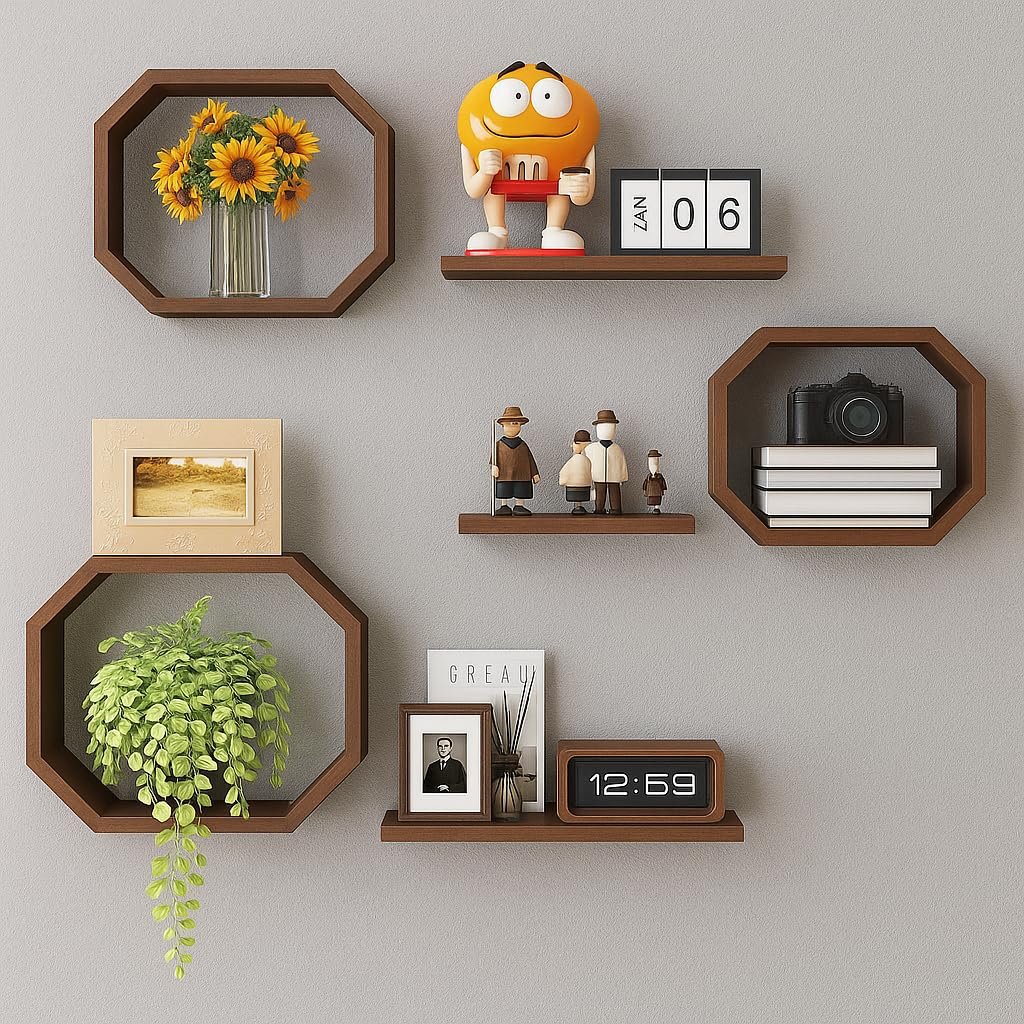
Floating Shelves Bedroom Wall Mounted
In a small bedroom where the floor space is almost non-existent, the walls become the main storage option. Shelves that simply float above the bed (and are fixed at a height so that one cannot hit the head), position above the door frame, or even on the slim walls beside the wardrobe are perfect for storing books, folded clothes, shoes, and decorating items without taking up any floor space at all.
The principle is to consider the wall from floor to ceiling as a usable surface instead of a backdrop, and to intentionally use all heights above the furniture line (usually above 90cm) for storage, and keep the floor as clear as possible.
Tip 10: Use a Large Mirror Strategically
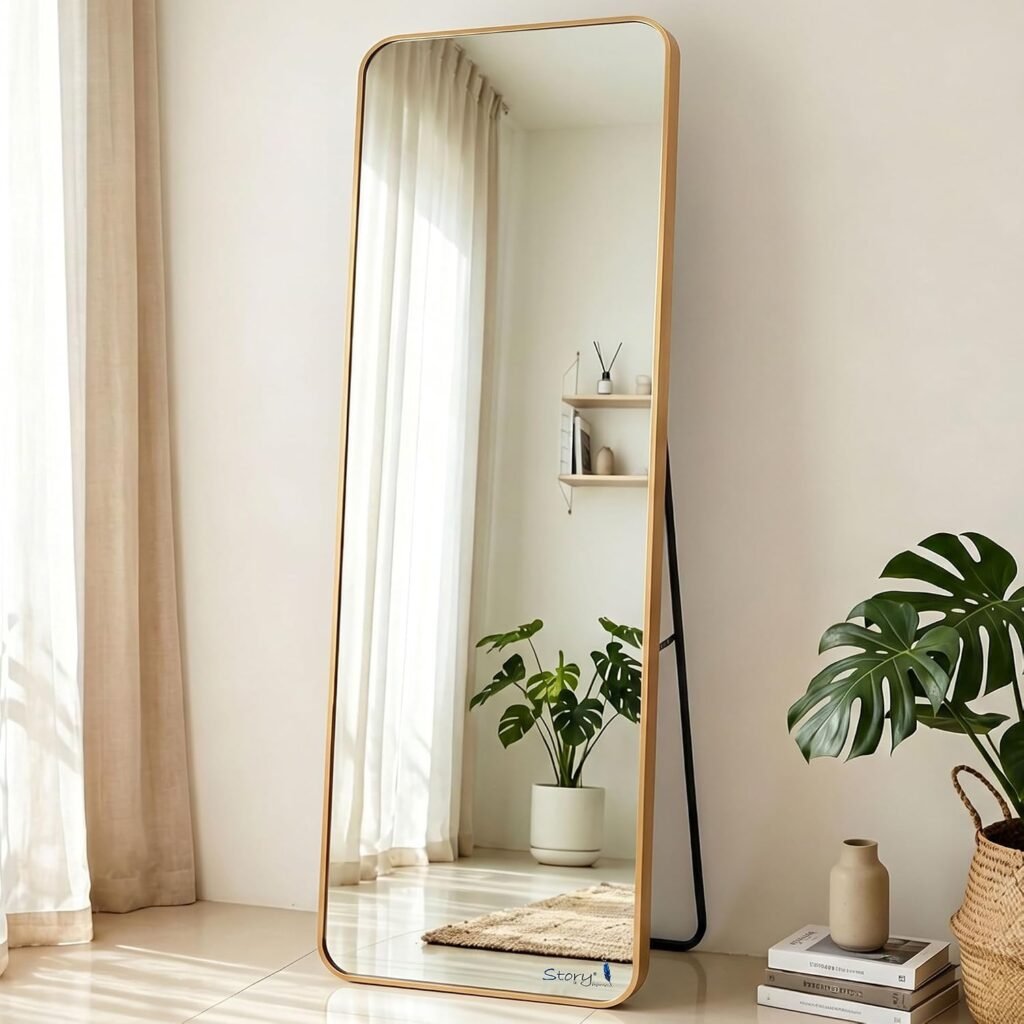
Large Bedroom Mirror Leaning Gold Frame
One big mirror can really work wonders especially in a small bedroom. You can lean it against the wall or hang it. It can dramatically expand the apparent space in the room. The image reflection doubles the perceived depth of the room, reflects the natural light coming from the window and the light in the room, and visually makes the room look more than twice as large as it actually is.
The most effective positions: opposite the main window (helps to bounce natural light back into the room for a maximum brightness effect), opposite the bedroom door (gives the feeling of a very deep space when you enter), or next to the window (reflects a different aspect of the natural light).
Tip 11: Limit the Number of Furniture Pieces
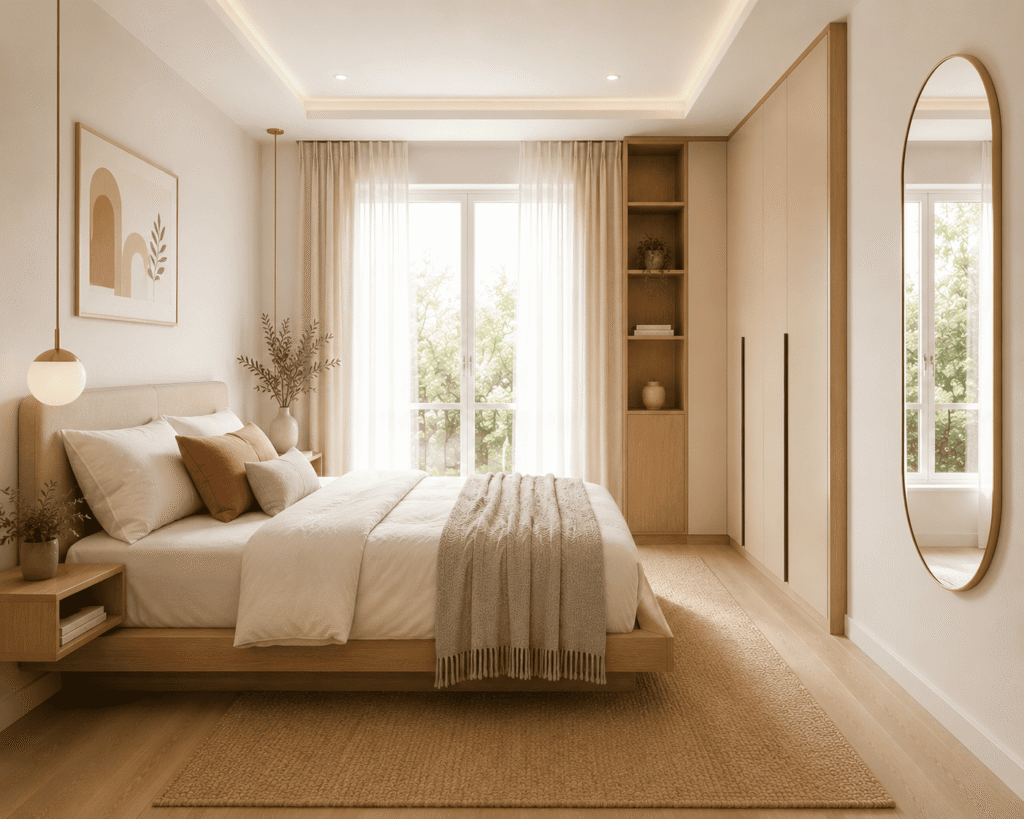
Each additional item of furniture in a small bedroom reduces the apparent size. The basic pieces of furniture in a bedroom are: the bed, some type of bedside storage (table, shelf, or wall-mounted), a wardrobe, and a mirror. Any extra items – a spare chair, a blanket box, a dressing table – should be justified by their genuine, regularly used functions that the current pieces of furniture cannot provide.
A small bedroom with fewer carefully selected pieces of furniture will always look and feel more spacious than one with more, even if the extra pieces are small. The empty space in between furniture lets the eye take a break and the room to get some fresh air.
Tip 12: Keep Bedding Simple and Light-Toned
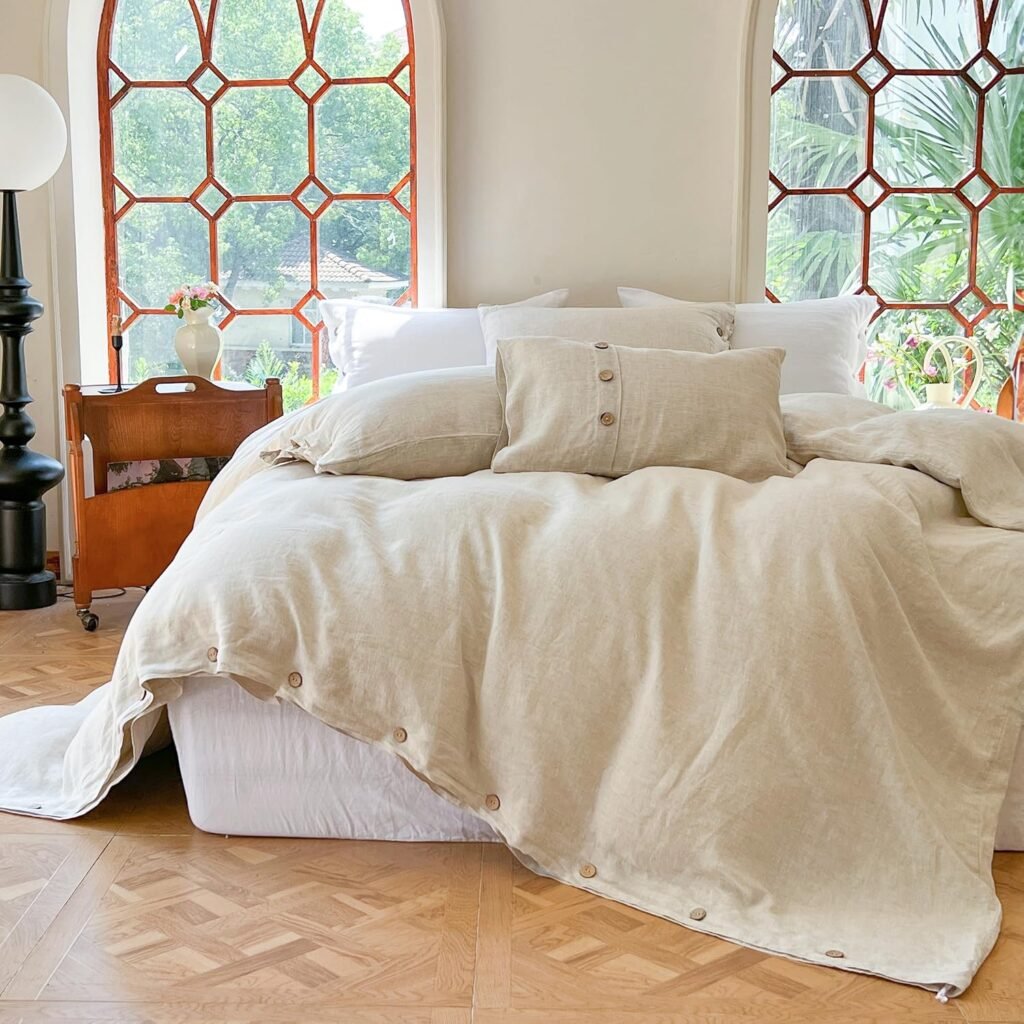
Linen Bedding Set Natural Double
The bed visually takes up most of the space in a small bedroom — it is the biggest one item in a room by far. Hence, your choice of bedding has a significant impact on the felt size of the room. Complex patterns, starkly contrasting colors, and multiple patterned layers all contribute to visual clutter and make the space feel more the cramped. Plain, lightly colored, or neutral bedding lets the bed be visible without taking over the whole view.
A set of white, cream, or warm ivory bedding made of top quality natural fabrics such as (linen or Egyptian cotton) is a very simple and most dependable way. Bed is pushed out of focus and the room appears more serene and spacious.
Tip 13: Use Over-Door Storage
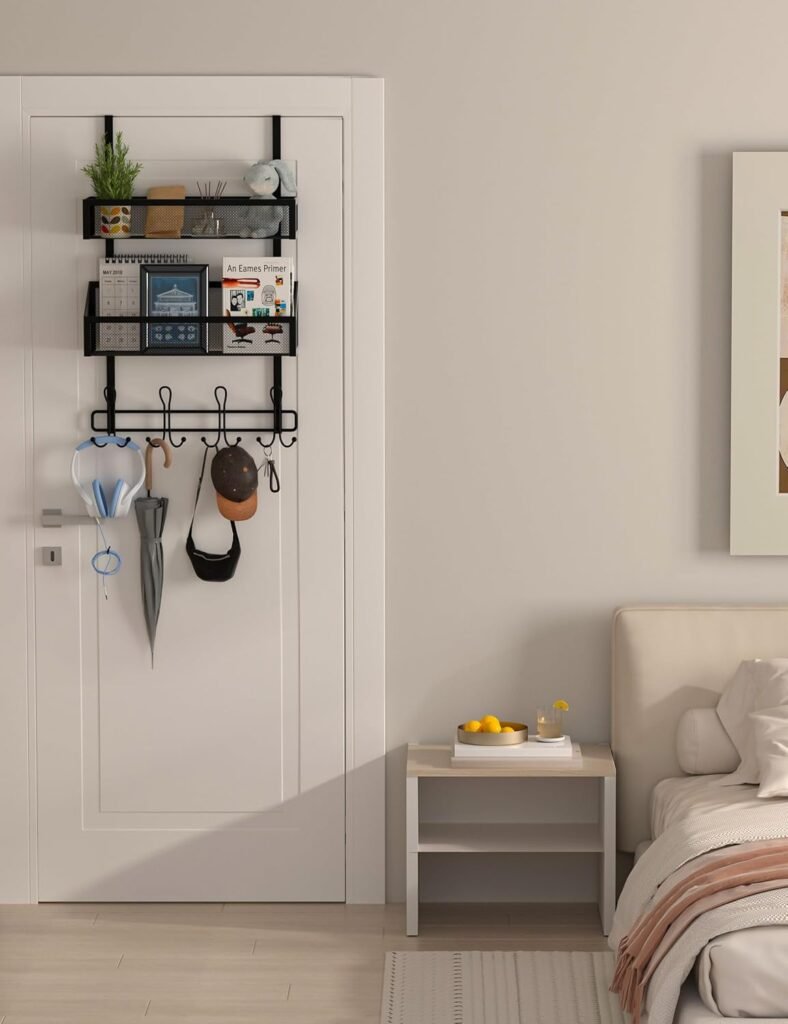
Over Door Organiser Bedroom Hooks
The back of a bedroom door is almost always unused storage space. Over-door organisers, hook systems, or slim shelving units mounted on the back of the door provide storage for shoes, accessories, scarves, bags, and any item that needs to be accessible but does not have a natural home in the room’s main storage.
Over-door solutions are entirely reversible and require no drilling (most clip over the top of the door), making them particularly useful in rented bedrooms where permanent wall storage is restricted.
Tip 14: Use Transparent or Reflective Furniture
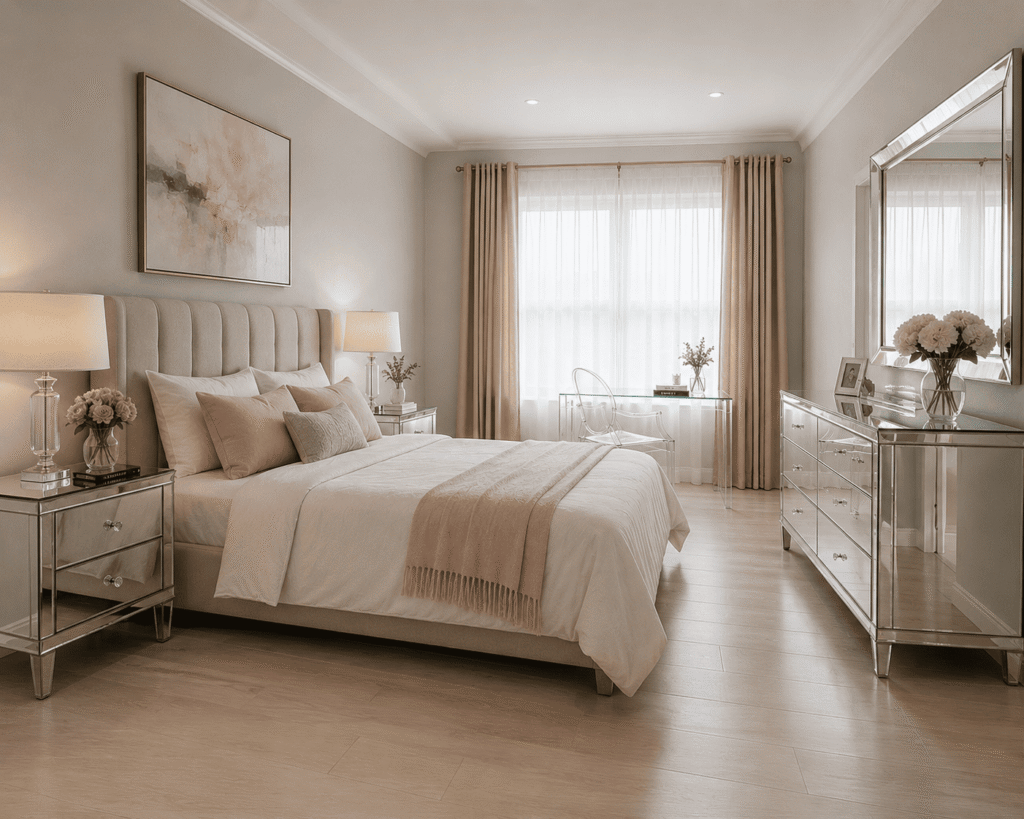
Acrylic, glass-topped, or mirrored furniture pieces — a glass-topped bedside table, an acrylic chair, a mirrored chest of drawers — have a visual lightness that opaque furniture of the same footprint does not. The eye passes through transparent and reflective surfaces rather than being stopped by them, which creates a sense of greater depth and space in the room.
One or two transparent or reflective pieces in a small bedroom — particularly the most visually prominent pieces, such as bedside tables — make a measurable difference to how the room reads.
Tip 15: Maximise Natural Light
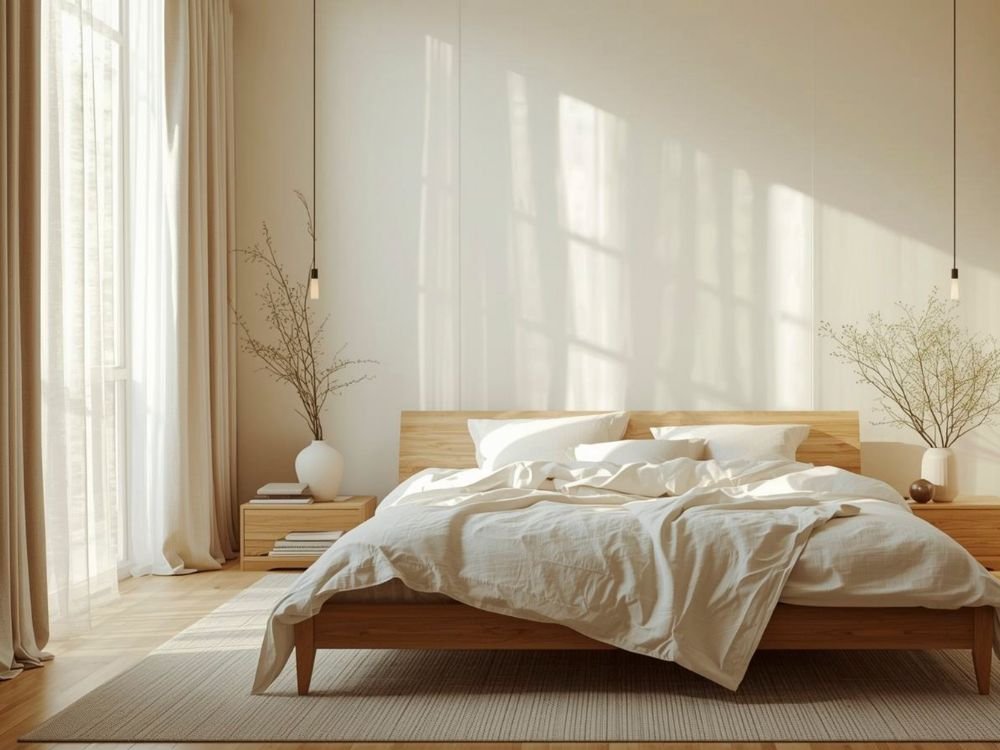
Natural light is the most powerful tool available for making a small bedroom feel larger. A room flooded with morning light feels open and generous regardless of its actual dimensions. Anything that restricts natural light — heavy curtains that cannot be fully opened, furniture positioned in front of windows, large objects on windowsills — works against the room’s perceived size.
During the day, allow curtains to stack fully beyond the window’s glass area (achieved by hanging them wider than the window, as described in Tip 1). Keep windowsills clear. Position the bed so that at least one window can be seen from the lying position — the view of natural light and sky expands the room’s perceived boundaries beyond its actual walls.
Final Thoughts
A small bedroom well-arranged is a completely different experience from a small bedroom poorly arranged. The fifteen tips in this guide are not about making the bedroom appear to be something it is not — they are about releasing the visual potential that most small bedrooms contain but do not express.
The single most impactful change, applied consistently, is the ceiling-height curtain. It costs no more than hanging curtains at a conventional height and delivers an immediate, visible improvement in how the room’s proportions read. Start there, and apply the remaining tips in order of their impact on your specific room’s constraints.
Frequently Asked Questions
Q: What colour makes a small bedroom look bigger?
A: Warm light hues are a clever way of visually enlarging a space especially a small room such as a bedroom: warm white, soft sage green, dusty blue and warm stone the main ones. A further trick to visually lift the height of the room without modifications is painting the ceiling and walls the same color – this will remove the ceiling line and create a feeling of loftiness. On the contrary, very dark or cool colors will most probably worsen the problem of a very small bedroom and be oppressive instead of making it cozy.
Q: How do I create more storage in a small bedroom?
A: The most compact way to implement storage in a small bedroom would be to have a bed with drawers in the base, hanging shelves above the bed and door frame, storage boxes that can be rolled under the bed, door organizers that can be hung on the back of the bedroom door, and shelves at the bedside that are fixed to the wall instead of tables. This way you can utilize the vertical wall space and underused areas (under the bed, behind the door) instead of adding pieces of furniture at floor level.
Q: Does a large mirror make a bedroom look bigger?
A: Yes — significantly. If you put a big mirror in front of a window, it will not only reflect natural light back into the room but also give the illusion of a much larger and deeper space. A mirror on the door of a wardrobe can have this effect too and at the same time get rid of the need for a separate standing mirror. Even one fairly big mirror in a small bedroom, when placed to reflect that part of the room which is most spacious or bright, can create the illusion of doubling in depth.
Q: Should curtains in a small bedroom be long or short?
A: Long — always. Floor-to-ceiling curtains can visually increase the height and size of a small bedroom, especially when the curtain rod is mounted near the ceiling. On the other hand, short or sill-length curtains highlight the window’s small size as well as the limited height of the room. The investment in floor-length curtains (which cost no more than shorter alternatives in the same fabric) is consistently the best return available in a small bedroom.
Q: What is the best bed for a small bedroom?
A: A storage bed — with drawers incorporated into the base — is typically the best choice for a small bedroom because it consolidates the bed’s floor footprint with significant storage capacity, reducing the need for additional storage furniture. A low-profile bed frame with a low headboard maximises the apparent ceiling height. Ottoman beds (which have a lift-up base revealing a large storage compartment) provide the most storage volume, though they require sufficient floor space at the foot of the bed to lift the base.