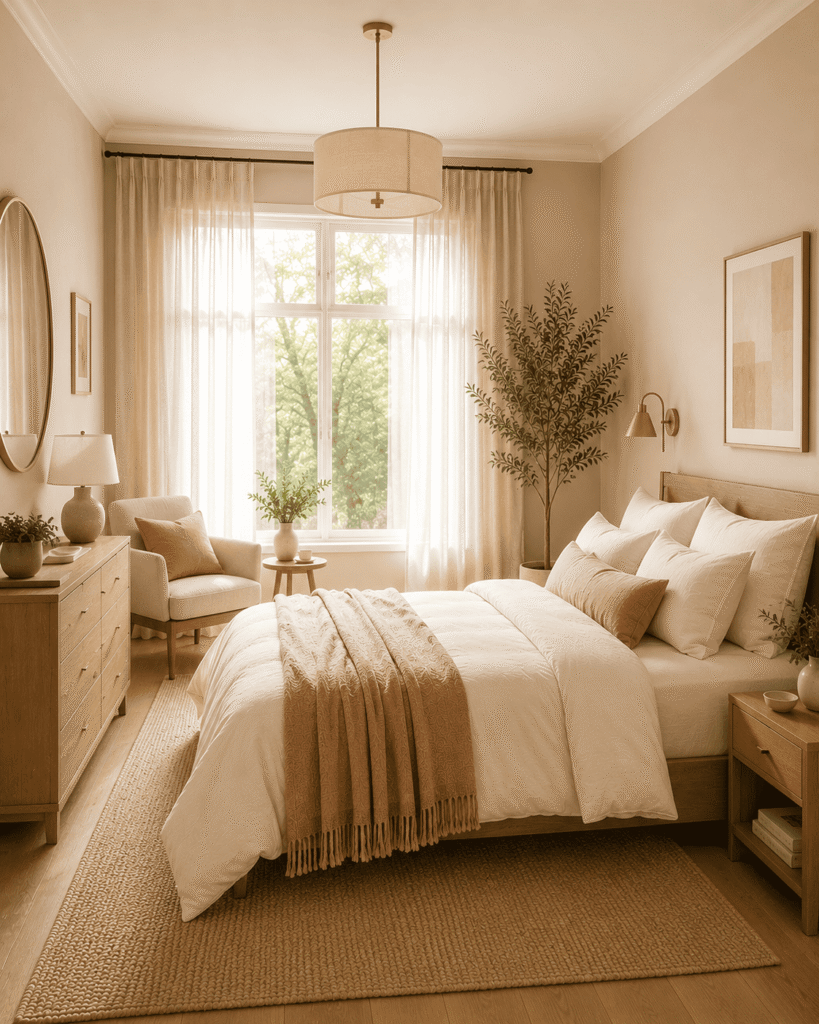
The hotel bedroom is one of the most universally aspirational domestic spaces in the world. Almost everyone has had the experience of checking into a hotel room and feeling, in the first moments, that the bedroom looks and feels better than their own — cleaner, calmer, more luxurious, and somehow more considered, even in a mid-range property where the individual components are not particularly expensive.
The feeling is not imaginary, and it is not purely a product of the novelty of being somewhere unfamiliar. Hotel bedrooms are designed according to a specific set of principles — about bedding, curtains, lighting, scent, surface clarity, and the systematic elimination of visual clutter — that are directly learnable and directly applicable to any bedroom at home.
This guide decodes every hotel bedroom principle and shows you exactly how to apply each one. The result is not a replica of a hotel room — it is your own bedroom, elevated by the same design intelligence that makes hotel rooms feel so consistently good.
The Hotel Bedroom Foundation: White, Warm, and Uncluttered
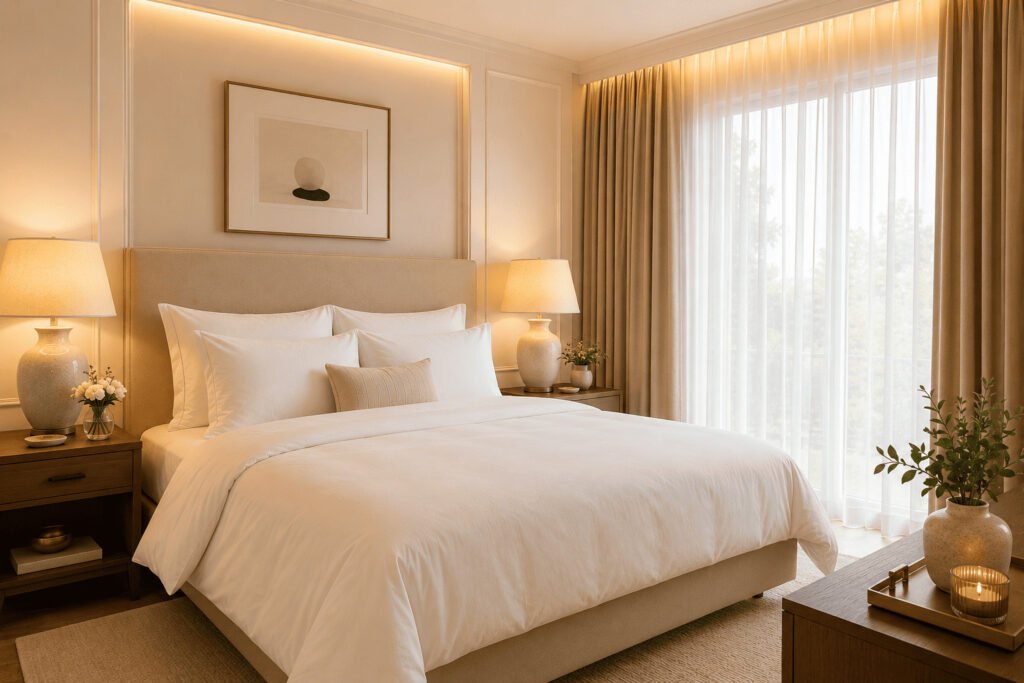
The hotel bedroom’s visual logic is based on three principles that are interconnected to portray an atmosphere of quality and tranquility, which can even make a simple hotel room stand out from the same type of room at home:
- White and warm neutral bedroom colours as the dominant palette: Almost all the really nice hotel rooms in the world use white or warm cream as the main colors for their bedding, walls, and ceiling. This not only enhances the feeling of cleanliness and brightness, but it also offers a neutral background that makes the room appear bigger and more peaceful than it really
- Warm artificial lighting with no overhead harshness: Most of the time hotel rooms in the evening don’t use overhead lights. Matching bedside lamps, floor lamps, and wall sconces are combined to provide warm, layered bedroom lights that makes the intimate, comfortable atmosphere that central overhead lighting cannot
- Zero surface clutter: hotel rooms look so good partly because the surfaces are clear. Nothing accumulated. Everything in its place. The discipline of maintaining clear surfaces is the single most impactful no-cost change available in any bedroom.
The Hotel Bed — The Most Visible Difference
The bed is the visual centre piece of any hotel room, and the quality of the hotel bed experience is what most people remember most vividly. There are four specific things hotels do with their beds that most home bedrooms do not replicate:
The bedding is always white or very pale
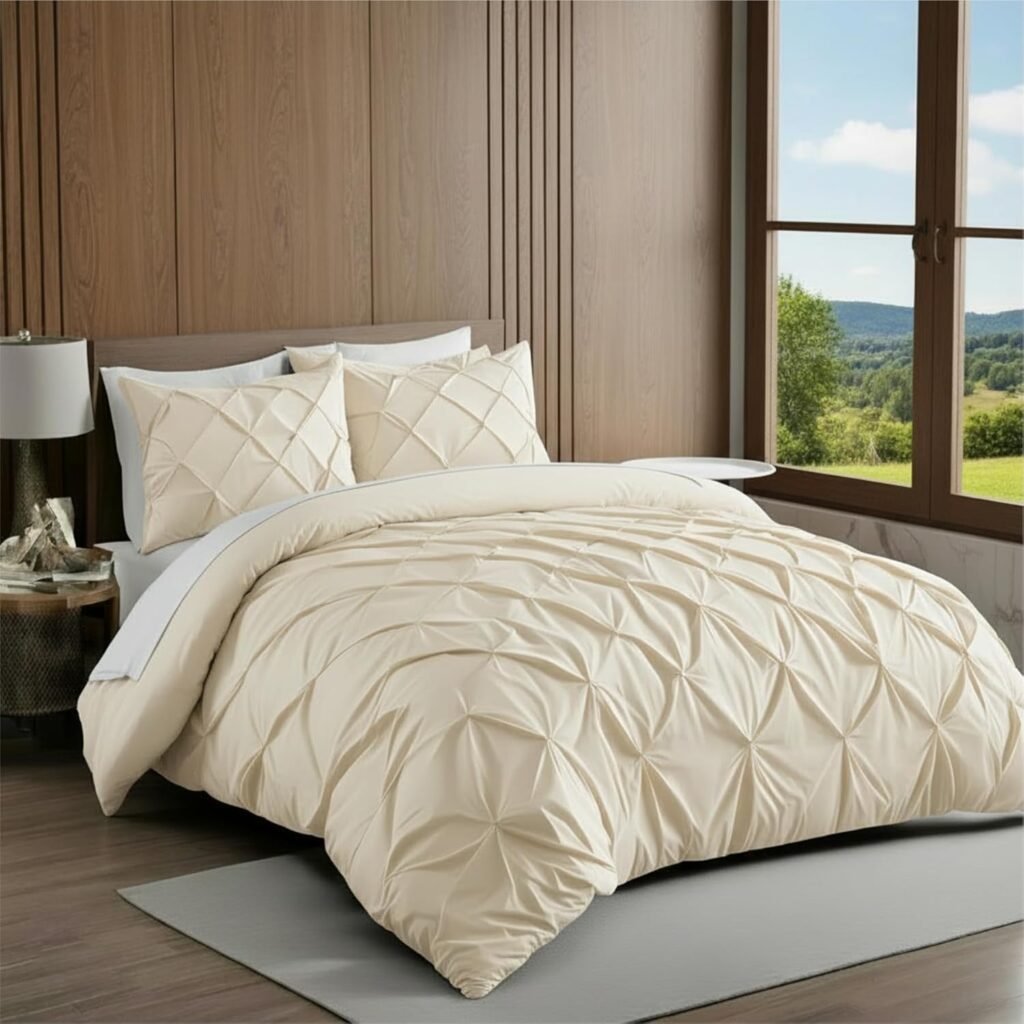
White or very pale cream quilted duvet covers, white pillowcases, and white or cream bed sheets are the most popular bedding in hotels worldwide because white is the color that conveys cleanliness better than any other color. A nicely ironed white duvet on a bed that is made neatly gives a feeling of luxury more than a duvet covered with any patterned or colored cover. The simplicity is part of the luxury — the bedding recedes from attention and allows the quality of the fabric and the perfection of the making to do the work.
The bedding is layered in three distinct elements
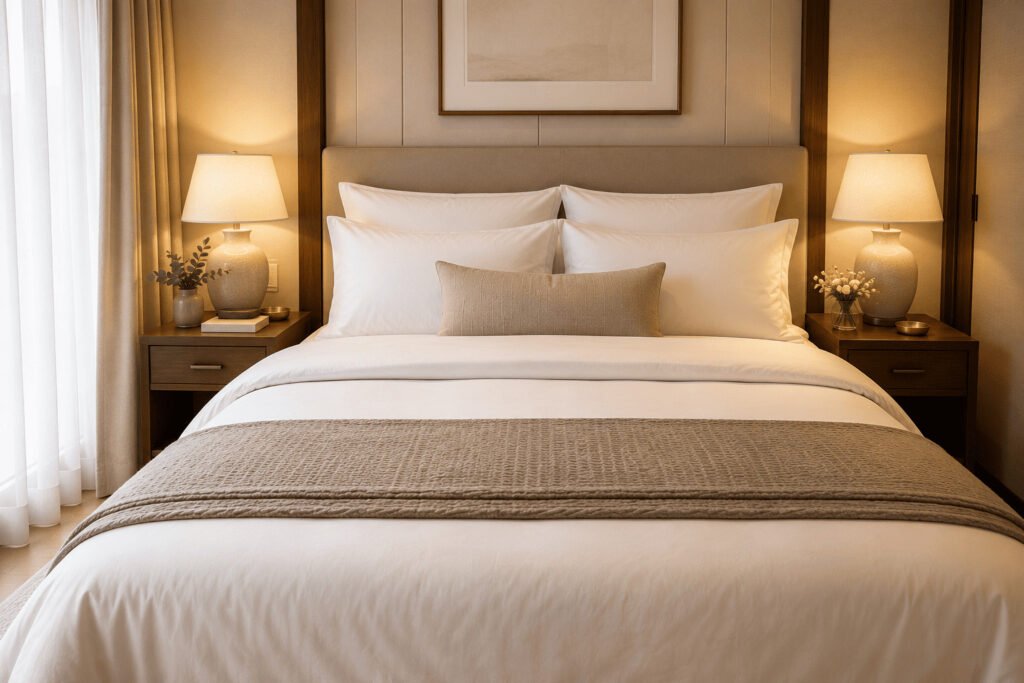
Hotel beds use three layers that most home beds reduce to two: the base sheet (fitted or flat), the duvet or coverlet, and a third decorative layer at the foot — either a folded throw, a bed runner, or an additional folded blanket. This third element at the foot of the bed is one of the most immediately recognisable hotel styling decisions and one of the easiest to replicate at home.
The third layer serves both a practical purpose (additional warmth for guests who run cold) and a visual one — the contrast of a different texture or weight folded neatly across the foot of the bed gives the whole arrangement a finished, designed quality that a duvet alone cannot achieve.
The pillows are arranged in a specific way
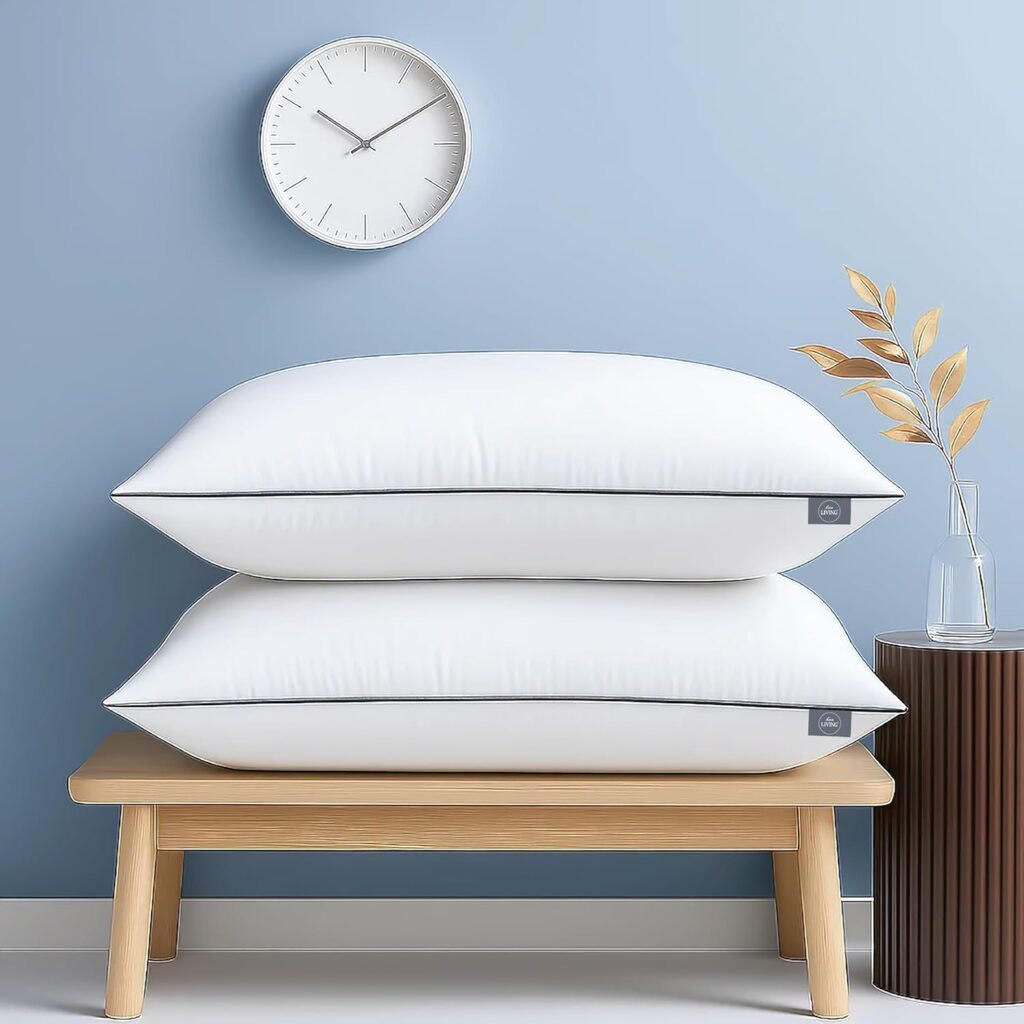
Hotel pillow arrangements typically use more pillows than most home beds — two sleeping pillows per person, supplemented by additional decorative or bolster pillows stacked behind them. The arrangement creates visual depth on the bed wall and makes the bed look significantly more generous and considered than a single pair of pillows.
The most hotel-appropriate home pillow arrangement for a double bed: Two European square pillows (65x65cm) leaning against the bedhead, two regular sleeping pillows placed in front of them, a rectangular bolster or a decorative cushion placed in front. Three tiers of pillows with each one shorter than the one behind it.
The bed is made to a high standard every morning
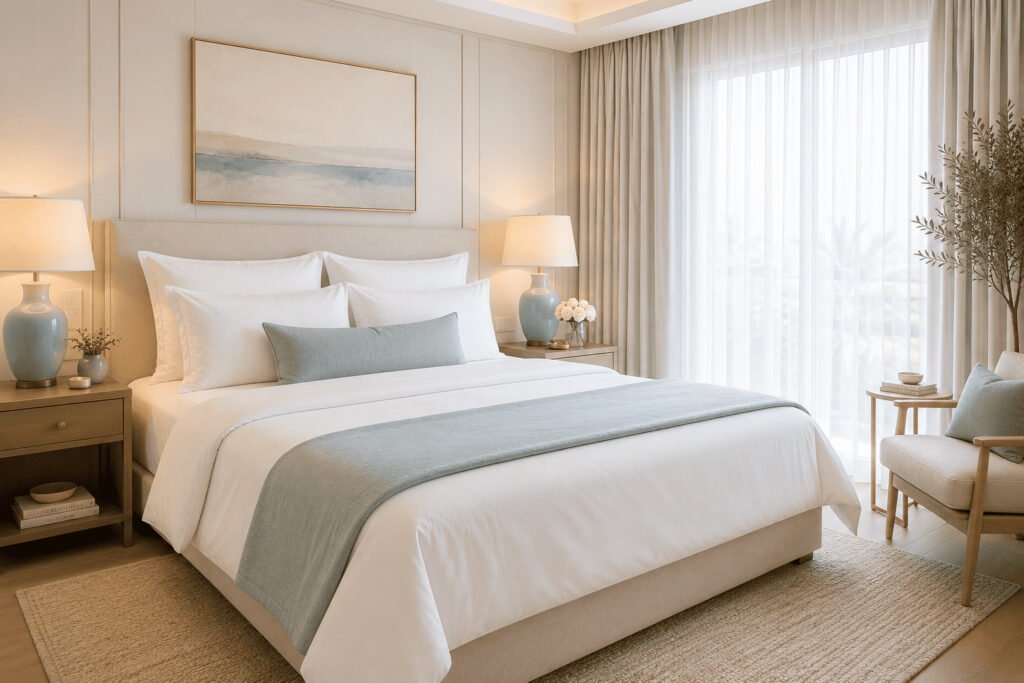
This is the most consistently cited hotel bedroom quality that people want at home and the one that is most purely a discipline rather than a purchase. A perfectly made bed — with straight lines, properly tucked corners, and a flat, smooth surface — looks more luxurious than even expensive bedding that is poorly arranged. The hotel bed formula: fitted sheet first with all corners tucked tightly, flat sheet folded back 30cm from the pillow line, duvet arranged evenly with equal overhang on both sides, pillows arranged as above, throw folded in thirds and placed at the foot.
Hotel Curtains — The Element That Changes Everything
If there is one hotel bedroom element that most dramatically transforms a domestic bedroom when replicated correctly, it is the curtains. Hotel guillotine curtain will usually seem to be more luxurious than home & curtains, and the reasons are different and can really be understood:
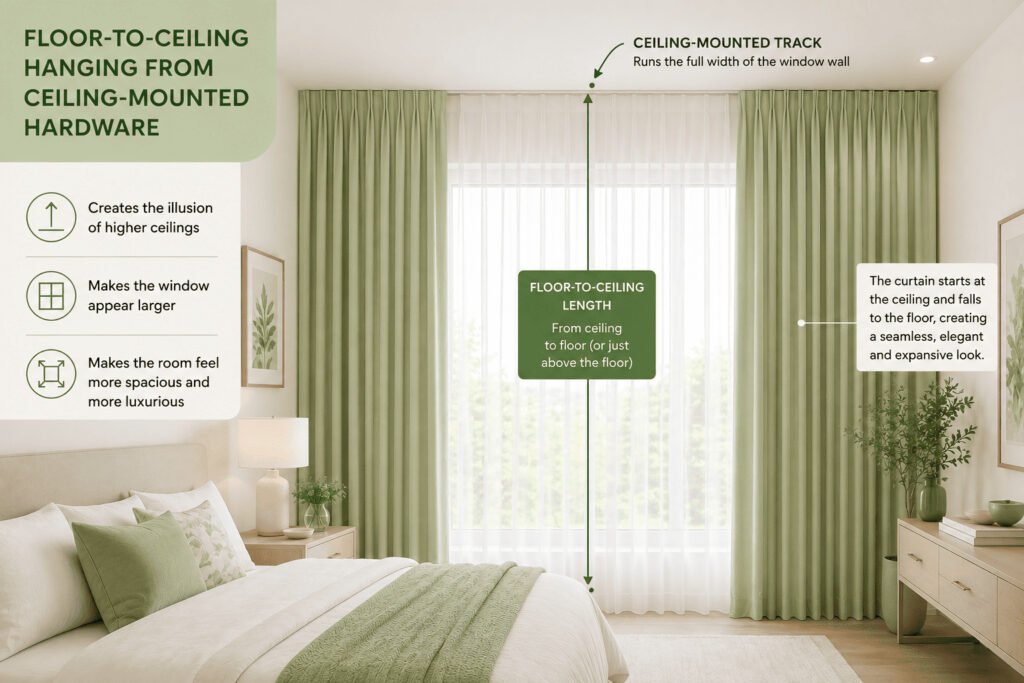
Floor-to-ceiling hanging from ceiling-mounted hardware
Hotel curtains almost never hang from a rod positioned just above the window frame. They hang from a ceiling-mounted track that runs the full width of the window wall, starting at the ceiling and falling to the floor, also known as ceiling height curtains — or a fraction below it. The effect is to make the ceiling feel dramatically higher, the window feel dramatically larger, and the room feel dramatically more generous than the actual dimensions suggest.
Double fullness — always more fabric than seems necessary
Hotel curtains use approximately twice the width of the window in fabric — sometimes more. When drawn open, the curtain panels stack into generous pleated columns at each side of the window. When drawn closed, they fall in deep, rich folds that absorb light and create an enveloping quality. Most home curtains use 1.5x fabric ratio; hotel curtains use 2x or more. This single difference accounts for much of the visual superiority of hotel curtains.
Always a blackout lining
Hotel curtains are almost universally blackout lined — because hotel guests need to sleep at any hour, regardless of external light levels. The blackout lining adds weight to the curtain, making it hang better, and ensures the darkness required for quality sleep. At home, a blackout-lined curtain in natural linen or velvet fabric provides the hotel’s complete solution in a single curtain panel.
The fabric is always natural — linen or velvet
The choice of curtain fabrics for hotels is typically very straightforward: hotel curtain material choice is linen in natural colors like cream, warm white, or a warm neutral is the mainstay for contemporary and brightly lit hotel interiors; velvet in rich jewel tones or warm neutrals is the standard for more luxurious or classic hotels. Both fabrics have in common the ability to hang with a natural weight and drape that is not achievable with polyester. Hotel curtains in linen filter morning light beautifully when the blackout inner is drawn back; hotel curtains in velvet create the most complete sense of enveloping darkness and warmth when fully closed.
Hotel Bedroom Lighting — Warm, Layered, Never Overhead

Matching Bedside Table Lamps Pair Ceramic
Hotel rooms teach the most important lighting lesson available: overhead lights are for cleaning, not for living. The entire evening atmosphere of a hotel bedroom is created by bedside lamps and nothing else. This is achievable at home with minimal investment.
- Matching bedside lamps: a pair of identical table lamps — ceramic or brass bases, linen drum shades, warm 2700K bulbs — provide the symmetrical, balanced, hotel-quality light that mismatched or different height bedside lamps cannot. The matching pair is one of the most immediately hotel-signalling purchases available.
- Wall-mounted reading lights: many hotel rooms supplement bedside lamps with wall-mounted swing-arm reading lights above each bedside position. These provide focused task lighting for reading without requiring a large lamp on the bedside table. In small bedrooms, they are even more valuable as small bedroom looks bigger.
- Dimmer switches: hotel lighting is always dimmable. A dimmer on the bedside lamps — or smart bulbs that dim via app — allows the same fixtures to provide evening atmosphere at 20% brightness and functional reading light at 70%.
The Hotel Bedroom Mattress and Sleep Quality
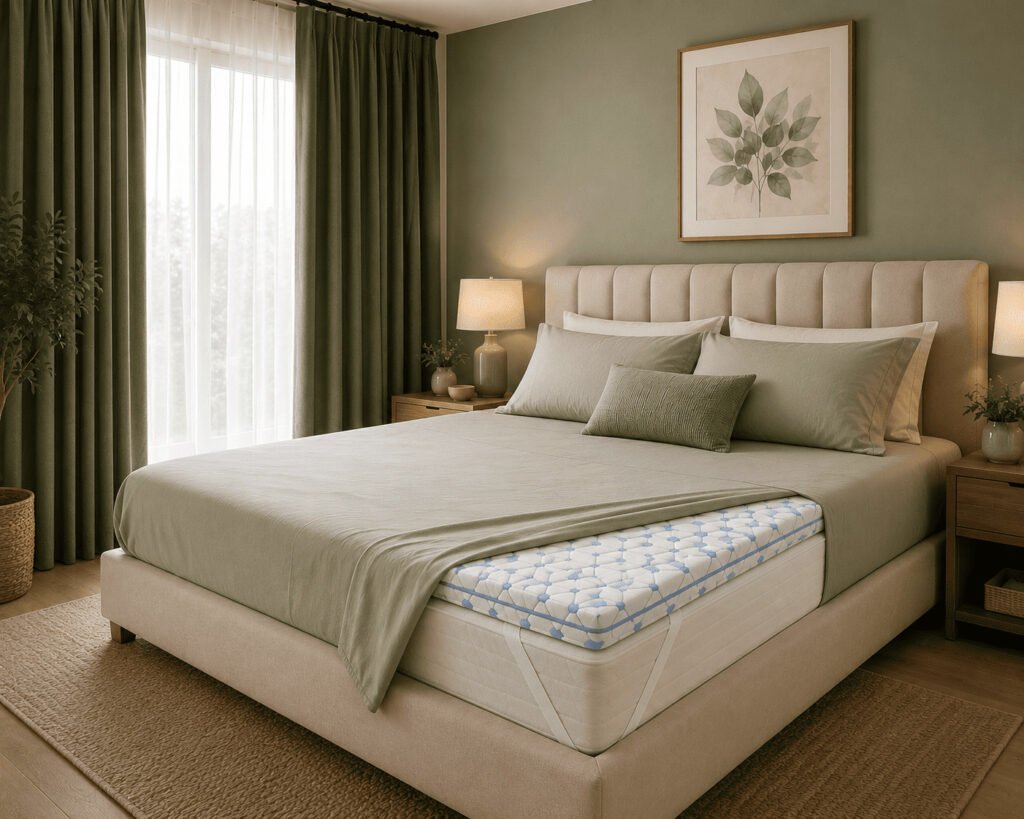
Luxury Mattress Topper 5cm Memory Foam Double
Hotels invest significantly in their mattresses because they understand that the sleep experience is the most memorable part of any hotel stay. The hotel mattress standard formula: medium-firm pocket sprung or hybrid mattress, typically in the £400-£700 range for a double equivalent, with a quality mattress topper (usually memory foam or natural latex) added above to provide the ‘sinking in’ sensation that guests associate with hotel bed quality.
The mattress topper is the most accessible hotel bed improvement available at home — a quality mattress topper of 5-8cm can transform the feel of an existing mattress that is structurally sound but lacking in surface comfort. This is consistently how hotels achieve the ‘better than my own bed’ sensation without replacing all their mattresses constantly.
The Hotel Bedroom Surface Rule — Clear, Intentional, Nothing Accumulated
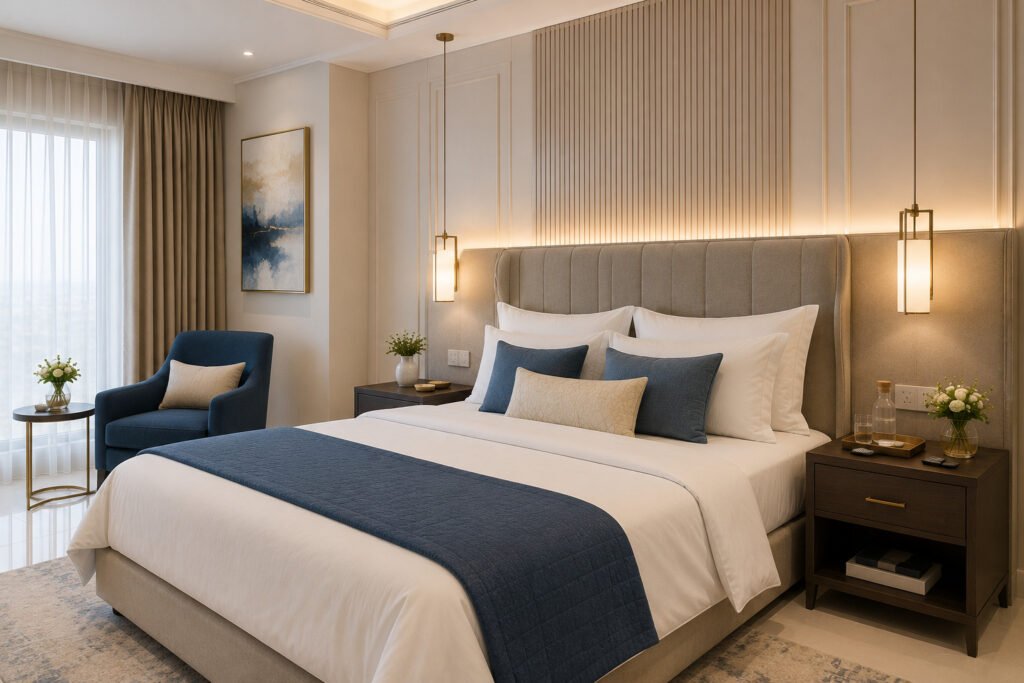
The single most important non-purchase hotel bedroom principle is surface management. Hotel rooms look better than home bedrooms in part because every surface is clear of everything that was not deliberately placed there. No charging cables trailing across the bedside table. No accumulated books, receipts, tissues, chargers, and miscellaneous objects. No surfaces that have become storage by default rather than design.
The hotel bedside table formula: one lamp, one glass or small carafe of water, one book or notepad, the television remote (hidden in a small tray if possible). That is all. The hotel equivalent of the bedside table styling principle, applied with hotel discipline.
- The most impactful no-cost hotel bedroom improvement: spend 15 minutes removing every non-essential object from every bedroom surface. Then add back only what is genuinely beautiful or genuinely needed. The visual improvement of this single act is typically more significant than any purchase.
Hotel Bedroom Scent — The Forgotten Luxury
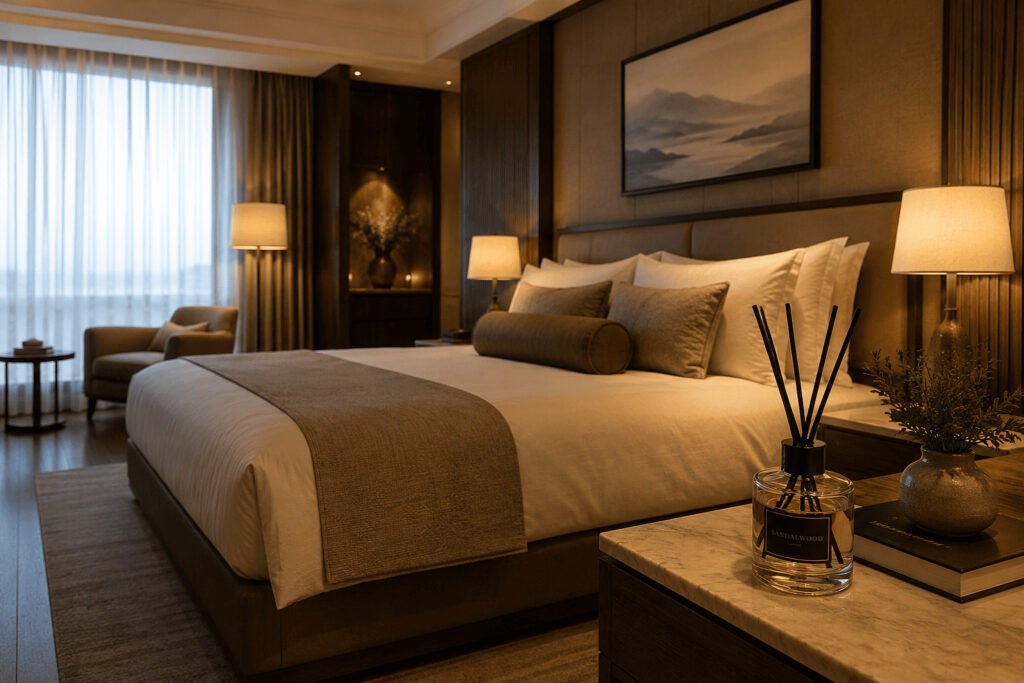
Every distinctive hotel has a signature scent — a specific fragrance diffused through the lobby and sometimes the guest rooms that becomes immediately and strongly associated with the hotel experience in the guest’s memory. This is not accidental: olfactory memory is the strongest and most immediate form of memory, and the right scent in a bedroom creates a quality of sensory comfort that no visual element alone achieves.
A quality reed diffuser or room spray in a single, consistent, gently warm fragrance — sandalwood, bergamot, white tea, or any warm-neutral blend that is neither strongly floral nor sharply citrus — transforms the quality of the bedroom experience without any visual change. The fragrance should be subtle enough not to be noticed immediately but present enough to be noticed when absent.
The Hotel Bathroom Extension — Towels, Robes, and the Detail That Signals Quality
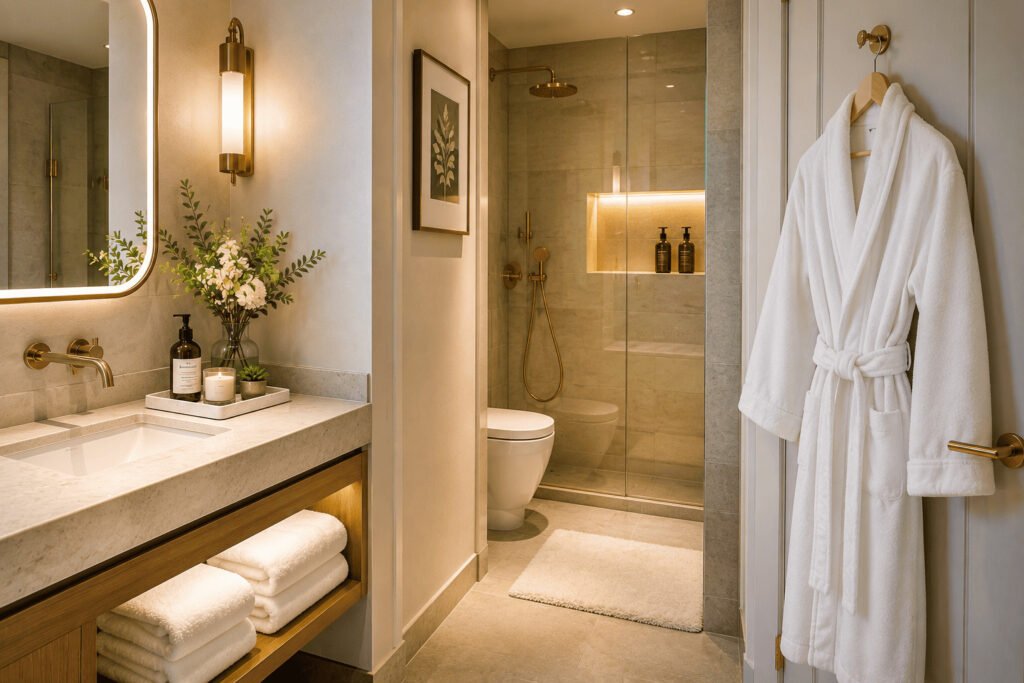
Luxury Hotel Dressing Gown Bathrobe White
The hotel bedroom experience extends into the adjacent bathroom through a set of specific signals that communicate quality with very modest investment: a pair of white towels folded and displayed rather than stuffed into a cabinet, a white robe on a hook behind the door, a small tray on the bathroom counter holding only the most used items. These details extend the hotel atmosphere beyond the bedroom itself and into the broader morning and evening experience.
The Complete Hotel Bedroom Checklist
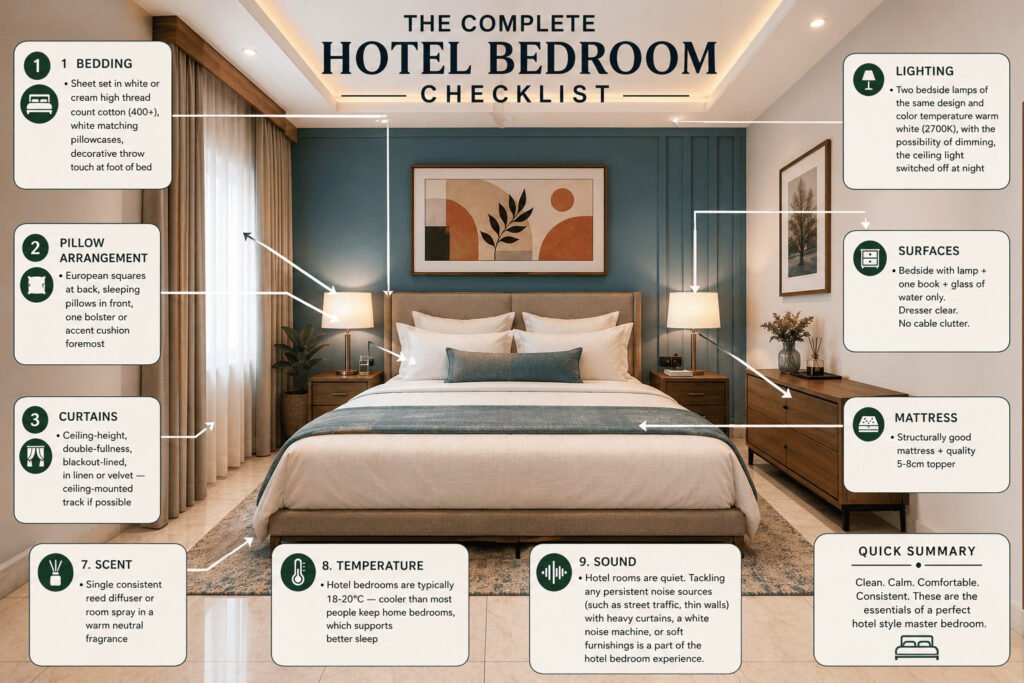
- Bedding: Sheet set in white or cream high thread count cotton (400+), white matching pillowcases, decorative throw touch at foot of bed
- Pillow arrangement: European squares at back, sleeping pillows in front, one bolster or accent cushion foremost
- Curtains: ceiling-height, double-fullness, blackout-lined, in linen or velvet — ceiling-mounted track if possible
- Lighting: Two bedside lamps of the same design and color temperature warm white (2700K), with the possibility of dimming, the ceiling light switched off at
- Surfaces: bedside with lamp + one book + glass of water only. Dresser clear. No cable clutter.
- Mattress: structurally good mattress + quality 5-8cm topper
- Scent: single consistent reed diffuser or room spray in a warm neutral fragrance
- Temperature: hotel bedrooms are typically 18-20°C — cooler than most people keep home bedrooms, which supports better sleep
- Sound: hotel rooms are quiet. Tackling any persistent noise sources (such as street traffic, thin walls) with heavy curtains, a white noise machine, or soft furnishings is a part of the hotel bedroom
Final Thoughts
The hotel room experience that the majority of people want to bring home is more about a few great design ideas that are really well executed – about clearness, quality, warmth and a neat and orderly arrangements of all the things that a bedroom usually has that make it look like a setting for a planned home rather than a space for a truly lived-in home.
The changes that create a hotel-like look at once include making the bed properly with white bedding layered three-fold every morning, hanging ceiling height curtains in linen or velvet with blackout lining and plenty of fullness, changing bedside lighting to matching warm toned lamps and dimming them in the evenings, and clearing all surfaces down to a few carefully chosen objects.
None of these changes requires significant spending. Most require discipline and intention rather than investment. The hotel bedroom principle that matters most is perhaps the simplest: every element in the room should be there on purpose. The discipline of that purpose is what creates the luxury.
Frequently Asked Questions
Q: What makes hotel bedrooms feel more luxurious than home bedrooms?
A: Hotel bedrooms get a more luxurious feel mainly due to these four factors: comprehensive removal of clutter in every surface, top-notch white bedding of a particular layered layout, floor-to-ceiling curtains with abundant fabric as well as blackout lining, and warm layer of lights without any overhead harshness. None of these elements is expensive in itself — the hotel effect is a design discipline rather than a spending level.
Q: What thread count do hotels use for bedding?
A: Most mid-to-high-end hotels use 300 to 400 thread count Egyptian or long-staple cotton for their duvet covers and sheets — high enough to feel genuinely soft and smooth, but not so high as to create the misleading marketing territory of 1000+ thread count claims (which often use inferior shorter fibres twisted together to inflate the count). To get a hotel-style look for your bedroom at home, choosing a 300-400 thread count percale or sateen fabric made from pure Egyptian cotton will be the ideal point.
Q: What type of curtains do hotels use?
A: Hotels almost universally use blackout-lined curtains — because guests need light control at any hour. Usually, linen a lighter or modern properties the face fabric and velvet more traditional or luxurious ones. The 4 main aspects that set the stand apart are: hardware mounted on the ceiling drop from floor to ceiling size. 2 times or more the width of the window make sure there is blackout lining for total control of light
Q: How do I make my bedroom smell like a hotel?
A: Hotels use signature scent programmes — typically warm, complex, moderately diffused fragrances that are neither strongly floral nor sharply fresh. At home, a quality reed diffuser in a single consistent warm fragrance (white tea, bergamot and sandalwood, amber, or similar) placed in the bedroom creates a very similar effect. The key is consistency — using the same fragrance every day so the bedroom develops a distinct, pleasant olfactory character. The scent should be noticeable on entering the room but not overpowering at the bedside.