Let me guess: you have curtains in your bedroom. They look good. But at 5.47 am on a summer day, your room is turned into a stage and you are suddenly wide awake – with or without your permission.
Blackout curtains seem like a luxury home item until you see how much they really change your life, after which you will be wondering how you ever survived without them! Better sleep, coziness on warm summer mornings and chilly winter nights, not to mention a bedroom which is dark at the right moments – quite a lot of things for a mere piece of fabric to do, really. But the right blackout curtains will accomplish all of that and more for you.
The problem is that not all blackout curtains deliver what they promise. There are many curtains on the market that dub themselves blackout but still let in quite a bit of light. This guide aims to clear up all the confusion about which criteria make a blackout curtain really effective, what features to consider at different price levels, and the errors that even a blackout curtain of good quality can be impeded by.
What Makes a Curtain Genuinely Blackout?
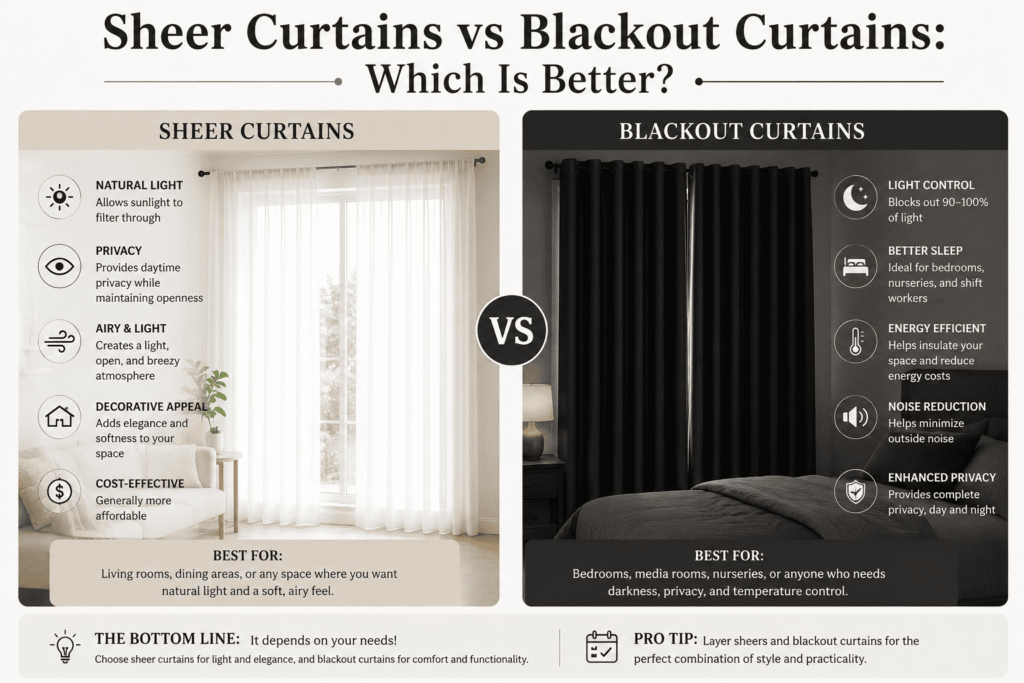
The word ‘blackout’ is a simple term but, actually, it is a very broad concept of performance. Genuine blackout fabric prevents 99 to 100 percent of light from passing through it. Whereas room-darkening fabric only blocks somewhere between 85 and 99 percent. The gap between those figures is quite big — for instance, on a sunny summer morning, even 10 percent light can make a room look quite bright.
It is the fabric construction that is responsible for the blackout effect. Most genuine blackout curtains employ one of these two methods: first, triple-weave technology, that is three layers of yarn woven together, a face layer, a dense core, and a backing, all in one integrated piece, or, second, a separate blackout lining: a foam-backed or rubber-coated layer that is sewn or glued to the reverse of the face fabric.
Triple-weave construction is usually a bit longer lasting and look nicer since the blackout layer is built-in instead of being added on top. Separate linings are less expensive to make and are more typical in cheap curtains, but the coating may come off especially after washing.
⚠ WATCH OUT: Be cautious of any curtain that just uses the word ‘blackout’ on the label without specifying a light-blocking percentage. Always read recent reviews from actual buyers to verify real-world performance before purchasing.
The Four Things That Determine How Dark Your Bedroom Gets
One thing that curtain manufacturers rarely tell you is this: Even with the best blackout fabric, your room won’t be completely dark if your curtains are wrongly installed. Bedrooms get illuminated through different ways — the fabric itself, through the sides, top, and bottom openings. Wonderful blackout curtain material deal with the first issue. Proper installation deals with the others.
1. Fabric Light Transmission
The curtain itself is made of this — and what the blackout rating actually points to. Check curtains that indicate 99% or 100% of light blocking. Curtains described as ‘room darkening’ instead of ‘blackout’ will be considerably less effective.
2. Side Gaps
Light seeps in at the sides if the curtain panel does not extend beyond the window frame. Your curtain should span at least 4 to 6 inches beyond each side of the frame. Even better, 6 to 8 inches. This is the main reason why people are unhappy with blackout curtains — the material itself is fine, but the coverage is not enough.
3. Top Gap
One of the most overlooked areas when hanging curtains is the space between the curtain top and the ceiling or the rod. If the rod is fixed right at the window frame level, there will be a noticeable wall space above the curtain to the ceiling that lets in light. You should fix the rod at ceiling level as much as you can and to reduce the top gap, install a pelmet or use curtains with deep headings.
4. Bottom Gap
Floor-level curtains that are not long enough to reach the floor — or that visibly leave a gap at the bottom — allow more light entering than people think, especially in summer when the morning sunlight is low and slanting. If you want to enjoy the blackout effect, curtains must be long enough to barely lift off the floor or be exactly touching it.
✦ PRO TIP: For a genuinely dark bedroom, mount the rod at ceiling level, use panels that extend 6 inches past each side of the frame, and ensure curtains reach to the floor. This setup — even with moderate quality blackout fabric — outperforms premium curtains that are installed with gaps.
Blackout Curtains by Budget — What to Expect at Each Level
Budget Blackout Curtains — Under £35 / $40
At this price point, you can still buy curtains that provide quite effective light blocking; however, you should not expect the luxurious hand-feel or the elegant drape of the more expensive options. Most budget blackout curtains utilize polyester triple-weave or a foam-backed lining. They wash quite well, are available in a decent range of neutral colours, and can block light effectively if correctly installed.
What to prioritise at this price: grommet or eyelet top for easy hanging, machine washable, specified light-blocking percentage of at least 95 percent. Stick to neutral colours — grey, navy, cream, charcoal — which are more likely to look good in most bedrooms.
- Realistic expectation: good functional darkness, decent appearance, may not hang as elegantly as more expensive options
- Best for: rental properties, guest bedrooms, children’s rooms, first-time buyers
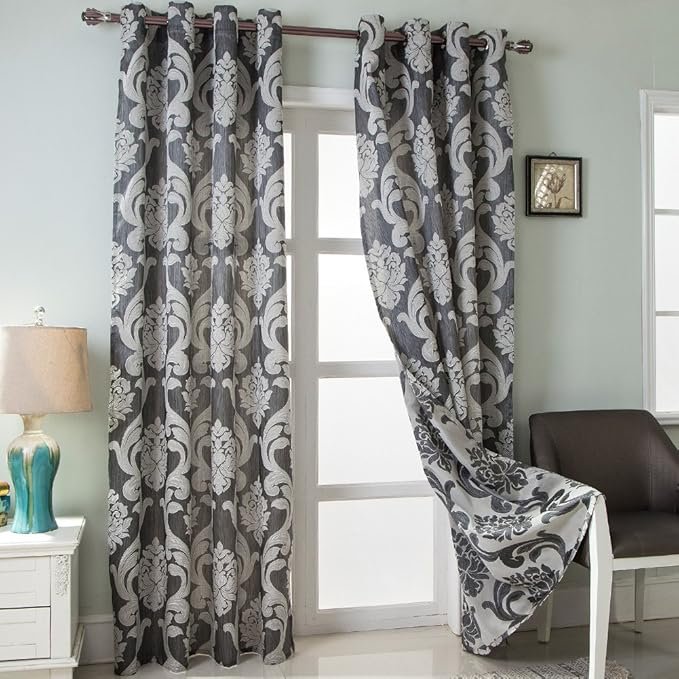
Grey Blackout Curtains – Buy Now
Mid-Range Blackout Curtains — £35 to £90 / $40 to $110
This is the perfect place for most master bedrooms. Here, you begin to enjoy a better quality of fabric although usually velvet or faux silk are the face fabrics especially when the proper sewn-in blackout lining replaces the glued coating. The curtains are more graceful, you have a larger choice of colours and they are better at standing up to time, in general.
Mid-range blackout curtains usually have a three-pass lining, which is a coating applied in three layers that really blocks out 100% of the light while still allowing the face fabric to look and feel like a normal decorative curtain. You can tell the difference in appearance between a cheaper blackout and a good mid-range one right away.
- Realistic expectation: excellent light blocking, attractive appearance, good drape, suitable for daily use in a master bedroom
- Best for: master bedrooms, main living rooms, any room where appearance as well as function matters
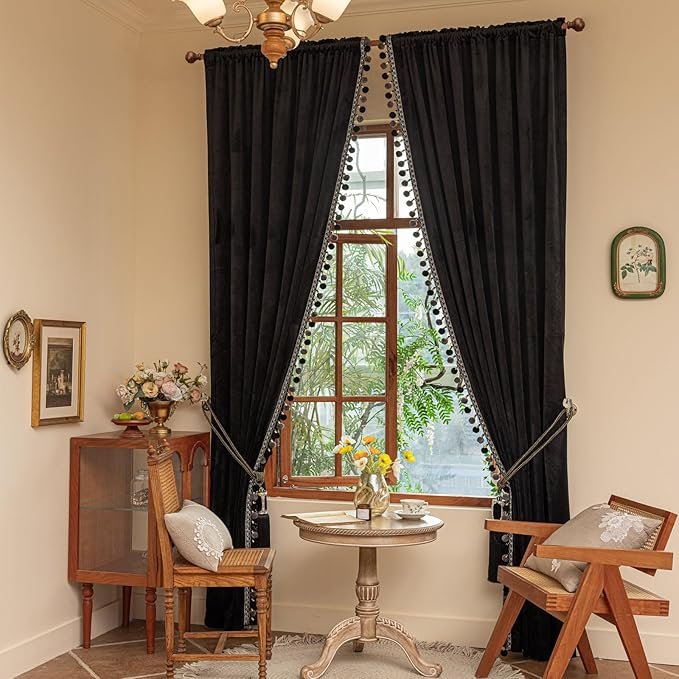
Velvet Curtains – Blackout Curtains
Premium Blackout Curtains — £90+ / $110+
Premium blackout curtains are the place where quality really gets exposed. Here, the fabrics themselves tend to be real velvet, heavy linen, or even textured cotton rather than polyester chip-offs. The blackout lining is worked-in by stitching, not glued or heat-bonded. The curtains have a perfect pleat, the drapes move gracefully even with the lightest movement of air and really do resemble those you find in an interior design magazine.
If you are investing in a bedroom you plan to remain in for many years and you value both function and aesthetics, premium blackout curtains should be on your wish list. Quality ones, if handled properly, can last 10-15 years and they can transform the whole atmosphere of a room in a way that cheap alternatives can hardly reach.
- Realistic expectation: exceptional appearance and function, long lifespan, significant visual impact on the room
- Best for: master bedrooms, luxury guest rooms, rooms where the curtains are a deliberate design feature
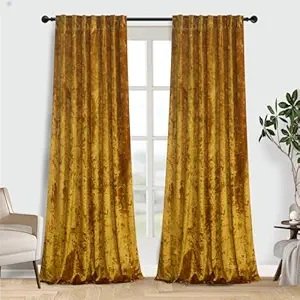
Click Here to buy velvet curtains.
Blackout Curtain Liners — A Smart Alternative
If you already have curtains that you like, but they do not darken the room sufficiently, you should definitely look at a blackout curtain liner. These are additional panels that typically have a white or cream-colored side that faces the room and they hang behind your standard curtains either on the same curtain rod or separately inside the window neck.
Liners cost way less than full curtain replacement and yet they can work really well. In most cases, they can clip or hook onto the original curtain rod, so you have a very simple installation. The main thing is that when the curtains are open, liners do make the curtains a little bulky and if your original curtains are slightly narrow, light will still leak at the edges.
For rented properties, curtain liners are a great choice — because they’re non-permanent, they can easily accompany you when you move out.
📌 NOTE: Blackout curtain liners are also a useful seasonal solution — add them in summer for complete darkness and remove in autumn when shorter days mean less early-morning light.
The Best Blackout Curtain Fabrics for Bedrooms
Polyester Blackout Curtains
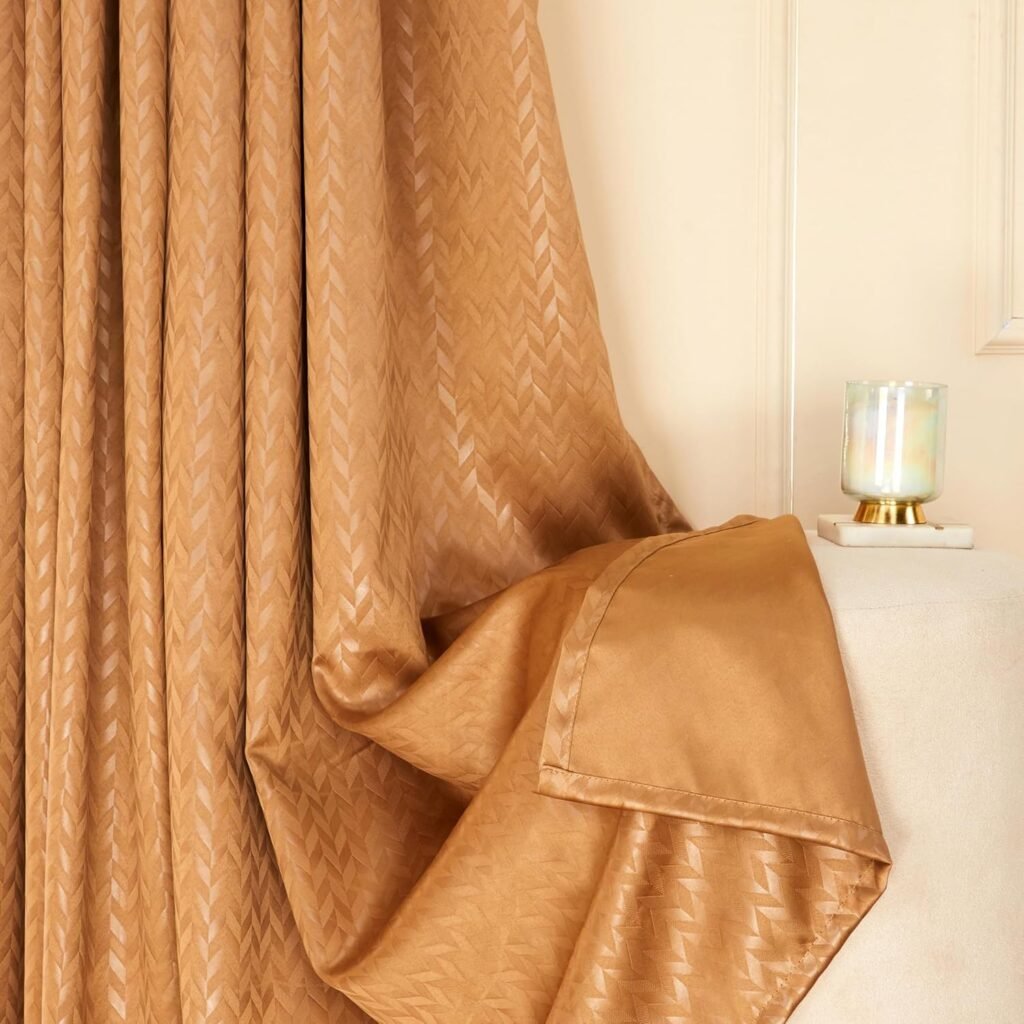
Click Here to buy this polyester curtain.
Polyester is the most popular material for blackout curtains and quite rightly so as it is tough, retains colour, easy to clean, and also offers a good price point for blackout upholstery. However, the fabric has lower breathability compared to natural materials which is not as big a problem with curtains as it is with clothes, but cheap polyester curtains can feel a bit synthetic because of this.
Velvet Blackout Curtains
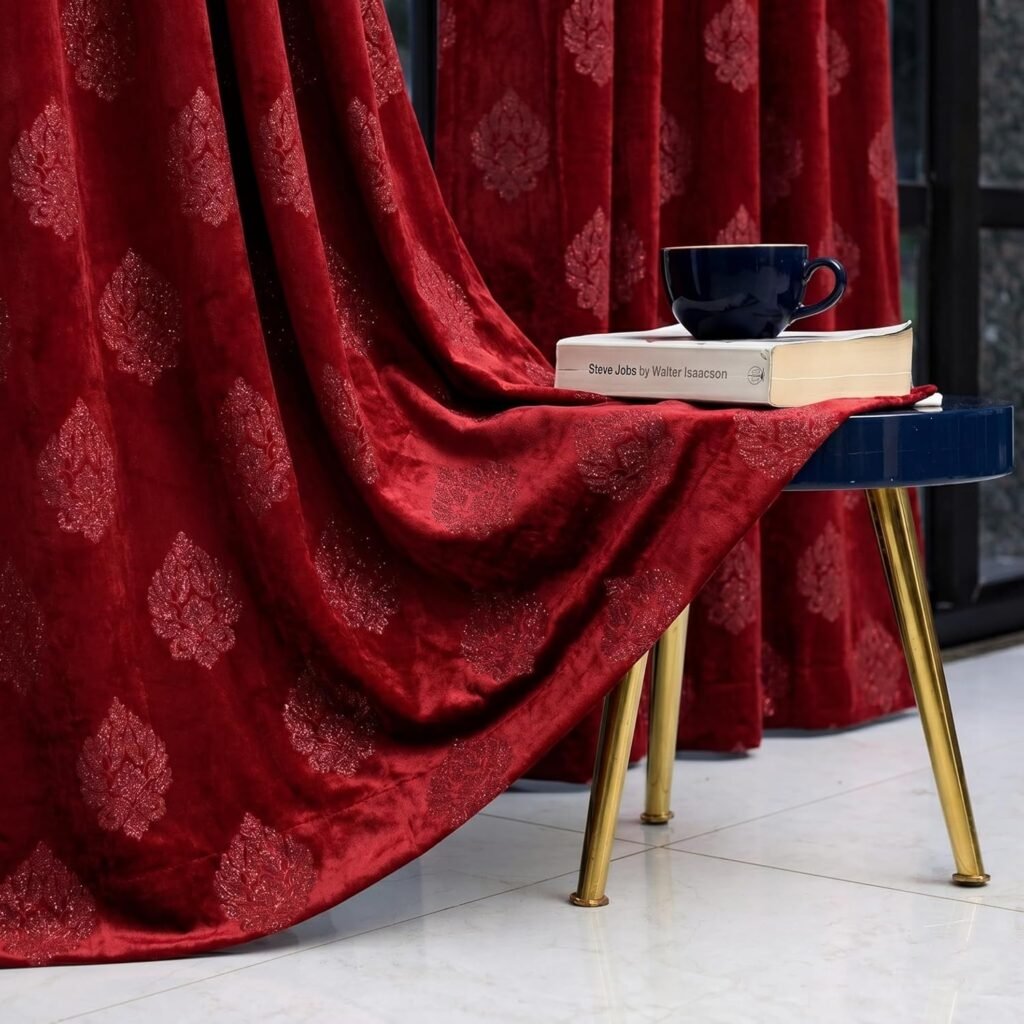
Velvet blackout curtains are the perfect match of velvet look and fabric with the functionality of blackout. Mainly velvet with its dense fiber and even more when with proper blackout lining, the mix is very effective in blocking light. Besides, velvet curtain fabric is also great for heat insulation and sound absorption. The only downside is the care velvet staring at you more so than polyester.
Linen Blackout Curtains
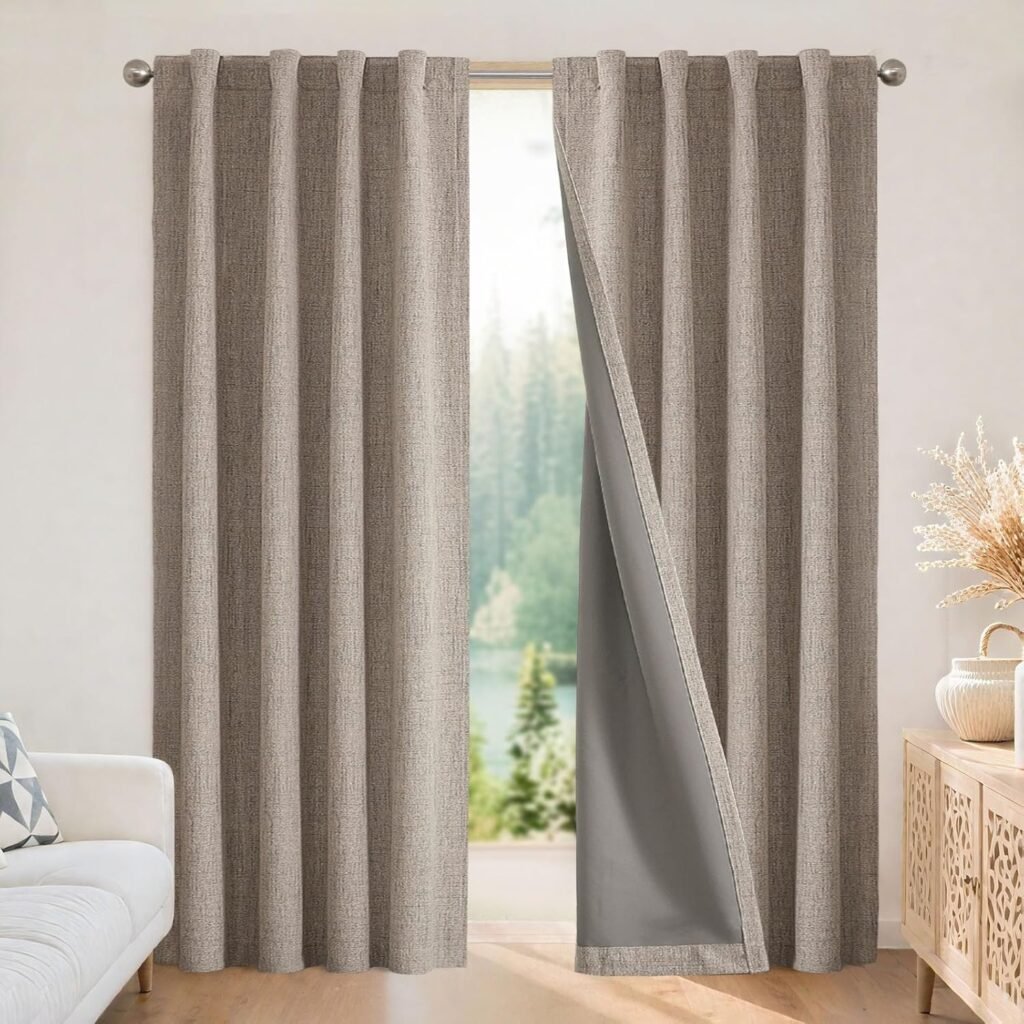
Linen Blackout Curtains – click here to buy
Linen blackout curtains have a layer of blackout fabric attached behind the natural linen layer. They are the curtains most often found in bedrooms with Scandinavian influence and homes decorated in a ‘natural’ style. The linen side looks and feels lovely, while the blackout siding takes care of practical purposes. They usually belong to the mid-to-premium price category.
Thermal Blackout Curtains
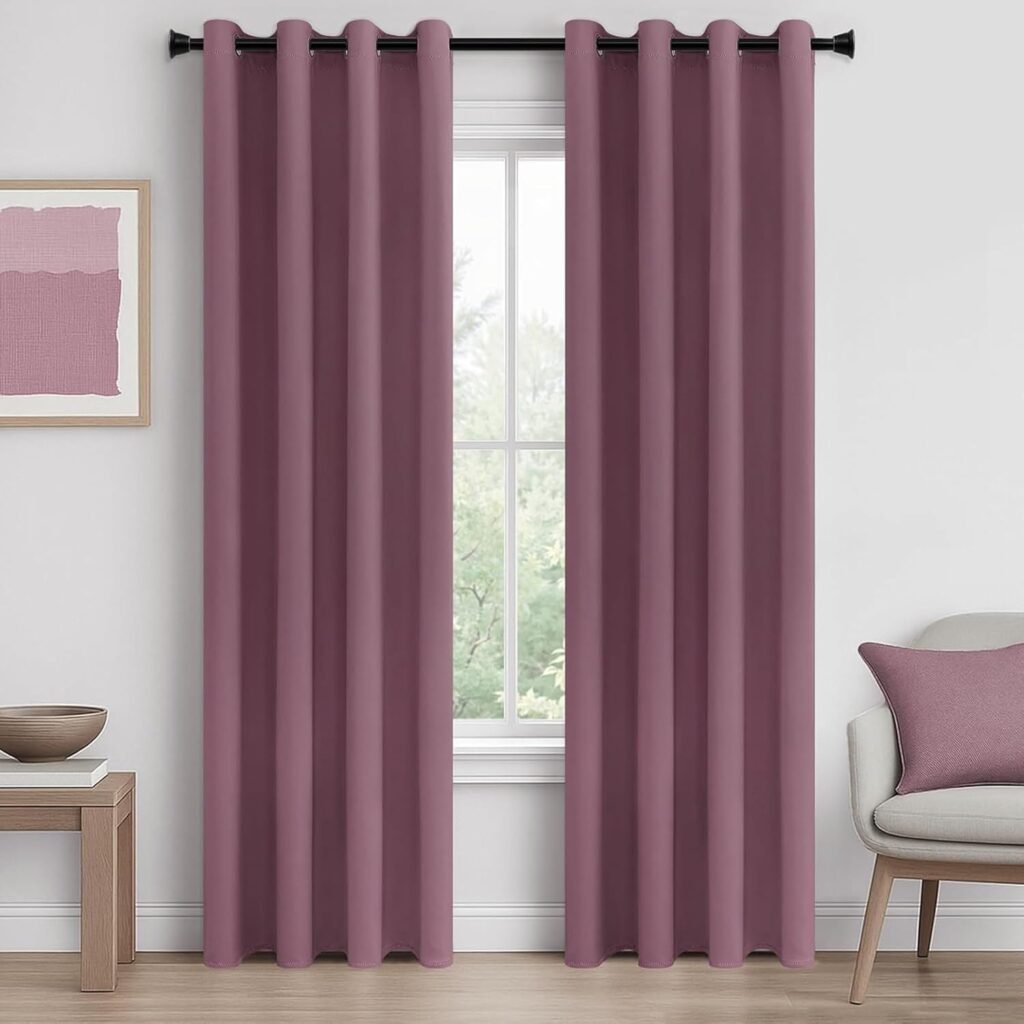
Buy thermal blackout curtains.
Thermal blackout curtains provide an additional layer which is primarily meant for insulation – they stop the heat from coming in during the summer and keep the heat from getting out in the winter. Especially in the UK, where there are a lot of houses with older, less well-insulated windows, thermal blackout curtains can significantly alter the temperature of a bedroom and heating costs during winter.
How to Hang Blackout Curtains for Maximum Effect
Even the best blackout curtains will not work at their best if you don’t install them properly. Here are the steps to get really dark results:
- The higher up towards the ceiling you mount the rod, the better — ideally, it shouldn’t be just at the top of the window frame. Any vertical space left between the rod and the ceiling will be a source of light leakage.
- One way you can stop light coming in at the sides where straight rods leave a gap is with a return rod – a rod that curves back towards the wall at each end.
- Each panel should extend beyond the window frame on its side by at least 6 inches when closed. More coverage usually means fewer gaps.
- If you want really minimal light at the top, try a deep pelmet or a cornice box above the curtain rod. It will hide the rod entirely and prevents any light from coming through the top.
- Curtains should almost touch the floor — leaving about half an inch room — or simply rest on it comfortably if you want to block light coming from underneath.
- To achieve complete darkness in a room which is exposed to very direct morning sun, use a blackout curtain along with a blackout roller blind that is fixed inside the window recess. This combination is almost completely impenetrable.
Go through out curtain length guide for your better understanding.
✦ PRO TIP: The blackout roller blind plus blackout curtain combination is what shift workers, new parents, and anyone with very sensitive sleep uses. The blind seals the recess; the curtain covers any remaining edges. Together, they give you the darkest possible bedroom.
Caring for Blackout Curtains
Blackout curtains are a little bit trickier to handle than regular curtains, especially when it comes to washing your curtains:
- Check the care label before washing any item — certain blackout linings really aren’t machine washable and must be dry cleaned only.
- Machine-washable blackout curtains can be gently washed in a cold or 30-degree cycle. Using heat may result in discoloration or deformation of the blackout coating.
- Never tumble dry at high temperatures — air dry or select a very low heat setting. Exposure to high heat can lead to the blackout lining bubbling and detaching from the face fabric.
- Never iron directly on the blackout lining – do the ironing always from the face fabric side, and don’t forget to set the iron on a low temperature.
- Regularly vacuum with the upholstery attachment to prevent dust build-up. Over time such dust can reduce the effectiveness of the lining.
- If the coated lining starts to peel or flake (which is quite common after some years with glued-on linings) then it is probably the time to get new curtains. Seldom can a flaking coating be fixed successfully.
Blackout Curtains for Different Bedroom Types
Master Bedroom Curtains
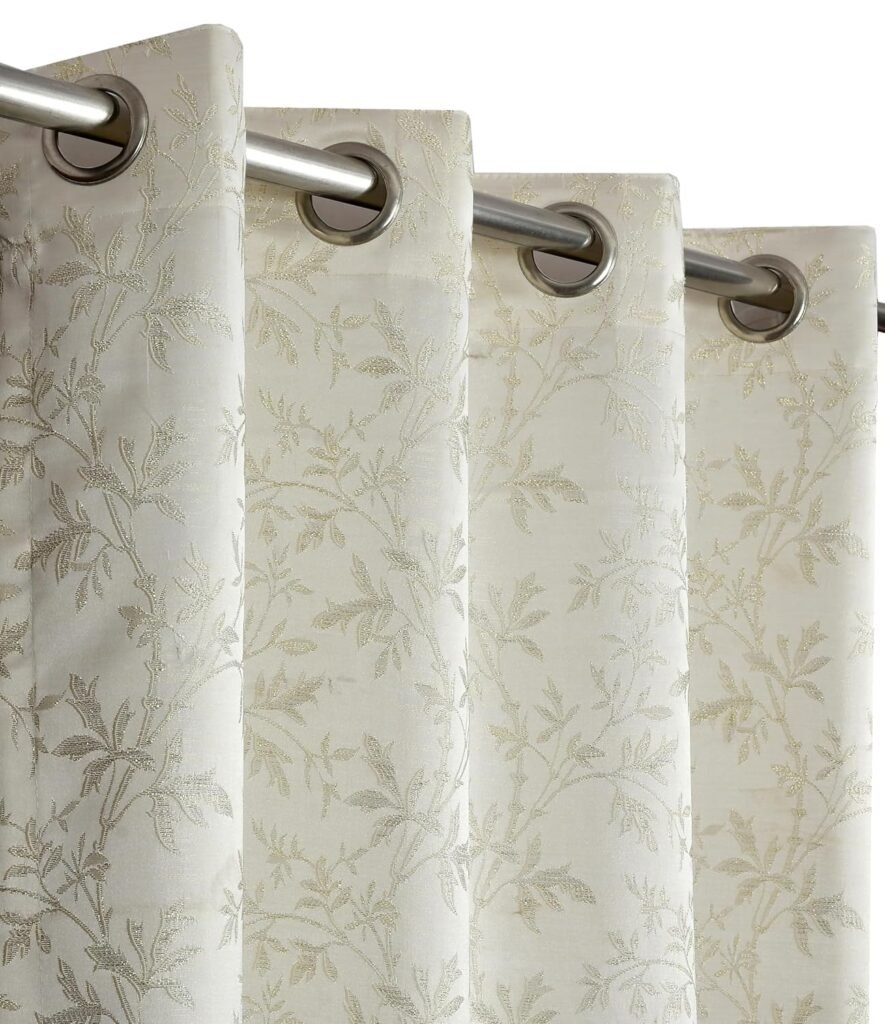
Excellent blackout and attractive appearance of curtains are the top priorities for the master bedroom. Therefore, those with mid-range or premium quality and made of velvet or lined linen, will be the perfect choice – these are the practical ones and simultaneously redound the aesthetics of the largest room in the house.
Children’s Bedroom Curtains
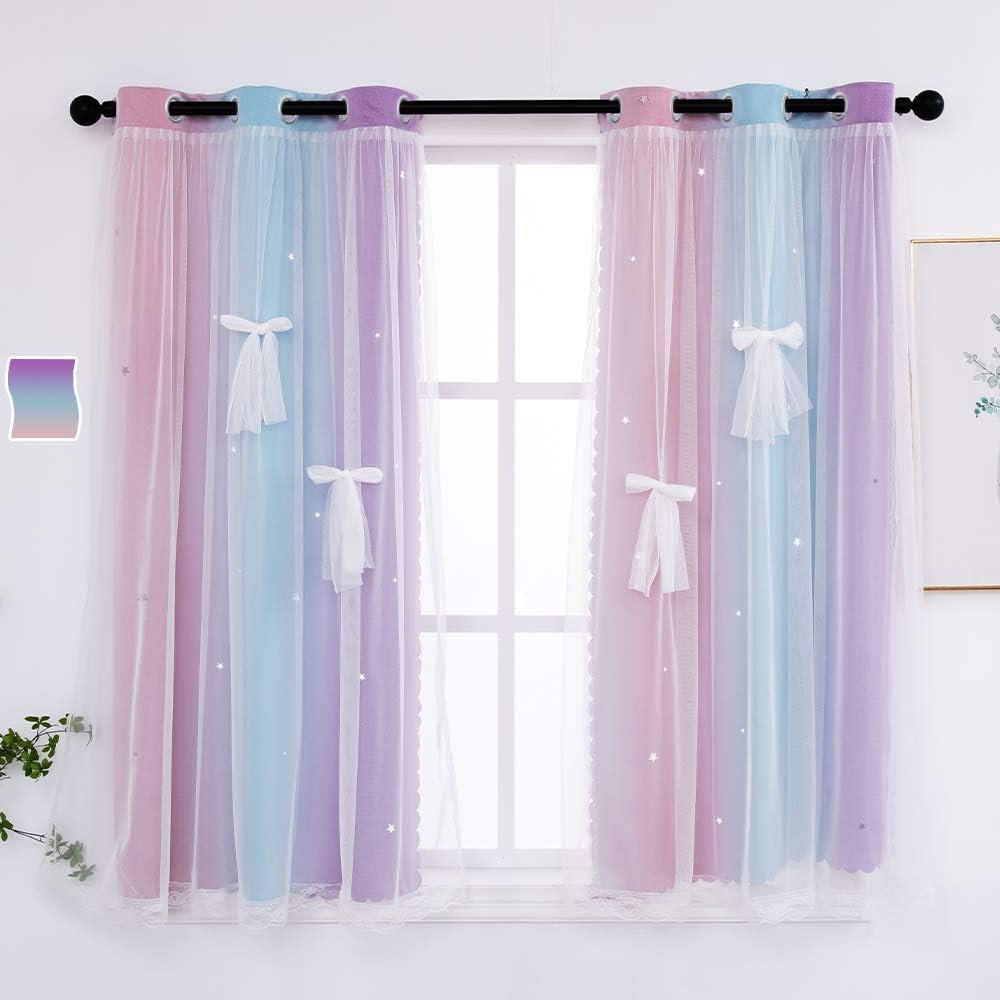
Blackout curtains are wonderful for children’s bedrooms. Most kids sleep deeper and longer in a dark room, and the bonus of an extra sleep hour in summer mornings by blocking the light is pleasantly effective for the entire family. Even low-cost to mid-priced polyester blackout curtains are more than sufficient for children’s rooms — don’t feel the need to buy the costly ones.
Baby’s Room or Nursery Curtains

Nurseries are the rooms that require the most comprehensive blackout solution. To ensure maximum darkness, one can install a roller blind with a blackout lining fitted directly inside the window recess in combination with outside mounted blackout curtains. With the blind sealing the glass and the curtains covering the frame and surround, this combination is basically light-proof. Studies show that babies who are raised in completely dark rooms tend to sleep longer and are more capable of falling asleep again after night feedings.
Guest Bedroom Curtains
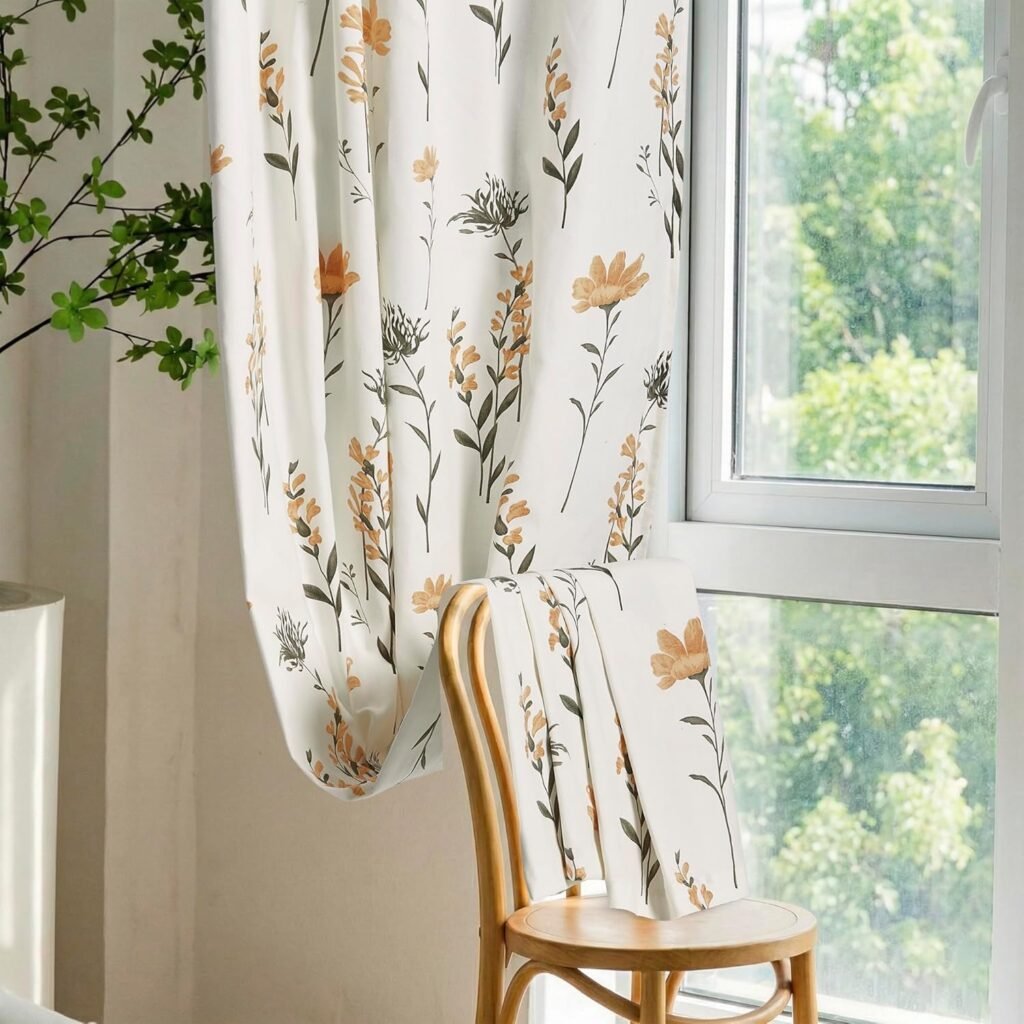
Guest bedrooms can be a major area of benefit for blackout curtains simply because the sleep patterns and light-sensitivities of guests will not be the same as yours. You will probably get complaints if the guest room is brightly lit by early-morning light while not having blackout curtains on. Discount blackout curtains will work wonderfully in this case, if that’s what you mean.
Final Thoughts
Among the most useful, yet highly undervalued bedroom improvements, blackout curtains top the list. Not a glamorous or attractive change, like new furniture or a bed frame, their main advantage is directly affecting one’s everyday life and especially sleep quality with a simple, easy and quite visible result.
Here’s a major tip: never overlook the installation process. Even if you have the top-of-the-line black-out curtains, if there’s light seeping in through the sides, top, and bottom, it’s a lost cause for a dark room. It is through the correct installation—high rod, wide panels, floor-length drop—that even mid-range black-out curtains will serve you very well.
Major tip: don’t forget about installation. You may have the most luxurious black-out curtains, but if light is coming in through the sides, top and bottom, then your dark room will be a fail. Only by correct installation—you mount the rod high, have wide panels and the curtains drop to the floor—that even mid-range black-out curtains will work quite well for you.
Frequently Asked Questions
Q: Do blackout curtains make a room completely dark?
A: Top-notch blackout curtains can block 99 to 100 percent of light directly passing through their fabric – but if the curtains aren’t installed properly, light can still sneak in around the edges. For a completely dark bedroom, you should pair your blackout curtains with a return rod that closes the side gaps, a pelmet that covers the top, and long panels that reach the floor. It is the combination of properly installed good blackout fabric that really makes a room quite dark.
Q: Are blackout curtains good for sleep?
A: Studies consistently confirm that sleeping in total or near-total darkness enhances the quality of sleep, increases the depth of sleep, and results in better morning alertness. The light, including moderate one, not only inhibits the secretion of melatonin but also detracts from sleep quality. Simply put, it’s a highly potent and reasonably priced method to turn the bedroom into a dark environment suitable for sleep, and this method is blackout curtains.
Q: Do blackout curtains help with heat in summer?
A: Indeed — a great deal. Blackout curtains, especially thermal blackout types, are capable of blocking sunlight radiation that gets through the windows. Thermal blackout curtains used on a very hot south-facing window in summer can cool the room by a number of degrees without the need for air conditioning. Their optimum effectiveness is when the curtains are shut in the heat of the day and opened at night when it is cooler outside.
Q: Can I get blackout curtains in nice colours and styles?
A: Definitely. The demand for blackout curtains has grown a lot recently and you can find them in every colour, fabric, and style even velvet jewel tones, textured linen, and printed patterns. The blackout lining is at the back of the curtain so it doesn’t change the look of the front in any way. You’re not giving up looks for efficiency.
Q: How do I stop light coming in around the sides of my blackout curtains?
A: To completely close the side gap with the curtain, the most effective method is the use of a return rod. This is a curtain rod that curves back towards the wall at each end. Another way is to have your curtain panels long enough so that they stretch at least 6 to 8 inches beyond the window frame on both sides. Adding a separate strip of blackout fabric or blackout tape behind each edge mounted to the wall with removable hooks is another alternative.
Q: What is the difference between blackout curtains and room-darkening curtains?
A: Blackout curtains literally block almost 99 to 100% of the light that passes through the fabric. On the other hand, room-darkening curtains block only partial… somewhere between 85 to 98% of the light. If you go by actually using them, room-darkening curtains will definitely darken the room but not to the point of complete darkness – on a sunny morning, you will still see silhouettes and objects in the room. Real blackout curtains, if installed properly, darken the room to the extent that you really cannot see your hand in front of your face.