
Walking into a room that had been professionally designed — a luxury hotel suite, a beautifully photographed sitting room, a show home that makes you stop in the doorway — you notice almost always at the windows something that is rather tricky to identify right away. Somehow, the curtains look simply perfect in a fashion that it is not easy to explain. They frame the window without cutting it off. They provide privacy without bringing in darkness. It is evident that they are doing lots of things together.
What you are usually looking at is layered curtains. Two sets of panels on the same window — typically a lighter, semi-transparent inner layer and a heavier, more private outer layer — working together to do things that a single curtain simply cannot do on its own.
Layering curtains is the one trick that designers rely on quite a bit for making their windows look rich and done. It is more affordable than one thinks, relatively easy to put up, and the change that it brings to a room is both instant and quite striking. This manual goes through all the aspects including from the fittings, to the types of textiles right down to the order of doing things that leading to the success of the project.
Why Layered Curtains Work So Well
A single curtain panel solves one problem: either it blocks light, or it lets it in. That is a binary choice. You draw it or you do not.
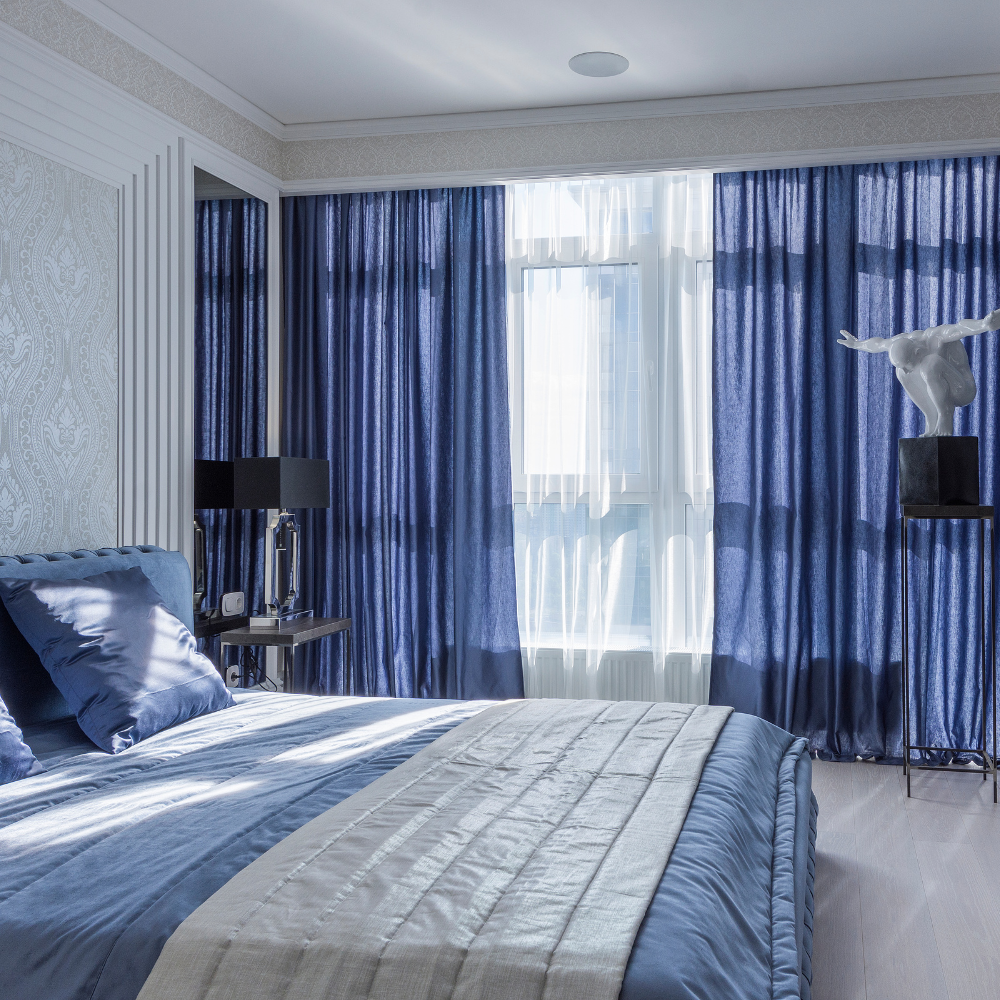
Layered curtains solve multiple problems simultaneously. The inner sheer layer filters daylight during the day — softening harsh sunlight into something warm and diffused while still maintaining daytime privacy from the street. The outer heavier layer closes at night for complete privacy, genuine darkness, and thermal insulation. At different times of day, you use different layers. The room adapts rather than compromises.
Beyond the practical benefits, there is a visual reason layering works so well. A single curtain panel, when open, sits as a flat stack at the side of the window. Two layers, when arranged at slightly different depths from the wall, create a sense of dimension and depth at the window that makes the whole wall feel more three-dimensional. The window becomes a feature rather than just a gap in the wall.
✦ PRO TIP: The fastest way to understand why layering works is to visit any well-appointed hotel and look at the windows. Almost every hotel in the world uses a sheer plus blackout combination — because it has been proven over decades to be the most satisfying solution for any room where people spend time at different hours of the day.
The Hardware: What You Actually Need
The only real requirement for layered curtains is the right rod setup. Everything else — fabric choice, colour, heading style — is flexible. But without the right hardware, layering is either impossible or looks improvised.
Option 1: A double curtain rod
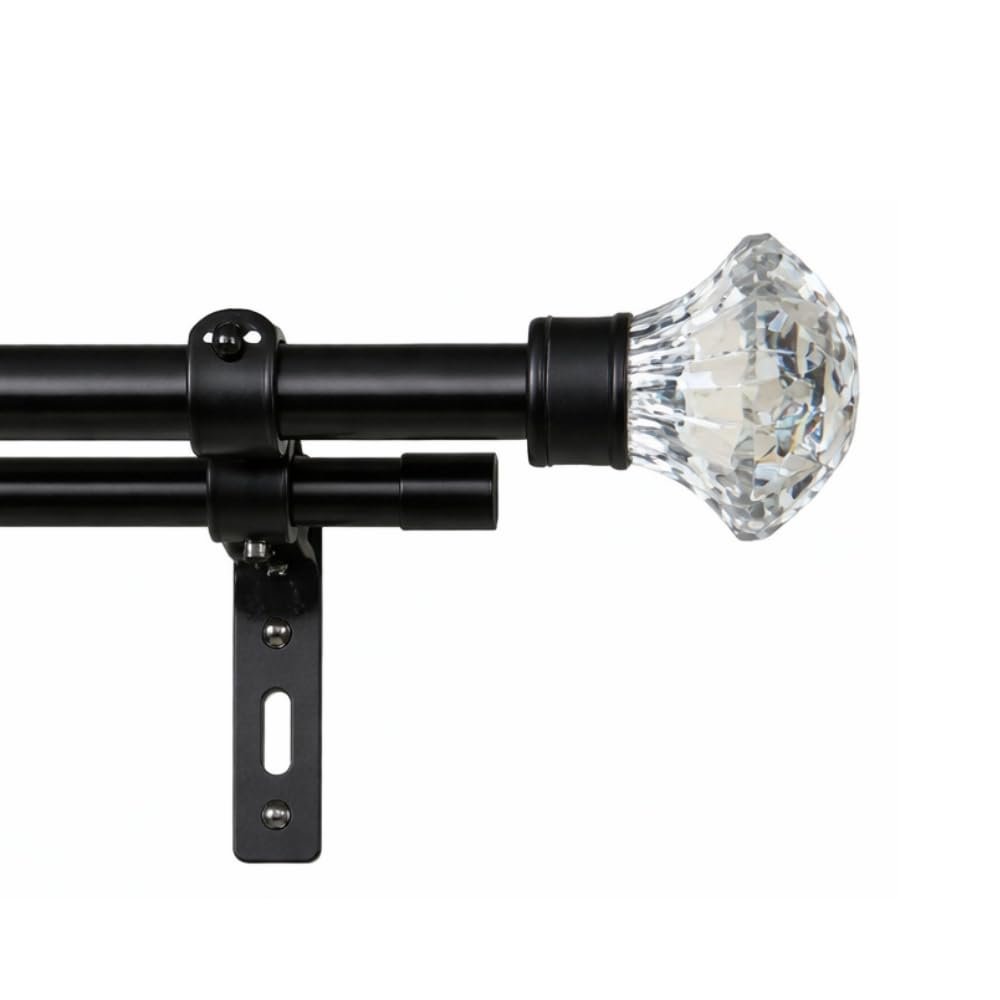
A double curtain rod is exactly what it sounds like — two parallel rods mounted on the same set of brackets, with the inner rod closer to the window and the outer rod closer to the room. The sheer panel hangs on the inner rod; the heavier panel hangs on the outer rod.
Double rods are not a rarity and can be found on the internet, in home furnishing shops, and retail outlets. They are made in standard lengths from 28 inches up to 144 inches for very wide windows, and they are offered in numerous finishes among which are – chrome, brass, matte black, brushed nickel, and white. Typically, the distance between the brackets of the two rods is 3 to 5 centimetres, which is sufficient for both curtains to be hung and operated independently without the risk of them getting entangled.
This is the cleanest and most professional-looking option. From the front, the hardware is largely concealed behind the curtain headings, and the two layers move entirely independently — you can draw each one separately with ease.
Option 2: Two separate rods at different heights
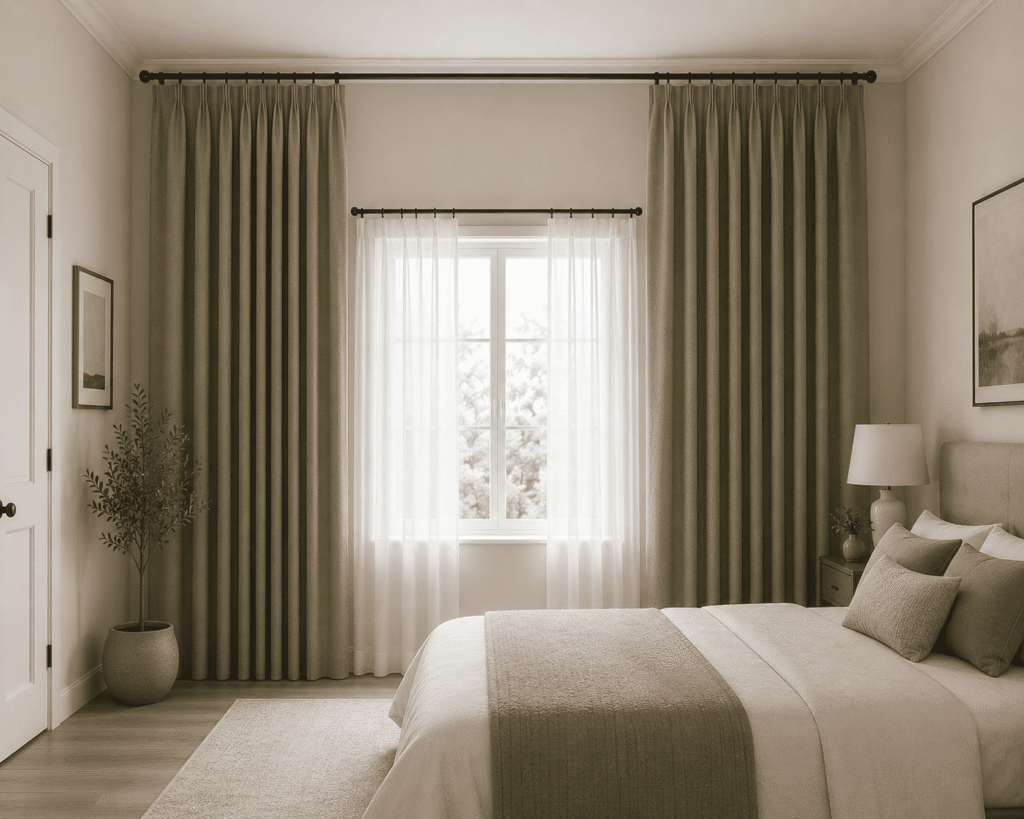
If you cannot find a double rod that fits your window width, or if you want more control over the distance between the layers, two separate single rods can be mounted at slightly different heights — the inner rod lower (just above the window frame) and the outer rod higher (closer to the ceiling).
This approach is also useful when you want the outer curtain to appear to start higher than the inner one — which creates a particular aesthetic where the layers are visibly distinct and the room feels especially tall. The small height difference between the rods means the two curtain tops are visible at slightly different positions, which reads as a deliberate design choice rather than a workaround.
Option 3: A ceiling-mounted double track
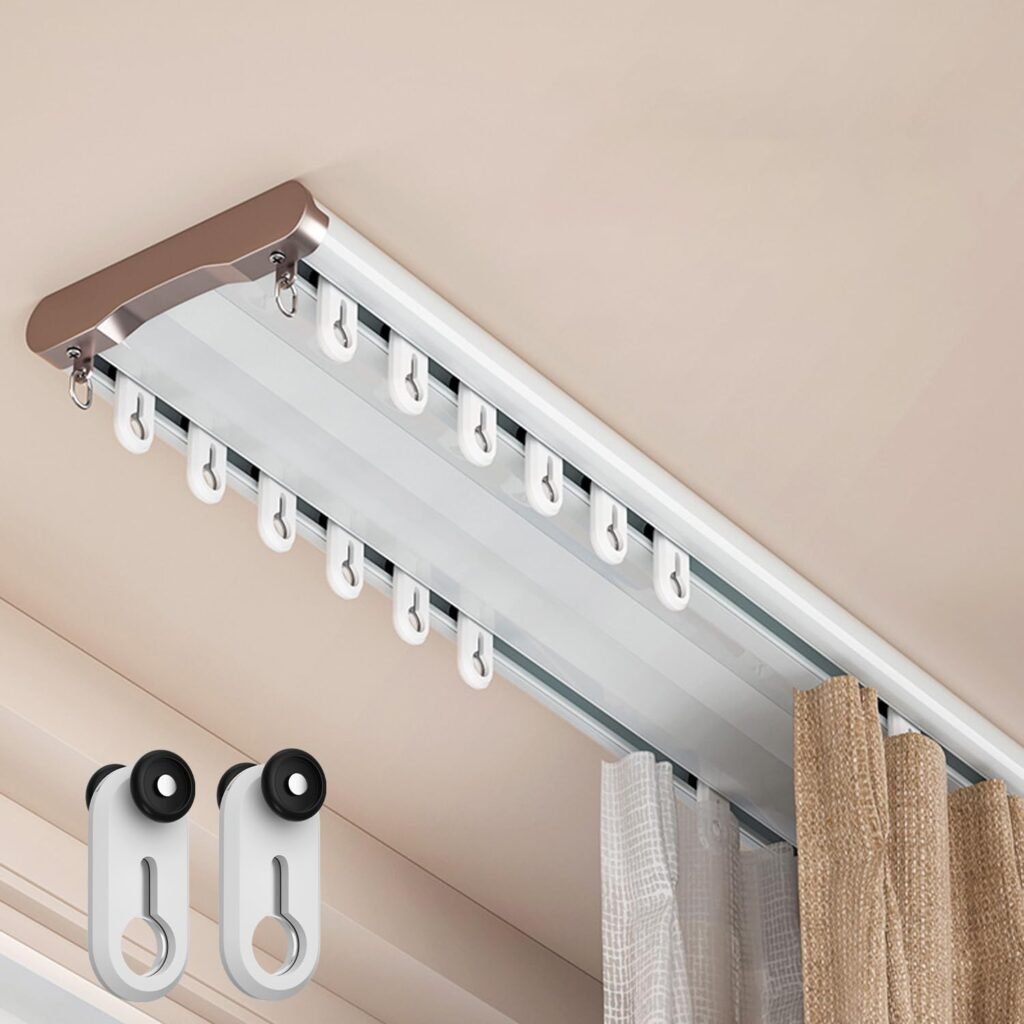
Ceiling-mounted curtain tracks — where the track is fixed to the ceiling rather than the wall above the window — give the most minimal, contemporary look because the hardware is essentially invisible. The curtains appear to hang directly from the ceiling with no visible rod or bracket.
Double-track versions are available and allow two independent layers to be hung on the same ceiling track. This is the approach used in most high-end residential and hospitality design. Setting it up may require a bit more work than simply hanging a wall rod, but the visual outcome is by far the most elegant of all the choices.
✦ PRO TIP: When choosing a double rod, check the weight rating of the brackets. The outer rod carries the heavier curtain (velvet, blackout, lined fabric) and the bracket must be rated to hold both rods’ worth of weight. Underpowered brackets sag — which means curtains that gradually slope toward the middle of the window. Use the heavy-duty versions.
Choosing the Two Layers: Fabric and Weight
A pairing that is successful in nearly all rooms is a light inner curtain made of semi-transparent fabric and a second, outer curtain of heavier, opaque or almost opaque material. Within these general guidelines, there are a number of great fabric pairings:
The classic combination: sheer voile + blackout
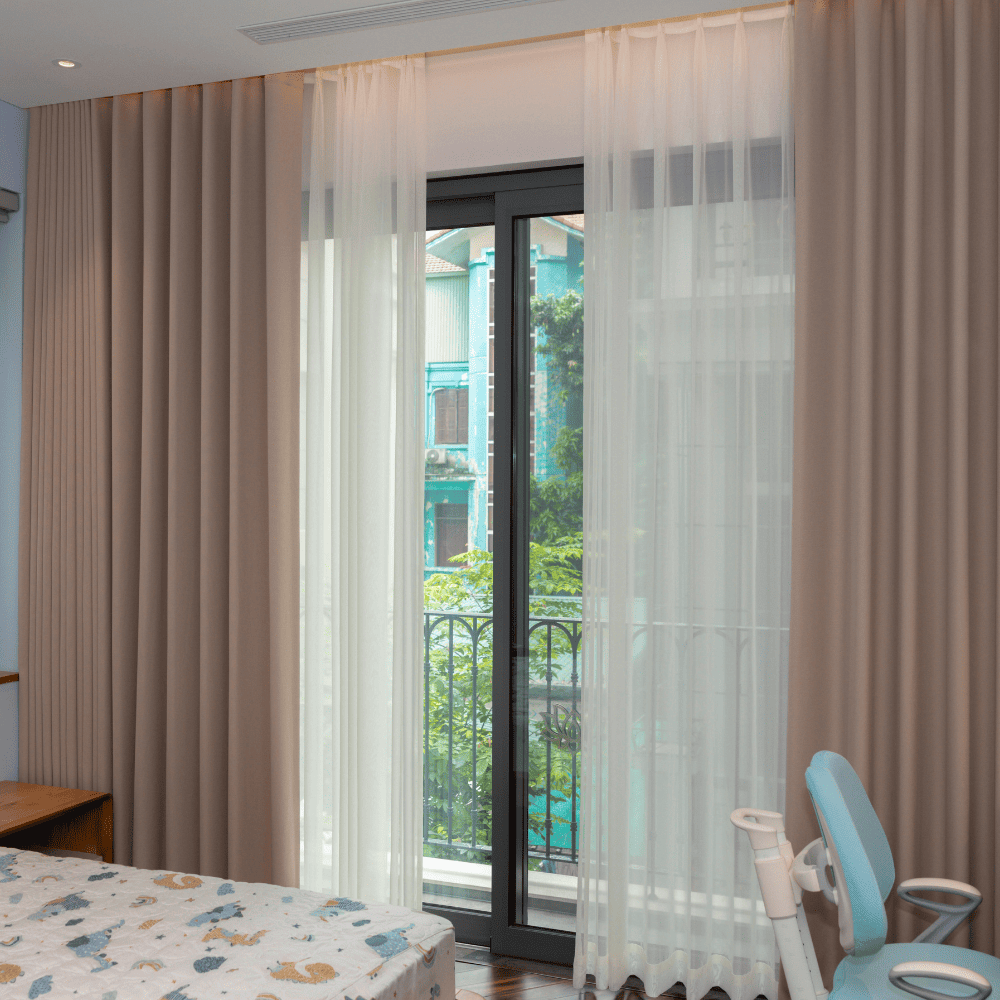
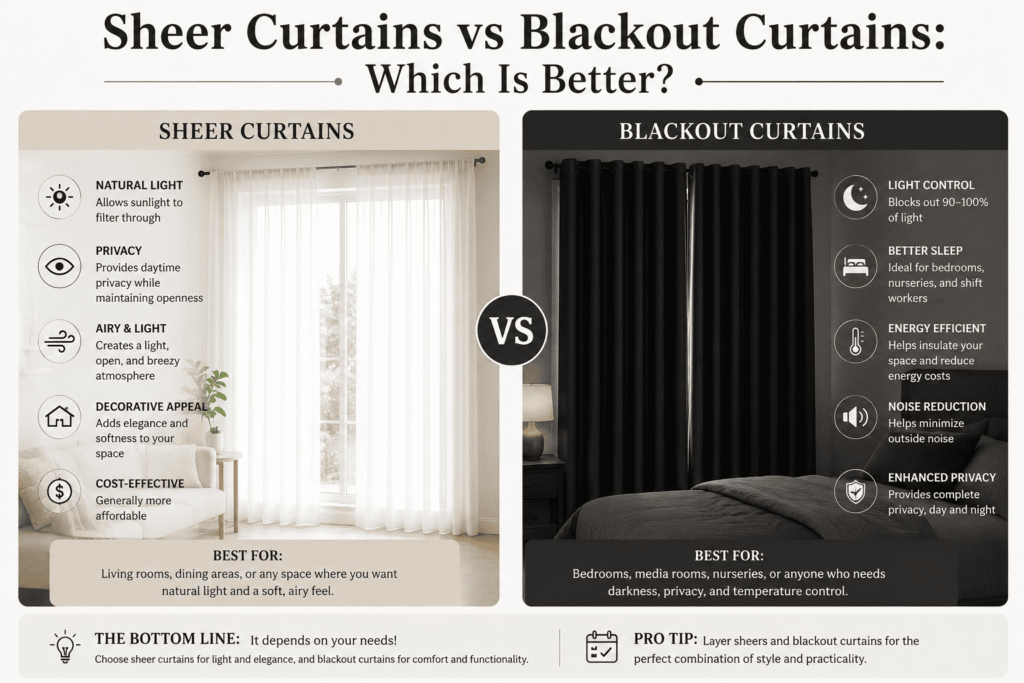
This is the workhorse of curtain layering and the most widely used combination in the world. Sheer voile or fine polyester on the inner rod — white, cream, or pale grey — allows beautiful filtered light during the day and provides daytime street-level privacy. The evening privacy is fully achieved by a blackout or room-darkening panel on the outer rod, and, with the right fabrics, thermal insulation can be quite effective as well. This is the reason why sheer and blackout curtains work together.
During the day the look is fresh and full of light. Evening time when the outer curtains are closed, the place will be wrapped, private and comfortable. Switching from one situation to another is one of a well-designed room’s delights.
The elevated combination: sheer linen + velvet
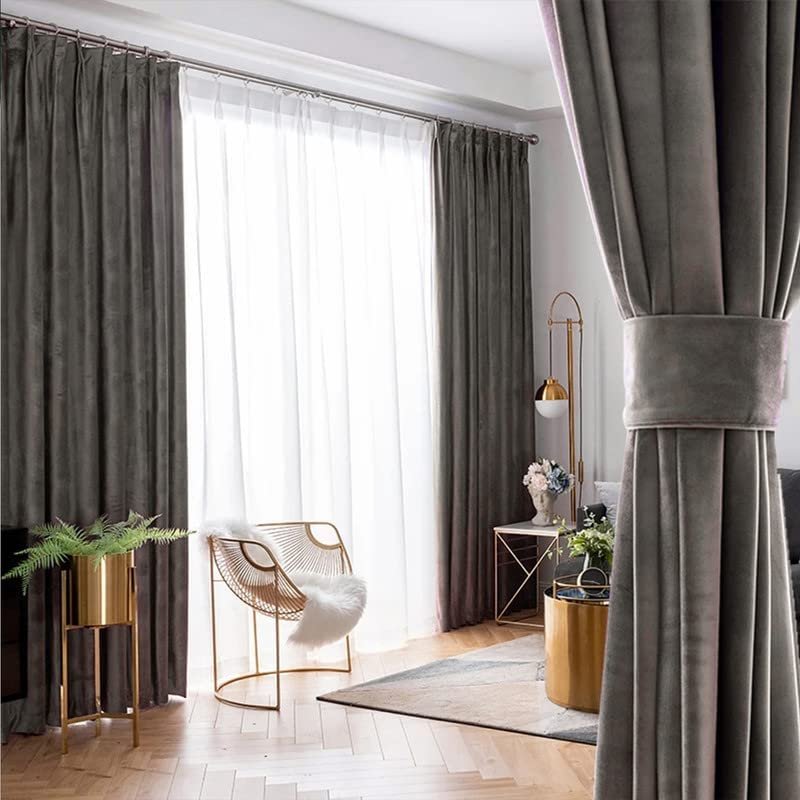
For rooms where aesthetics matter as much as function — a master bedroom, a formal living room, a dining room — pairing sheer linen with a velvet outer curtain creates a combination that is genuinely luxurious. The linen inner layer has a warmth and texture that synthetic voile lacks. The velvet outer layer provides the richest possible visual weight and the best light-blocking and thermal performance of any curtain fabric.
This combination photographs exceptionally well and is frequently used in editorial interior photography. It works best in rooms with warm wall colours — cream, terracotta, warm grey, sage — where both the linen and the velvet can be chosen in complementary rich tones.
The natural combination: sheer linen + linen
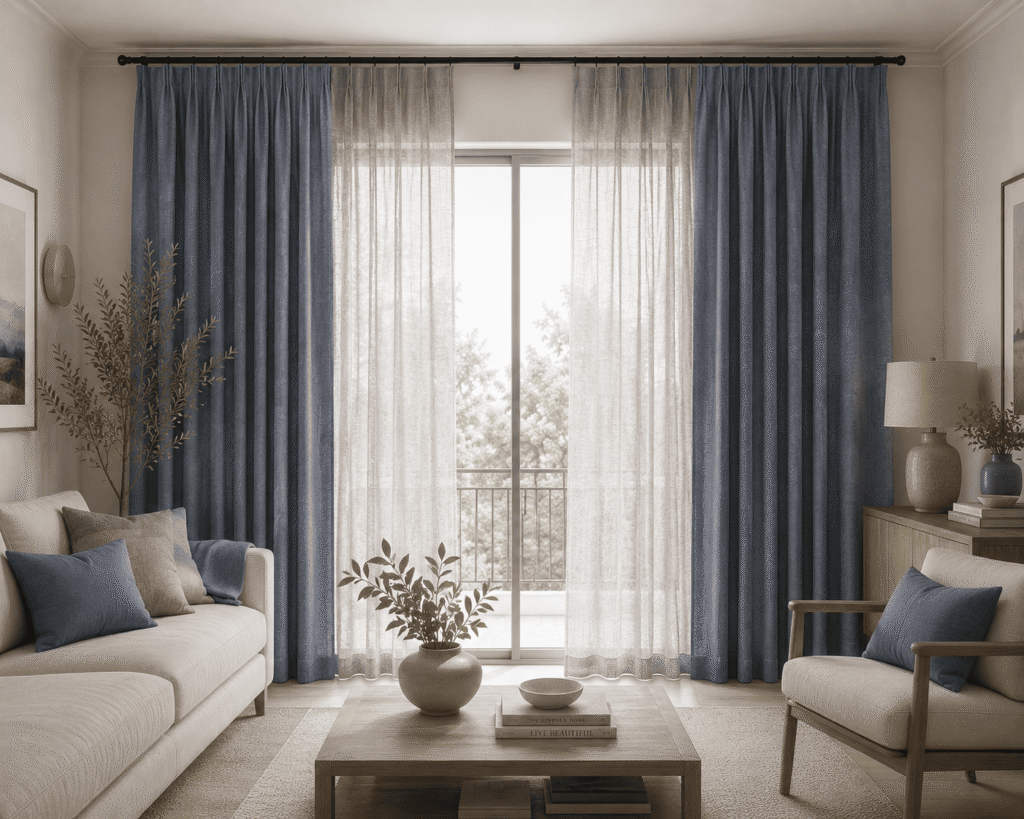
For decorations in rooms with a Scandinavian, Japandi, or natural-materials feel, using two layers of linen – a light unlined layer inside and a heavier lined layer outside – creates a very harmonious look in which both layers are visible as linen, but clearly different in weight.
Neutral colors are a great base for this mix to work together: the inner-most layer would be processing with natural linen, the outermost layer with a little darker stone or warm grey linen. The two layers’ tonal relationship is more of a subtle and classy than quite contrasting.
The practical combination: sheer voile + lined cotton or polyester
For everyday rooms on a more limited budget — a child’s bedroom, a home office, a guest room — a sheer voile inner layer paired with a standard lined cotton or polyester outer curtain delivers the same layering benefits at a fraction of the cost of premium fabric combinations. The visual effect is slightly less dramatic, but the practical benefits — light control, privacy, thermal insulation — are fully present.
Getting the Lengths Right When Layering
A common error when using layered curtains is having different lengths for the two layers, which leads to a stepped or misaligned look at the bottom. There are the points to be taken care of is getting the right drop for layered curtains. Ideally, both layers should be of the same length – either both reaching the floor or both ending at the sill, depending on the room and the look.
Practically, the inner sheer curtain layer is occasionally trimmed or hemmed so that it is 1 to 2 centimeters shorter than the outer layer. Doing so, when both layers are drawn closed, the outer layer will neatly cover the inner one without any fabric bunching between them. Besides, when the outer layer is drawn back to the sides, the inner sheer will naturally hang on its own.
Both layers should be floor-length in most rooms. The sheer inner layer at floor length creates a beautiful light effect — the fabric glows slightly at the base where it meets the floor — and the outer layer at the same length looks deliberate and intentional rather than like curtains that fell short.
✦ PRO TIP: When measuring for layered curtains on a double rod, remember that the inner rod and the outer rod are at slightly different distances from the wall. The very edges of the rods are, as a rule, about 3 to 5 cm away from the wall. It makes the outer curtain, when closed, go 3 to 5 cm further in the room than the inner sheer, automatically. Account for this when measuring — the outer curtain’s effective drop starts from a slightly lower position.
How to Hang Layered Curtains: Step by Step
Follow this sequence for the cleanest and most professional result:
- Step 1: Decide on rod position. Mount both rods (or the double rod) as high as possible — ideally within 5 to 10 centimetres of the ceiling. This is more important for layered curtains than for single ones because the visual mass of two layers benefits enormously from maximum height.
- Step 2: Fit the brackets. In the case of a double rod, the bracket set will support both rods simultaneously. For two different rods, mark the two bracket positions with a spirit level prior to drilling or sticking them with adhesive. The gap between the two rods must remain uniform throughout the entire window
- Step 3: Thread the inner sheer first. The sheer panel goes on the inner rod — closest to the glass. If using eyelet curtains on both rods, thread the inner sheer panels on the inner rod before installing the outer rod.
- Step 4: Hang the outer curtain. The heavier outer panel goes on the outer rod. For eyelet curtains, the rings sit on the rod. For tab top or rod pocket, thread them accordingly.
- Step 5: Adjust the lengths. Hang both layers and check the floor clearance. Ideally both layers end within 1 centimetre of each other at the floor. If the inner sheer is longer, it can be lightly hemmed. If the outer curtain is longer, it can form a small intentional puddle.
- Step 6: Dress the curtains. Pull both layers into their correct positions and allow them to hang for 24 to 48 hours — fabric, particularly linen and velvet, needs time to fall into its natural drape. Do not judge how they look immediately after hanging.
- Step 7: Add tiebacks if using them. Wall-mounted holdbacks should be positioned to hold both layers together when open, with the inner sheer pulled back inside the outer curtain fold.
📌 NOTE: When both layers are open (pulled to the sides), they should stack at the sides of the window in a way that clears the glass completely. This means the total stack depth of both layers — the sheer plus the outer curtain — needs to be accommodated on the wall beside the window. Extend the rod further past the window frame if the stacked layers are covering the glass when open.
Colour and Pattern: How to Combine the Two Layers
The safest and most universally successful approach is white or cream sheer inner layer plus a coloured or patterned outer layer. The sheer is essentially invisible as a colour — it reads as light and air rather than as a specific hue. The outer curtain carries all the colour personality of the window.
For a more intentional tonal approach, choose an inner sheer in the same colour family as the outer curtain — just significantly lighter. Navy outer curtain with a pale blue-grey sheer inner. Forest green outer curtain with a sage or pale green sheer inner. This creates a beautifully coherent window where the two layers feel like one considered composition rather than two separate curtains.
Pattern combinations need more care. A patterned outer curtain with a plain sheer is straightforward and usually works well. A patterned outer with a patterned sheer — even a very subtle pattern on the sheer — can become visually busy in a way that is difficult to predict until the curtains are actually hanging. Unless you have a clear vision of how the two patterns interact, keep the sheer plain.
Layered Curtains Room by Room
Living Room Curtains
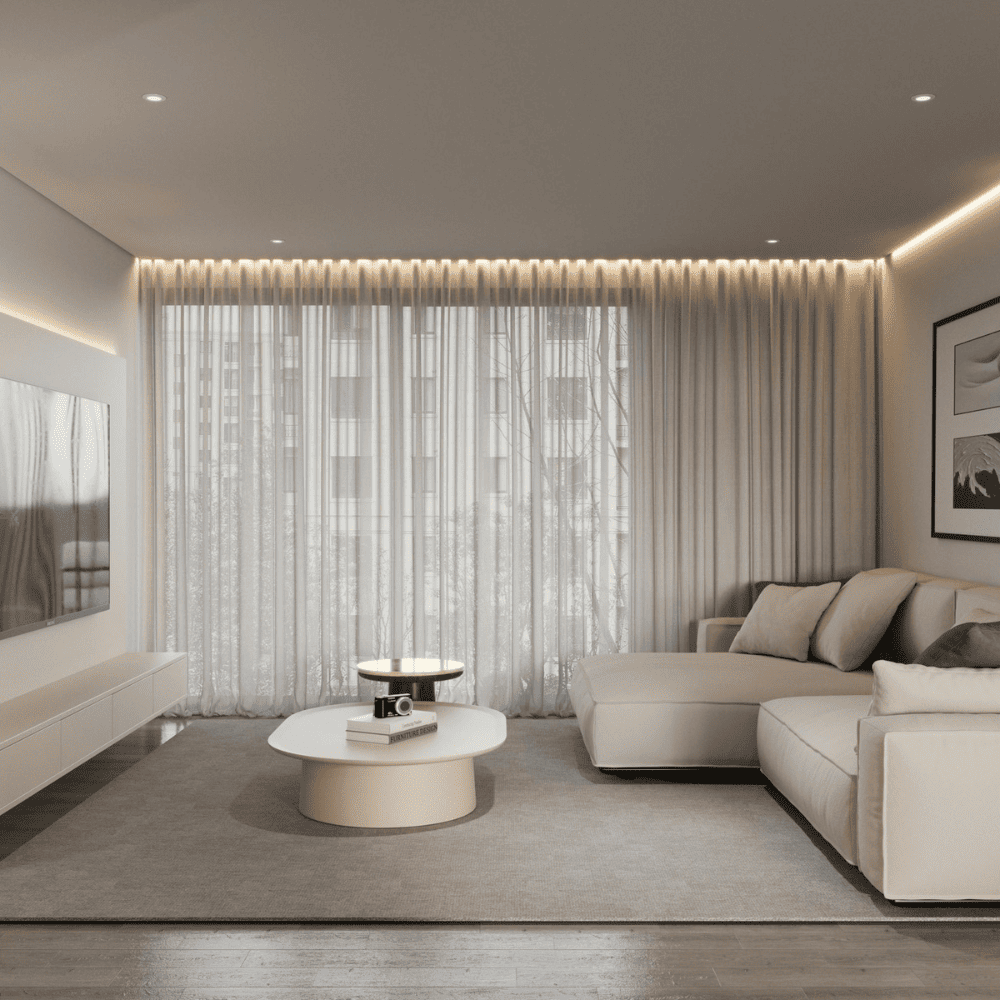
The living room is where layered curtains are most transformative and most appreciated. The ability to modulate light throughout the day — open sheers in the morning, both layers in the evening — means the room always looks and feels appropriate for the time of day. The visual impact of a well-layered living room window is immediate and impressive.
In the living room, the tried-and-true combination of sheer voile backed by a heavier linen or velvet is also that of the most versatile ones. Give preference to the white or cream sheer curtain and the outer curtain set in a colour that goes well with the sofa and the walls. The outer curtain can be either very simple or quite extravagant if the room can take it.
Bedroom Curtains

Bedrooms are the room where the functional case for layering is strongest. The sheer inner layer means the room is softly lit and private during the day. The blackout outer layer means the room is genuinely dark at night for sleep. The two-layer system is the solution to the curtain dilemma that most people eventually reach after years of trying to find a single curtain that does everything.
In a master bedroom, a sheer linen inner layer with a velvet or thermal blackout outer layer creates the most luxurious possible result, so layered curtains for bedroom is the most suitable. In a child’s room, white voile inner with a patterned or brightly coloured blackout outer is both practical and playful.
Dining Room Curtains

Dining rooms suit layered curtains particularly well in the evenings. During the day, sheer inner panels allow the room to feel light and open. In the evening, closing the outer layer (typically in a warmer, deeper colour) creates exactly the enclosed, atmospheric feeling that evening dining benefits from. Light from a dimmer switch lighting, combined with drawn outer curtains, is able to change an average dining room to something really extraordinary.
Common Layering Mistakes to Avoid
- Both layers the same weight — sheer plus sheer, or heavy plus heavy. This defeats the purpose of layering. One layer must be significantly lighter than the other.
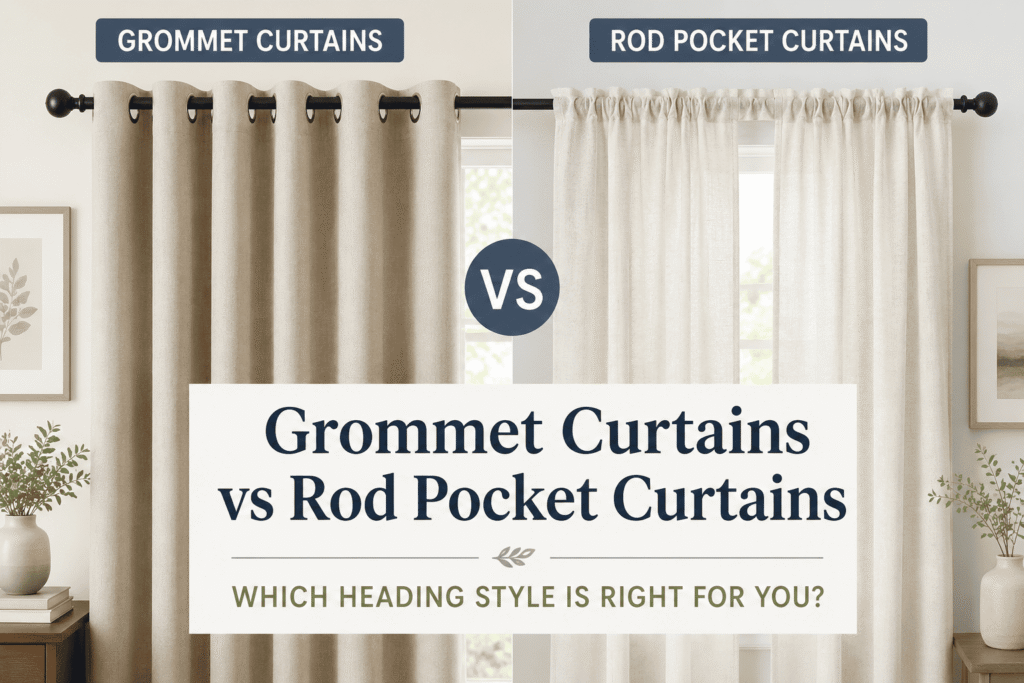
- Mismatched heading styles — one pair of eyelet curtains and one pair of rod pocket, on the same double rod. The opening and closing mechanisms are incompatible and the curtains will catch on each other constantly. Both layers should use the same heading type.
- Rods too close to the window frame — the stack of both layers when open will cover the glass. Extend both rods well past the frame on each side so the layers stack entirely on the wall when drawn back.
- Choosing layers that clash in colour — an orange outer curtain with a yellow-toned sheer creates an unexpected mixed colour when both are closed together. Stick to neutrals for sheers or choose a sheer specifically matched to the outer curtain colour family.
- Not dressing the curtains after hanging — freshly hung curtains look stiff and random. Spend five minutes pressing the folds gently into place after hanging, grouping the fabric into even vertical columns. Leave them closed for a day or two to set the fold.
Final Thoughts
Layered curtains are one of those techniques that feels slightly complicated until you have done it once — and then you wonder why you ever used a single curtain anywhere. The combination of light control, privacy, thermal insulation, and visual richness that layering provides is simply not available from a single panel, no matter how beautiful that panel is.
The investment is modest — a double rod costs little more than a single one, and two sets of panels at different price points can be combined effectively. The transformation to the room is significant and immediate. And the flexibility it gives you — airy and light during the day, enclosed and private at night — improves the quality of daily life in the rooms where you spend the most time.
If you are starting with the hardware, a double curtain rod in a finish that matches your existing ironmongery is the right first purchase. If you are starting with fabric, a white or cream sheer voile for the inner layer is the most versatile choice — it works with virtually any outer curtain colour you might choose now or in the future.
Frequently Asked Questions
Q: Do I need a special rod for layered curtains?
A: A double curtain rod is the most convenient and cleanest-looking hardware for layered curtains — it provides two parallel rods on the same bracket set, allowing both layers to hang and move independently. Still, two individual single rods installed at slightly different levels work well too and might even be the preferred solution for very wide windows where double rods may not span the full width. Double tracks for the ceiling mount are the fancy option which also look the neatest.
Q: Which fabric should go on the inside rod closest to the window?
A: Always the lighter, more transparent fabric on the inner rod closest to the glass — sheer voile, fine linen, or cotton lawn. The heavier, more opaque fabric goes on the outer rod. This order is both functional (the sheer filters light while the outer blocks it) and practical — if the heavier fabric were on the inner rod, it would block the lighter fabric from being seen or used independently.
Q: Can I use blackout curtains as the outer layer?
A: Yes — and this is actually one of the most common and effective combinations. A sheer inner layer for daytime use, a blackout outer layer for evening and night. The visual appearance of blackout curtains has improved enormously in recent years and they are available in velvet, linen, and patterned styles that are genuinely attractive as well as functional. Choose a blackout outer layer in a fabric and colour you are happy to see drawn closed every evening.
Q: How do I stop the two layers from tangling?
A: The most common cause of tangling is rods that are too close together — less than 3 centimetres of separation between the inner and outer rod means the rings from one layer catch on the other. A minimum of 4 to 5 centimetres between the two rods prevents this. Also ensure both layers use the same heading type (both eyelet, both ring clip, etc.) so the opening and closing mechanisms are compatible.
Q: Can layered curtains work in a small room?
A: Yes — and in some ways they work better in small rooms than large ones. Choosing a thin, light-colored sheer to line the inner layer is the secret (this way, the room will stay light and open if you just pull the sheer). Also, it’s a good idea to place both rods at the highest point possible. Surprisingly, floor-length drapes in a tight space with multiple curtain layers can trick the eye into seeing a bigger area due to the strong vertical lines that attract the eye upwards.