There’s something special about the light in a room with linen curtains that is difficult to describe and nearly impossible to replicate with other fabrics. Its warmth but lack of weight, filtering but not blocking out, softness but not diffuseness make natural linen an amazing domestic pleasure — you experience it yourself and you understand completely why people keep talking about linen curtains!
Recent trends indicate a shift in how people want their homes to feel; less synthetic, less manufactured, more connected to natural materials and natural light. Linen curtains fit this bill perfectly; being both beautiful and practical they surpass polyester or cotton curtains in terms of practicality and appeal.
This guide covers everything you need to know about linen – its key features, its true benefits and any restrictions, how to select an ideal type for your room and care for it so it lasts as long as possible.
What Makes Linen Different From Other Curtain Fabrics?
Linen fabric is produced using fiber from the flax plant – one of the oldest domesticated crops ever used to craft textiles for millennia. Flax fibre has long been valued for its natural strength, moisture-wicking and breathability properties compared to cotton or synthetic fabrics – these properties translate directly to how linen performs in homes across the world.
Linen fabric can be easily distinguished by its texture. Linen yarn naturally exhibits slight irregularities in its fiber thickness that create subtle textures visible in its finished form; this feature contributes to giving linen its unique, rustic character; no two lengths of linen fabric have identical structures and no synthetic fabric has managed to duplicate these organic variations successfully.
Linen fabric also boasts what textile specialists refer to as a high lustre – a subtle natural sheen that reflects light differently from cotton or polyester fabrics, giving curtains made with linen the ability to catch and hold light, giving a dynamic appearance rather than looking flat and boring. In curtain form, this means linen grabs light beautifully rather than looking lifeless or flat.
The Real Benefits of Linen Curtains
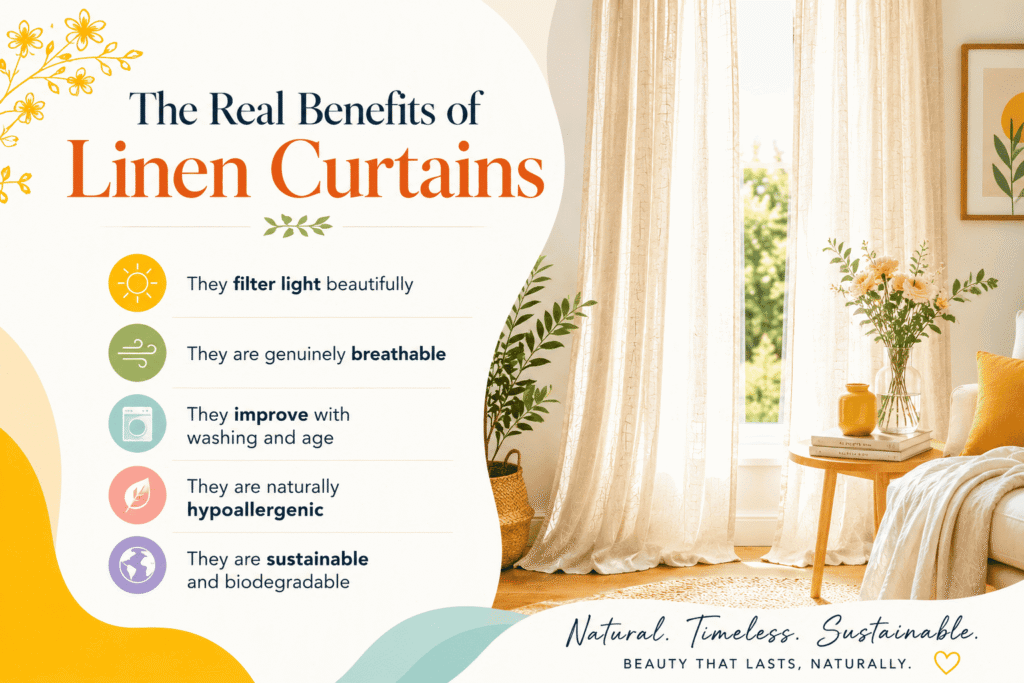
They filter light beautifully
This is the quality that converts most people. Natural, unlined linen in standard curtain weights does not block light — it transforms it. Direct sunlight through natural linen becomes something softer and warmer, with a golden quality that genuinely changes the atmosphere of a room. It is not the same as the flat, white diffusion of polyester voile. It has warmth and texture to it.
For living rooms and dining rooms where natural light is wanted but harsh direct sunlight is not, unlined linen is the ideal solution. For bedrooms, a lining can be added — either a standard cotton lining or a blackout lining — to give the aesthetic benefits of linen on the face with whatever light-control performance is needed behind it.
They are genuinely breathable
Linen is one of the most breathable natural fibres available. In curtain form, this quality becomes especially apparent in rooms that get hot – south-facing rooms in summer, rooms with wood-burning stoves or bedrooms in warmer climates – where air circulation needs to occur rather than creating barriers; so drawn linen curtains in these warm environments will still feel airy instead of oppressive.
Polyester curtains provide a more impermeable barrier, and may make the room seem smaller in the summertime when drawn shut in an otherwise open room. Linen is often better-suited to year-round use due to these practical considerations.
They improve with washing and age
Linen fabric’s most remarkable characteristic may come as a surprise to people used to synthetic fabrics which degrade with repeated washing: linen actually becomes softer, more supple, and ultimately more beautiful with use – its slight stiffness softening as natural fibres develop drape and the texture becomes richer with wear. This property surprises many.
A pair of well-chosen linen curtains that are correctly cared for will look better at three years than they did at three months. This is the opposite of most polyester curtains, which gradually fade, pill, or lose their shape over time. For anyone thinking about long-term value rather than just initial cost, linen’s improvement with age is a genuinely compelling argument.
They are naturally hypoallergenic
Linen fibres naturally repel dust mites and mold spores — two of the most prevalent household allergens. This does not rely on external treatments applied to fabric but instead the flax fiber itself providing resistance. Therefore, linen curtains make an effective choice for households suffering from allergies, asthma or respiratory conditions as they attract and hold allergens less readily than synthetic materials which tend to gather allergens more readily.
They are sustainable and biodegradable
Flax grows with minimal water, minimal pesticides, and minimal environmental impact compared to cotton and virtually no comparison to synthetic fibres. Linen is fully biodegradable at the end of its life. For anyone making environmentally motivated choices in their home, linen is one of the genuinely good options — not a greenwashed compromise but a fabric that is legitimately more sustainable than most alternatives.
The Honest Limitations of Linen Curtains
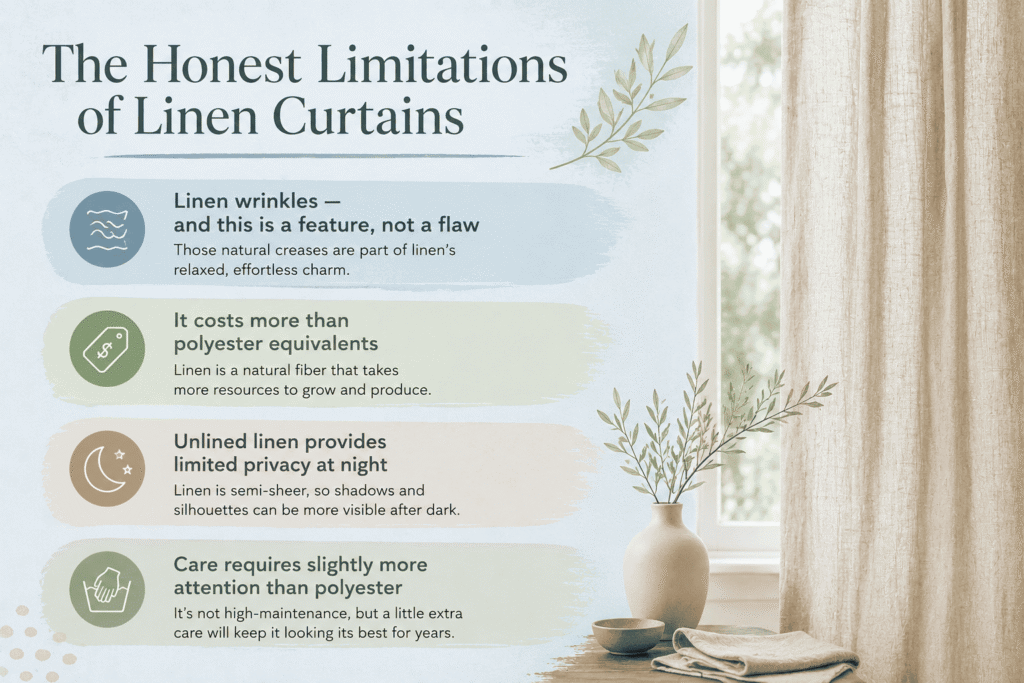
Linen wrinkles — and this is a feature, not a flaw
Linen wrinkles more readily than polyester and more than most cottons. This is the most common reason people hesitate. The important perspective is that linen wrinkles are different from the crumpled, collapsed look of a poorly hung polyester curtain. Linen wrinkles are soft, natural, and very much part of the fabric’s character — they are part of what makes linen look relaxed and natural rather than synthetic and stiff.
For people who want perfectly smooth, crisp curtains, linen may genuinely not be the right choice. For everyone else, accepting and even embracing linen’s natural texture — perhaps lightly steaming rather than hard ironing — gives results that look beautiful rather than neglected.
It costs more than polyester equivalents
Good linen curtains cost more than comparable polyester curtains. The gap has narrowed as linen’s popularity has grown and production has scaled up, but quality linen curtains are still a mid-to-premium purchase. The counterargument is the durability and improvement-with-age point above: linen curtains that last ten years and look better at year five than year one represent better long-term value than polyester curtains that need replacement at year three.
Unlined linen provides limited privacy at night
Natural, unlined linen that filters light beautifully during the day becomes relatively transparent at night when interior lights are on and it is dark outside. If you want full nighttime privacy with unlined linen curtains, you need a secondary layer — either a separate blind inside the recess or a lined linen option.
Lined linen solves this completely. A cotton lining behind the linen face preserves all the daytime light quality while adding nighttime privacy. A blackout lining adds full light control as well.
Care requires slightly more attention than polyester
Linen can be machine washed — most curtain-weight linens wash very well — but it requires a cooler temperature and a gentle cycle. Hot washing shrinks linen. Tumble drying on high heat does the same. Linen curtains also tend to shrink slightly with the first wash, which needs to be accounted for when measuring and ordering — particularly if buying unlined linen to a precise length.
📌 NOTE: A good rule of thumb when ordering unlined linen curtains to be washed: add 5 to 8 percent to your measured length to account for expected shrinkage in the first wash. Pre-washing linen fabric before making curtains is the alternative approach if you are making custom curtains.
Types of Linen Curtains — What to Look For
100% Linen Curtains
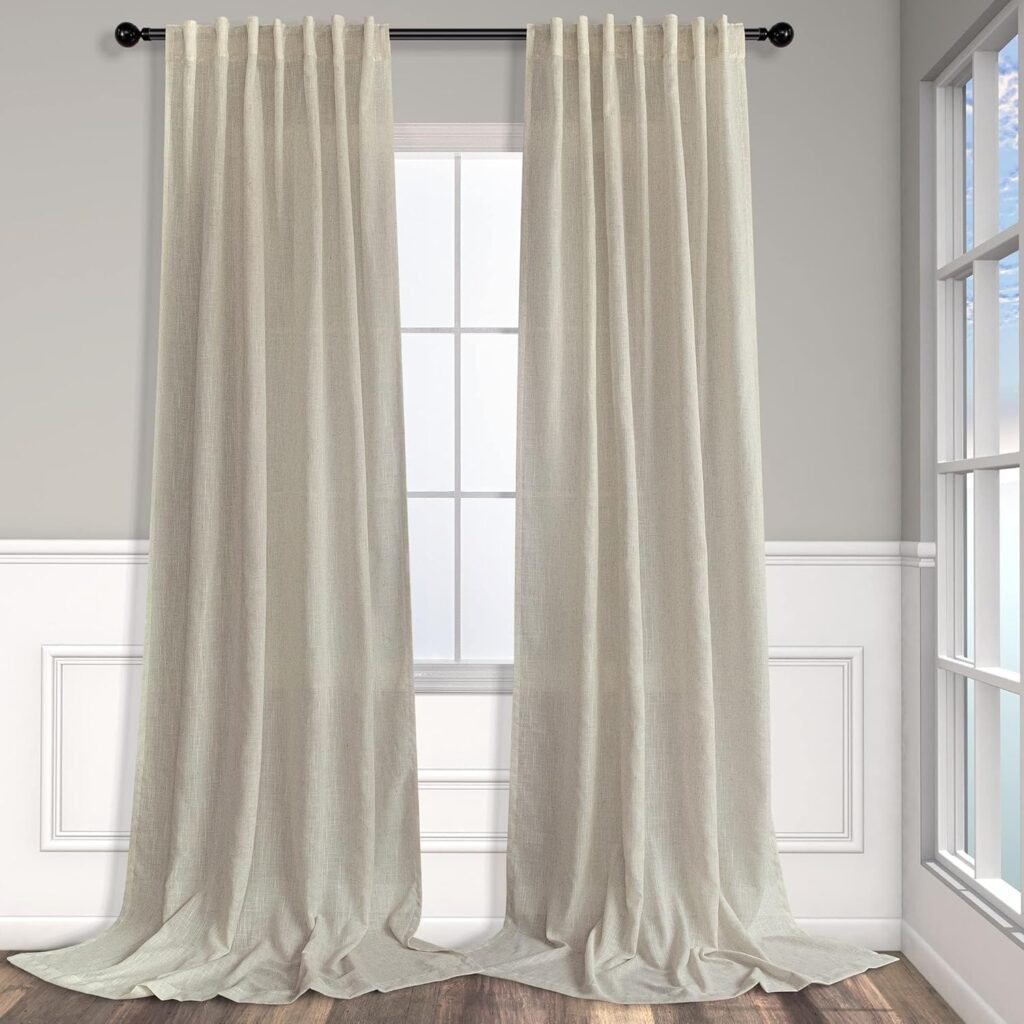
Pure linen curtains are the most breathable, the most beautiful, and the most expensive option. They have the most distinctive texture and the warmest light quality. They are also the most prone to wrinkling and require the most careful washing. For rooms where you want the full linen experience — a living room or master bedroom where the fabric will be seen and appreciated every day — 100% linen is worth the investment.
Linen-Cotton Blend Curtain
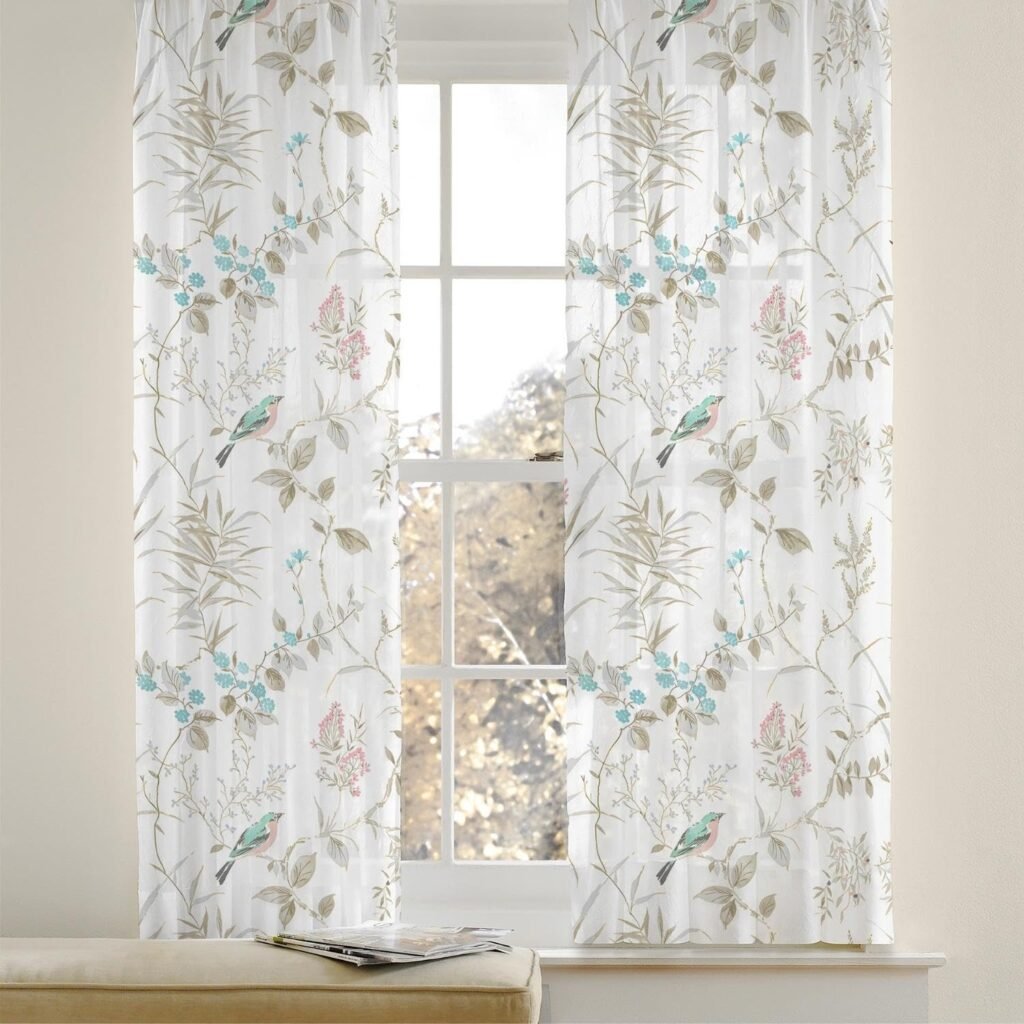
A blend of linen and cotton blend fabric (often 50-50 or 55-45) combines the natural texture and breathability of linen with the slightly easier care and slightly reduced wrinkling tendency of cotton. These are a very practical option for everyday rooms where you want the linen look without the full maintenance commitment of pure linen. They also tend to be more affordable.
Linen-Look Polyester Curtains
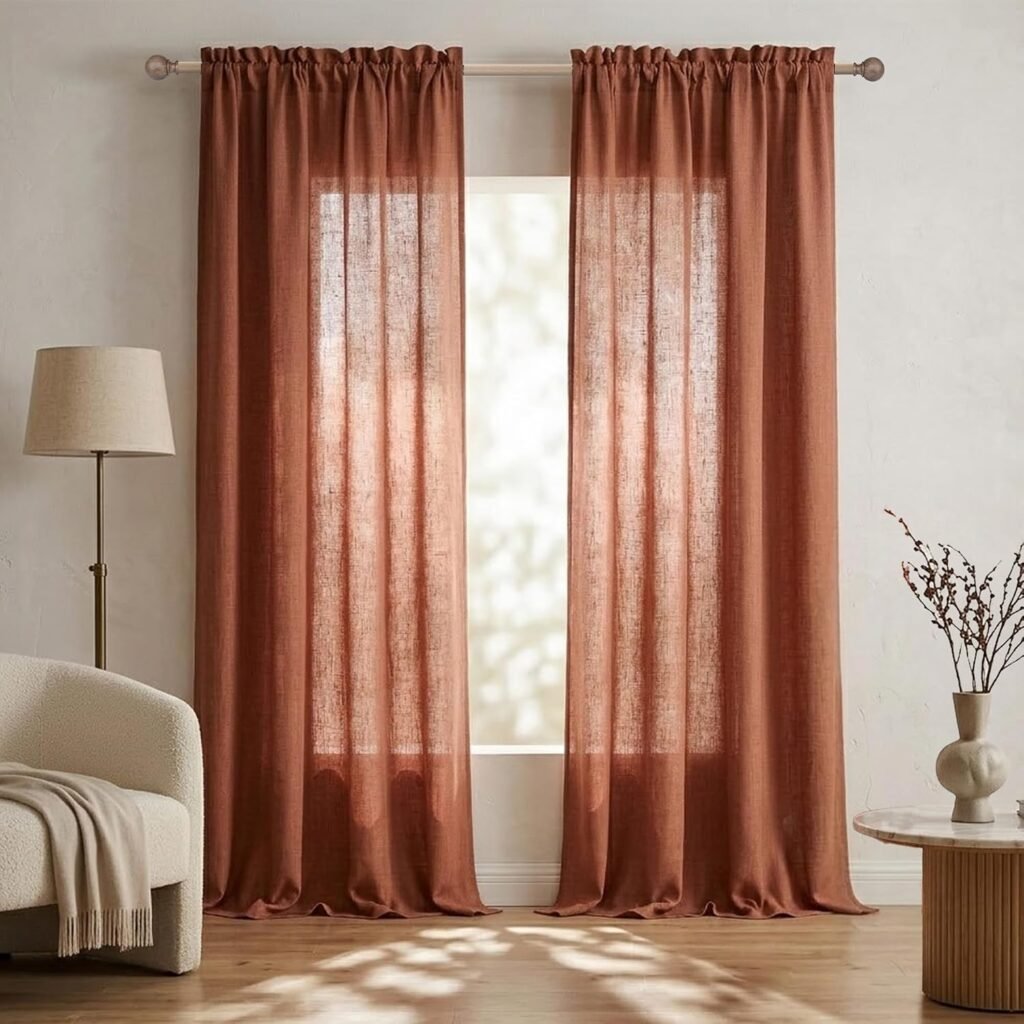
Linen-look polyester curtains are an economical and widely accessible readymade solution. While their visual resemblance of linen’s texture satisfies, genuine linen provides more breathability, natural lighting, and improvement-with-age than faux versions can. Linen-look polyester provides an acceptable compromise for tight budgets or when not being closely observed by guests in any given space.
For rooms where you will look at and live with the curtains closely every day — a living room, a bedroom, a study — the difference between genuine linen and linen-look polyester is immediately apparent on inspection. The real thing has a quality that reads as genuine to anyone who knows what they are looking at.
Stonewashed or Washed Linen Curtains
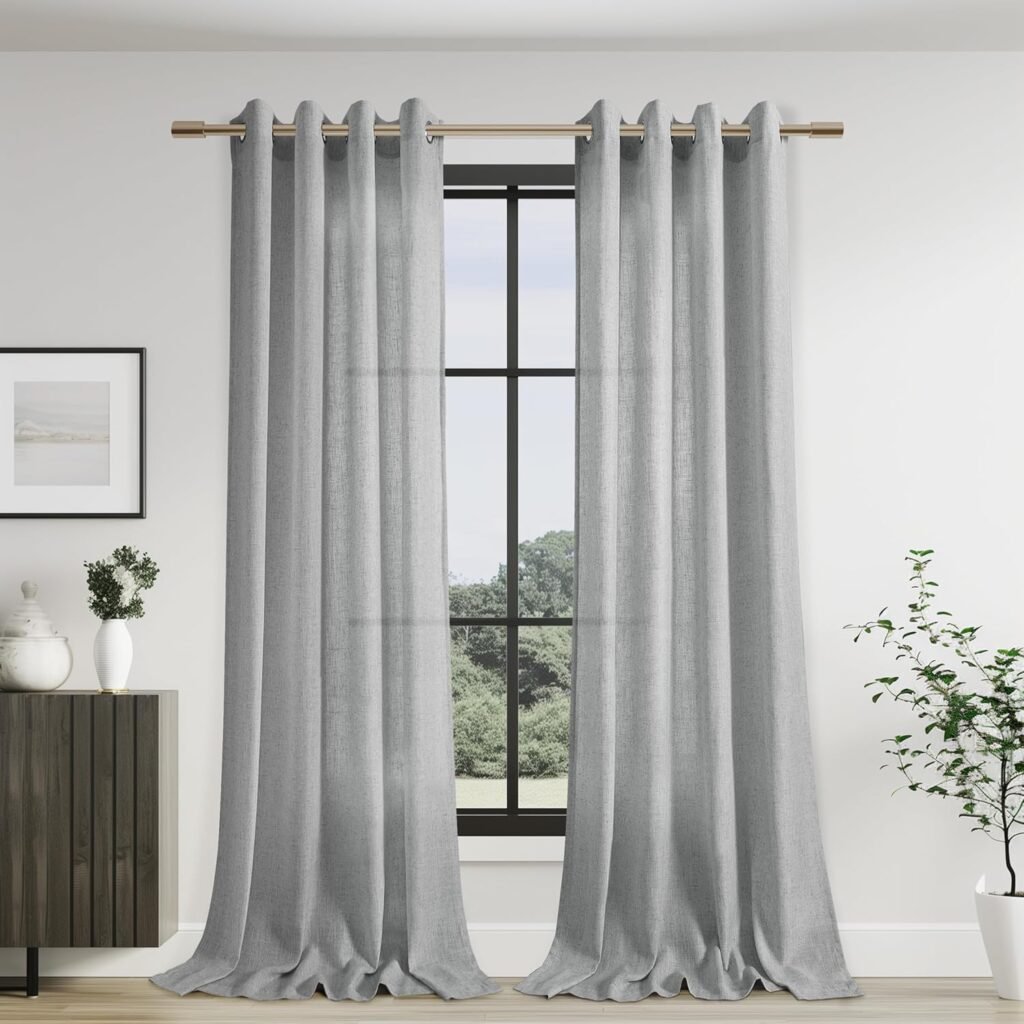
Stonewashed or Washed Linen Curtains
Stonewashed linen has been pre-treated to reduce and relax its stiff, unlaundered quality and achieve the supple drape found only with unlaundered linen over time. Stonewashed curtains possess the look and feel of aged fabric from day one – ideal for interiors seeking that lived-in, established look of well-aged fabric from day one.
This is particularly popular in coastal, Scandinavian, and relaxed-contemporary interior styles where the curtain should look like it has always been there.
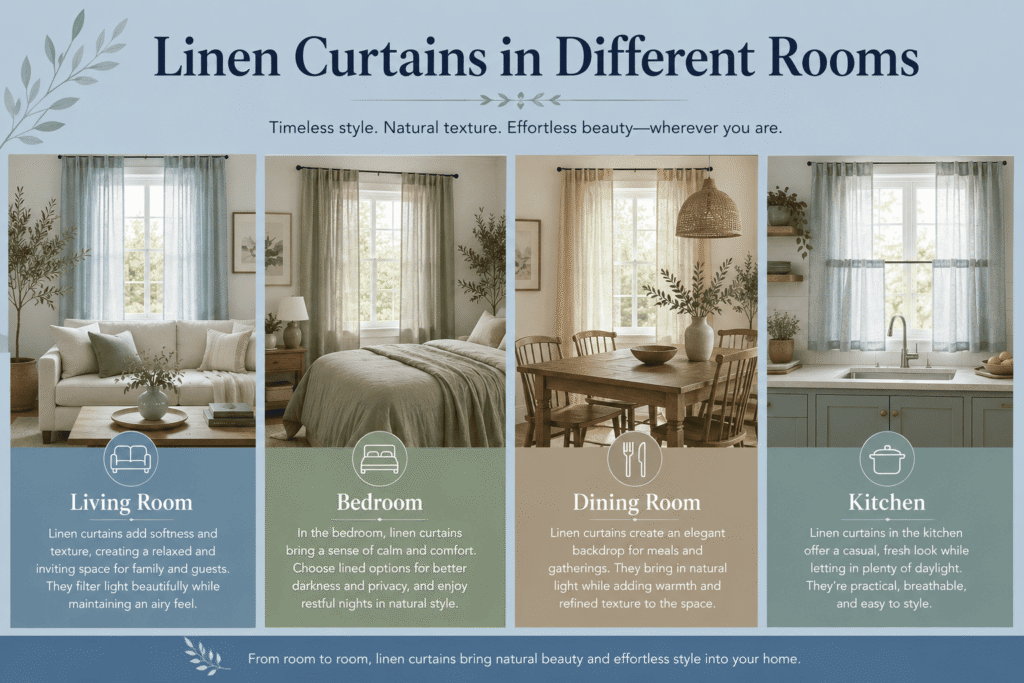
Linen Curtains in Different Rooms
Living room
Living rooms are where linen curtains shine most naturally; floor-length, unlined or lightly lined linen panels in natural, warm white or pale gray create the ideal ambience to make a room truly welcoming and make afternoon light appear softly filter through them beautifully – they even work in both open-plan living spaces as well as more enclosed ones, accommodating modern furniture as easily as traditional furniture styles!
Living rooms that face south or west and receive strong afternoon sunlight benefit from heavier linen or cotton-lined linen fabrics to reduce glare while maintaining the natural lighting qualities that make linen so appealing.
Bedroom
Bedroom linen curtains work best when lined — either with standard cotton for privacy and added drape, or blackout lining to block light fully and provide greater nighttime privacy. Unlined linen can look lovely but only provides minimal light control or privacy benefits.
Lined linen curtains in a bedroom combine the best of both worlds: the beautiful, natural face fabric that looks and feels like quality, and the practical performance of a lining that does the functional work behind the scenes.
Dining room
Dining rooms provide the ideal setting for linen curtains – particularly during evening meals when their filtering quality catches light from within, creating the cozy ambience necessary to make dining feel special and intimate. Floor-length panels make evening meals truly memorable!
Kitchen
Kitchen environments present more complicated questions for linen. Its natural properties of breathability, resistance to mould, and ease of washing make it an excellent fit in this setting; yet its absorbent fabric easily picks up cooking odors more readily than synthetic fabrics; therefore frequent laundering may be required in order to keep kitchen linen curtains looking their best. A linen-cotton blend that washes more readily may be the more practical choice in such circumstances.
How to Care for Linen Curtains
Correct care keeps linen curtains looking their best and ensures they develop rather than deteriorate with time. One should take care of certain things if one intends to clean linen curtains at home.
- Machine washing: cold to 30 degrees, gentle cycle. Never hot wash — heat causes permanent shrinkage.
- Drying: air dry flat or hang back on the rod while slightly damp. The weight of the curtain pulls out wrinkles as it dries. Avoid high-heat tumble drying.
- Ironing: Use medium heat when ironing linen while still damp; press on its reverse side on medium-heat setting on both the opposite and reverse sides respectively to maximize wrinkle-free results for as long as possible; alternatively embrace its natural texture by lightly steaming to refresh and revive its feel.
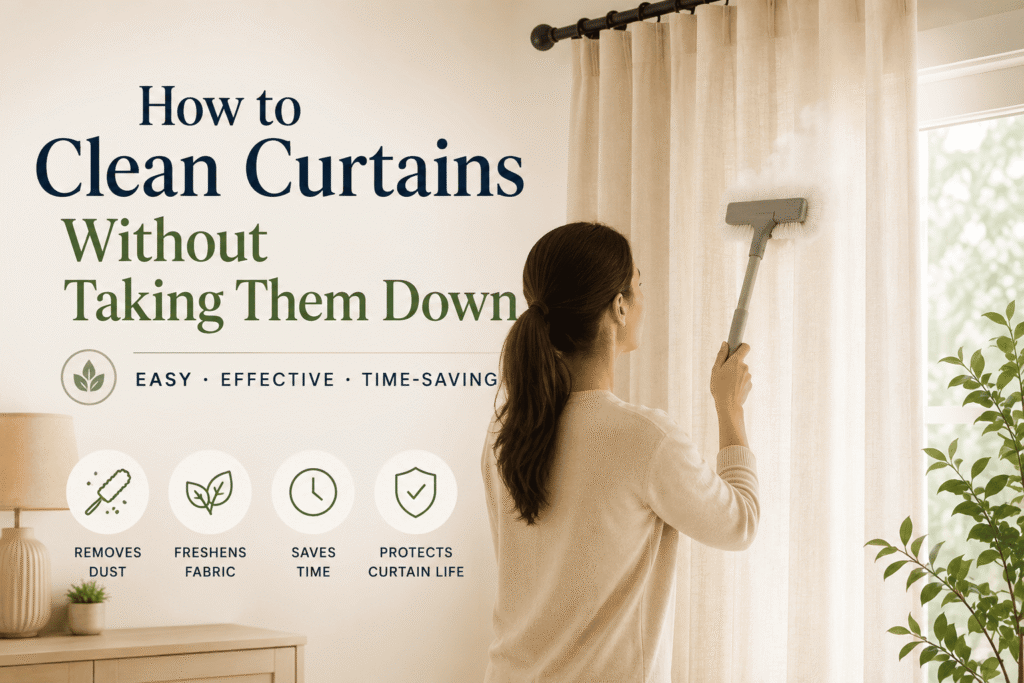
- Steaming: Fabric steamers used from a distance are one of the gentlest and most efficient ways to refresh linen curtains between washes. Steam relaxes wrinkles while rejuvenating their drape without necessitating removal from curtains.
- Storage: When it comes to storing linen curtains between seasons, make sure they’re folded loosely rather than tightly to avoid creating permanent creases and store in an airy cotton bag or pillowcase – rather than sealed plastic containers which trap moisture.
Choosing Linen Curtain Colours
Linen’s natural colour range is its strongest asset. Undyed, natural linen ranges from pale cream to warm oatmeal to a slightly deeper biscuit tone — all beautiful, all versatile, all consistently popular in interior design. These natural tones work in virtually every room against virtually every wall colour, which is part of why linen has become the default fabric choice for so many decorators.
Beyond natural tones, linen takes dye very well and is available in a wide range of colours — pale greys, dusty blues, sage greens, warm terracottas, and even deeper tones for rooms where a more saturated colour is wanted. The key characteristic is that linen colours tend to look muted and natural rather than sharp and synthetic — even bright-ish linen colours have a depth and warmth that polyester in the same hue lacks.
- Most versatile: natural undyed linen, warm white, oatmeal — works with every wall colour and furniture style
- Most on-trend in 2026: warm stone, dusty sage, pale mushroom, soft clay
- Most dramatic: deep natural linen in charcoal, dark stone, or deep slate — richly textured without the weight of velvet
✦ PRO TIP: If you are ordering linen fabric by the metre to make custom curtains, order a fabric sample first and view it in your specific room in different lighting conditions. Linen colours change significantly between natural daylight and warm artificial evening light — what looks perfectly neutral in a shop can look much warmer or cooler at home.
Linen vs Cotton vs Polyester — The Honest Comparison
For anyone deciding between the three main curtain fabric types, here is the direct comparison:
- Linen vs Cotton: Linen offers several advantages over cotton fabric in terms of strength, breathability and resistance to mould and allergens while becoming increasingly beautiful over time. Cotton can be easier to press smooth without creasing; less likely to wrinkle; less costly overall; decorative curtains designed for sightlines are often made out of linen while functional curtains tend to prefer cotton due to practicality and cost considerations.
- Linen vs Polyester: While linen offers natural materials that breathe freely and soften with each wash cycle, polyester offers greater wrinkle-resistance at more competitive pricing and wider availability of colours at lesser costs. If natural materials and long-term quality matter most to you, linen may be your top pick; while polyester offers adequate results at lesser costs.
- Linen-cotton blend vs both: the blend captures most of linen’s benefits with less wrinkles and at an easier on your budget price point; making this material the superior option in everyday rooms without needing to sacrifice on quality through polyester use.
Where to Buy Quality Linen Curtains
Ready-made linen curtains in standard sizes are widely available online and in home furnishing shops. The quality range is wide — from linen-look polyester sold as linen at low prices, to genuine heavyweight linen in beautiful natural tones at the mid-to-premium end of the market.
For custom lengths and widths — which are often needed for non-standard windows, very high ceilings, or when you want a specific drop or fullness ratio — linen fabric by the metre and custom curtain making services give complete control over the final result. The investment is higher than ready-made, but the curtains fit perfectly and the fabric quality is exactly what you choose.
Ready-made or custom—the main factor to consider is the content of real linen – Not linen-look, not linen-texture, but genuine linen fibre. There are really big differences in quality, drape, light filtration, and how long they last, between genuine linen and its imitators.
Final Thoughts
Linen curtains might not work in every room or with every household. They need a bit of looking after, they are more expensive than polyester, and the way they wrinkle might not be seen as charming by everyone. However, if you are someone who appreciates natural materials, gorgeous light quality, durability over many years, and a fabric that gets even more characterful instead of losing it with time — linen is definitely the top curtain fabric out there.
The rooms that use linen well tend to be the rooms that look and feel most genuinely alive. There is something about the combination of natural light, natural fibre, and natural texture that synthetic fabrics cannot replicate — not because the technology does not exist, but because the thing that makes linen beautiful is its genuine naturalness, which is inherently impossible to fake.
If you are considering linen curtains and want to see the fabric in a range of colours and weights before committing to a purchase, the best approach is to order fabric samples. A small piece of linen in your room, in your light, against your walls, tells you everything you need to know — and it costs almost nothing to find out.
Frequently Asked Questions
Q: Are linen curtains good for blocking light?
A: Natural linen without a lining lets the light in very nicely as it is not blocking the light in any way — it produces a warm, soft light in the room rather than darkness. For areas where you want to have an option of letting in less light, linen curtains with a cotton or blackout lining behind the face fabric provide the look of linen while offering better light control. For total blackout, a blackout lining behind the linen face works very well and maintains all the nice visual features of linen on the room-facing.
Q: Do linen curtains shrink when washed?
A: Pure linen fabric will shrink 3-8 percent with its initial wash cycle depending on its weave and water temperature, so wash at 30 degrees or below to minimise shrinkage, air drying rather than tumble drying on heat; when ordering custom curtains to account for shrinkage when ordering slightly longer than your drop measurement is best practice – prewashing fabric before creating curtains is often the most reliable way to guarantee accurate finished length after first wash!
Q: How long do linen curtains last?
A: Good quality linen curtains with proper care last 10-20 years with proper washing and care. Linen is one of the strongest natural fibres and becomes stronger as each wash cycle passes; hot washing (which weakens fibers and leads to shrinkage), harsh detergents and prolonged sunlight exposure over many years gradually bleach the color over time are the primary factors contributing to premature wear; with proper attention linen curtains will outlive virtually all polyester alternatives!
Q: Are linen curtains expensive?
A: Quality linen curtains typically cost 30-100% more than their polyester counterparts; depending on fabric and construction. But when measured against per-year costs (total price divided by expected lifespan), linen can offer better value – often offering greater natural quality as well as affordability than their polyester equivalents that need replacement more frequently. Linen/cotton blend curtains often represent an ideal compromise: more natural but still affordable alternatives compared with pure linen products.
Q: Can linen curtains be ironed?
A: Yes — Linen irons beautifully when damp, taking on an almost effortless surface finish with ease. Use a medium-hot iron on its reverse side while it remains slightly damp from washing or mist lightly with water before starting your ironing session. However, many who purchase linen specifically because of its natural feel prefer not ironing at all and instead choose steam lightly to let its natural textures show through instead – both approaches are valid choices!
Q: What is stonewashed linen and is it better than regular linen?
A: Stonewashed linen has undergone pre-treatment with a washing and tumbling process which remove the natural stiffness of raw linen fibre and result in a soft, supple drape that unwashed linen requires multiple washes to naturally develop. It is not superior to regular linen – just different in character. Stonewashed linen possesses a more laid back, well-used appearance right away. Normal linen is initially a bit stiff but softens, and gets better as time passes. Both are real linen; the decision is up to you, do you want the softness on the first day or do you want the linen to show its character as time goes on.