Thermal curtains can reduce heat loss through your windows, but the fabric alone does not determine performance. The lining, total width, how fully the curtain covers the window, and how much air can move around the edges all matter.
This guide covers how thermal curtains work, what to look for, how they differ from blackout curtains, and how to hang them so they actually perform.
What Are Thermal Curtains?
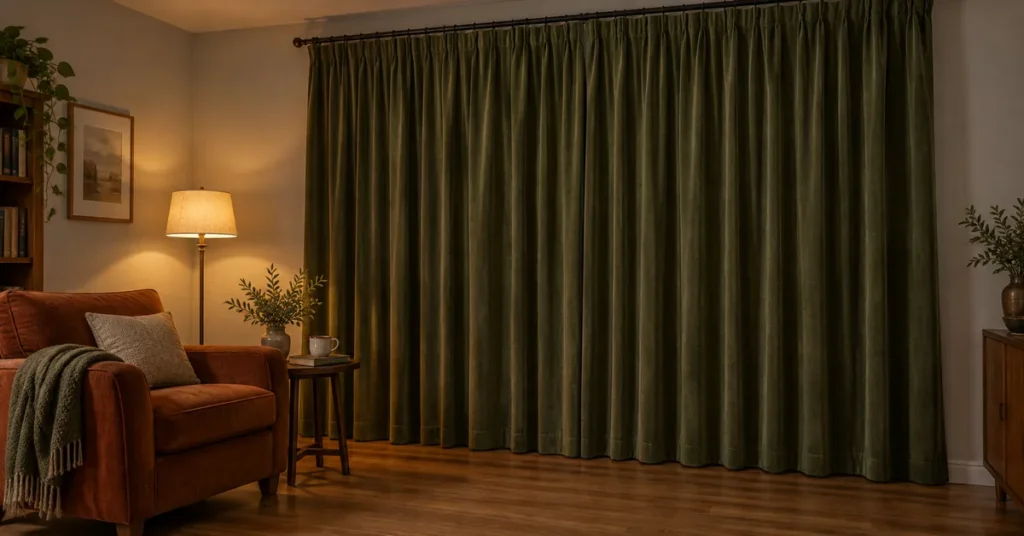
Thermal curtains add insulating layers between the room and the glass, slowing the movement of warm air out and cold air in. There is no single fabric or construction that qualifies. The word “thermal” describes intended performance, not one specific material. Check what the curtain actually contains rather than relying on the label.
Do Thermal Curtains Actually Work?
Yes, but the effect depends on the complete setup, not just the curtain.
Independent testing by Consumer NZ found that heavy lined curtains retained more heat than cheaper thermal-backed curtains, and that floor-length curtains outperformed sill-length ones. Adding a pelmet or barrier above the curtain further improved results. The overall construction and fit mattered as much as whether the lining carried a “thermal” label.
Results depend on the window condition (curtains cannot fix broken seals or serious air leaks), how well the curtain covers the window, and the climate. The effect is more noticeable on a single-glazed window in a cold area than on modern double glazing in a mild one.
How Do Thermal Curtains Reduce Heat Loss?
A closed curtain creates a layer of relatively still air between itself and the glass. Still air is a poor conductor of heat, so this buffer slows the transfer of warmth from the room to the cold glass surface.
When the curtain does not seal well, a convection loop forms. Warm room air enters above or around the curtain, meets the cold glass, cools and becomes denser, sinks down behind the curtain, and escapes from underneath into the room at floor level. This circulating current draws warmth from the room and replaces it with cold air.
Dense or multi-layered fabric slows heat moving through the curtain itself. Full coverage reduces the gaps that let cold air spill into the room. A fitted pelmet at the top can restrict the entry of warm room air into the gap behind the curtain, which is where the convection loop begins. A loose valance or ceiling-mounted track alone does not seal this gap as effectively.
Thermal Curtains vs Blackout Curtains
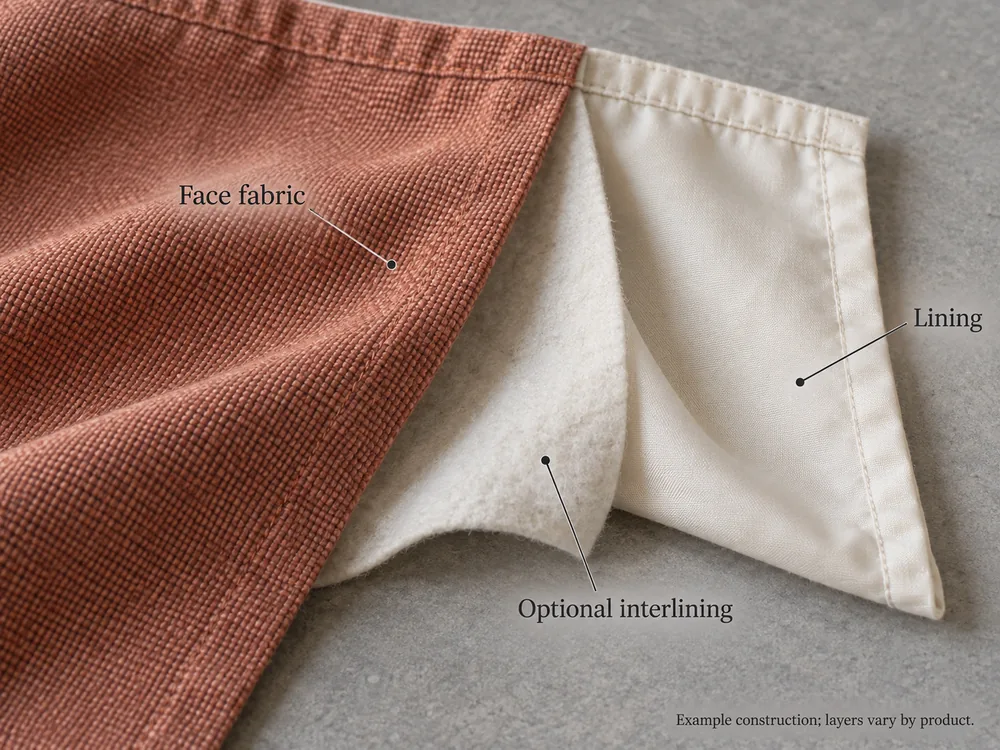
These two terms describe different things, although they overlap in some products.
| Thermal Curtains | Blackout Curtains | |
| Primary purpose | Reduce heat transfer at the window | Block light from entering the room |
| Light control | Partial (varies by product) | Near-total darkness when closed |
| Insulation | Core function | Some products offer it; not guaranteed |
| Privacy | Good when closed | Very good when closed |
| Typical lining | Thermal or insulated lining layer | Opaque light-blocking coating or layer |
| Best rooms | Cold windows, draughty areas, living rooms | Bedrooms, nurseries, media rooms |
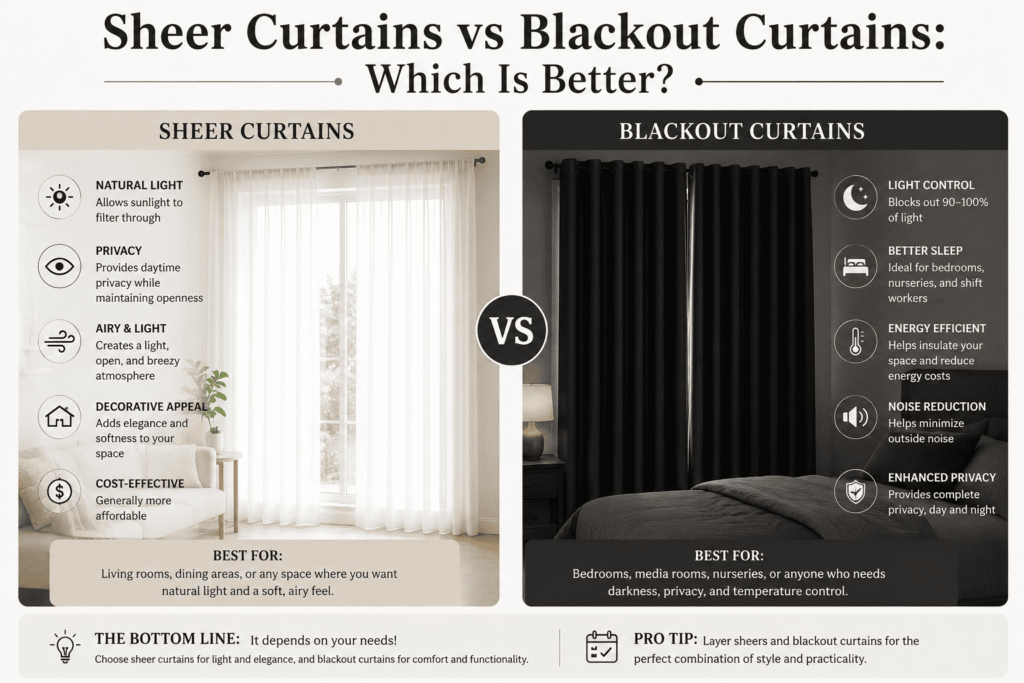
A blackout curtain is designed primarily to stop light. A thermal curtain is designed primarily to reduce heat transfer. Some products do both, but a curtain marketed as blackout does not automatically insulate well.
For a more detailed comparison, see our guide to blackout curtains for bedrooms or our comparison of sheer vs blackout curtains.
What Makes a Curtain Thermal?
Several things work together. No single factor guarantees good insulation on its own.
Lining
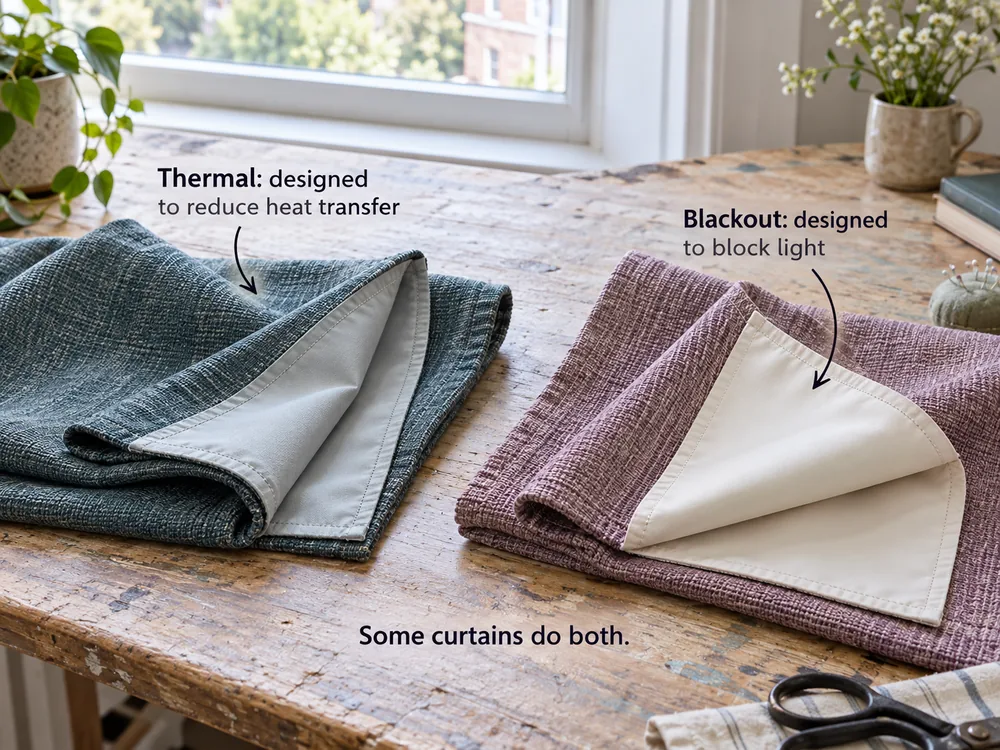
Lining contributes to insulation, but a thermal label does not guarantee better performance than ordinary lined curtains. Judge the complete construction and fit. Some blackout linings also offer thermal properties, but not all do. Interlining (bump cloth or domette between face fabric and lining) adds an extra barrier and is common in custom-made curtains.
Face fabric
Dense, heavy fabrics slow heat moving through the curtain, but a heavy fabric without proper lining will not perform like a well-lined curtain. Judge the complete curtain, not the face fabric alone. See our curtain fabric and material guide for a broader comparison.
How Wide Should Thermal Curtains Be?
The curtains should close fully without pulling tight. Most heading types need fabric width of 1.5 to 2.5 times the track or rod length for enough fullness.
Worked example: A 180 cm track with a pencil-pleat heading at 2x fullness needs about 360 cm of total flat fabric width before gathering (roughly 180 cm per panel). Allow for returns at each end and an overlap of 5 to 8 cm where the panels meet. Ready-made pinch-pleat curtains may state their finished heading width rather than flat fabric width, so do not automatically multiply that figure by two.
Where wall space allows, extend the track so the curtain wraps toward the wall at each end (side returns), closing the gap where cold air enters. At the top, a fitted pelmet can restrict airflow above the curtain. A loose valance or ceiling-mounted track may reduce the visible gap but does not automatically seal it.
Adjoining windows at a corner need careful coverage at the join and space for heavier curtain stacks. See our corner window curtain ideas and how to measure curtains for details.
How Long Should Thermal Curtains Be?
Floor-length curtains generally insulate better than sill-length ones because a gap at the bottom allows cold air to flow into the room at floor level.
Do not let curtains cover radiators, heaters, or floor vents. A curtain hanging over a radiator traps heat against the wall instead of letting it warm the room, and is a safety concern. Follow the heater manufacturer’s clearance instructions.
For windows where floor-length curtains are impractical, such as above a kitchen counter, a sill-length curtain with thermal lining is still better than no thermal treatment. For more on choosing the right length, see our curtain length guide.
How Should Thermal Curtains Be Hung?
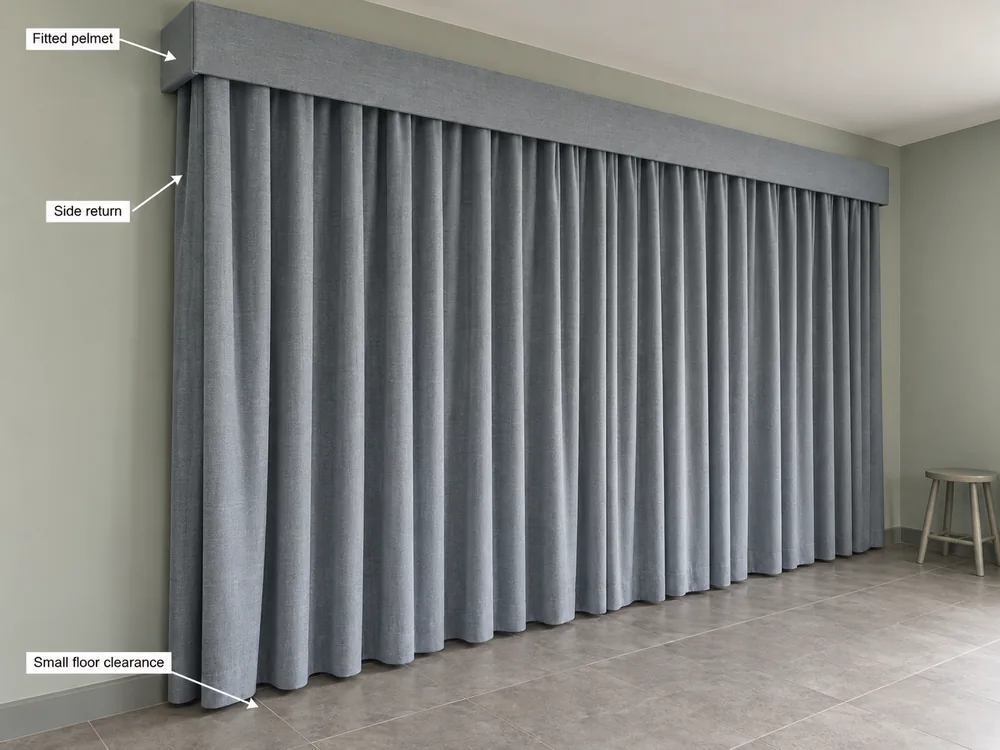
How you hang thermal curtains can be as important as the curtain itself. Mount the track above the window frame and extend it past each side so the curtain wraps beyond the frame edges. Use side returns where possible. A fitted pelmet at the top can restrict airflow and reduce the convection loop; a loose valance or ceiling-mounted track is less effective.
Check that the rod, brackets, or track can safely support the weight of heavier lined curtains, especially on plasterboard walls.
Thermal Curtains for Winter
Winter is where thermal curtains have the most noticeable effect. Close them as soon as it gets dark or when outside temperatures start to fall. On sunny winter days, open curtains on sun-facing windows to let in free solar warmth, then close them again before sunset.
Combine thermal curtains with other draught-control measures where appropriate: sealing gaps around the window frame, adding draught excluders, or using secondary glazing film.
Can Thermal Curtains Help in Hot Weather?
To some degree. A closed curtain can reduce solar heat entering through a sun-facing window. Light-coloured or reflective-backed curtains are more effective for this than dark ones, which absorb heat and re-radiate it into the room. However, curtains sit inside the glass. Exterior shading (awnings, external blinds, or shutters) intercepts heat before it enters and is generally more effective.
Thermal Curtains for Bedrooms
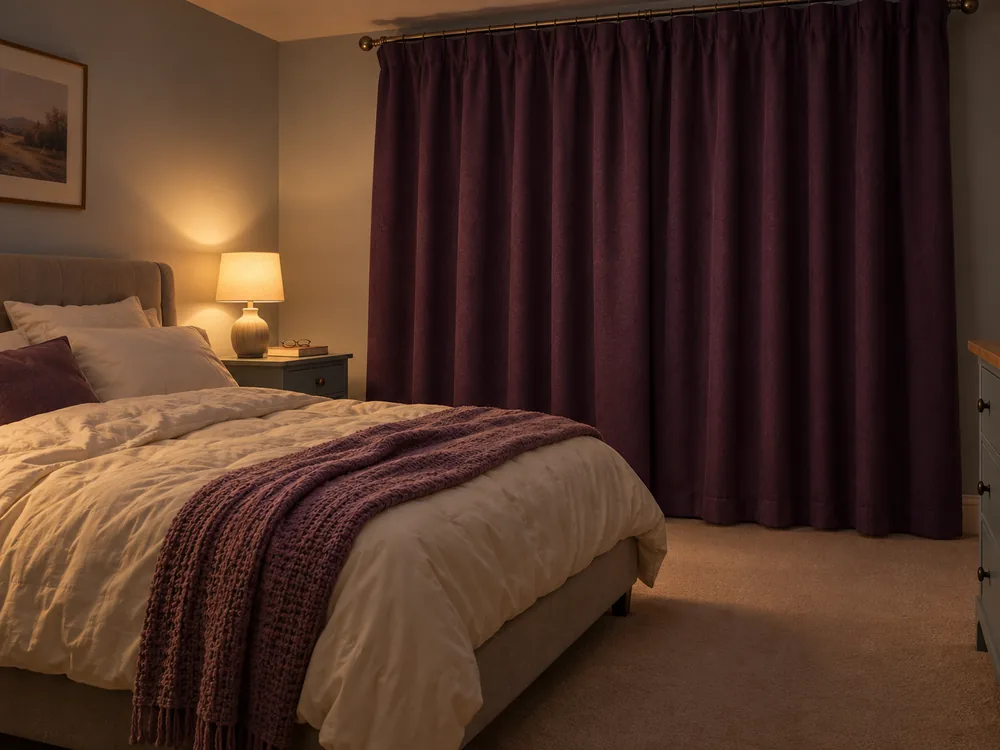
Bedrooms are one of the best rooms for thermal curtains. The curtains are closed for the longest uninterrupted period (overnight), which is also when outside temperatures are lowest.
A thermal blackout curtain combines insulation with near-total darkness, suiting anyone who is sensitive to outside light, works shifts, or has street lighting near the window.
If the bedroom has a radiator under the window, use a sill-length curtain that stops above the radiator with the clearance recommended by the heater manufacturer, or consider an alternative window treatment such as a thermal blind. Never let a curtain hang over a radiator. For more on choosing bedroom curtains, see our guide to the best blackout curtains for bedrooms [mintblues.com/best-blackout-curtains-bedroom].
Thermal Curtains for Living Rooms

Living rooms often have the largest glazed areas, including wide windows, patio doors, or French doors. Balance insulation with daylight by ensuring the curtains have enough wall space beside the window to stack clear of the glass when open.
For patio or balcony doors, make sure the track extends far enough so the curtains clear the door opening completely.
Are Thermal Curtains Good for Old or Draughty Windows?
They can improve comfort, but curtains cannot stop air leaks. If air moves through gaps in the frame, draught-proofing (weatherstripping or caulk) should come first. The curtain then works on top of that repair. If the window has a broken seal, cracked pane, or rotting frame, curtains are not the fix.
Thermal Curtains in Rented Homes
Thermal curtains are practical for renters because they can usually be installed on existing curtain rods or tracks and removed when you move out. Check whether the existing hardware can handle the weight. If you need to upgrade the rod, check your tenancy agreement or ask your landlord before drilling.
Adding a clip-on or hook-on thermal lining to existing curtains is an option, but it adds weight. Check that the rod, track, and fittings can support the combined weight before committing. If the hardware is already at its limit, adding lining will make the problem worse.
What to Look for When Buying
- Lining: Check whether it is standard, thermal, blackout, or a combination. Judge the complete construction rather than the label alone.
- Width: Check whether the stated width is per panel or per pair, and whether it is flat fabric width or finished heading width.
- Length: Confirm the finished drop from the appropriate hanging point for your heading and hardware.
- Weight: Check that your rod or track, brackets and fixings support the combined curtain and lining weight.
- Care: Check the care label before buying. Some thermal linings can be damaged by machine washing.
Common Thermal Curtain Mistakes
Gaps at sides, top, or bottom let the convection loop run freely. Curtains too narrow or too short lose air-trapping ability and leave glass exposed. Assuming blackout means thermal: a blackout curtain blocks light but may not insulate. Blocking radiators traps heat against the wall. Weak hardware is a safety issue when thermal curtains are heavier than expected.
Are Thermal Curtains Worth It?
Good fit when: Your windows feel cold to sit near. You want a low-disruption improvement without replacing windows. The room has large glazed areas.
Less useful when: The window has major air leaks that need repair first. The curtains cannot fully cover the window. Most of the heat loss is from other parts of the room.
Thermal curtains are one part of room comfort. They work best alongside draught-proofing, adequate heating, and sensible use. They are not a replacement for window repair, but for many people they are one of the simplest and most reversible improvements available.
Quick Decision Guide
| If you want… | Consider… |
| Warmth + darkness | Thermal blackout curtains |
| Warmth but still some daylight | Open thermal curtains during the day; add sheers for filtered light when needed |
| Cold bedroom comfort | Thermal + blackout combination |
| Large cold living room windows | Full-length lined curtains with good side coverage |
| Rental-friendly option | Use existing hardware where suitable; check combined weight |
| Hot sunny window control | Light-coloured or reflective backing, not just thickness |
Frequently Asked Questions
Do thermal curtains really keep a room warmer?
They reduce heat loss through the window, which helps the room stay warmer for longer. The effect depends on the curtain construction, how well it covers the window, and the condition of the window itself.
What is the difference between thermal and blackout curtains?
Thermal curtains are designed to reduce heat transfer. Blackout curtains are designed to block light. Some products do both, but the terms describe different purposes.
Can thermal curtains help keep heat out in summer?
When closed during strong sun, they can reduce some solar heat entering the room. Light-coloured or reflective-backed curtains are more effective for this than dark ones.
Do thermal curtains need to touch the floor?
They do not need to touch the floor, but minimising the gap at the bottom improves performance. A clearance of 1 to 2 cm above the floor is practical for cleaning while still limiting cold air movement.
Do insulated curtains stop draughts?
They can reduce the feeling of cold air near the window, but they do not seal air leaks in the window frame. Draught-proofing the window should be done alongside or before installing thermal curtains.
Are thermal curtains worth buying?
For windows that feel cold, in rooms where replacing the window is not practical and the curtain can be properly fitted, they are usually a worthwhile investment.