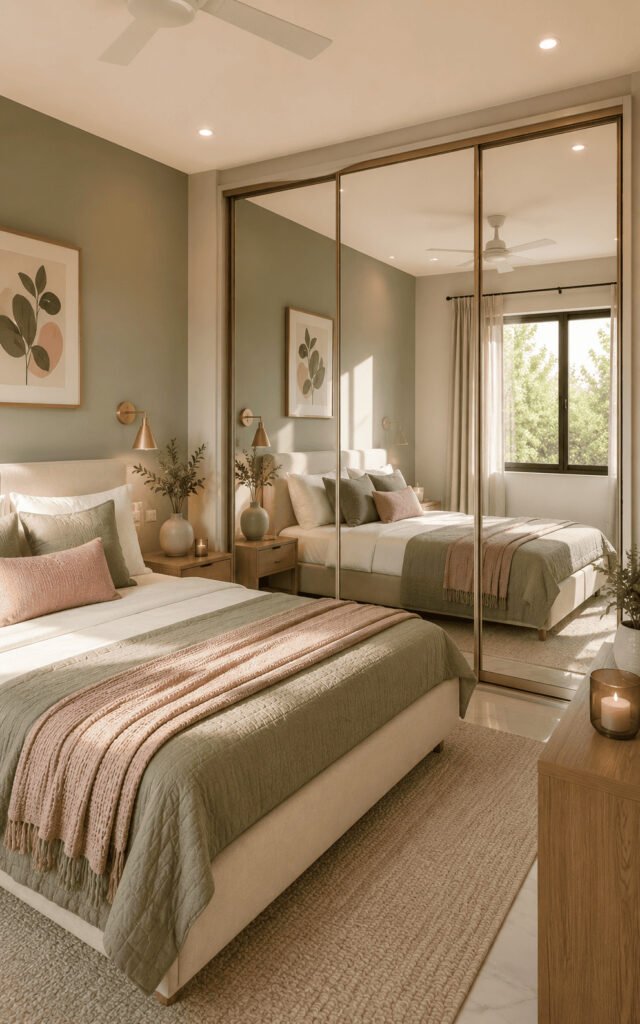
The wall above your bed is usually the first thing you notice in a bedroom, and an empty one can make the whole room feel incomplete. Finishing this space well is less about finding the “right” piece and more about choosing something that fits the scale of your bed, suits your room and feels intentional.
This guide covers 15 wall decor ideas for above the bed, with sizing advice, placement tips, safety guidance and solutions for small rooms and rentals.
What Looks Best Above a Bed?
The best above-bed decor is proportionate to the bed, centred on the headboard and hung at a height that visually connects to the furniture below. Beyond that, what works depends on your headboard width, ceiling height, room size, personal style and comfort level with mounting heavier objects.
Most approaches fall into three categories: one strong focal piece, a coordinated group, or a wall treatment (wallpaper, paint or panelling) that removes the need to hang anything at all.
15 Wall Decor Above Bed Ideas
One oversized horizontal artwork
The simplest way to anchor the wall. A single horizontal piece echoes the shape of the bed and avoids visual clutter. Aim for roughly two-thirds to three-quarters of your headboard width. If the artwork looks small when you hold up a paper template, it will look small on the wall.
Two matching framed prints
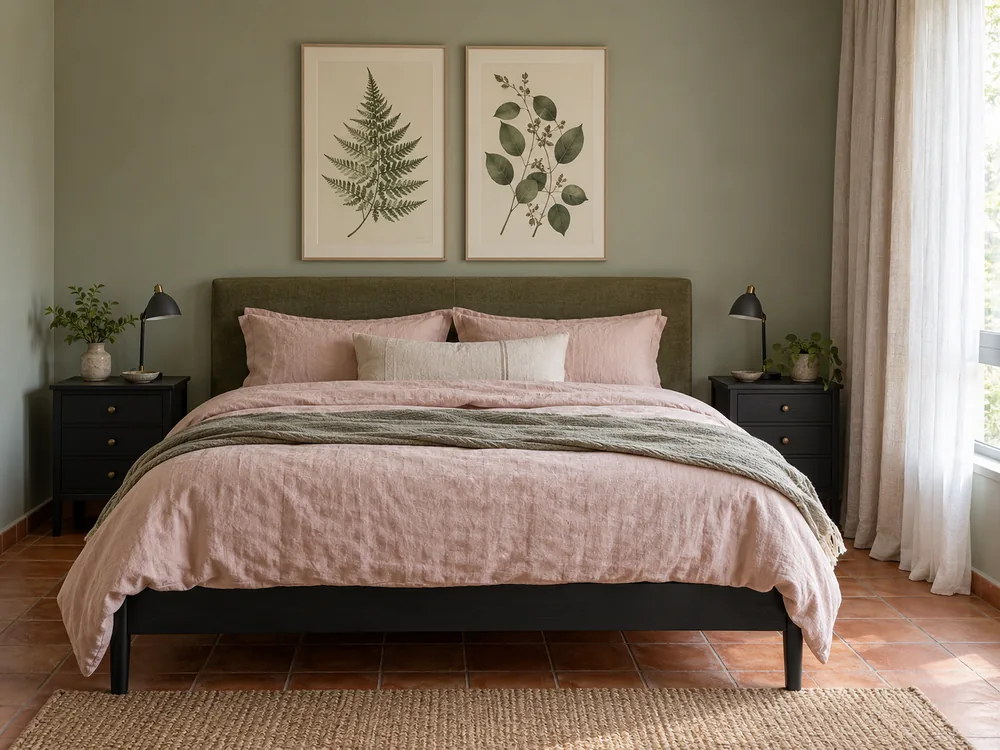
A symmetrical pair adds structure without complexity, and works especially well with a centred headboard and matching bedside tables. Leave about 5 to 8 cm between the frames, and make sure the pair together spans roughly two-thirds of the headboard.
Three-piece art set or triptych
A triptych spreads the composition wider than a single piece, which suits a broad headboard. The three pieces should clearly relate to each other through colour, subject or framing. Keep spacing between panels consistent; a gap of 3 to 5 cm is one starting point, adjusted to the artwork.
Gallery wall
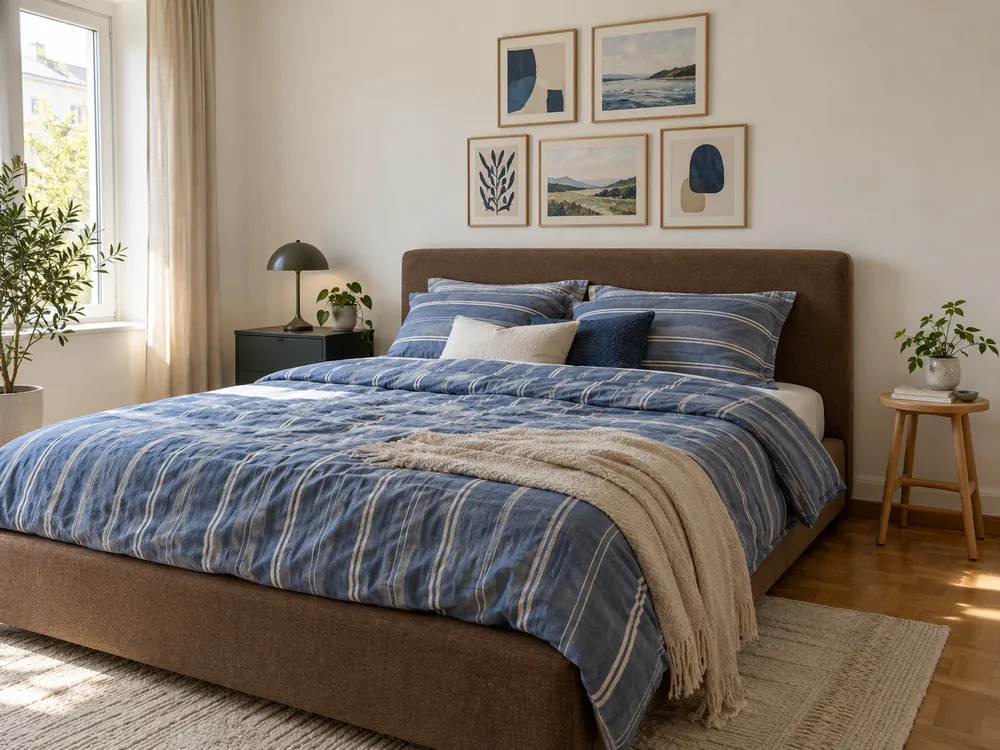
A gallery wall lets you mix frame sizes, photographs and personal artwork, but it needs careful planning to stay balanced above a bed. Map your arrangement on the floor first, or use paper templates on the wall. Contain the grouping within the headboard width, and in a small bedroom, try a compact group of four or five pieces, then check whether it feels crowded.
Large textile wall hanging
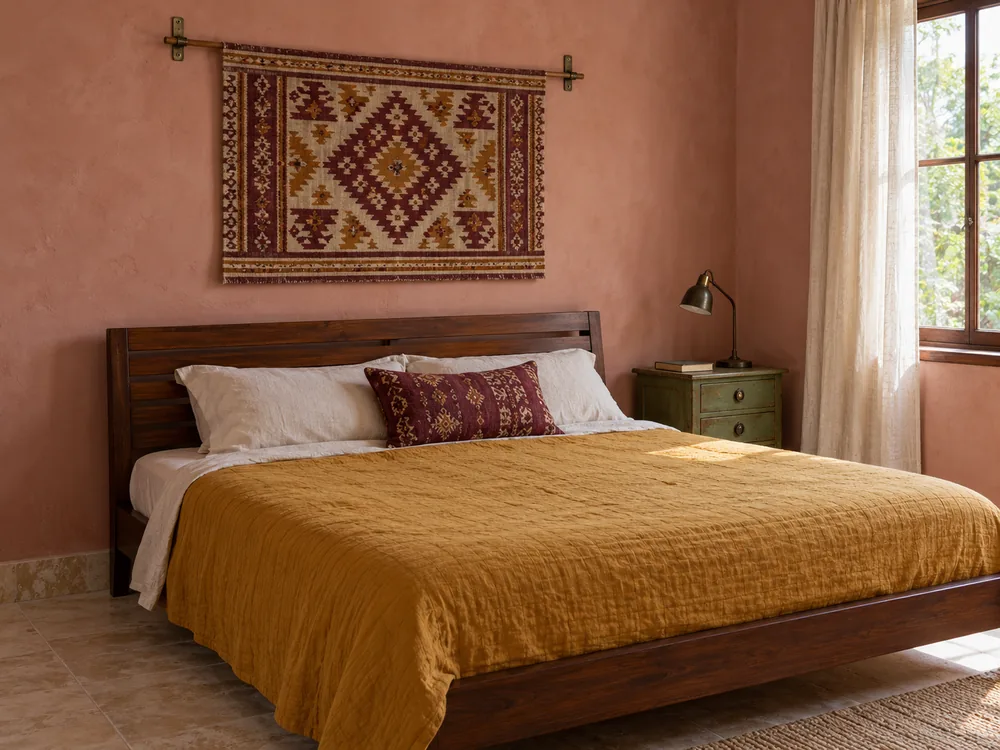
A woven panel adds texture above the bed. Match the rod fixings to the wall and weight and follow the mounting instructions.
A woven tapestry, kantha throw or printed fabric panel mounted on a rod or dowel brings warmth and softness. Textiles absorb a little sound, add handmade texture and weigh far less than glass-framed art. They suit boho, eclectic and globally inspired rooms. Secure the rod properly, even though the textile itself is light.
Decorative mirror
A well-placed mirror bounces bedroom light around the room and can make a smaller space feel more open. Round, arched and rectangular shapes all work. Because mirrors can be heavy, secure them into studs or masonry anchors appropriate for the weight and wall type. If the weight concerns you, consider an acrylic mirror or position a leaning mirror beside the bed instead. Secure any floor mirror according to its manufacturer’s instructions as well.
Picture ledge
A narrow picture ledge makes it easy to rotate prints and photographs. Place a ledge with leaning or loose objects beside the bed rather than directly above sleepers. A raised lip does not secure the displayed items. If you want a similar layered look above the headboard, arrange lightweight artwork with each piece individually secured using suitable fixings.
Floating shelf
A floating shelf can create a display around the bed, but both the shelf and its contents need attention. Position shelves holding loose objects beside the sleeping area. Choose lightweight pieces and an LED candle, and follow the shelf manufacturer’s installation and load instructions. A securely mounted shelf does not prevent unsecured contents from falling.
Wall-mounted sconces with central artwork
Flanking a piece of art with two sconces creates a layered arrangement that also provides reading light. This is a good option when the room has no space for table lamps.
Woven baskets or lightweight wall pieces
Flat-backed woven baskets, dried palm leaves or similar natural pieces arranged in a loose grouping bring organic texture to the wall. Mix sizes and overlap slightly, but keep the grouping within the headboard width.
Wallpaper behind the bed
A feature wallpaper gives the wall visual weight and pattern without hanging a single object. If you rent, removable peel-and-stick wallpaper is widely available, though results depend on the wall surface and product quality. Test a small area first.
Painted arch, colour block or accent shape
A painted shape directly on the wall behind the headboard is a budget-friendly focal point. Use painter’s tape for clean edges. The shape usually looks best when it extends about 10 to 15 cm wider than the headboard on each side.
Wood slats, moulding or wall panelling
Vertical slats or panelling behind the bed add texture and architectural depth. These suit modern, Scandinavian and Japandi bedrooms. This is typically a more permanent change, so check with your landlord if you rent.
Macrame hanging
A knotted macrame piece in cotton or jute brings a handmade, textured quality different from a flat textile. Where a fabric hanging reads as a panel of colour or pattern, macrame adds three-dimensional depth through its knots and fringe. It works in boho and natural settings, and its open structure keeps the look light even at a larger scale. Match the width to the headboard, just as you would with any other above-bed decor.
Leave the wall intentionally simple
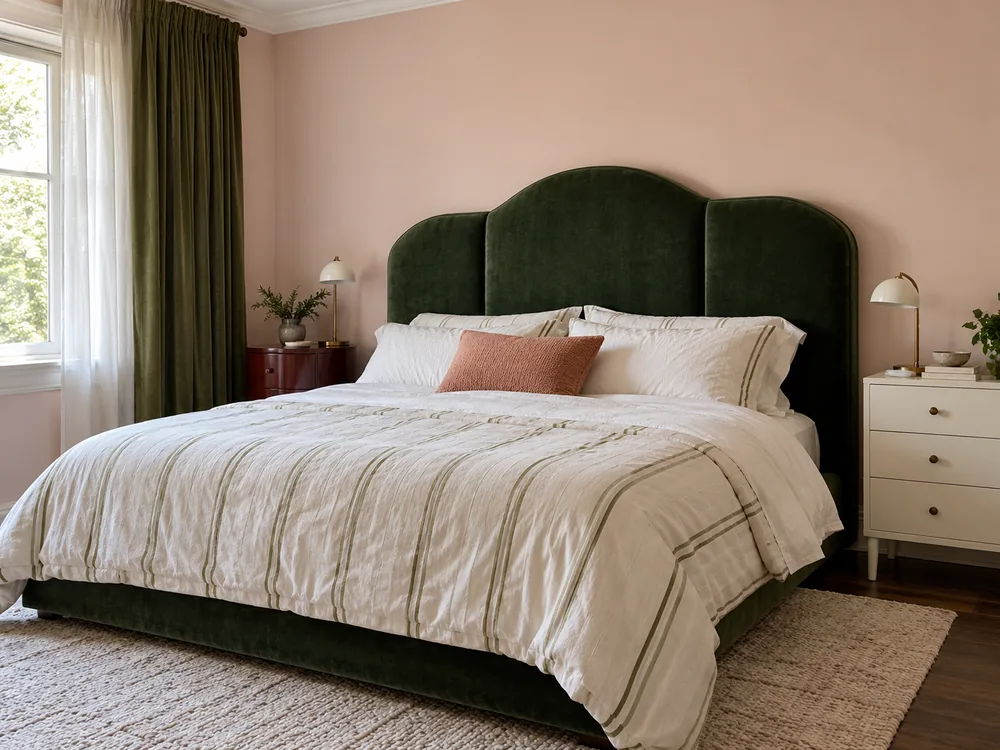
If you have a tall upholstered headboard, a bold wallpaper or architectural panelling, the wall may already have enough visual interest. Leaving it bare is a design decision, not neglect.
How to Get the Size and Placement Right
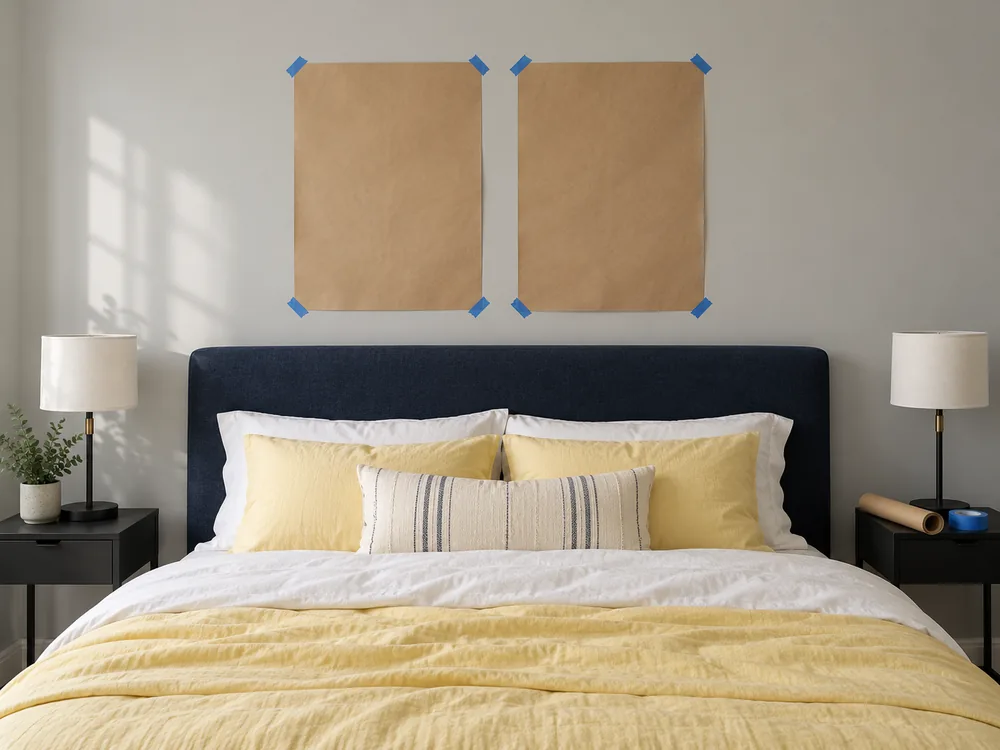
The most common above-bed mistake is artwork that is too small. A narrow frame above a wide headboard looks disconnected, as if it belongs somewhere else.
Size. A useful starting point is for wall decor to span roughly two-thirds to three-quarters of the headboard width. Measure your actual headboard rather than relying on standard bed-size labels, because headboard widths vary. If you are grouping pieces (a pair, a triptych, a gallery wall), the proportion applies to the overall grouping.
Height. The bottom edge of your artwork is often around 15 to 25 cm above the top of the headboard as a starting point. This keeps the art visually tied to the bed rather than floating in the middle of the wall, but the right gap depends on your ceiling height and headboard proportions. With a tall headboard, the gap may need to be smaller. Without a headboard, place the art high enough that it clears your head when you sit up against the wall, and check the position from the doorway and from your seated position on the bed.
The standard gallery “eye-level” hanging rule may not suit this position, because above-bed art is typically viewed from the doorway or from the bed, not while standing in front of it.
Before committing: Cut paper to the size of the art you are considering and tape it to the wall. Check from the doorway and from the bed. This simple step saves unnecessary holes and returns.
What Is Safe to Hang Above a Bed?
Anything above a sleeping area needs to be securely fixed. A few precautions are worth taking seriously.
Match fixings to the wall type and weight. A lightweight canvas on plasterboard needs different fixings than a framed mirror on brick. Check the item’s weight and choose anchors rated for it. If you are unsure, ask at a hardware store.
Avoid unsecured items. Secure each item above the bed using fixings suited to its weight and the wall. Do not rely on a shelf lip, backstop or leaning position to hold loose objects in place. Follow the mounting instructions for both the display and its contents.
Be cautious with heavy pieces. Heavy mirrors, thick glass frames and loaded shelves carry real risk if they fall. Use heavy-duty fixings, secure into studs or masonry where possible, and follow the manufacturer’s instructions. Note that 3M’s official instructions for Command picture-hanging strips state “Do not hang over beds”.
Check shelf contents as well as fixings. Keep shelves within their rated load and place displays of loose objects beside the sleeping area. Lightweight contents still need to be considered separately from the shelf’s own mounting.
Consider lightweight alternatives. Unframed canvas, textile hangings, lightweight baskets, macrame, or a wall treatment like paint or wallpaper all avoid the issue of heavy objects above sleepers entirely.
Renter-Friendly Above-Bed Wall Décor
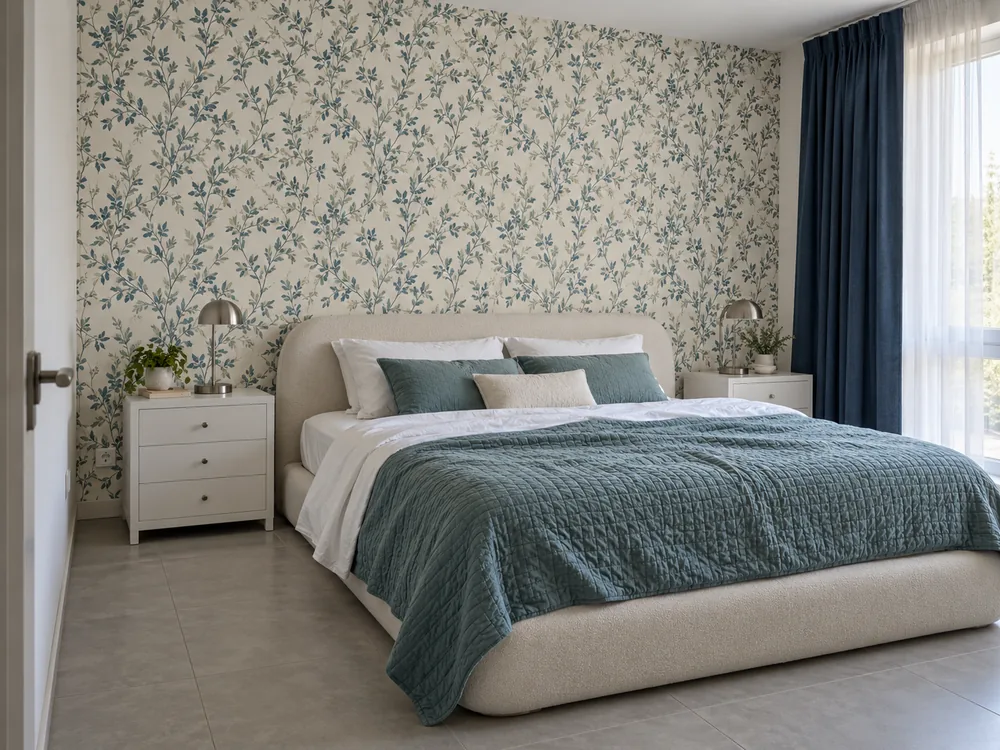
Removable wallpaper can create a feature without drilling. Product suitability and removal depend on the wall surface; test a hidden area first, as removal may damage paint or finishes.
If drilling is not an option, focus on ideas that avoid wall fixings entirely.
Removable wallpaper creates a feature wall without traditional wallpaper paste, though removal may still damage paint or finishes depending on the wall surface and product. Painted arches or colour blocks work if your lease allows painting and you can meet any requirements to restore the original finish.
Wall decals add a graphic element without drilling. Check the product’s surface requirements and removal instructions, and test a small hidden area first.
A lightweight textile on a rod or dowel is another popular rental solution, but keep in mind that mounting the rod usually requires at least small fixings. Check whether your lease allows minor holes that can be filled on move-out.
Note that while adhesive hooks and strips work well in other parts of the home, 3M’s official instructions for Command picture-hanging strips state “Do not hang over beds.” For above-bed decor in a rental, wall treatments (removable wallpaper, paint, decals) are the most reliable no-drill options.
Above-Bed Decor for a Small Bedroom
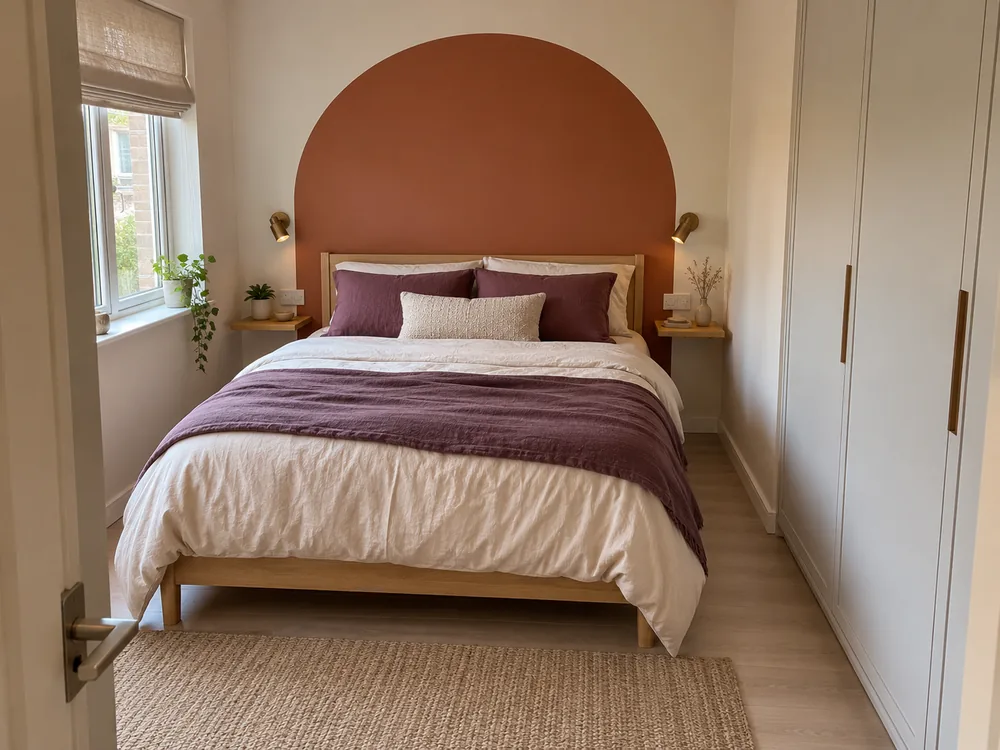
In a smaller room, fewer elements and simpler framing keep the wall from feeling crowded. One correctly scaled focal piece, a clean pair of prints, or a painted feature often works better than a multi-piece gallery wall. A mirror can help the room feel more open, though weight and fixings still matter. A securely mounted textile hanging can add interest without visual bulk. Whatever you choose, the same proportion rules apply: scale to the headboard, not the wall.
Common Above-Bed Decorating Mistakes
Choosing artwork that is too small. Check scale with a paper template before buying. If it looks undersized as a cutout, it will look undersized framed.
Hanging decor too high. Art should connect visually to the headboard. If there is a large gap, it looks detached.
Cluttering with unrelated small pieces. A random mix of frames without a clear colour or style connection reads as clutter, not curation.
Ignoring headboard width. Scale decor to the headboard, not the wall. A very wide wall with a narrow bed still needs decor proportioned to the bed.
Mounting heavy items with inadequate fixings. Always match fixings to the weight and wall type.
Competing with a busy headboard or wallpaper. If the headboard or wall treatment is already the feature, adding a busy gallery wall on top can overwhelm the space. Simpler decor, or none at all, works better.
Copying inspiration without measuring. A layout that looks balanced in a room with 3-metre ceilings may not work in a room with 2.4-metre ceilings.
How to Choose the Right Option
If the number of options feels overwhelming, start here:
- Want calm and minimal? One large artwork or a painted feature.
- Want symmetry? A pair of matching prints.
- Want personality? A gallery wall.
- Want texture? A textile hanging or macrame.
- Want more light? A mirror.
- Prefer nothing heavy above the bed? Wallpaper, paint or panelling.
- Renting with no drilling? Removable wallpaper, paint or wall decals.
- Small room? Fewer elements and simple framing.
Measure your headboard first. Decide whether you want something calm or bold. Then narrow from there. The right above-bed decor is the option that fits your room, not the one that looked best in someone else’s.
FAQs
What should I put on the wall above my bed?
Framed artwork, a mirror, a gallery wall, a textile hanging or a wall treatment like wallpaper or paint are all popular choices. A single piece of well-scaled artwork is the easiest starting point.
How big should art be above a bed?
As a flexible guideline, artwork or a grouping should span roughly two-thirds to three-quarters of the headboard width. Measure your headboard rather than relying on standard bed-size labels, since headboard widths vary between models.
How high should wall art be above a headboard?
A common starting point is around 15 to 25 cm above the top of the headboard, but the right gap depends on your ceiling height and headboard proportions. The goal is to keep the art visually connected to the bed.
Is it safe to hang a mirror above a bed?
It can be, if secured according to the manufacturer’s instructions with fixings appropriate for its weight and your wall type. An acrylic mirror may reduce the weight. A floor mirror beside the bed is an alternative location, but it also needs securing according to its manufacturer’s instructions.
Can you put shelves above a bed?
A shelf requires suitable fixings, but its contents also need to be secure. Put shelves displaying loose objects beside the sleeping area rather than directly above sleepers, and follow the manufacturer’s installation and load instructions.
What can I put above a bed without drilling?
Removable wallpaper, peel-and-stick wall decals and painted features all work without drilling. Note that 3M’s official instructions for Command picture-hanging strips state “Do not hang over beds”.
Should the wall above the bed always be decorated?
No. If your headboard, wallpaper or wall treatment already provides enough visual interest, leaving the space above the bed bare is a valid choice. The goal is a room that feels finished, not decorated for the sake of it.