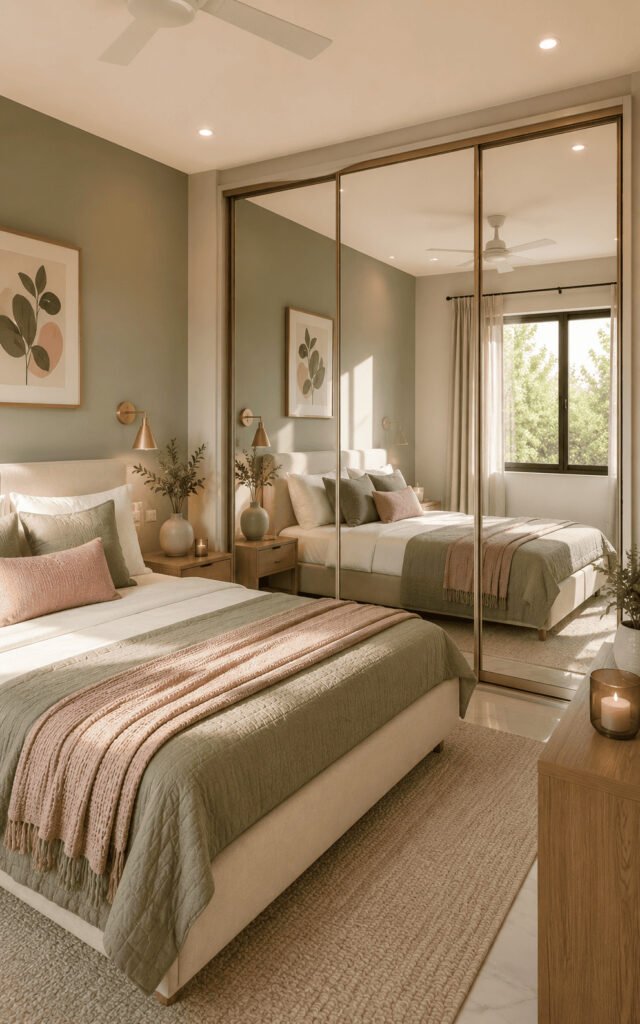
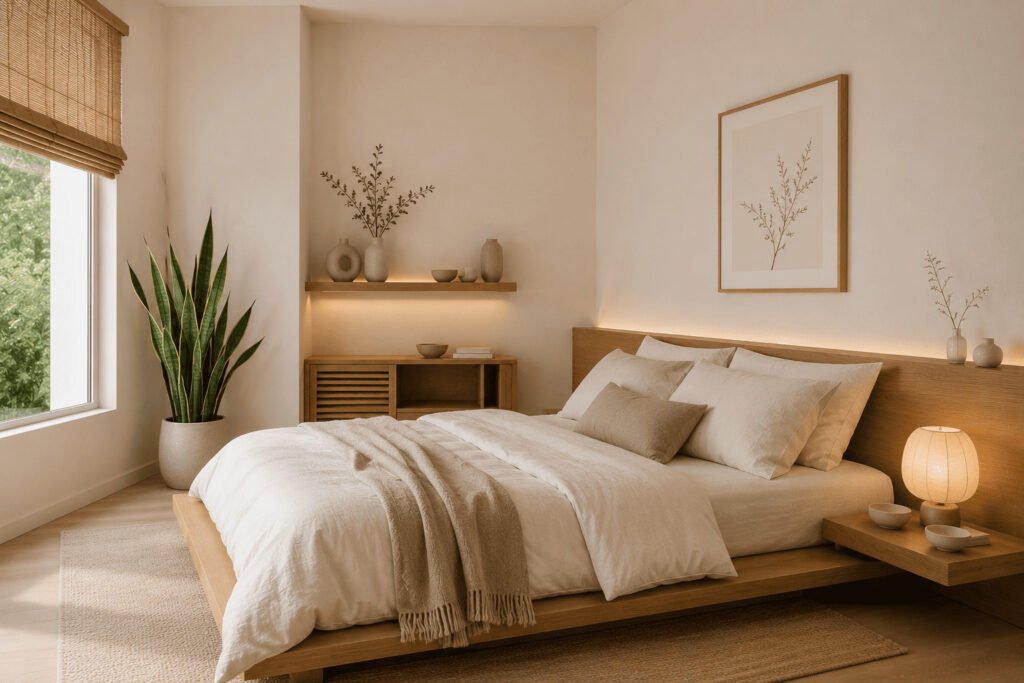
Japandi combines in a word the two design cultures Japanese and Scandinavian – two that, at first glance, look very different but actually have a very deep common set of values: reverence of natural materials, love of simplicity and functional design, deriving comfort from few but well-made objects instead of many, and recognizing that the quality of the environment we live in affects the quality of our experience in it.
In a bedroom specifically, Japandi produces something extraordinary: a space that is completely uncluttered and visually calm, yet warm, natural, and genuinely comfortable to sleep in and wake up in. It is the aesthetic that resolves the apparent contradiction between minimalism (which can feel cold and uninviting) and maximalism (which can feel restless and over-stimulating) — finding the precise midpoint where reduction and richness coexist.
This guide addresses each aspect of the Japandi bedroom thoroughly from a practical point of view: color scheme, bed and furniture styles, curtain material fabrics, window treatments, trinkets, greenery, and light sources. You will find all the information here if you decide to start a Japandi bedroom design project or if you want to transform your current bedroom to this style.
Understanding the Japandi Philosophy
When reading about the Japandi aesthetic, one of the best things to do before getting started with it in your bedroom is to understand the two philosophies it takes inspiration from. This is because your tangible choices will be based on these concepts,
- Wabi-sabi (Japanese): The beauty of imperfection, the short-lived nature of things, and the use of natural materials in their raw state are to be appreciated. A hand-thrown ceramic that is not perfectly symmetrical, linen bedding with natural crease marks, a piece of oak with the grain showing are, in fact, quite fascinating in the wabi-sabi perspective compared to their perfect, machine-made Age, wear, and the marks of genuine use are valued rather than concealed.
- Hygge (Scandinavian): It is the Danish and Norwegian idea of domestic comfort and warmth —that sensation of being sealed in safe & cozy as the cold world outside, together with warm, the sense of being protected and comfortable. Hygge in interior design is characterized by the use of soft fabrics, warm lighting, and the addition of cozy items (like candles, plants, and a good book) that make the home a place of perfect
Japandi applies both simultaneously: the wabi-sabi appreciation for natural, imperfect materials, and the hygge warmth and comfort ethos. The result is a design vocabulary that is simultaneously minimal and warm — the most difficult combination in interior design to achieve, and the most rewarding when it is.
The Japandi Bedroom Palette
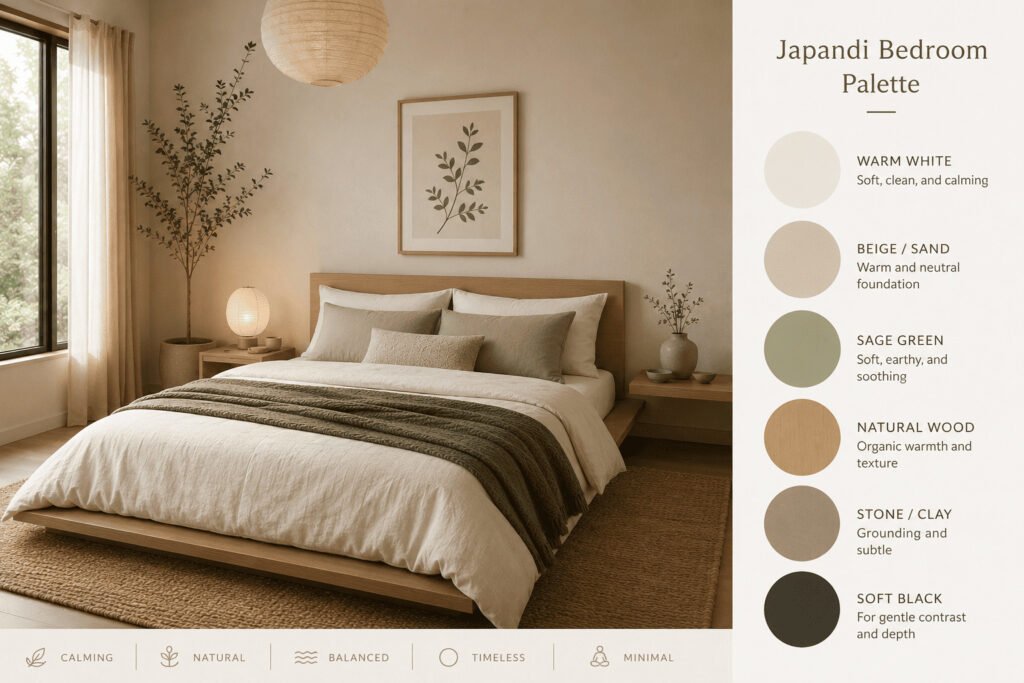
The Japandi bedroom colour palette is drawn from natural materials and natural environments. Every colour has a precedent in the physical world rather than in a manufacturer’s formulation.
- Walls: warm white (the white of linen, not the white of clinical environments), sage green (the green of lichen on stone), warm stone (the pale, slightly warm tone of natural limestone), or warm greige.
- Bedding: natural linen beige, warm cream, undyed cotton white — the colour of natural fibres before any dye is applied
- Wood: light oak, bamboo, or warm walnut — always with visible grain, never painted or laminated in a way that conceals the wood’s natural quality
- Accent: a single deeper tone introduced sparingly — warm black in a lamp base or a ceramic, deep charcoal in a single cushion — provides the visual grounding that prevents the palette from floating
- What to avoid: cool grey, synthetic-looking white, primary colours, anything that reads as manufactured rather than grown or found
The Bed — The Japandi Centrepiece
The bed in a Japandi bedroom is almost always low. The low-profile bed — whether a platform frame, a tatami-style base, or a simple slatted wooden frame close to the floor — creates a grounded, earthward quality that is central to the Japanese design influence. A tall four-poster bed, however beautiful, is antithetical to Japandi; a low bed with natural linen bedding pooling slightly at the sides is its perfect expression.
The headboard is simple and architectural if it exists at all :a solid panel in natural wood, a simple slatted design, or nobody headboard at all . A padded, upholstered headboard in a synthetic fabric is, therefore, a little off-piste with the decor.

Low Platform Bed Frame Natural Wood Double
Natural Linen Bedding — The Non-Negotiable Textile
If we consider the fabric that represents the Japandi bedroom style more than any other, that is natural linen. Linen is the fabric of Japandi because it represents every characteristic that the style cherishes: firstly, it is a natural fibre, from the flax plant, secondly, its texture is visible, tangible and appears as genuine and unprocessed, thirdly, the more it is washed, the better it actually gets, becoming softer and more pliable with each use, and lastly, its average weave texture is a type of natural imperfection for which wabi-sabi has a positive attitude rather than a negative one.
Natural or undyed linen bedding in warm cream or natural beige is the ideal choice. If dyed, it should be in a muted natural tone — soft sage, warm stone, dusty blue, or warm grey — never a bright or saturated colour. The bedding should drape and pool slightly rather than being tightly tucked — the Japandi bed is not a hotel bed with perfectly mitered corners but a natural, slightly relaxed arrangement that looks genuinely lived-in and comfortable.
✦ PRO TIP: When making a Japandi bed, leave the duvet slightly asymmetrically arranged rather than perfectly centred and squared. One side slightly higher than the other, a small natural crease at the fold, a pillow slightly angled — these small deliberate imperfections create the wabi-sabi quality that makes the bed look naturally beautiful rather than staged.
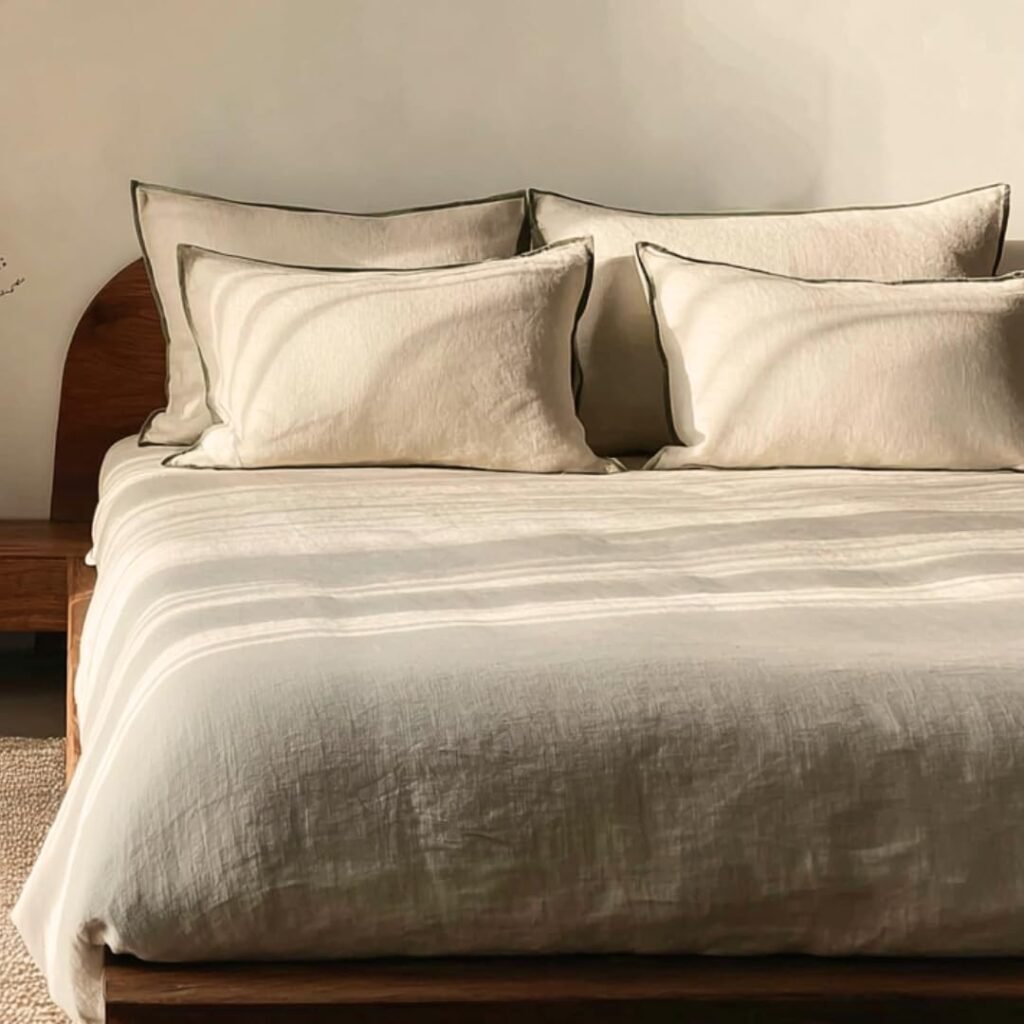
Linen Bedding Set Natural Cream King
Japandi Furniture — Natural Wood, Functional Form
Japandi furniture has two non-negotiable qualities: it must be made of natural materials (wood, bamboo, rattan, or natural stone — never synthetic laminate or painted MDF masquerading as wood), and it must have a clear functional purpose expressed through a simple, honest form.
The bedside table in a Japandi bedroom is typically small, low, and in solid natural wood — a simple block with a single shelf or drawer, or no storage at all. It holds precisely what is needed for the night: a glass of water, a book, a lamp. No more.
Wardrobes and storage furniture should have clean, flat fronts — no ornate handles, no decorative moulding — in natural wood or painted in the wall colour. The perfect Japandi wardrobe is a smooth built-in wardrobe that blends so well into the wall that it’s practically invisible; the functional solution is a wardrobe with simple wooden handles and a clean front.
- Best Japandi bedroom furniture materials: solid oak (light or warm tone), bamboo, solid walnut (slightly darker, suits rooms with deeper wall colours), rattan (for accent pieces only — a small chair or side table)
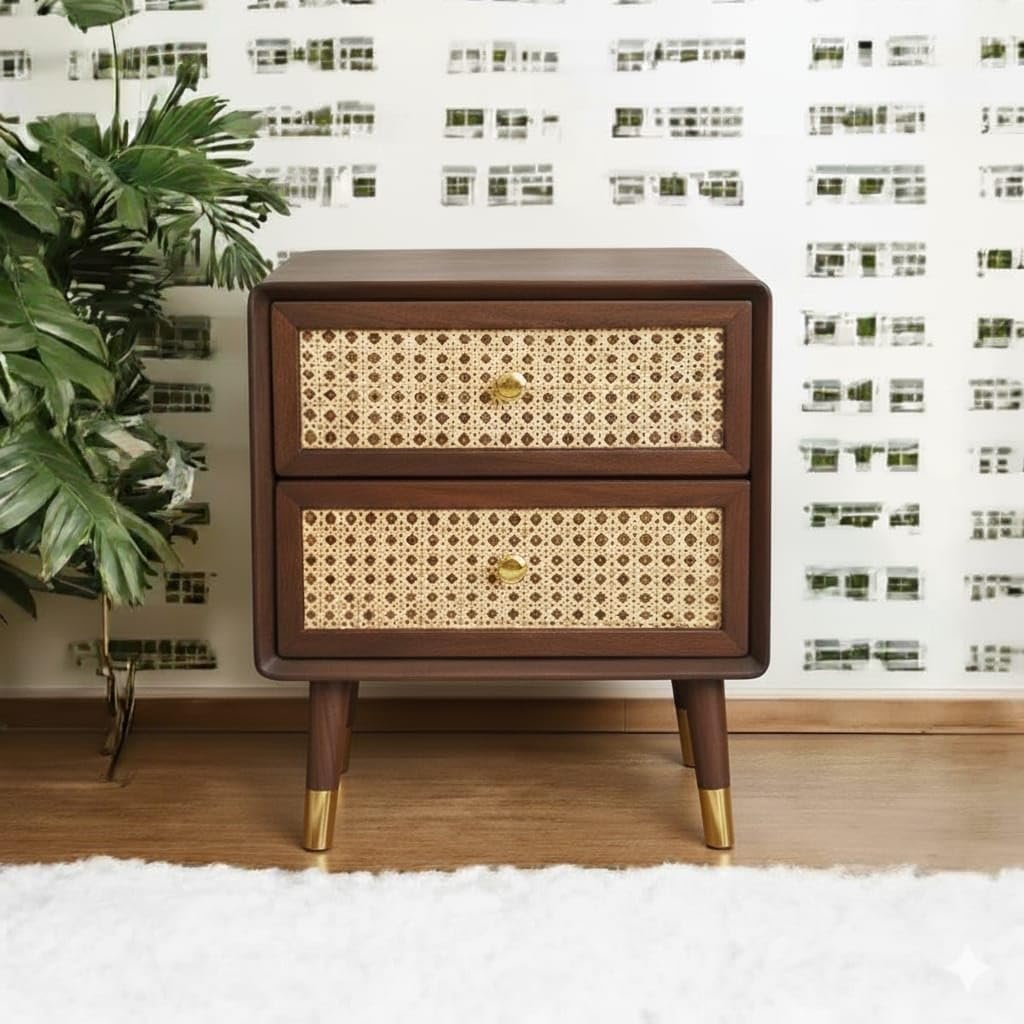
Japandi Bedside Table Solid Wood Minimal
Japandi Curtains — Natural Linen, Ceiling Height, Invisible Hardware
Curtains in a Japandi bedroom serve the same principles as every other element: natural material, honest form, functional purpose expressed simply. The only curtain that fully satisfies these requirements is natural linen — undyed or in a muted natural tone — hung floor to ceiling on a ceiling-mounted track that is hidden behind the curtain heading when drawn.
The ceiling-mounted track is specifically aligned with Japandi because it is invisible — the hardware disappears, and the curtain appears to flow directly from the ceiling to the floor, creating an uninterrupted vertical line that embodies the aesthetic’s appreciation for clean, uncluttered form. A visible pole with decorative finials is inconsistent with Japandi’s preference for concealed or architectural hardware.
When the linen curtains are drawn wide open, the folds of the curtains should completely clear the window, letting all the morning light in. When closed, they temper daylight into a cozy, soft light and at the same time, they act as the subtle barrier between indoor and outdoor, which is a key element of the hygge feeling of a home.
Accessories — Wabi-Sabi Objects and Nothing More
Accessories in a Japandi bedroom are selected with tremendous care and placed on purpose. The principle is straightforward: each item showcased in the room should justify its presence either by its material excellence, by its shape, or by its sentimental value. Gathering a lot of ordinary ornaments is actually the antithesis of wabi-sabi.
The items that most correspond to Japandi’s material and deep philosophical beliefs are: pottery made on a potter’s wheel showing the potter’s hand and imperfection, pebbles that have been hand-picked from a certain spot, one plant in a minimalist earthenware pot, a tiny wooden tray beside the bed, an open paperback book scattered around, a miniature ceramic incense burner.
- The bedside: one lamp, one object (ceramic, stone, or single stem), one functional item (book or glass of water). Nothing else.
- The dresser or shelf: three objects maximum. Mix heights and materials. One plant, one ceramic, one object of personal meaning.
- The floor: nothing except the bed, bedside tables, and one plant. The floor is not a storage surface.
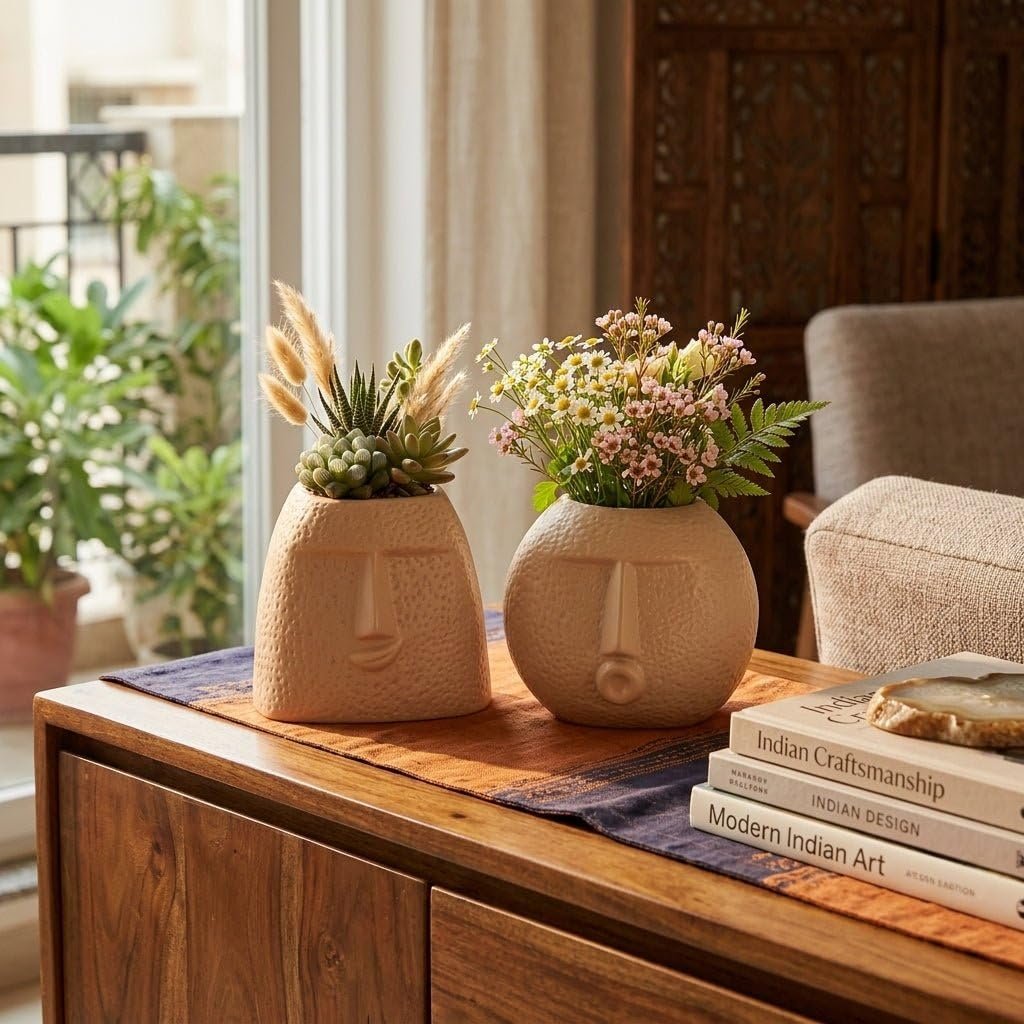
Ceramic Vase Set Japandi Neutral
Plants — One Significant Architectural Form
Plants in a Japandi bedroom follow the same principle as accessories: one significant choice rather than many small ones. A single snake plant in a simple ceramic pot, positioned where it will receive the morning light and where it has space to be appreciated as an individual form, makes more impact than any collection.
The snake plant really is the ideal Japandi bedroom plant thanks to its shape: extremely upright, sharply geometric, almost like a piece of art. The ZZ plant, having dark shiny leaves on curved stems, is a good match as well. Hanging or sprawling plants are more out of harmony – Japandi bedrooms generally favour vertical, striking plant shapes that enhance the room’s uncluttered design rather than oppose them.
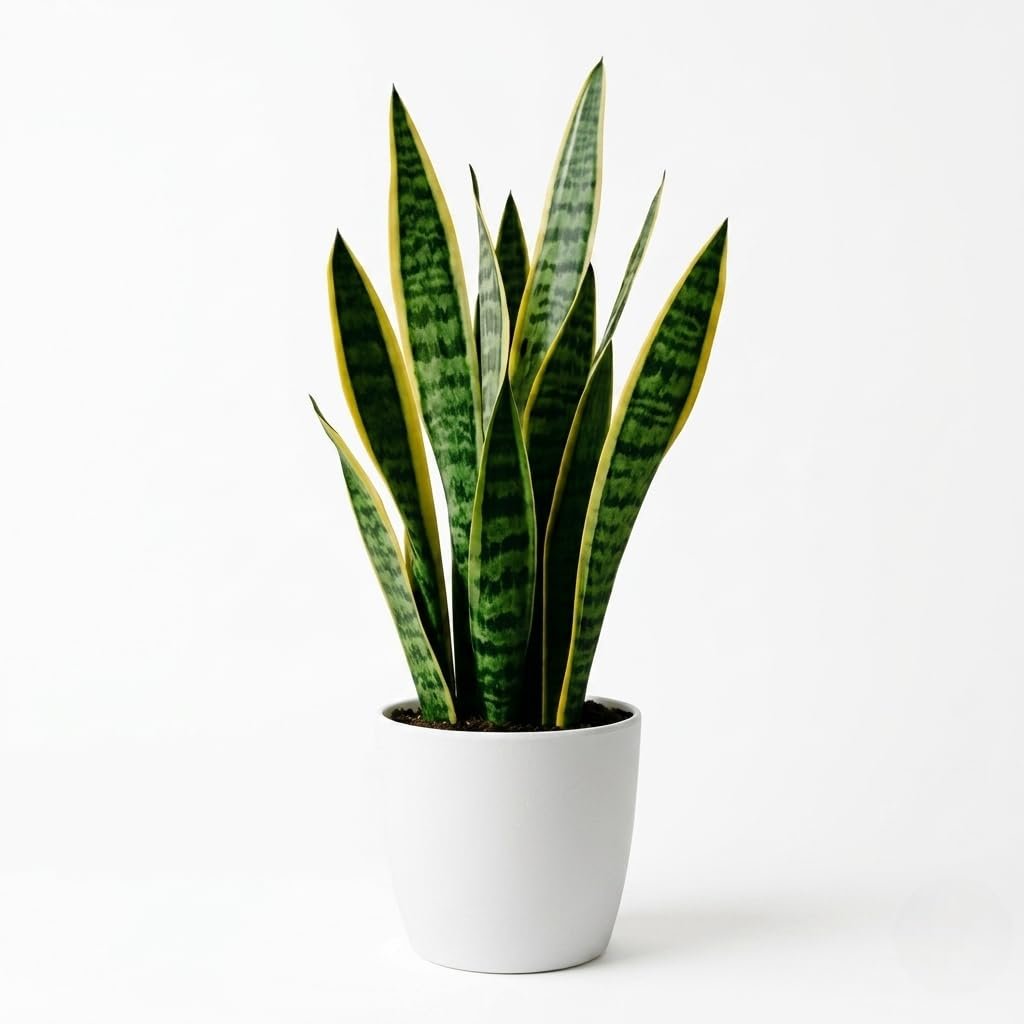
Snake Plant Indoor Pot Bedroom
Lighting — Warm, Minimal, and Layered
Japandi bedroom lighting uses the same warm colour temperature (2700K) as all the warm aesthetics in this series, but is particularly disciplined about fixture choice. The ceiling light — if it exists — is a simple architectural fitting: a recessed spot, a minimal flush mount, or a simple paper or ceramic pendant without decoration. Chandeliers, chandelier fans, ornate pendants, and decorative fixtures are inconsistent with the aesthetic.
The primary evening light sources are bedside lamps (in natural wood or ceramic bases, with a simple linen or paper shade) and possibly one floor lamp of similarly minimal profile. No fairy lights, no LED strips, no coloured lights — the only light in a Japandi bedroom is warm white at the lowest comfortable brightness.
- Best Japandi bedside lamp: wooden base (natural grain visible), white or cream linen drum shade, warm filament or 2700K LED bulb
- Evening light level: dimmer than most people are comfortable with at first — allow 2–3 weeks of adapting before dismissing the lower light level. The eyes adjust and the quality of the dimmed warm light becomes deeply pleasant.
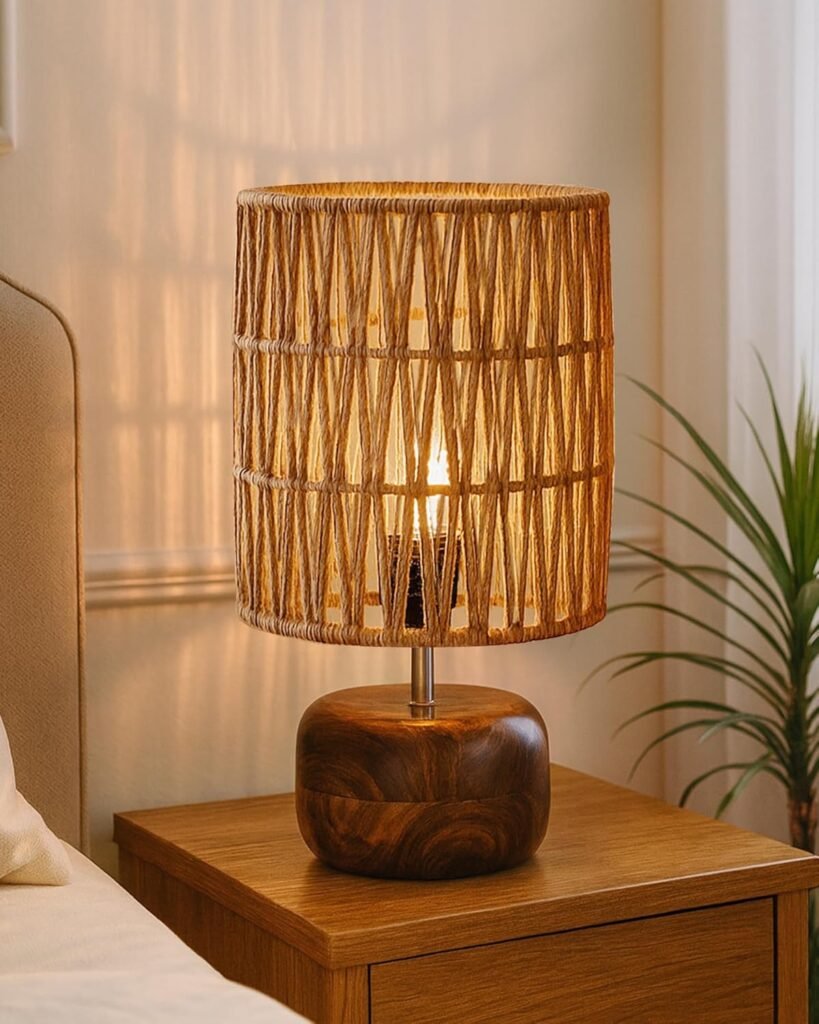
Minimal Bedside Lamp Natural Wood Warm
The Japandi Morning Routine
One of the most underappreciated aspects of the Japandi bedroom is the way it transforms the morning experience. Waking in a Japandi bedroom — to morning light filtering through linen curtains onto natural linen bedding, in a room that is calm, uncluttered, and visually resolved — is a fundamentally different experience from waking in a room that is visually busy, full of objects, and lit harshly.
This difference in the quality of morning experience is not imaginary and not trivial. The research on visual environment and mental state is consistent: calm, uncluttered visual environments produce calmer, more focused mental states. A Japandi bedroom is, in this sense, not merely aesthetically preferable — it is functionally superior for the purpose a bedroom exists to serve.
How to Convert an Existing Bedroom to Japandi
For most people, creating a Japandi bedroom is a process of subtraction and substitution rather than complete replacement. The conversion process in order of priority:
- Step 1: Remove everything from the surfaces. Everything. Then assess what earns its place back.
- Step 2: Change the bedding to natural linen in cream or warm neutral. This single change transforms the room’s quality more than almost anything else.
- Step 3: Change the wall colour if necessary — warm white or sage green covers most situations. Test with a sample pot before full commitment.
- Step 4: Replace curtains with natural linen, floor to ceiling curtain length. If budget is limited, this is where to spend most of the available budget.
- Step 5: Replace synthetic material accessories with natural ones: a ceramic instead of a plastic object, a wooden tray instead of a plastic one, a stone instead of a synthetic decoration.
- Step 6: Change the bulbs to 2700K warm white and reduce brightness in the evening.
- Step 7: Add one significant plant in a simple ceramic pot.
Final Thoughts
The Japandi bedroom is worth the investment of thought and the discipline of restraint it requires because it delivers something that most bedrooms in most homes do not — a space that genuinely supports rest, that improves the quality of mornings, and that remains as beautiful at year five as it was when first assembled.
The sustainability of the aesthetic is by far one of the least talked about yet fundamental aspects of it. Since Japandi is based on natural materials, muted natural colors, and the embracing of aging and wear versus opposing it, a Japandi bedroom will not become outdated. The natural linen becomes even softer and lovelier; the oak is acquiring a warm patina; the ceramic is becoming more interesting. The room becomes more itself over time rather than less relevant.
Begin with the bedding and curtains. Two natural linen items, they define the room through materials and, in fact, any addition of other Japandi things will be quite easy. Choose warm white or sage for the walls, if you want. One plant and three ceramic pieces are what you need to add. Please take away all the rest. A Japandi bedroom is not so much about what you put in as about what you dare to take out, its like Japandi across the whole home – not just the bedroom.
Frequently Asked Questions
Q: What is the difference between Japandi and minimalism?
A: Minimalism is all about cutting back — fewer things, simpler shapes, less colour — and this can result in a visually clean environment that is cold, stark, and uncomfortable as well. Japandi, while it also favours reduction as a means, takes Japanese wabi-sabi concept a step further which appreciates natural imperfection and the Scandinavian hygge which is focusing on warmth and domestic comfort. The main difference: a Japandi bedroom uses warm natural materials (linen, wood, ceramic), has warm colour in its palette, and accepts the natural imperfection of genuine materials; a cold minimalist bedroom might use synthetic materials, cool greys, and a more clinical cleanliness.
Q: What bed frame is best for a Japandi bedroom?
A: A low-profile platform bed in solid natural wood — oak, walnut, or bamboo — is the most Japandi-aligned choice. The shortness of the height is indeed the main point of the Japanese design influence, and the natural wood grain plays a key role in the wabi-sabi appreciation of the natural materials. While upholstered bed frames provide comfort, they deviate from the aesthetic a bit, unless the upholstery is done in natural fabric such as linen or wool (undyed) and not synthetic velvet or polyester. A simple slatted wooden frame or a platform with a low solid wood headboard is great.
Q: What curtains should a Japandi bedroom have?
A: Natural linen curtains — undyed or in a muted warm neutral — hung floor to ceiling on a ceiling-mounted track. Being made from natural materials, having honest forms and simple, clean appearance, is the only curtain choice that completely fits the Japandi aesthetic’s criteria. The track fixed to ceiling is the most favourite one because it cannot be seen when the curtains are hung and, therefore, the curtains seem to flow directly from ceiling to floor without any hardware interruption. Polyester, patterned, or short curtains are not in line with the aesthetic.
Q: What accessories should a Japandi bedroom have?
A: Accessories in a Japandi bedroom must be minimal, selecting their materials with high quality and a certain wabi-sabi character, as well as their placement should each day be with a conscious intention. A bedside table: one lamp, one ceramic object, one functional item. A dresser or shelf: a maximum of three items, at different heights and made of different materials. On the floor: nothing except the furniture and one plant. Every object should be there because it is genuinely beautiful or genuinely meaningful — not because it was purchased to fill a space.
Q: Is Japandi style expensive to achieve?
A: Not necessarily. The most expensive-looking Japandi bedrooms are often assembled from a combination of quality investments (natural linen bedding, one good ceramic) and thoughtfully chosen affordable items. The most important investment is the bedding — natural linen bedding in good quality is not cheap but is used daily for years and looks better with age. The ceiling-height linen curtains are the second investment. Most of the remaining Japandi aesthetic can be achieved through subtraction (removing clutter) and material substitution (replacing synthetic with natural objects) rather than purchasing.