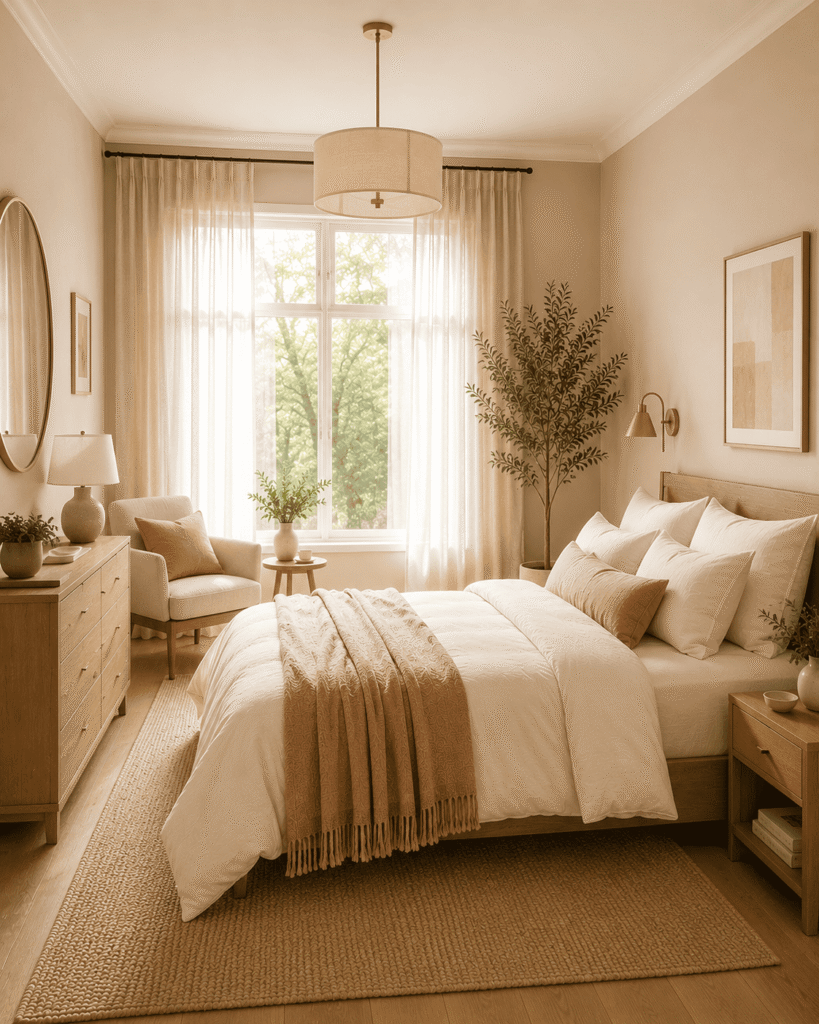
The bedroom is the room where lighting matters most and where it is most consistently handled incorrectly. The default bedroom lighting arrangement — a central ceiling light, turned on at full brightness from the moment the bedroom is entered until the moment the occupant falls asleep — is the worst possible lighting approach for both sleep quality and evening atmosphere, yet it is the arrangement that most bedrooms in most homes rely on.
The problem is physiological as well as aesthetic. The human brain considers light as the main signal for circadian rhythm i.e. the internal clock that manages sleep and waking. Bright, cool, overhead light informs the brain about daytime and strongly inhibits the production of melatonin that helps sleeping. Dim, warm, lower-positioned light signals evening and supports the natural progression toward sleep.
This guide covers the lighting ideas approach that serves the bedroom correctly: the fixtures to choose, the positions that work, the bulb specifications that matter, and the specific products that deliver the right result.
The Core Problem: Why Overhead Lights Fail in Bedrooms
A standard ceiling light has three characteristics that make it poorly suited to a bedroom used for relaxation and sleep:
- High position: Ceiling lights shine downwards from a single central point, which often leads to unflattering shadows on faces (which is especially of concern at mirrors and vanities), uneven illumination of the entire room, and the kind of visual impression that we link with functional spaces and not with places meant for
- Bright output: most ceiling fixtures are fitted with bulbs producing 800 lumens or more — the level appropriate for task-focused activity but too bright for evening relaxation or pre-sleep wind-down.
- Undifferentiated control: a single overhead light is either on or off — providing no ability to adjust the light level or position throughout the evening as the need shifts from getting dressed (brighter, functional) to reading (focused task) to pre-sleep wind-down (very dim, warm).
The solution is not removing the ceiling light — it serves a practical purpose for getting dressed, cleaning, and other daytime activity. The solution is installing multiple additional light sources that are used instead of the overhead light during evening hours.
The Bedroom Lighting Formula: Three Layers
Layer 1: Ambient — the room’s background light
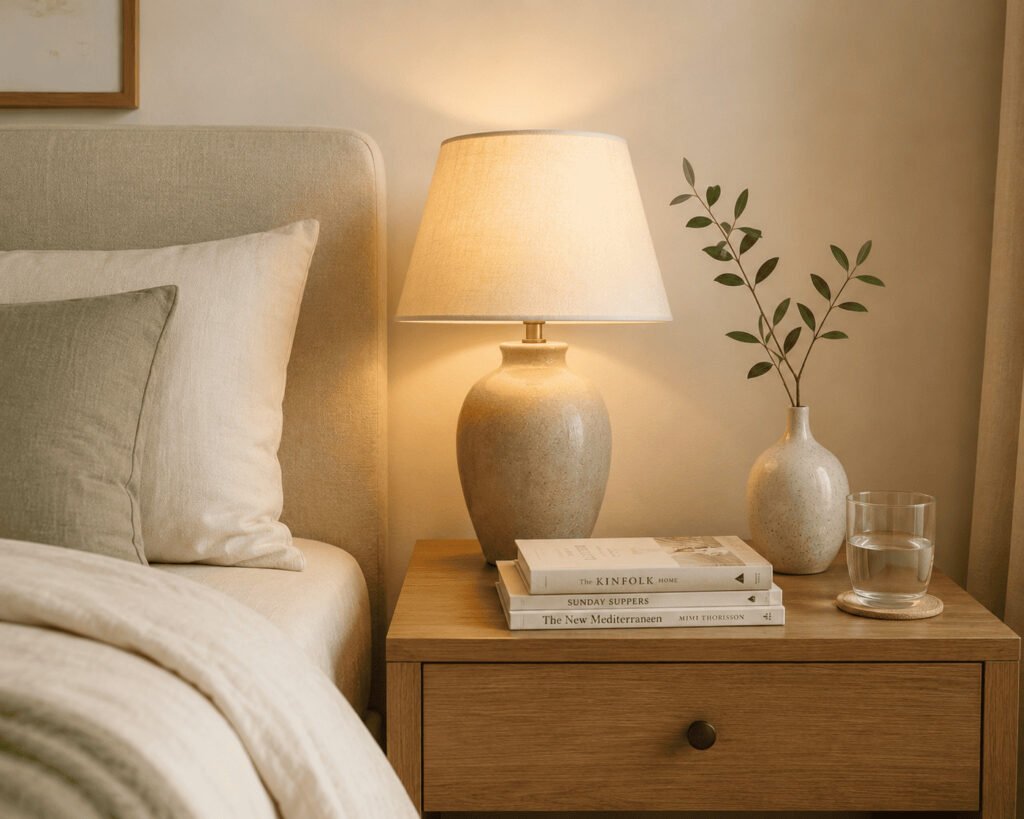
In a bedroom, ambient light in the evening comes from bedside lamps positioned at approximately mattress height, rather than from overhead. Two matching bedside lamps — one each side of the bed — provide gentle, symmetrical ambient light that illuminates the room at the level where people are when relaxing in bed, rather than from above.
The visual quality of bedside lamp light — warm, low, symmetrical — is fundamentally different from ceiling light and creates a bedroom atmosphere that immediately signals rest and relaxation.
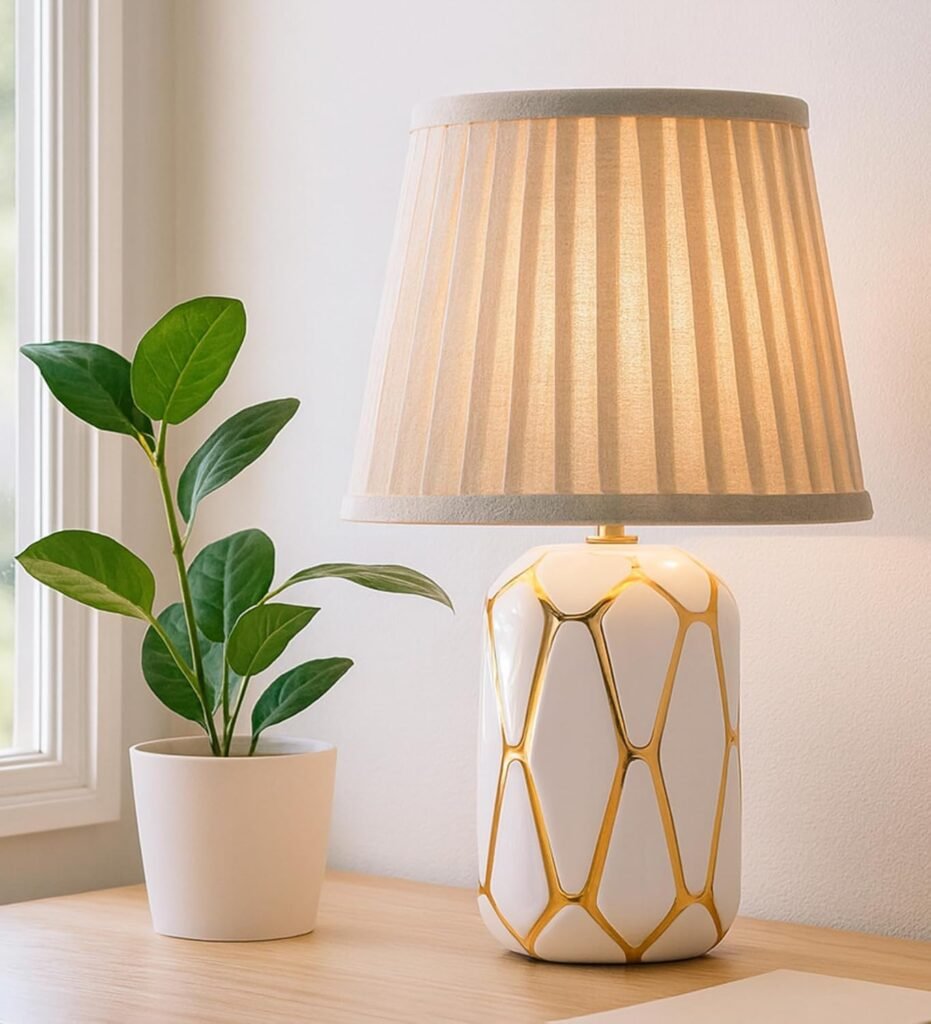
Bedside Table Lamp Warm Ceramic Base
Layer 2: Task — focused light for reading
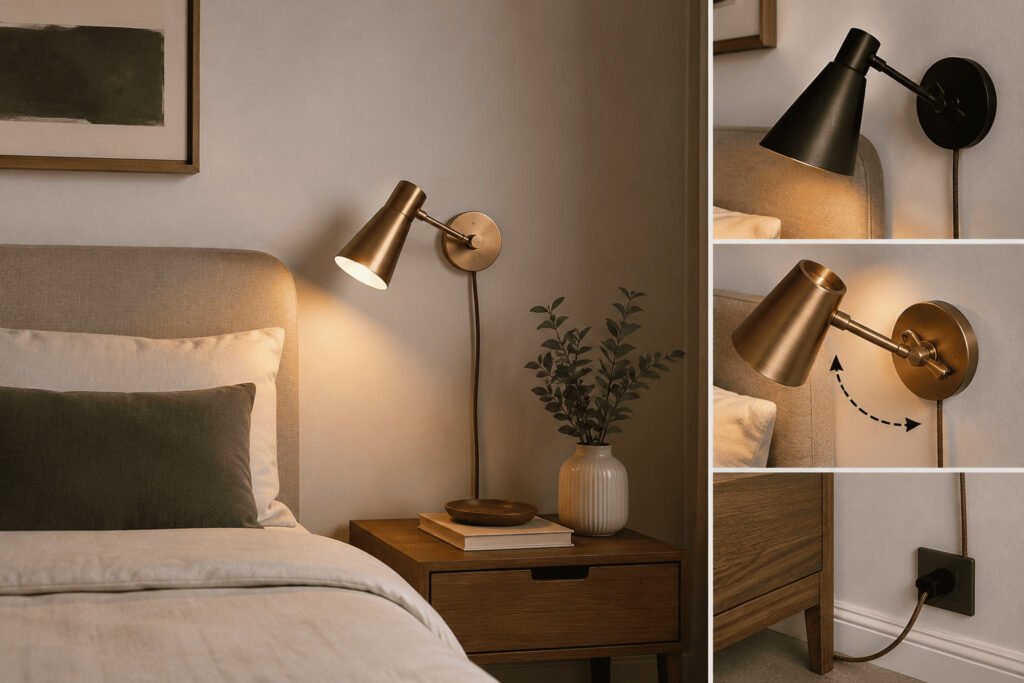
Reading in bed requires more focused light than ambient bedside lamps provide — a dedicated reading light directed at the book or screen rather than diffused into the room generally. Adjustable wall-mounted swing-arm lights above each bedside are the most practical reading light solution: they provide precisely directed light, are independently adjustable, and free up the bedside table from a lamp’s footprint.
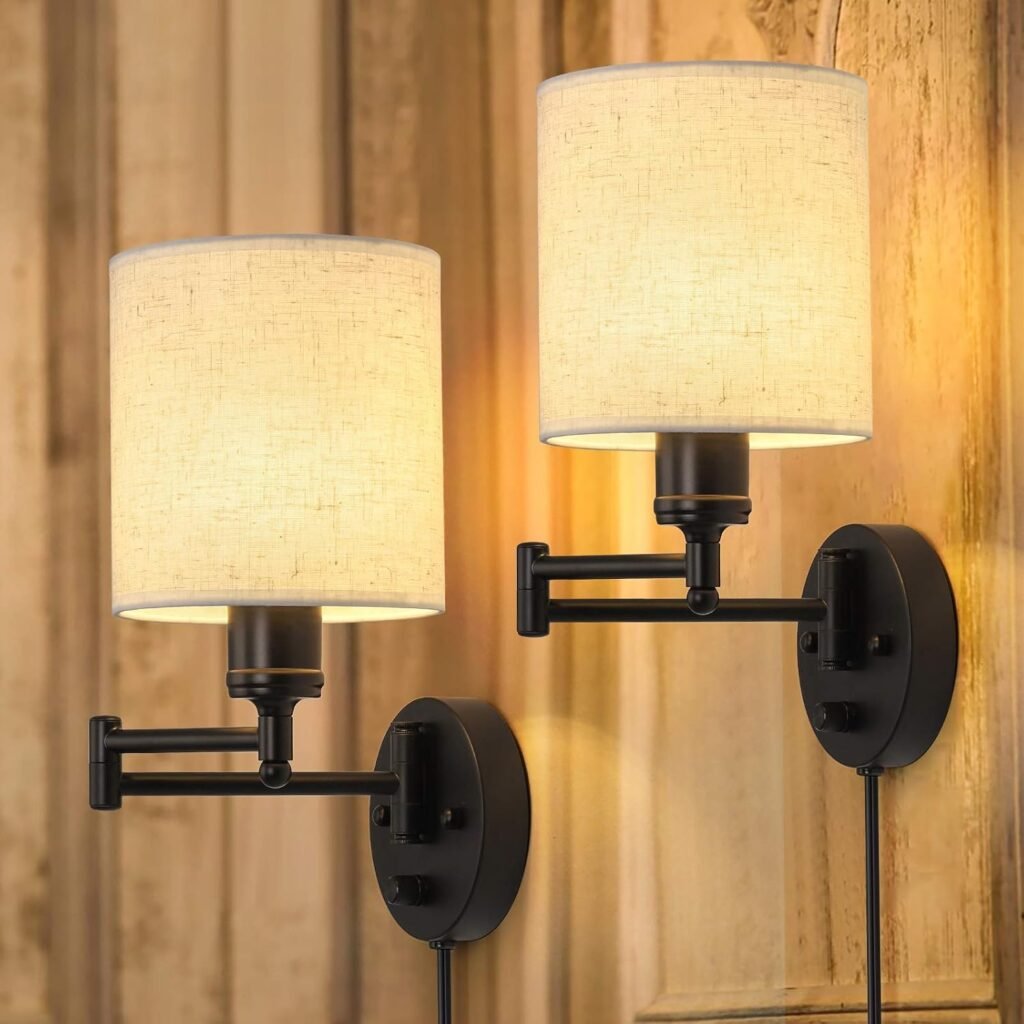
Wall Mount Swing Arm Reading Light Bedroom Plug In
Layer 3: Accent — the finishing atmospheric layer
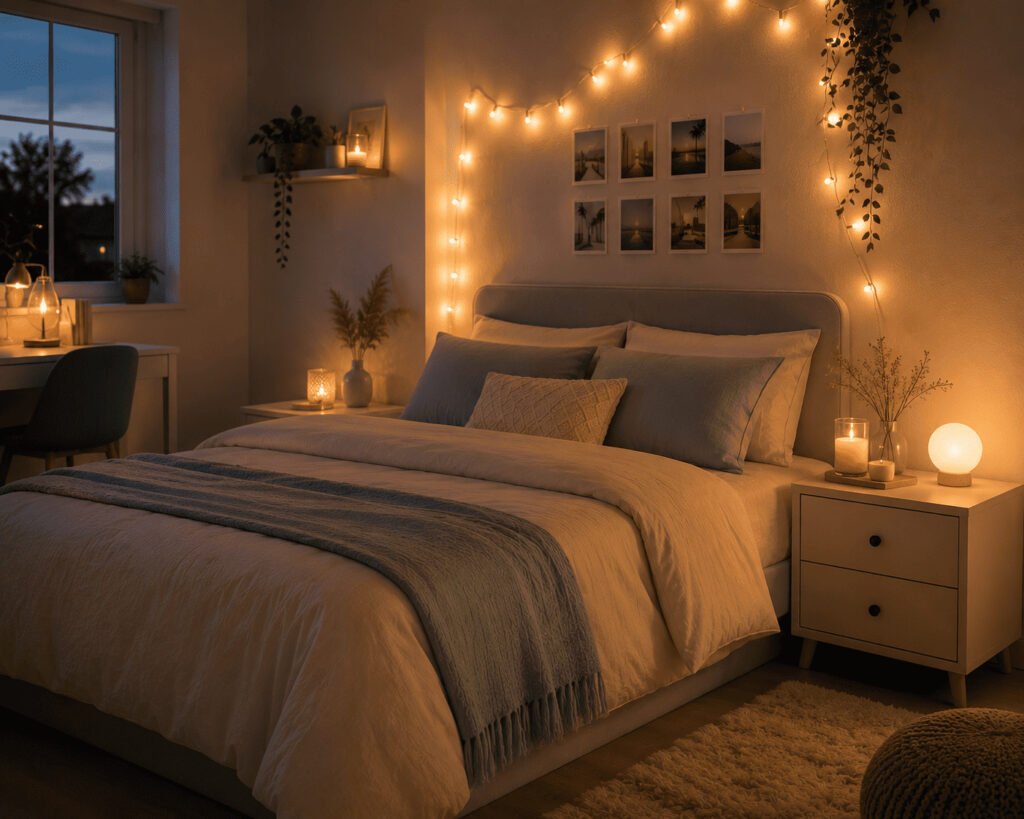
Fairy lights, candles, and the glow of a bedside candle or diffuser constitute the accent layer — the lowest, warmest, most intimate lighting level that is appropriate only when the room’s sole purpose is relaxation or sleep. This layer creates the quality of warm, private light that cannot be achieved by any fixture designed primarily for function.

Pillar Candle Set Bedroom Warm Scent
Bedside Lamps — The Most Important Bedroom Lighting Decision
The bedside lamp is the main evening lighting source of the bedroom and the fixture that most directly changes the atmosphere of the room. The choice of a lamp — its height, its shade material, its base design, and its bulb — decides whether the bedroom feels like a refuge or a working space.
- Height: Typically, a bedside lamp shade should be around shoulder height when you are sitting up in bed — That is usually 40 to 55cm above the mattress surface. If it is too low the light doesn’t reach the room; if it is too high the light bulb is seen and it causes
- Shade material: Fabric shades (linen, cotton, paper) not only diffuse light warmly and softly but also have the ability to produce a slightly muted effect. Glass and metal shades, on the other hand, produce a light that is more focused and, in some cases, even
- Base: ceramic, wood, and stone bases suit natural and warm aesthetics. Metal bases in brass, gold, or black suit contemporary and Art Deco rooms. Avoid plastic or chrome.
- Pairs: Always place matching or at least very closely complementary bedside lamps at each side of the bed. Different lamps disrupt the visual balance and create an aura of confusion in a room that is intended to be peaceful and
✦ PRO TIP: Choose a bedside lamp with a shade wide enough to cast light across the entire bedside area — books, a glass of water, a phone. A shade that is too narrow creates a small pool of light with dark areas around it, which feels inadequate and is poor for reading.

Wall-Mounted Bedside Lights — The Designer Alternative
Wall-mounted swing-arm reading lights — fixed to the wall above the bedside, with an adjustable arm and head that can be directed toward the book or reader — are the solution used in most professionally designed bedrooms for good reason. They provide precisely positioned reading light that table lamps cannot achieve, they free the bedside table from a lamp’s footprint (giving back 30 to 40cm of surface area per side), and they look significantly more intentional and designed than even a beautiful table lamp.
Plug-in versions — which require no electrical installation and simply plug into a standard wall socket — are available from most lighting retailers and on Amazon, making the upgrade accessible without professional electrical work. The wall mount is fixed with two screws and a picture-hanging style anchor.
- Best finish for most bedrooms: warm brass or matt black — both suit a wide range of bedroom aesthetics
- Key feature to look for: a lampshade or head that rotates at least 180 degrees for full directional control
- Cord management: choose a version with a fabric cable (not plastic) and route the cable neatly to the nearest socket
Ceiling Lights — When and How to Use Them
The bedroom ceiling light should be present and functional, but used selectively. It serves daytime tasks: getting dressed, cleaning, examining clothing colours. In the evening, after approximately 7pm, it should be off — replaced by the bedside lamp layer.
If a ceiling light must be used in the evening (shared bedroom with different schedules, small space with no other option), installing a dimmer switch transforms its usefulness. A dimmable ceiling light at 20-30% brightness is a completely different experience from the same light at full brightness — warm, comfortable, and no longer disruptive to sleep preparation.
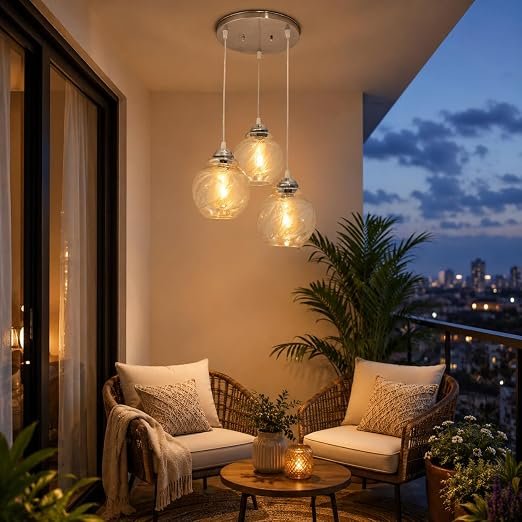
The simple ceiling light itself can be an element of the bedroom’s aesthetic even when not illuminated. A plain paper or ceramic pendant in a warm neutral or a minimalist flat flush mount, do not overwhelm the room’s design but the contrary sit there quietly as part of the overall look.
Bedroom Pendant Light Warm Shade
The Science of Bulb Temperature in the Bedroom
The colour temperature of light — measured in Kelvin — has a more direct effect on sleep quality than almost any other bedroom variable under the occupant’s control. Understanding and practicing this knowledge is the biggest lighting change that an average person can make.
- 4000K and above (cool white/daylight): suppresses melatonin production and signals daytime to the brain. Using these in a bedroom in the evening makes sleep harder to achieve. Check and replace any cool white bulbs in your bedroom right now.
- 3000K (warm white): a reasonable compromise — warmer than cool white but still functional for getting dressed and morning tasks.
- 2700K (warm white): the standard recommendation for bedroom use — golden, amber-toned, sleep-compatible.
- 1800-2400K (ultra-warm/candlelight): available in smart bulbs and Edison-style filament bulbs — the warmest, most sleep-friendly light available from an electric source. Use for the last hour before sleep.
⚠ WATCH OUT: Look at the colour temperature indicated on the bulbs in your bedroom now. Change those which have a temperature of more than 3000K to a 2700K one. Spending five minutes on this simple job and paying around £5-15 this way, you will be able to get one of the most significant improvements in sleep quality that only a few can offer, irrespective of their price.
Smart Bulbs Warm White Dimmable Bedroom
Smart Lighting in the Bedroom
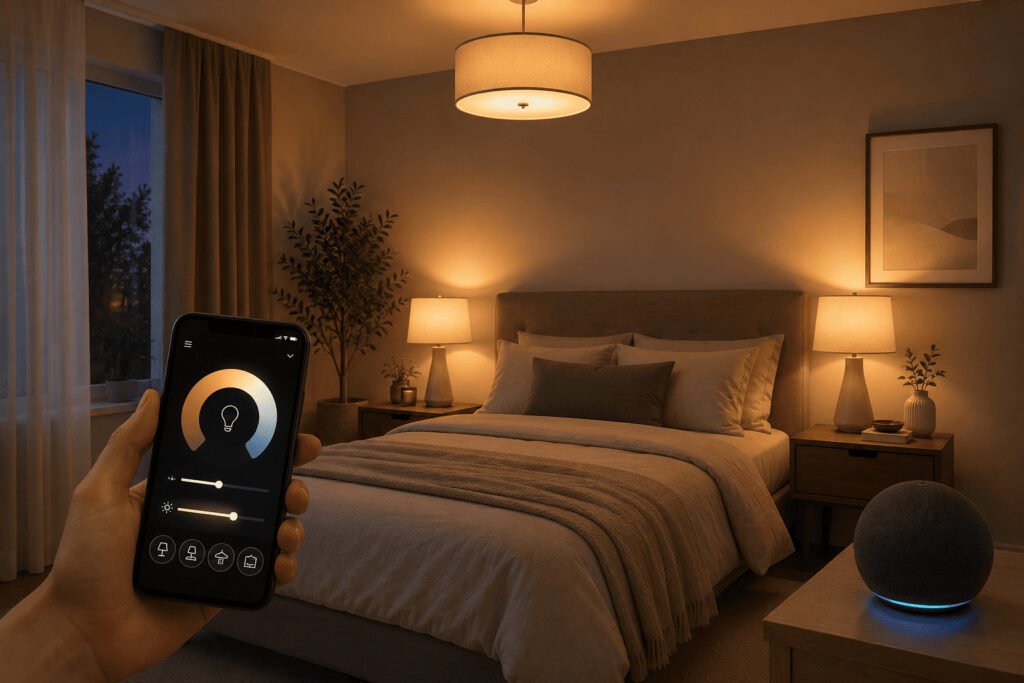
Smart bulbs — controlled via smartphone app or voice assistant — provide the most convenient path to optimal bedroom lighting without complex electrical installation. A smart bulb in each bedside lamp and the ceiling fixture can be programmed to:
- Automatically dim and shift toward warmer colour temperature after 8pm, simulating sunset and supporting natural sleep preparation
- Turn on gradually in the morning at a pre-set time, simulating sunrise to support a more natural wake
- Be dimmed and controlled from bed without getting up to operate a switch
- All lamps turned off together from a single voice command or phone tap
Smart bulbs require no additional wiring — they screw into standard lamp fittings and connect to home WiFi. The investment (approximately £10-15 per bulb) is returned in improved sleep quality and the convenience of never needing to get out of bed to adjust lighting.
Fairy Lights and Candles — The Atmospheric Finishing Layer
No electric fixture creates the quality of light produced by a candle. The irregular, flickering warmth of a real flame — at approximately 1800K colour temperature — is the most melatonin-compatible light source available and creates a quality of intimate, warm atmosphere that directly signals rest.
For households with safety concerns (children, pets, high-humidity rooms near flammable materials), high-quality flameless LED candles with a realistic flickering effect and warm colour temperature provide almost the same visual quality without any fire risk.
Fairy lights — strung along a shelf, draped around a mirror, or positioned behind the bed’s headboard — add a layer of warm, low, irregular light that creates a cocoon-like atmosphere particularly effective in the 30 minutes before sleep.
Bedroom Lighting for Different Room Types
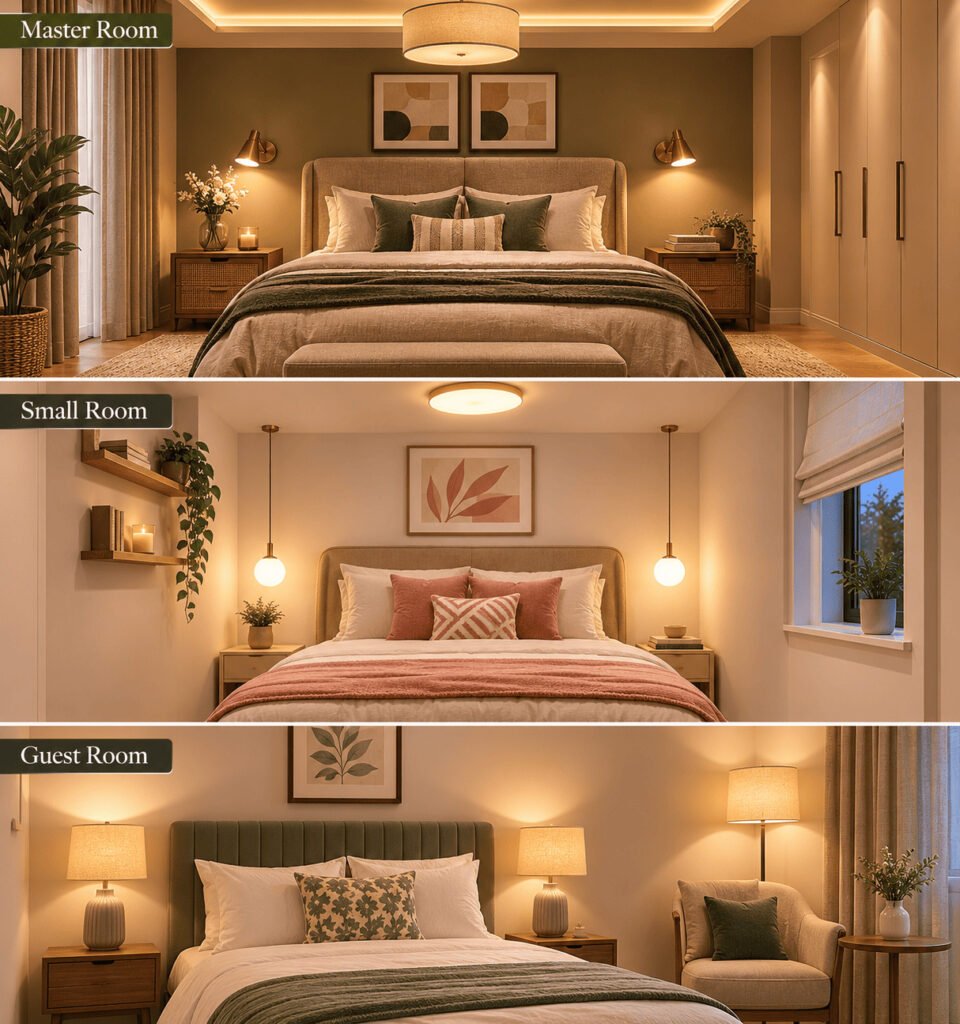
Master bedroom
Two matching bedside lamps, a dimmer switch on the ceiling light, and potentially wall-mounted reading lights above each bedside. This is the room where lighting investment is most justified and most used. Smart bulbs for automatic temperature shift from early evening.
Small bedroom
Wall-mounted bedside lights help a lot in really small bedrooms especially since they don’t take space on the already tiny bedside tables. Two or three simple flush-mount ceiling fittings may be a better option than a hanging lamp (which takes up headroom). Fairy lights hung on a wall can replace a floor lamp in a room that is too small to fit one. So we should know lighting solutions for small bedrooms so that we can take the right decision at the time of selection.
Guest bedroom
The guest bedroom benefits from a bedside lamp on each side and a ceiling dimmer — guests have different schedules and routines. A simple rechargeable lamp that can be moved anywhere adds flexibility without permanent installation.
Common Bedroom Lighting Mistakes
- Using the ceiling light all evening. Turn it off after 7pm and rely on bedside lamps. The difference is immediate and significant.
- Use cool white or daylight bulbs (4000K and above) for your bedside lamps. Placement of a warm light fixture is hardly a match to a cool white Always check the Kelvin rating.
- One bedside lamp for a double bed. Two lamps are not a luxury — they are the minimum for a functional, visually balanced bedroom for two people.
- Lampshade too small for the base. The shade should be proportionate to the base — as a guide, the shade diameter should be roughly equal to the base height.
- No dimming capability. Having a bedroom without any dimmable lighting is basically like having a room where you can’t switch the day activity to an evening rest in a comfortable way. So, get a dimmer or smart bulbs to change the mood of the room and the time of day.
Final Thoughts
Bedroom lighting is one of the most directly actionable improvements available for both sleep quality and evening quality of life. The changes required are not expensive or complex — replacing cool white bulbs with warm white equivalents costs minutes and a few pounds; adding a second bedside lamp or installing a dimmer switch is an afternoon project.
The result — a bedroom that transitions smoothly from daytime functionality to warm, dim, sleep-supportive evening atmosphere — is one of the most significant improvements to daily life available through a home decor change.
Frequently Asked Questions
Q: What is the best light bulb colour for a bedroom?
A: 2700K warm white is the standard recommendation for most bedroom fixtures. For the last 30-60 minutes before sleep, an even warmer option (2200-2400K, available in smart bulbs and Edison filament style) is more aligned with sleep science. Bedroom light with color temperature over 3000k must be replaced, as relaxation is harder to achieve with such light, a cold white or strong daylight bulb stops production of melatonin and sleep cannot properly occur.
Q: Should a bedroom have a ceiling light or just lamps?
A: A bedroom should have both, but they serve different purposes. The ceiling light is used for daytime tasks — getting dressed, cleaning, seeing colours accurately. Lamps are used in the evening for relaxation and pre-sleep lighting. Many well-designed bedrooms effectively have no overhead light in the evening, relying entirely on bedside lamps, wall-mounted reading lights, and candles for evening atmosphere and comfort.
Q: Where should bedside lamps be placed?
A: On surfaces at approximately shoulder height when sitting up in bed — typically 40 to 55cm above the mattress surface. The shade should sit at eye level or slightly above, so that the bulb is not directly visible from the resting position in bed (which creates glare). The lamp should be within comfortable arm’s reach from the lying position in bed for easy switching.
Q: Are wall-mounted bedside lights better than table lamps?
A: Bedside lights mounted on the wall have many benefits that make interior designers often prefer them. Besides providing more precisely directed reading light, they also free up the surface of the bedside table and look more intentional and designed. Besides that, they are great for small bedrooms. Those with a plug-in feature require no electrical work and are fully accessible to most homeowners. The main benefit of table lamps is that they are more portable and can be easily repositioned if the bedroom layout changes.
Q: Do smart bulbs improve sleep?
A: Yes, when used correctly. Smart bulbs can be set to change colors automatically as cool and bright light during the day while it turns gradually into warm and dim light in the evening — in this way it is similar to the natural cycle from daylight to sunset that our bodies’ circadian rhythms are adapted to. This automatic shift, which most people forget to apply manually, is the most consistent sleep-improvement benefit of smart lighting.