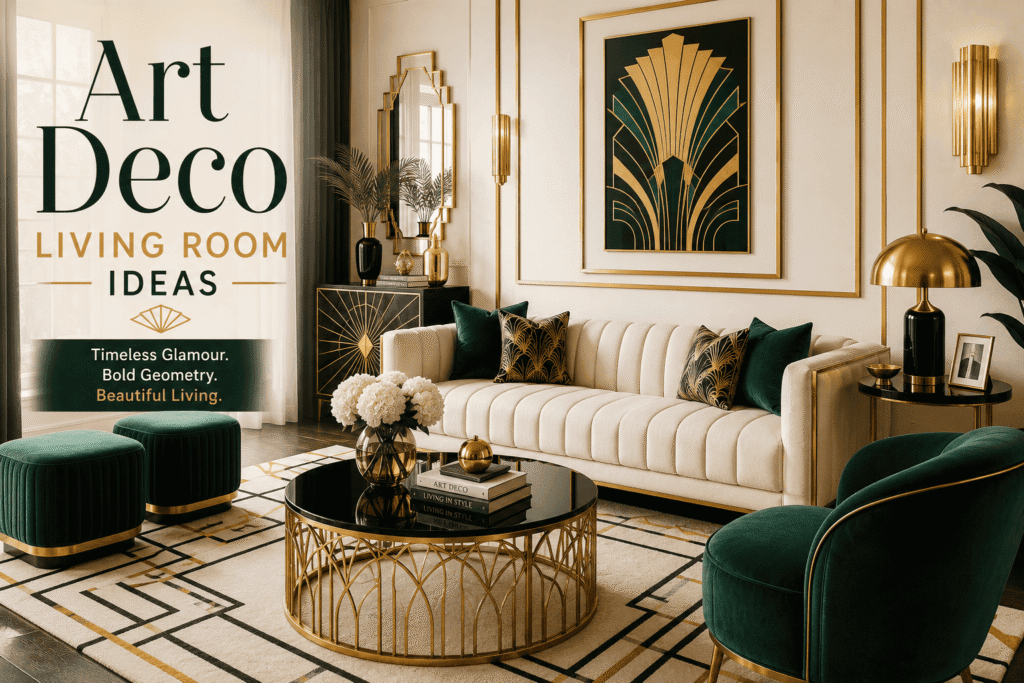
Art Deco has been slowly making its way back to the interior design scene for some time, but 2026 will be the year of the strongest and most popular Art Deco revival.
The timing is deliberate. Following a period of ten years when grey minimalism, clean Scandinavian lines and the controlled restraint of Japandi were the main themes in interior design, the mood for interiors has now changed very strongly towards abundance, glamour and the bold celebration of luxurious materials and decorative details.
Art Deco, the style that blossomed in the 20s and the 30s, is known for its geometrically precise shapes, rich use of materials, strong presence of jewel colors and the bringing together of exquisite craft with modern industrial production – matches this sentiment very well. The merging of strict geometry with lush, tactile materials in Art Deco results in living spaces that look at the same time well-planned and luxurious, modern yet old-fashioned.
The 2026 interpretation is not a period recreation. Nobody is installing Deco-era chandeliers and period furniture reproductions. What gets revived is the style: ruby red, emerald green and sapphire blue colors, geometrical shapes, velvet couches, golden metals, and heavy architectural forms. If placed in a modern living room, these elements will produce something that, on the one hand, looks completely up-to-date, and on the other hand, is inspired by one of the most unique and longest-lasting design traditions of the twentieth century.
The Art Deco Colour Palette — Jewel Tones and Drama
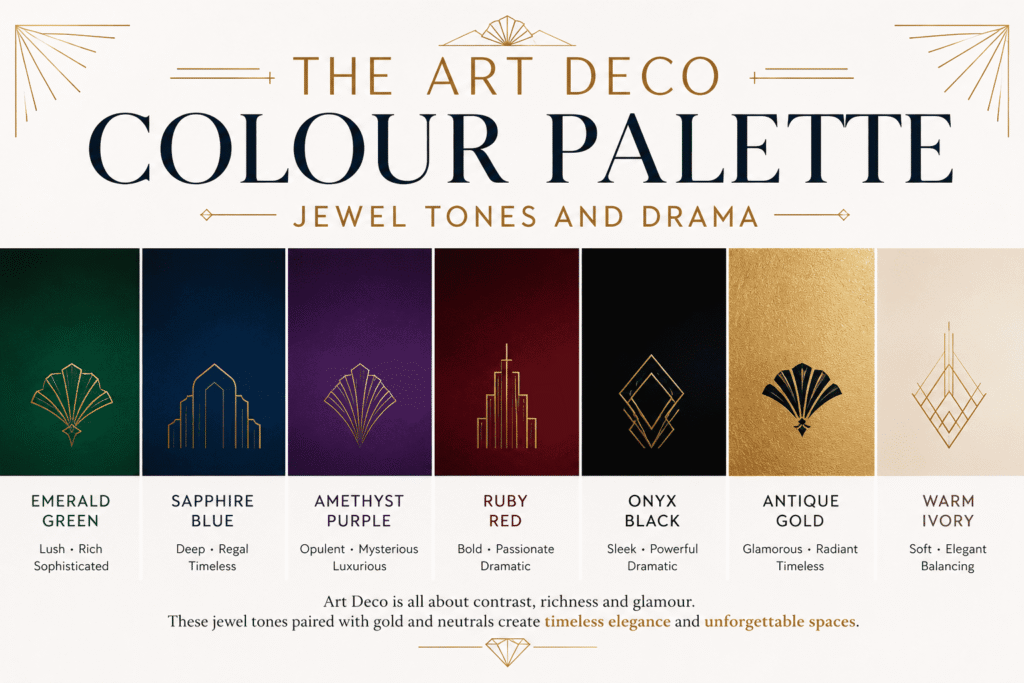
Art Deco colour is bold, rich, and unequivocal. This is not a palette of quiet neutrals and warm whites — it is a palette of dramatic jewel tones, deep blacks, warm golds, and the occasional ivory or cream used as a foil for the richer elements.
The signature Art Deco colour combinations: jewel tone and dark wall colour combinations, deep teal or emerald green with black and gold, midnight navy with champagne and ivory, rich plum or aubergine with bronze and cream, deep burgundy with dark walnut and gold. In each combination, a deep jewel tone provides the dominant colour, a dark neutral (black, charcoal, or very dark chocolate brown) provides depth and contrast, and a warm metallic (gold, bronze, champagne) provides the glamour element.
- Primary jewel tones: deep teal, emerald green, midnight navy, rich plum, dark jade, sapphire blue, deep coral
- Neutral anchors: black, near-black charcoal, dark chocolate, ivory — never grey (too cold for Art Deco’s warmth)
- Metallic accents: gold (warm, yellow gold rather than rose gold), bronze, champagne, polished brass
- What to avoid: cool greys, pastel tones, washed-out colours, and any colour that reads as understated. Art Deco explicitly celebrates saturation and depth.
The Art Deco Living Room Wall Treatment
The wall treatment is where the Art Deco aesthetic announces itself most clearly. A single deep-coloured wall — or in a fully committed interpretation, three or four deep-coloured walls — immediately establishes the room’s dramatic register in a way that no amount of accessories can replicate on a plain neutral backdrop.
Deep teal is the single most emblematic 2026 Art Deco wall colour, followed closely by midnight navy and rich jade green. These colours have the depth and richness to support the gold, velvet, and geometric elements that complete the aesthetic without the room feeling heavy — the metallic elements provide enough reflective lightness to balance the dark walls.
Wall panelling in a geometric pattern — horizontal mouldings, stepped panels, or a bold picture rail used at a higher-than-standard position — introduces the architectural geometry that is central to the Art Deco vocabulary. In period properties with existing cornicing or ceiling roses, these are embraced and emphasised rather than disguised.
Art Deco Velvet — The Non-Negotiable Material
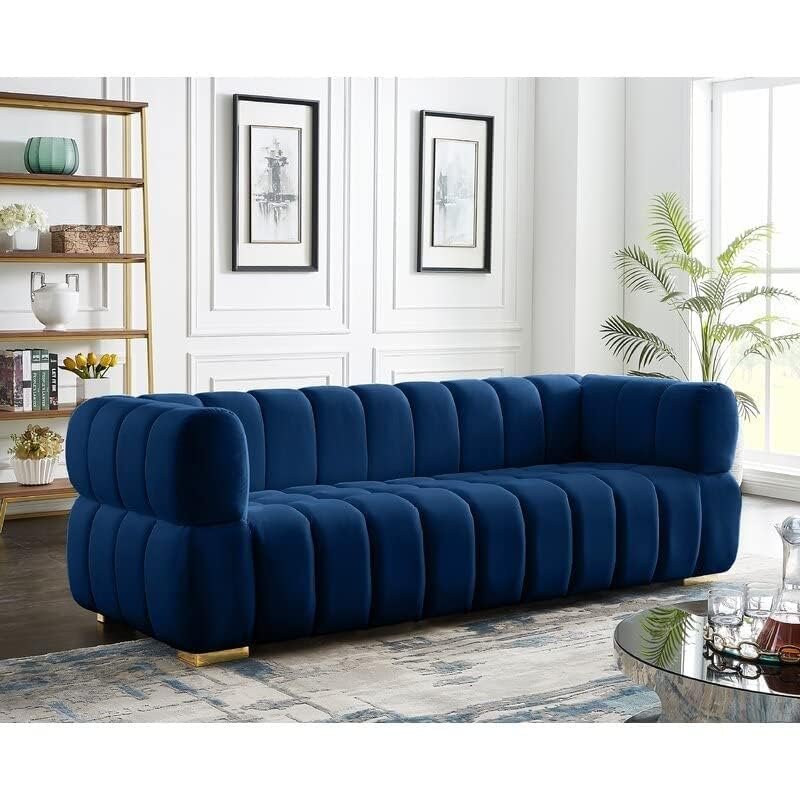
Velvet is the defining textile material of Art Deco interiors and the one that most reliably signals the aesthetic’s presence. The pile of velvet catches and absorbs light in a way that creates the particular visual depth and richness that Art Deco rooms depend on. Against deep jewel-toned walls, velvet upholstery and velvet curtains create a layered, enveloping quality of material richness that no other fabric achieves.
These are some very typical Art Deco velvet usages: a sofa in emerald green, deep teal or rich plum velvet; velvet cushions in contrasting or complementary jewel tones; velvet curtains in the wall colour or in a deeply related tone.
Velvet curtains in an Art Deco living room serve a particularly important function: they add an enormous area of rich, light-absorbing fabric to the room’s material palette, and when drawn they create the sense of a wrapped, luxurious space that is quintessentially Deco in character.
Geometric Patterns — The Structural Soul of Art Deco
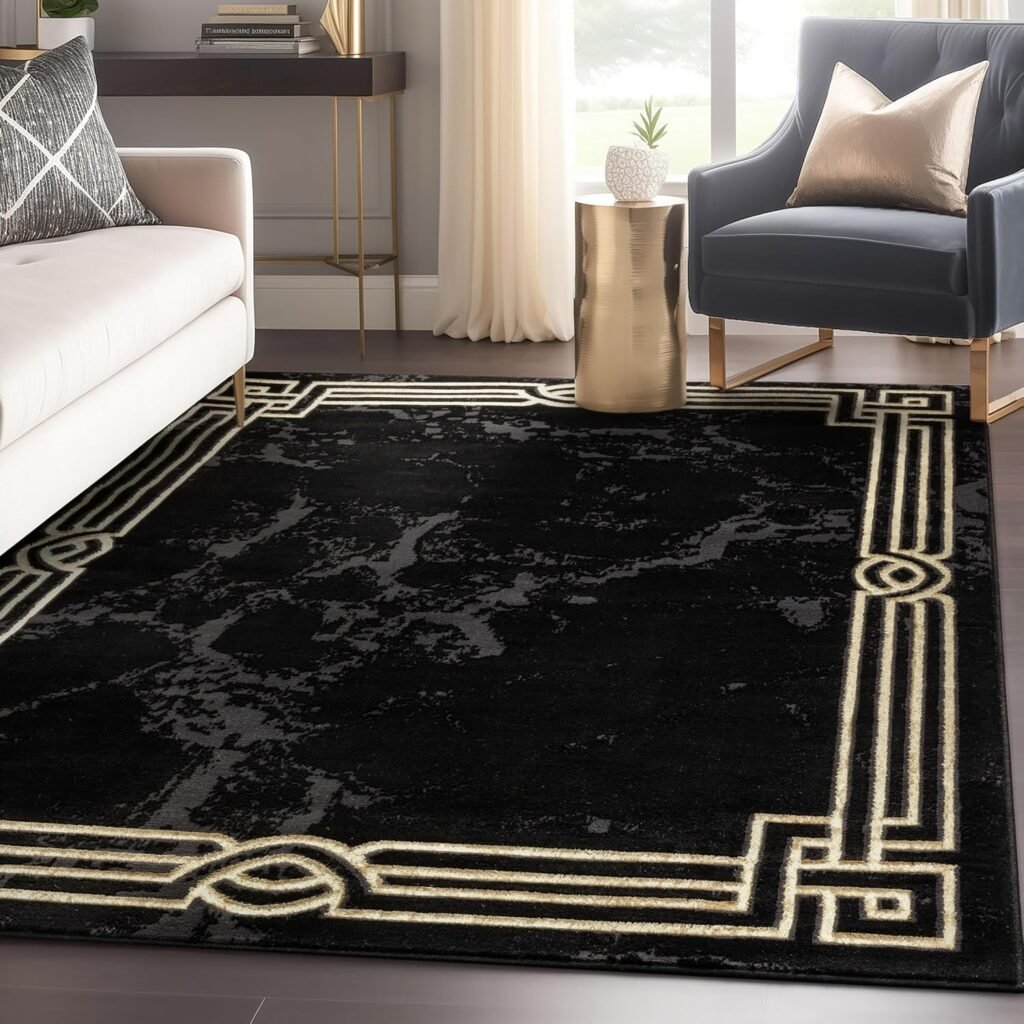
Geometric Rug Living Room Black Gold
The geometric language of Art Deco — sunburst patterns, chevrons, stepped forms, fan shapes, hexagons, and the characteristic repeated triangular forms — appears across every surface and every object type in a true Deco interior. In a 2026 interpretation, this geometry is introduced more selectively but no less deliberately.
Some surfaces embrace geometric patterns better than others in a living room designed with Art Deco style. A patterned rug grounds the seating zone. It brings that trademark Deco precision. What about cushion covers? Chevron, geometry, or fans work great. Don’t forget a statement mirror above the fireplace or console: fan-shaped, sunburst, or stepped arch.
- Most Art Deco geometric patterns: sunburst/starburst, fan/scallop, chevron/herringbone, stepped pyramid, stylised lotus, interlocking circles.
- Rug: the most practical and most impactful place to introduce geometric pattern — a large geometric rug with gold, black, and jewel tone elements anchors the whole seating arrangement within the Art Deco aesthetic.
Gold and Bronze — The Metallic Signature
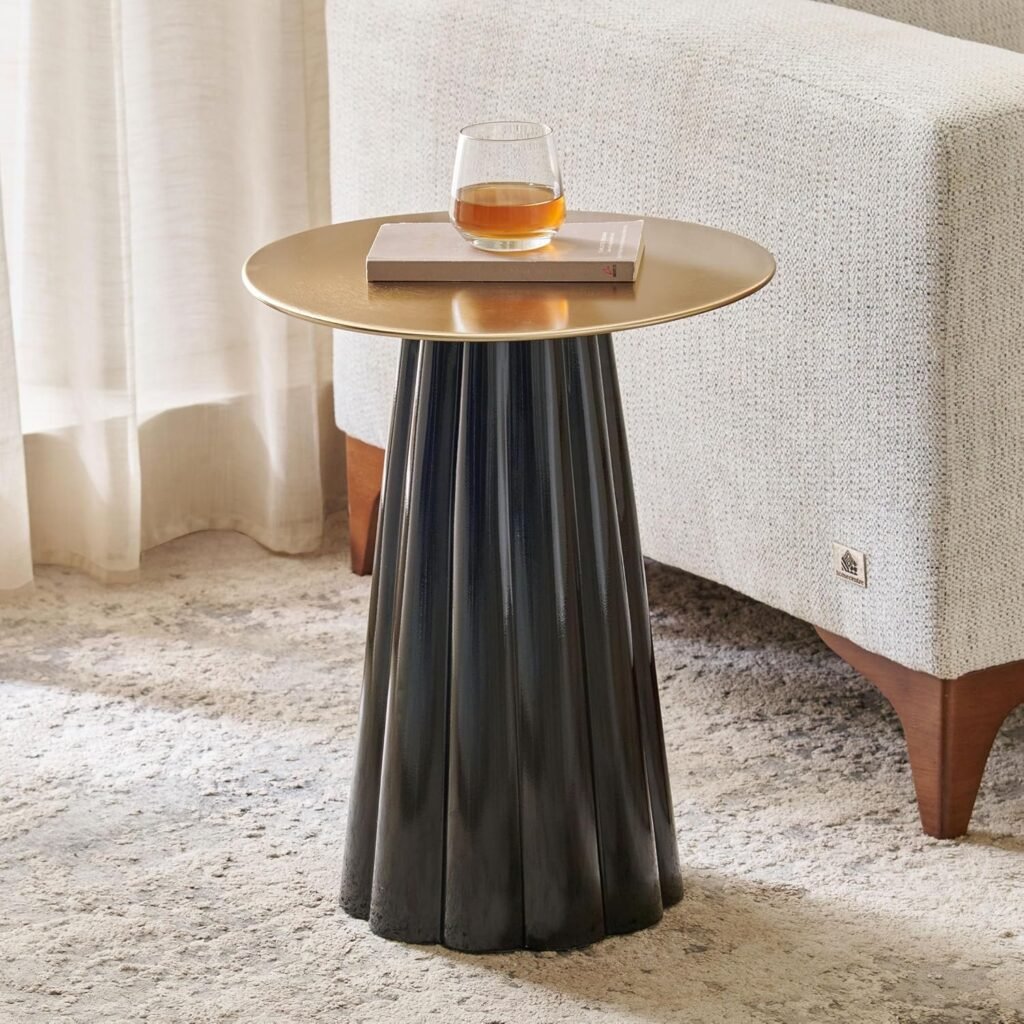
Art Deco Side Table Gold Black Marble
If velvet is Art Deco’s tactile signature, gold is its visual one. Gold — warm, yellow gold rather than the cooler rose gold that dominated earlier in the decade — appears in Art Deco interiors as hardware, lamp bases, mirror frames, side table legs and surfaces, picture frames, and decorative objects. It is never one token accent piece — it is a consistent metallic thread running through the entire room.
The discipline of gold in a 2026 Art Deco living room is restraint of form combined with consistency of material. Every piece of hardware is gold. Every lamp has a gold element. The mirror frame is gold. The side table legs are gold. The picture frames are gold. Within this consistency, the pieces themselves can vary in form — some clean and geometric, some more ornate — without the room looking over-decorated.
- Most effective gold elements: floor lamp with geometric gold base and drum shade, fan or sunburst mirror in warm gold frame, side table with gold or brass legs and marble or dark lacquer top, geometric pendant or ceiling light in gold
Art Deco Curtains — Velvet, Rich Tone, Maximum Drop
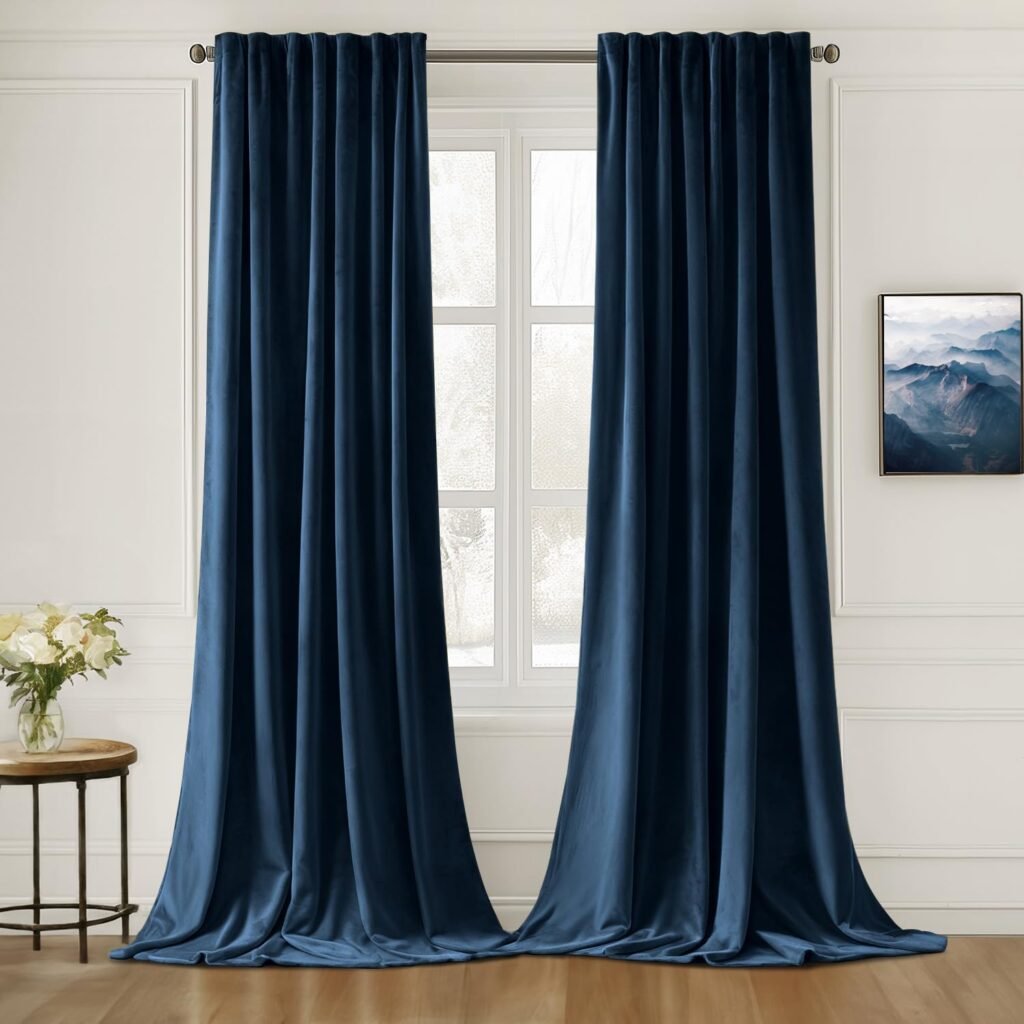
For an Art Deco living room, curtains shouldn’t be considered a mere afterthought – they’re almost part of the architecture of the decor. Floor-to-ceiling velvet drapes in the main jewel tone of the room or a related dark colour will give the impression of a rich enclosure, which is a major element of the Deco mood.
The heading style should be formal: pinch pleat or pencil pleat rather than casual eyelet. The length should be maximum — floor to ceiling living room curtains, hung from as close to the ceiling as possible, with a small puddle of extra fabric at the base in a formal or grand room setting. The colour should be bold: the same deep teal as the walls (for a monochromatic, enveloping effect), or a contrasting jewel tone (deep plum against navy walls, emerald against dark charcoal) for a more deliberate, designed contrast.
✦ PRO TIP: For a full Art Deco window effect, pair floor-length velvet outer curtains with a sheer inner layer in ivory or cream. Draw the sheer during the day for soft, filtered light. Draw the velvet outer curtains at night for maximum warmth and enclosure. This layered approach also provides excellent thermal insulation, which is both practical and historically authentic — heavy velvet curtains were partly valued for their warmth in the pre-central-heating houses of the 1920s and 1930s.
Art Deco Furniture — Form, Symmetry, and Luxury Materials
The style of Art Deco furniture typically features powerful geometric shapes, an equal balance of elements, and the employment of high-end materials – glossy lacquer, rare wood veneers, chrome, mirror glass, and, more and more, velvet and leather upholstery or rexine sofa fabric. The forms are simultaneously streamlined and decorative: a Deco armchair has clean lines but is deeply upholstered; a Deco side table has a simple form but a precious material surface.
For a 2026 Art Deco style living room which doesn’t fully replicate the period, a few Deco-style pieces (three or four) placed around mostly contemporary furniture can create the look very effectively. These could be an elegant, formal sofa with a velvet upholstery, and slightly rolled arms in a rich jewel color; a mirrored or marble-topped side table; a gold geometric-type floor lamp; and a striking sunburst or fan-shaped mirror.
- The most suitable Art Deco furniture for a living room would be a velvet sofa with rolled or square arms (rather than the low, casual profile of minimalist furniture), a mirrored or dark lacquer coffee table, side tables with golden legs, and a formal upholstered armchair in a velvet of a contrasting
How to Add Art Deco Touches Without Full Commitment
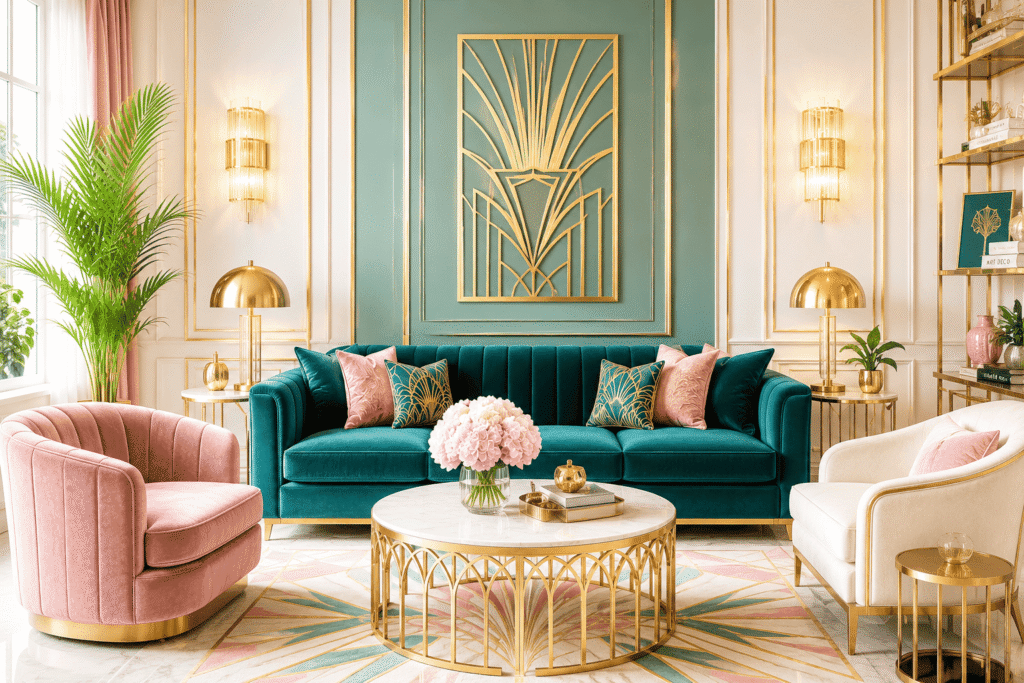
The full Art Deco living room — deep jewel walls, velvet sofa, gold metalwork throughout, geometric patterned rug — is a significant commitment to an aesthetic that is not right for every home or every taste. A more accessible approach introduces the vocabulary without the full transformation.
- Start with one jewel-toned velvet element — a sofa, a large armchair, or a set of velvet cushions in emerald or deep teal — against existing neutral walls
- Add a gold floor lamp or table lamp with a geometric base — the single most Deco-suggestive accessory at the most accessible price point
- Hang a fan or sunburst mirror — immediately recognisable as Art Deco and effective even in an otherwise non-Deco room
- Add a geometric rug with gold, black, and deep tone pattern elements
- When repainting, consider one deep jewel tone accent wall rather than a full room
Final Thoughts
Looking at Art Deco in 2026, it is precisely the interior design style that is confident, well-thought-out, and truly glamorous, which the present mood desires. After going through the era of minimalist restraint and mostly neutral color schemes, spaces emphasizing the richness, depth, and enjoyment of luxurious materials are not only fresh but also naturally sophisticated.
The primary feature of an Art Deco lounge — the one that gives the maximum output with the least input in terms of space — is the velvet: not only on the sofa but also on the cushions and most dramatically in the drapes. Floor-to-ceiling velvet drapes in a rich jewel shade, done from the first floor all the way to the ceiling and placed on a wall of the same or closely related colour, give the atmosphere of a luxurious cocoon that is perfectly characteristic of Art Deco and absolutely cannot be achieved by any other material combination.
From there, construct the geometric mirrors, gold lamps, and patterned rugs around the velvet base. The room that emerges will be one of the most unique and visually appealing in any home.
Frequently Asked Questions
Q: What is the Art Deco style in a living room?
A: The use of Art Deco in a living room often includes the following elements: strong geometric shapes and patterns, walls and furniture upholstered in jewel colours such as deep teal, emerald, navy, plum, velvet being the main fabric, warm gold metalwork (lamps, mirrors, table legs, hardware), symmetrical arrangement of furniture, and overall sense of luxurious, glamorous enclosure. The style was first seen in the 1920s–1930s and now in 2026 it is being revived without the use of antique furniture reproductions — bringing the colour, material, and geometric language to today’s living rooms.
Q: What colours are Art Deco in a living room?
A: Art Deco colours are striking, heavy, and heavily pigmented. The defining colour scheme features dark gem colours — emerald, forest green, deep teal, midnight blue, royal purple, sapphire, jade — along with black or almost black neutrals and warm gold or bronze metallic touches. Ivory and cream mostly come up as light-giving contrasts to the dark main colours. Light grey, pastel colours, and any kind of colour that can be considered as quite plain, are very much the opposite of the Art Deco style, which is all about celebrating depth, richness, and visual drama.
Q: What curtains suit an Art Deco living room?
A: Floor-to-ceiling velvet curtains are definitely the very genuine Art Deco window treatment. The velvet texture, the formal pinch pleat or pencil pleat heading, and the maximum floor-to-ceiling drop all coincide with the style’s love of rich materials and luxurious scale. The color of the curtain should be a deep jewel shade — either matching the wall color for a monochromatic, enveloping effect, or in a contrasting jewel color for a bolder, designed contrast. A sheer ivory or cream inner layer beneath the velvet outer curtains provides daytime light filtration while completing the layered, formal window treatment that Art Deco rooms call for.
Q: Is Art Deco making a comeback in 2026?
A: Yes — Art Deco is experiencing its most significant interior design revival in decades in 2026. The shift in the broader design mood away from cool minimalism and toward warmth, richness, and decorative confidence has created conditions particularly receptive to Art Deco’s vocabulary of jewel tones, velvet, gold, and geometric pattern. Major paint brands have reported significant increases in deep jewel tone purchases. Velvet upholstery continues at sustained high popularity. The geometric mirror and the fan-shaped mirror have become recognisable 2026 statement accessories.
Q: How do I make a living room look Art Deco on a budget?
A: The most impactful budget Art Deco moves are: replace existing cushion covers with velvet in a jewel tone (emerald, teal, plum) — typically £15-40; add one gold floor lamp with a geometric base — typically £40-80 on Amazon; hang a sunburst or fan-shaped mirror — typically £30-80; paint one wall in a deep jewel tone (one pot of paint). These four changes — achievable for under £200 total — introduce the Art Deco vocabulary convincingly without requiring new furniture or major renovation.