Furniture arrangement is the most consequential and most undervalued decision in small living room design. People spend significant time and money choosing the right sofa, the right coffee table, the right rug — and then arrange everything they have chosen in a way that makes the room feel exactly as small and cramped as it did before anything changed.
The reason is that most people’s intuition about how to arrange furniture in a small room is exactly wrong. The instinct is to push everything against the walls to ‘open up’ the centre of the room. In practice, furniture pushed against all four walls creates a room that feels like a waiting room — formal, uncomfortable, and somehow both full of stuff and completely empty at the same time.
This guide will tell you the right principles to follow: ways to anchor a seating arrangement, deciding the seating layout according to room shape, preserving circulation while still providing comfort, and certain blunders that make small living rooms appear even smaller.
The Single Most Important Rule: Float the Furniture
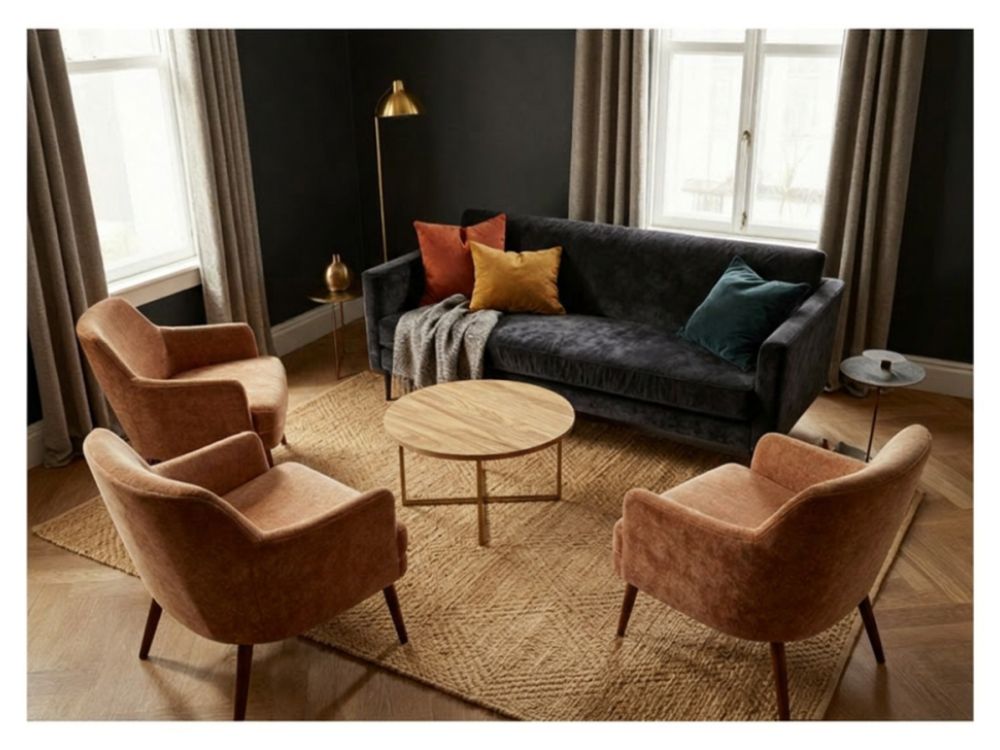
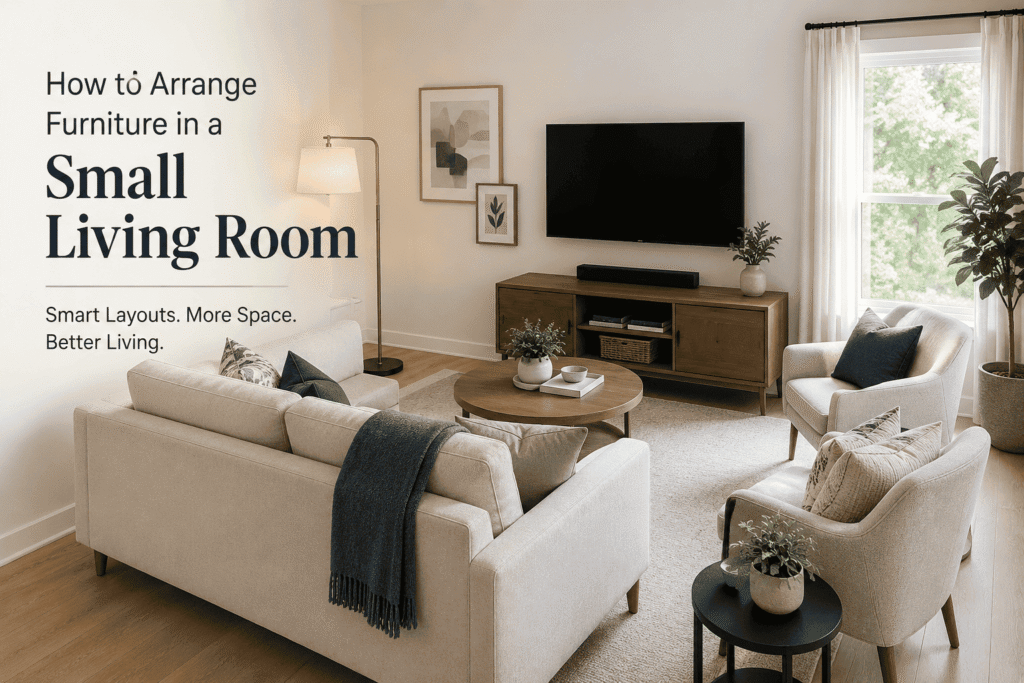
The one idea that can most radically change how a small living room looks is: pull the furniture off the walls. Don’t put the sofa against the wall at the back. Place chairs and tables so that they form a cohesive group in the room’s centre rather than a perimeter ring around the edge.
This runs counter to instinct — it seems to consume more floor space, not less. But the visual effect is completely different from what the logic suggests. A sofa that appears to be a good 20 to 30cm away from the wall produces a seating layout which is not just accidental but looks deliberate, well defined, and artistic. It establishes a portion of the room which is clearly understood as a living area rather than just a gathering of separate furniture pieces placed along the walls.
The practical key to floating furniture successfully in a small room is a rug. The rug anchors the floating arrangement and provides the visual foundation that tells the room — and everyone in it — that this is a deliberate, bounded seating area rather than furniture that has simply been placed without reference to the room’s dimensions.
✦ PRO TIP: Pull your sofa just 20cm away from the wall. That small gap — less than a foot — is enough to create the visual effect of a floating arrangement. You do not need a large room to float furniture. You just need to break the contact between the back of the sofa and the wall.
The Rule of Anchor and Define
Every successful living room furniture arrangement has two structural elements: an anchor and a definition.
The anchor is the rug. It marks the limits of the seating area on the floor and gives the furniture arrangement a definite spot in the room. A furniture group, no matter how well arranged, can appear disconnected and temporary without a rug. With the right-sized rug, the same arrangement looks complete and permanent.
The definition is the focal point. Every living room furniture arrangement should face something: a fireplace, a television, a window, a piece of art, or a feature wall. All the seating in the arrangement should be oriented toward this focal point. Without a focal point, furniture tends to face in random directions, which creates an uncomfortable and disorienting arrangement.
- Step 1: Identify the focal point (fireplace, TV wall, best window view)
- Step 2: Orient the main seating (sofa) to face or angle toward the focal point
- Step 3: Add secondary seating (armchair, side chairs) at 90-degree angles from the sofa, completing the arrangement
- Step 4: Place the coffee table in the centre of the arrangement — approximately 40 to 45cm from the sofa edge for comfortable leg room
- Step 5: Anchor the whole arrangement with a rug that sits under the front legs of all the seating pieces
The Rug Size Rule — Why It Matters So Much
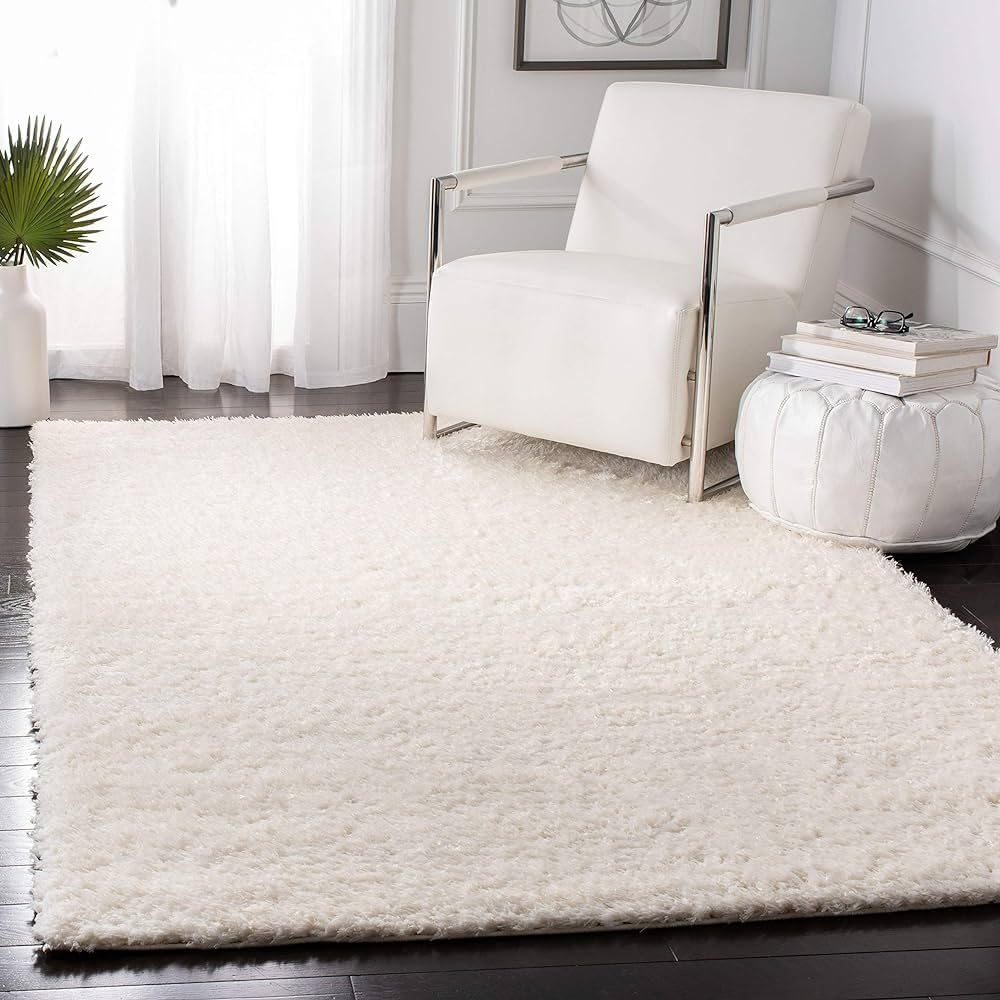
An undersized rug is one of the most common and most damaging errors in living room furniture arrangements. A rug that sits only under the coffee table, with all the furniture legs on bare floor around it, creates a visual island that emphasises the separation of the furniture pieces rather than unifying them.
The minimum rug size for a living room seating arrangement: all four front legs of the main sofa and any secondary seating should sit on the rug. The rug’s perimeter should extend at least 20 to 30cm beyond the front legs of the outermost furniture piece on each side.
For most small living room arrangements with a two-seater sofa and one or two side chairs, a rug of at least 160 x 230cm is the minimum. In practice, the next size up (200 x 290cm) almost always looks better — the extra 40cm on each dimension makes a significant difference to how well the arrangement reads as a unified zone.
Five Layouts That Work in Small Living Rooms
Layout 1: The Standard Floating Arrangement
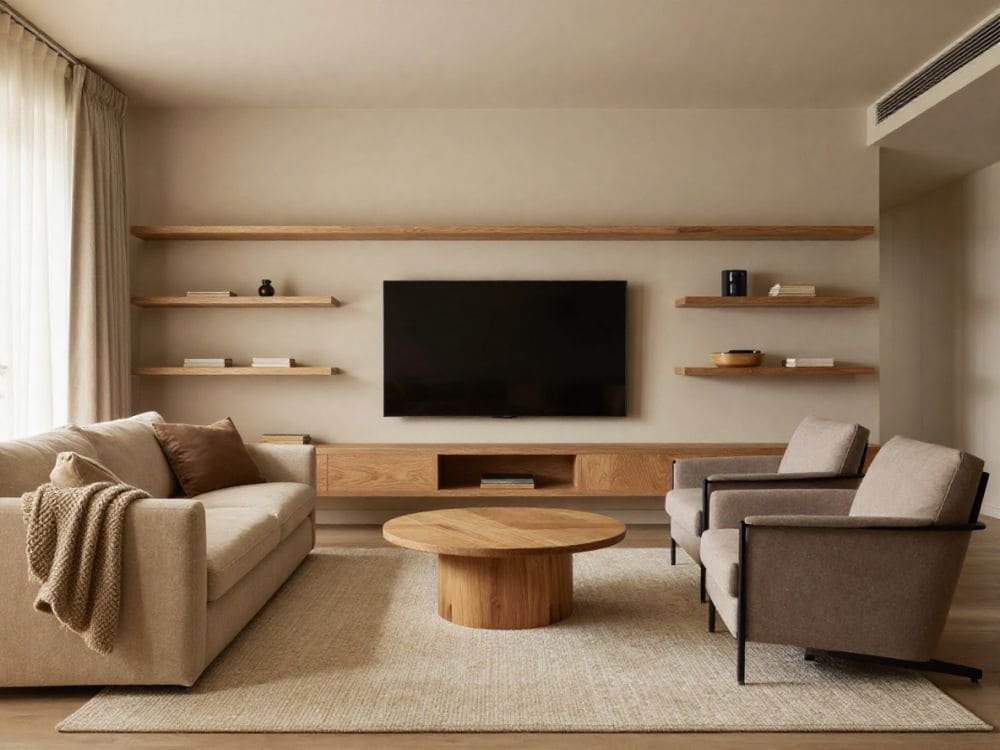
The classic and most versatile layout. The sofa faces the room’s focal point (TV wall or fireplace), positioned approximately 20 to 30cm from the back wall. A coffee table sits in front. One or two armchairs or side chairs sit at 90-degree angles from the sofa ends. A rug anchors everything.
This seating plan can be adapted even for rooms of 3.5 x 4 metres in size and it will transform the room into a nice, social seating area that involves the whole space in the centre of the room without hindering any natural walking routes along the walls.
- Works best in: square or near-square rooms, rooms with a clear single focal point
- Minimum room width needed: 3.5 metres
Layout 2: The L-Shape Sofa Arrangement
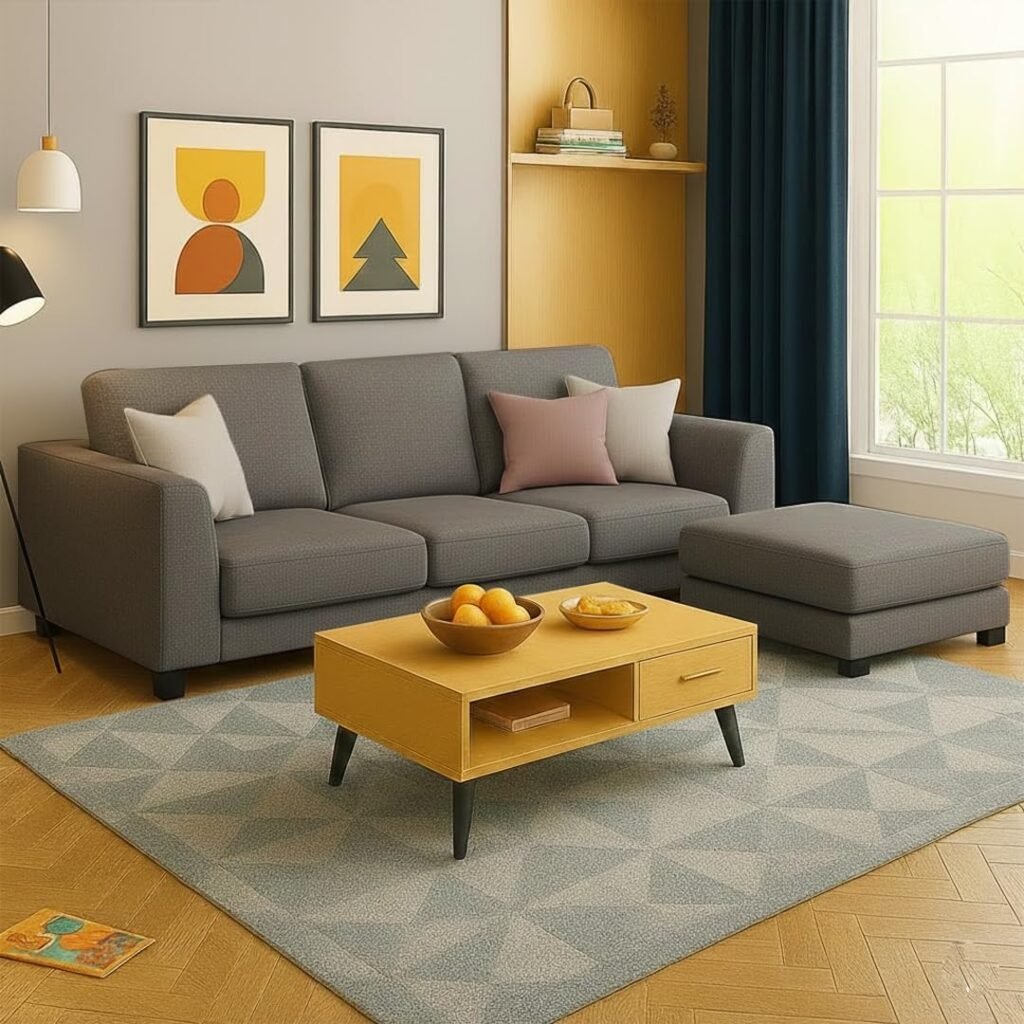
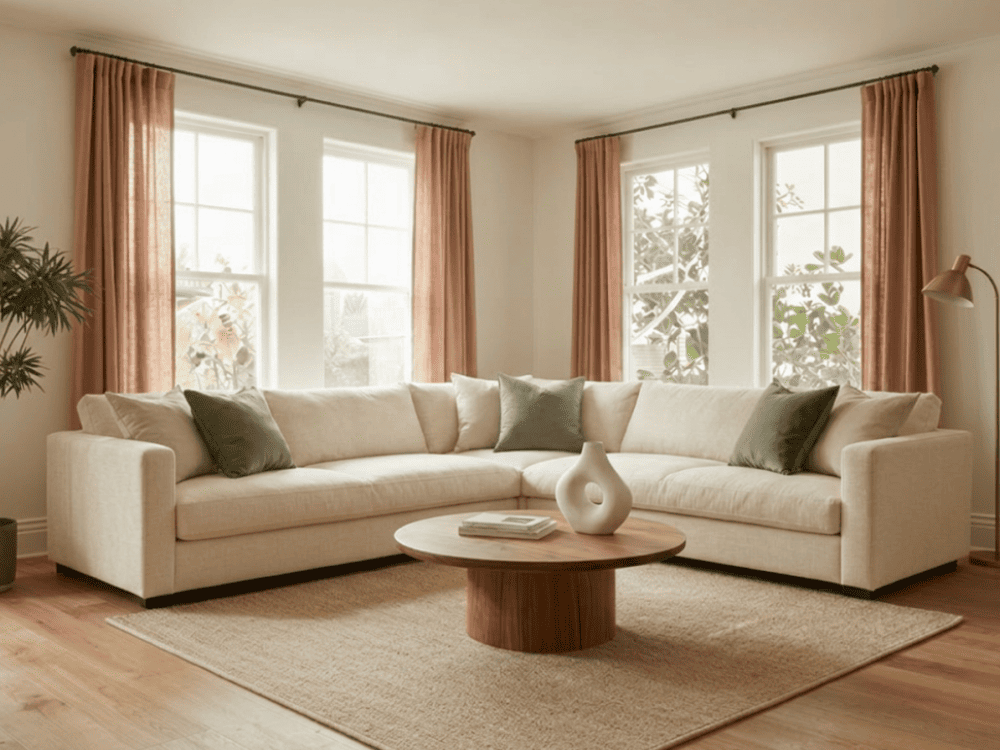
The L-Shape Sofa Arrangement For Living Room
The corner of a room naturally defines the space, so using a sofa in the shape of an L to fit that corner is an excellent way to find seating that is very efficient with the space. The L configuration takes advantage of the corner rather than opposing it, offers a good amount of seating without the need for an additional piece, and the room’s three sides remain open.
The main thing to figuring out how to make an L-shaped sofa fit in a small room is making sure that the sofa arms do not touch both walls at the same time. You can have one arm touching a wall but the other arm should be slightly in the room with at least 10 to 15cm free from the nearby wall.
- Works best in: rooms with an accessible corner, open-plan spaces where the sofa also defines a zone boundary
Layout 3: The Conversation Grouping
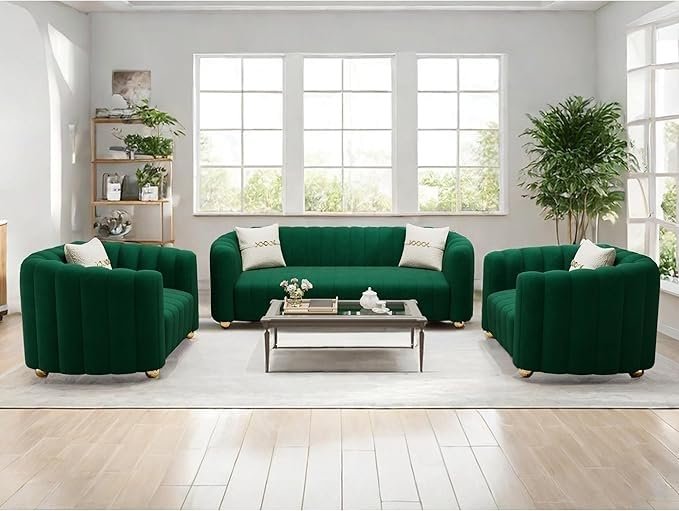
Conversation Grouping Sofa For Living Room
In rooms that are too narrow for side chairs to sit alongside the main sofa without blocking circulation, a facing arrangement — two facing sofas or a sofa facing two armchairs — creates a conversation-focused seating group that works down the length of the room rather than across it.
This style fits narrow rooms extremely well, a great way to focus the seating along the length of the room and thereby diminish the feeling of the narrow dimension. Placing a rug below the central coffee table brings together both sides of the setup.
- Works best in: long, narrow rooms; rectangular rooms where width is the limiting dimension
- Note: ensure at least 75 to 90cm between the facing pieces for comfortable leg room
Layout 4: The Single Sofa with Two Chairs
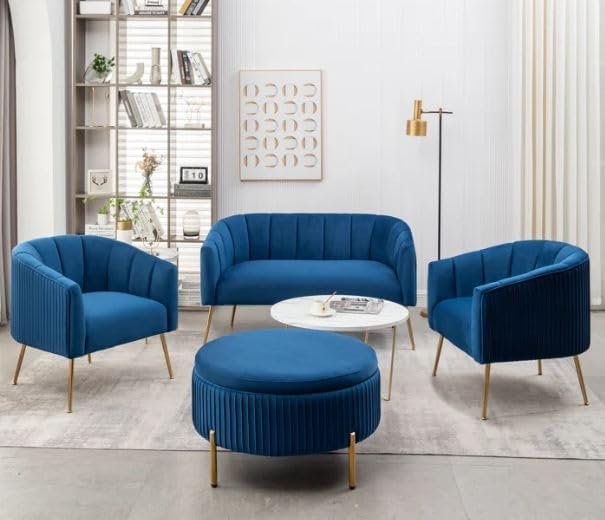
The Single Sofa with Two Chairs For Living Room
For rooms where budget, space, or both prevent a full seating complement, a single sofa with two lightweight accent chairs provides flexibility and visual lightness. The accent chairs — ideally with legs rather than floor-touching bases — can be moved easily, repurposed for occasional dining, or pushed back when the room needs more floor space.
Lightweight chairs that have thin legs are a little transparent when you look at them and therefore do not fill up the space as much as large, heavy upholstered armchairs do. Two pieces of wicker, rattan, or light-frame metal chairs next to a small sofa can give a small living room an eclectic, collected feeling while still allowing for the maximum amount of spatial flexibility.
Layout 5: The Open-Plan Zone Definition
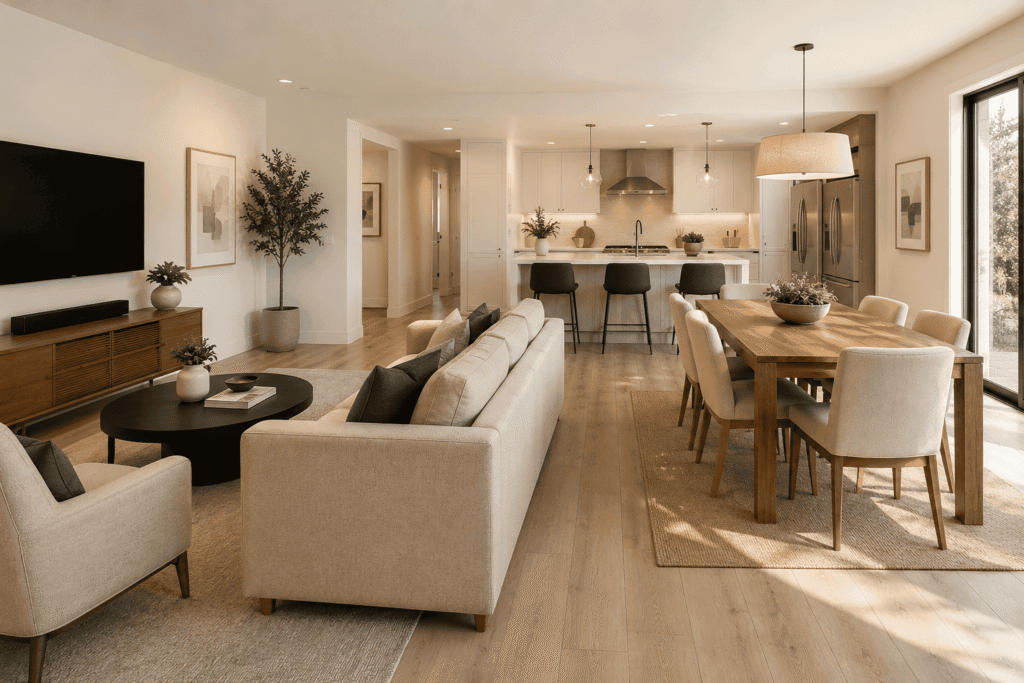
In an open layout area where the living room is co-sharing space with a kitchen or dining area, the furniture layout is also used for defining the boundary of the living area in the absence of physical walls. A sofa’s back (even when it is only 75 to 80cm high) visually separates the living and dining areas if the sofa is placed with its back to the dining area.
Placing a console table or a low bookcase behind the sofa reinforces this zone boundary, in addition to providing extra surface area. The use of the rug effectively defines the living zone, and the living area appears as a separate room within the open-plan space.
Room-Shape Specific Solutions
Square Living Rooms
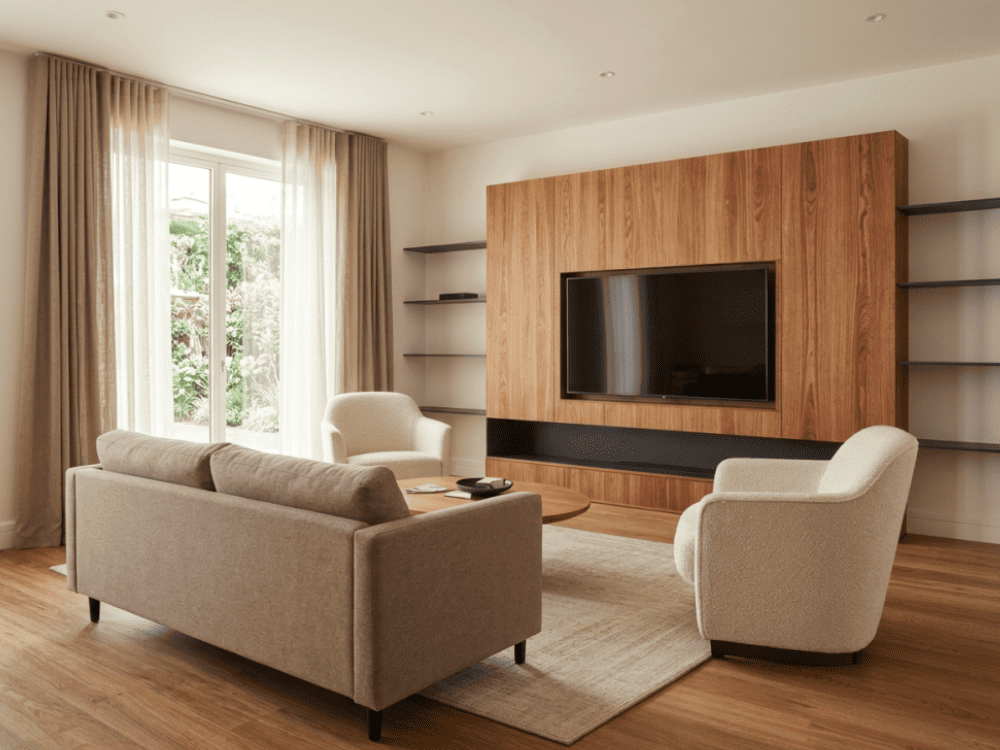
Square rooms are the easiest to arrange because they allow equal development in all directions. The standard floating arrangement works best. Avoid placing furniture along only two walls and leaving two walls bare — this creates an asymmetry that reads as incomplete. Instead, use all four walls as reference points, floating the main furniture group in the centre and using the wall spaces for shelving, a console, or artwork.
Rectangular Living Rooms
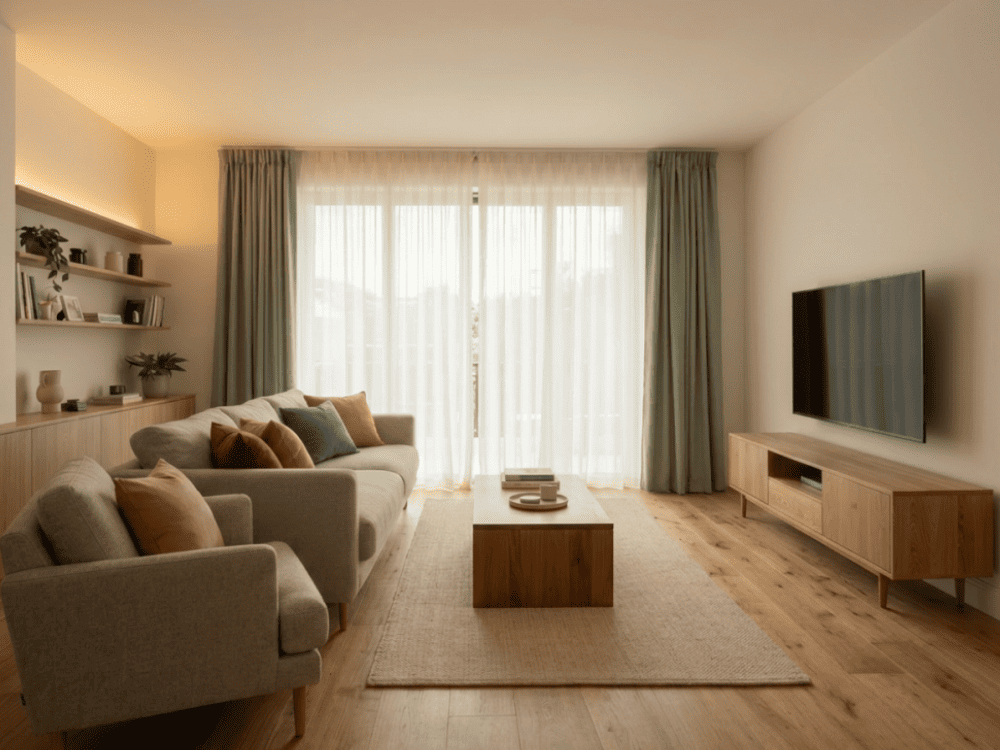
Rectangular rooms have a clear length and a clear width, and the furniture should reflect both measurements. Typically, in a rectangle, the main seating set up is placed at the longer side of the room looking across the width at the focal point. The remaining shorter side can be used for a secondary purpose (like a desk, shelves, or a second armchair) without interfering with the main seating area.
Avoid placing the sofa at the very end of a long rectangular room facing down the length — this creates a cramped end-to-end arrangement where the sofa and the facing wall are too close together and the rest of the room’s length is unused.
Narrow Living Rooms
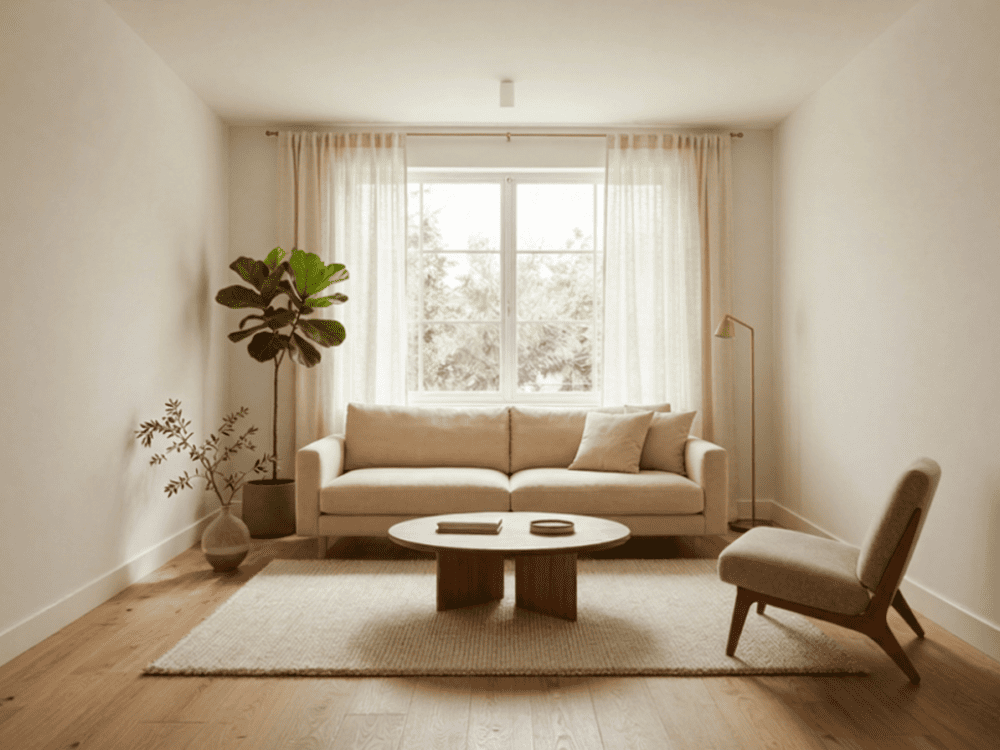
Narrow rooms are the most challenging. A few major rules: position the sofa across the narrow width instead of along the length (this will make the room seem wider instead of longer), get furniture with legs rather than bases that are on the floor so you can really increase the visual space under the pieces, floor-to-ceiling curtains will not only make your eye go up but will also lessen the feeling of being closed-in, and most importantly, do not furnish every little piece of available space.
In a narrow room, less furniture done well consistently outperforms more furniture done adequately. A two-seater sofa, one side chair, one coffee table, and a floor lamp — all chosen for their visual lightness and compact dimensions — creates a room that feels more generous than the same narrow space crammed with more furniture.
L-shaped or irregular living rooms
L-shaped rooms have a natural division at the corner, which should be used as a zone boundary rather than fought against. The main seating arrangement occupies the larger section of the L; the smaller section becomes a secondary zone — a reading corner, a desk area, or a simple display and storage area. A tall plant, a floor lamp, or even a floor-to-ceiling shelving unit that visually connects the two zones could be accommodated at the corner between the two zones.
The Most Common Small Living Room Furniture Mistakes
- Pushing all furniture against the walls. This is the most prevalent and most damaging arrangement error. It creates a perimeter of furniture with empty floor in the centre — exactly the opposite of a cozy, functional living room.
- Picking a sofa that’s bigger than the room. A massive sofa filling up the room doesn’t leave any room for other furniture, comfortable walking, and sense of harmony, either. A sofa should not be larger than one third of the room’s
- Using a rug that is too small. A rug only under the coffee table creates a visual island effect that emphasizes separation rather than unity. Front legs of all seating must sit on the rug.
- Blocking natural light. Tall furniture blocking windows limits the amount of natural light a small room can get. Either leave the spaces right in front of windows free or use tiny, low pieces of furniture that barely reach up to the
- Neglecting circulation routes. Every furniture arrangement needs at least 75cm of clear walkway on the main circulation routes through the room. Less than this and the room feels uncomfortably tight even when seated.
- Facing the room’s least interesting element. If the fireplace is on one wall and the television is on another, choose which one is the focal point and orient the seating toward it. Seating that faces nothing in particular creates an aimless arrangement.
- Too many small pieces. Multiple small pieces of furniture — three side tables, four different chairs, two different rugs — create visual complexity that reads as clutter rather than richness. In a small room, fewer pieces done well almost always outperforms more pieces done adequately.
✦ PRO TIP: Before moving any furniture, tape out the proposed arrangement on the floor with masking tape. Mark the sofa footprint, the chair positions, the coffee table, and the rug boundary. Live with the tape marks for a day and test the circulation routes by walking through the room as you normally would. This costs nothing and prevents the frustration of moving heavy furniture only to discover the arrangement does not work.
Lighting Your Furniture Arrangement
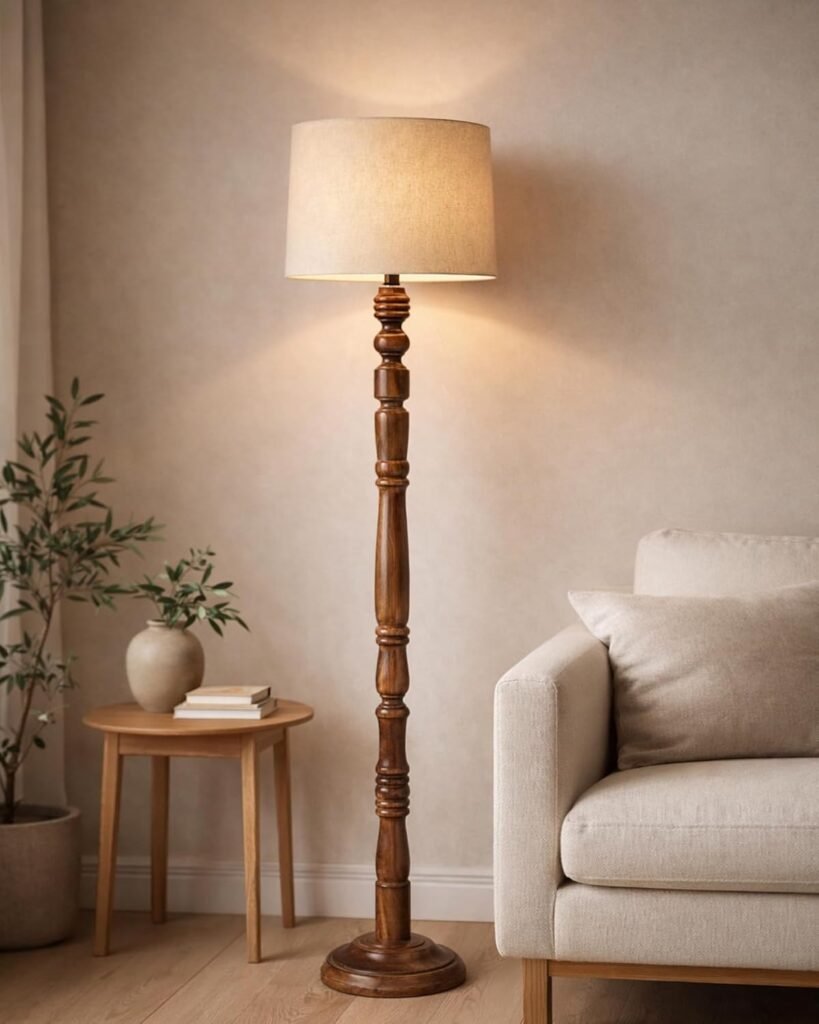
Floor Lamp Living Room Warm Light
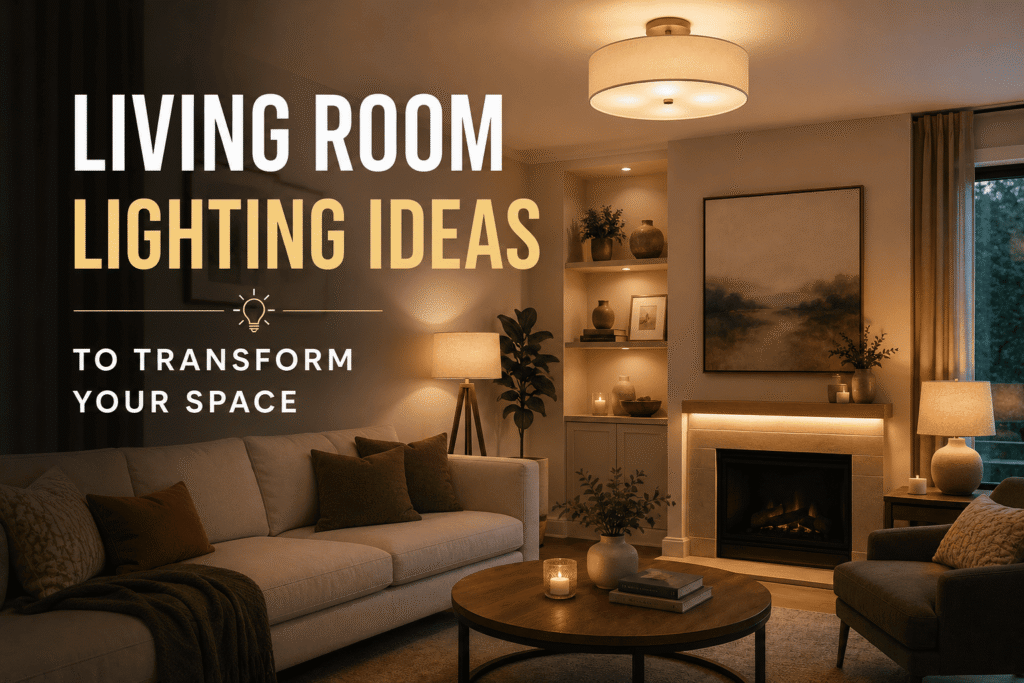
Furniture arrangement and lighting are closely connected because the arrangement determines where lamps can be placed and what they illuminate. The best living room lighting for a small space is layered — a floor lamp in one corner, table lamps at sofa height, and overhead lighting used sparingly if at all.
The best position for a floor lamp in a small living room is the corner behind one end of the sofa — the position that is most out of the main circulation route and that creates the warmest, most flattering light when viewed from the seating. An arc floor lamp is particularly effective in a small room because it extends the light source out over the sofa without the lamp’s base occupying central floor space.
Storage Without Clutter
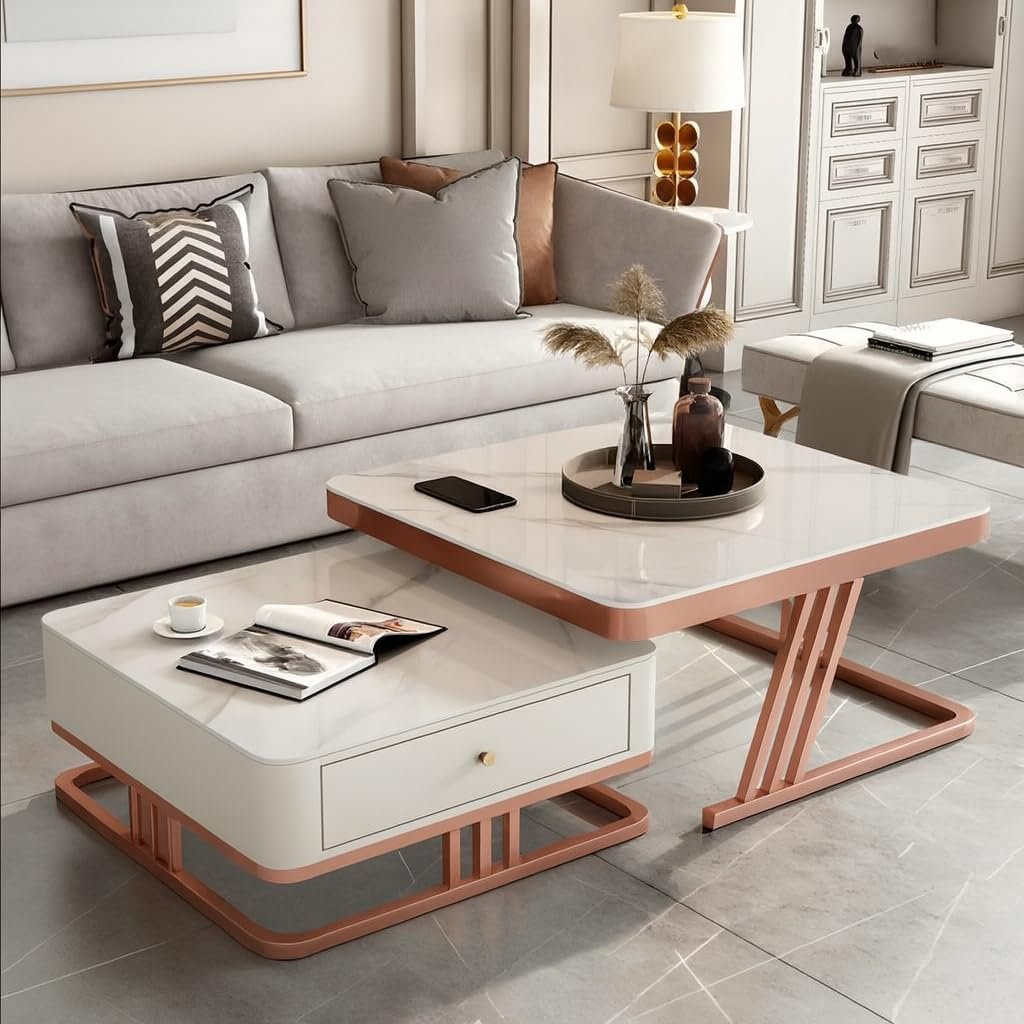
Nesting Tables Set Of 2 For Living Room
Every small living room has a storage challenge. The solution that creates the most usable storage without adding visual weight is vertical: shelves on the walls rather than storage units on the floor. A set of floating shelves on the primary wall — styled with books, plants, candles, and personal objects — provides significant storage while contributing positively to the room’s character. These are some storage ideas for small living rooms which can be helpful while planning for room decor.
Multi-purpose furniture cuts down on the number of individual pieces needed and therefore the visual clutter: a storage ottoman in place of a separate coffee table and blanket basket, nesting tables instead of fixed side tables, a sofa having storage drawers integrated under the seat.
Final Thoughts
Furniture arrangement in a small living room is not about constraint — it is about clarity. A small room arranged with clear principles: a defined focal point, a floating main seating piece, an anchoring rug, adequate circulation, and lighting layered at the right heights, is a room that functions and feels significantly better than a larger room arranged without these principles.
The most transformative change costs nothing — it is simply pulling the sofa away from the wall and placing the front legs of the furniture on a correctly sized rug. Those two moves, alone, create a fundamentally different room: one that reads as designed and inhabited rather than merely furnished and filled.
Start with the rug. First find out the size of your arrangement, put it exactly where the seating area will be, then arrange the furniture around it. All remaining parts will flow from this point.
Frequently Asked Questions
Q: Should sofas be against the wall in a small living room?
A: No — Putting the sofa against the wall is without a doubt the most common mistake in small living rooms and almost always makes the room feel worse not better. A sofa hovering 20 to 30cm from the back wall results in a seating arrangement that appears intentional and designed. It creates a defined seating zone rather than a perimeter ring of furniture. The visual effect of pulling a sofa just 20cm from the wall is immediately apparent — the room looks more considered and more comfortable.
Q: What size rug should I use in a small living room?
A: The minimum rug size for a small living room seating arrangement is 160 x 230cm, and in most arrangements 200 x 290cm looks better. The seating pieces’ front legs should all be on the rug so the arrangement looks like a whole. A rug that is only under the coffee table gives a visual island effect that in fact makes the room look smaller. The rug is the largest single item you can use to anchor and define a furniture arrangement.
Q: How do I arrange furniture in a small narrow living room?
A: In a small living room arrange the sofa widthwise instead of lengthwise. The narrow dimension will then seem less dominant. Choose pieces that have legs instead of heavy bases that touch the floor. To draw the eyes upward and help lessen the feeling of horizontal constriction, use floor-to-ceiling curtains. Leave one wall almost empty to be used as a passage way, and don’t be tempted to fill every corner — a narrow room requires negative space in order to be comfortable.
Q: How much space should be between sofa and coffee table?
A: Typically, the front edge of a sofa should be 40 to 45 centimetres apart from the nearest edge of the coffee table to ensure the most comfortable and practical distance. This way it may not only be possible to reach the table without strain when seated but it is also possible to get past the sofa easily without having to squeeze. When the distance is less than 35cm, seating will feel cramped. On the other hand, going beyond 55cm means reaching the table will involve an uncomfortable and awkward leaning forward.
Q: Can a small living room have two sofas?
A: Yes, if the room dimensions and the sofa sizes allow. A facing arrangement of two smaller sofas — each approximately 170 to 180cm wide — works in rooms of approximately 4 x 4 metres or larger. The key measurement here is the gap between the two sofas that are facing each other: a minimum of 75 to 90cm for comfortable leg room and easy passage. Two petite sofas placed in a face-to-face setting offer more social seating and a better-defined conversation area than a big sofa placed against a wall,.
Q: What furniture should I remove from a small living room to make it feel bigger?
A: Items that are most worth removing or replacing in a cramped living room include: bulgy sofas (change into a compact two-seater or apartment size sofa), a number of different-height side tables (change into one or two nesting tables), storage units that go down to the floor taking up display wall space (change into floating shelves), and extra occasional chairs that are rarely used.
Removing one big piece of furniture nearly always leads to a bigger change than adding or rearranging several smaller pieces.