An accent wall is the single highest-impact, lowest-cost intervention available in living room design. A weekend of painting — or in some cases, a few hours of installing peel-and-stick materials — can transform a flat, undefined room into one with genuine architectural interest and a clear sense of design intention. No other change delivers this ratio of visual impact to cost and effort.
The idea is quite straightforward: one wall of the room gets a unique treatment compared to the other three, usually by a more intense or dramatic color, a totally different material, or a texture treatment, whereas the rest of the walls are kept in neutral, supportive tones.
The outcome is a room that has depth, one single point of focus, and a feeling of thoughtfully designed space rather than a plain and uninteresting one.
This guide covers every major accent wall approach available, how to choose which wall in your room to treat, identifying your room’s focal point and the specific considerations that determine whether an accent wall succeeds or falls flat.
How to Choose Which Wall to Treat
The choice of which wall becomes the accent wall is more consequential than the colour or material chosen for it. Get this wrong, and even the most beautiful treatment fails to deliver its full impact.
- The wall you see first when entering the room. This is the single most reliable rule. The wall directly opposite or diagonal from the room’s main entrance is seen immediately and repeatedly by anyone entering, making it the highest-impact location for an accent treatment.
- The wall behind the sofa or main seating. This wall serves as the backdrop for the room’s primary activity zone and photographs in nearly every view of the room, making it a strong secondary choice when the entrance wall is impractical.
- The wall that has the fireplace or built-in architectural element. The wall already containing an element of central area (fireplace or built-in shelving an enormous window) will enhance the focal point instead of battling with it.
- Avoid: the wall with the highest number of doorways or windows (too separated to be a coherent treatment) Also, avoid using more than one wall within an area that is small (creates an undefined, chaotic space, rather than a distinct central point).
Idea 1: Bold Colour Block
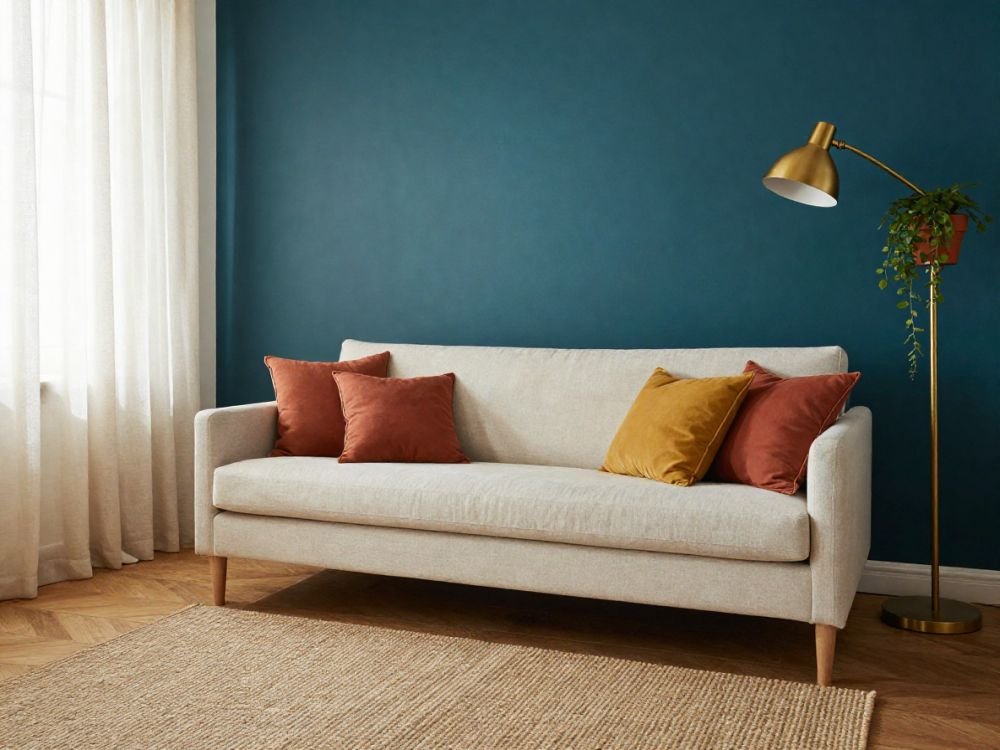
The most straightforward and most widely used accent wall approach: paint a single wall in a colour notably deeper or bolder than the surrounding walls. For example, forest greens, dark terracotta midnight navy, as well as deep plumb are some of the more sought-after accent wall colors that are chosen because of their warmth and harmoniousness with the natural colors and materials which dominate the current trends in interiors.
The single most critical technical detail is the finish of the ceiling and the mouldings. The ceiling sheathing in the precise neutral, light colour tone as the remaining three walls, and do not allow the extension of the highlight shade onto the ceiling and skirting boards. The limitation of the colour causes it to show as a deliberate element rather than a wildly uncontrolled gush of colour.
Idea 2: Colour Drenching (Monochromatic Depth)
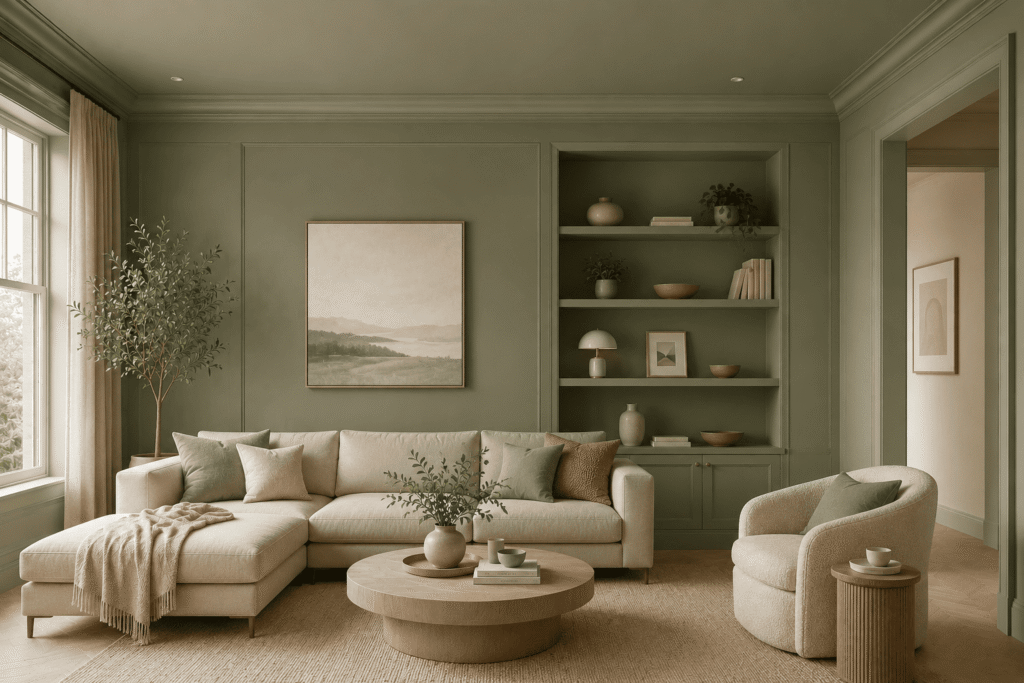
Colour drenching is a great way to extend the accent wall idea further and is achieved by painting the wall, ceiling, and sometimes the skirting board, all in the same or a very similar shade. By doing so, it abolishes the visual boundary of the ceiling line and one gets a feeling that the colour is wrapping the space completely and not just a flat painted rectangle.
Colour drenching, compared to a normal accent wall, gives a deeper and more architectural effect and is a very good way to handle rooms with uninteresting attributes when this method can be the trick to the awkward ceiling height or an unbalanced wall arrangement.
Idea 3: Wood Slat Wall
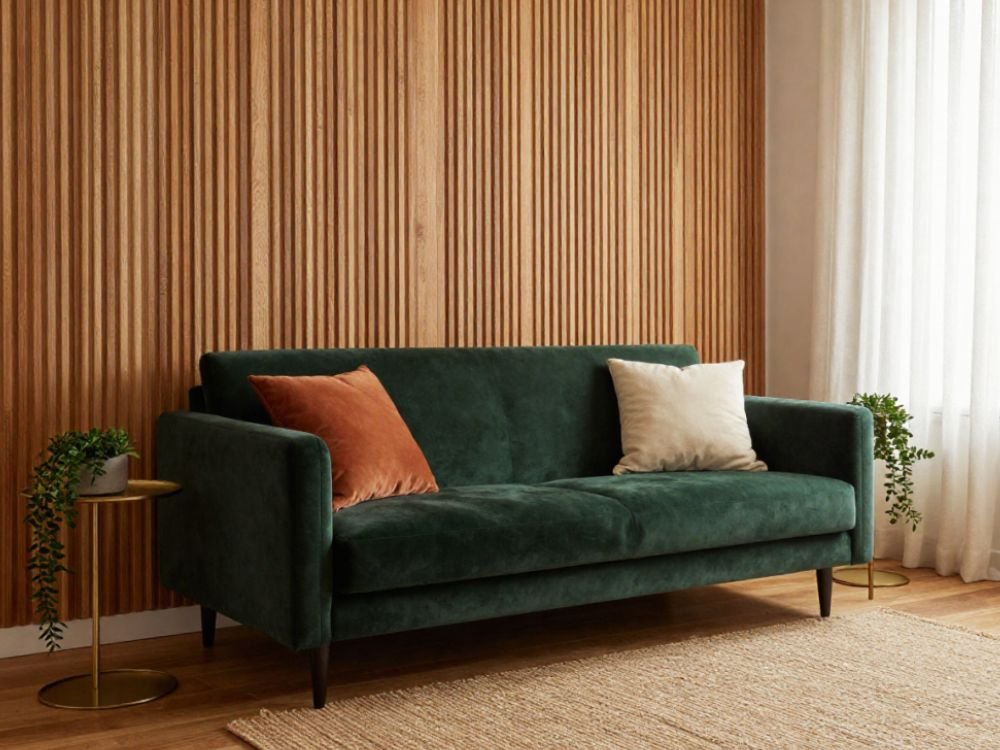
To buy this – click here
Wood slat accent walls — vertical wooden battens installed at regular intervals across the wall, usually over a contrasting or matching painted backing board — have become one of the most popular non-paint accent wall treatments. The texture and shadow play created by the slats adds genuine three-dimensional interest that flat paint cannot replicate.
Pre-made slat wall panel kits, available widely online, make this treatment achievable as a weekend DIY project even without advanced carpentry skills. Standard spacing is 2 to 4cm between slats, with the slats themselves typically 2 x 4.5cm in profile, though wider and more dramatic spacing is increasingly popular for a bolder look.
✦ PRO TIP: First, paint the wall behind the slats a dark colour in contrast (such as charcoal or black) before even thinking about installing light or natural wood slats. The dark backing will create deep shadow lines between the individual slats which will greatly enhance the notion of depth and texture as compared to a slat wall simply installed over a plain white backing.
Idea 4: Textured Wallpaper
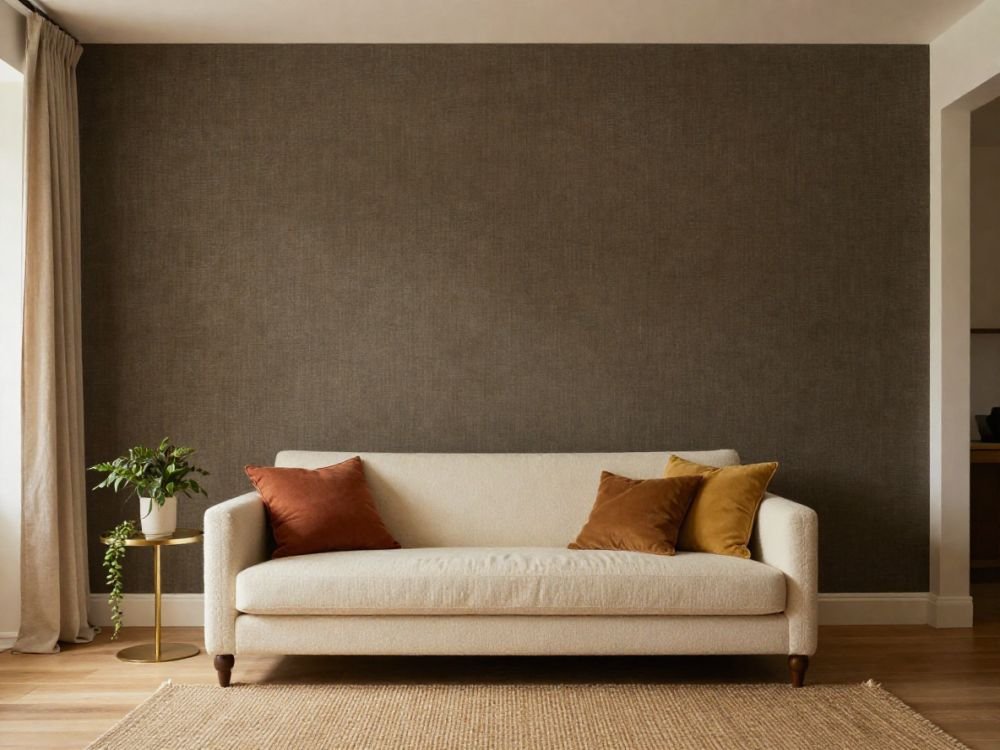
Adding textured and patterned wallpaper to just one wall creates a nice visual focal point without having to cover the whole room in a bold pattern. Grasscloth, linen, geometric, and botanical designs are some of the most popular types of accent wallpaper treatment for 2026.
Compared to the conventional paste-applied wallpaper, peel-and-stick wallpaper has greatly simplified this method, especially for renters or anyone desiring a less-committal way to try out a bold pattern. The quality of this kind of wallpaper has drastically changed for the better, and carefully installed peel-and-stick wallpaper is almost impossible to tell from the classic pasted kind.
Idea 5: Two-Tone Wall (Upper and Lower Split)
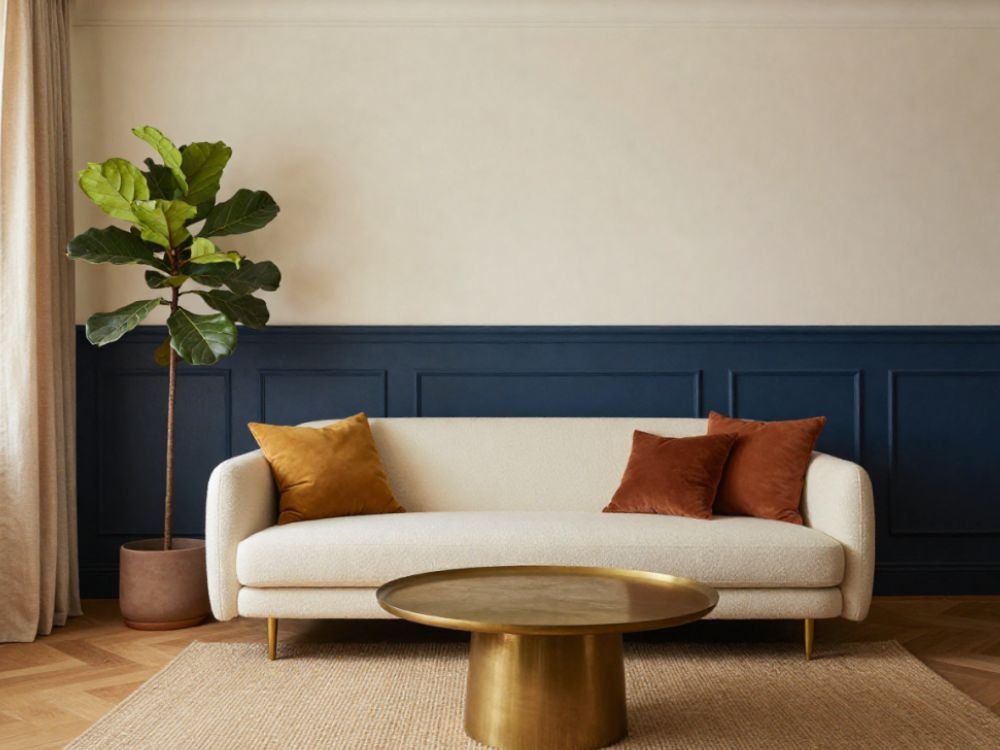
Two-tone wall treatment, where the lower half of the wall is painted with a darker color and the upper half lighter one color, separated by a straight painted line or a physical dado rail, is an accent treatment that has inherent class. The separation line is generally placed at 90 to 110cm height.
If this technique is employed comprehensively, i.e. on all four walls of a room (still, it can be only one wall), it will, not only visually unite the entire interior but each wall can also stand out as a separate decorative element. Painted or papered in just one colour, the accent wall will be the simple, flat alternative.
Idea 6: Picture Ledge Gallery Wall
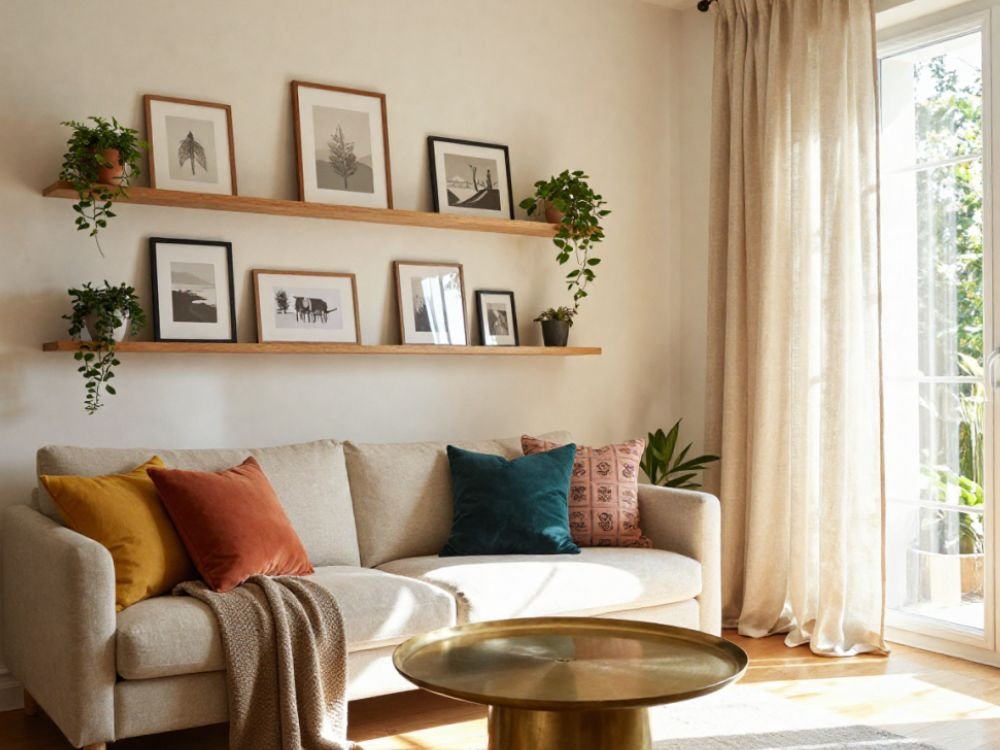
An accent wall doesn’t always have to involve paint or texture. You can also design one through a nicely planned display: installing a few picture ledge shelves on just one wall, stacking framed art, photos, and little items so that the arrangement is always changing and could be rearranged. This is the perfect option for living rooms where you want to keep your options open — rearranging and updating the display can be done without the need for repainting.
Idea 7: Exposed Brick or Brick Effect
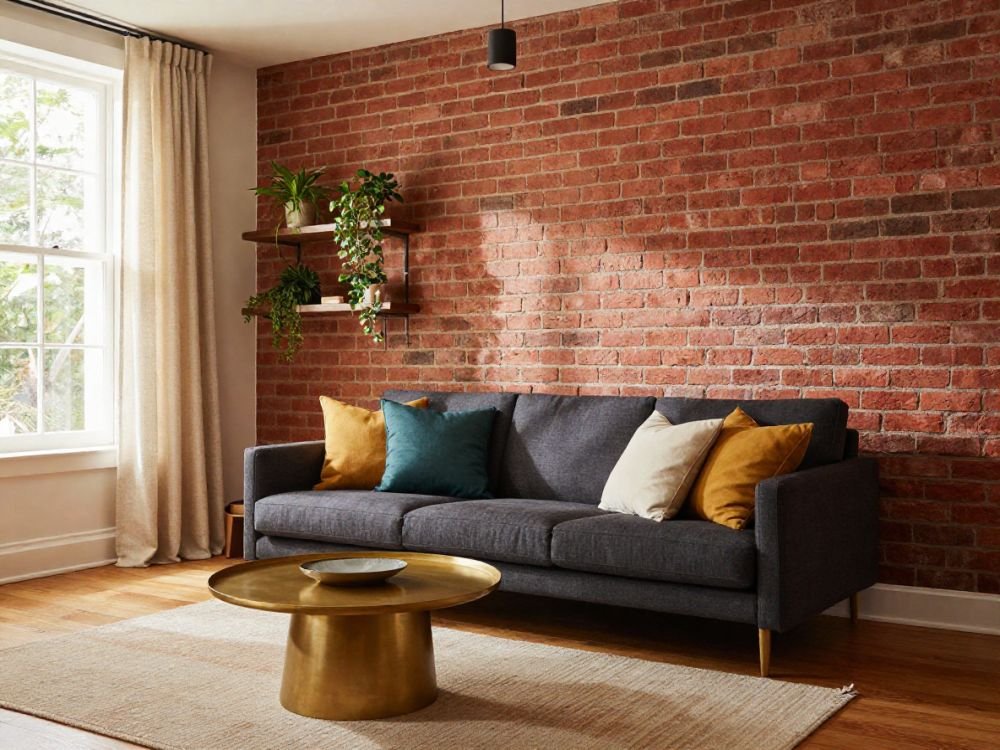
In period properties, exposing original brickwork on a single wall creates one of the most characterful accent treatments available, with zero ongoing decorating cost once exposed and sealed. For properties without original brick, brick-effect cladding panels or wallpaper provide a similar visual effect without structural work.
Idea 8: Deep Charcoal or Near-Black
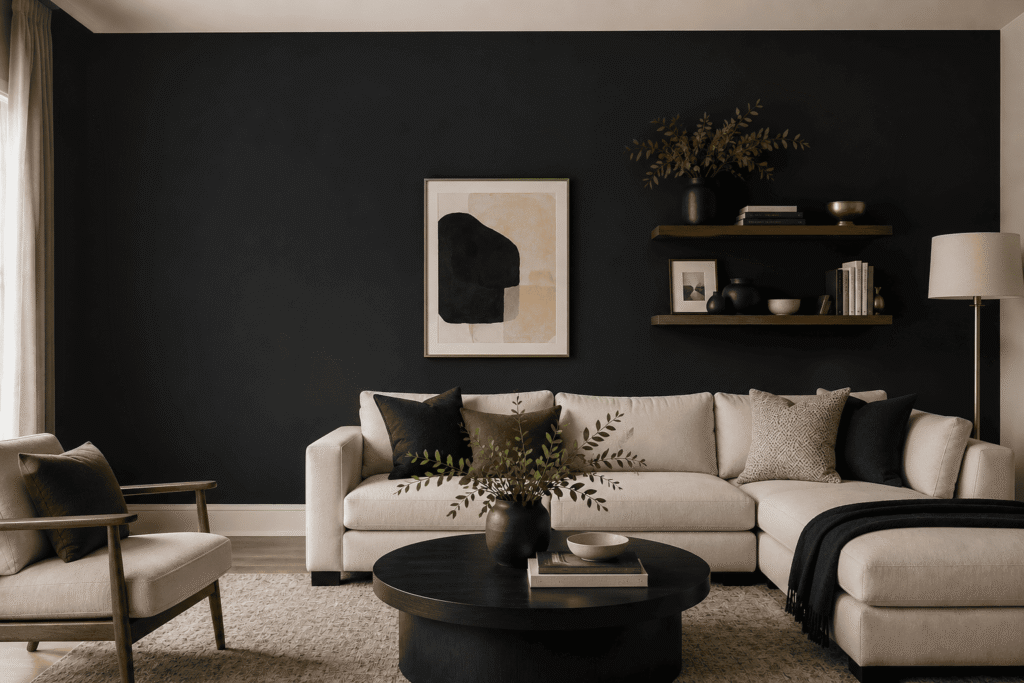
For maximum drama a single wall painted in a deep charcoal or near-black combinations with a very bright white of ceiling, trim, and the other three walls results in an accent treatment which has considerable visual impact. This is especially effective as the wall behind a media unit or fireplace so that the darkness recedes and crisply contrasts whatever is placed in front of it.
Idea 9: Botanical Mural or Wallpaper
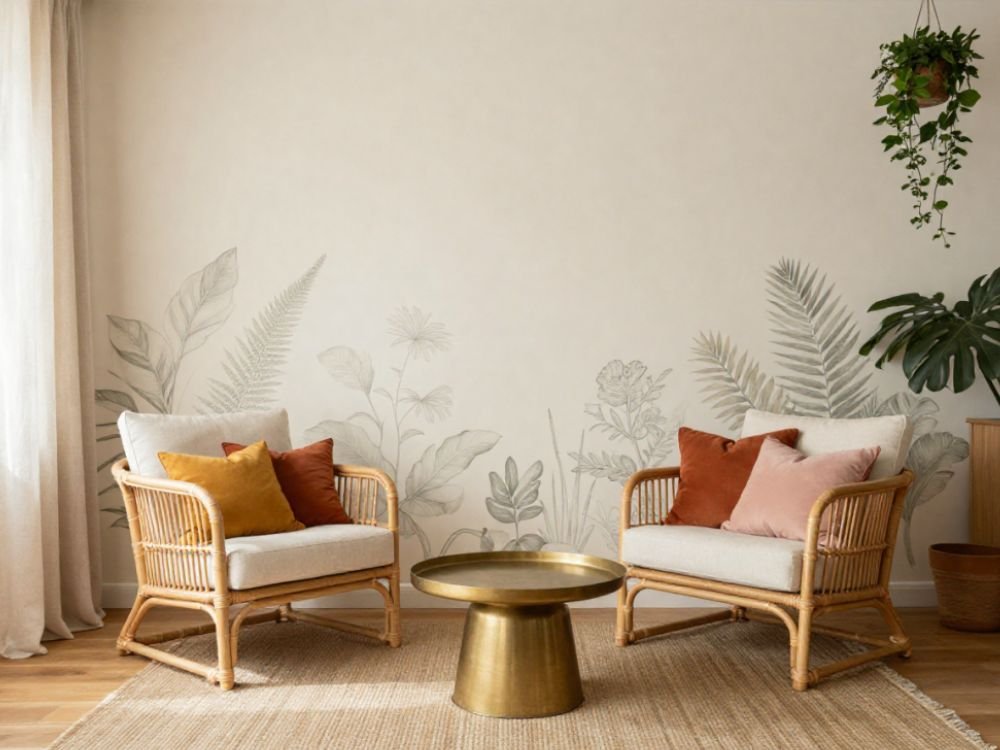
A huge floral or outdoor scene mural wallpaper spanning the whole wall offers an engulfing, showy accent which is very similar to a great art piece covering the entire wall surface. This option is perfect for living rooms that want a maximalist or nature-inspired look and it is especially great for rooms that have minimal decorating, letting the mural be clearly the focus of the room.
Idea 10: Arched or Shaped Paint Detail
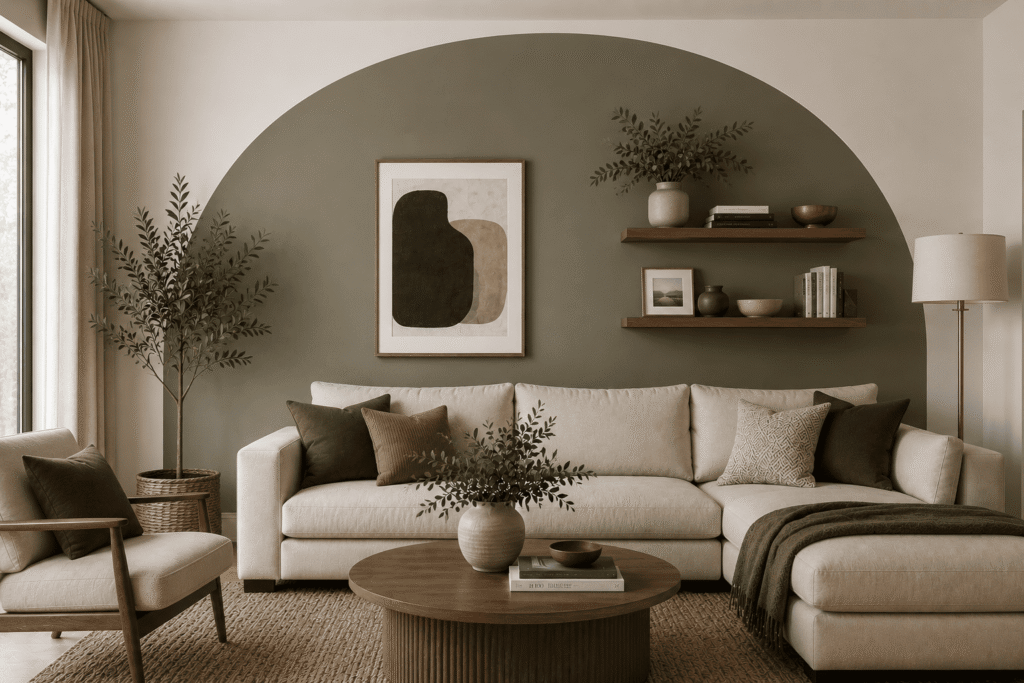
Rather than painting the full rectangular wall, an arched or curved shape painted in an accent colour — behind a sofa or as a headboard-style feature — creates a softer, more contemporary accent treatment that has grown significantly in popularity. The arch is typically masked out with painter’s tape and a flexible curve guide before painting.
Idea 11: Reclaimed or Distressed Wood Panelling
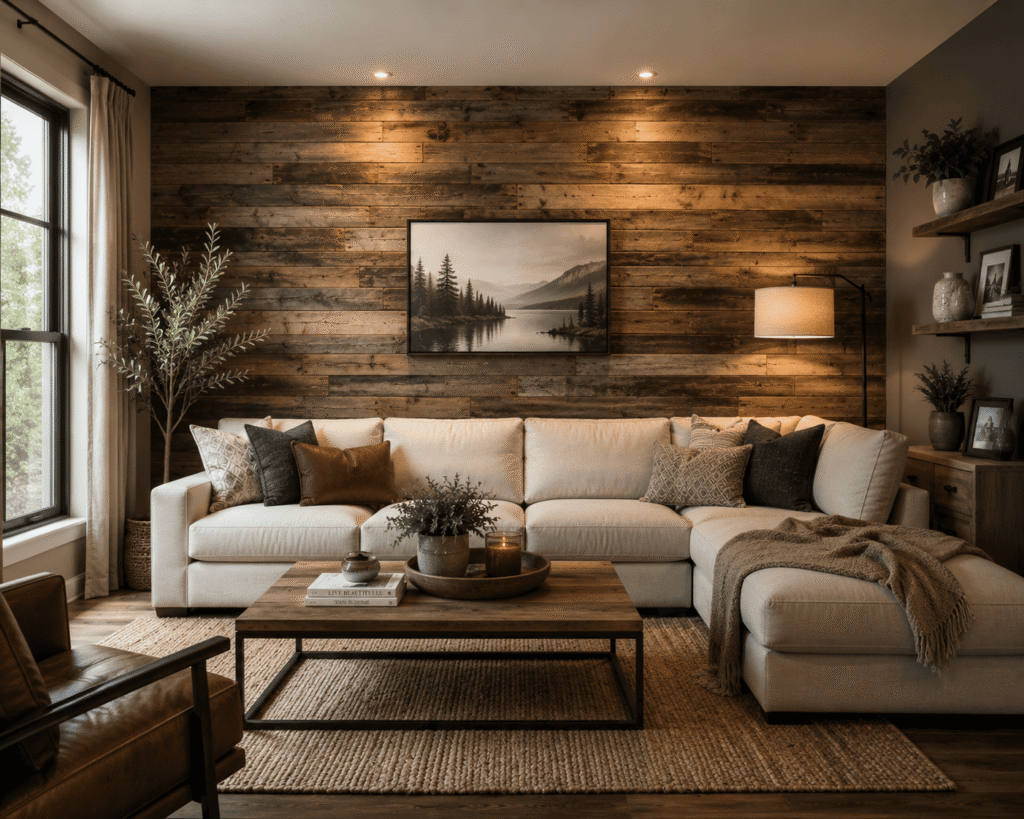
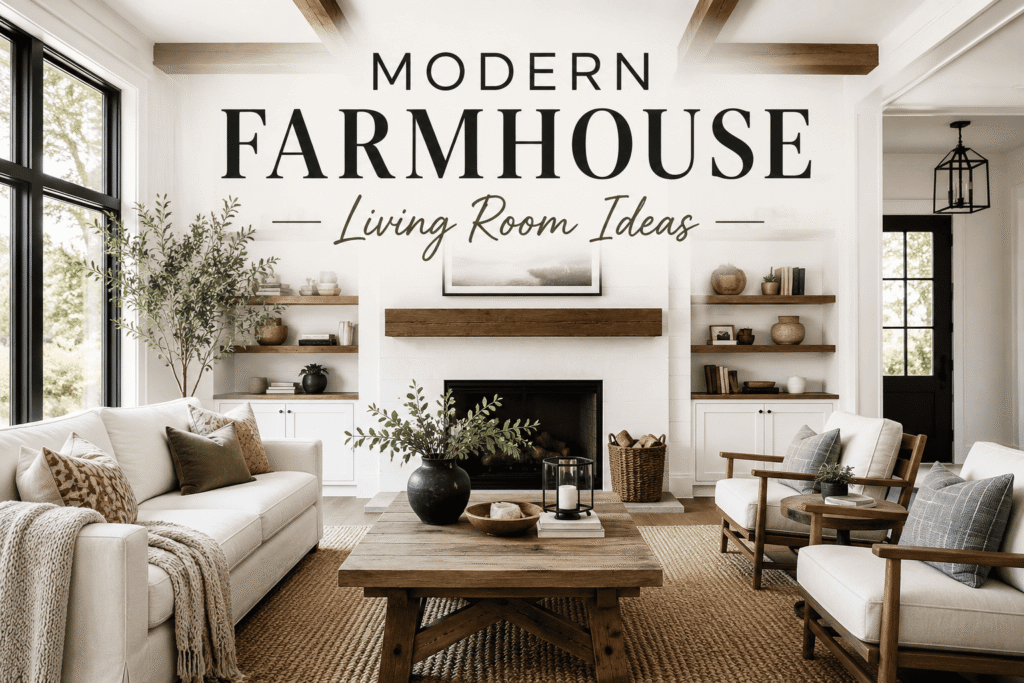
To give a house a farmhouse or rustic feel, one could do an accent wall covered with reclaimed or distressed wood boards. This brings a lot of texture and material interest to the space. The combination works very well with the modern farmhouse living room style, where one wall made of reclaimed wood, usually located behind a media unit or a fireplace, becomes the centerpiece of the room’s material palette.
Idea 12: Mirror or Reflective Accent Wall
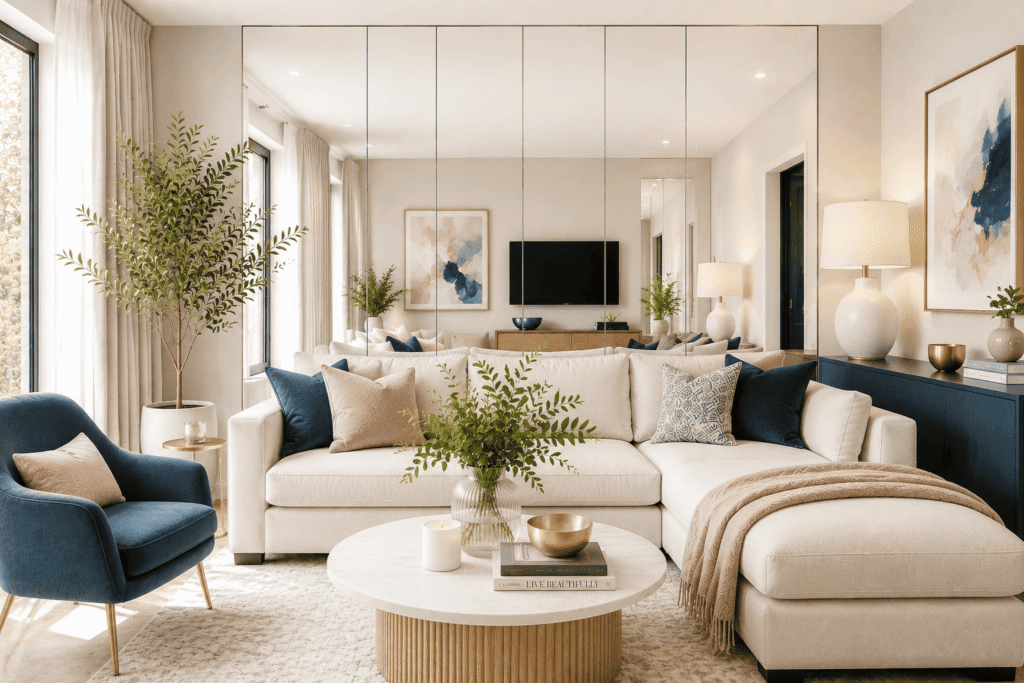
A wall partially or fully covered in mirror panels creates an accent treatment that adds both visual interest and the practical benefit of reflected light and perceived space — particularly valuable in smaller living rooms. This works best as a partial treatment (mirror panels covering 50-70% of the wall, often in an interesting geometric arrangement) rather than full wall-to-wall mirroring, which can feel impersonal in a residential setting.
Making an Accent Wall Work — Key Principles
- Commit fully to the contrast. A subtle, barely-different accent wall fails to read as intentional. The accent colour or material should be clearly and confidently different from the surrounding walls.
- Keep supporting walls simple. The three non-accent walls should remain in a calm, neutral tone that does not compete with the feature wall for attention.
- Think about the furniture that will be placed against the wall. A headboard with a strong pattern or a big artwork on the wall with patterned wallpaper can create a visual competition. Simple furniture and accessories allow a striking accent wall to be the undisputed focus of the
- Light it well. Dark or textured accent walls, in particular, are greatly enhanced by the addition of a dedicated light source, such as a picture light, a floor lamp placed nearby, or directional ceiling spotlights. This ensures that the wall’s colour and texture can be enjoyed even during the evening
Final Thoughts
Accent wall is still one of the most reliable design tricks as it can change a space drastically while costing a very small amount of time and money. The rule that makes any of the approaches in this article work well is one and the same: pick the perfect wall, make a strong contrast, and keep other parts of the room simple so that the accent wall can stand out.
Whether the choice is a bold forest green colour block, a textured wood slat installation, or a peel-and-stick botanical mural, the underlying logic is the same — one wall becomes the room’s clear focal point, and everything else in the room is arranged to support rather than compete with it.
Frequently Asked Questions
Q: Which wall should be the accent wall in a living room?
A: Definitely the safest option is the wall which you first notice once you step into the room or the wall right behind the main sofa. Either of these two ways will give you the accent treatment that is featured multiple times and most of the time. Besides, the wall that has the focal point (fireplace or built-in shelving) which can be a good picking its main feature will be strengthened rather than hindered by that one. Steer clear from having accent walls on windows or door wall segments and refrain from treating more than one wall in a small room.
Q: What colour is best for an accent wall in 2026?
A: Some of the most fashionable 2026 accent wall colours are warm, earthy, and richly toned kinds instead of the cooler greys which were the main ones in the last 10 years: a dark green in the forest, a reddish brown of the earth, a dark purple, and a deep navy are the top picks. These colours are successful because we perceive them as warm and down-to-earth, not cold, and they go really well with the natural materials (wood, linen, rattan) which are the focus of the interior contemporary trends.
Q: Do accent walls make a room look smaller?
A: A correctly chosen and correctly placed accent wall does not make a room look smaller — in fact, a dark accent wall behind a seating area often makes a room feel more spacious by creating depth and a clear focal point, rather than the flat, undefined quality of four identically coloured walls. It’s all about restraint: one decorated wall, out of the four walls, the other three walls being light and neutral, will keep the space open yet visually attractive because of the feature.
Q: How much does a wood slat accent wall cost?
A: A wood slat accent wall using a pre-made panel kit typically costs between $150 and $400 for a standard living room wall, depending on the wood type and panel quality, plus minimal additional cost for paint if a contrasting backing colour is used. A fully custom-built version using individual battens costs less in materials but requires more time and basic carpentry tools. This places it among the more affordable non-paint accent wall options relative to wallpaper or stone cladding.
Q: Can I do an accent wall in a rented home?
A: Yes — several accent wall approaches are fully renter-friendly. Wallpapers with peel-and-stick technology do not need paste for application and are removed cleanly without damaging the surface. Slat wooden wall panels disappear easily if a gel like a tape is used for adhesion instead of screws. This way, the slat wall look is achieved without permanent fixings. Picture ledge galleries require only small nail holes that are easily patched. Paint remains the least renter-friendly option unless the landlord permits repainting, in which case choosing an easily-covered colour for eventual repainting is a sensible precaution.