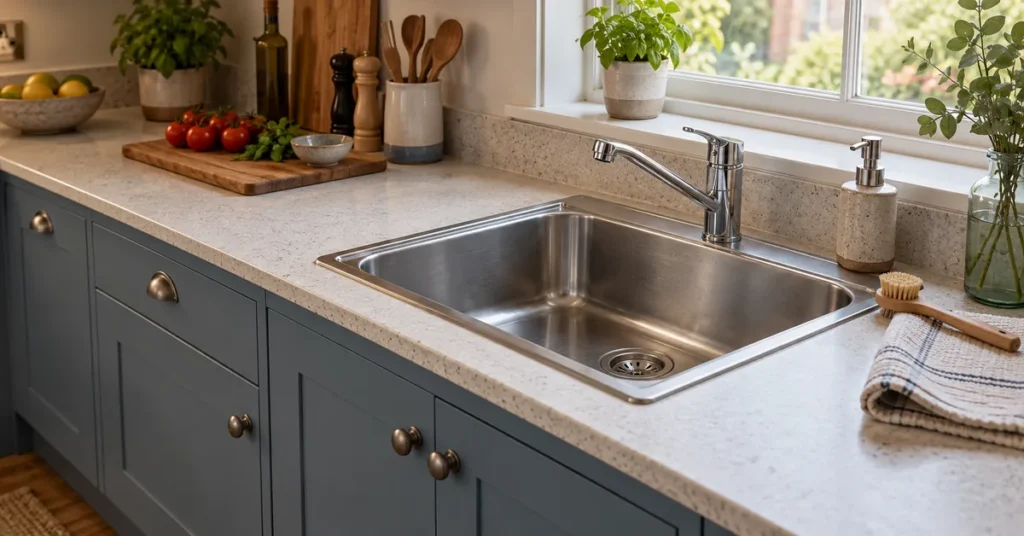

A 16 gauge stainless steel kitchen sink uses thicker steel than an 18 gauge sink, and that difference matters to many buyers. But thickness alone does not determine whether a sink is worth the price.
Both 16 gauge and 18 gauge sinks are widely used in residential kitchens. The real question is whether the extra thickness gives you enough practical benefit for the extra cost, once you factor in construction quality, sound treatment, steel grade and how you actually use your kitchen.
This guide explains what the gauge numbers mean, compares 16 and 18 gauge side by side, and helps you decide which makes sense for your kitchen and budget.
What Does 16 Gauge Mean on a Stainless Steel Sink?
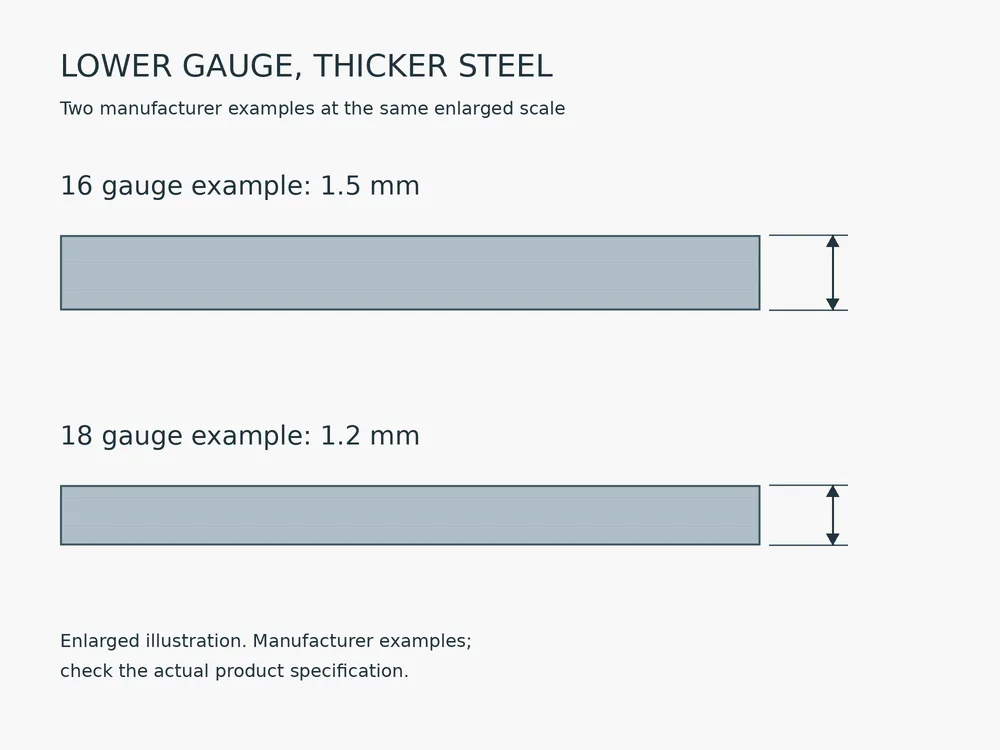
Gauge is a measurement of sheet metal thickness. The important rule is simple: a lower gauge number means thicker steel. So 16 gauge steel is thicker than 18 gauge, and 14 gauge is thicker again.
Many sink manufacturers list their specifications approximately as:
16 gauge: around 1.5 to 1.6 mm (approximately 0.06 inches)
18 gauge: around 1.2 to 1.3 mm (approximately 0.05 inches)
These are useful comparison figures. However, the quoted thickness can vary with the gauge convention and product specification, so always check the product specification for the sink you are considering.
Watch out for marketing language that says “thick gauge” or “heavy duty” without stating the actual gauge number. A specification sheet should clearly show the gauge.
16 Gauge vs 18 Gauge Kitchen Sink at a Glance
| Feature | 16 Gauge | 18 Gauge | What It Means for the Buyer |
| Relative thickness | Thicker (~1.5–1.6 mm) | Thinner (~1.2–1.3 mm) | Check the stated thickness for each product |
| Weight | Heavier | Lighter | Heavier sinks feel more solid but weigh more to install |
| Resistance to flex | Generally more rigid, all else equal | Generally less rigid, all else equal | Bowl design and support also affect stiffness |
| Typical price range | Higher | Lower | Expect to pay more for 16 gauge at comparable quality |
| Availability | Available from many brands | Available from many brands | Compare models sold in your market |
| Suitable household use | Normal or demanding use | Many residential kitchens | Both handle everyday residential kitchen use |
Is 16 Gauge More Durable Than 18 Gauge?
Thicker steel generally provides more material and greater resistance to flexing under weight. In that sense, a 16 gauge sink can feel more solid when you press on the bowl or set heavy cookware down.
However, durability in a real kitchen depends on more than just thickness. The stainless steel grade, the quality of the welds, the sink design, bowl shape, how it is mounted and supported, and the finish all contribute to how well a sink holds up over years of use.
A well-made 18 gauge sink from a reputable manufacturer can perform reliably for years in a typical residential kitchen. A poorly constructed 16 gauge sink with weak welds or a poorly finished surface could develop problems sooner. Gauge is one useful indicator, not the whole story.
Does 16 Gauge Dent Less Easily?
Potentially, yes. Thicker sheet metal requires more force to deform, so a 16 gauge sink may resist minor impacts better than an 18 gauge sink of the same design.
But dent resistance is not just about thickness. Bowl geometry matters: a flat, wide bowl with no supporting structure can flex more than a smaller or ribbed design. The way the sink is mounted and how much of the rim is supported by the countertop also play a role.
In normal home use, neither 16 nor 18 gauge sinks are likely to dent from everyday tasks like washing dishes. Heavy impacts, such as dropping a cast-iron pan directly onto the bowl, could potentially dent either gauge.
Is a 16 Gauge Sink Quieter?
Thicker steel may contribute to a more solid feel, but that does not establish how quiet a finished sink will be. Sound treatment and installation also affect the result.
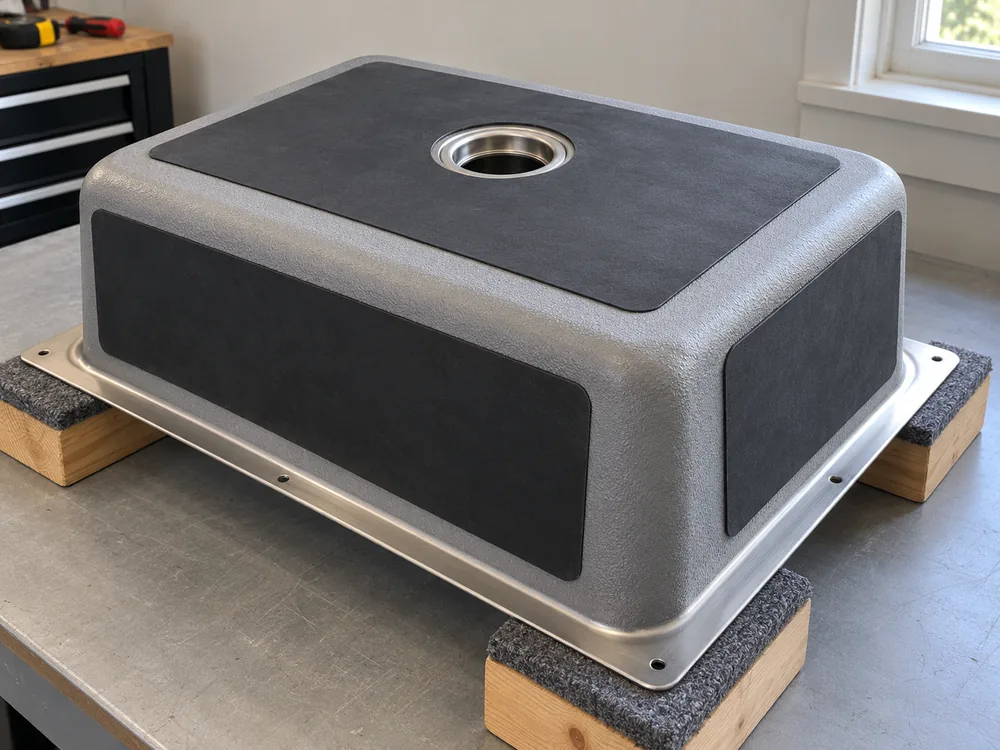
Sound-deadening pads, spray-on undercoating, bowl shape, mounting type, water flow and whether a waste disposal unit is fitted all affect how noisy a sink sounds in use. Many current manufacturers, including brands like Ruvati, combine their 16 gauge steel with sound guard padding and undercoating as standard.
Choosing 16 gauge purely because you expect a silent sink is not a reliable strategy. Check what sound treatment the specific product includes, regardless of gauge.
Does Gauge Affect Scratching or Rust?
Scratching
Thickness does not prevent surface scratches. Scratches happen on the exposed finish, and even a 16 gauge sink will show marks over time with regular use. A brushed or satin finish tends to hide everyday wear better than a polished surface, but no stainless steel sink is scratch-proof.
Rust and Corrosion
Corrosion resistance comes from the stainless steel composition, not the thickness. Grade, surface condition, cleaning and exposure to corrosive substances all matter. Gauge alone does not establish corrosion resistance.
What Is T304 Stainless Steel, and Is It the Same as 16 Gauge?
This is a common point of confusion. They measure two different things.
Gauge refers to the sheet thickness (how thick the steel is).
T304 (also written as Type 304 or AISI 304) refers to the stainless steel grade, meaning its chemical composition. Type 304 is a chromium-nickel stainless steel. Some sink manufacturers specify an 18/10 composition for their products, but that is not a universal definition of Type 304.
A kitchen sink can be T304 and 16 gauge, or T304 and 18 gauge. Both combinations exist. For example, Ruvati lists many of its 16 gauge sinks as T304 grade with 18/10 chromium and nickel content. Franke offers T304 sinks in 18 gauge.
When comparing sinks, check both the gauge and the grade separately. A sink that states 16 gauge but does not mention the steel grade is missing important information.
When Is a 16 Gauge Kitchen Sink Worth Paying More For?
A 16 gauge sink may be worth the extra cost when:
- Your kitchen gets heavy daily use with large pots and pans handled frequently.
- You prefer a heavier sink that feels more rigid in use.
- The price difference is reasonable for your budget, after comparing the complete specification.
- The sink also has good construction: verified steel grade, sound deadening, a quality finish and solid mounting hardware.
- You are installing a large single-bowl undermount sink, where a wider unsupported span benefits from thicker steel.
When Is an 18 Gauge Sink Enough?
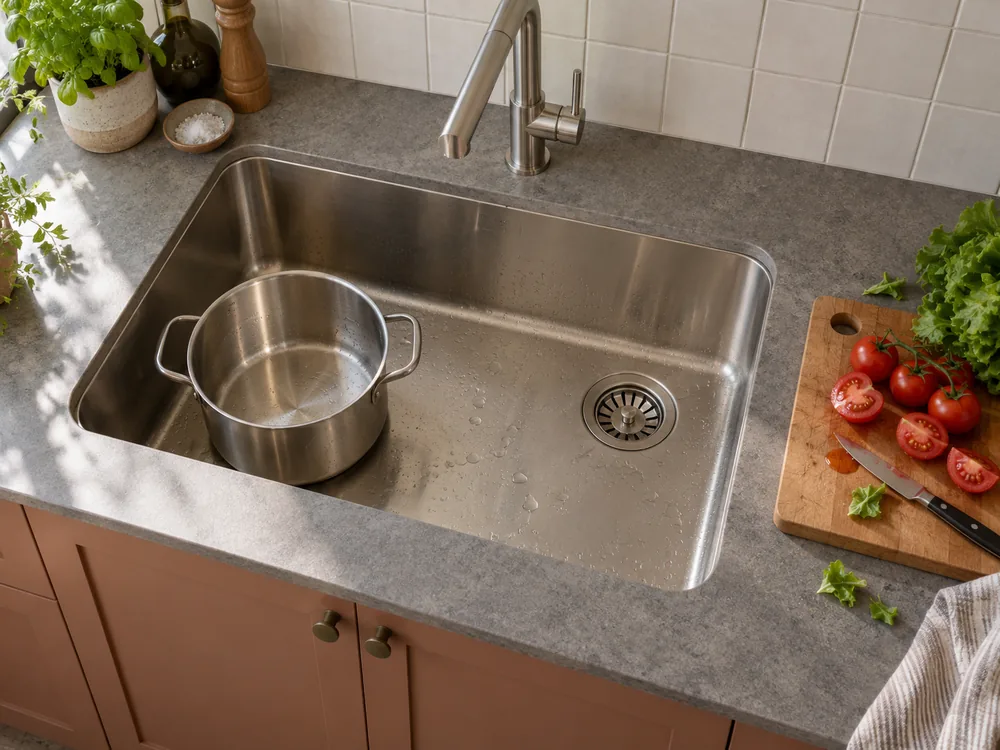
A well-made 18 gauge sink can be completely suitable for many homes. It may make more sense when:
- Your household use is normal to moderate.
- Budget matters, and the 18 gauge option frees up money for a better tap, waste disposal or installation.
- The sink has good overall construction, sound treatment and a credible manufacturer warranty.
- The sink size and style you want are available in 18 gauge from a trusted brand.
For example, Franke lists its Grande GDX11018 as an 18-gauge sink with heat and sound insulation. An 18 gauge sink is not a poor-quality choice by default.
Gauge Is Not the Only Specification to Check
Before buying any stainless steel kitchen sink, compare these specifications alongside the gauge.
Stainless Steel Grade
Check whether the product states its steel grade (such as Type 304; a stated 18/10 composition is additional material information). If no grade is listed, you cannot assess corrosion resistance from the gauge alone.
Sink Size and Bowl Depth
Overall dimensions, bowl depth and cabinet minimum all affect whether the sink fits your kitchen. For detailed sizing help, see our kitchen sink size guide.
Sound Deadening
Check for sound-deadening pads and spray-on undercoating. Gauge alone cannot tell you how effective the complete sound treatment will be.
Finish and Corners
Brushed or satin finishes show everyday wear differently from polished ones. Tight-radius corners look modern but are harder to clean than rounded corners. Neither option is universally better; it depends on your preference.
Mounting Type and Cabinet Requirements
Undermount and topmount installations have different support requirements and countertop implications. Always check the manufacturer’s minimum cabinet size.
Does a Handmade Sink Need 16 Gauge Steel?
Handmade sink construction and steel gauge are related but not interchangeable. Many handmade sinks do use thicker stainless steel, but the term “handmade” describes the manufacturing method, not the gauge or grade.
A handmade sink that does not state its gauge or grade leaves you guessing. If you are considering a handmade option, our overview of handmade stainless-steel sinks introduces this construction style. Still check the individual product specification before buying.
16 Gauge vs 18 Gauge: Which Should You Choose?
Consider 16 gauge if heavier construction matters to you, the price difference is acceptable, the overall specification is strong, and you expect demanding daily use.
Consider 18 gauge if the sink is well-made, the specification suits your kitchen, household use is moderate, and the price-to-value balance works better for you.
Do not choose a sink by gauge alone. A 16 gauge sink with a poor finish, no sound pads and an unlisted steel grade may be a worse purchase than a well-specified 18 gauge sink from a trusted manufacturer.
Common Mistakes When Comparing Sink Gauge
- Assuming a higher gauge number means thicker steel (it is the opposite).
- Choosing solely by gauge without checking the complete specification.
- Ignoring the stainless steel grade.
- Expecting 16 gauge to be scratch-proof or rust-proof.
- Assuming a thicker sink is automatically quieter without checking sound treatment.
- Ignoring sink dimensions, bowl depth and cabinet requirements.
- Paying more for gauge alone without comparing overall construction quality.
- Trusting marketing terms like “commercial grade” without verifying actual specifications.
Quick Checklist Before Buying
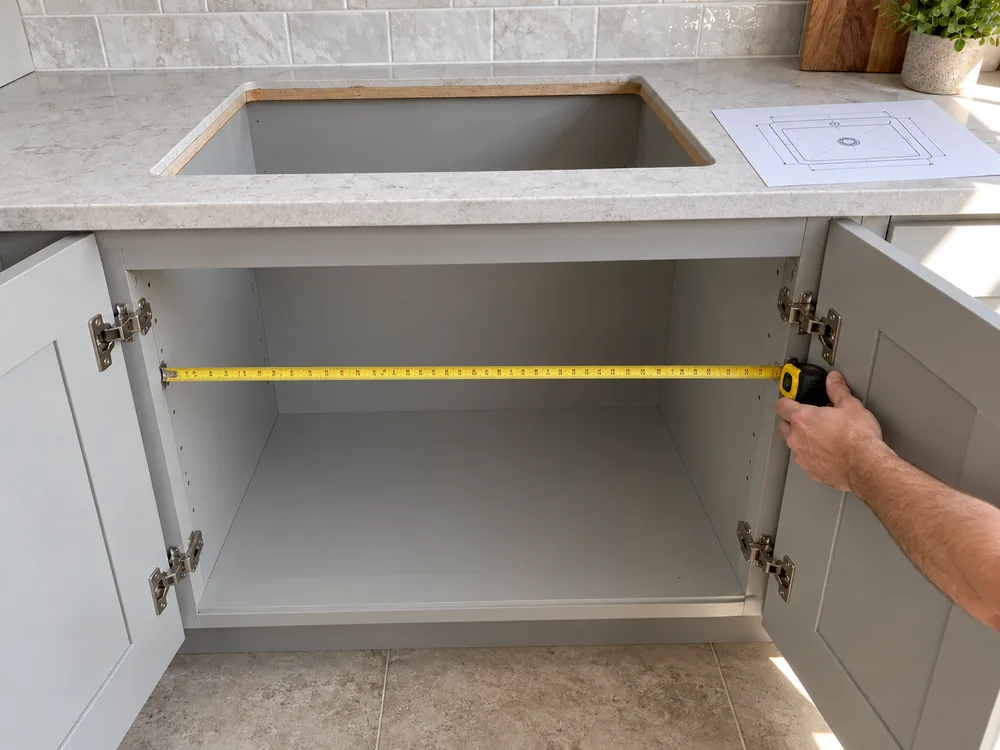
Before ordering a stainless steel kitchen sink, confirm:
- Stainless steel gauge and approximate thickness
- Stainless steel grade (for example, Type 304)
- Overall sink dimensions (side-to-side width and front-to-back measurement)
- Bowl dimensions and bowl depth
- Minimum cabinet size required
- Mounting type (undermount, topmount or dual-mount)
- Sound-deadening pads and undercoating
- Finish type (brushed, satin, polished)
- Warranty details
- Included accessories (grid, strainer, clips)
- Manufacturer installation drawing or template
Then compare price. A sink that ticks all the right specification boxes at 18 gauge may serve you better than a 16 gauge sink that falls short on other details.