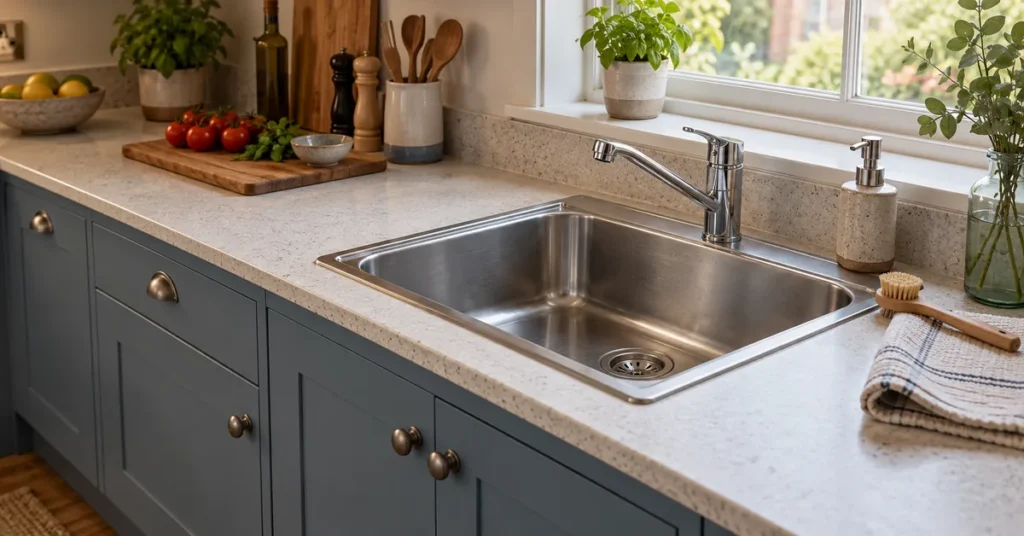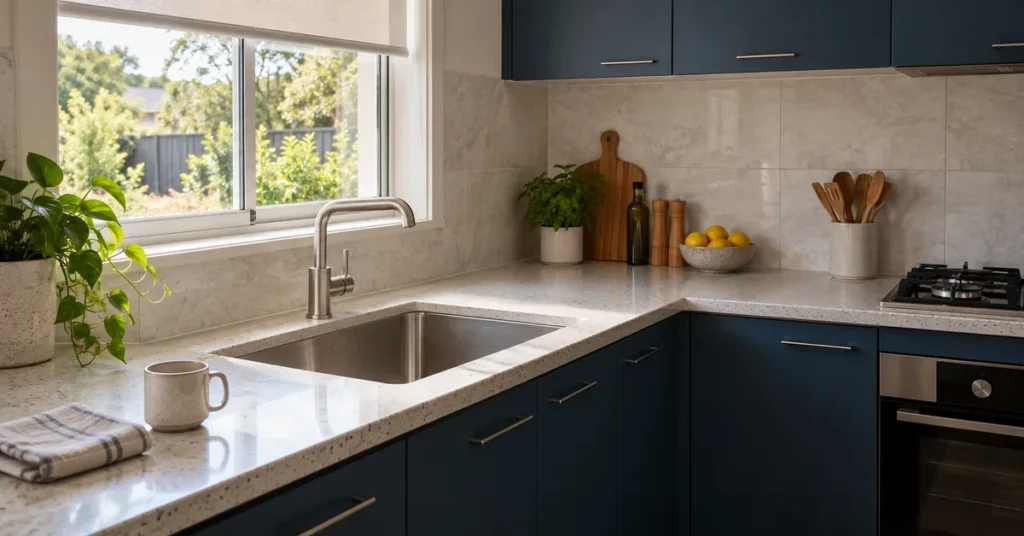
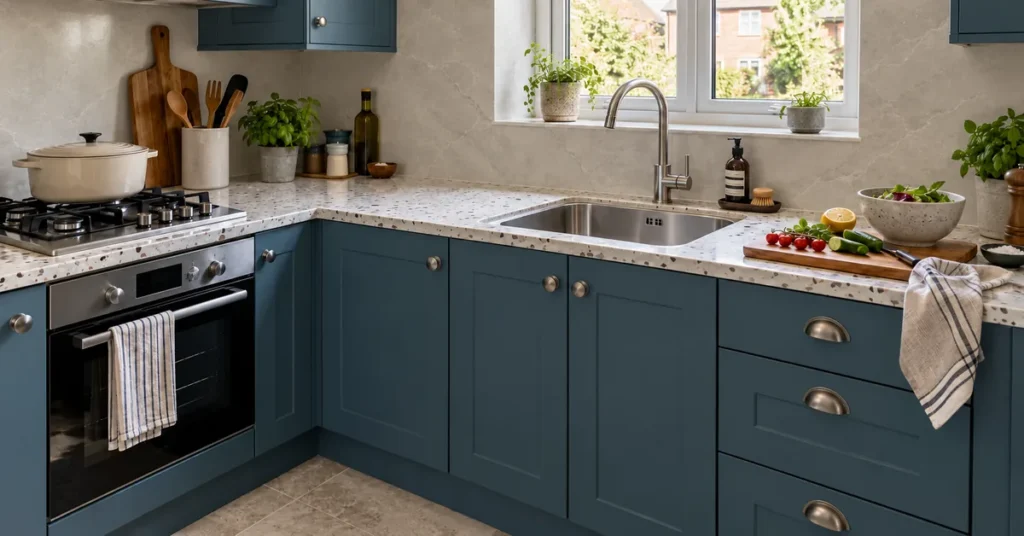
A kitchen sink can take up a surprisingly large share of the available counter in a compact kitchen. The instinct is to buy the smallest sink that fits, but that creates a different problem: a bowl too small to hold everyday cookware is frustrating to use, and the counter space you saved may not make up for it.
This guide helps you balance sink footprint, usable bowl space, preparation area and your daily washing routine so the sink you choose works with your kitchen rather than against it.
What Makes a Sink Work Well in a Small Kitchen?
A practical compact-kitchen sink should:
- Fit the base cabinet correctly, with the clearances the manufacturer specifies
- Leave enough clear countertop beside it for food preparation
- Provide enough usable bowl area for the cookware and dishes you wash regularly
- Avoid unnecessary bulk from oversized rims, drainboards or features you will not use
- Suit your household’s washing routine, whether that involves a dishwasher or not
Outer dimensions do not tell you how much washing space you get. Check the internal bowl measurements on the manufacturer’s dimensional drawing.
How Small Should a Kitchen Sink Actually Be?
Choose the footprint around the counter you can spare and the cookware you wash regularly. A compact product label is not enough to establish whether a sink will work in your kitchen.
For detailed measurement tables, standard depth ranges and cabinet-fit checks, see the full kitchen sink size guide rather than guessing from the product title alone.
A Small Single Bowl Often Uses Space Better
When overall width is limited, a single uninterrupted bowl usually provides more practical washing space than two separate compartments.
In a compact layout, a single bowl can:
- Accept wider cookware, baking trays and cutting boards without the obstruction of a central divider
- Give you one continuous area to soak, wash and rinse
- Keep the external footprint smaller because there is no divider adding width
A single bowl is not right for every household. If you regularly separate soaking and rinsing, compare it with a double bowl whose compartments are still large enough for those jobs.
When Can a Double Bowl Still Work in a Small Kitchen?
A double bowl can still make sense when:
- The base cabinet is wide enough for both compartments to remain genuinely useful
- Your household regularly separates washing, rinsing and food preparation tasks
- At least the larger bowl can hold your everyday cookware without forcing it at an angle
Dividing a narrow sink can leave both bowls awkward to use. Check each compartment against your dinner plates and saucepans rather than assuming two bowls will make washing easier.
Preserve Prep Space Beside the Sink
Choosing a sink for a compact kitchen is not only about the sink itself. It is equally about what is left around it.
You need clear countertop beside the sink for:
- Chopping and food preparation
- Setting down ingredients and dishes before and after washing
- Resting hot cookware on a suitable surface
- Small appliances you use regularly, such as a kettle or toaster
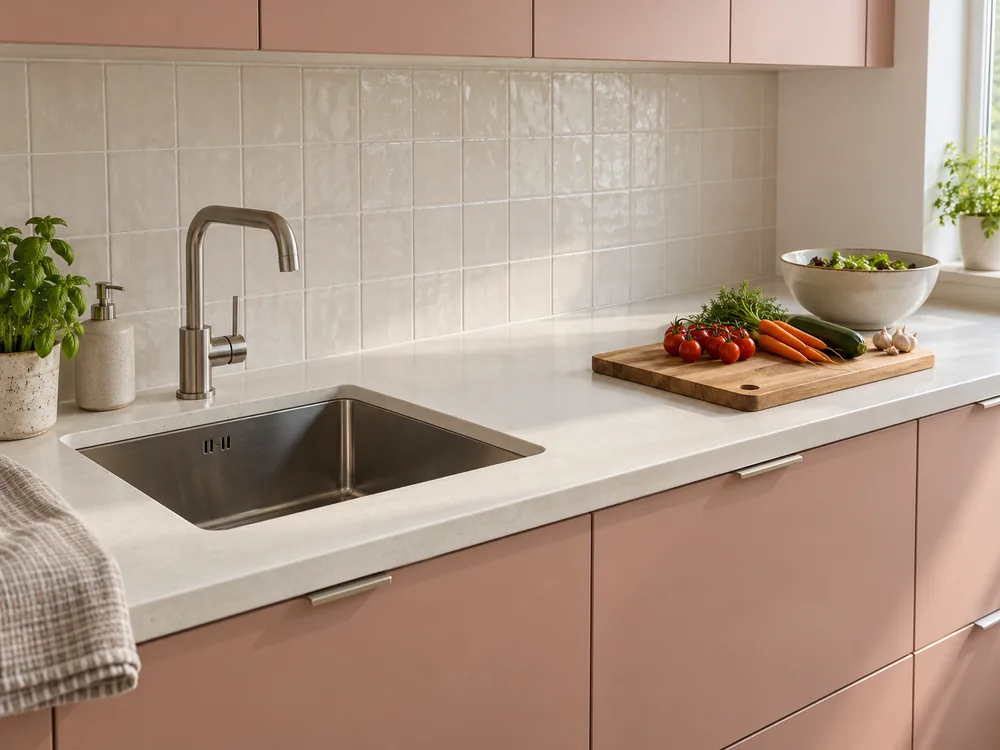
Before choosing, set out your chopping board, ingredients and a mixing bowl where you normally prepare food. Notice whether you can rinse vegetables and return to chopping without moving everything. Preserve that useful working area when comparing sink footprints.
Keep rarely used appliances off this preparation area. These habits for keeping kitchen counters clear can help protect the space beside the sink.
Think About Bowl Size, Not Just Overall Sink Size
Two sinks with the same advertised width can provide very different amounts of usable bowl space. The difference comes from:
- Rim or flange width: a thick rim takes bowl space away from the inside
- Built-in drainboard area, which counts towards the overall width but is not bowl space
- Dividers in double-bowl models
- Corner radius: tighter internal corners tend to give more usable floor area inside the bowl
Look at the internal dimensions and bowl shape together. Tighter corners can give more usable floor area, but check whether you can comfortably wipe into them during cleaning.
How Deep Should a Small Kitchen Sink Be?
A deeper bowl can accommodate taller pots and help contain splashing, but depth also affects reach and the space available underneath.
Choose depth around your comfort and the equipment below, rather than automatically choosing the deepest model. An undermount bowl also sits below the worktop, adding to the reach from its top surface.
Undermount, Drop-In or Integrated: Which Works Best in a Compact Kitchen?
Undermount
An undermount sink leaves no raised rim to wipe debris over. Check that the exact sink, worktop and support system are approved for this installation; compatibility depends on the materials and manufacturer instructions.
Drop-In (Top-Mount)
A drop-in sink rests on the countertop with a visible rim. It can be a practical option for a compact kitchen, particularly when replacing an existing sink, provided the cutout and mounting requirements match.
Integrated Sink and Worktop
An integrated sink is formed with or joined into the worktop for a continuous appearance. Cleaning, cost and repair options depend on the material and construction.
Compare the actual footprint rather than choosing by appearance alone. A visually continuous surface does not necessarily give you more usable preparation space.
Should a Small Kitchen Sink Have a Drainboard?
A built-in drainboard can be useful if you hand-wash frequently and need somewhere for dishes to dry with water draining back into the bowl. In kitchens where there is no separate drying area, a drainboard solves a real problem.
The trade-off is countertop length. A drainboard extends the total sink footprint, and in a compact kitchen that extra width may eat into the preparation area you need.
Alternatives to consider:
- A removable drying rack that stores away when not needed
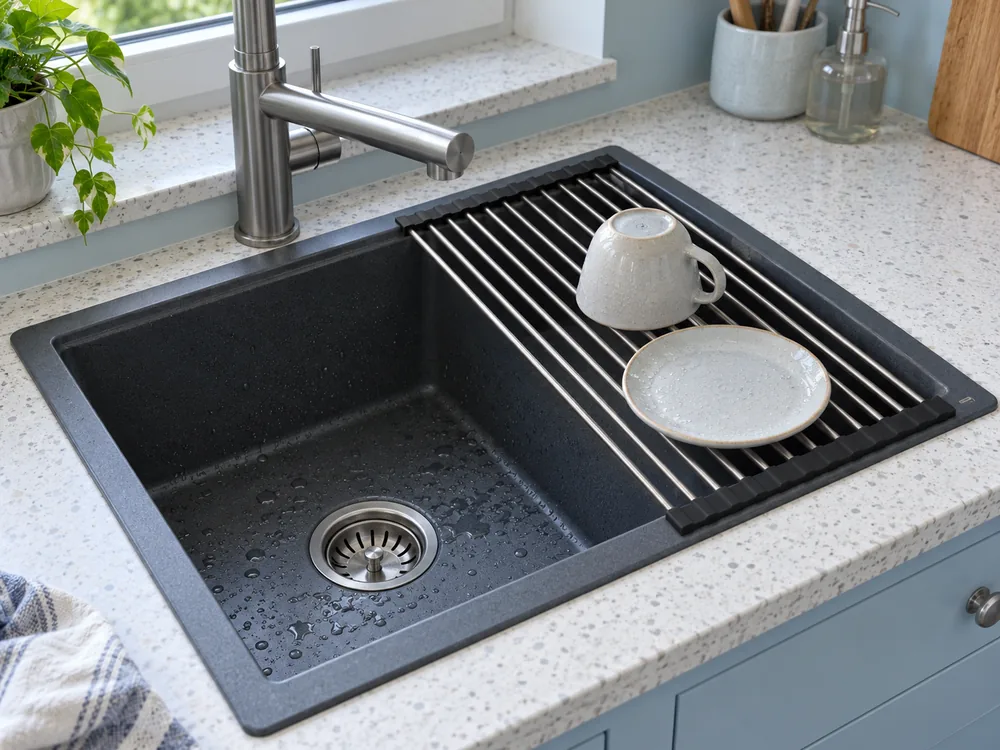
- A roll-up rack designed to sit across the top of the sink bowl
- A temporary dish rack placed on the counter only after washing
If you rarely hand-wash large loads, a built-in drainboard may consume more space than it earns.
Sink Accessories That Can Make a Compact Kitchen Work Harder
Roll-Up Rack
A roll-up rack sits across the bowl and provides temporary rinsing, drying or resting space. When not needed, it rolls up and stores in a drawer or cupboard. This is one of the most practical additions for a small kitchen sink.
Fitted Cutting Board
Some sinks accept a cutting board designed to sit across the rim, creating a temporary preparation surface over part of the bowl. This only works when the sink is not actively in use, and the board must be sized for the specific model.
Colander Insert
A colander that rests inside or across the bowl lets you rinse vegetables or drain pasta without occupying counter space. Check that the colander is compatible with your sink’s width.
Leave room to store removable accessories. A board over the sink helps only when you can move it aside easily to use the tap or bowl.
What About a Corner Sink in a Small Kitchen?
A corner sink may seem like a logical way to use an awkward space, but it is not automatically a space-saving solution.
Before committing to a corner installation, consider:
- Corner cabinets can be difficult to access and harder to plumb
- The work triangle between sink, hob and refrigerator may become awkward
- Counter space on either side of a corner sink is often narrow and angled
- Dishwasher placement beside a corner unit may conflict with doors or drawers
Try the sequence of rinsing, chopping and loading dishes on your layout before committing to a corner sink. Check that someone standing there will not block an appliance door or the main route through the kitchen.
Small Kitchen Sink Ideas for Different Situations
Narrow Apartment Kitchen
Consider a compact single bowl with a minimal rim footprint. Prioritise keeping a clear preparation surface on at least one side. A roll-up rack can provide temporary drying space without consuming counter permanently.
Kitchen with a Dishwasher
When most dishes go through a dishwasher, a modest sink is often enough for rinsing and the occasional hand-wash. Still check that your largest pots and baking trays fit comfortably inside the bowl.
Kitchen Without a Dishwasher
If most dishes are washed by hand, allow for washing and drying together. Choose a bowl that accommodates regular cookware and decide where clean dishes will drain before protecting every last bit of counter.
Frequent Large-Pot Cooking
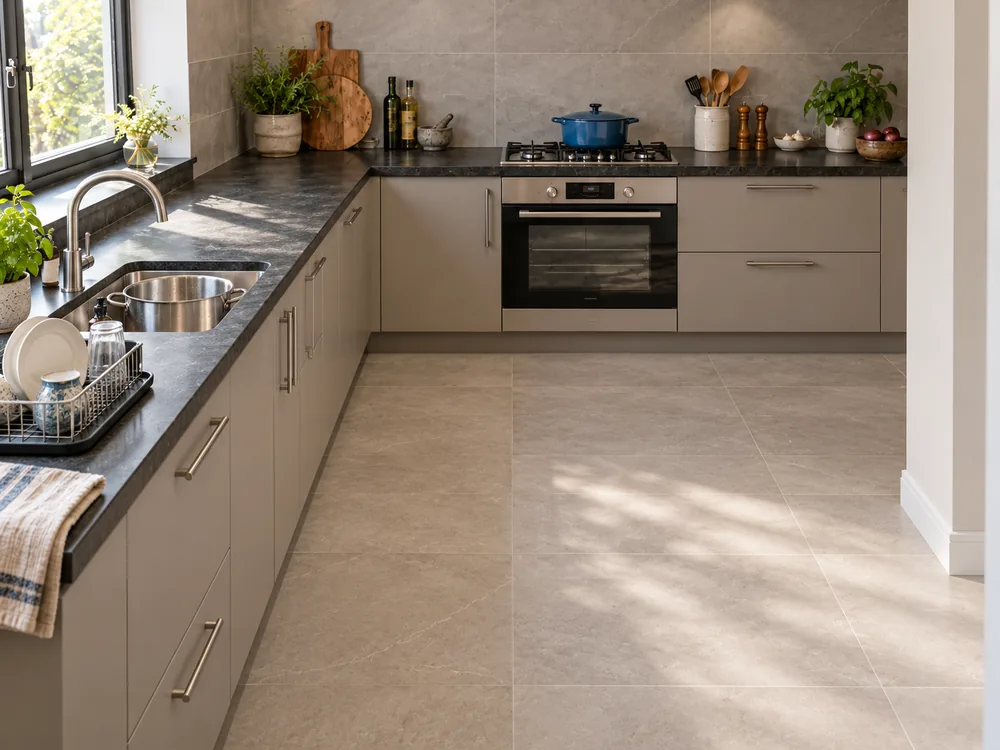
Compare your largest regularly washed pot, including its handles, with the bowl opening. Allow room to turn and rinse it; extra depth alone will not make a wide pan fit.
Occasional-Use Kitchenette
A genuinely compact bowl can suit light cooking and occasional washing. Check its intended use and practical capacity rather than assuming any bar or prep sink will serve as a main kitchen sink.
Small Sink Features That Can Actually Waste Space
Not every feature that sounds useful earns its place in a compact kitchen:
- An oversized drainboard that is rarely used but permanently occupies countertop
- Wide decorative rims that reduce the internal bowl without adding function
- Two bowls too small for a standard dinner plate or saucepan
- An unnecessarily deep bowl consuming under-sink cabinet space for capacity you do not need
- Accessories permanently covering the working surface rather than solving a temporary need
- An awkwardly positioned tap that blocks part of the bowl or limits how you use the counter behind it
- Choosing the smallest possible sink without checking whether your regular cookware actually fits inside
Choose features for tasks you actually do, and keep the remaining worktop available for preparing food.
What Should You Measure Before Buying?
Before ordering, record:
- Base cabinet internal width
- Total available countertop length
- Sink overall dimensions (width, front-to-back, depth)
- Internal bowl dimensions from the manufacturer’s drawing
- Bowl depth and available space below the sink
- Remaining clear prep area with the sink in place
- Tap/faucet position and clearance
- Plumbing position below
- Nearby appliance, door or drawer conflicts
For a step-by-step approach to taking these measurements, including how to check cutout compatibility and mounting clearances, the full kitchen sink size guide covers each step.
Small Kitchen Sink Decision Table
| Situation | What to Prioritise | What to Avoid |
| Very limited countertop | Compact single bowl; clear prep space on at least one side | Oversized drainboard; double bowl consuming all counter |
| No dishwasher | Adequate bowl capacity for regular cookware; comfortable depth | Undersizing the sink just to gain counter area |
| Frequent large cookware | Internal bowl width that fits your largest pot or tray | Two small bowls that cannot hold standard cookware |
| Occasional-use kitchenette | Genuinely compact sink; minimal footprint | Over-specifying features for light use |
| Under-sink storage important | Moderate bowl depth; check clearance below for bins or supplies | Unnecessarily deep bowl consuming cabinet space |
| Frequent hand washing | Comfortable bowl size; consider a drying accessory | Tiny bowl that slows the washing workflow |
Quick Checklist Before You Choose
- ☐ Confirm cabinet compatibility with the manufacturer’s minimum requirement
- ☐ Check full sink dimensions (width, front-to-back and depth)
- ☐ Check usable internal bowl dimensions
- ☐ Compare the bowl with your largest regularly washed cookware
- ☐ Check how much clear preparation area remains
- ☐ Decide whether you genuinely need two bowls
- ☐ Decide whether you genuinely need a built-in drainboard
- ☐ Check bowl depth and the space it leaves below
- ☐ Confirm the mounting type suits your countertop
- ☐ Check tap/faucet position and clearance
- ☐ Check plumbing and under-sink storage conflicts
- ☐ Check accessory compatibility if you plan to use them
- ☐ Review the manufacturer’s dimensional drawing before ordering