Small bathrooms are short on floor space, and adding more furniture does not always help. Before buying a new cabinet or shelf unit, the better starting point is to look at what you actually need to store, then figure out where unused space already exists.
Effective bathroom storage usually comes from a mix of approaches: reducing the number of items kept in the room, using vertical wall space, choosing narrow or shallow storage instead of deep cabinets, and keeping everyday items within easy reach. The following sections cover practical ways to do this without making a compact bathroom feel smaller.
Start by Deciding What Really Needs to Stay in the Bathroom
Adding storage to hold things that do not need to be in the bathroom is a common mistake. Before shopping for organisers, sort through what is actually there.
Keep within easy reach
Everyday toiletries, hand towels, a toilet roll or two, and the grooming products you use daily. These need to be accessible, not buried in a cabinet.
Store elsewhere if possible
Bulk refills, extra towels, duplicate cosmetics, rarely used hair tools, and cleaning supplies that are only needed occasionally. If another cupboard or linen closet is available elsewhere in the home, use it. For a more detailed approach to reducing household clutter, see our guide to keeping your home clutter-free.
This step alone can free enough space that you may not need an extra cabinet at all.
Use the Space Under the Sink More Efficiently
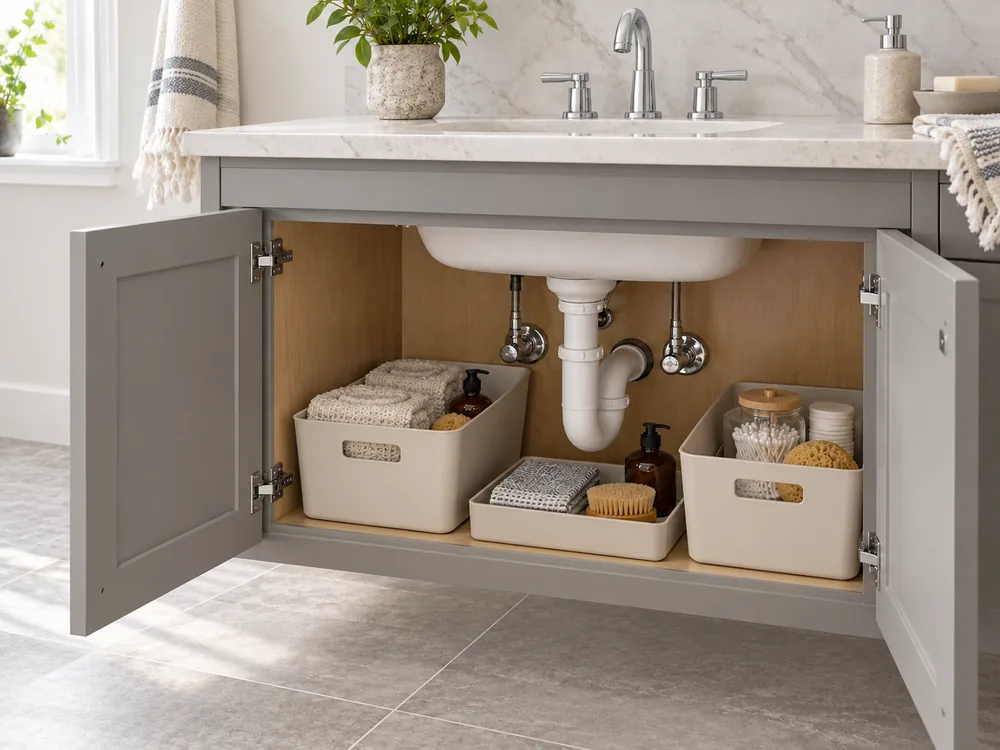
The cabinet under the sink is often wasted because pipes, traps and valves take up awkward shapes. Rather than stacking loose bottles around the plumbing, try using:
Stackable bins or small drawers that fit around the pipework. Shallow trays work well for keeping cleaning supplies together without blocking access to the plumbing. Removable shelf inserts designed for under-sink use can double the usable layers inside the cabinet.
The key rule: storage must not prevent access to shut-off valves or pipe connections. Avoid packing items tightly against plumbing. If something leaks, you need to reach it quickly.
If you are choosing or replacing a wash basin, the type of basin affects how much usable cabinet space you get underneath. Pedestal basins offer almost none, while a vanity unit can provide more, though the actual space depends on the basin size, plumbing layout and cabinet design. Our guide to under-counter wash basin options covers how basin style affects your storage layout.
Choose a Narrow or Shallow Cabinet Instead of a Bulky One
A full-width bathroom cabinet can block the walkway in a small room. Narrower or shallower alternatives are often a better fit.
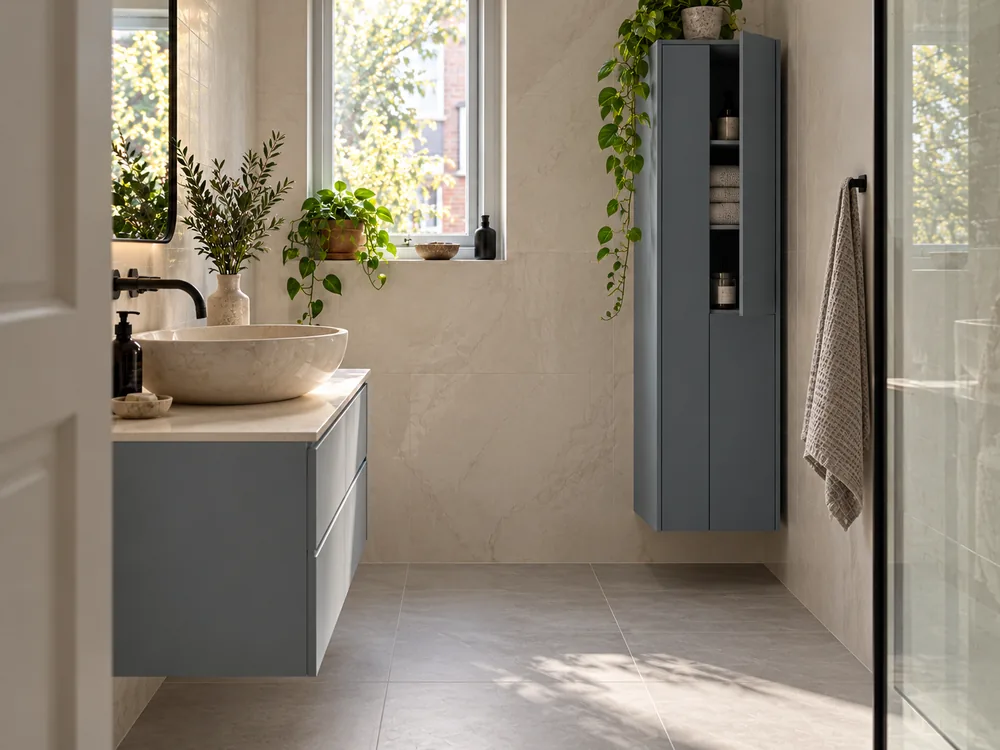
Tall narrow cabinet
Good when you have limited floor width but enough wall height. Measure the available width, then look for a cabinet that fits with room to spare on each side. Check that the cabinet depth does not push into the walking path or block a door.
Shallow wall cabinet
Useful where projection into the room needs to stay minimal. Measure how far the cabinet will stick out from the wall and check that it will not interfere with movement or faucet clearance. Fixing requirements depend on your wall type, so check the manufacturer’s guidance before installation.
Small freestanding cabinet
A practical choice where wall mounting is not possible, such as in some rental bathrooms. Before buying, measure the footprint carefully and check that door swing or drawer opening will not hit the toilet, shower door or walkway.
Use Wall Space Without Filling Every Wall
Wall-mounted shelves, small cubbies, rails and hooks can all add storage without taking floor space. But a common mistake is covering every available wall with open shelving. In a small bathroom, too much visible storage creates visual clutter that makes the room feel busier, not bigger.
Reserve open shelving for items that look tidy: a few neatly folded towels, a small basket, or everyday products you use often. Everything else is better behind a door or stored outside the bathroom. The weight your shelves can hold depends on the wall type and fixings, so always follow the manufacturer’s load rating and use appropriate hardware.
Can You Add Storage Above the Toilet?
The wall above the toilet is often unused, and an over-toilet shelf or cabinet can be a good use of that space. Options include a shallow wall-mounted cabinet, open shelves, or a freestanding over-toilet frame.
This works well when the wall space is genuinely unused, the storage depth is shallow enough to feel comfortable when using the toilet, and the fixings suit the wall type. A deep cabinet mounted low over the toilet can feel oppressive and make the area awkward to use.
Also consider access: wall-mounted units should not block the cistern, flush mechanism or maintenance panels. A freestanding over-toilet unit may suit some rooms, but check its stability and whether the manufacturer requires anchoring.
Make Better Use of Bathroom Corners
A corner that sits empty might seem like wasted space, but not every empty corner needs furniture. A corner shelf, narrow cabinet or shower caddy can be useful if the corner is genuinely accessible and the unit does not interfere with door openings, the shower enclosure or cleaning access.
Avoid placing furniture in a corner simply because it is empty. If the corner is hard to reach or the unit blocks something, it will collect dust rather than solve a storage problem.
Small Bathroom Towel Storage That Does Not Take Over the Room
Towels are bulky, and finding space for them in a compact bathroom takes some thought.
Hooks are the simplest option for towels currently in use. They take almost no wall space and allow towels to air-dry. A towel rail works when you have a stretch of available wall and want a neater look. A shelf-and-rail combination lets you store a few folded towels on top and hang one below. A tall narrow cabinet is useful if you need to store several spare towels out of sight.
If you have a linen cupboard or bedroom storage elsewhere, keep the bulk of your towels there and store only one or two spares in the bathroom itself.
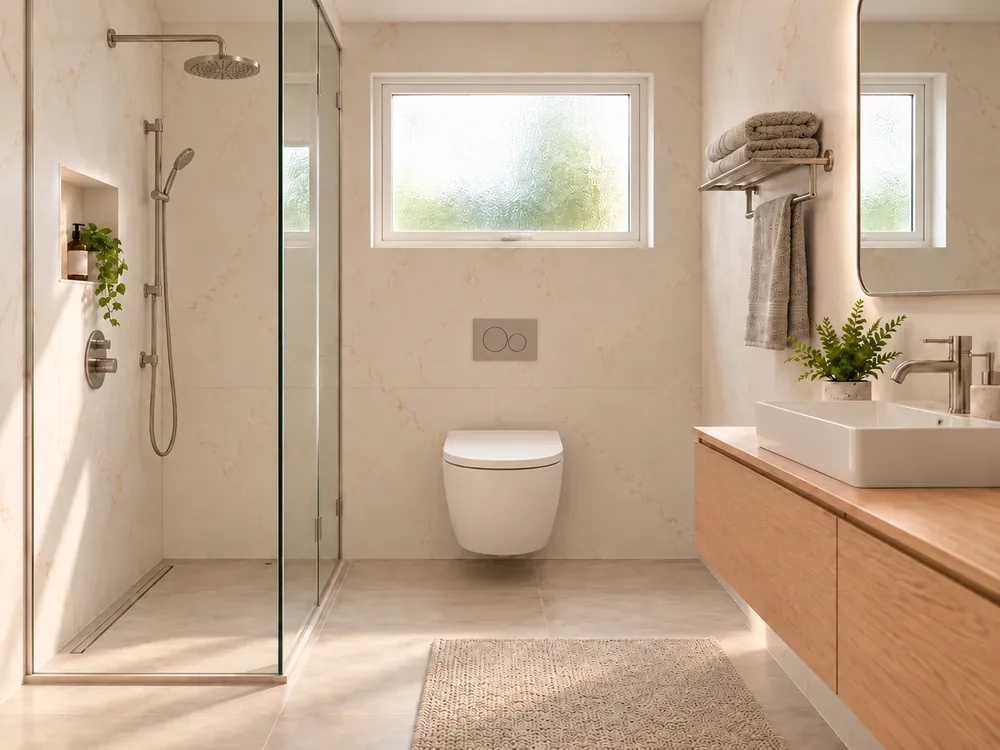
Should You Use Open Shelves or Closed Cabinets?
The answer depends on what you are storing and how tidy you are willing to keep things. Here is a quick comparison:
| Storage Type | Works Well For | Main Advantage | Main Drawback |
| Open shelves | Towels, everyday items, attractive containers | Easy access, no doors to open | Can look cluttered quickly |
| Closed wall cabinet | Toiletries, cleaning items, personal products | Hides visual mess | Door projection and depth matter in tight spaces |
| Tall narrow cabinet | Towels, toiletries, mixed storage | Good vertical use of a small footprint | Needs floor space and may block walkway |
| Rolling cart | Flexible, renter-friendly storage | Easy to move and reposition | Consumes floor area and can obstruct movement |
Use a Mirror Cabinet When It Solves Two Problems
A mirrored cabinet combines a mirror and shallow storage in one unit, which can work well over a vanity where wall space is limited. It gives you a place for toothpaste, skincare, razors or contact lens supplies without adding another piece of furniture. If you store any medicines in the bathroom, check the packaging first: many medicines need to be kept in a cool, dry place, and bathroom heat and humidity can reduce their effectiveness. Keep medicines out of reach of children regardless of where you store them.
Before replacing an existing mirror with a cabinet, check whether the added depth affects faucet clearance, lighting placement or overall vanity proportion. A mirror cabinet that projects too far can look heavy over a small basin. For proportions and placement, see our guide to choosing the right bathroom mirror size.
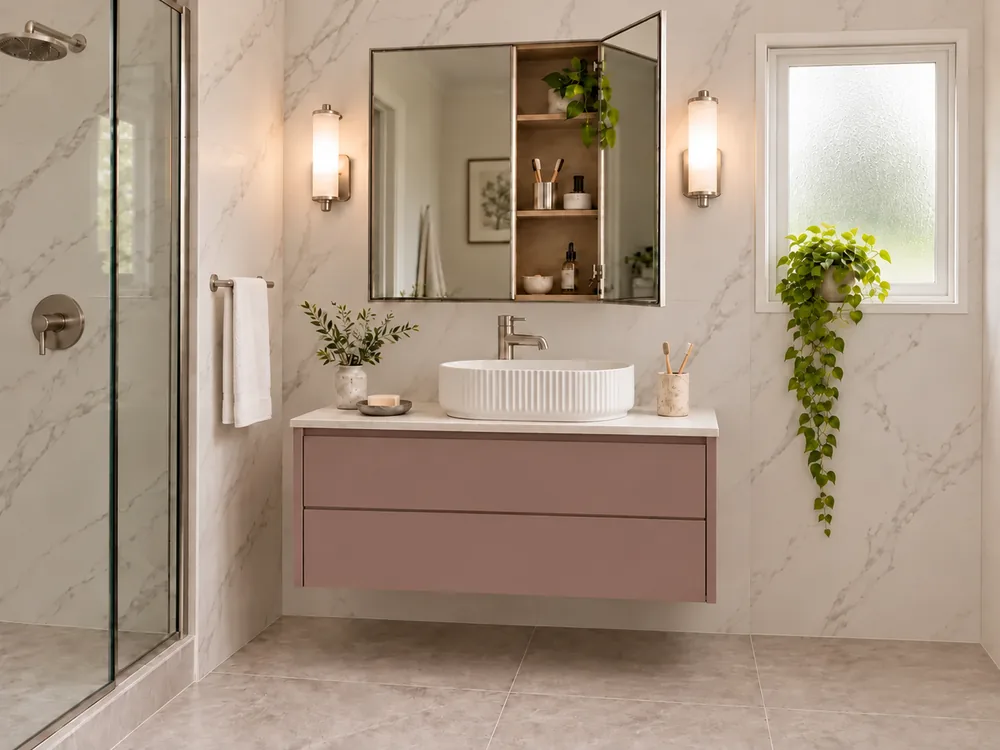
Keep the Countertop Storage Deliberate
The vanity counter should not become a catch-all surface. In a small bathroom, counter space is working space, and piling it with products makes the room feel smaller than it is.
Aim for one tray or one small organiser holding the products you use every single day. Move duplicates, seasonal items and anything decorative but non-functional into a cabinet or out of the bathroom entirely. A clear countertop is easier to clean and makes the whole vanity area feel calmer.
Renter-Friendly Bathroom Storage Options
If drilling is not an option, you still have choices. A slim freestanding cabinet, a narrow rolling cart, an over-door organiser, or stackable baskets on existing shelves can all add storage without touching the walls.
Adhesive-mounted products (hooks, small shelves, caddies) can work on smooth surfaces, but check the manufacturer’s load rating and surface compatibility first. Test in a discreet spot, especially on painted walls or tiles with textured grout. No adhesive product is guaranteed to remove without trace, so proceed carefully in a rental. For more advice on rental wall surfaces, see our renter-friendly wall decor guide.
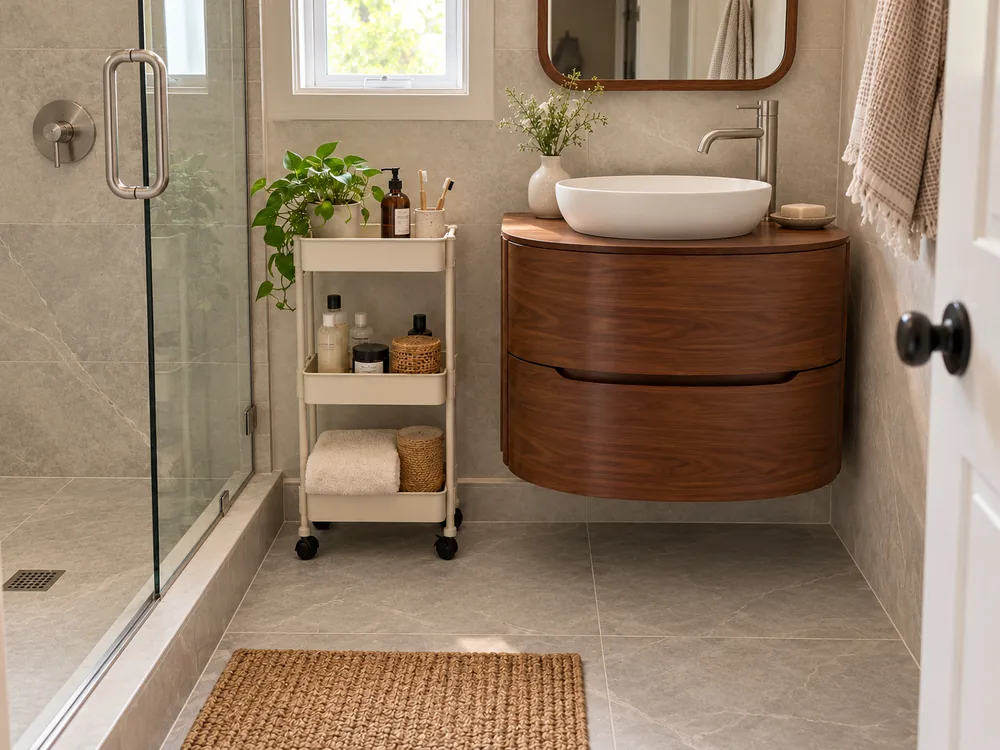
Common Mistakes That Make a Small Bathroom Feel More Crowded
Not every storage solution helps. Adding a deep cabinet in a narrow walkway, covering every wall with open shelving, or leaving dozens of products visible on counters and the bath edge can all make the room feel tighter. The general principle: add storage only where it solves a specific problem, and stop before the room starts to feel smaller than it did before.
Choosing the Right Storage for Your Bathroom
The right choice depends on what you have to work with. If floor space is tight, wall-mounted options or a mirror cabinet keep the floor clear. If you have an unused stretch of wall height, a tall narrow cabinet can hold more than you might expect. A messy under-sink area usually just needs internal organisers that fit around the plumbing. For towels, hooks or a rail are the simplest starting point. Renters can consider freestanding or removable options, checking lease rules and product instructions first. Adhesive products may still damage a surface.
Quick Small Bathroom Storage Checklist
Before buying or installing anything, check:
- What actually needs to stay in the bathroom
- Available floor width after walking space is accounted for
- Cabinet or shelf depth and whether it narrows the room
- Door swing, shower-door movement and drawer clearance
- Plumbing and cistern access
- Wall type and whether fixings can support the weight
- Renter restrictions on drilling or permanent fixtures
Measure first, buy second. The best storage solution for any small bathroom is the one that fits the space you actually have.
Frequently Asked Questions
How do I add storage to a very small bathroom?
Start by removing items that do not belong in the bathroom. Then look at vertical wall space, under-sink organisers, and shallow wall-mounted cabinets. Always check walking space, plumbing access and door clearance before adding anything.
What can I store under a bathroom sink?
Toiletries, cleaning supplies and small organisers, as long as everything fits around the plumbing and does not block shut-off valves. Use removable bins or trays so you can reach the pipes when needed.
How do I store towels in a small bathroom?
Hooks and rails use the least space for towels in daily use. For spare towels, a shelf-and-rail combination or narrow cabinet works. Keep bulk towel storage outside the bathroom if possible.
Are open shelves good in a small bathroom?
For a small number of tidy, frequently used items, yes. Too many open shelves increase visual clutter. Mixing some open and some closed storage usually works best.
What type of cabinet is best for a small bathroom?
It depends on the layout. A shallow wall cabinet suits tight floor plans, a narrow floor-standing cabinet uses vertical space well, and a mirror cabinet doubles as a mirror. Measure before choosing.