
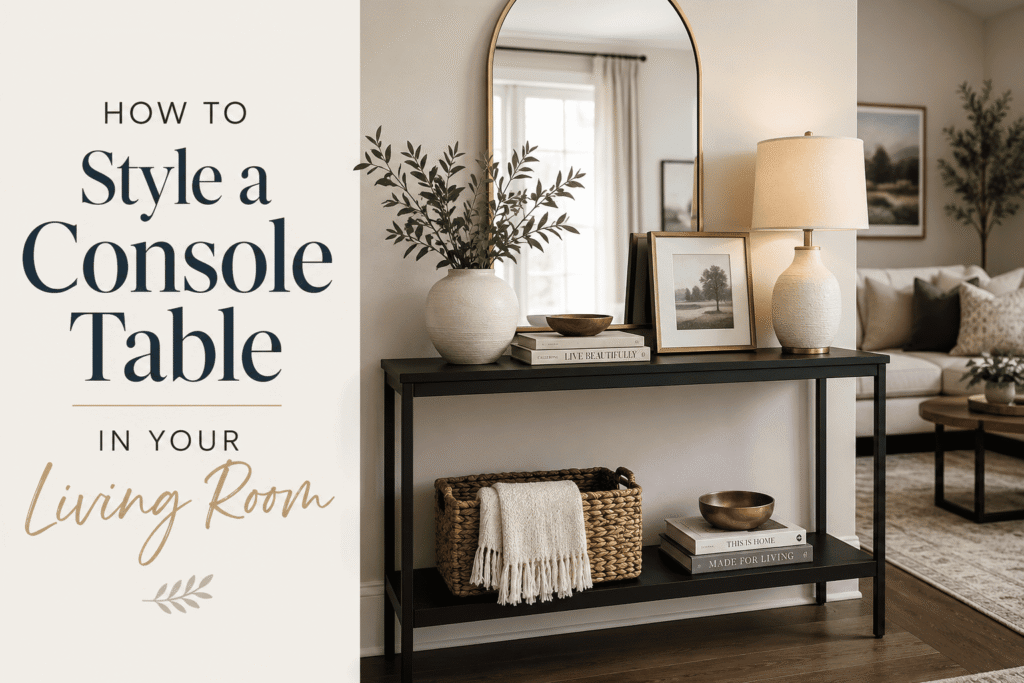
The console table is one of the most versatile and most under utilised pieces of furniture in home design. Slim enough to fit against almost any wall without consuming meaningful floor space, tall enough to serve as both a display surface and a functional landing spot, and generous enough in width to support a considered arrangement of objects, lamps, and plants — the console offers more styling opportunity per square metre of floor space than almost any other piece of furniture.
The challenge is that styling a console table well requires an understanding of composition — of how height, proportion, odd numbers, and layering work together to create an arrangement that looks considered rather than randomly accumulated. Most consoles, even in otherwise beautifully designed homes, fall short of their potential because they are styled by instinct rather than by principle.
This guide gives you the principles, the formula, and the specific guidance needed to style any console table beautifully — whether it is positioned against a hallway wall, behind a floating sofa, or as a display focal point in a living room.
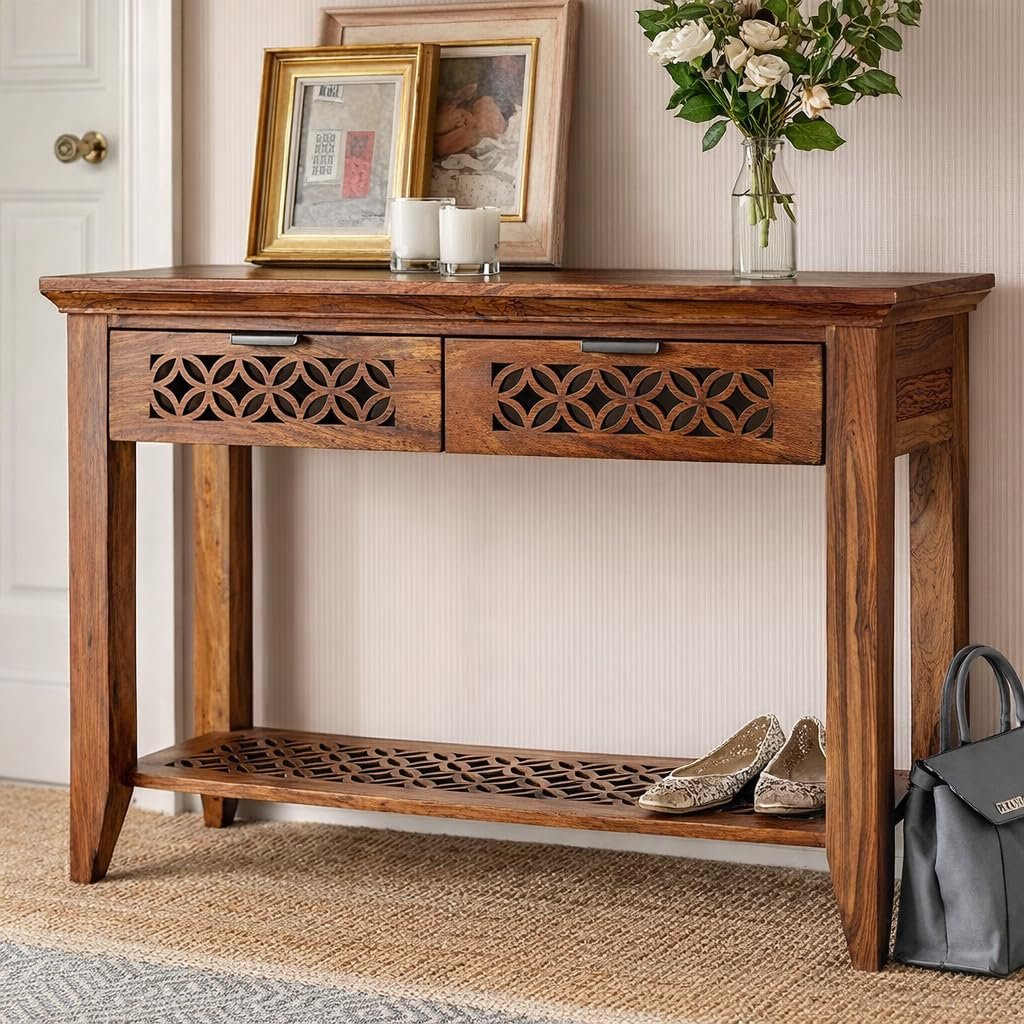
The Foundation: Choosing the Right Console Table
Before any styling begins, the console itself must be right for the space. The key dimensions and proportions to consider:
- Height: standard console table height is 75 to 90cm — similar to a dining table. Positioning against a wall and viewing from a standing position are usually correct in this case. If a console is placed behind a sofa, then a height of 80 to 85cm is generally more than enough to comfortably be above the sofa back while not hiding the
- Width: The size of a console should definitely be in proportion to the wall it stands against. Take an average living room wall that measures around 3 to 4 meters for example, a console with a length of 120 to 160 cm is the right size. If the wall or alcove is narrower, then the 80 to 100 cm console would be more
- Depth: consoles are shallow by design — typically 30 to 40cm. This is what allows them to sit against a wall without projecting into the room. Avoid consoles deeper than 40cm for wall-positioned use — they begin to consume usable floor space.
- Material: The console’s finish ought to be in keeping with the room’s current furniture color scheme. To achieve warm natural or Japandi interiors natural wood (oak, walnut) is the ideal option; for modern rooms painted or lacquered wood; metal legs with a wooden or marble top for an industrial or eclectic
The Core Styling Formula — Height, Asymmetry, Layering
The widely-used and trusted console table styling formula by interior designers in different style registers includes three principles: varying the height, introducing some asymmetry, and layering depth. When these three principles are used consistently, they can totally change the look of an unplanned assortment of things on a surface into a well-thought-out composition.
Height variation
A console decked out with completely same height objects looks flat and boring. Ideally the layout consists of objects in three different height levels: large (usually a big mirror, a painting or a lamp placed at the back and sides), medium (a flower, some books stacked together, a vase), and small (a little tray, a ceramic bowl, a candle arrangement in the front). The eyes move over these differences in height rather than looking at a uniform line.
The tallest element — almost always a mirror or artwork — should sit at the back of the arrangement and reach a height that feels visually anchored to the wall above the console rather than floating in front of it.
Asymmetry
A console styled with perfectly symmetrical elements on each side looks like a hotel lobby rather than a personal space. The principle of asymmetry — different elements on each side that balance each other visually without being mirrors of each other — creates the sense of a curated, personal arrangement rather than a purchased set.
An example of successful asymmetry would be having a tall table lamp on the left, visually balanced (but not literally) by a tall plant on the right. Between them, there is a medley of medium-height objects arranged asymmetrically.
Layering depth
Objects arranged in a single line along the front edge of the console look staged and flat. Layering — placing some objects toward the back of the surface, others at the middle, and the foreground objects nearest the edge — creates depth and the sense of a naturally accumulated arrangement rather than a static display.
✦ PRO TIP: The foreground layer (objects at the very front of the console surface) should consist of the lowest-height items: a tray, a small candle grouping, or a ceramic bowl. This creates a visual ‘ground level’ that gives the arrangement stability and makes the taller elements behind read as designed rather than just placed.
The Mirror — The Console’s Most Important Companion
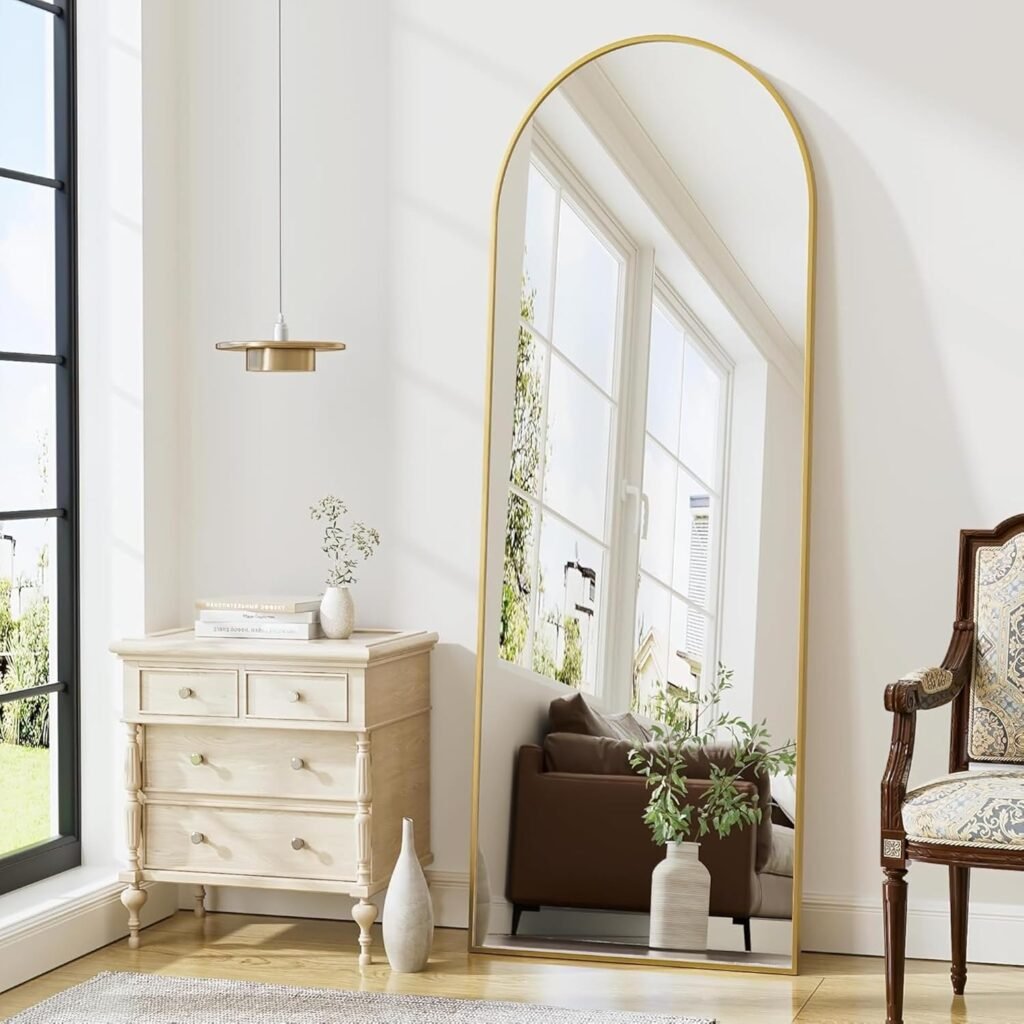
One of the most visually stunning and space-saving arrangements in home design is a mirror placed above a console table. The mirror, at the same time, performs various roles: bouncing light and creating an illusion of more space in the room, it connects visually the items displayed on the console, and lastly, it is a functional piece (useful for a quick glance at one’s appearance before heading out). Generally when we hear the word mirror, we assume about dressing table mirror, but when a well-designed mirror is placed in the living room, it gives a very different and an amazing look to the interiors.
The mirror must be proportional to the console – usually it is 60 to 70% of the console’s width. If the mirror is way wider than the console that stands underneath it, the mirror will look unmoored; a mirror that is way narrower will just look too small.
- Mirror shape options for a console: large round mirror for a contemporary or boho setting, rectangular mirror in a warm wood or metal frame for a traditional setting, arch or pill-shaped mirror for a transitional 2026 aesthetic, multiple smaller mirrors grouped together for an eclectic look
The Lamp — Bringing the Arrangement to Life
On one side of a console arrangement, a table lamp does double job by serving both a functional goal and decorating a room. Functionally, it provides a cozy area of light at the level that can be used with other types of lighting in the room. Visually, the lamp brings a vertical component with the appealing look (the base) and the warm (the shade and glow) that no purely decorative item can imitate.
For asymmetric arrangements, the lamp typically sits toward one end of the console rather than the centre, with the display objects occupying the other side and the centre. For more symmetrical arrangements, two matching lamps at each end frame the display objects between them — a more formal, traditional approach that suits period or traditional rooms. One more good option is of table lamps as part of a layered lighting scheme which also enhances the interiors.
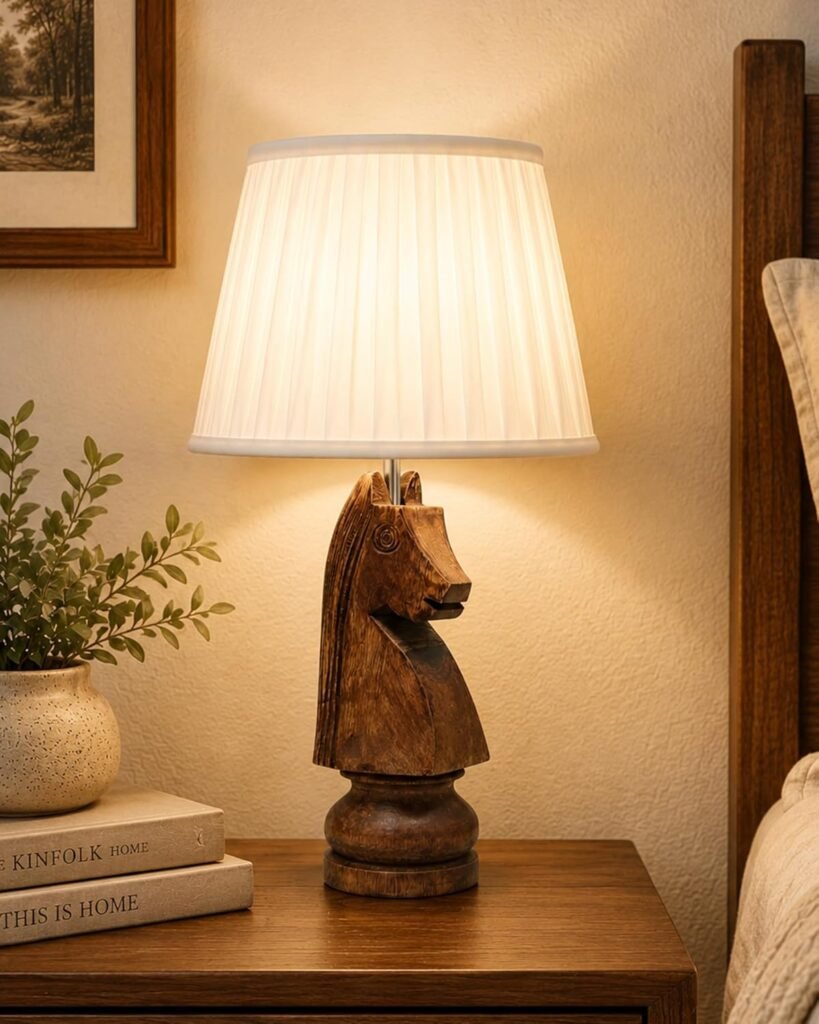
Table Lamp Console Living Room
Plants and Botanicals — Essential Living Elements
Plants or botanical are what really differentiate a console that is really alive from one that just has the appearance of being a dead display. A plant conveys an organic shape, a natural change of colour and texture, as well as a feeling that the arrangement is evolving and changing instead of being fixed permanently.
For a console, trailing plants (pothos, string of hearts, tradescantia) that drape gracefully over the edge of the surface create beautiful movement. Taller plants (a small fiddle-leaf cutting, a snake plant in a slim pot) add architectural height. Dried botanicals — pampas grass, dried eucalyptus, cotton stems — provide structure and texture without requiring watering.
- Plant placement rule: position the plant near one end of the console (not in the centre) to keep the arrangement asymmetrical and to give it a breath of air visually, instead of crowding it
Trays — The Composition Anchor
A decorative tray put in the front or in the centre of the console arrangement has a special compositional role: it gathers the smaller items (candles, small ceramics, a remote control) visually as a unit allowing the latter to not get scattered randomly across the surface. One can do a loose arrangement of objects in the tray since the tray itself is the structure.
Trays also serve a practical function — they make it easy to temporarily clear the console for practical use, then restore the arrangement by lifting the tray back into position. For a console in a hallway or behind a sofa where practical landing space is also needed, a tray section of the console is particularly useful.
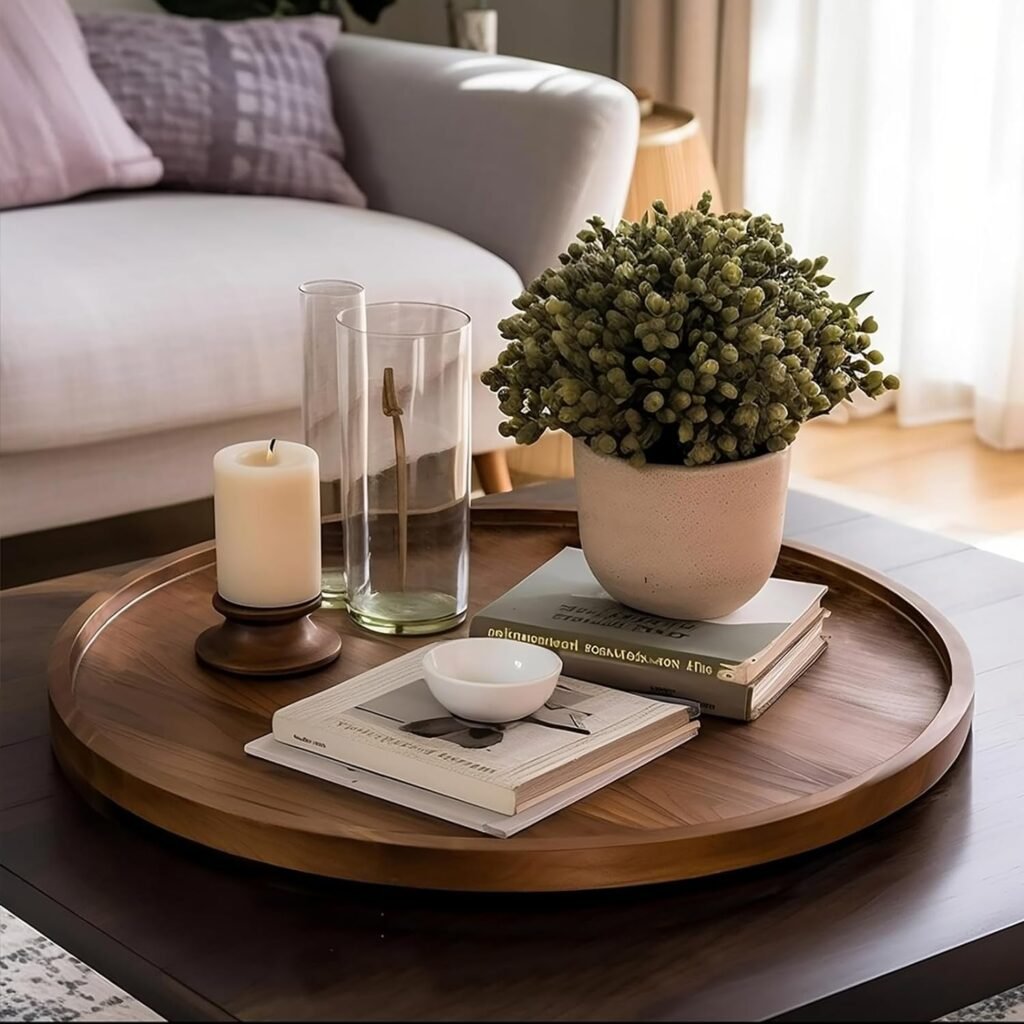
Decorative Tray Living Room Coffee Table
The Rule of Odd Numbers
It is common for interior designers to use odd numbers of objects instead of even numbers in arranging displays. The main reason behind this is that odd numbers give an impression of being organic and natural, whereas even numbers suggest a sense of being planned and formal. A group of three ceramic vases in graduating heights looks collected and personal. The same two vases, placed symmetrically, looks purchased as a pair and placed without further thought.
This rule applies at the level of individual groupings (three candles rather than four; a plant, a vase, and a small ceramic rather than two vases and two candles) as well as at the level of the whole arrangement. An odd number of distinct visual elements in a console arrangement almost always looks more natural and more personal than an even arrangement.
Seasonal Styling — Changing the Console Through the Year
Seasonal changes of a console table arrangement can be done with very little expenditure and effort. It could be a great way to transform the character of the space without any redecoration. The big items like the mirror, the lamp, and the tray remain the same; the changing elements (plants, small ceramics, candles) are seasonal.
- Spring: fresh flowers in a simple vase, lighter textures (pale ceramics, white or cream accessories), green trailing plants
- Summer: dried botanicals (cotton stems, dried grasses), clear glass objects, a diffuser with a fresh citrus or ocean scent
- Autumn: dried pampas, small pumpkins or gourds, warm amber candles, darker ceramics in terracotta or warm brown
- Winter/Christmas: evergreen stems, pinecones, warm metallic accents, an advent candle or grouping of pillar candles
Where to Position a Console Table in a Living Room
Against a wall between windows or above a sofa
The most classic console placement — against a wall with adequate wall space above for a mirror, artwork, or a gallery grouping. This is the display-focused use of the console, where the primary function is aesthetic: creating a designed moment on the wall.
Behind a floating sofa
A console positioned against the back of a floating sofa (one that is not pushed against a wall) creates a natural room divider, a practical landing surface, and a display opportunity all in one placement. The console height should slightly exceed the sofa back height — typically 80 to 85cm — so that objects on the console are visible from the front of the sofa rather than hidden behind it.
At the entrance to the living room or in a hallway
A console positioned at the threshold of the living room or in an adjacent hallway functions as an arrival moment — the first thing seen when entering the space and therefore the first opportunity to set the aesthetic tone of the room.
Final Thoughts
Styling a console table nicely is not only very easy but also one of the most satisfying ways of interior designing a house. Besides, styling a console table is like a small doodle on paper which can be revised, refreshed, and updated in just a few minutes whereas repainting a room and rearranging furniture are like wholesale changes.
The core formula — mirror standing tall in the back, lamp on one side, plant on the other, tray in front, odd numbers everywhere, asymmetric setup — offers a dependable structure which can be tailored to any style, any wallet, and any time of the year. After the initial setup, the skeleton hardly needs any care at all; only the selection of plant items, the time period candle, the tiny piece of pottery that was a souvenir from a vacation changes.
Start with the mirror and the lamp. These two elements alone transform a bare console into a considered arrangement. Build the rest of the composition around them, and revisit it whenever the season changes.
Frequently Asked Questions
Q: What should I put on a console table in a living room?
A: Most effective console table arrangements usually feature a large mirror or artwork placed at the back, tall enough to support the area; a table lamp on one side gives a warm and practical touch, while a plant or botanical arrangement on the other side, which is an organic, living element. In the foreground, a decorative tray can be used for grouping smaller objects, and finally, one or two ceramic objects or a stack of books placed at different heights between these elements complete the arrangement. The major principles include, varying height, asymmetry over symmetrical placement, and layering objects at different depths rather than arranging them in a single line.
Q: What height should a console table be?
A: Standard console tables measure 75 to 90 cm high, which suits most walls and is also a nice standing viewing height. As a general guide, a console behind a floating sofa at 80 to 85cm usually sits nicely above the sofa back. If a hallway console is also to be a practical surface (for placing keys and bags), then the standard height range of 80 to 85cm would be most handy. Very low consoles (below 70cm) tend to be better as display pieces without a wall mirror, because the mirror-above combination needs a higher surface to work proportionally.
Q: What size mirror goes above a console table?
A: The width of a mirror above a console table should be about 60 to 70% of the console’s width — wide enough to look properly grounded with the console below it, but not so wide that it extends beyond the console’s outline and seems disconnected from it. A mirror 70 to 85 cm wide would suit a 120 cm console. For a 150 cm console, 90 to 105 cm. The height of the mirror is supposed to be such that it looks visually tied to the wall above the console rather than standing there all on its own.
Q: How do I style a narrow console table?
A: If you decide on a narrow console (less than 30 cm deep) you will need to be quite strict with yourself in order to prevent things from looking overcrowded. Concentrate on tall, thin pieces rather than broad, spreading ones: maybe a single, tall flower vase, a lamp with a narrow base and shade, a small framed photo slightly leaning against the mirror, and a tiny tray with two or three small items. The depth restriction is actually a useful constraint — it forces a more minimal, graphic composition that can look more intentional than a wider surface with more objects.
Q: Can I put a console table in a small living room?
A: Yes — a console table is one of the best furniture choices for a small living room because its slim depth means it adds a display surface and a design moment with minimal impact on the room’s usable floor space. A console of 25 to 30cm depth against a wall occupies far less space than a bookcase, sideboard, or any other storage piece, while providing a focused display opportunity. Positioned behind a floating sofa in a small room, it serves double duty as a room definition element and a practical surface.