When people talk about curtains, they usually focus on fabric, colour, and length. What is less often discussed – but equally important to how the finished curtain looks – is the heading style: the method by which the curtain attaches to and hangs from its rod or track.
The heading style determines the fold and drape of the curtain, which rod or track it is compatible with, how easily it opens and closes, and the overall aesthetic register of the window treatment. Two curtains in identical fabric, identical colour, and identical length can look completely different depending on their heading style.
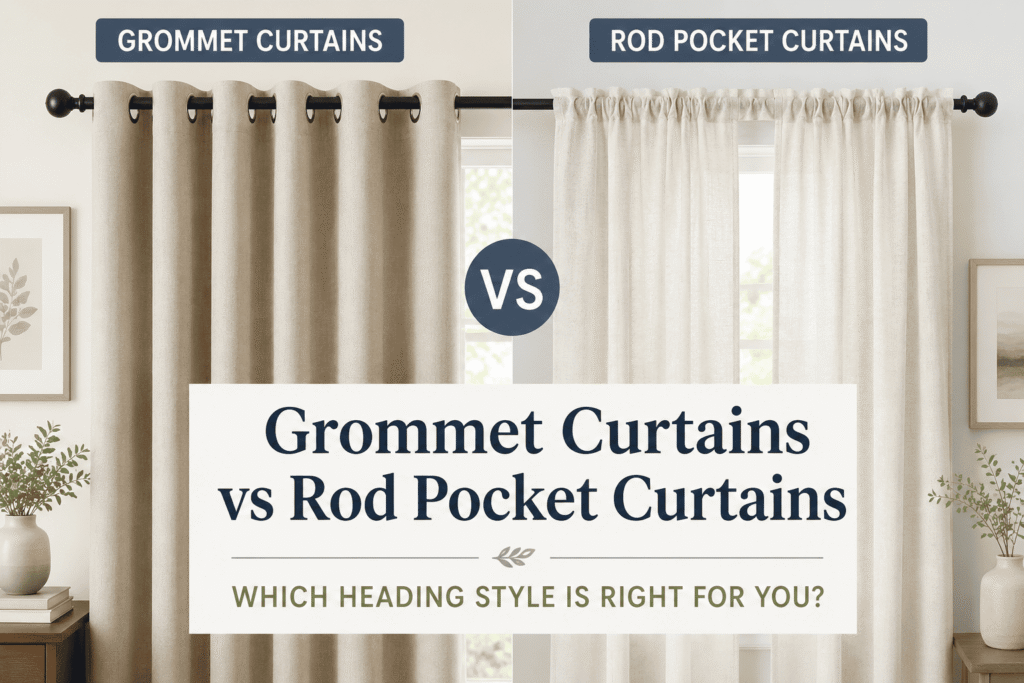
The two most popular types of header styles in today’s home decor are the grommet (or eyelet) and rod pocket. This article describes both, gives an honest comparison, and assists you in figuring out which one suits each of your windows. Besides, it discusses other key heading styles — pinch pleat, pencil pleat, and tab top — making sure you gain the full understanding.
What Is a Grommet (Eyelet) Curtain?
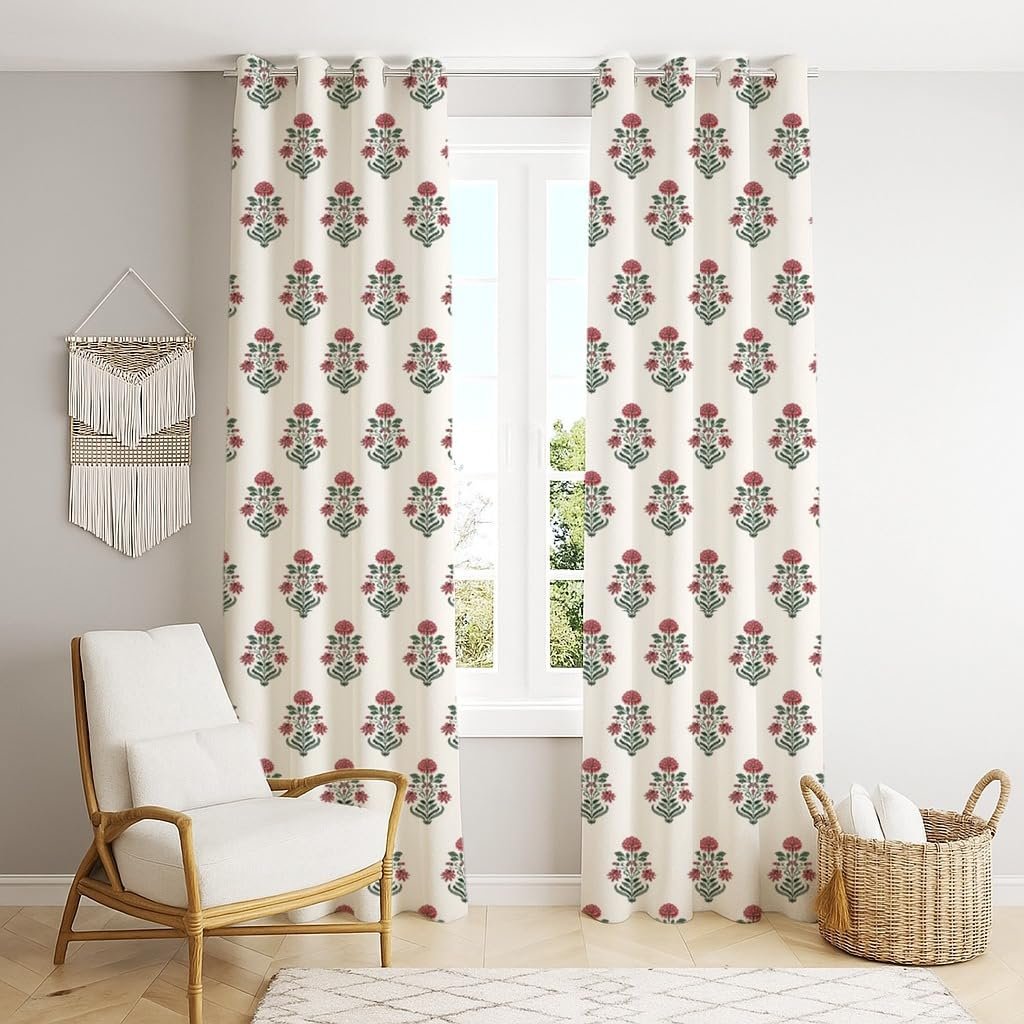
A grommet curtain – called an eyelet curtain in the UK and Australia — has large metal rings, typically 4 to 5cm in diameter, punched at regular intervals through the top of the curtain fabric. The curtain rod threads directly through these rings, and the curtain hangs in a series of soft, regular S-shaped folds between each ring.
The rings are usually metal — silver chrome, matte black, brushed nickel, or brass — and they are fully visible when the curtain is hung. The choice of ring finish therefore contributes to the window treatment’s overall aesthetic and should be chosen to harmonize with the other metal finishes in the room.
Grommet curtains are the most popular ready-made curtain style in the UK, US, and Australia by a significant margin. Their clean, contemporary look, straightforward installation, and smooth opening and closing action have made them the default choice for the majority of modern interiors.
Advantages of grommet / eyelet curtains
- Easy installation. The rod simply threads through the rings — no gathering tape, no hooks, no additional hardware required. Installing a pair of eyelet curtains takes minutes.
- Smooth opening and closing. The rings slide freely and directly on the pole. Eyelet curtains move more easily and with less effort when opening and closing than gathered or pleated ones.
- Contemporary, clean look. The regular S-fold created by the rings gives a crisp, tailored appearance that suits modern and contemporary interiors very well.
- Wide compatibility with standard poles. Eyelet curtains work on any standard round or square curtain pole — which is the most common curtain hardware available.
- Self-measuring simplicity. Because the heading requires no gathering allowance, what you see in the shop is essentially what you get when hung — making sizing more straightforward than with gathered headings.
Limitations of grommet / eyelet curtains
- Not compatible with curtain tracks. The large metal rings cannot fit inside a track channel — eyelet curtains require a pole, not a track.
- Less formal appearance. The S-fold drape of eyelet curtains is clean and contemporary, but it does not have the formal richness of pleated the heading. For very traditional or formal rooms, eyelet curtains might be too casual
- Ring size limits fabric weight. The rings create stress points where the fabric hangs from metal. For very heavy curtains — fully lined velvet, interlined thermal curtains — the weight concentrated at each ring can gradually stretch the fabric over time. Reinforced grommets and a larger number of rings per panel mitigate this.
- Ring finish is visible and permanent. If you change your room’s metal finish and the rings no longer harmonize, there is no easy fix — the rings are a permanent part of the curtain.
What Is a Rod Pocket Curtain?
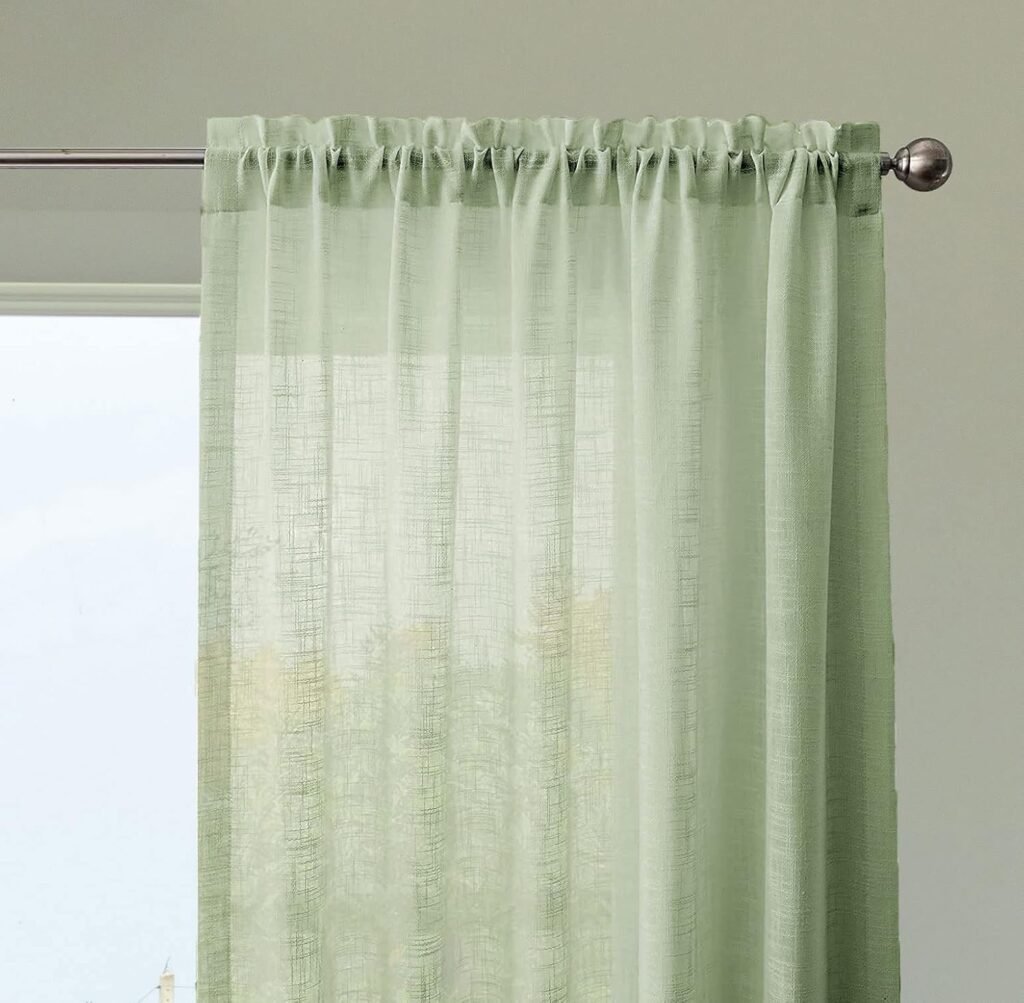
A rod pocket curtain — sometimes called a cased heading, slot top, or tunnel top — has a sewn channel (the pocket) across the top of the curtain through which the curtain rod slides directly. When the fabric is moved along the rod, it gathers by itself, resulting in a gentle, ruffled look at the upper part of the curtain.
Rod pocket curtain is a style that has more of a classic, gathered, and often a charming kind of appeal compared with eyelet curtains. The gathered heading creates a fuller, softer appearance at the top of the window, and the rod is concealed within the fabric pocket rather than being visible through rings.
Rod pocket curtains are particularly popular for sheers and lightweight panels — voile, fine cotton, and thin linen curtains — where the gathered effect is soft and delicate rather than heavy. They are also commonly used for café-style curtains and for the inner layer in a two-layer curtain setup.
Advantages of rod pocket curtains
- Soft, romantic, traditional look. The gathered fabric at the heading creates a fuller, softer appearance that suits traditional, cottage, and farmhouse interiors.
- Rod is fully concealed. The curtain rod hides inside the pocket — giving a cleaner top edge without visible hardware.
- Very affordable. Rod pocket curtains are among the least expensive curtain styles to produce, which is reflected in their price. Budget-conscious ready-made curtains are very often rod pocket style.
- Works for both poles and some tracks. Rod pocket curtains thread onto a pole, but a track with a rod-pocket compatible glider system can also be used.
- Ideal for sheers and lightweight panels. The gathered softness of the rod pocket heading suits lightweight fabrics beautifully — better than the structured S-fold of eyelet curtains for very fine fabrics.
Limitations of rod pocket curtains
- Difficult to open and close. Because the fabric is threaded directly onto the rod, sliding the curtain open requires pushing the gathered fabric along the rod — which creates friction and bunching. Rod pocket curtains are not practical for windows that are opened and closed daily.
- Uneven gathering. The fabric gathers somewhat randomly along the rod rather than in precise, even folds. The result is attractive but less precise than pleated or eyelet headings.
- Not suitable for heavy fabrics. The friction of sliding heavy fabric along a rod is impractical. Rod pocket curtains work best with lightweight to medium fabrics.
- Harder to rehang after washing. Taking down and re-threading a rod pocket curtain will definitely take up more of your time than just taking down and re-hanging eyelet
Side-by-Side Comparison: Grommet vs Rod Pocket
- Appearance: Grommet creates clean S-fold, contemporary look. Rod pocket creates soft gathered ruffles, traditional or romantic look.
- Opening ease: Grommet slides smoothly — easy to open daily. Rod pocket has friction — best for decorative curtains that stay in position.
- Rod compatibility: Grommet requires a pole (not compatible with tracks). Rod pocket works on poles and some track systems.
- Fabric weight range: Grommet suits medium to heavy fabrics well. Rod pocket suits lightweight to medium fabrics best.
- Look formality: Grommet is contemporary, clean, slightly casual. Rod pocket is traditional, soft, slightly formal in gathered style.
- Installation ease: Grommet is extremely quick — thread rings onto pole. Rod pocket requires threading the pole through the full fabric pocket.
- Cost: Grommet curtains are mid-range. Rod pocket curtains tend to be the most affordable heading style.
- Best for: Grommet — modern living rooms, bedrooms, any room used daily. Rod pocket — sheers, café curtains, traditional rooms, decorative panels that rarely move.
The Other Main Heading Styles
Nowadays, a grommet and rod pocket are probably the two most popular ready-made curtain heading styles, but there are more options available besides them. Knowing about the choices will allow you to pick the most appropriate one for every room.
Pencil pleat Curtains
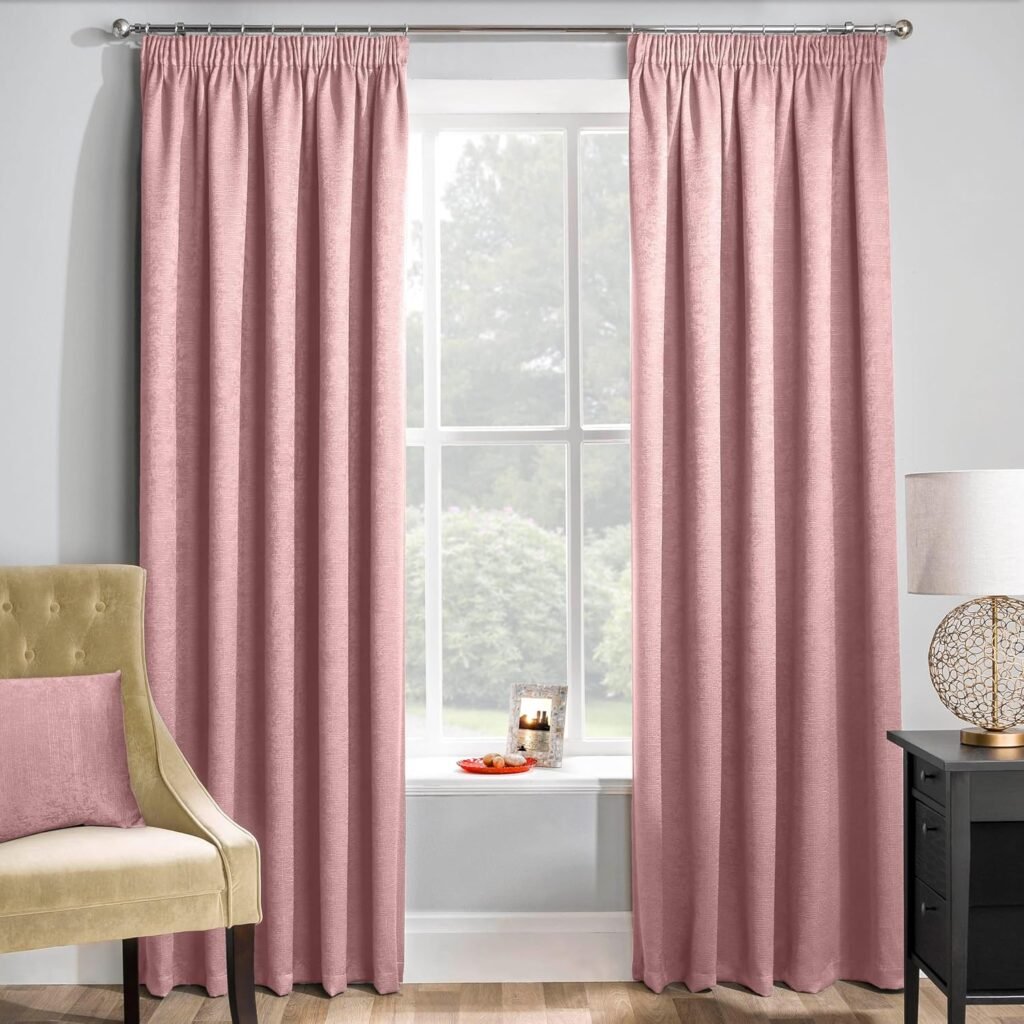
Pencil pleat is the most versatile and widely used heading style for made-to-measure curtains. A tape sewn across the curtain top creates a series of closely gathered, uniform pleats when the drawstring cords are pulled. The result is a full, evenly gathered heading that works equally well on a track (with hooks in the tape) or on a pole (with rings attached to the tape hooks).
Compatible with tracks or poles, pencil pleat curtains can be crafted to hang in a beautiful drape from very high ceiling installations, and almost any fabric type can be used, from the lightest linen to the heaviest velvet. For precisely these reasons, they are the professional curtain maker’s default choice for the majority of installations. Many people for their high ceiling living room curtains, select pencil pleat curtains as they give royal look to the interiors.
- Best for: rooms where a curtain track is used, made-to-measure curtains, formal living rooms and bedrooms, heavier fabrics
- Not ideal for: very casual or minimal interiors where the gathered heading looks fussy
Pinch pleat Curtains
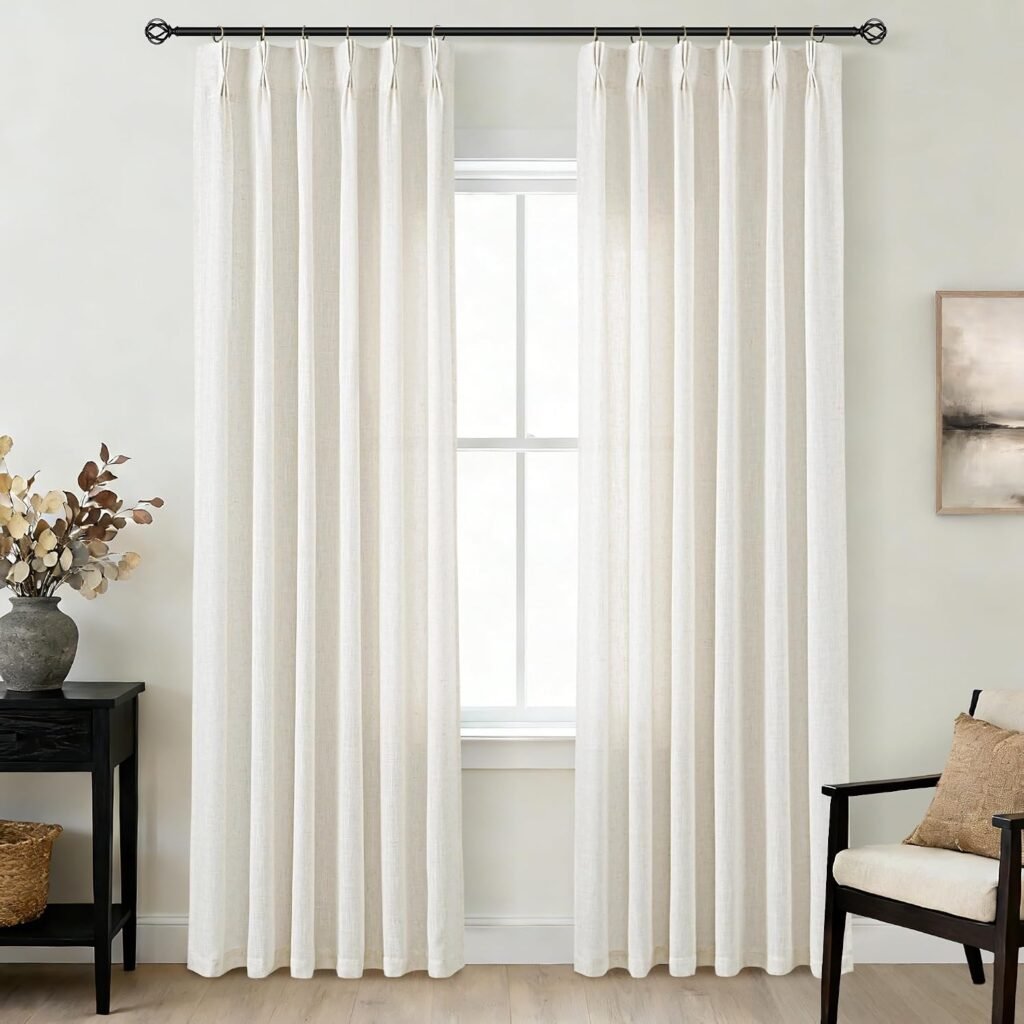
Pinch pleats curtains are a type of heading where groups of three folds are evenly spaced and gathered together by pinching them at the base to make structured and decorative pleats. The result is the most formal and architectural of all curtain headings — precisely spaced, deliberately structured, and visually impressive.
Pinch pleat curtains are the heading of choice for formal dining rooms, grand living rooms, period properties, and any room where the curtain treatment is meant to make a significant statement. Working on a track (with hooks) or on a pole (with rings), the curtains look stunning when hanging at full ceiling height.
- Best for: formal and period style rooms, installations in rooms with very high ceilings, velvet and silk fabrics, and curtains that are made-to-measure
- Not ideal for: informal contemporary rooms where the formal element is just not
Tab top Curtains
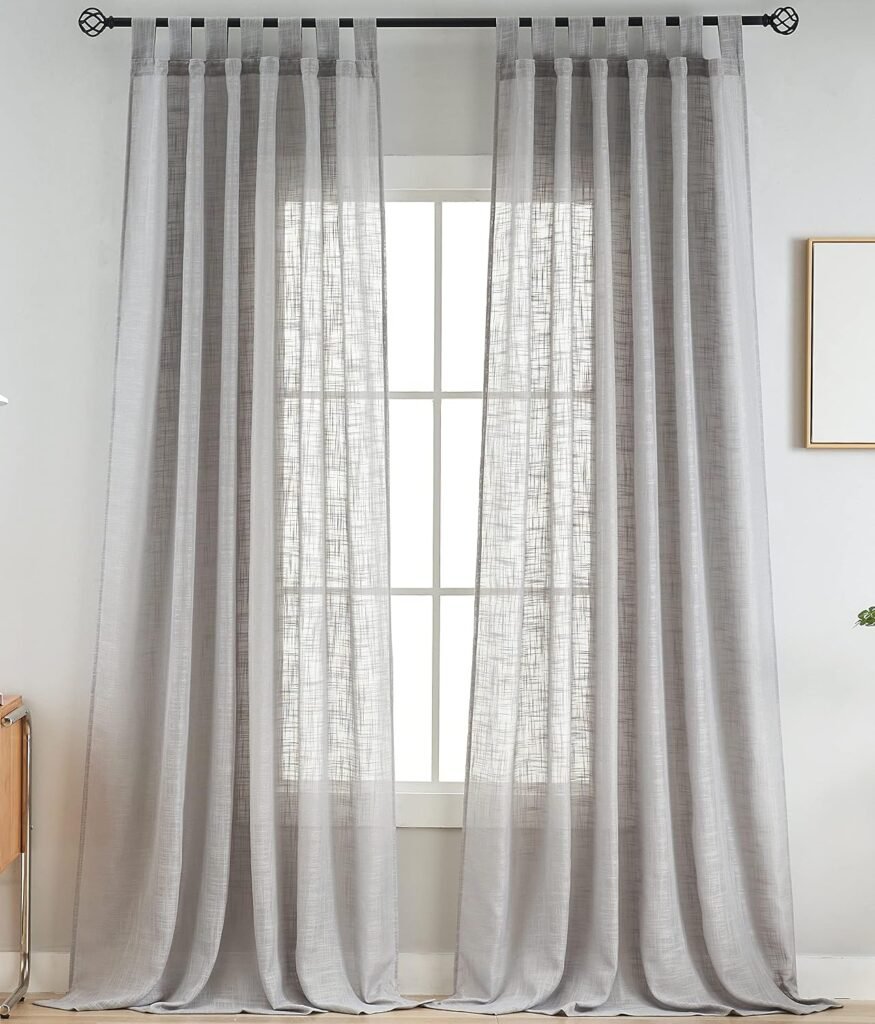
Tab top curtains have fabric loops sewn at the top of the heading through which the rod threads. The loops are usually the same fabric as the curtain body, and they create a casual, relaxed look with the rod visible between each tab.
Tab top curtains are best suited to lightweight fabrics in informal settings — a bedroom, a casual living room, a study. They aren’t really a good fit for heavy curtains (the tabs will stretch if the weight is too large) or for any room where the curtain needs to be able to open and close easily (the tabs produce more friction than rings and less than a rod pocket).
- Best for: lightweight fabric in casual rooms, bedrooms with a relaxed aesthetic, curtains that stay mostly in one position
- Not ideal for: heavy fabrics, daily-use windows, formal rooms
Eyelet vs track — a common compatibility question
One of the most frequently asked curtain questions is whether eyelet curtains can be used on a curtain track. The answer is no — standard eyelet curtains are designed for poles only. The large metal rings cannot fit into a track channel. One more thing if you’re going for a track instead of poles (which give a cleaner, minimal look): you must pick pencil pleat, pinch pleat, or curtains with tins that are compatible with tracks. One should understand track vs pole compatibility with heading styles before taking any decision.
Which Heading Style for Which Room?
Modern or contemporary living room
Grommet (eyelet) curtains are the obvious pick if you want to create a modern or contemporary look in your living room. Their stylish S-fold, easy and smooth gliding, and the fact that they visually represent the here and now, all match the aesthetic perfectly. Choose a ring finish that harmonizes with the room’s other metalwork — matte black, chrome, or brushed brass.
Traditional or period living room
For a formal traditional or period room, pinch pleat or pencil pleat curtains in a heavy fabric — lined velvet, lined silk, or heavy linen — make the strongest statement. Rod pocket curtains in a lighter fabric work well for sheers and secondary panels in traditional rooms. Eyelet curtains in formal traditional rooms can look slightly incongruous.
Bedroom
For a bedroom, the choice depends on the aesthetic. Contemporary bedrooms suit eyelet curtains in a medium or heavy fabric. Traditional or romantic bedrooms suit rod pocket panels for sheers with a pencil pleat or pinch pleat blackout outer layer. For the best light control in a bedroom, a two-layer approach — inner sheer on a rod pocket and outer blackout on an eyelet pole — gives the most flexibility, combining heading styles in a layered curtain setup.
Kitchen
For kitchens, rod pocket curtains for café-style or sill-length panels are a natural and traditional choice. The gathered, informal look suits kitchen environments. Eyelet curtains at sill length also work in contemporary kitchens.
Sheers and lightweight panels
Rod pocket is the ideal heading style for sheer, voile, and other lightweight curtain panels. The gathered softness of the rod pocket heading suits fine fabrics beautifully, creating a delicate, billowing look that the S-fold of eyelet curtains cannot replicate with lightweight fabric.
How to Measure for Different Heading Styles
Different heading styles require different width measurements because they use different amounts of fabric in the heading.
- Grommet (eyelet): The curtain panel width indicated on the product is the width of the curtain when it is hanging (even though the S-fold style will need some fabric, the exact amount is predictable). Purchase panels that collectively have a width of 1.5 to 2 times the window width to achieve a full
- Rod pocket: the fabric gathers significantly at the heading. Buy panels that total 2 to 2.5 times the window width to achieve a full, richly gathered look. Under-width rod pocket curtains look thin and sparse rather than soft and abundant.
- Pencil pleat: buy panels that total 2 to 2.5 times the window width. The gathered pleat uses significant fabric and the result depends on adequate fullness.
- Pinch pleat: buy panels that total 2 to 2.5 times the window width. The pleats are precisely spaced and the calculation is usually done by the curtain maker for custom orders.
✦ PRO TIP: For eyelet curtains, count the number of rings per panel before buying — the number of rings determines how much fabric is used in the S-fold. Most standard eyelet panels have 7–8 rings for a 90cm-wide panel. Fewer rings means deeper folds and more fabric used; more rings means shallower folds and the curtain hangs more flat when closed.
Final Thoughts
Choosing the heading style is not as striking as fabric or colour, but it is a more important decision than most people think. If you make the right choice, your curtains will appear as if they were designed; if you go the wrong way, your curtains will be a little bit off, even though the rest is perfect.
For most contemporary rooms and everyday windows, eyelet (grommet) curtains on a standard round or square pole are the simplest, most practical, and most widely compatible choice. For rooms where a more formal, gathered look is wanted, pencil pleat or pinch pleat on a track or pole gives a richer, more designed result. For sheers, café curtains, and lightweight decorative panels, rod pocket remains the most appropriate and most widely available choice. So choose the right rod for your heading style as per the decision taken for respective rooms is very important part.
When purchasing fabric for curtains by the meter and either DIY or having them made, the choice of the heading isn’t limited by the availability of the ready-made ones. Actually, any fabric can be shaped with any heading style. So, you basically have a total say in how the end product will look.
Frequently Asked Questions
Q: What is the difference between grommet and eyelet curtains?
A: Grommet and eyelet curtains are exactly the same thing described with different terminology. ‘Grommet’ is the term used predominantly in the United States. ‘Eyelet’ is the term used in the United Kingdom, Ireland, and Australia. Both refer to the same heading style: large metal rings punched through the top of the curtain through which the curtain rod threads directly. If you see both terms in your searching, they describe identical products.
Q: Can I use eyelet curtains on a curtain track?
A: No — standard eyelet and grommet curtains are designed for use on curtain poles only. The large metal rings cannot fit inside a track channel. If your preference is for a curtain track mounted on the ceiling or wall (which results in a neater, less cluttered appearance), you must have curtains with pencil pleat, pinch pleat, or hook-compatible headings. On the other hand, very large ring clip systems are occasionally capable of being adapted for track use, though this is not a great solution.
Q: Which curtain heading style looks most expensive?
A: Pinch pleat and pencil pleat headings — particularly when made in a heavy, quality fabric like velvet, silk, or heavyweight linen — look the most expensive and the most formal. They are also more likely to require professional or custom-made curtains rather than ready-made. Among ready-made options, eyelet curtains in a quality fabric and appropriate ring finish look more expensive than rod pocket curtains because of their cleaner, more structured appearance.
Q: Are rod pocket curtains hard to open and close?
A: Yes — rod pocket curtains are significantly harder to open and close than eyelet or pleated curtains with hooks because the fabric is threaded directly onto the rod, creating friction. They are best used for curtains that are primarily decorative and remain in a mostly fixed position — inner sheer panels, café curtains, or curtains in rooms where they are opened infrequently. For any window that is opened and closed daily, eyelet or a track-based system is much more practical.
Q: What heading style should I use for blackout curtains?
A: Eyelet (grommet) is the most popular heading style for blackout curtains because it is easy to open and close and works on standard poles. However, for the best light-blocking performance, a pencil pleat or pinch pleat heading on a track with return brackets (where the curtain wraps back to the wall at each end) blocks side light gaps more effectively than an eyelet heading on a pole. If light control is the primary concern, a track-based system with a gathered heading is technically superior.