

Curtains that were beautiful when first hung gradually lose that freshness. Creases develop — from being pushed to the side when open, from washing and rehanging, from the natural settling of fabric over time. Dust accumulates. Odours from cooking, pets, and general household life embed themselves in the fibres. The curtains begin to look lived-in in the wrong way rather than the right way.
The good news is that most curtains can be fully refreshed in under twenty minutes without being taken down, without being washed, and without professional cleaning. Steaming is the most effective and most versatile curtain refresh method available — it removes wrinkles, relaxes fabric, eliminates dust and odours, and leaves curtains looking as though they were freshly hung.
This guide covers everything: why steaming is effective, the right way to steam, best steaming tools, fabric handling with steaming and what can be done when one’s not having a steamer.
Why Steam Works on Curtains
Fabric wrinkles are caused by the fibres of the fabric being held in a compressed, bent position for long enough that they set in that position. Heat and moisture — which is what steam provides — relax the hydrogen bonds between fibre molecules that hold the wrinkle in place. When those bonds relax, gravity and the weight of the curtain pull the fabric back into a smooth, vertical position.
This is why hanging curtains back on the rod immediately after washing (while still slightly damp) removes most washing wrinkles without any ironing or steaming — the weight of the curtain, combined with the residual moisture in the damp fabric, does the same job. Steaming replicates this combination of heat and moisture on curtains that are already hung and dry.
Besides its main use, steaming can also be beneficial for curtains. Steam can eliminate dust mites, bacteria, and odour-causing compounds without the need for chemicals or washing. In fact, a good steaming of curtains while hanging every 4 to 6 weeks can remove dust, allergens, and odours, which are deeply embedded and vacuuming alone cannot remove them.
Method 1: Using a Handheld Fabric Steamer
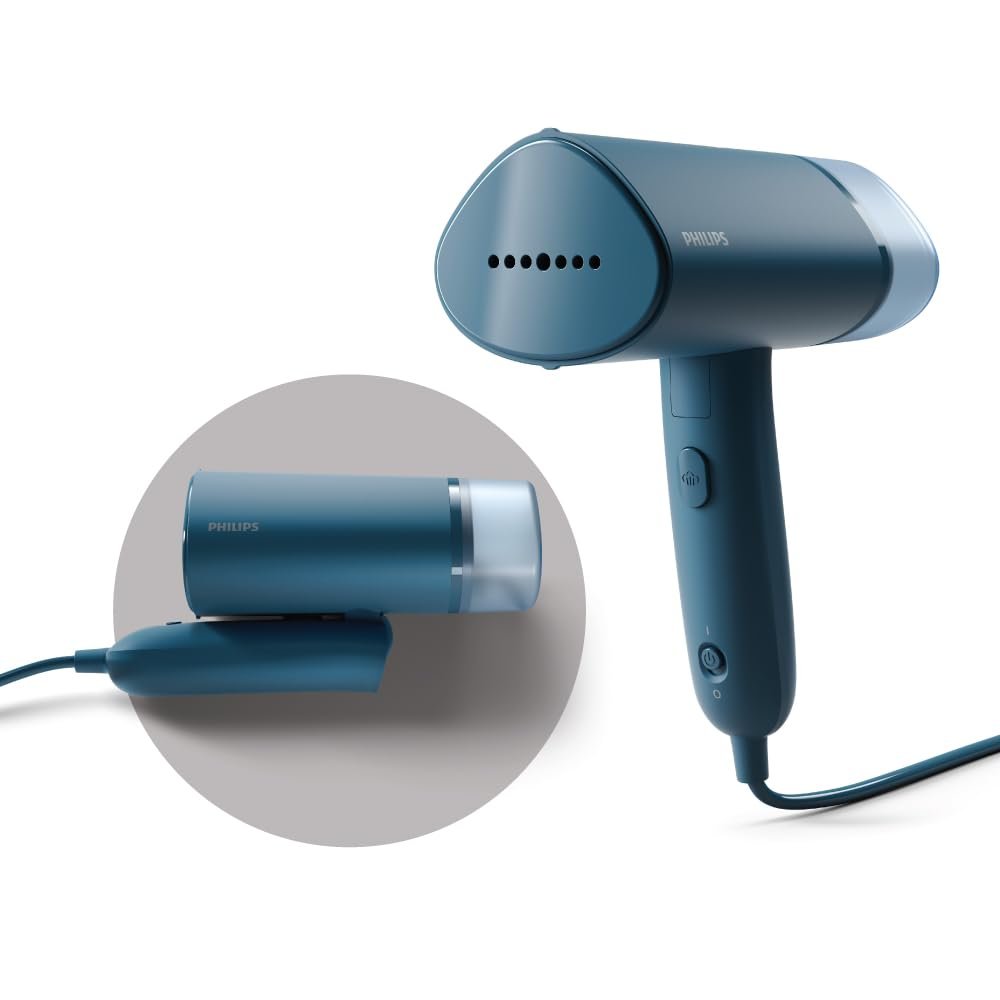
Handheld fabric steamer clothes curtains
The most effective curtain steaming tool is a handheld fabric steamer. Besides being compact, they are also heated very quickly (most of them reach the working temperature within 30-60 seconds) and very convenient to move up and down a long curtain, a good handheld steamer is the one and only the most useful curtain care tool you can have.
What you need
- Handheld fabric steamer — fill with distilled or filtered water (not tap water, which causes scale build-up)
- A clean cloth or towel to hold against velvet or delicate fabric if needed
- Patience — work slowly and methodically from top to bottom
Step-by-step method
- Step 1: Put some distilled water in the steamer (filtered water is also good if no distilled water) to the recommended level. Don’t overfill — when you overfill, the water comes out of the fabric as spits rather than being clean steam.
- Step 2: Don’t start until the steamer has reached its full working temperature. Most handheld steamers are prepared within 30 to 60 seconds. You will notice a steady stream of steam coming out of the nozzle instead of occasional
- Step 3: Start steaming at the top of the curtain, where the heading is located. Keep the steamer nozzle at a distance of 3 to 5cm from the fabric surface — this ensures that the steam will reach the fibres but the nozzle will neither touch the fabric nor leave water droplets.
- Step 4: Pull the steam head downward very slowly and in a straight line. Cover a band of fabric around 15 to 20cm wide per pass. Work from one edge of the curtain to the other and overlap the passes slightly.
- Step 5: When you are steaming one part what you can do is take your other hand (make sure to protect it with a thin cloth if the fabric is very hot) and gently pull the fabric down so that it straightens up better.
- Step 6: Once you’ve steamed the entire curtain, let it hang freely for 15 to 20 minutes before handling it. The steam must have a chance to work in the fabric’s new relaxed state — if you touch or bunch the fabric too soon, you will undo the
✦ PRO TIP: For the best results on a large curtain, work in sections from top to bottom — do not jump around. The heat from each steamed section helps condition the fabric for the section below it. Working methodically also ensures no areas are missed.
Steaming linen curtains
Linen stands out as the fabric that is most obviously improved by steaming. It wrinkles effortlessly and can have a quite crumpled appearance only a few days after the hanging or washing, being linen, caring for and refreshing linen curtains becomes so easy. A thorough steaming relaxes the natural linen fibres back into their vertical fall, and the improvement is immediate and dramatic.
Linen is a fabric which can endure the direct impact of steam without getting damaged. This means you can hold the steamer 3 to 5 cm away and move it slowly over the garment. The inherent moisture-wicking ability of linen fibers results in quick drying after steaming. Give the material 15 to 20 minutes of drying time before you handle it.
Steaming velvet curtains
Velvet requires the most care of any curtain fabric when steaming. Velvet can be crushed or marked if the steamer nozzle accidentally touches the fabric, if the steam is given too close, or if the steamed velvet is physically handled while still warm and damp.
For velvet curtains: hold the steamer slightly further from the surface — 5 to 8cm rather than 3 to 5cm. Use slow, gentle passes rather than close, concentrated steam. Once you have steamed a part of the fabric, employ a velvet brush (use a soft bristle one, and make sure you brush in the direction of the pile) to softly raise the pile to its original standing position. Allow to dry completely before any contact. Steaming and caring for velvet curtains is an important task for us.
⚠ WATCH OUT: Never let the steamer nozzle touch velvet fabric. Even a very short touch can squash the pile completely and create a mark which is impossible to remove. So, keep the nozzle always visibly away from the velvet surface to avoid this.
Steaming cotton curtains
Cotton responds very well to steam — the natural fibres relax easily and the result is a clean, smooth hang with wrinkles entirely removed. Cotton can tolerate direct steam at the standard 3 to 5cm distance without any risk of damage. It also dries quickly after steaming.
For cotton curtains that were washed and hung damp (the best way to avoid heavy washing wrinkles), any residual creasing after the initial damp-hang can be addressed with a quick steam when the curtains are fully dry.
Steaming polyester curtains
Polyester curtains need a marginally lower steam heat than natural fibers. Usually, handheld steamers generate steam at a temperature that is okay for polyester; however, confirm the care label of your particular curtains before steaming. Should the label state ‘do not iron’, then a very faint and rapid steaming movement between 6 to 8 cm is the best option instead of the regular distance.
Polyester wrinkles less than natural fabrics and releases wrinkles relatively easily with light steam. For most polyester curtains, a single light pass is sufficient.
⚠ WATCH OUT: Do not hold a steamer in a fixed position on polyester fabric for more than 2 to 3 seconds. Extended concentrated steam can mark or distort synthetic fibres.
Method 2: Using an Iron with a Vertical Steam Function
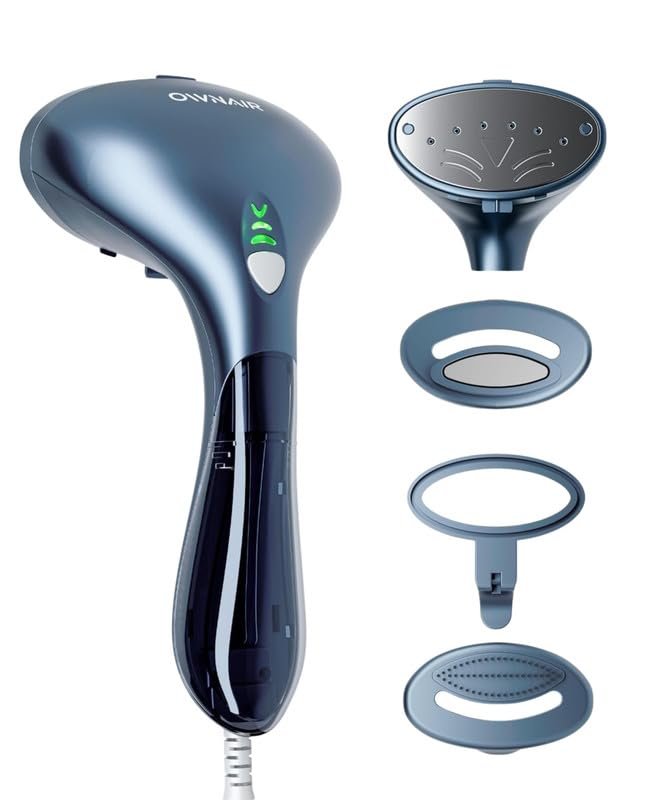
Steam iron with vertical steam
Many standard steam irons have a vertical steam or garment steam function — a setting that directs steam from the iron’s soleplate while the iron is held vertically, rather than requiring the iron to be pressed flat against fabric on an ironing board. This function works very effectively on hanging curtains.
How to use a vertical steam iron on curtains
- Set the iron to the appropriate fabric temperature for your curtain fabric — cotton and linen settings for natural fabrics, synthetic or low setting for polyester.
- Turn on the steam function and allow the iron to reach temperature with steam flowing.
- Hold the iron 5 to 10cm from the curtain fabric — further than a handheld steamer because iron soleplates are hotter.
- Press the steam trigger in short bursts rather than continuous steam, moving the iron slowly downward.
- Allow 20 minutes for the fabric to dry and set before touching.
⚠ WATCH OUT: Never lay the iron’s soleplate flat directly on a curtain that is still hanging. At a low temperature, an iron in direct contact with the fabric while it is still hanging may result in shine marks, burn marks, or other permanent distortions. Therefore, always keep the iron at a distance and only use the steam function.
Method 3: Steaming Curtains Without a Steamer
If you do not own a fabric steamer or a steam iron, there are two effective alternatives that use nothing more than water and the curtains’ own weight.
The bathroom steam method
Bathroom steam method is probably the best-known home hacks for wrinkled fabrics, and it actually works quite well on curtains that can be taken down temporarily.
Remove the curtains from the rod. Hang them on the shower rod, curtain rail, or any bar in the bathroom that allows them to hang at their full length. Run a very hot shower and allow the bathroom to fill with steam. Leave the curtains in the steam for 20 to 30 minutes with the shower running, then turn off the shower and leave the curtains hanging for a further 30 minutes in the cooling, still-humid air.
The result is not as precise or as thorough as direct steaming, but it is effective for light to moderate wrinkling in most fabric types. The method works best for cotton and linen, and less effectively for very heavy fabrics like lined velvet where the steam may not penetrate the full thickness.
The damp towel and weight method
For curtains that cannot be moved, the damp towel method provides a minimal steam alternative. Dampen a clean white cloth with warm water (not dripping wet — just thoroughly dampened). Press the damp cloth gently against wrinkled sections of the curtain and leave for 2 to 3 minutes. Take off the cloth and caress the fabric downwards with your hand. Moisture together with a little pressure will relax the wrinkle and the curtain’s weight itself will pull the fabric smooth as it air dries.
This method is slow and best suited to isolated wrinkles rather than a full curtain refresh, but it requires no equipment and no tools. It is particularly useful for a quick refresh in a situation where nothing else is available.
The wrinkle release spray method
Fabric wrinkle release sprays — available in most supermarkets and online — are water-based formulations that relax fabric fibres when misted onto the curtain surface. Hold the curtain taut at the bottom while spraying, then smooth the fabric and allow to dry.
Wrinkle release sprays are effective for polyester and lighter synthetic fabrics and reasonable for cotton. They are not as efficient for heavy materials such as velvet or fully lined curtains where the sprayed liquid doesn’t get through enough. Besides, they aren’t a replacement for thorough steaming, if a deep wrinkle or odour removal is the main concern.
How Often Should You Steam Your Curtains?
- Linen curtains: It is best to steam every 4 to 8 weeks, or when wrinkling becomes quite visible. Linen is a fabric that easily creases, but with steaming, it achieves the greatest refreshing effect among all
- Cotton curtains: steam every 6 to 8 weeks, or after washing and rehanging if residual creasing remains.
- Velvet curtains: light steaming every 6 to 8 weeks. More frequent steaming than this is not needed for wrinkle management and is not recommended for the pile.
- Polyester curtains: steam only when visible wrinkling occurs — typically less frequent than natural fabrics, as polyester is more wrinkle-resistant.
- After washing: regardless of fabric type, steam any remaining creasing after the curtain has dried on the rod if the initial damp-hang did not resolve all wrinkling.
Full curtain maintenance routine should be taken care of.
What Not to Do When Steaming Curtains
- Do not use tap water in your steamer if it is very hard — hard water causes limescale build-up in the steam nozzle that eventually blocks it and causes water spitting. Use distilled or filtered water.
- Do not hold the steamer nozzle against the fabric. Keep it at the recommended distance — contact deposits water and can damage delicate or pile fabrics.
- Do not steam against the grain of velvet. Always steam velvet in the direction of the pile (downward), never across it.
- Do not touch the curtain immediately after steaming. The steam needs 15 to 20 minutes to set the fabric in its new position. Touching or moving the curtain too soon undoes the work.
- Do not steam a curtain that is not hung correctly. If the curtain is bunched at the side or twisted on the rod, fix the hanging issue before steaming — steaming a badly hung curtain will set the bad position, not correct it.
- Do not steam curtains that are labelled ‘dry clean only’ without testing on an inconspicuous area first. Most ‘dry clean only’ curtains can be lightly steamed without damage, but test first.
Buying a Fabric Steamer for Curtains — What to Look For
You don’t have a fabric steamer yet? If this guide convinces you that fabric steaming is brilliant, here are some things to consider before buying a fabric steamer.
- Water tank capacity: a larger tank means longer steaming time before refilling. For full-length curtains, a 200ml minimum tank is recommended. Smaller travel steamers (100ml) may need refilling mid-curtain.
- Heat-up time: look for under 60 seconds. Many budget steamers take 90 seconds or more — not a deal-breaker but worth noting.
- Steam output: measured in grams per minute. Higher output (10g/min or above) is better for heavy fabrics like velvet and fully lined curtains. Lower output (6–8g/min) is fine for cotton and linen.
- Attachments: a fabric brush attachment and a crease tool are useful for specific fabric types. Not essential but helpful.
- Cord length: For floor-length curtains of 2 metres or more, a cord at least 1.5 metres long is necessary to run from a wall socket up to the top of the curtain.
Final Thoughts
Steaming curtains is one of those home maintenance tasks that delivers a completely disproportionate improvement for the time and effort involved. Twenty minutes with a handheld steamer can take a pair of linen curtains from visibly wrinkled and slightly neglected to freshly hung and beautifully smooth — with no washing, no taking down, and no professional help.
In case you don’t have a fabric steamer, here’s a great reason to get one. It will be a real money saver for all the fabrics around your house — not only curtains — and a quality handheld steamer which you use regularly is one of those buying that truly and dramatically changes the appearance and feel of the soft furnishings in your home.
The method is simple: start from the top moving downwards, maintain the nozzle at proper range, let the cloth air out before handling it. Do this method regularly with your drapes a couple of times yearly, and they will keep on looking as great and as intended on the first day they were decorated.
Frequently Asked Questions
Q: Can I steam curtains while they are hanging?
A: Yes — steaming curtains while they are hanging is the preferred method. It is faster, easier, and more effective than taking them down and ironing them flat because the weight of the hanging curtain helps pull the fabric smooth as the steam relaxes the fibres. The only fabric that might possibly need additional care when steaming in place could be very delicate fabric or heavily embellished curtains whose embellishments may be affected by steam or dripping water.
Q: How do I get wrinkles out of curtains without a steamer?
A: Without a steamer, the most effective methods are: The easiest way to get rid of wrinkles in your curtains is the steam from a bathroom. Just hang your curtains in a bathroom with the door closed and put a shower with hot water running for 20 to 30 minutes. You can also use a steam iron with vertical steam function, spraying a fabric wrinkle release spray, or the damp cloth method (a dampened cloth is pressed briefly against wrinkled sections, then smoothed by hand). The bathroom steam method yields quite thorough result for moderate wrinkling of curtains.
Q: Can you steam velvet curtains?
A: Yes, but you should be more careful than when handling other fabrics. Keep the steamer 5 to 8cm away from the velvet (even further than for cotton or linen), move slowly, and never let the sprayer touch the pile. After steaming, a soft velvet brush which has been dipped in the direction of the pile should be used to gently lift it back to the erect position. Only when it is thoroughly dry can one come into contact with it. The end product is velvet which has appeared to be rejuvenated and revived rather than flattened.
Q: How long does it take for curtains to dry after steaming?
A: Typically, curtains that have been steamed dry within 15 to 30 minutes depending largely on the fabric’s thickness as well as the temperature and humidity of the room. Linen and cotton dry quickly — typically 15 to 20 minutes. Fully lined or interlined curtains take longer — 30 to 45 minutes — because the lining holds moisture. Velvet should be left for a full 30 minutes before touching to ensure the pile is fully dry and set.
Q: Does steaming curtains remove smells?
A: Yes — Steam does work well at breaking down and taking away various household odors that have been absorbed by curtain fabric, such as the smell of cooked food, pets, and stale air. The steam’s heat alters the chemical composition of odour-causing substances while the moisture in the steam helps to remove them from fabric during drying. In case of stubborn or very strong odors, intensive steaming combined with a one-hour airing of the room through the open windows gives the best outcomes. For very stubborn smells that have become deeply embedded (e.g. smoke, mold), washing the curtains to clean them is way more effective than if you just smoked the curtains.
Q: What is the difference between a steamer and an iron for curtains?
A: A fabric steamer produces steam without the need for a flat soleplate pressed against the fabric — it can be used on hanging curtains at a distance. An iron requires the fabric to be pressed flat on an ironing board (for standard ironing) or can be used on hanging curtains with a vertical steam function. For curtains that are already hung and should not be taken down, a fabric steamer is generally more convenient. An iron’s vertical steam function is also effective but requires more care about distance and temperature. Both produce good results when used correctly.