
Curtain pelmet designs are an integral part of window decor — they not only add beauty to windows but conceal curtain rods and tracks for a polished, finished look. A well-chosen pelmet raises the entire standard of a room’s window treatment, making it look intentional and complete in a way that curtains alone simply cannot achieve.
But pelmets offer far more than hardware concealment. They add architectural detail to plain walls, frame windows as furniture-like features, improve light control at the top of the curtain, and — when positioned close to the ceiling — can actually make rooms feel taller by drawing the eye upward.
In the United States, a hard-constructed pelmet is called a ‘cornice board’, and a soft fabric header is called a ‘valance’. This guide uses all three terms so readers from every region can find what they are looking for — the designs and principles apply equally regardless of the term you use.
Whatever your preference, classic or modern, a curtain pelmet can perfectly complement any home decor. Below are the 8 top-selling curtain pelmet styles with their main characteristics, ideal placements, serving size, and fabrics tips.
Curtain Wooden Pelmet Designs
Wooden curtain pelmets are one of the most timeless and robust window pelmet designs available. They bring warmth and permanence to living rooms and bedrooms and can be finished in almost any way — carved for traditional interiors, painted for contemporary ones, or polished to show the natural grain for a warm natural aesthetic. These pelmet designs also has an amazing effect with two colour combination for bedrooms walls.
Wooden pelmets are basically made from either solid wood or MDF (medium-density fibreboard). It is the first option which offers carving virtues and natural warmth; however, the second option is the best solution in terms of being economical, more dimensionally stable (it does not warp with humidity changes), and providing a smoother painting surface.
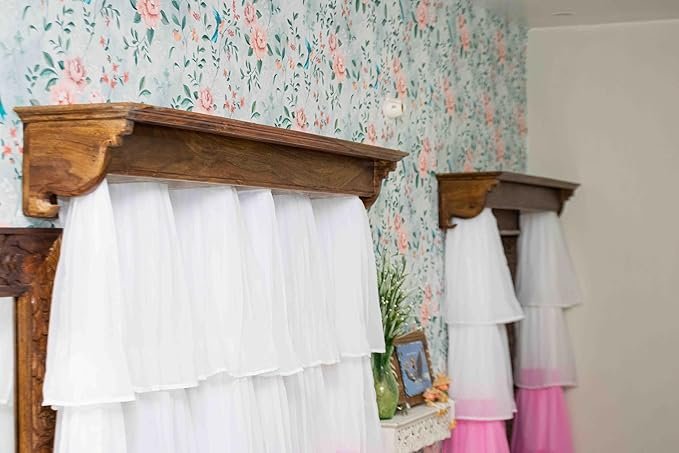
Wooden Pelmet Board MDF Curtain – Buy Now
Key features:
- Made from solid wood or MDF — can be carved, painted, stained, or polished
- Long-lasting and structurally sturdy — the most durable pelmet material
- Can incorporate decorative moulding, routed edges, or carved detail
- Pairs beautifully with both patterned and plain curtain fabrics
Best suited for: Living rooms, bedrooms, formal dining rooms, and traditional or transitional interiors
Works with curtain styles: Pinch pleat, eyelet, and pencil pleat curtains on a concealed track
Fabric Curtain Pelmet Designs
Fabric pelmet designs add grace and softness to windows. They are constructed on a wooden or MDF base but the front and side faces are covered with fabric — either matching the curtains for a unified look, or contrasting for a layered, decorative effect. One can also use velvet fabric for a fabric covered pelmet.
The fabric is wrapped around the board and is either stapled or fixed with the hook-and-loop tape at the back edges. Interlining a layer between the fabric and the board imparts the covered face a padded, upholstered look making the pelmet look professional and luxurious rather than flat.
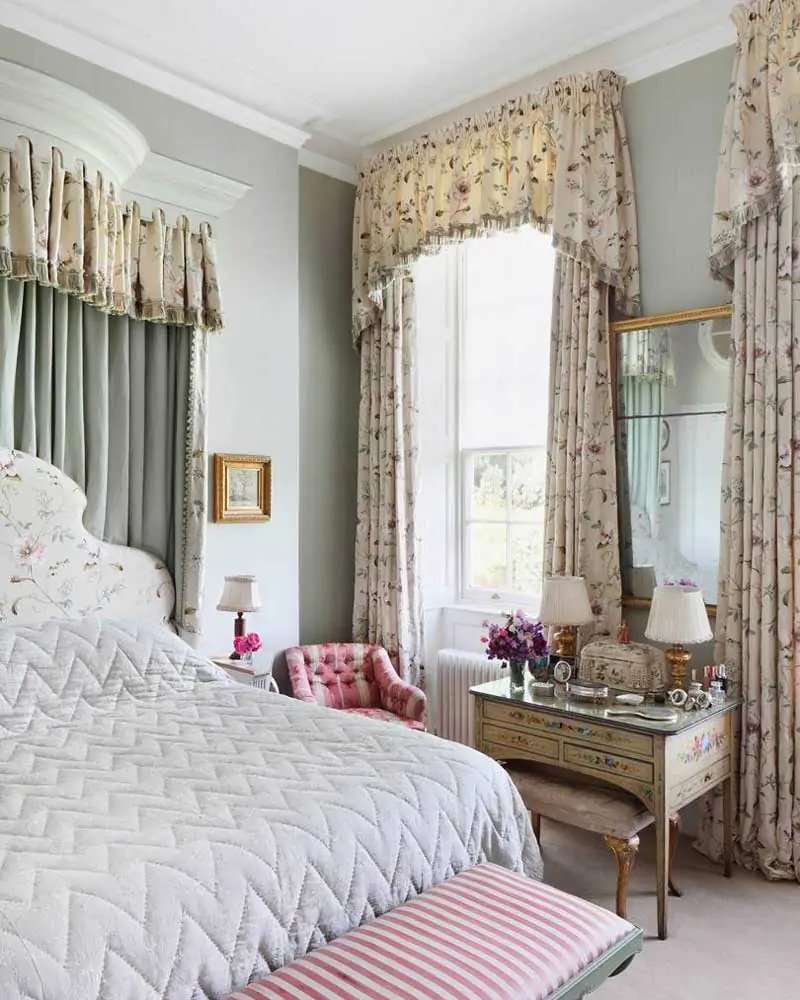
Key features:
- Upholstered with matching or contrasting curtain fabric
- Available in pleated, straight, shaped, or padded front profiles
- Interlining between fabric and board creates a hotel-quality finish
- The most cohesive approach — pelmet and curtains read as one unified window treatment
Best suited for: Bedrooms, formal living rooms, and any room where a hotel-quality window treatment is wanted
Fabric choices: Velvet, linen, cotton, and patterned upholstery fabrics. Avoid very lightweight sheers — they show board imperfections unless heavily interlined.
Curtain Pelmet Box Designs
The pelmet box is one of the most versatile and most widely used pelmet types. It presents a neat, clean appearance and can be finished in multiple ways — covered in fabric, finished with laminate, or simply painted to match the wall.
One of the most effective contemporary applications is the painted pelmet box — painted to exactly match the wall colour using the same paint finish. Instead of serving as a decorative feature, the box that is painted blends so well with the wall that it almost does not exist, thus allowing the curtains to have a neat architectural starting point. This is known as an ‘architectural pelmet’ or ‘pelmet reveal,’ and it is a common feature in premium modern home interiors.
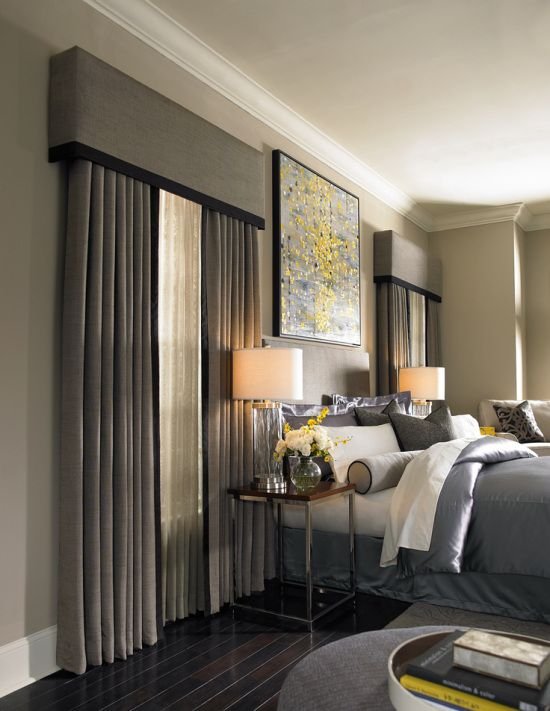
Key features:
- Rectangular and minimal — suits modern, contemporary, and transitional interiors
- Covers curtain tracks completely for a clean visual finish
- Can be finished with fabric, laminate, wallpaper, or wall-matched paint
- The wall-matched painted version disappears visually — curtains become the sole design statement
Best suited for: Modern apartments, contemporary interiors, and rooms where concealed hardware is needed without a decorative pelmet
✦ PRO TIP: For a contemporary painted pelmet box that disappears into the wall, paint it the same shade as the wall using the same finish (matt emulsion). Do not use gloss or satin on the pelmet if the walls are matt — the different sheen will catch light differently and make the pelmet visible even when the colour matches perfectly.
Swag Curtain Pelmet Designs
A swag pelmet — also called a swag and tail — is the most formal and most decorative of all pelmet types. Fabric is draped across the top of the window in one or more looping swags, with longer fabric tails hanging at each side. Swags and tails are associated with grand formal interiors, period properties, and traditional interior design.
In 2026, swags and tails are being revived along with the general maximalist and historically-inspired fashion trends. They are, however, still best suited for formal dining rooms, grand entrance halls, and period reception rooms and not for everyday contemporary spaces.
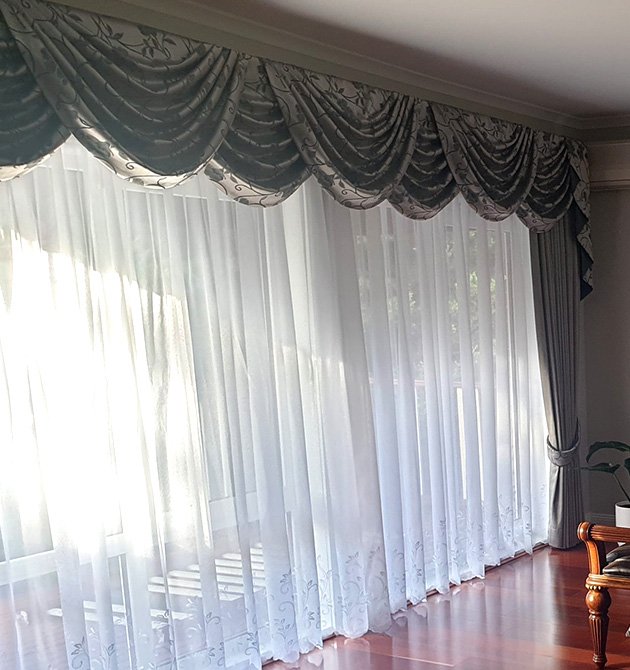
Key features:
- Elegant, draped fabric arrangement — adds genuine luxury and visual drama
- Most formal and decorative pelmet type available
- Works beautifully with layered curtains — swag above, floor-length panels below
- Available in single or multiple swag configurations
Best suited for: Formal living rooms, classic homes, dining rooms, and period properties
Fabric choices: Silk, velvet, damask, and rich patterned fabrics. Avoid casual fabrics like plain cotton fabric or linen.
Valance Curtain Pelmet Designs
A valance is a soft fabric header that hangs from a rod or track at the top of the window, covering the curtain hardware without a hard board construction. Valances are softer, more informal, and more versatile than hard pelmet boxes — they suit kitchens, bedrooms with a romantic aesthetic, and cottage-style homes particularly well.
Valances can be gathered (like a small curtain), pleated, scalloped (a shaped hemline cut in a repeating curve), or straight with a simple curtain fabric hem. Each creates a different character — from relaxed cottage-style to structured and architectural.
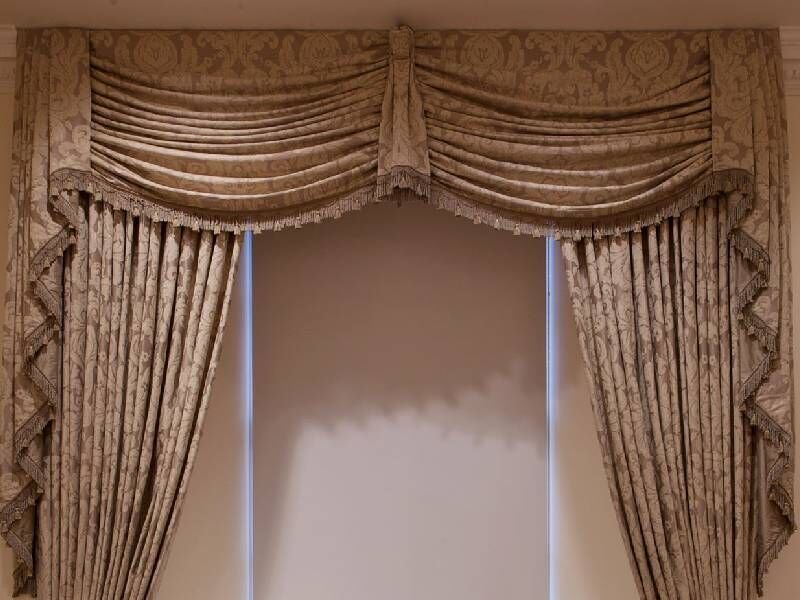
Key features:
- Soft, fabric-only construction — no wooden board required
- Available in gathered, pleated, scalloped, or straight styles
- Budget-friendly option — less material and less construction than a hard pelmet box
- Easy to change seasonally or when redecorating — no hardware to alter
Best suited for: Kitchens, dining areas, small windows, bedrooms with a romantic aesthetic, and cottage-style homes
US note: ‘Valance’ is the most widely used US term for any fabric window top treatment — gathered valances over kitchen sinks are extremely common in American homes
Gypsum Curtain Pelmet Designs
Gypsum pelmet designs are built into the ceiling itself — a recessed channel or trough created in the false ceiling during construction or renovation, into which the curtain track is installed and completely hidden. The curtain appears to emerge from the ceiling with no visible hardware at all.
This is the most seamless and most architectural pelmet available and has become very popular in luxury residential design and in modern Indian apartment interiors where false ceilings are standard. Unlike every other pelmet type, a gypsum pelmet must be planned during construction or ceiling renovation — it cannot be retrofitted into a finished ceiling without significant work.
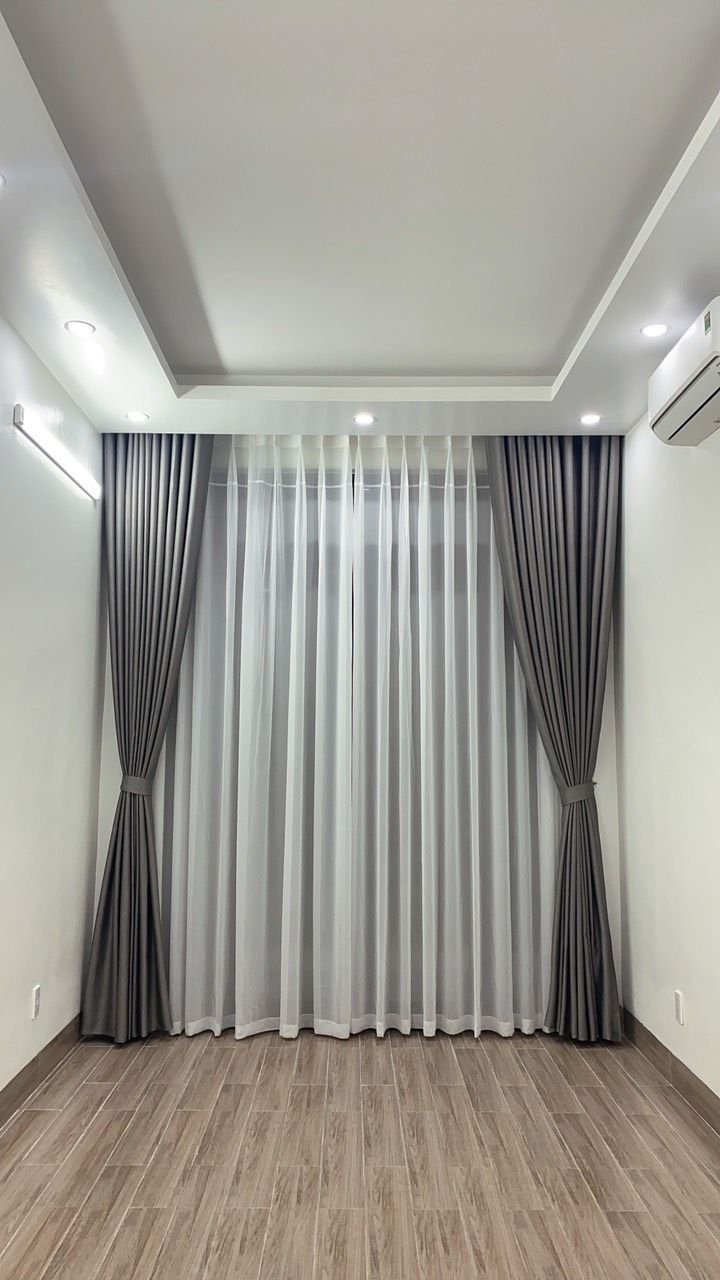
Key features:
- Completely seamless and concealed — the most minimal curtain top treatment available
- Hides the curtain track entirely within the ceiling void
- Works beautifully with LED cove lighting in the same channel
- Creates the look of curtains floating from the ceiling — very luxurious
Best suited for: Luxury homes, modern apartment interiors with false ceilings, and any project where curtains are planned during construction
Metal Curtain Pelmet Designs
Metal pelmets give windows a contemporary and stylish finish. Typically made from aluminium or steel, they combine the structural concealment function of any other pelmet with the clean, industrial-inspired aesthetic that suits modern apartments, loft-style interiors, and commercial spaces.
Aluminium pelmets are lightweight and rust-resistant, available in brushed aluminium, anodised, or powder-coated colour finishes. Steel pelmets are heavier and more structural-looking, often used in commercial or loft-style settings. The minimalistic profile of a metal pelmet suits contemporary interiors where visible decorative detail is not wanted but clean hardware concealment still is.
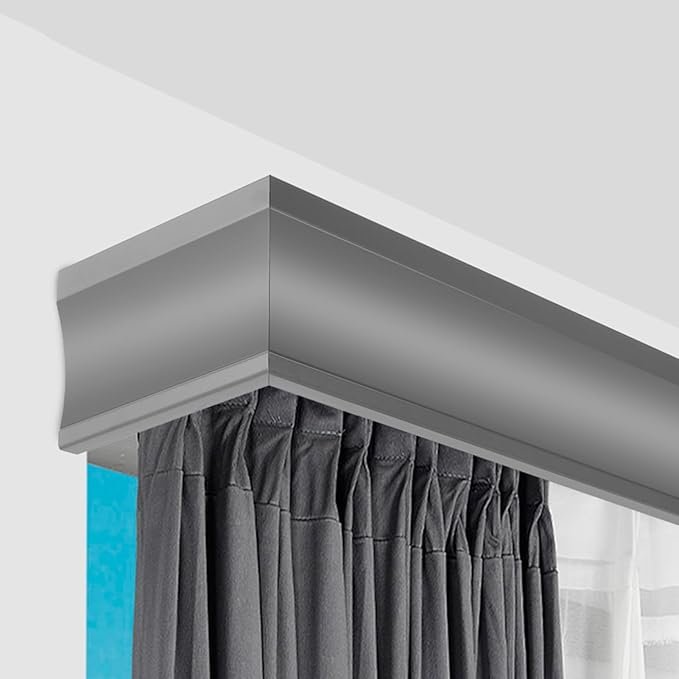
Key features:
- Made from aluminium or steel — rust-resistant and highly durable
- Minimalistic, clean-lined profile — suits industrial and modern aesthetics
- Available in brushed, anodised, or powder-coated colour finishes
- Low maintenance — no repainting or re-covering required
Best suited for: Industrial interiors, modern apartments, offices, loft-style homes, and spaces where a metallic finish suits the wider design
Decorative & Printed Curtain Pelmet Designs
Decorative and printed pelmet designs are led by creativity and visual character rather than a specific construction type. They may be wooden pelmets with hand-painted designs, fabric-covered pelmets in bold printed or patterned fabrics, or novelty-shaped pelmets designed to express personality and add character to a room.
These pelmets are most effectively used in rooms where the window is the primary decorative statement — a child’s bedroom where a themed pelmet sets the room’s character, a creative study where a bold printed pelmet introduces pattern at a contained scale, or a maximalist room that uses every surface as a design opportunity.
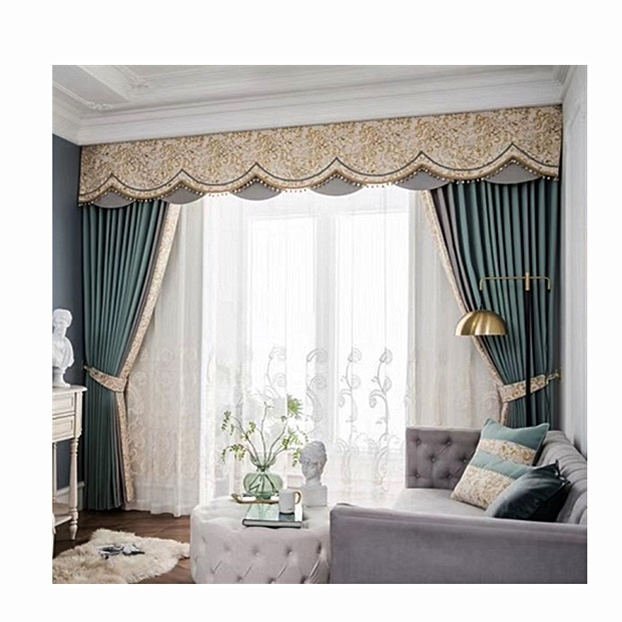
Key features:
- Custom shapes, prints, and patterns — the pelmet as a creative design element
- Adds personality and character to the window treatment
- Works as the room’s design focal point rather than a background feature
- Can be themed — botanical prints, geometric shapes, hand-painted motifs
Best suited for: Children’s rooms, creative spaces, home offices, and any room where a standard pelmet would be too plain
How to Get Curtain Pelmet Proportions Right
The proportions of a pelmet are the most critical factor in whether it looks designed or overdone. The most common pelmet mistake is making it too deep (too tall) relative to the curtains below — a pelmet that is too tall consumes too much visual height and makes the ceiling feel lower.
The three measurements to get right:
- Pelmet depth (height): approximately 1/8 to 1/10 of the total curtain drop. For a 220cm curtain drop, the pelmet should be 22–27cm deep. For a 250cm drop, 25–31cm. Use the shallower end for contemporary rooms; the deeper end for traditional rooms.
- Pelmet projection (depth from wall): it has to be large enough to clear the curtain heading when the curtains are stacked A minimum of 10cm clears most tracks; 15cm is safer for pencil pleat headings. Measure the actual depth of your curtain hardware and add 3–5cm.
- Pelmet width: at least as wide as the curtain track or pole, ideally 5–10cm wider on each side so the curtain stack clears the pelmet ends fully when open.
⚠ WATCH OUT: Do not make the pelmet projection too shallow. A pelmet that does not project far enough will catch on the curtain heading as the curtains are opened and closed — making them impossible to operate properly.
How to Choose the Right Curtain Pelmet for Your Home
With eight pelmet types available, the right choice depends on four factors. Work through these in order to find the best match for your room:
- Your interior style: Traditional and period homes suit wooden pelmets, fabric pelmets, and swags. Contemporary and modern interiors suit painted pelmet boxes or metal pelmets. Minimalist rooms suit gypsum ceiling channels. Transitional rooms work well with fabric-covered boxes in a plain linen or neutral tone.
- Your curtain fabric and colour: A fabric pelmet should either match the curtain fabric exactly (the most unified look) or provide a deliberate tonal contrast. Avoid an accidental near-match — if you are not matching exactly, make the contrast clear and intentional.
- Your window size and ceiling height: When there are taller window curtains combined with high ceilings, one can go for longer, denser pelmets. On the other hand, rooms with lower ceilings require shorter pelmets (at most 1/8 of the curtain length) so as not to give the impression of a closed-in space.
- Your maintenance preference: Painted and metal pelmets require the least maintenance. When the fabric fades or the style changes, the fabric-covered pelmets can be re-covered. Gypsum pelmets are permanent.
Conclusion
Curtain pelmet designs offer far more than just a practical use — they enhance the window’s visual presence, giving it a polished and designed look that curtains alone cannot achieve. Whether you choose a classic wooden pelmet, a fabric-covered box to match your curtains, a minimal painted box that disappears into the wall, a seamless gypsum ceiling channel, a dramatic swag and tail, or a bold decorative statement pelmet — each type transforms the window from a hole in the wall into a considered architectural feature.
The perfect pelmet depends on a number of things including the style of your home, the fabric of your curtains, the height of your ceiling and how visually dominant you want the window treatment to be. With these 8 options explained in the guide, every room kind and every taste will have the right curtain pelmet design ready.
Frequently Asked Questions
Q: What is the difference between a pelmet and a valance?
A: A pelmet is a hard box or board — usually made from wood or MDF — installed in front of curtain hardware. It can be covered with fabric, painted, or finished with laminate. A valance is a soft fabric header that hangs from a rod at the top of the window to conceal the curtain hardware, with no hard board required. The hard-built pelmet in the US is termed ‘cornice board’, while ‘valance’ refers to soft fabric top treatments. Both are backdrops to the curtains and serve the same purpose of concealing curtain hardware and providing the window with a polished, designed look.
Q: What is a gypsum pelmet and how is it made?
A: A gypsum pelmet is a recessed channel built into a false ceiling during construction, into which the curtain track is installed and hidden completely. The curtain appears to emerge directly from the ceiling with no visible hardware. It is the most seamless pelmet type available and is especially popular in modern Indian apartment interiors with false ceilings. It must be planned at the construction stage — it cannot be added to a finished ceiling without reopening the ceiling.
Q: Do pelmets make rooms look smaller?
A: Correctly sized pelmets do not make rooms feel smaller — they can actually make them feel taller. A pelmet mounted close to the ceiling creates a strong horizontal line at height, drawing the eye upward and making the ceiling feel higher. The main thing is proportion: the depth of the pelmet should be only 1/8 to 1/10 of the entire length of the curtain. A pelmet which is overly deep (too tall) may appear heavy and visually reduce the height of the ceiling.
Q: Can I add a pelmet to my existing curtains?
A: Yes — a pelmet can be added above any existing curtain installation provided there is sufficient wall space between the curtain heading and the ceiling. The pelmet box is mounted on brackets fixed to the wall or ceiling, in front of the existing track or pole. The existing curtains do not need to be changed or rehung. The main measurement to check is whether the pelmet projection is deep enough to clear the curtain heading when the curtains are stacked open.
Q: What fabric is best for a curtain pelmet?
A: Matching the curtain fabric is the most common and most unified approach. The fabric needs enough body to wrap smoothly around the board without puckering or showing the board edges — medium-weight fabrics like velvet, linen, cotton, and chenille all work well. Very lightweight fabrics show imperfections unless a substantial interlining is used. For the best finish, add a layer of domette or bump interlining between the fabric and the board before wrapping.
Q: Is a pelmet the same as a cornice board in the US?
A: Yes — a cornice board in the United States is essentially the same as a pelmet in the UK. Both describe a hard-constructed wooden or MDF box that is covered in fabric, paint, or wallpaper and installed above a window to conceal the curtain hardware. The US also uses ‘valance’ for soft fabric window top treatments. All three terms — pelmet, cornice board, and valance — describe window top treatments; pelmet and cornice board specifically denote the hard-constructed version.