
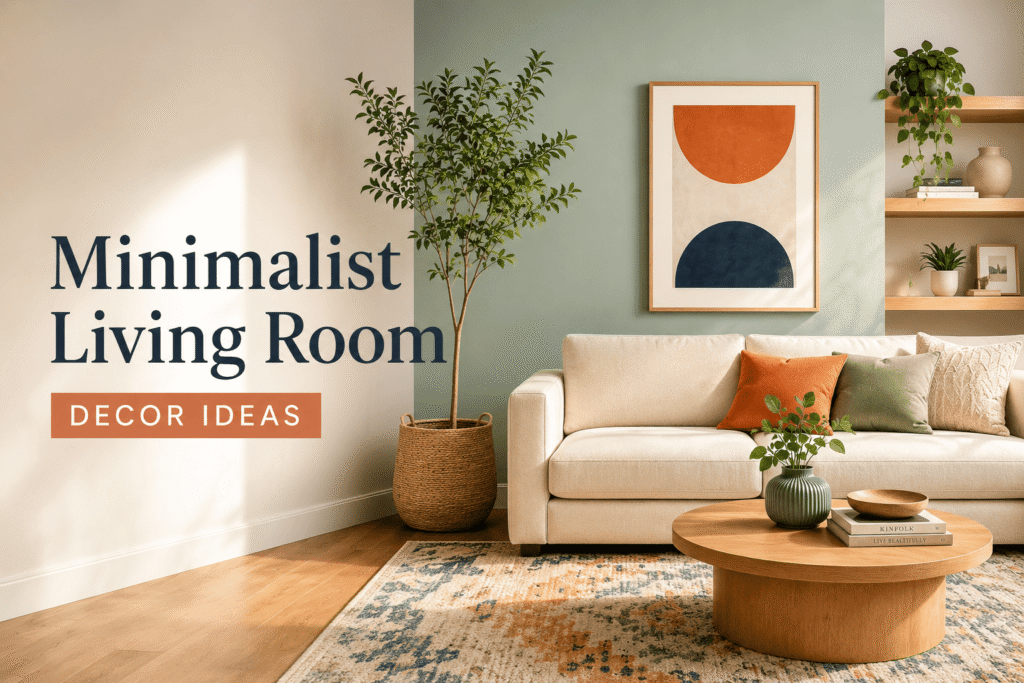
Minimalism has come a long way and changed a lot since around the 2010s, when it was mostly associated with cold, white, sterile rooms that looked good but were hardly comfortable. What minimalism is currently starting to be is something much more subtle and truly attractive: warm minimalism — or, at the highest level of sophistication, Japandi — which is a mixture of the simplicity and serenity of minimal design together with the coziness, nature-oriented materials, and the silent comfort of Scandinavian and Japanese aesthetics.
The resulting living rooms are truly clutter-free and visually soothing, and their warm hues, lots of natural textures and extreme comfort to dwell in overspill back to their physical nature. Show-home chicness that looks good in the photos but that one lives in poorly – this is not it. It is a thoughtful method of less possession, more selective choice and artistic arrangement of each item as the whole visual impression of the living room.
This guide is a thorough resource for designing a modern minimalist living room. It focuses on the color scheme, the style of furniture, the fabrics, the window treatments, the storage concept, and the room decor elements that complete the look in a way that stays soothing and not becoming freezing.
The 2026 Minimalist Palette — Warm, Not White
The palette shift that defines 2026 warm minimalism is away from cool grey-white and toward the colour of natural materials: warm white with a hint of sand or cream, the beige of raw linen, the light gold of oak, the pale warm grey of undyed wool, the soft green of a houseplant. Every colour in a warm minimalist room has a natural precedent — it occurs somewhere in the physical world rather than in a manufacturer’s formulation.
This means avoiding brilliant white, cool grey, and any colour that reads as synthetic or manufactured. The wall colour should be warm white or a warm neutral — a white with a touch of warmth in its undertone, or a pale stone or greige. The furniture should echo natural material tones. The textiles should be in natural, undyed colours or in the quiet, complex tones that natural dyes produce. Means to say that it gives a very soothing effect when it is warm neutral colour palettes for minimalist living rooms.
- Wall colour: warm white (slight cream undertone), warm stone, pale greige
- Furniture tones: natural or light oak, warm walnut, raw pine — never painted white (too stark) and never grey laminate (too synthetic)
- Textile tones: natural linen beige, warm cream, undyed wool grey, soft sage, dusty rose — all muted, all warm
- Accent: a single deeper tone introduced sparingly — warm terracotta, deep sage, warm navy — through one cushion or one ceramic object
Furniture — Less, But Better
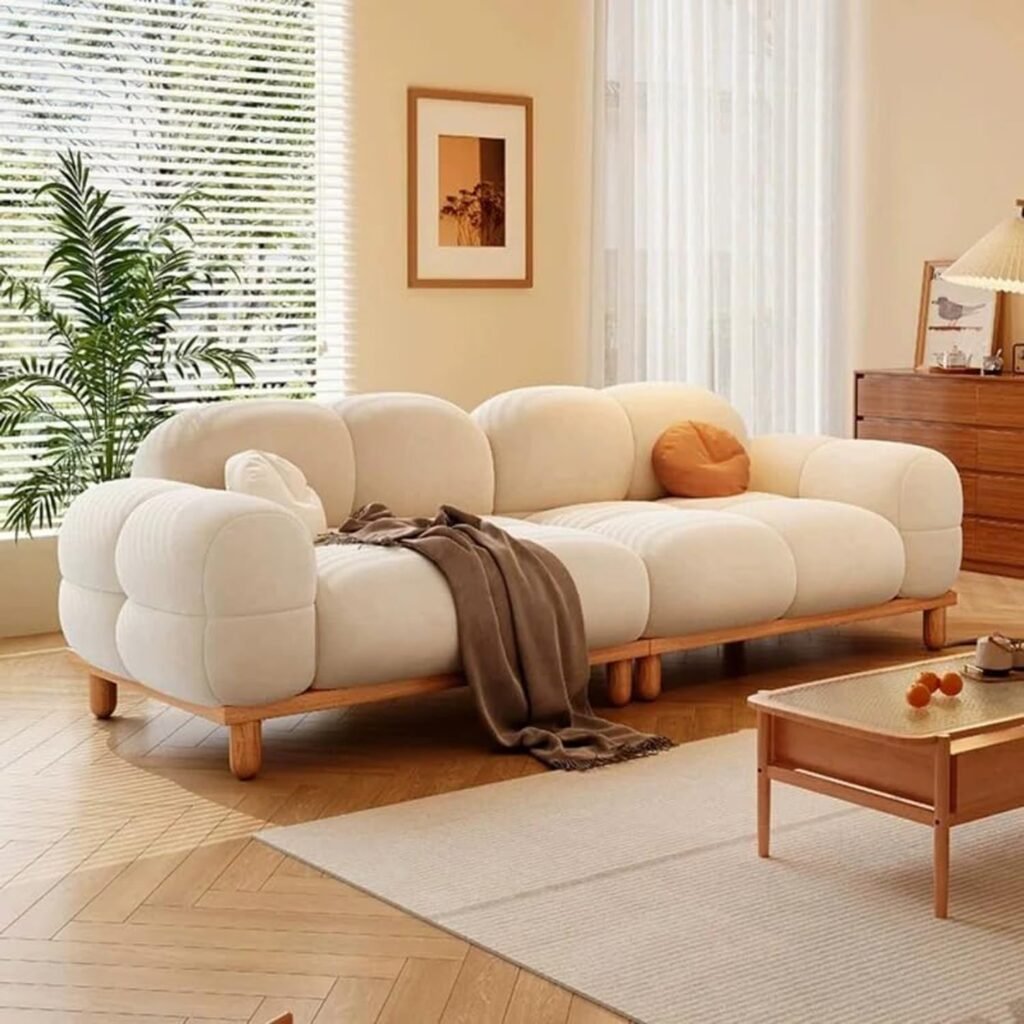
Low Profile Sofa Minimalist Living Room Neutral
A minimalist living room typically has minimal furniture arrangement than a maximalist one or a room furnished in a traditional style, however these pieces are selected with much more attention and are given more space so that each one can be appreciated individually. The idea is not to deny oneself, but to curate. Each piece qualifies to remain since it fulfils a specific function and enhances the overall look of the room.
A sofa in a minimalist living room is usually quite low in height, with simple straight lines. The fabric can be a light neutral color, such as raw linen, soft wool, cotton that has not been dyed, or leather with a dull color. Arms are generally slim and low or absent entirely; cushions are minimal and integrated rather than added in layers. The sofa does not call attention to itself — it serves as a comfortable, well-proportioned piece that allows the room’s calm to continue across it.
The coffee table is often lower than a conventional equivalent, in natural wood or a stone material, with a clean geometric form. Side tables are reduced to one or none. A single armchair, in the same tonal family as the sofa but in a contrasting material (a linen sofa with a wood and leather or rattan armchair, for example), provides variety without busy-ness.
- Sofa: low-profile, clean arms, neutral upholstery — linen, wool, or muted cotton
- Coffee table: solid wood or stone, geometric, lower than standard height
- Seating: a single additional chair — rattan, leather, or wood — not a matching set
- Storage: concealed wherever possible — a low credenza with closed doors, a storage ottoman, or built-in alcove shelving
Minimalist Curtains — Natural Linen Every Time
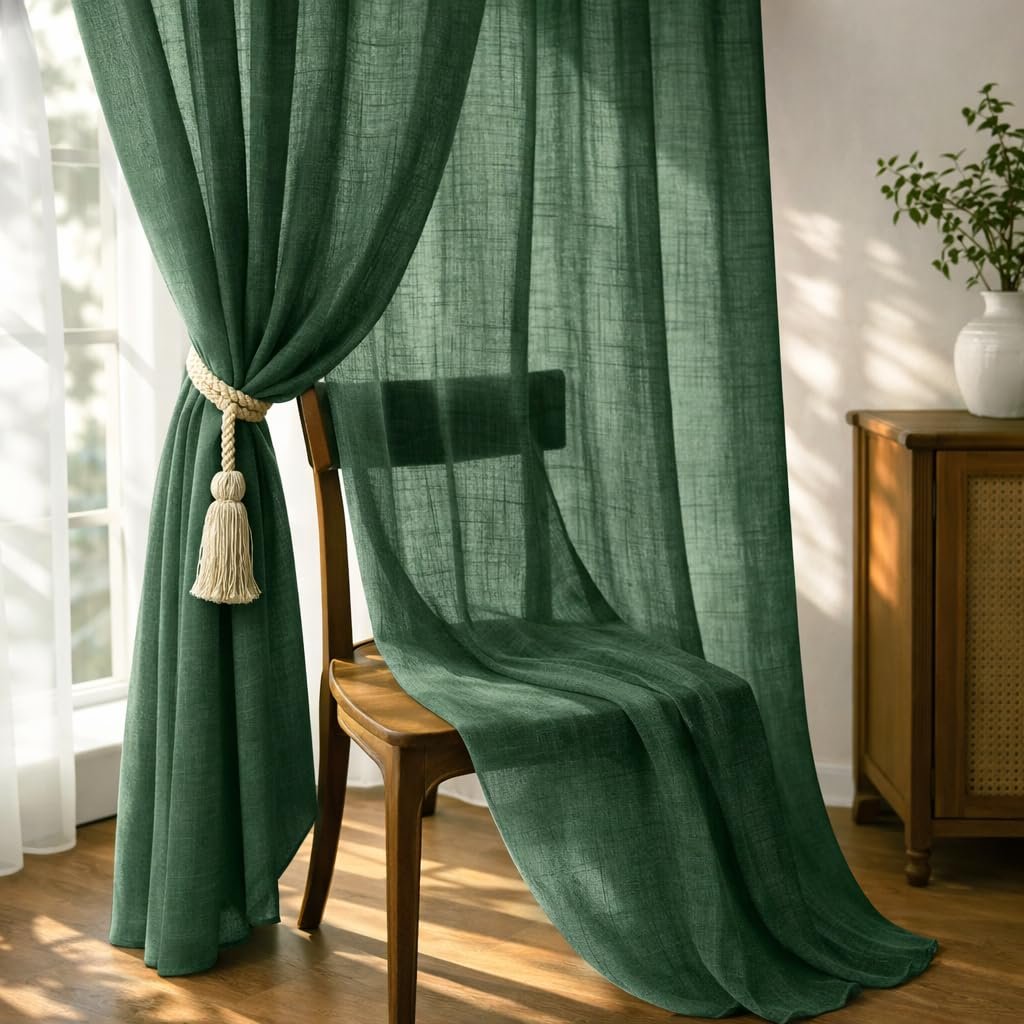
Natural Linen Curtains Floor Length
In a minimalist living room, curtains work not only as a functional tool (control the amount of light, maintain privacy) but also a decorative one (bringing the window wall some natural texture and warmth without the addition of visual complexity). The curtain that fulfils both functions most effectively is natural linen, and one should know everything about linen curtains for the minimalist home.
Natural linen curtains — undyed or in a warm neutral — hang with a slightly irregular drape that reads as honest and organic rather than manufactured. They filter light into something golden and warm. They add texture that is visible and tactile without being patterned or decorated. They are exactly the material quality that the warm minimalist aesthetic values: natural, unpretentious, and beautiful precisely because of rather than despite its simplicity.
Floor length linen curtains, hung on a bare ceiling mounted track or a narrow wrought iron or wooden pole and placed at the ceiling level, are the ultimate minimalist window treatment. The long, continuous vertical panels strengthen the peaceful, tidy mood of the room and at the same time, they visually lengthen the ceiling height.
✦ PRO TIP: For the most refined minimalist curtain result, choose a ceiling-mounted track rather than a visible pole. The track is hidden behind the curtain heading when the curtains are drawn, making the curtains appear to begin directly at the ceiling. This invisible hardware is the approach used in most high-end minimalist interiors.
Textiles — Texture Without Pattern
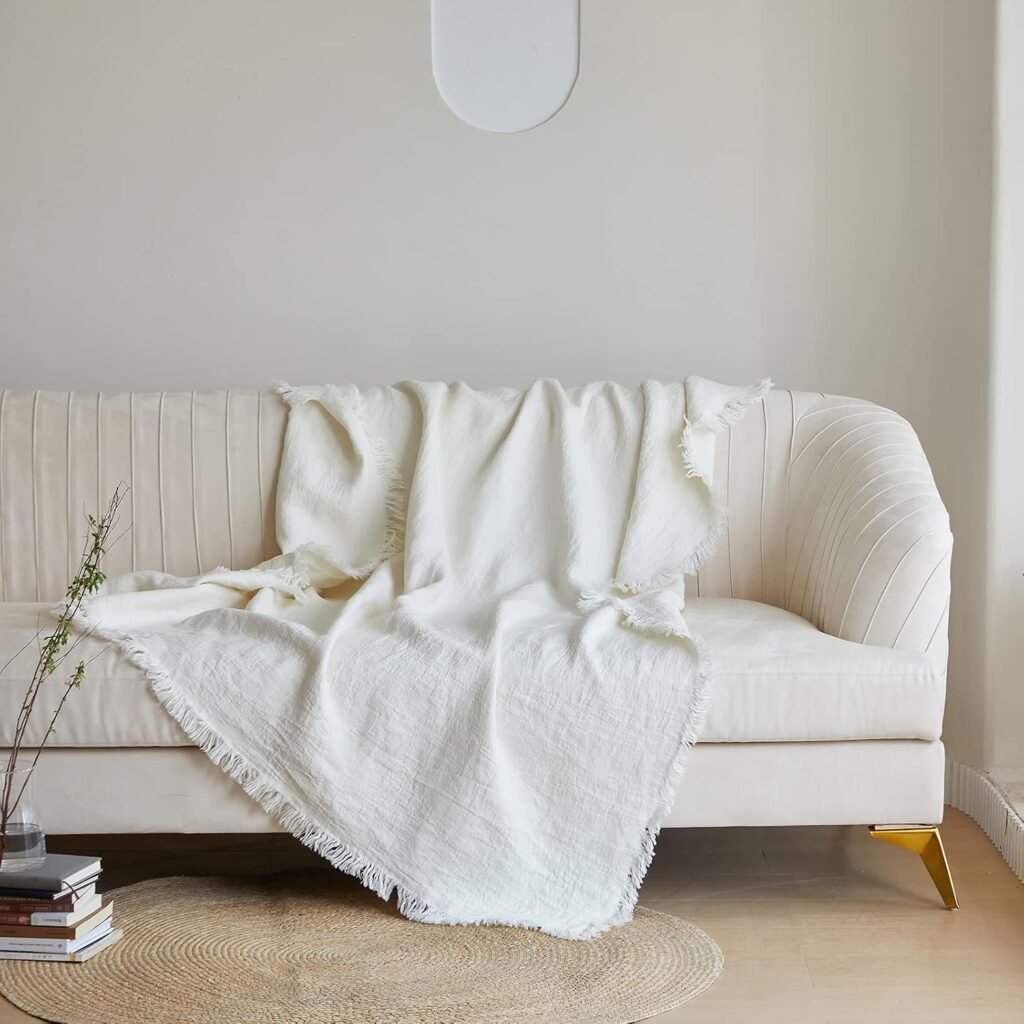
The minimalist living room uses textiles for warmth and texture rather than for pattern or colour contrast. This is a significant restraint compared to other aesthetic approaches — no bold prints, no bright cushion covers, no competing patterns — but it produces a quality of calm that patterned textiles would undermine.
The texture vocabulary is very natural and varied among linen (rough and irregular), wool (warm and soft), cotton (fresh and cool) and sometimes velvet in a very dull color (warm and light-absorbing). Layering these textures results in a richness that is not visually noisy. A linen sofa adorned with a wool throw and two linen cushions in a slightly different weight or weave will give a smart, layered look all derived from one colour family.
- Cushion rule: 2-3 cushions maximum on any sofa. In the same or closely related materials. No more than two slightly different tones.
- Throw: one fold of a neutral linen or wool throw draped over one sofa arm — not spread across the whole sofa
- Rug: natural jute, sisal, or a plain wool rug in warm neutral — no pattern, no colour
The Japandi Approach — Japanese + Scandinavian
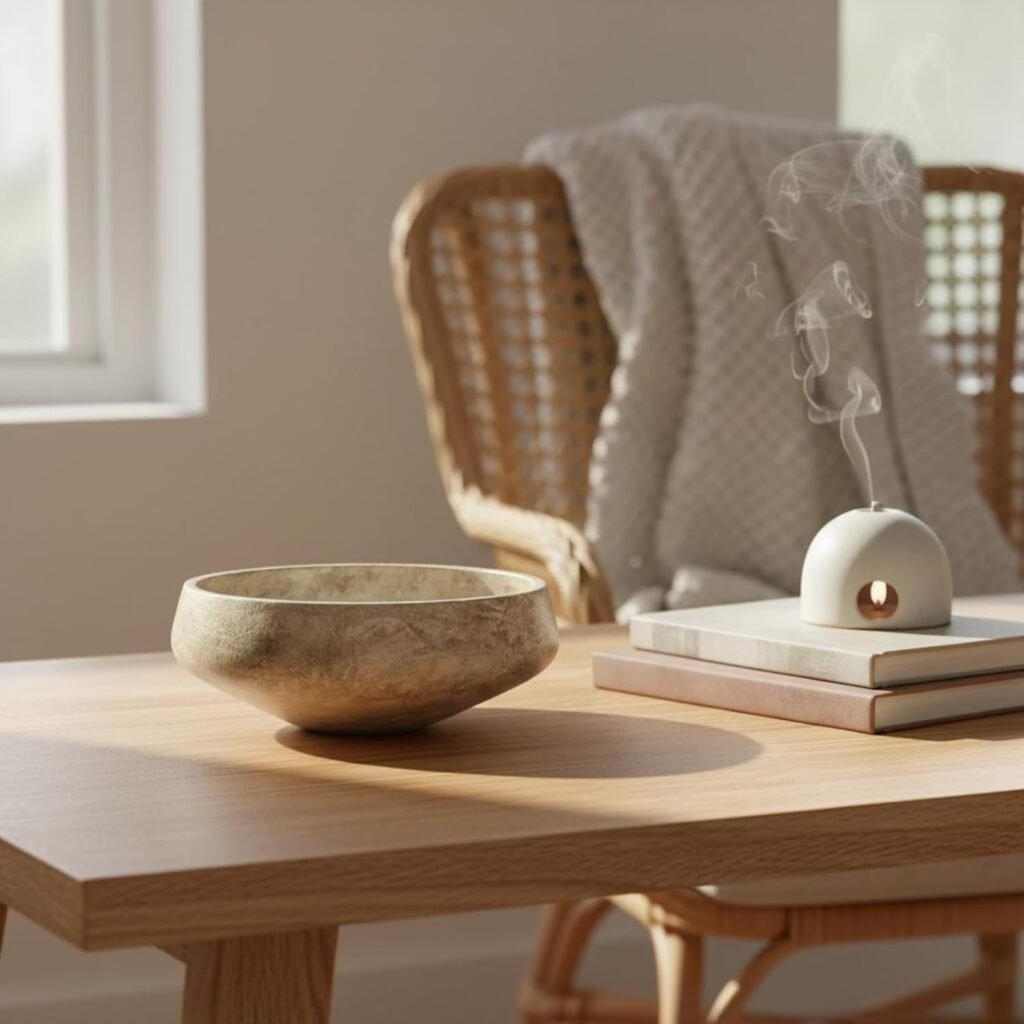
Wabi Sabi Ceramic Bowl Decor Minimalist
Japandi is a style that beautifully captures the essence of minimalism in 2026 by merging two different traditions – Japanese wabi-sabi which appreciates the beauty of imperfection, natural materials and the passage of time, and Scandinavian hygge that evokes warmth, comfort and the idea of home as a place of genuine refuge. The outcome is minimalism that has a soul -spaces that are visually quite clean but not cold, extremely comfortable but not overloaded with stuff.
The specific Japandi elements that distinguish it from generic minimalism: Wood has natural natures and a fine temperature. Rocks exhibit the characteristics of being irregular and imperfectly made by hand (instead of the perfect factory finish). Plants are selected mainly for their architectural form (a single monstera or fiddle leaf, not a collection). Finally, negative space is used intentionally (one object on a surface is a deliberate choice; nothing on a surface is also a deliberate choice).
- Japandi materials: warm oak, bamboo, raw cotton and linen, hand-thrown ceramics, dark Japanese lacquer (minimal, as accent)
- Japandi colour: warm neutrals + one deeper tone (black or deep charcoal used sparingly in a lamp base, a pot, a single cushion)
- Japandi plant: architectural, large, solitary — monstera, fiddle-leaf fig, snake plant in a simple ceramic or woven pot
Storage — Concealed, Not Displayed
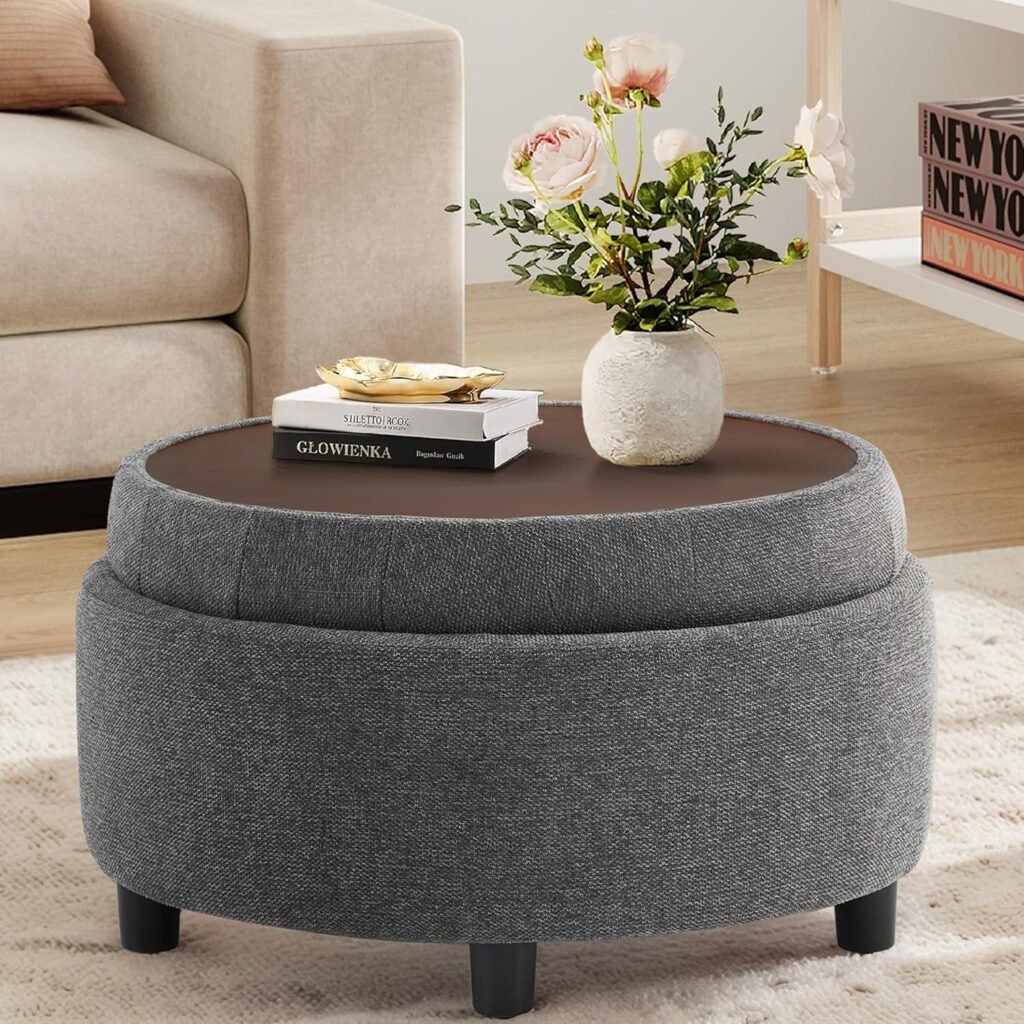
Storage Ottoman As A Coffee Table
The minimalist living room requires more thoughtful storage than any other aesthetic, because the aesthetic depends on surfaces being clear. This is not achieved by having fewer things — it is achieved by having effective storage that keeps things out of sight when not in use.
The most useful storage pieces in a minimalist living room: a low credenza or sideboard with closed doors (the primary storage piece — houses remotes, cables, chargers, magazines, everything that accumulates on surfaces), a storage ottoman that doubles as a coffee table or footrest, floating wall shelves used sparingly and styled deliberately rather than filled with clutter.
The principle: On every horizontal surface, either nothing should be placed, or at most, three highly selected items can be displayed. Usually, in a minimalist space a coffee table may feature only one decorative piece and occasionally a practical one (like a set of coasters, a tiny tray). The discipline of maintaining this is more important than any purchasing decision.
Plants — One Significant Choice
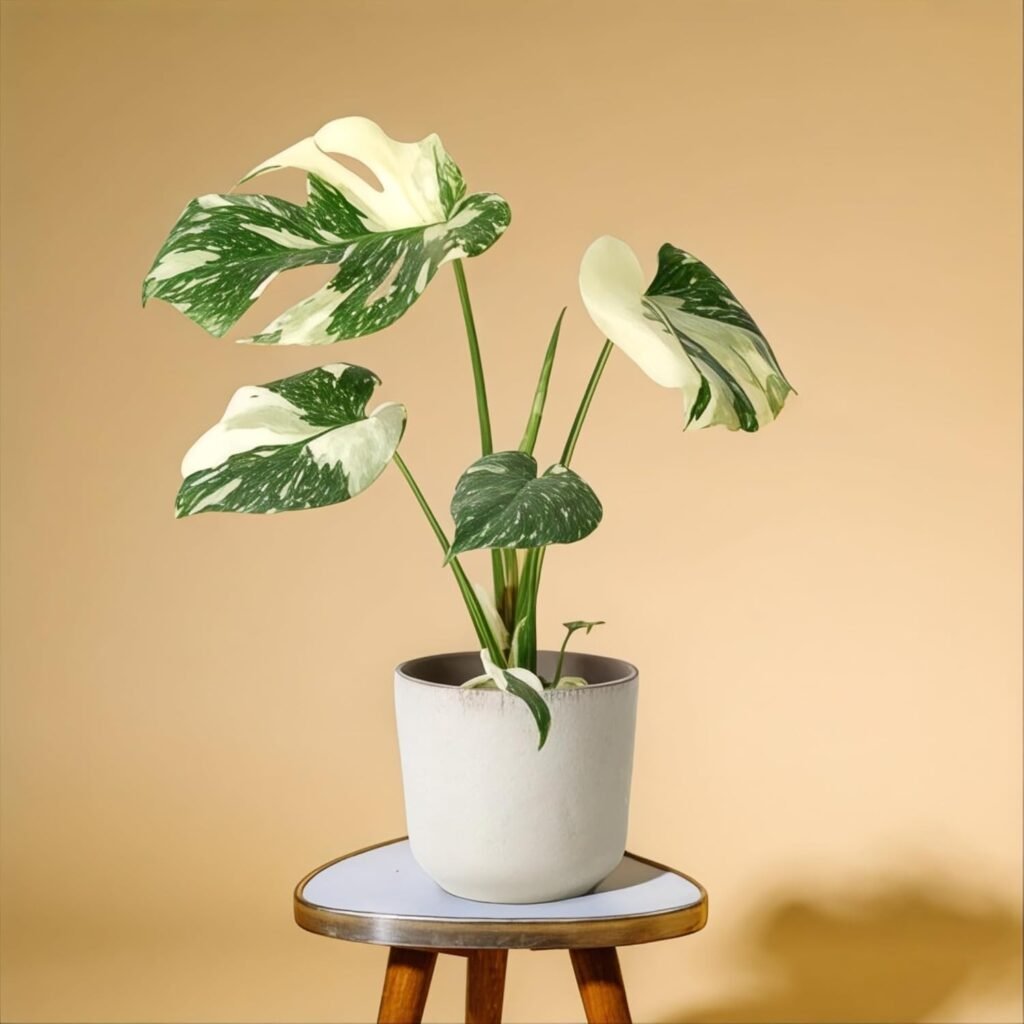
Large Plant Pot Indoor Monstera Minimalist
In a maximalist room, plants are used in clusters and collections for their combined visual effect. In a minimalist room, a single architecturally significant plant — positioned where it has sufficient space to be appreciated as an individual form — makes more impact than any collection. A large monstera in a simple ceramic pot, placed in a corner where it receives good indirect light, is a more powerful design element than six smaller plants scattered around the room.
The pot matters as much as the plant in a minimalist room. A plain cylindrical ceramic pot in a warm neutral or a dark tone, or a simple woven basket planter, completes the Japandi-aligned look. A decorative or patterned pot would compete with the plant’s form.
Lighting in a Minimalist Room
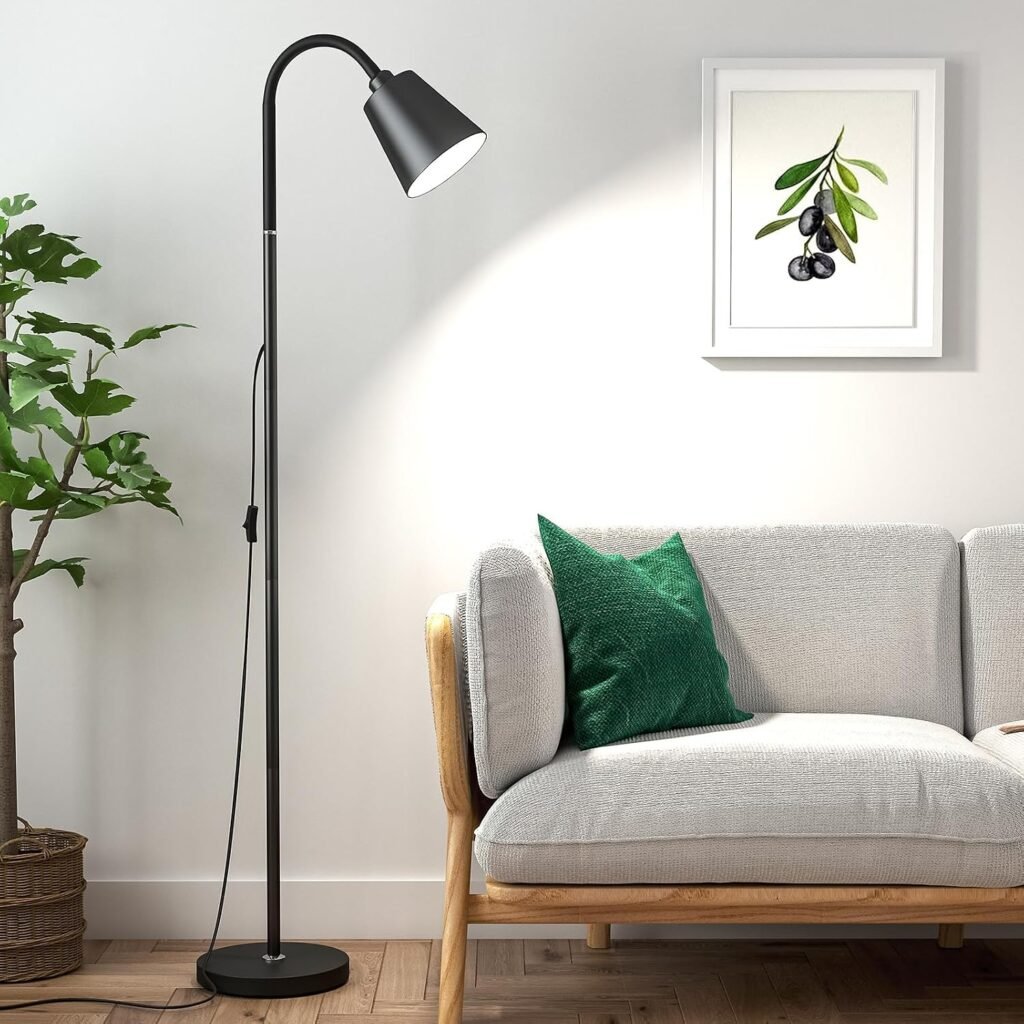
Minimal Floor Lamp Thin Base Living Room
Minimalist lighting for living room follows the same rules as minimalist everything else: fewer sources, more carefully chosen, contributing warmth and texture rather than decoration. The preferred fixture is architecturally simple — a single arc floor lamp with a clean paper or fabric drum shade, a pair of clean-lined wall sconces, or a pendant with a simple form (paper or ceramic).
Spotlights mounted on an overhead track are usually more in keeping with the minimalist style than a fancy pendant, as they give directed light without a fixture vying for the observer’s attention. Warm bulbs (2700K) are an absolute must.
What Minimalism Is Not — The Common Misunderstandings
- Minimalism is not emptiness. A minimal room has everything it needs and nothing it does not — but ‘everything it needs’ includes warmth, comfort, personal objects, and genuine livability. A room with no cushions, no textiles, and no personal character is not a minimalist room; it is an unfinished one.
- Minimalism is not necessarily cheap. A minimal room often costs more than a maximalist one because every piece needs to be of sufficient quality to withstand the scrutiny of having less around it. A cheap sofa is concealed in a busy room; it is painfully visible in a minimal one.
- Minimalism is not permanent deprivation. It is a discipline of ongoing curation — deciding what earns its place. Most people find that this discipline becomes gradually easier as the benefits of visual calm and spaciousness become part of daily life.
- Minimalism is not a style for large rooms only. Small living rooms with minimal furnishings and well-thought-out arrangements often seem bigger, more peaceful, and more inviting than equivalent rooms packed with many pieces of furniture. The minimalism really complements small
Final Thoughts
The minimalist living room is worth pursuing not as a design exercise but as a quality of life decision. Rooms with fewer, better-chosen things are easier to maintain, easier to relax in, and easier to enjoy — the clarity of a well-ordered space contributes to a calm state of mind in a way that is genuinely measurable in daily experience.
In fact, this 2026 edition of the aesthetic – warm, natural-material, Japandi-inspired – also comes as a lot more doable and a lot more truly comfortable than the frigid minimalism it is replacing. Natural linen drapes, a warm neutral paint, a low-profile couch in subdued fabric, a big plant, and a carefully done selection of natural material items: this can be managed on any budget and any room size, and it results in a living environment that is not only visually pleasant but also very agreeable to the senses.
Frequently Asked Questions
Q: What is warm minimalism and how does it differ from classic minimalism?
A: Warm minimalism is different from classic or cold minimalism in the choice of materials, colours, and textures. Classic minimalism (which was very much the style in the 2010s) has generally been characterised by white walls, hard surfaces, cool grey tones, and an almost stark, architectural quality that often put visual cleanliness above livable comfort. Warm minimalism follows the same principle of restraint — fewer pieces, more space, no visual clutter — but with warm materials: natural wood, linen, wool, undyed cotton, hand-thrown ceramics, and warm white or neutral wall colours. The interior looks calm and uncluttered but at the same time feels truly comfortable and inviting.
Q: What is Japandi style in a living room?
A: Japandi is a style that merges the Japanese wabi-sabi concept – appreciating beauty through nature’s imperfections, simplicity, and the organic aspect of natural materials – with the Scandinavian hygge idea of domestic warmth, comfort, and perfectly functioning, well-made objects. A living room reflecting Japandi is one that is minimalist not just in layout and color scheme but also, most importantly, it is warm through the use of materials and the atmosphere created: natural wood that shows its grain, hand-made ceramics with their deliberate irregularities, natural linen fabrics, architectural plants, and a color palette dominated by warm neutrals with black and charcoal as the occasional, deepest accents.
Q: What colours work in a minimalist living room?
A: Warm white, warm cream, pale stone, greige, and warm neutral beige are the most widely used wall colours. Natural material tones — the beige of raw linen, the warm grain of oak, the pale grey of undyed wool — provide the room’s colour palette through materials rather than paint. A single slightly deeper accent — warm terracotta in a ceramic vase, deep sage in one cushion, warm navy in a folded throw — introduces visual interest without disrupting the calm. Cool grey, brilliant white, and any colour that reads as synthetic or manufactured are at odds with the warm minimalist aesthetic.
Q: How do I make a minimalist living room feel warm and not cold?
A: The warmth in a minimalist room comes from four things: warm colour temperature in the lighting (2700K bulbs — never cool white), natural materials (wood, linen, wool, ceramic, jute), warm wall and floor colours (warm white rather than brilliant white, natural wood rather than grey laminate), and a small number of well-chosen textiles (a linen throw, a natural rug). A minimalist room that feels cold is usually missing one or more of these — too much white paint, cool light bulbs, or synthetic materials are the most common causes.
Q: Can a minimalist living room have curtains?
A: Yes — Curtains play a crucial role in the decor of a minimalist living room. Floor-length linen curtains, in particular, complement the design really well. Linen from nature not only brings in a fresh and natural texture along with the feeling of warmth but at the same time, it is so visually peaceful that it will not spoil the minimal character of the room. Avoid heavily patterned or brightly coloured curtains, and avoid curtains that are too short or too thin — both undermine the room’s sense of considered proportion. Floor-length linen hung from a ceiling-mounted track or simple iron pole is the most aligned option.