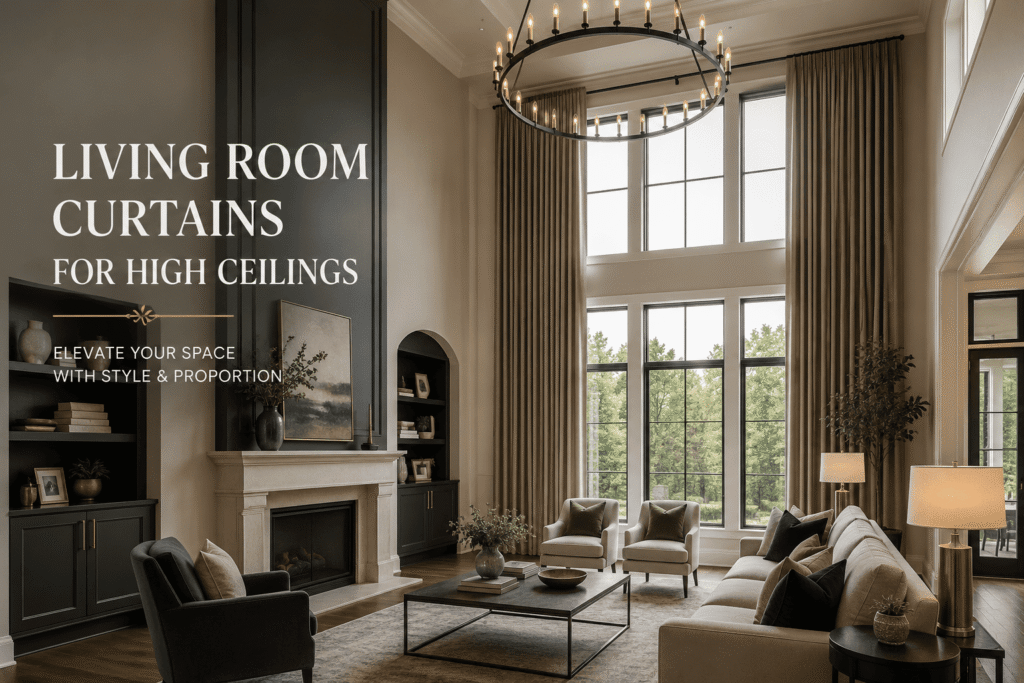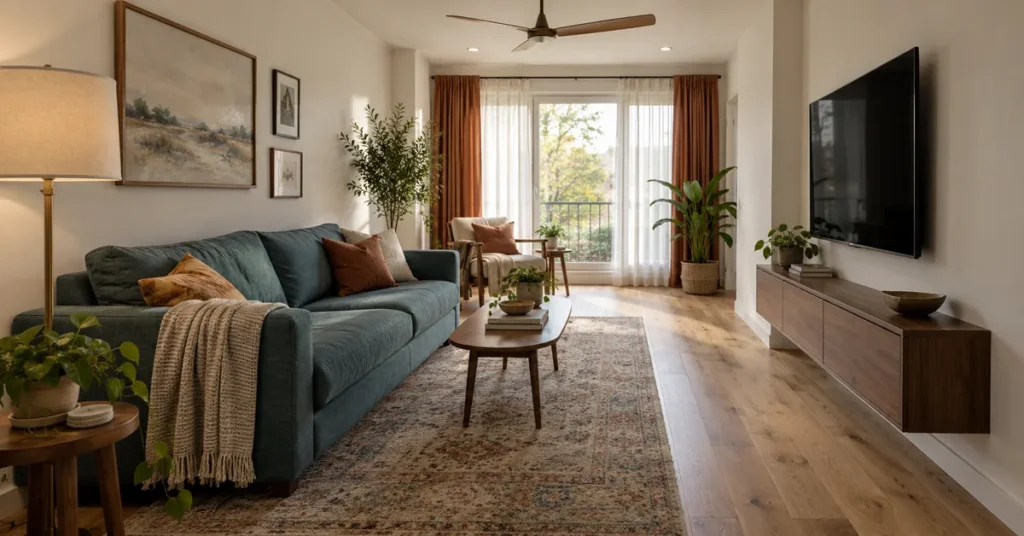
The modern farmhouse aesthetic has been the most consistently popular home decorating style in the United States for over a decade, and in 2026 it shows no signs of declining. If anything, the return of warmth, natural materials, and domestic comfort as dominant interior values — the same values that drove the farmhouse aesthetic in the first place — has given it a second wind.
What defines the modern farmhouse is a specific tension: it is simultaneously clean and casual, simple and warm, contemporary and traditional. It takes the practicality and earthiness of the working American farmhouse and removes the roughness — replacing worn with clean, cluttered with curated, functional with beautiful. The result is a living room that feels genuinely comfortable and genuinely designed at the same time.
This guide covers every element: the palette, the key materials, the furniture approach, the curtains and window treatments, the wall treatments that define the style, and the specific accessories that complete it — with budget guidance throughout and specific product suggestions for every element.
The Modern Farmhouse Colour Palette
Warm whites and warm neutrals form the basis of the contemporary farmhouse colour scheme. Not stark white or cool grey-white – warm white with a bit of cream, warmth, or the lightest shade of beige. This colour combination for living room for walls and ceilings is the one that nearly all modern farmhouse interiors are started with, and it’s the picking that makes all the other features come out clearly and warmly.
Against this warm white base, the farmhouse palette introduces warmth through natural materials (wood, jute, cotton, linen) and through carefully chosen accent colours that read as natural and grounded: warm grey, warm beige, sage green, dusty blue, black (for contrast through hardware and furniture legs), and occasionally a warmer accent — terracotta, rust, or warm ochre — introduced through textiles.
- Primary palette: warm white, warm cream, soft greige, warm grey
- Natural material tones: light natural oak, reclaimed wood grey-brown, raw linen beige, natural cotton white
- Accent colours: matte black (hardware, lamp bases, window frames), sage green (plants, occasional cushion accent), dusty blue (cushion and throw accent), warm rust or terracotta (seasonal accent)
- What to avoid: cool greys with blue undertones, stark brilliant white, bright primary colours, anything synthetic-looking
The Farmhouse Living Room Sofa — Comfort Is Non-Negotiable
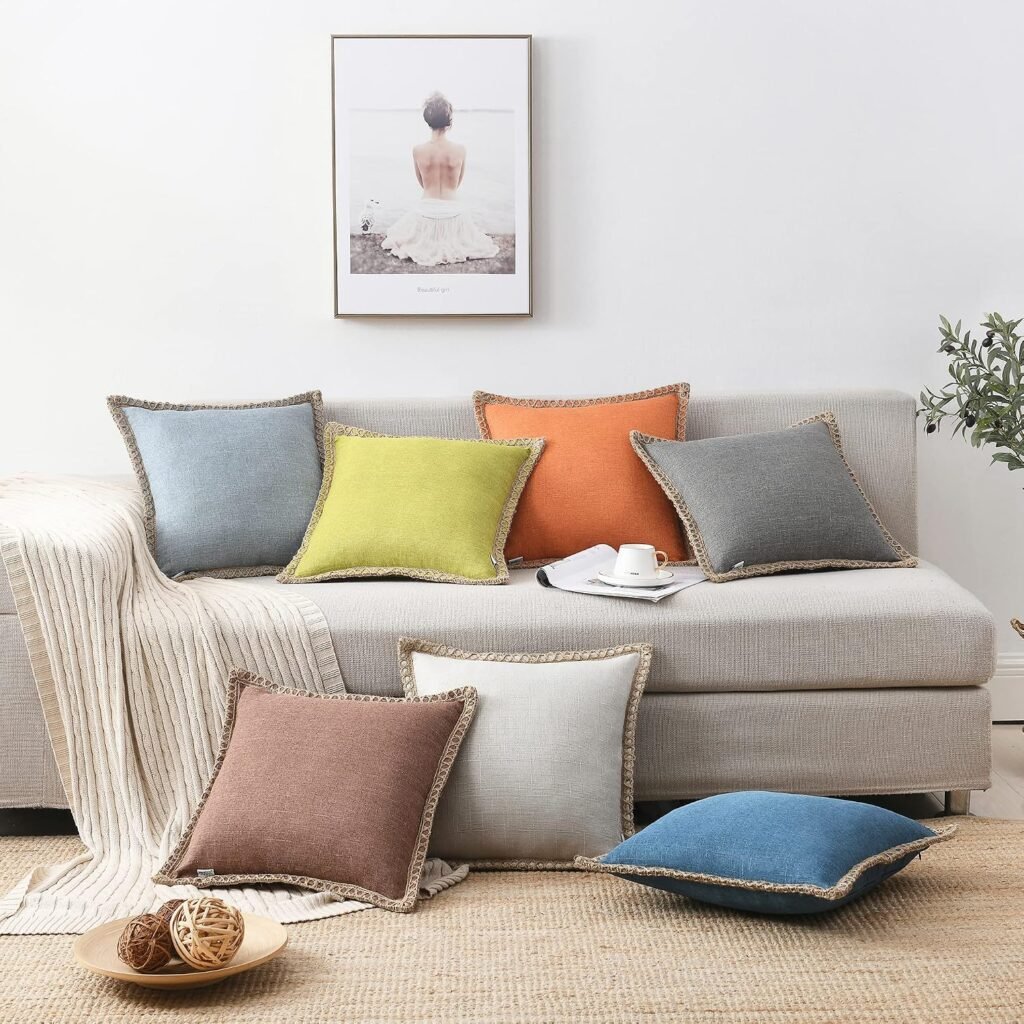
A sofa can certainly be the centerpiece of any living room, but in a farmhouse-style setting it plays a very special role because the farmhouse look is basically all about comfort and livability. A farmhouse sofa should look genuinely comfortable — deep, generous, slightly casual — rather than precise or formal.
Choosing the classic farmhouse sofa is like choosing your house’s favorite piece of furniture. In fact, the options are: a white or warm cream cotton slipcovered sofa (a bit wrinkled, doable, straightforward), a neutral linen sofa in warm oatmeal or natural beige, or a worn leather sofa in cognac or caramel. Each one is great for the farmhouse look because it: with the slipcover you get casual and practical, linen sofa is warm in a natural way, and leather sofa has an aged character.
What the farmhouse sofa is rarely, if ever, is a grey microfibre sofa with tight upholstery in a modern style. It is usually the sofa that people buy just because it is there and not because they want it. It gives no sense of warmth, no character, and no farmhouse feel no matter what it’s surrounded by.
- Best farmhouse sofa choices: cotton slipcover in white or cream (most authentic), linen in natural or oatmeal, worn leather in cognac or tan, rolled-arm Chesterfield in neutral fabric
- Legs: turned wood legs or simple tapered legs in natural or dark wood — never metal legs (too contemporary for the aesthetic)
Farmhouse Curtains — Linen is the Answer
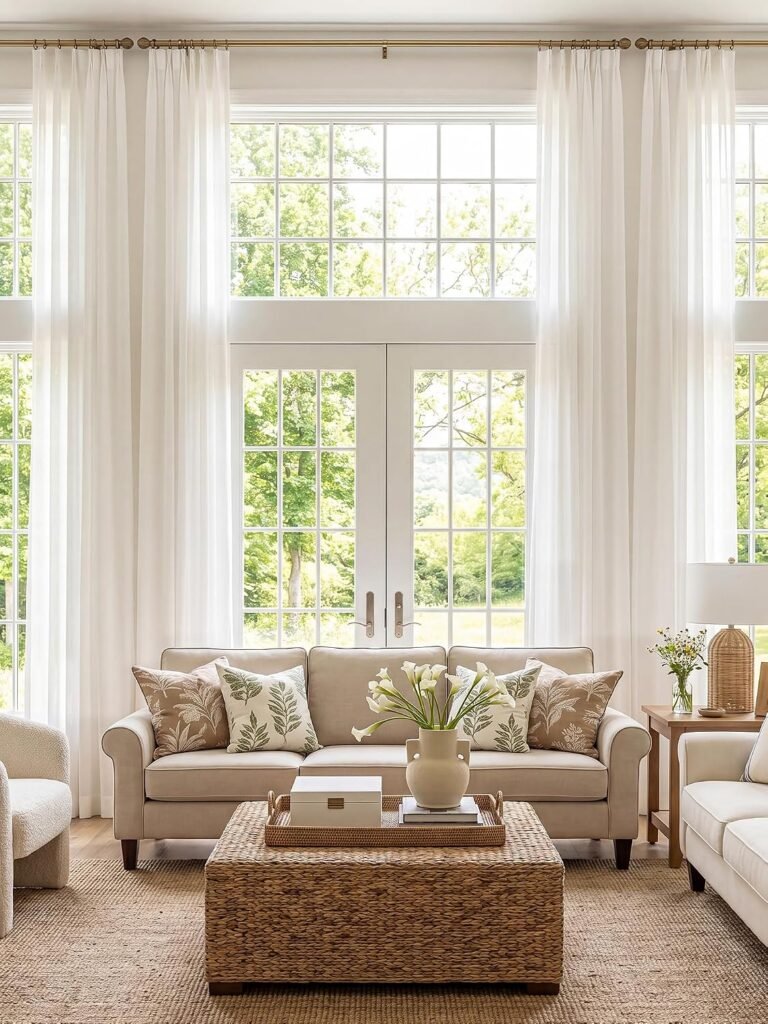
Linen curtains cream for farmhouse floor length curtains
If there’s one curtain style that matches the charm of a modern farmhouse, it’s natural linen. The features of linen curtains — a bit uneven, clearly woven, warm in color — are the qualities that farmhouse style treasures: natural, genuine, down-to-earth, and attractive not in spite of but rather because of its imperfections.
Floor-length linen curtains in natural, cream, or warm white — hung from a simple iron or wood pole positioned as close to the ceiling as possible — are the definitive farmhouse window treatment. They filter morning light into something warm and golden, hang with the relaxed drape that only natural fibre achieves, and complement every other element of the farmhouse palette.
The heading style for farmhouse curtains should be simple: rod pocket for the softest, most gathered look, or eyelet for a cleaner, slightly more contemporary take on the farmhouse style. Tab top works in casual farmhouse spaces. Pinch pleat is too formal.
✦ PRO TIP: Go for linen with a rod pocket heading and a tiny ruffle above the rod pocket (very often called a French return or eyelet ruffle) if you want to get the real farmhouse curtain effect. That subtle ruffle at the curtain top is a traditional country window treatment element which fits perfectly in a farmhouse context.
Shiplap, Reclaimed Wood, and Architectural Character
The architectural elements most associated with the modern farmhouse aesthetic — shiplap panelling, exposed wood beams, barn doors, and reclaimed wood — are either structural (built into the house) or can be added as surface treatments.
Shiplap accent walls
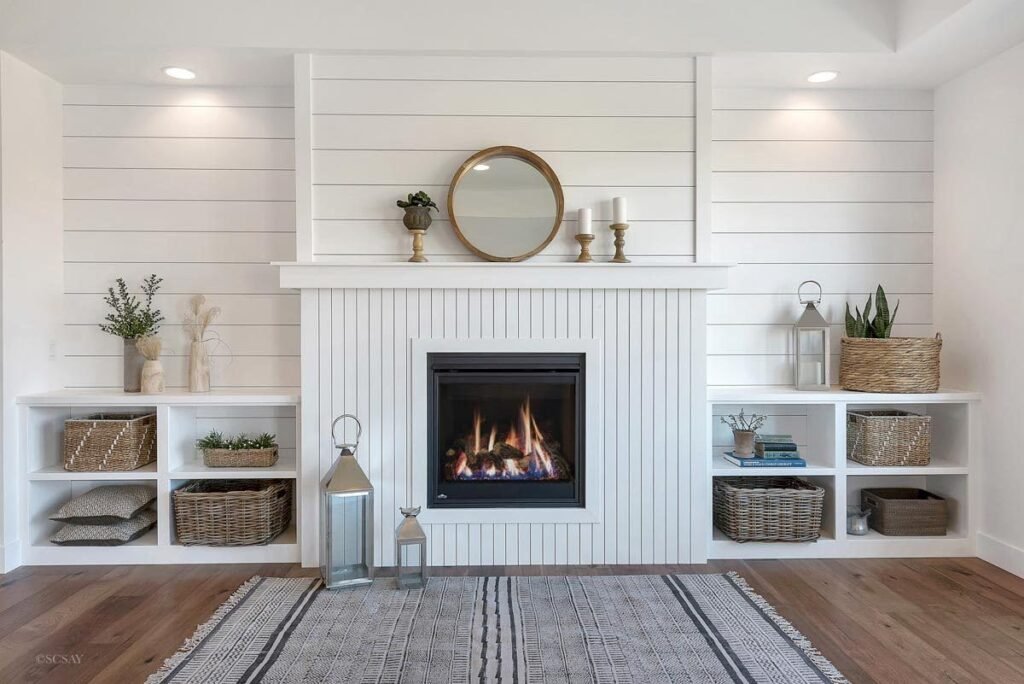
Shiplap wall panels peel stick farmhouse
Shiplap — horizontal boards with a slight gap or overlap between each board, creating a distinctive shadow line — is the most definitively farmhouse wall treatment available. A single shiplap accent wall in the living room behind the sofa or fireplace immediately establishes the farmhouse aesthetic in a way that nothing else does as efficiently.
Real shiplap involves installing actual wooden boards, which requires some DIY skill and moderate cost (approximately $200–400 for materials for a standard wall). Peel-and-stick shiplap panels — adhesive panels that replicate the look without nails or permanent installation — are available on Amazon for approximately $50–100 per wall and work very well in rental properties and for anyone who wants the look without the installation commitment.
Reclaimed wood elements
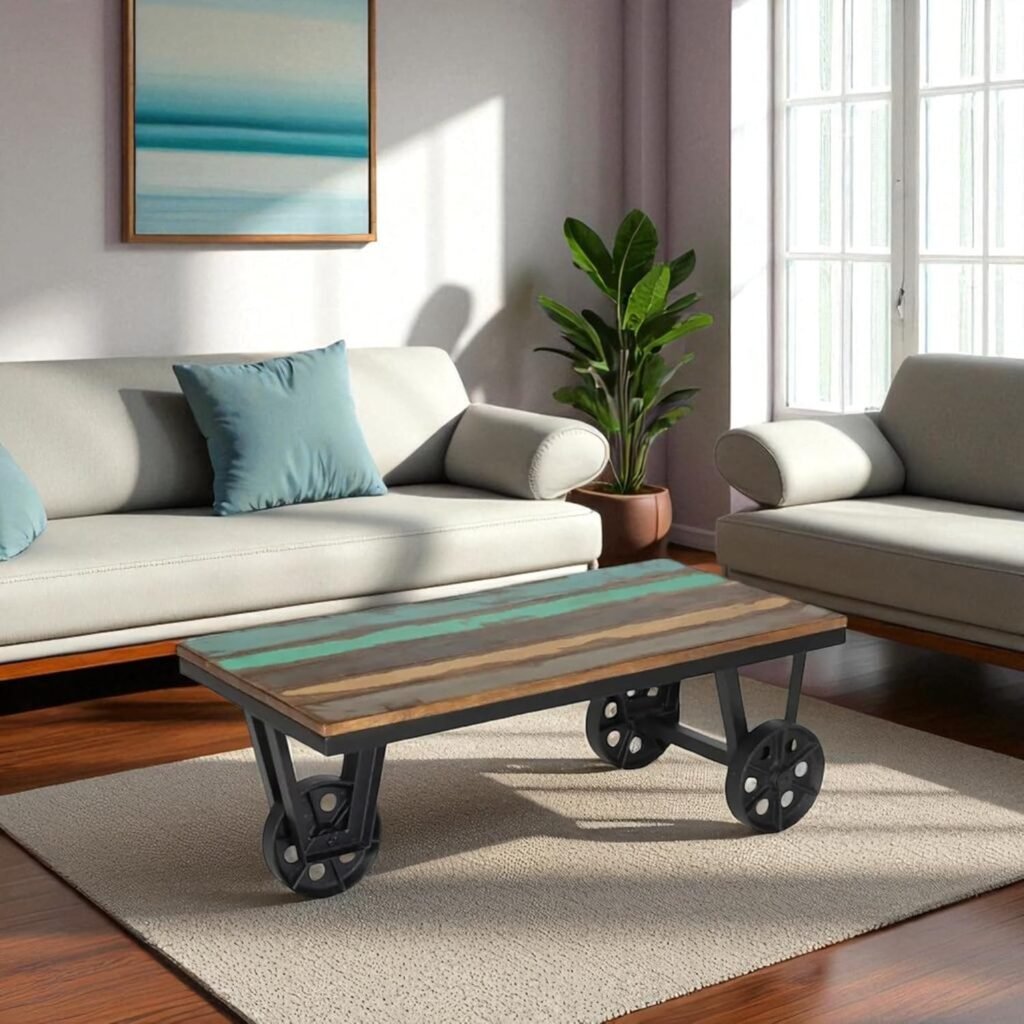
Reclaimed wood coffee table living room
Reclaimed wood — old barn wood, weathered grey oak, or any wood with visible age and character — has a quality that freshly sawn wood cannot replicate. The grain is richer, the colour is more complex, and the surface shows the evidence of a previous life that makes it immediately interesting.
The most frequent usage in a farmhouse living room is reclaimed wood coffee tables, shelves, and even mantlepiece surrounds. A genuine reclaimed wood coffee table — found at a salvage yard, a marketplace, or an antique dealer — can be the most characterful single element in the room.
Barn doors
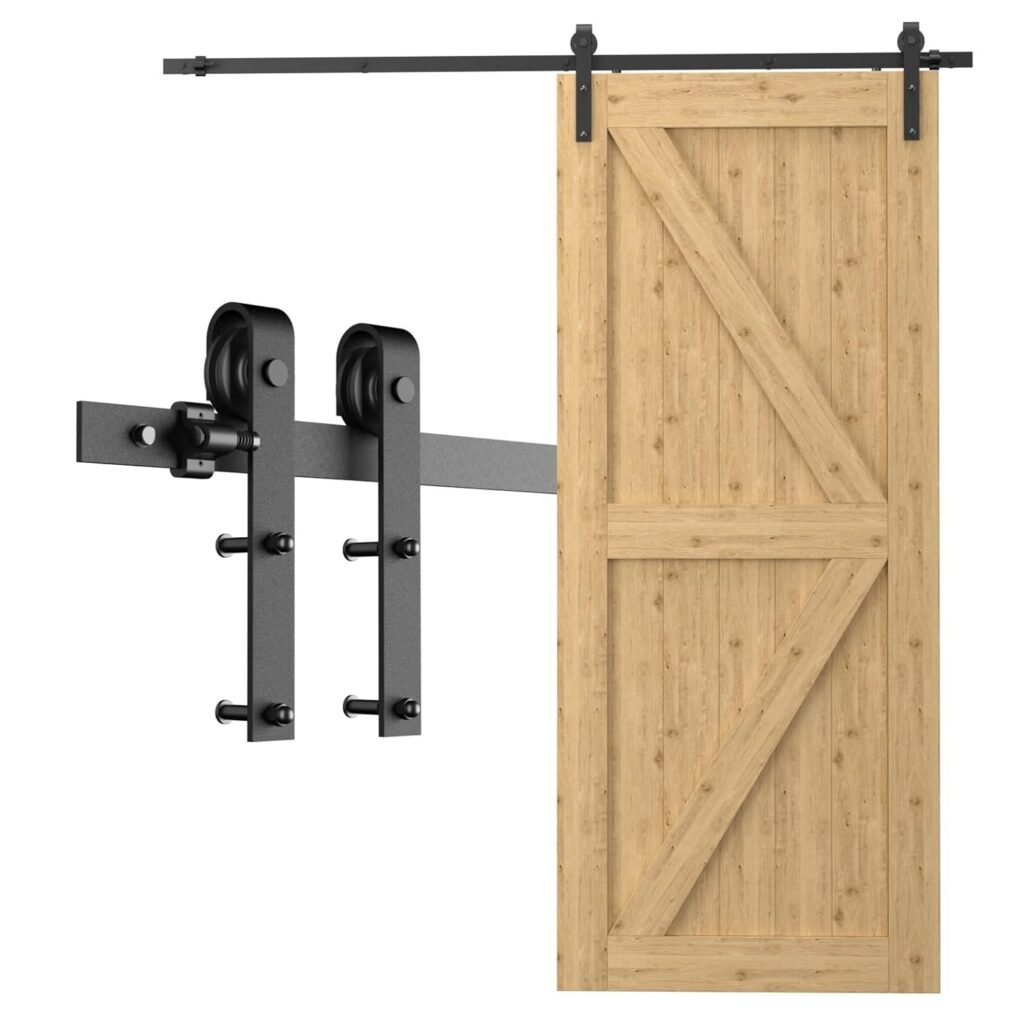
Barn door hardware sliding door kit black steel
A barn door — a sliding door on exposed steel hardware mounted above the door opening — is one of the most strongly farmhouse-associated interior elements. In a living room, barn doors most commonly appear as room dividers between the living room and a hallway or dining room, or as closet doors.
The hardware that slides the barn door is as important as the door itself — black steel or iron bar hardware is the most farmhouse-appropriate choice. The door itself should be in natural or painted wood, ideally with simple board construction or a classic Z-brace pattern.
Farmhouse Furniture — Wood, Iron, and Natural Materials
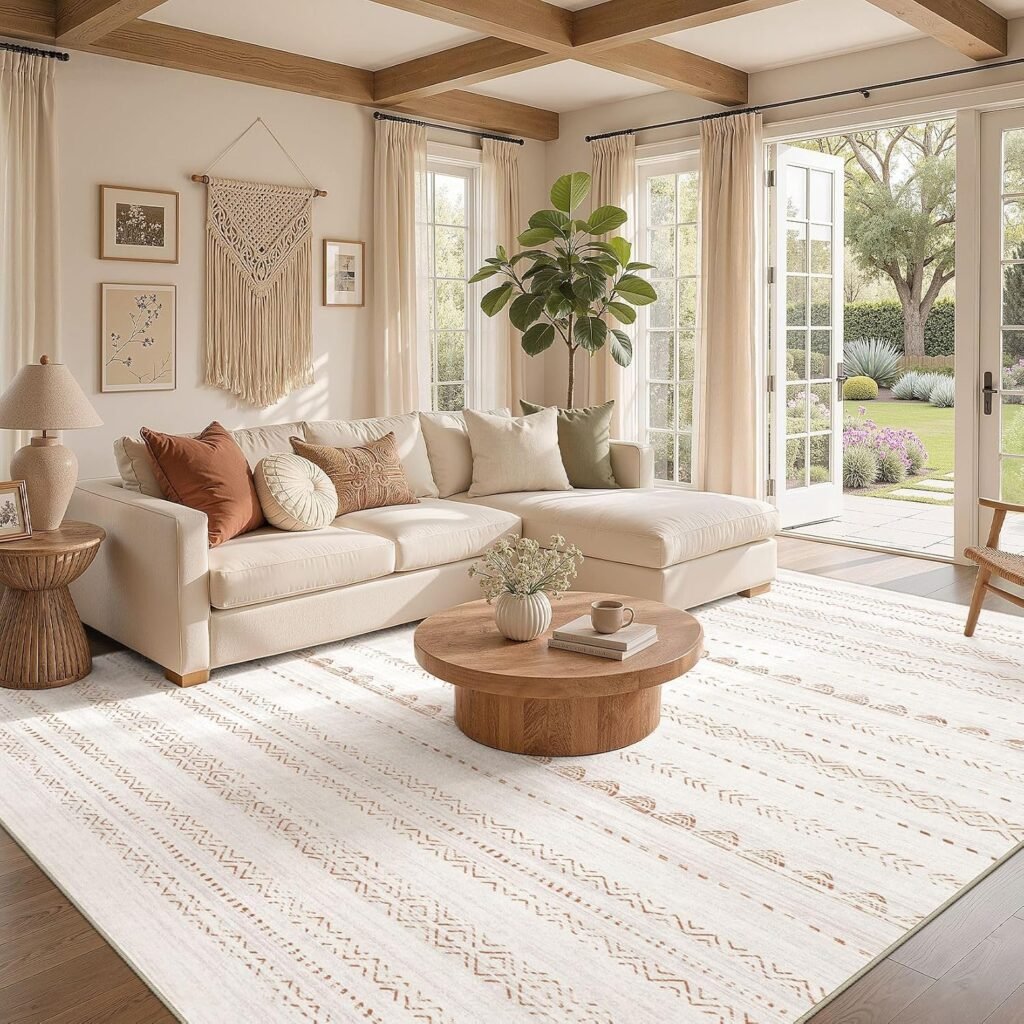
Farmhouse area rug cotton neutral living room
Typical furniture words for a modern farmhouse living room hardly ever change – natural wood is used in warm or weathered finishes, metals are black or dark iron, fabrics are linen or cotton, and accents are woven of natural fibres. As to style, furnishing can be a little rustic (wood grain exposed, legs turned, making quite simple) or modern and minimal (but in natural materials instead of metalloid ones).
- Coffee table: reclaimed or distressed wood, preferably with some character. Round or rectangular both work.
- Side tables: turned wooden legs or iron and wood combination. Metal and wood nesting tables are very farmhouse.
- Bookcase or display unit: white-painted wood, ideally with glass doors for the upper section — the classic ‘painted farmhouse cabinet’ look.
- Accent chair: a classic overstuffed club chair in neutral fabric, or a wooden rocking chair or ladder-back chair with a seat cushion for a more rustic farmhouse touch.
Farmhouse Textiles — Layered Natural Fabrics
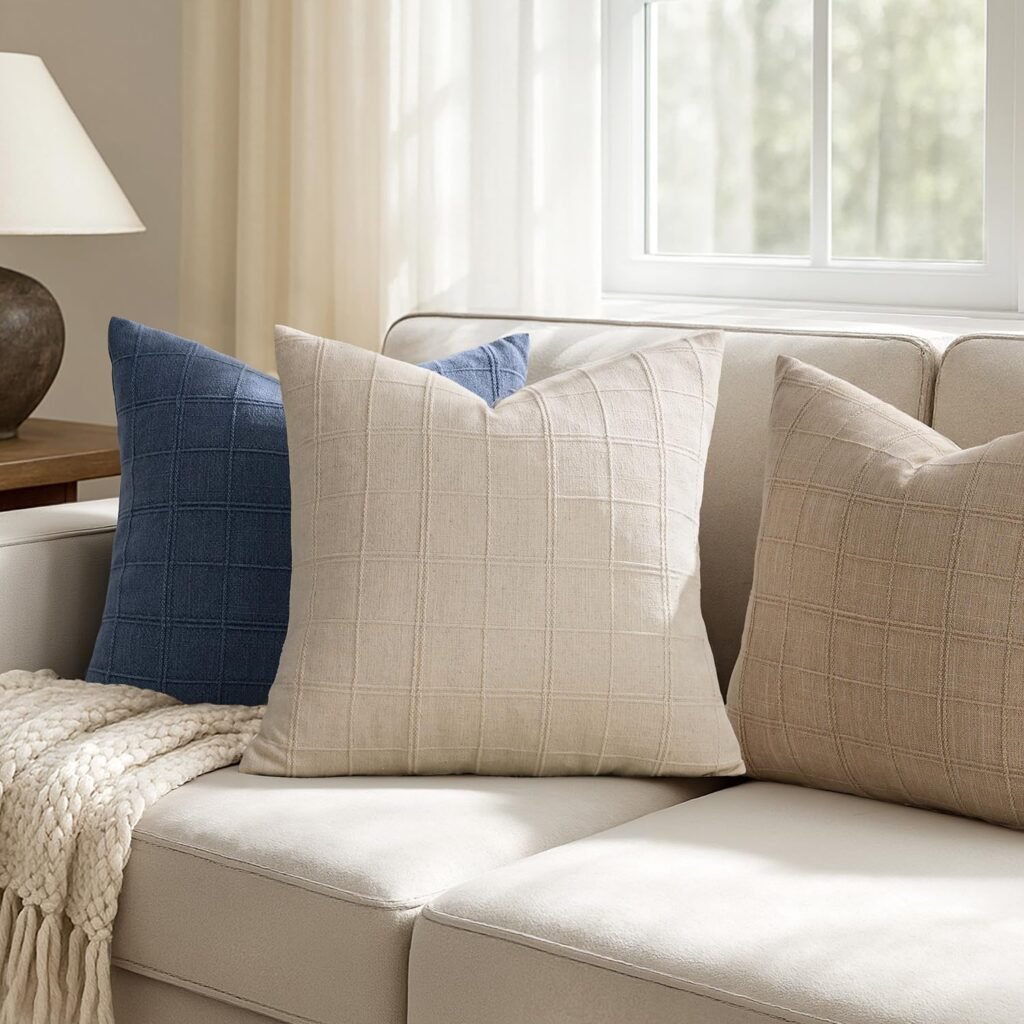
Farmhouse throw pillow covers linen
Farmhouse fabrics look like they come from the countryside. They are simple, natural, and layered beautifully. The main colors used are warm white, warm cream, natural beige, warm grey. Patterns are brought through traditional textile patterns that keep the spirit of the handcrafts alive: plaid, ticking stripe, grain sack stripes, French country print, and simple gingham.
- Throw pillows (cushions): linen or cotton in neutral tones, with some plaid, stripe, or simple text/word pattern introduces through at least one or two pillows
- Throws and blankets: cotton plaid throw in warm neutral tones — the plaid throw on the arm of a sofa is one of the most recognisable farmhouse details
- Rugs: If you choose natural cotton, jute, or braided wool, stick to neutral tones. Farmhouse rugs are generally in a cream, oatmeal, or warm grey base color with the pattern being something simple like the ticking stripe or a barely visible geometric
Farmhouse Lighting — Iron, Wood, and Warm Bulbs
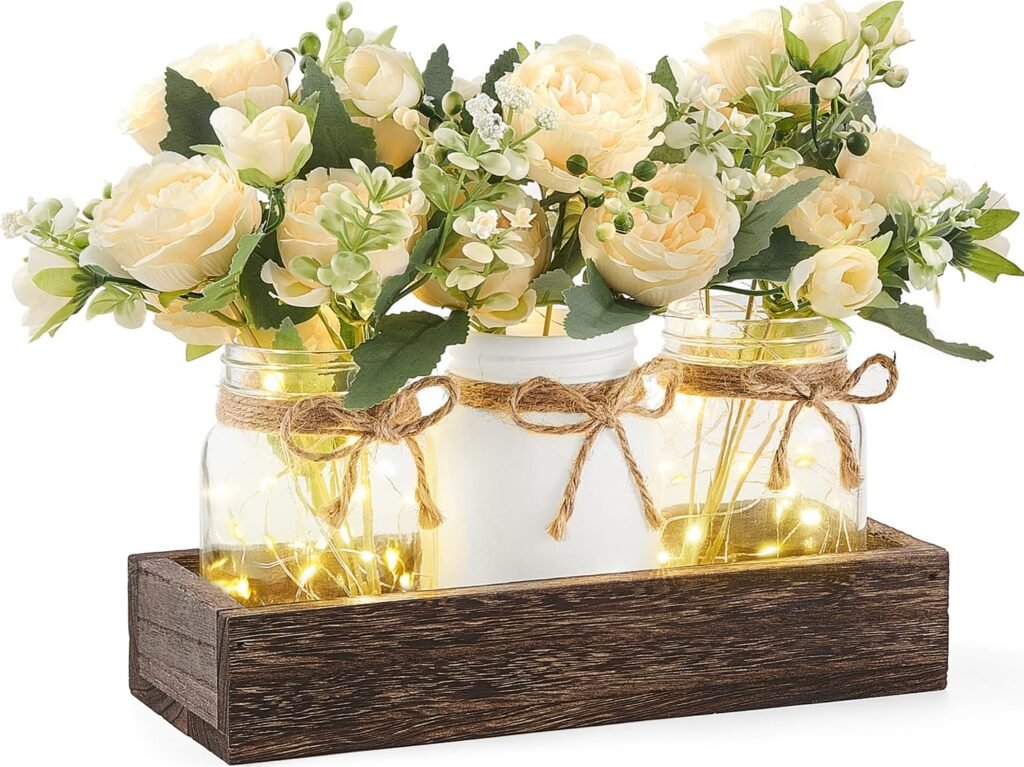
Mason jar lantern set farmhouse decor
Expressing the farmhouse style in lighting is mainly a matter of materials and colors: iron or black metal are the go-to materials for lighting fixtures, suitable places can be decorated with wood, and of course, warm-toned filament or warm white bulbs are always preferred over cool or bright white ones.
The lighting that would best accompany the farmhouse lifestyle in most cases would be a wrought iron chandelier or a semi-flush pendant for the main ceiling light, lamps with ceramic or wooden bodies and linen drum shades on the tables, floor lamps with a matte black metal base and simple drum shade, and lantern-style candle holders can be side table and mantel decoration.
- Key farmhouse lighting characteristic: Typical farmhouse lighting, in fact, the central element that establishes the warmth and nostalgia that is integral to the farmhouse feel, are Edison filament bulbs in warm amber tones. Swap out any cool white bulbs in your living room fixtures for warm white (2700K) or Edison filament
Farmhouse Wall Decor — Personal, Meaningful, Simple
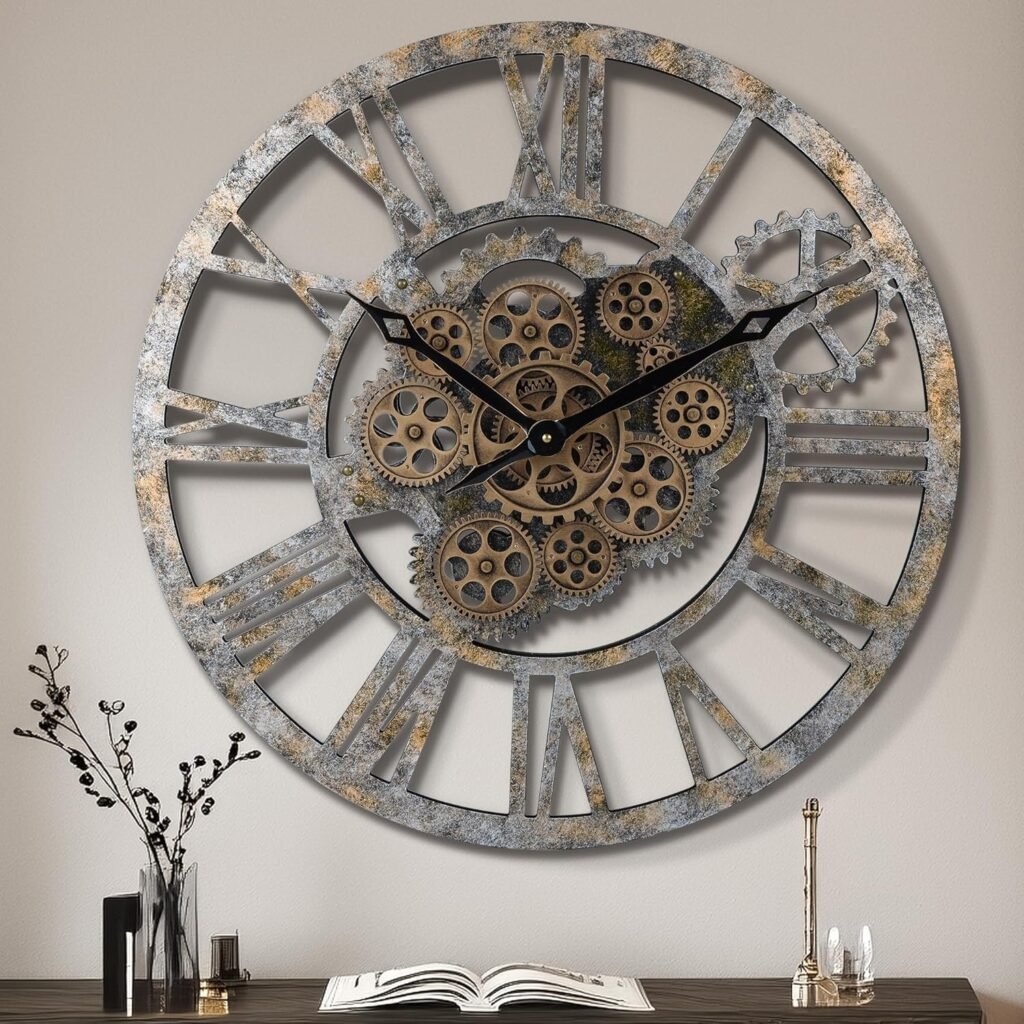
Farmhouse wall decor generally steers clear of being purely decorative and instead embraces meaningfulness. The most fitting farmhouse wall decorations are gutsy metal clocks, vintage wooden fonts with a very simple word or phrase, wreaths made from dried flowers or eucalyptus, family pictures in plain white or wooden frames, and a collection of walls showcasing botanical prints, old maps, or vintage-type illustrations.
The arrangement principle for farmhouse wall decor is personal and slightly asymmetric rather than perfectly balanced. A grouping of differently sized frames with slight spacing irregularity reads as collected and genuine. A perfectly symmetrical matching set reads as purchased from a catalogue.
The Farmhouse Living Room on a Budget
The modern farmhouse look is highly achievable on a moderate budget because its key elements — warm white paint, linen curtains, natural fibre rugs, plaid throws, cotton cushion covers — are widely available at accessible price points. The most expensive farmhouse elements (real shiplap, genuine reclaimed wood furniture, custom barn doors) can be approximated affordably:
- Instead of real shiplap: peel-and-stick shiplap panels ($50–100 per wall) or a basic white-painted V-groove panelling made with white painted MDF strips
- Instead of reclaimed wood furniture: distressed or weathered-finish furniture from well-known retailers, or second-hand finds from online marketplaces
- Instead of custom barn door: a cheap hollow-core door painted in matte white or warm grey, complemented by the use of low-cost barn door hardware
- Essential investments: linen curtains (most of the window area, greatest visual) a good-quality neutral area rug (ties the whole room together), plaid throw (most recognisable farmhouse element at very low cost)
📌 NOTE: The single most impactful farmhouse change that costs almost nothing: replace cool white light bulbs throughout the living room with warm white (2700K) or Edison filament equivalents. This changes the entire atmosphere of the room for approximately $10–20 total.
Final Thoughts
The modern farmhouse living room style has stood the test of time because it tackles the basic problem of home design more effectively than nearly any other look: on one hand, it is stunning, on the other, it is truly comfy. It makes spaces that are aesthetically pleasing without being stiff, that give off warmth without being messy, and that are suitable for daily family life without giving up on a nice atmosphere.
The basics are quite straightforward: walls painted warm white, curtains made from either linen or cotton in natural hues hanging from ceiling to floor, a sofa that is both comfy and made of natural fabric in a neutral shade, a natural fibre rug, layers of textiles in plaids and neutral shades, and sufficient wooden and iron elements in the accessories that narrate the style story. Add a plant or two, a warm lamp, and something personal — a family photograph, a favourite book, a piece of pottery — and the room is complete.
The style is achievable at any budget, in any size room, and in any type of home — from a genuine farmhouse conversion to a city apartment. The aesthetic is in the materials and the palette, not the architecture.
Frequently Asked Questions
Q: What is the difference between farmhouse and modern farmhouse?
A: Traditional farmhouse decor is generally quite rustic — you will find lots of distressed wood, vintage pieces, and antique elements, and the overall look is intentionally worn and aged. Modern farmhouse is a step further by incorporating contemporary clean lines with rustic materials, keeping the colour palette simpler and more controlled (more warm white, visible age less), and the accessories are more carefully chosen to not give an overcrowded or nostalgic appearance. Therefore, the style is a fresh, liveable one rather than retro or themed.
Q: What colours are used in a modern farmhouse living room?
A: Warm white & neutrals such as warm cream, soft greige, warm grey, natural wood and linen are the main colors of the modern farmhouse color scheme. Accent colors are brought in through fabrics and decorative items instead of the wall. For example, black or iron hardware can be used for contrast, sage green from house plants & a few cushions, dusty blue or soft teal from throw pillows, and warm rust or terracotta as seasonal accent colors in throws and cushions. The color scheme does not include cool greys, bright colors, or anything that looks synthetic.
Q: What curtains are best for a modern farmhouse living room?
A: Cotton and linen are perfect materials for modern farmhouse style curtains – especially in off-white, creams or natural colors. The rich texture, warmth and casual drape of linen really embody the farmhouse style’s love for natural, genuine materials. The softest and most gathered look is achieved by rod pocket heading. For maximum impact, hang curtains floor to ceiling on an iron rod or simple natural wood rod. Linen needs to be opaque enough to give privacy when curtains are drawn but not lined so that it still maintains its natural light-filtering capability.
Q: Does a modern farmhouse living room need shiplap?
A: Shiplap is closely tied to the modern farmhouse style and gives instant recognition to the look, however, it is not a must-have. The farmhouse style can be done just as well through the color scheme (warm white walls), the materials (linen, wood, iron), and the textiles (plaid throws, cotton cushions, natural rugs). A shiplap feature wall alone has a greater effect than shiplap all over and can be done with peel-and-stick panels for less than $100 without any permanent installation. If shiplap is not on the cards, a white-painted brick fireplace surround or a white-painted wood mantel can visually do almost the same job.
Q: How do I add farmhouse style to a living room I rent?
A: Renting rules prevent certain farmhouse features from being done (such as real shiplap, barn doors, or big paint changes), but most of the farmhouse look is really in the things that can be moved around: linen curtains, plaid throws, cotton cushion covers, jute or cotton rugs, Edison filament bulbs, galvanized metal accessories, and potted plants. When these items are combined with a neutral living room they evoke a farmhouse environment very effectively and without any permanent changes. Peel-and-stick shiplap tiles can be a good option for renters because they can be removed without damaging the walls.