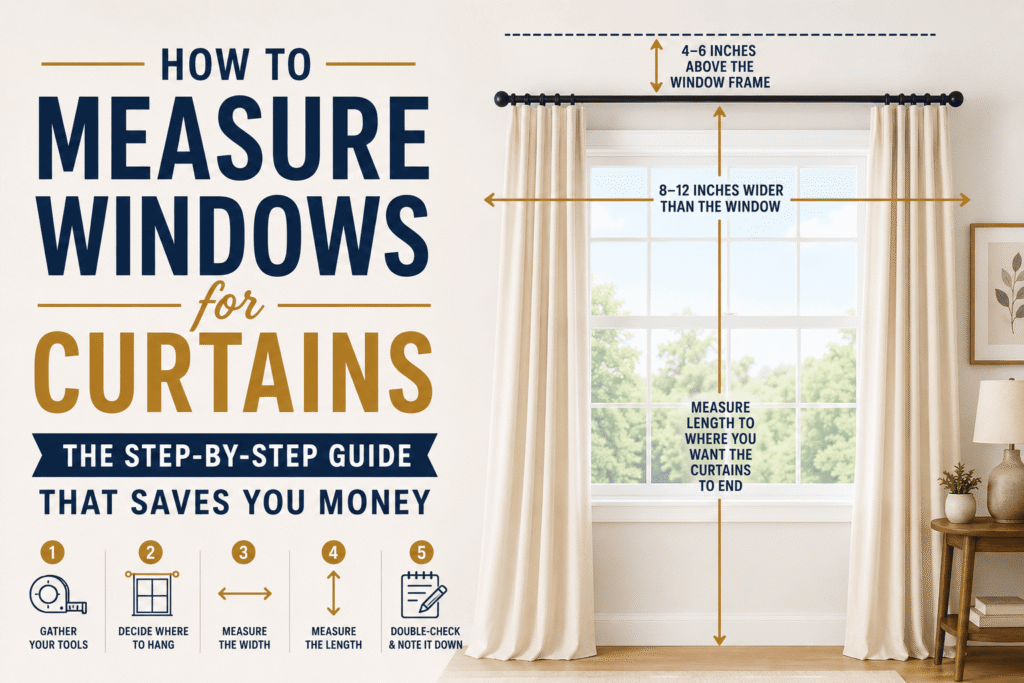
Here is a secret that a lot of people find out only when it is too late: the length of curtains is one of the very few decorating choices that without redoing the whole thing cannot really be corrected. Pick the wrong sofa cushions and you just replace them. Select the wrong paint color and you repaint in a couple of days. However, purchase curtains that are 3 inches too short, and every time you come into that room, you will be annoyed by that space between the fabric and the floor.
Getting the perfect curtain length is what divides rooms that appear professionally designed and rooms that appear as if someone guessed and got lucky. The comforting news is that once you know the options the decision is quite easy.
This guide guides you through every length option, room type and ceiling height – so you buy right the first time.
Why Curtain Length Has Such a Big Impact on a Room
Interior designers tend to say one rule more often than anything else: curtains that are too short make the room look small and cheap even if you spent a lot on them. It doesn’t matter if they are linen, silk, or the most expensive velvet – if they are just hanging there just above the floor as if they got shrunk in the wash, the entire room is lessened.
On the contrary, fabrics that cover the floor or come near to it, make a room look elegant straight away and purposeful. They also direct the gaze upwards making the ceiling appear taller than it really is. They wrap the window like a very thought out and complete work of art. A simple room with few pieces of furniture will look stylish when decorated with long curtains.
Length also impact practical performance in mind ways people hardly think about. Short curtains that hardly cover the window leave gaps allowing cold draughts to enter and light to spill through at the sides and bottom. Floor-length curtains that extend well past the window frame, on the other hand, are a much more effective barrier to both.
✦ PRO TIP: If you take nothing else from this guide, take this one thing: always buy longer than you think you need. You can always hem curtains to make them shorter. You cannot make curtains longer once they are already cut.
Step One — Measuring Your Windows Correctly
Before deciding on any length, you must take two measurements: the drop (the length the curtain will be hanging from the rod to the endpoint) and the width (how wide each panel should be). Both are extremely important, but here we will focus only on drop — the length measurement that is most often misunderstood by many.
How to Measure the Drop of Curtains
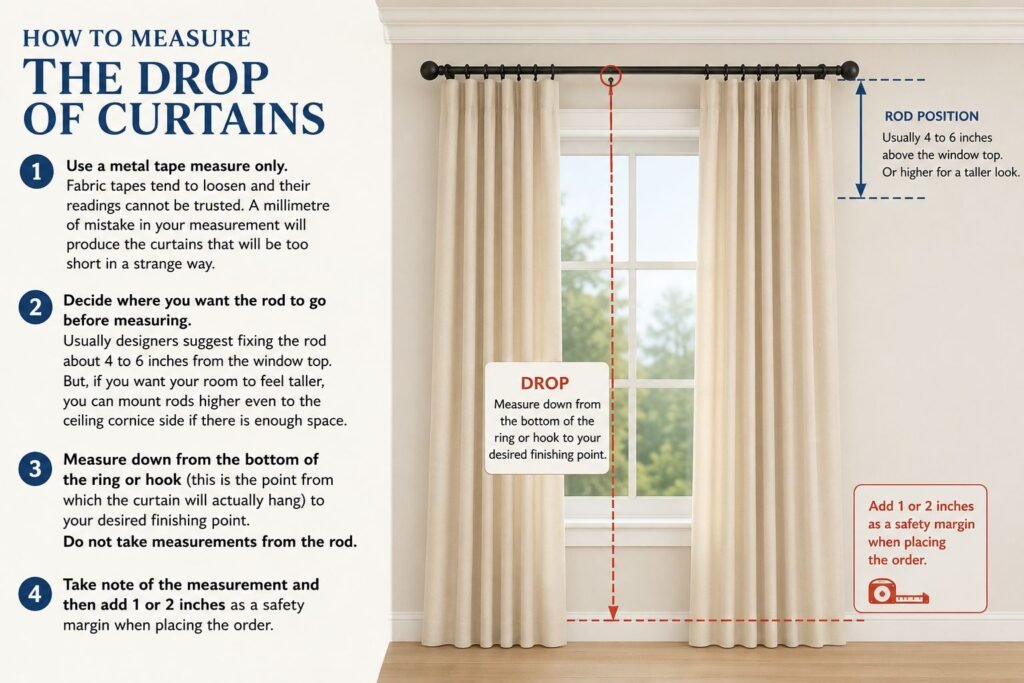
A drop is the length of a curtain from the most top point of the curtain rod up to where the curtain’s lower edge will be. The detailed procedure follows:
- Use a metal tape measure only. Fabric tapes tend to loosen and their readings cannot be trusted. A millimetre of mistake in your measurement will produce the curtains that will be too short in a strange way.
- First thing first, decide where you want the rod to go before measuring it. Usually designers suggest fixing the rod about 4 to 6 inches from the window top. But, if you want your room to feel taller, you can mount rods higher even to the ceiling cornice side if there is enough space.
- Measure down from the bottom of the ring or hook (this is the point from which the curtain will actually hang) to your desired finishing point. Do not take measurements from the rod itself.
- Take note of the amount and then add 1 or 2 inches as a safety margin when placing the order.
How to Measure the Width of Curtains
To get the width, simply measure the window from one frame side to the other. Then, multiply it by two. Each curtain panel should have a minimum width equal to 1.5 times the width of half the window when flat — this is the feature that makes curtains have their gathered and full look. To achieve a rich, lavishly draped look, go for panels that are twice the size of the window width.
✦ PRO TIP: After measuring, always add 1 to 2 extra inches to your drop number before ordering. It is far simpler to have a curtain hemmed slightly shorter after it arrives than to return it and start the ordering process again.
The Five Curtain Length Options — What Each One Achieves
There are five main curtain lengths used in home decoration. Also there are different types of curtains as well which we need to know as well. Each has a specific purpose, a specific visual effect, and specific rooms where it belongs. Understanding all five means you can always make an informed choice rather than guessing.
1. Sill-Length Curtains
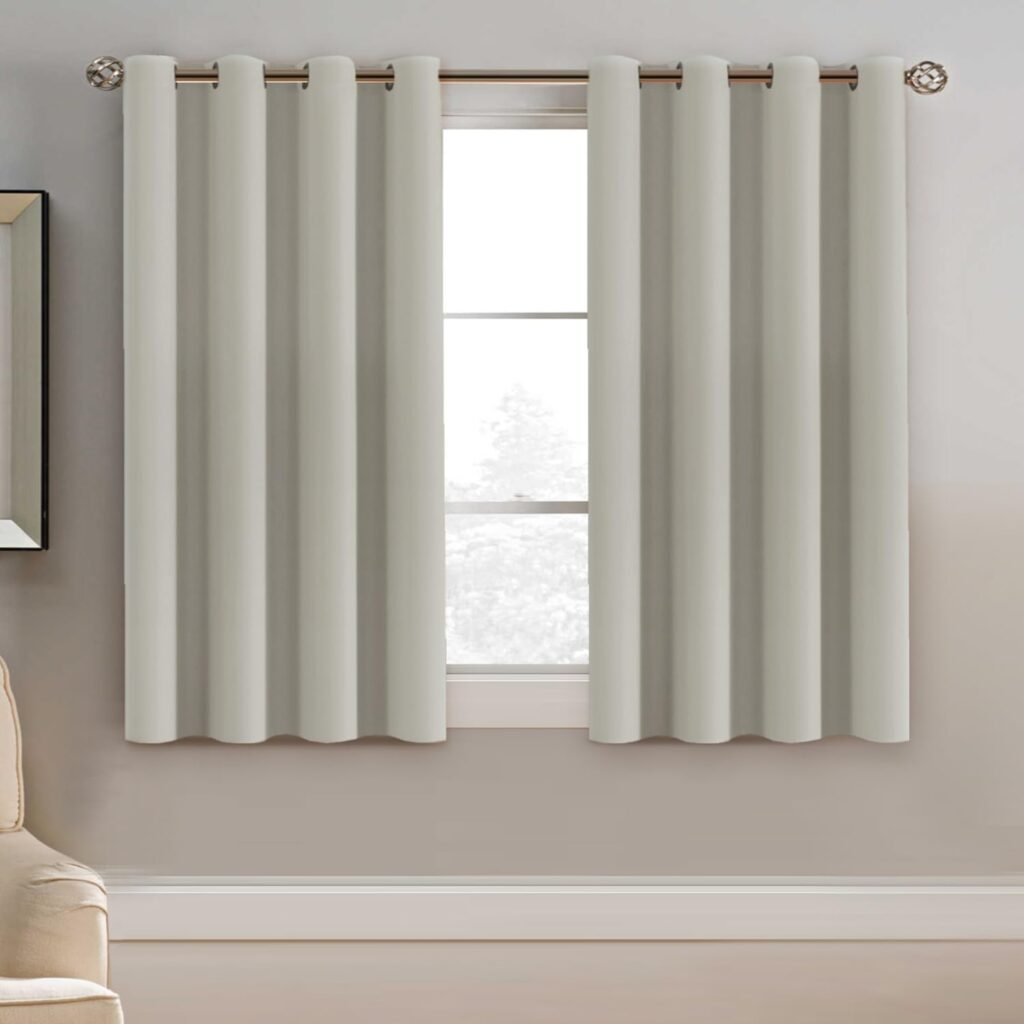
Sill Length Curtains – Buy Now.
Sill-length curtains just reach the bottom of the window sill without going down a few inches below it or being above it. They create a clean, simple, and functional appearance that looks neat and orderly.
They are perfect for spaces where longer curtains would be really inconvenient. A kitchen with a sink under the window is probably the clearest example: curtains touching the floor would always be wet and dirty. Children’s bedrooms are another example, as long curtains at child height tend to get pulled, climbed, and generally destroyed.
In the living rooms and master bedrooms, the curtain length at the window sill usually visually lowers the ceiling height and the whole room becomes smaller. Use them only if absolutely necessary for the purpose on hand.
- Best for: Kitchens, bathrooms, children’s bedrooms, utility rooms, small windows
- Avoid in: Living rooms, master bedrooms, dining rooms, any room where you want a polished feel
2. Below-Sill or Apron-Length Curtains
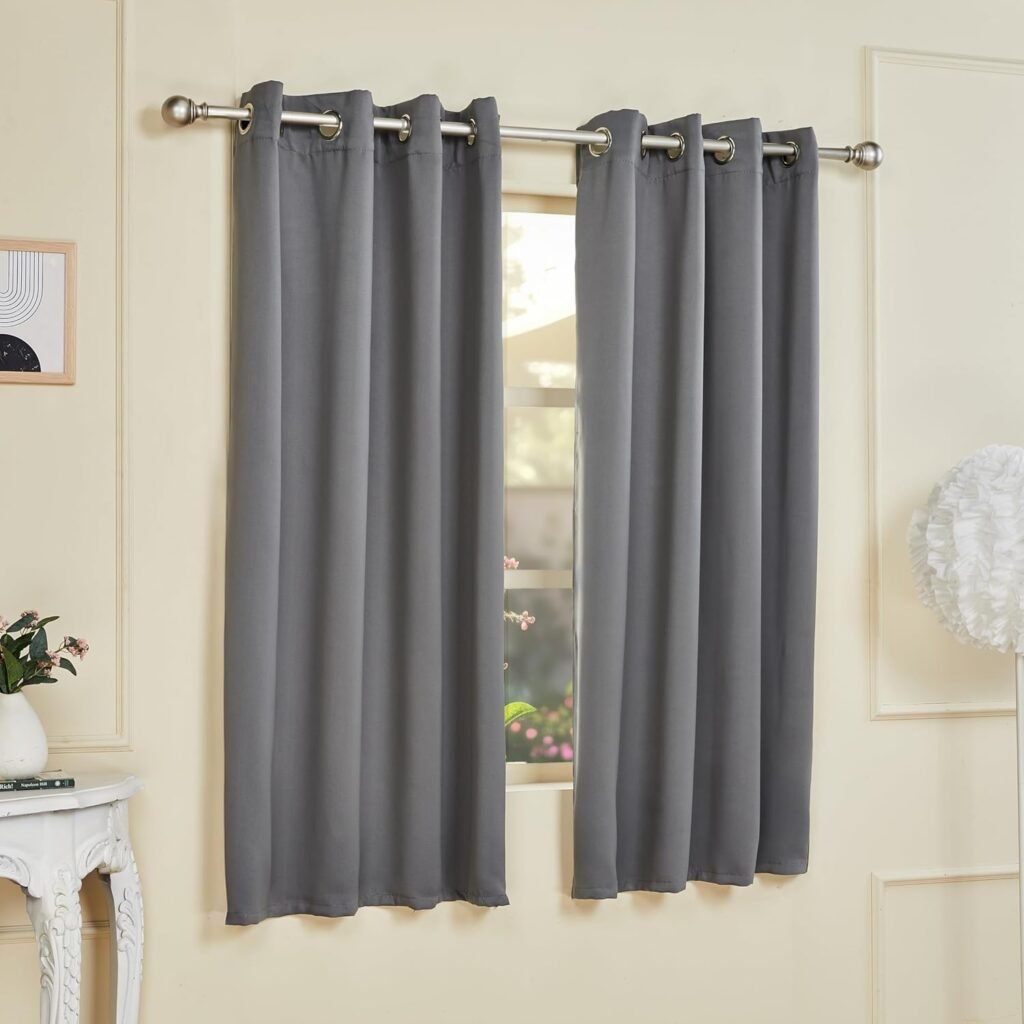
You can buy this type of curtains from Amazon as well. Click here to buy the same.
Apron-length curtains extend 4 to 6 inches beyond the window sill — a little beyond the sill height but not reaching the floor. This was a typical option in bygone days but nowadays, interior designers nearly all discourage it.
The problem is straightforward: somebody must have started aiming for floor-length curtains but then didn’t want to finish it. It has absolutely no single benefit of sill-length and not even the charm of floor-length. It stands in a weird middle ground that serves neither purpose very well.
An apron length is a reasonable choice only if panel-length curtains can’t be used in the room due to a radiator or window seat being right under the winder, so it is not possible for the curtains to hang all the way down to the floor.
- Best for: Situations with under-window radiators, built-in window seats, or unavoidable obstructions
- Avoid in: Any room where floor-length curtains are achievable
3. Floor-Length Curtains — The Universal Standard

Floor-length curtains (Click here to buy) usually stop about half an inch to one inch above the floor. Most interior decorators say this is the perfect length: near enough to give an intentional and chic appearance, but not so long that they gather dust or are a danger of tripping in the course of everyday life.
Floor-length curtains are about half an inch to one inch shorter than the height of the floor. This is the perfect spot that designers of interiors almost always go for: near enough to seem deliberate and classy, but not too long that they gather dust or corners of the room become a trip hazard with your regular movements.
If you are ever in doubt about what length to choose, floor-length is almost certainly the right answer.
- Best for: Living rooms, master bedrooms, dining rooms, home offices, hallways, spare bedrooms
- Works with: Every style, every budget, every ceiling height above 8 feet
✦ PRO TIP: For perfect floor-length curtains, subtract half an inch from your floor-to-rod measurement when ordering. This creates the clean ‘floating’ gap that looks deliberate rather than like the curtains shrank.
4. Puddle-Length Curtains
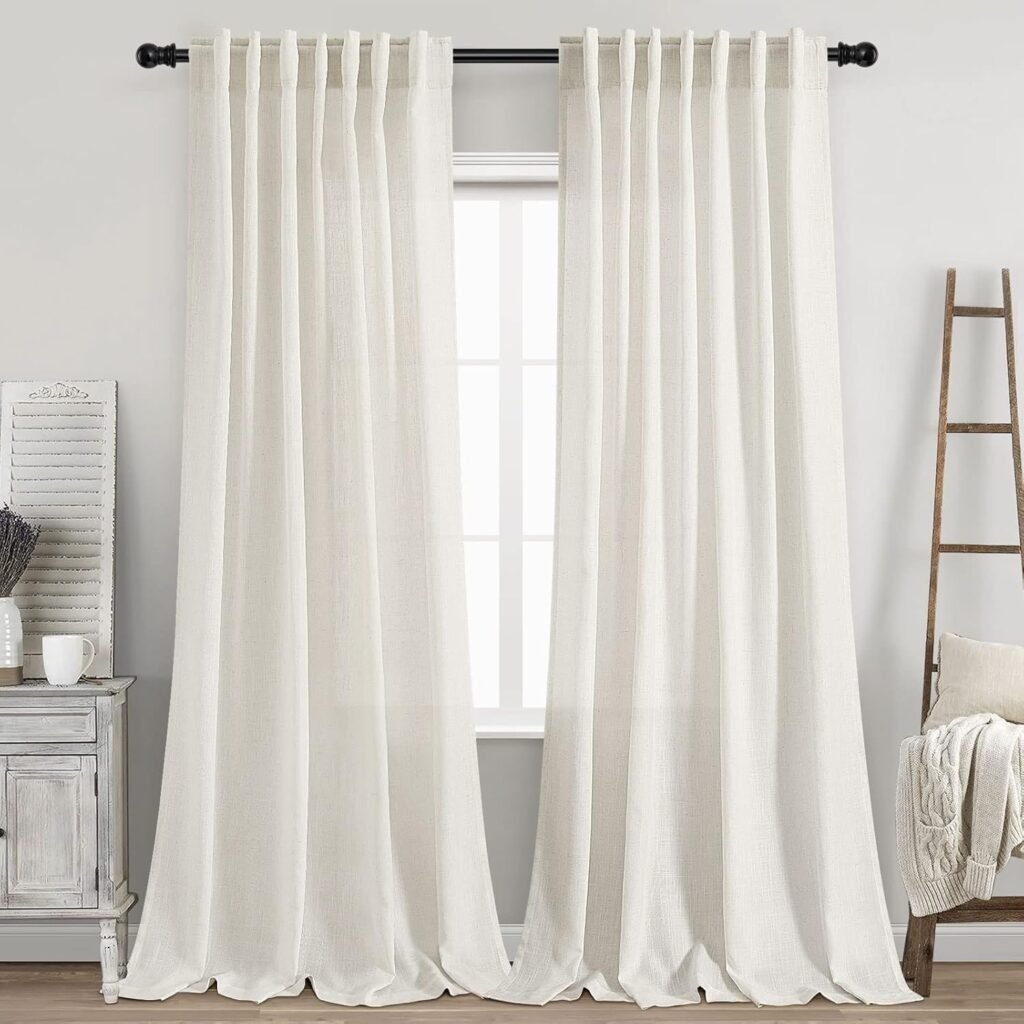
Puddle length curtains or drapes deliberately drop down to the floor, the length of the fabric pool at the base may vary from 1 inch to 6 inches. It is this intentional excess that generates a softly elegant, relaxed atmosphere, a trademark of formal rooms, top-notch interior designs, and the kind of spaces one sees in design magazines.
Sometimes a small puddle of 1 to 2 inches is referred to as a ‘break’ — like the way a perfectly tailored suit trouser lies gently on the shoe. It comes across as stylish and thought out without being too fancy for ordinary usage. A very exaggerated puddle of 4 to 6 inches is visually very impressive in a formal dining room or a grand master bedroom, however, it gathers dust very quickly and can even be a trip hazard in the rooms that are frequently used.
- Best for: Formal dining rooms, master bedrooms, drawing rooms, spaces used mainly for entertaining
- Avoid in: Hallways, family living rooms, children’s rooms, homes with pets or small children
5. Ceiling-to-Floor Curtains
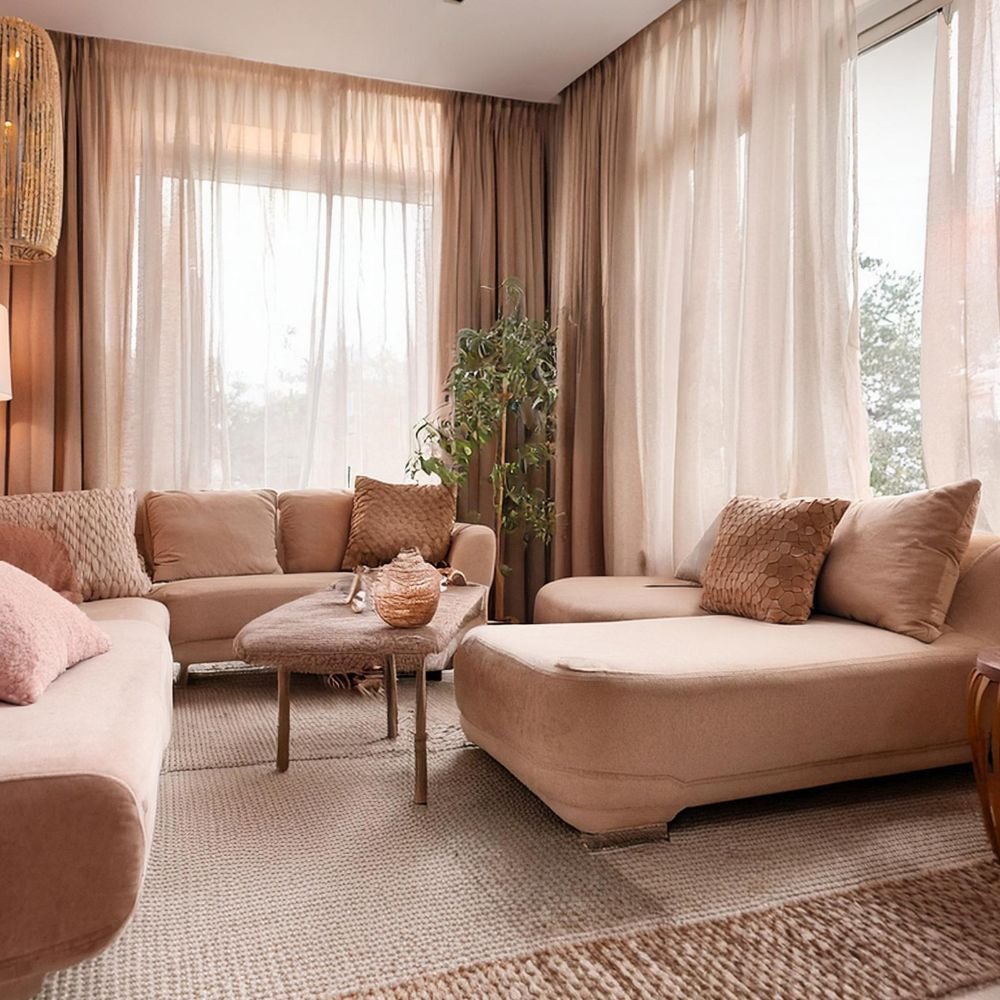
Ceiling-to-floor curtains are installed very near the ceiling — preferably not more than 2 or 3 inches away from the cornice, or on a ceiling-mounted track — and they extend down to the floor. The curtain rod is hidden, and the curtain seems to start right at the ceiling.
This is a technique that designers love because it can make any room appear to be substantially taller. By having one continuous vertical line from the floor all the way to the ceiling, it creates an optical illusion of the room being taller which is quite effective. For rooms with lower ceilings (less than 9 feet), using ceiling-to-floor curtains can change the feeling of the whole space.
- Best for: Rooms with 8 to 9 foot ceilings where a taller feel is wanted, bedrooms with low ceilings
- Avoid in: Rooms where windows sit far below the ceiling, as the curtain expanse above the glass can look odd
The Right Length for Each Room in Your Home
Living Room Curtains

Floor-length curtains paired with an installation as high on the wall as possible are the right solution for just about any living room entirely. The rod should be installed at least 4 to 6 inches above the window frame.
If there is a space between the top of the frame and the ceiling cornice, the rod can be pushed even higher. The point is to visually extend the window, which is by far the most effective change of how a room feels.
Wide living room windows with multiple small panes are usually best treated as one big window rather than several small ones. Make sure to use enough curtain panels to cover the whole width liberally, and have some fabric on each side left over when the curtains are open. Even interior designers look for curtain pelmets in the living rooms or other rooms. It also gives an elegant look to the interiors.
Bedroom Curtains

Bedrooms can be a bit more dramatic than living rooms. Floor-length bedding is the minimum for a bedroom that feels done — but a gentle puddle of 1 to 2 inches gives a bedroom a plush, serene ambiance while it stays quite functional. For kids’ rooms, exact floor-length or sill-length would work better.
Blackout curtains in bedrooms ideally should always extend a minimum of 4 inches from each side of the window frame. It is understood that the main light source will be the edges, not the fabric, so giving extra width is as important as length.
Kitchen Curtains
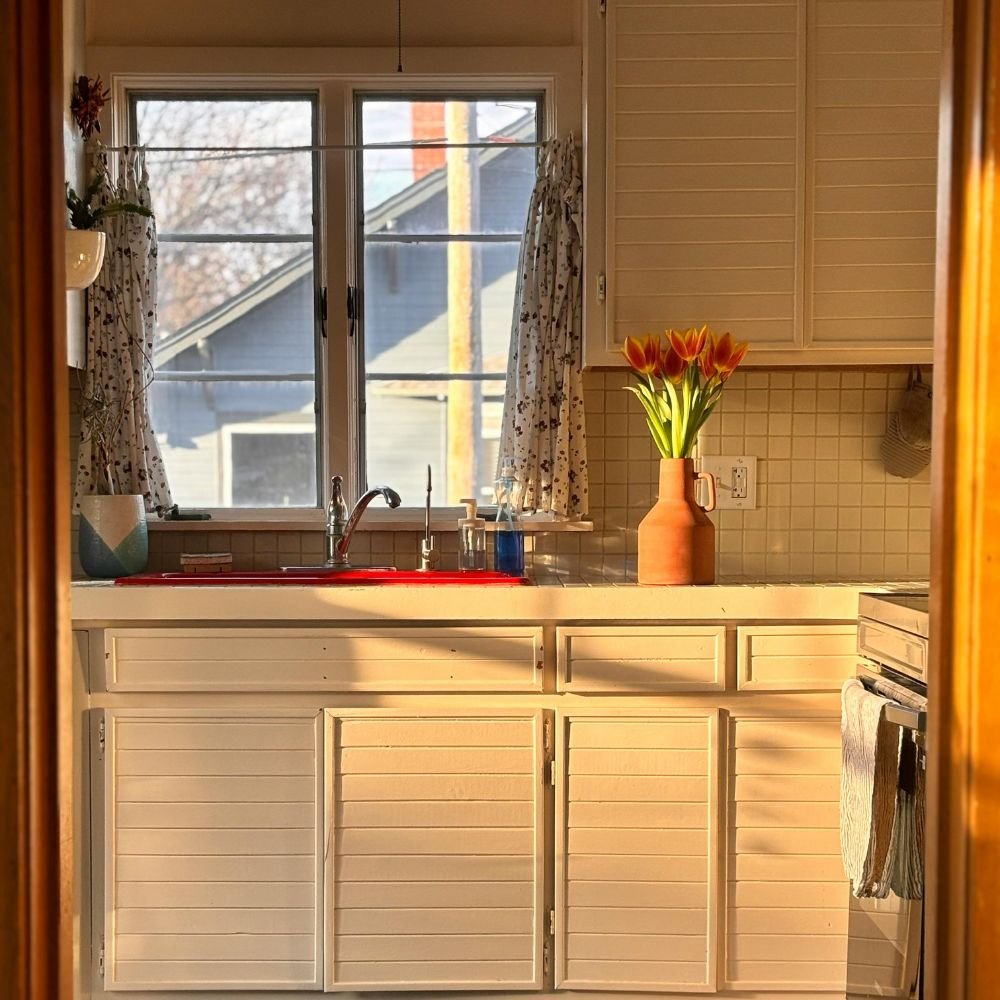
Kitchen is the major exception to the floor-length curtains rule. Mostly, sinks in kitchens are either directly under or close to the main window so the floor-length curtains would get wet, stained, and hardly quite hygienic. Sill-length is really the practical standard in kitchen.
Cafe curtains – panels that cover only the bottom half of the window – are another very good option for kitchens. They keep the privacy of the room from the street at standing level, however, they let in the daylight through the uncovered part of the window. They are quite a classic, slightly continental style that matches pretty much any kitchen very well.
Bathroom Curtains
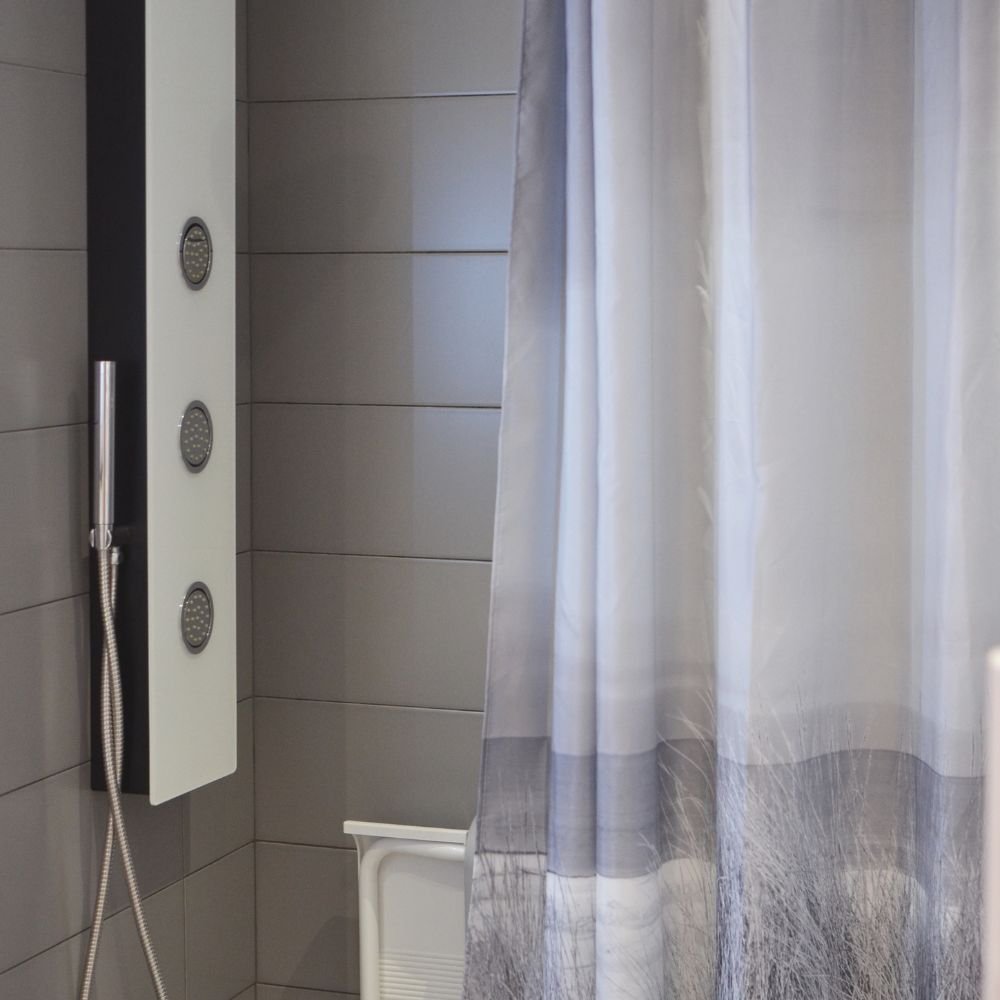
Bathrooms, like kitchens, primarily determine the practical use of curtains. Sill-length is indeed the common choice, while the fabrics are necessarily resistant to moisture. For the bathrooms that already have the frosted glass installation, the addition of sheer curtains can make the interior softer without giving up on privacy.
Some people who want a very luxurious bathroom with freestanding baths or the very finest fittings may want to use floor-length curtains to their full advantage and create a spa-like atmosphere. However, if you decide on this style, be sure the material is truly moisture resistant and can also be taken down, washed easily, and quite regularly.
Dining Room Curtains

Dining rooms are probably the only rooms in the house where you can be very generous and dramatic, totally. A small puddle of 1 to 2 inches in a formal dining room looks really beautiful and sets the perfect mood for dinner and entertaining. Clean floor-length is the best option, most practical and as elegant, for casual everyday dining rooms.
Home Office Curtains
Working from home means having curtains that really allow you control over the amount of the natural light entering, which is really critical for screen users. Pick ones that fully open giving you a clear view and closed tightly when sun is low and creating the glare. Steer away from very dark and heavy materials which might have a negative effect on concentration and energy.
Standard Curtain Lengths — What You Will Find in Shops
Standard curtain lengths are few and far between when it comes to ready-made curtains. Having an idea of these beforehand gives you an advantage in selecting the correct size that matches your ceiling height and rod position:
- 63 inches (160 cm) — Sill-length or just below sill for standard 8-foot ceilings. Also used for tier and cafe curtains.
- 84 inches (213 cm) — The most widely sold length. Ideal for floor-length when the rod is mounted at or just above the window frame in a room with an 8-foot ceiling.
- 96 inches (244 cm) — For floor-length when the rod is mounted 4 to 6 inches above the frame, or for standard floor-length in rooms with 9-foot ceilings.
- 108 inches (274 cm) — Ceiling-to-floor in rooms with 8 to 9 foot ceilings, or floor-length in rooms with 10-foot ceilings.
- 120 inches (305 cm) — For rooms with 10 to 12 foot ceilings, or for an intentional puddle effect in standard rooms.
📌 NOTE: If your perfect measurement falls between two standard sizes, always buy the longer option. Hemming a curtain shorter is simple and inexpensive. Making a curtain longer once it is already cut is impossible without adding fabric, and the join will always show.
Curtain Length by Ceiling Height — Quick Reference
- 8-foot ceilings (244 cm) — Use 84-inch curtains at frame level, or 96-inch with the rod mounted 4 to 6 inches above the frame
- 9-foot ceilings (274 cm) — Use 96-inch for standard floor-length, or 108-inch for ceiling-to-floor treatment
- 10-foot ceilings (305 cm) — Use 108-inch for floor-length, or 120-inch for ceiling-to-floor or a subtle puddle
- 12-foot ceilings and above — Custom-made curtains are almost always necessary; standard sizes will not provide adequate coverage
✦ PRO TIP: Always measure from the ring or hook position on the rod, not from the rod itself. This is where the curtain actually hangs from, and the difference can be an inch or more depending on your hardware.
Common Curtain Length Mistakes — and How to Avoid Them
In fact, having the right length alone is not enough to avoid several common mistakes that can ruin the result:
- Hanging the rod too low — the most frequent and damaging mistake. A rod mounted only just above the window frame limits the visual impact of the curtain enormously. Mount it as high as possible.
- Panels that are too narrow — each panel should be 1.5 times the width of half the window or even more. Tight, flat curtains that hardly cover the glass look pretty mean and unflattering.
- Insufficient width past the frame — You should make your curtains long enough to cover the window frame by 4 to 6 inches on each side at the very least. Otherwise, this area will allow the light to leak in and your window will look slightly closed even when the curtains are fully opened.
- Mixing lengths in open-plan spaces — If a living room and dining room are sharing one open area, different curtain lengths can cause visual confusion. Maintain length consistency in open-plan areas.
- Buying based on window size rather than room scale — in a large room, generous curtain panels look balanced. In a small room, oversized curtains can feel overwhelming. Match the curtain scale to the whole room, not just the window.
What to Do When Standard Lengths Do Not Work
Old houses, in fact, frequently have very different ceiling heights, windows placed at unusual positions, or windows very close to the ceiling. When standard readymade sizes really don’t fit, tailor-made curtains are the way to go – and they are easier to get than most folks would think.
For DIY adjustments, iron-on hem tape is a reliable and inexpensive way to shorten curtains without sewing. Most fabric shops and large supermarkets stock it. Curtain hem weights can also be sewn or clipped into the base of curtains to help them hang straight and prevent them from riding up in draughts.
If you want a completely customized solution, buying fabric per metre and getting curtains tailored precisely to your dimensions through a local curtain maker or upholsterer is usually cheaper than people think — and the final product is a perfect fit every time.
Final Thoughts
Curtain length may seem like a minor detail until you make a mistake – and then it can feel like a huge one. Luckily, the guidelines are quite simple once you learn them, and they work in most rooms and homes.
Long floor-length curtains which are planted high on the wall are basically the right option for most rooms. They enlarge the visual space of the room, increase the perceived height of the ceiling and the size of the window. If you are uncertain, this is the safe bet that works nearly every time.
Once you have the length right, fabric is your next dilemma—and that’s where it starts to get really exciting. If you want the oomph of everyday cotton, or the glamour and richness of velvet, or the airy and light beauty of sheer linen, the choice of fabric will change the character of a room as much as the length does.
Frequently Asked Questions
Q: Should curtains touch the floor or hang above it?
A: In living rooms, bedrooms, dining areas — you know, curtains must either be sweeping the floor or be within half an inch of the floor. This is the norm that gives rooms a finished and professionally styled look. The only real exceptions are kitchens and bathrooms where functionality is more important than looks and shorter curtains are quite normal and very reasonable.
Q: How much gap between the curtain and the floor is acceptable?
A: If you want a clean and modern appearance, try to have half an inch to an inch of clearance. For a easygoing, informal look, curtains may even touch the floor slightly. And a formal or luxurious style means that you allow the fabric to pool by 1 to 2 inches. Anything more than 3 inches of pooling is seen as dramatic and is only appropriate for formal rooms where most of the time the space is for entertaining.
Q: How high above the window frame should the curtain rod be?
A: At least 4 inches above the top of the window frame. Ideally, 6 inches or more. If there is a gap between the frame and the ceiling, put the rod even higher – possibly up to the ceiling. The higher the rod hangs, the taller the room will look. This one change can create more visual effect in a room than nearly any other choice regarding curtains.
Q: What length curtains do I need for a 9-foot ceiling?
A: For a 9-foot (274 cm) ceiling with the rod mounted 4 to 6 inches above the window frame, 96-inch (244 cm) curtains will typically provide floor-length coverage. For a ceiling-to-floor treatment, 108-inch (274 cm) curtains are usually correct. Always measure your specific window before ordering, as ceiling heights and window positions vary considerably between different homes.
Q: Can long curtains work in a small room?
A: Yes — in fact, in a lot of small rooms, floor-length curtains will visually enlarge the space rather than make it look smaller. Having a long vertical line running, they lead the eye upwards and thus, create an optical illusion of a higher room. The main thing in a small room is to go for lighter fabrics and colours. Thick velvet in a dark jewel shade can be too much, however, small room may look wonderfully light and high if you use soft linen or sheer curtains in a light colour.
Q: What do I do if my curtains are already too long?
A: There are three realistic choices for you. Firstly, you can simply hem them – either with iron-on hem tape which is a really straightforward thing to do for anyone at home, or you can take your curtains to a nearby tailor or dry cleaner that provides hemming services. Secondly, if the room’s style fits, you can let the curtains intentionally puddle. Thirdly, you may consider changing the height of the rod – although this would mean lowering the rod to match the shorter curtains and it goes against the usual principle of always hanging rods as high as possible.