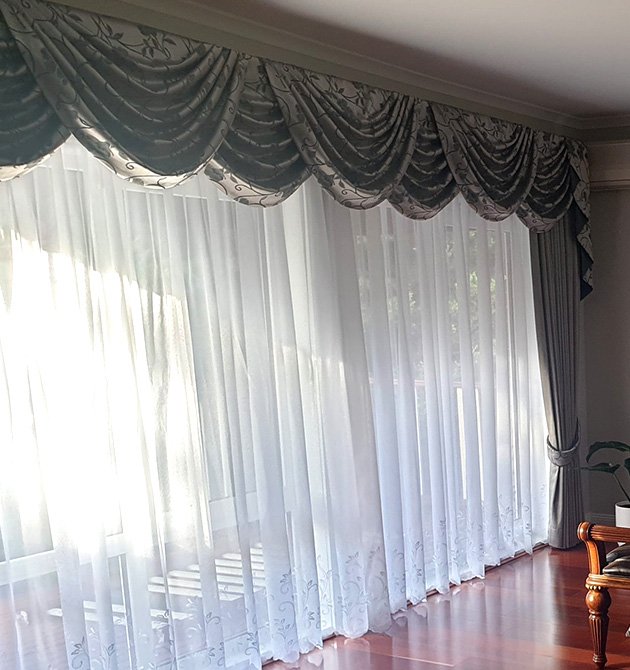
The curtain rod is the least glamorous part of any window treatment, which is probably why most people give it less thought than the curtains themselves. This is a mistake. A wrong curtain rod – a different type, wrong finish, wrong weight rating – will ruin what curtains do at their best. Curtains that drag, droop, slide to the middle, or bunch in an asymmetrical pattern are most of the times the result of a wrong choice of the hardware rather than a bad fabric or a poor measuring.
The right curtain rod, on the other hand, is invisible. You do not notice it because everything about the curtains looks correct — they hang straight, they glide smoothly, they stack neatly when open, and they sit at exactly the right height. The rod has done its job perfectly precisely because you cannot see it working.
This guide covers every type of curtain rod available, what each type is designed to do, and which situations call for which type. By the end you will know exactly what to buy for every window in your home.
The Main Types of Curtain Rod — A Quick Overview
There are seven distinct categories of curtain rod, each designed for a different purpose, a different window type, or a different aesthetic outcome:
- Standard curtain pole — the classic visible rod with decorative finials
- Curtain track — a functional channel system that conceals behind the curtain heading
- Ceiling-mounted curtain track — the track fixed directly to the ceiling rather than the wall
- Double curtain rod — two rods on one bracket set, for layering two sets of curtains
- Tension curtain rod — a spring-pressure rod that requires no fixings and no drilling
- Bay window curtain pole — a purpose-made angled pole system for bay windows
- Flexible curtain track — a bendable track for bay windows and curved walls
Each of these serves a distinct purpose. The question is not which type is best overall — it is which type is right for your specific window, your curtain style, and your room.
1. Standard Curtain Pole
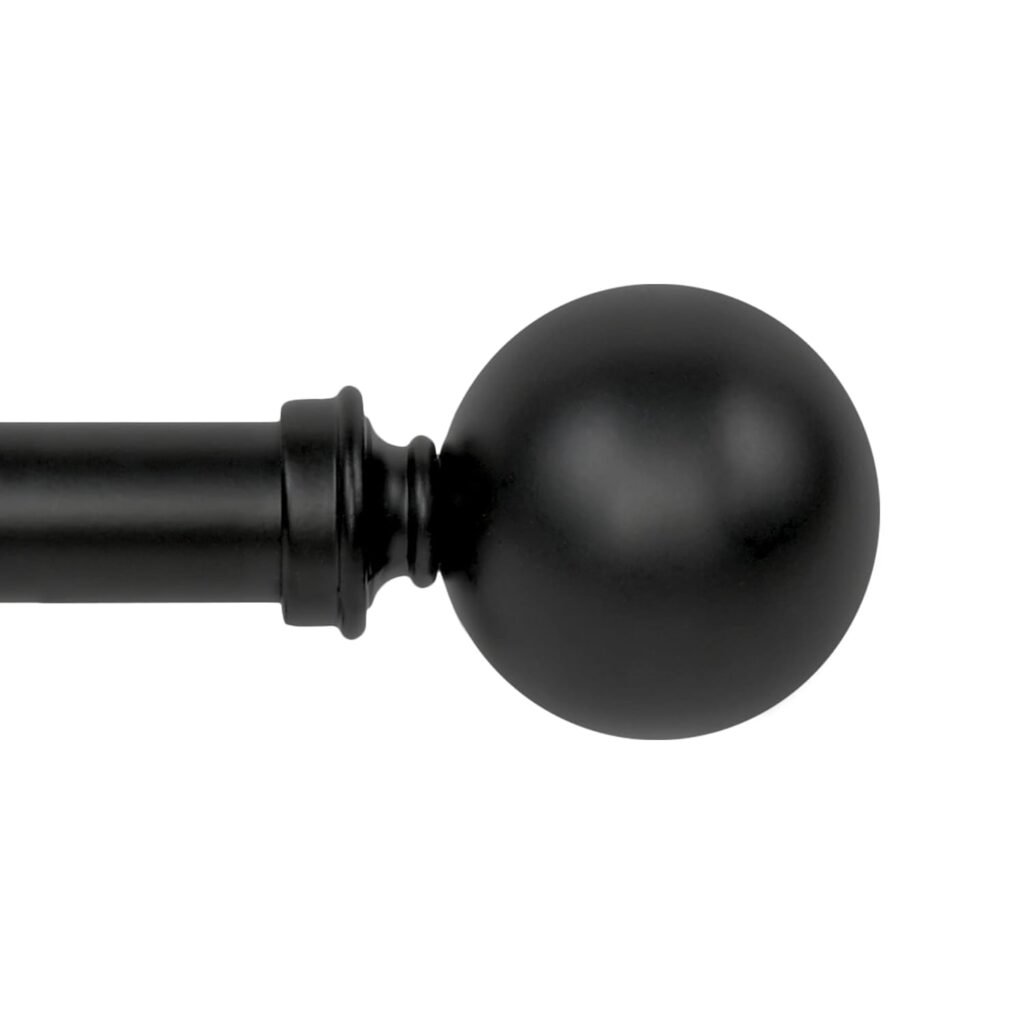
The traditional curtain pole is probably what comes to everyone’s mind when they talk about a curtain rod: a single, round rod which is either made of metal or wood, fixed on the wall by brackets, and having the pretty end caps (finials) at the two ends. The curtain is threaded onto the pole via its heading — eyelet rings slide directly onto the pole, rod pocket headings thread onto it, or ring clips hang from the pole.
Standard curtain poles are visible hardware — they are part of the window treatment’s aesthetic, not hidden behind it. This is their defining characteristic. Choosing the right pole in the right finish can really enhance the appearance of a window; on the other hand, choosing a wrong one can really spoil the window’s appearance.
Round curtain pole
The most traditional and widely available profile. Typically 28mm in diameter, available in wood or metal, in a very wide range of finishes. The roundness means curtains slide smoothly and stack neatly.
- Best for: traditional rooms, rooms where the hardware is part of the decor, eyelet and ring-top headings
- Finishes: matte black, chrome, brass, brushed nickel, antique bronze, natural wood, white, ivory
- Weight capacity: varies significantly by bracket type — always check the pole’s rated weight capacity before hanging heavy curtains such as velvet
Square or flat profile pole
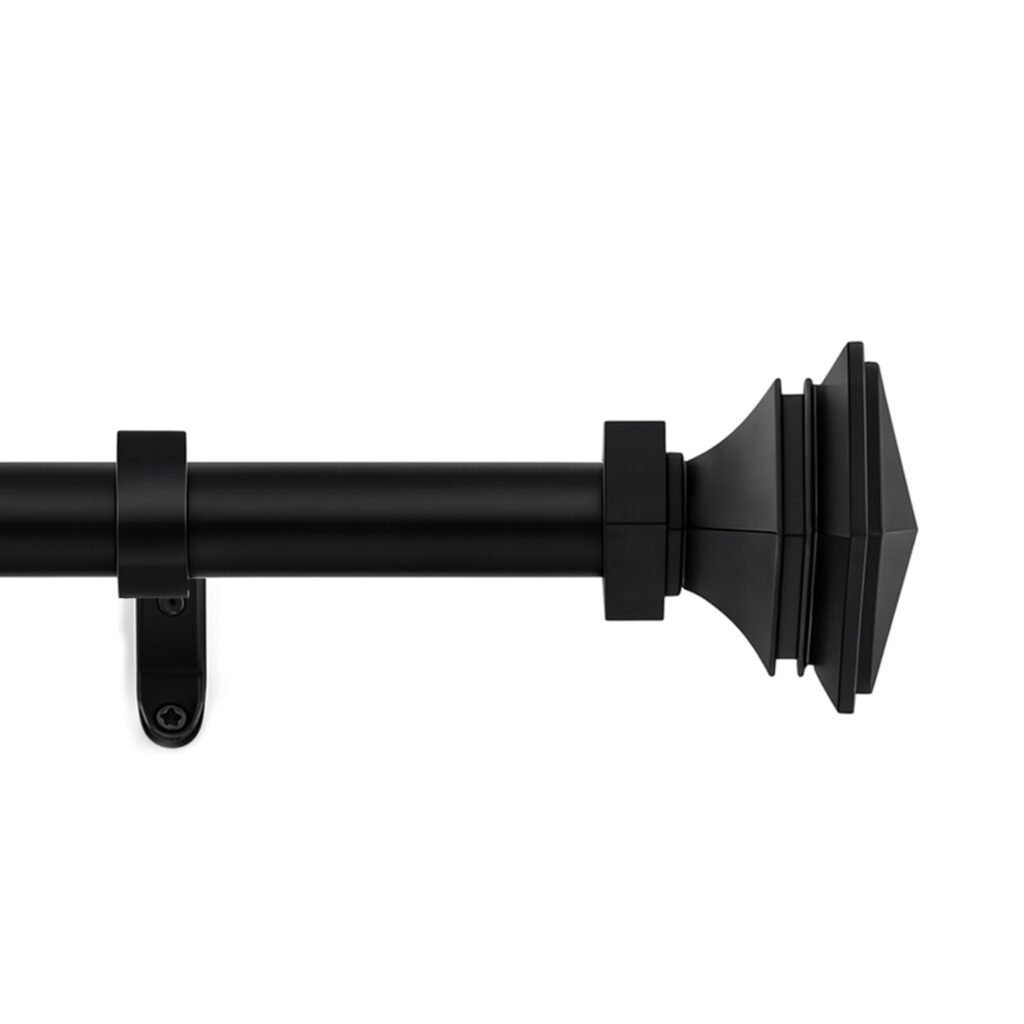
Square curtain pole matt black
A modern profile- square or rectangular in cross-section instead of round. Square poles have a sharper, more architectural appearance that matches modern and minimalist interiors. These poles are not as common as round ones, but their popularity has increased considerably along with the rise of the minimalist interior style.
- Best for: contemporary and Scandinavian-style interiors, floors with simple lines and modern furniture.
- Finishes: matte black is the leading choice in popularity, then comes brushed brass and
Wooden curtain pole
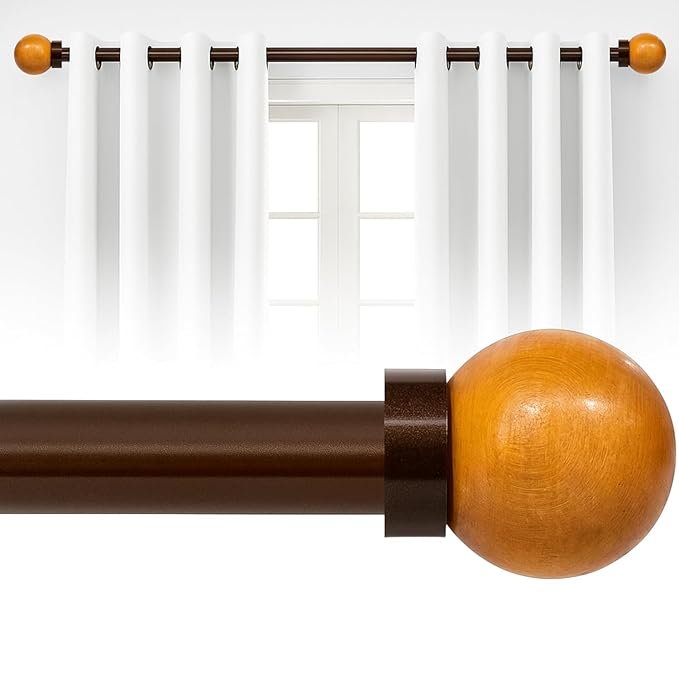
Wooden poles — in natural oak, dark walnut, white ash, or painted finishes — create a warm ambience that metal hardly achieves. They are perfect for more traditional, Scandi, and farmhouse styles of decor, really flavor the setting when paired with linen and cotton curtains which adhere to the natural material theme of the whole window dressing.
- Best for: home interior styles inspired by nature, farmhouses and cottages, warm wooden furniture or floors.
✦ PRO TIP: When choosing a curtain pole finish, match it to the largest existing metal element in the room. If your door handles, light fittings, or radiator valves are brass, choose brass. If they are chrome, choose chrome or matte silver. If they are matte black, choose matte black. The finish does not need to be identical — it needs to be harmonious.
2. Curtain Track
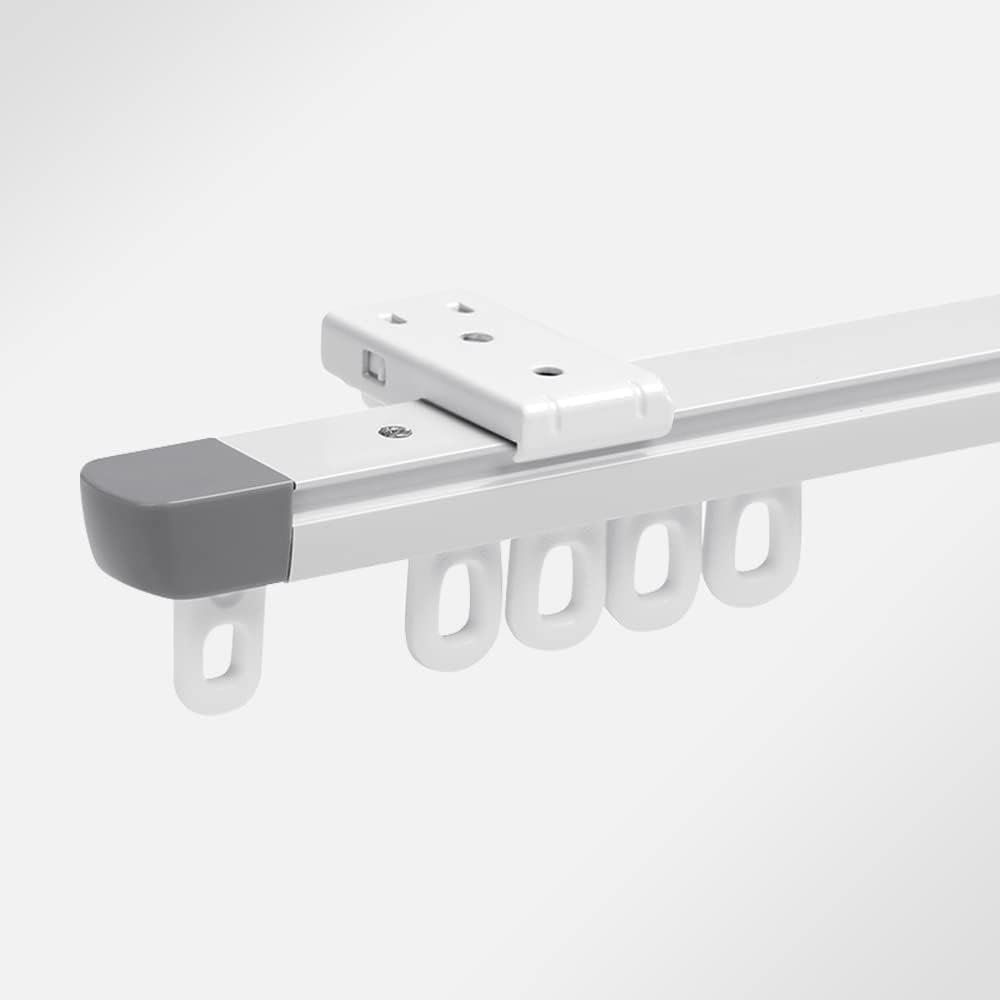
A curtain track is a functional channel system rather than a decorative rod. Curtains are hung from gliders that run inside the track, and the track itself is designed to be concealed behind the curtain heading when the curtains are drawn. Unlike a pole, the track is not meant to be seen.
Since tracks are mainly functional and not so much decorative like poles, those professional interior designers who consider curtains to be the room’s main visual element would rather choose tracks. Curtains hanging from a ceiling-mounted track well will appear more costly and thoughtfully designed than the same curtains on a visible pole.
- Best for: any room where you want the hardware to be invisible, contemporary and minimalist interiors, ceiling-mounted installations, very wide windows where a pole would sag
- Glider types: standard plastic gliders (inexpensive, very functional), cordless gliders, and ring gliders for heavier fabrics
- Material: plastic tracks for lighter curtains; metal tracks for heavy fabrics such as velvet and fully lined curtains
⚠ WATCH OUT: Curtain tracks require a specific curtain heading — pencil pleat, pinch pleat, or a track-compatible tab. Standard eyelet curtains are designed for poles and cannot be used on tracks. Always check your curtain heading type before choosing between a track and a pole.
3. Ceiling-Mounted Curtain Track
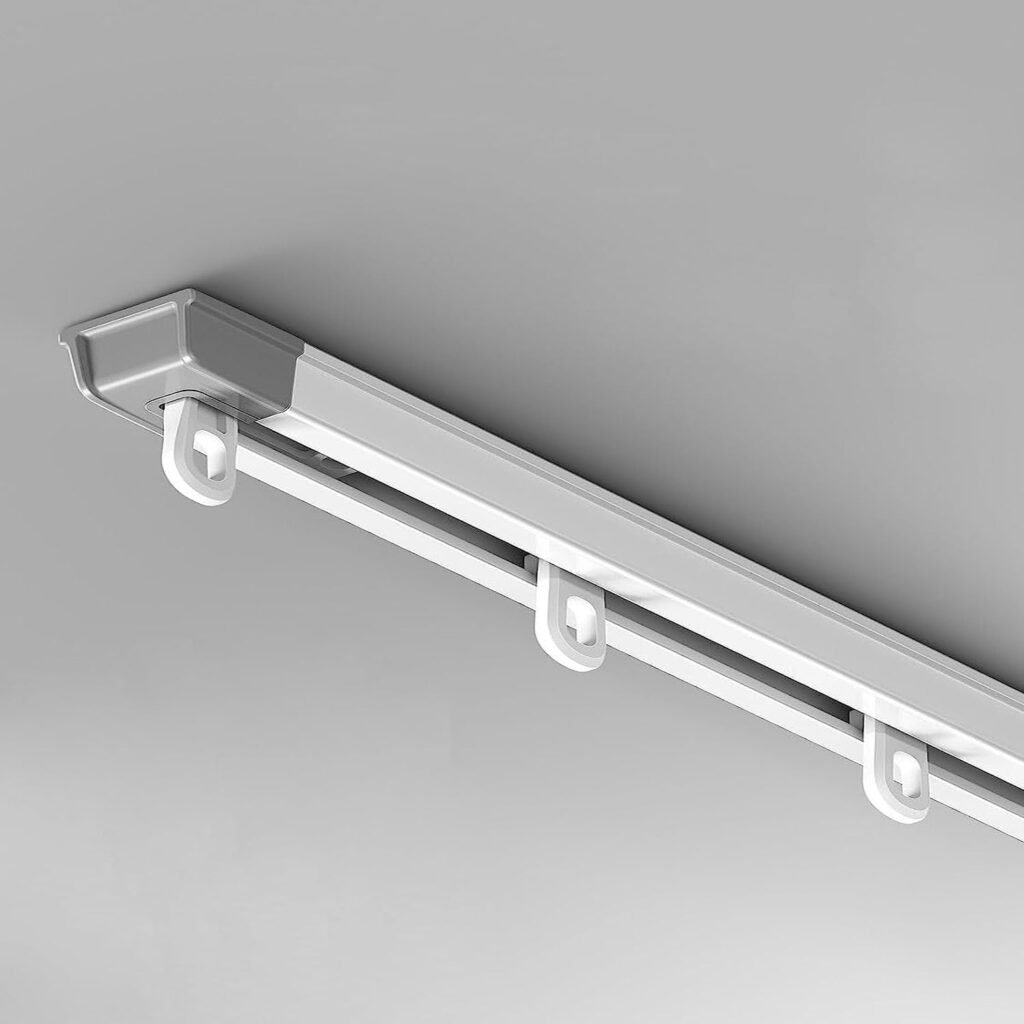
A ceiling-mounted track is attached to the ceiling itself rather than the wall above the window. In fact, this is the method practically always used in luxurious interior design schemes, hotel bedroom curtains, and modern home interiors with curtains designed to give an impression of being suspended from the ceiling.
In comparison to a wall-mounted rod, the visual effect is much more sophisticated and in a way, the curtains seem to be hanging directly from the ceiling. There is no bracket or track in sight, and the curtains offer a straight and uninterrupted vertical line from the ceiling to the floor. The result of this is that rooms seem taller, ceilings seem higher, and windows seem bigger.
Installation requires drilling into the ceiling and checking for ceiling joists, which is slightly more involved than wall mounting. The practical benefit of ceiling mounting beyond aesthetics is that the curtains, when drawn open, stack against the ceiling line and leave the entire window completely clear — no curtain fabric blocking the glass at all.
- Best for: Anywhere you’d like to maximize the visual impact of your lighting. Also works great in rooms with standard or low ceilings (ceiling mounting will visually raise these), and in contemporary and minimalist
- Installation: requires ceiling fixings — always drill into a joist or use appropriate hollow ceiling anchors. In rented properties, check lease terms before ceiling mounting.
✦ PRO TIP: Measure from the ceiling (not from above the window frame) to the floor before ordering a ceiling-mounted track. The curtain drop will be the full ceiling height, which is typically 6–10cm more than the drop from a standard wall-mounted position. Order curtains to this full ceiling-to-floor measurement.
4. Double Curtain Rod
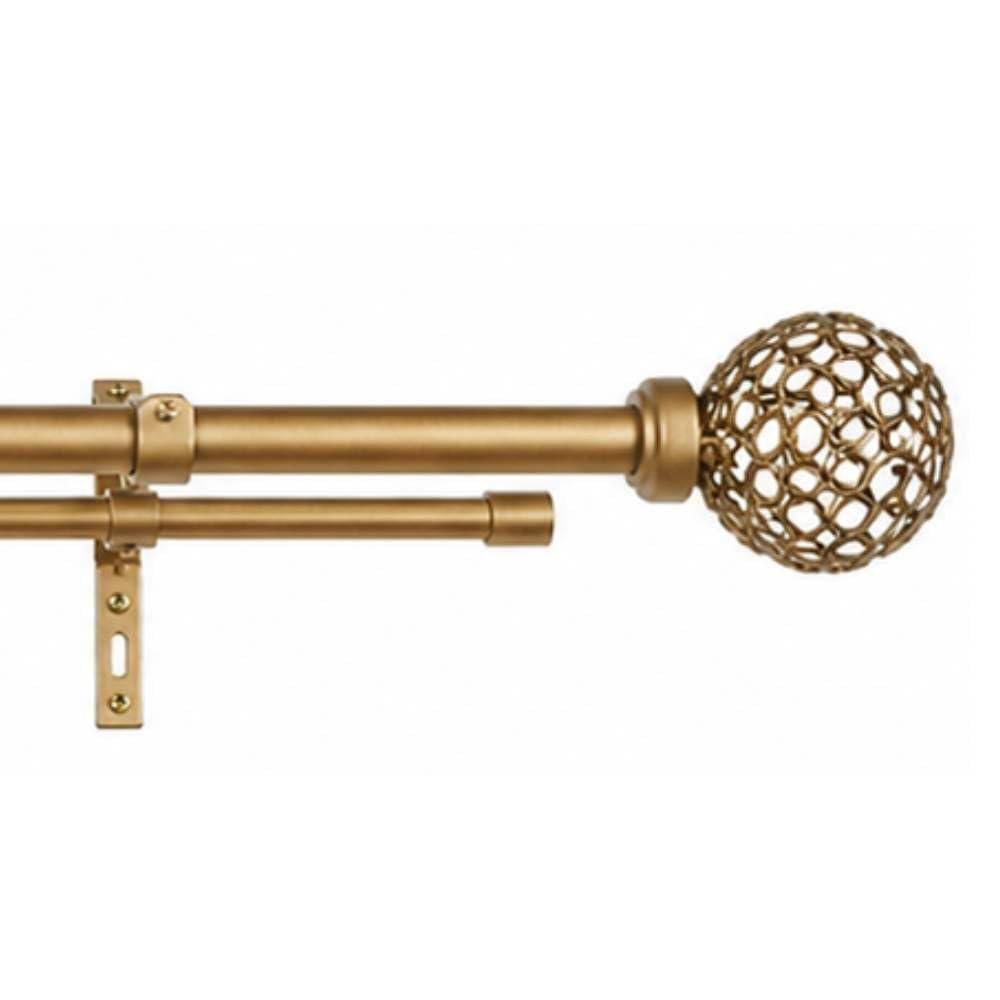
A double curtain rod is two parallel rods mounted on a single bracket set — an inner rod closer to the glass and an outer rod closer to the room. This hardware is specifically designed for layered curtain setups: a sheer or lightweight inner curtain hangs on the inner rod, and a heavier blackout or opaque outer curtain hangs on the outer rod.
The two rods function completely independently — each can be opened and closed separately. This gives the maximum flexibility of any curtain hardware: sheer only during the day, both layers at night, or outer curtain only when you want privacy with less light filtration.
Double rods are available in all the standard finishes — matte black, chrome, brass, brushed nickel — and in adjustable widths from standard 28-to-48 inch spans up to wider ranges for large windows.
- Best for: any room where layered curtains are desired — particularly master bedrooms (sheer + blackout), living rooms (sheer + lined), and dining rooms (sheer + velvet)
- Spacing between rods: typically 3–5cm — enough for both curtains to hang and slide without catching
5. Tension Curtain Rod
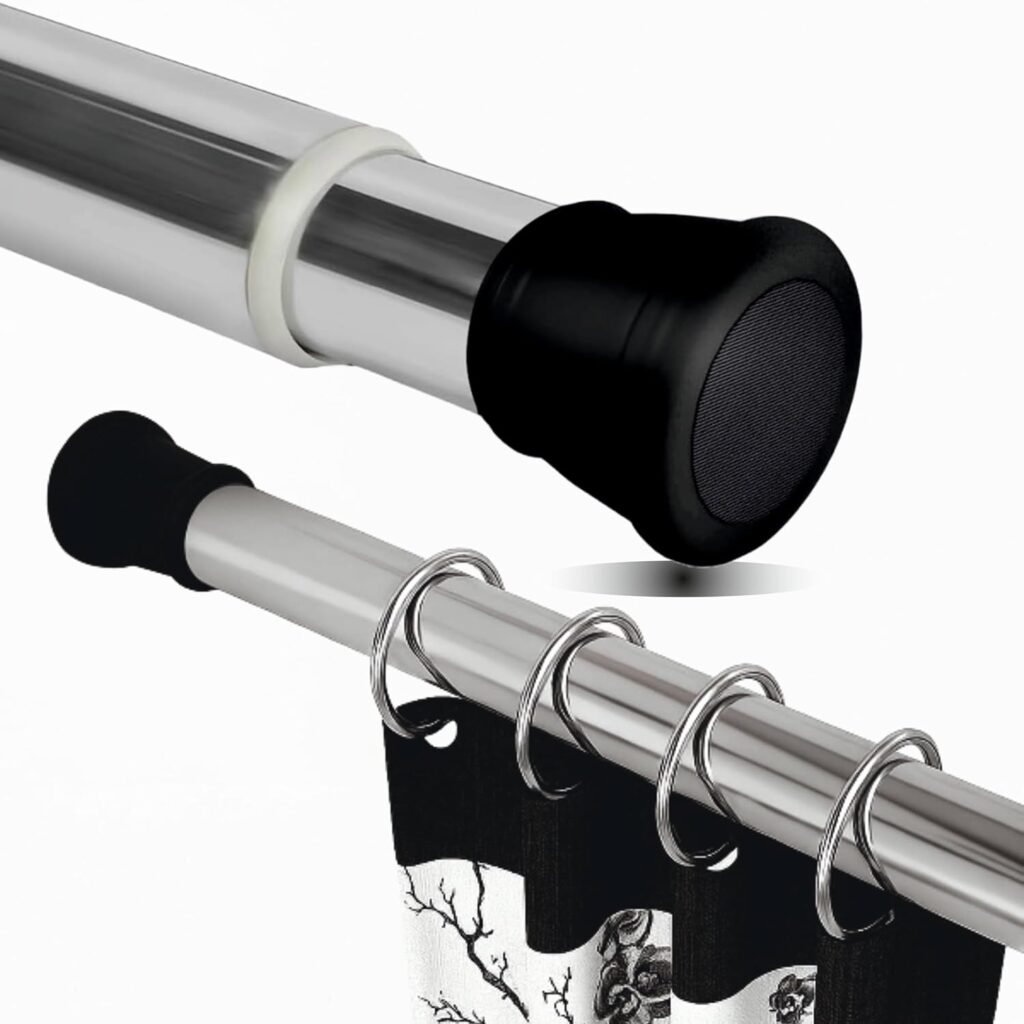
A tension curtain rod works by spring pressure: a strong internal spring pushes outward on both ends of the rod, holding it in place through friction between the rod ends and the wall or window frame. No drilling is required, no fixings, no damage to walls, so best are tension rods and other no-drill solutions.
This makes tension rods the preferred option for renters, temporary curtain installations, and windows in rooms where drilling is either impossible or undesirable. They are also widely used inside doorways as door curtain hangers and inside window recesses for café-style curtains.
The limitation of tension rods is weight. A typical tension rod will support a curtain with the weight from light to medium such as voile, light cotton, or linen. It will not be able to sustain heavy velvet, fully-lined curtains, or very wide curtains. The weight capacity of each rod is prominently indicated on the packaging and should always be looked at greatly before the purchase.
- Best for: renters and temporary setups, inside window recesses for café-style curtains, door curtains, lightweight curtain fabrics
- Weight limit: typically 3–8kg depending on the rod size and quality — always check
- Width range: most standard tension rods adjust from 60cm to 150cm — wider versions available for larger windows
⚠ WATCH OUT: Never use a tension rod for curtains heavier than its rated capacity. Overloaded tension rods slip — usually slowly over days — and eventually drop the curtains entirely. For any curtain over 3kg total weight, use a properly fixed pole or track.
6. Bay Window Curtain Pole
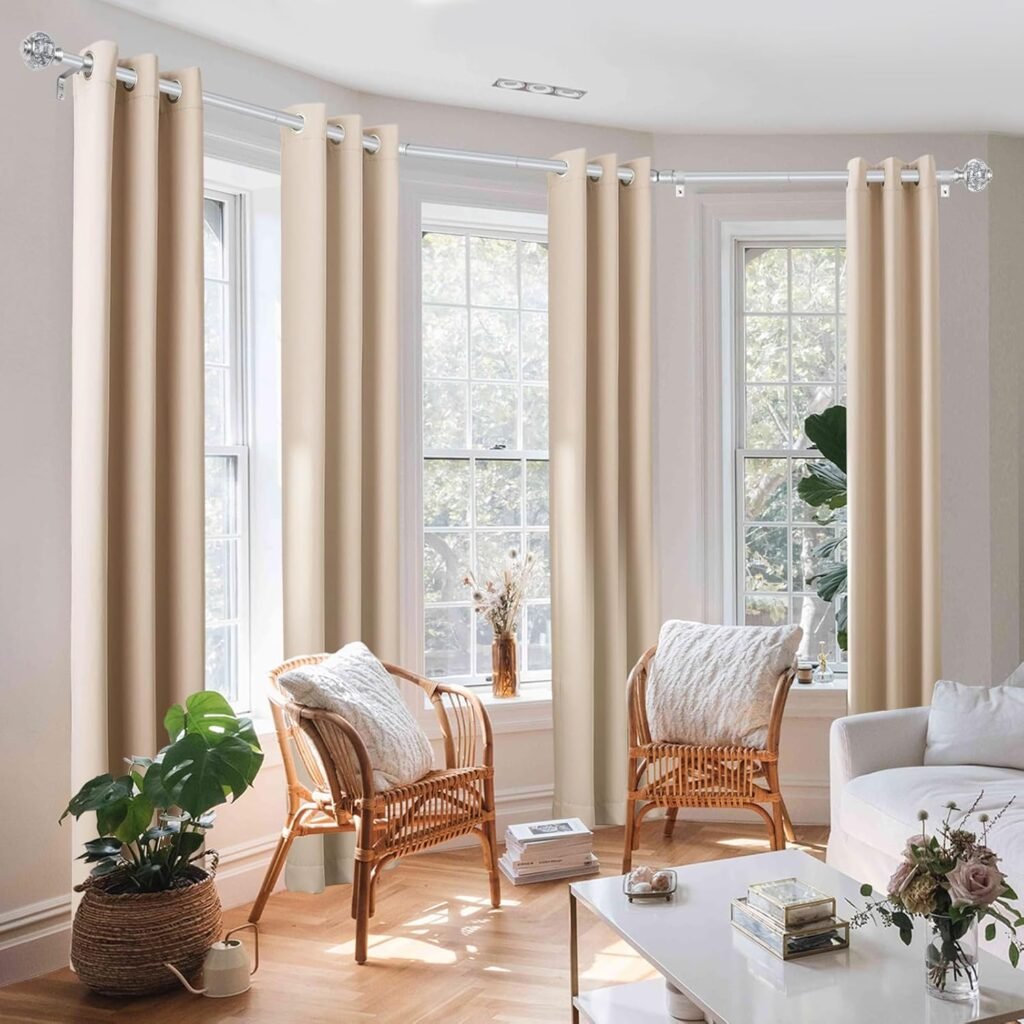
A bay window curtain pole is a purpose-made three-section system consisting of a central pole, two angled corner connectors, and two side poles. The corner connectors come in different angles — most commonly 30° and 45° — to match the specific angle of your bay window’s returns.
Choosing between a bay pole and a flexible track, a bay window pole is visible decorative hardware. The pole sections and corner connectors are part of the window treatment’s aesthetic, and the decorative finials at the outer ends complete the look. This makes bay window poles better suited to traditional and period-style rooms where visible ornate hardware is expected and appropriate.
One practical limitation of a bay window pole is that the corner junctions prevent curtains from sliding continuously around the full bay — each panel effectively has its own curtain pair, which can create a slightly fragmented look compared to a flexible track.
7. Flexible Curtain Track
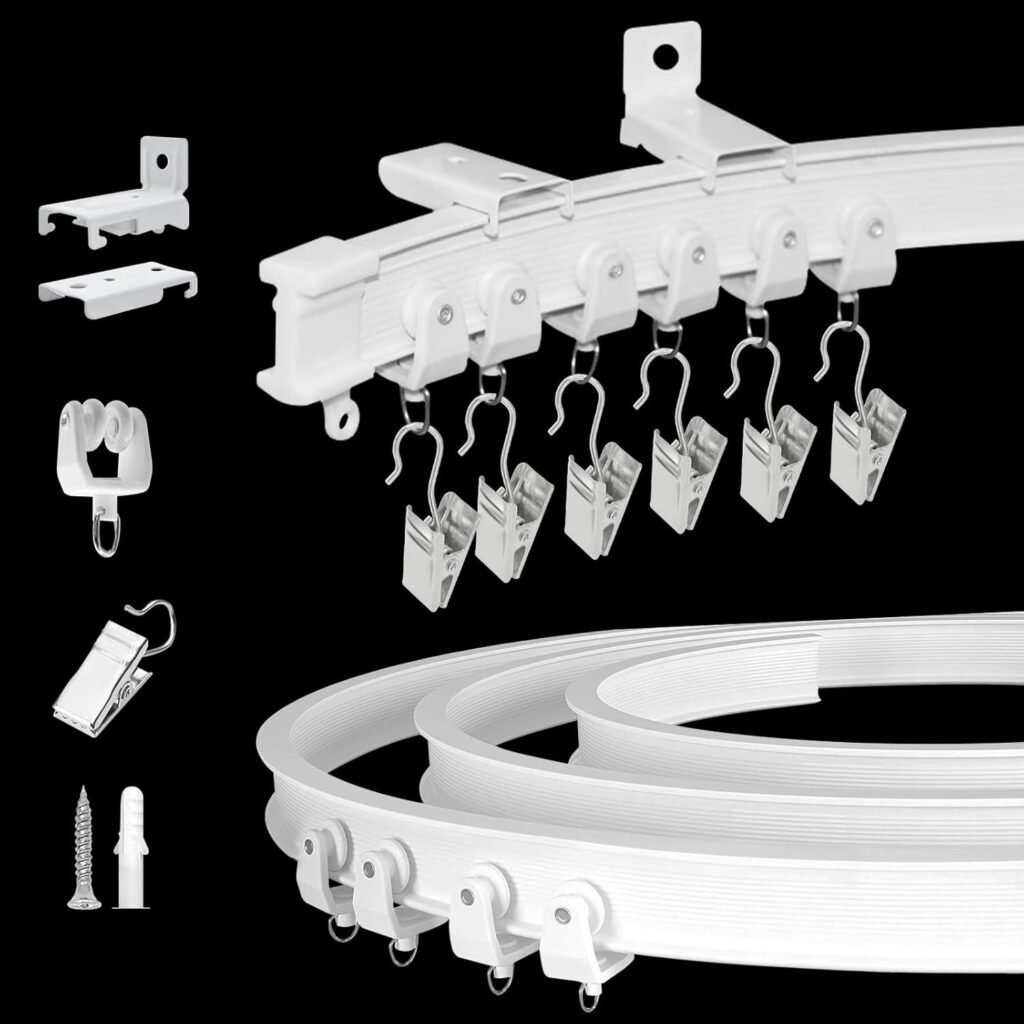
A flexible or bendable curtain track can be shaped to follow any curve or angle — making it the most versatile hardware option for bay windows, curved walls, and any non-standard window configuration. The track is supplied straight and can be bent by hand to match your specific window geometry.
Once bent to shape and mounted, a flexible track allows curtains to slide continuously around the full contour of a bay window without any gaps or junctions. This produces the most unified, designer look of any bay window curtain solution.
Flexible tracks are typically more functional-looking than decorative poles — they are meant to be concealed behind the curtain heading rather than displayed. For rooms where visible hardware is not desired, a ceiling-mounted flexible track is the most sophisticated and invisible solution available.
Curtain Rod Sizes — Getting the Right Length and Weight Rating
There are two measurements that matter when buying any curtain rod: the length and the weight rating. Both are easy to get wrong, and both mistakes are frustrating and expensive to correct. So one should have a guidelines of how to measure windows for curtains.
Length
A curtain rod should extend 15–25cm beyond the window frame on each side. This is the ‘return’ — the extra length that allows the curtains to stack beyond the glass when fully open, clearing the entire window of fabric. A rod that only spans the window frame means the stacked curtains block some of the glass even when fully open.
Total rod length = window frame width + 30–50cm (15–25cm each side).
For adjustable rods, choose a range that comfortably covers your required length at or near the middle of its adjustment range — not at the maximum stretch, where the rod is most likely to sag or lose rigidity.
Weight rating
Every curtain rod or track has a maximum weight rating — the total weight of curtains it can hold without sagging or failing. This is usually shown in kilograms per metre of rod length.
Lightweight curtains such as voile, thin cotton or unlined linen will work well with most standard rods. Medium-weight curtains such as lined cotton or unlined velvet will require checking the rating carefully. Heavy curtains such as fully lined velvet, thermal blackout or heavy chenille require a track with a metal profile and a centre bracket support for any rod over1.5 metres.
⚠ WATCH OUT: Never assume a decorative pole can hold heavy curtains based on its appearance alone. Cheap thin-walled metal poles with plastic brackets will bend or fail under the weight of fully lined velvet curtains. Check the weight rating — it is not optional.
Curtain Rod Finishes — How to Choose
Choosing the finish of your curtain rod is a matter of style, not a functionality. The straightforward guideline is: go for the finish that is the same as the other metal elements in the room.
- Matte black: suits contemporary, industrial, and Japandi interiors. Works with almost any curtain colour. Currently the most popular curtain hardware finish in the UK and US.
- Brushed brass or antique gold: are perfect for traditional, maximalist, and warm-palette rooms. They also work greatly with deep curtain colours such as navy, forest green, plum.
- Chrome or brushed nickel: are a good fit for neat contemporary rooms with cool-toned palettes. They match well with white, grey, and blue curtains.
- Natural wood: is ideal for Scandi, farmhouse, and natural-material interiors. It is most effective when combined with linen, cotton, and other natural-fibre
- White or ivory: suits rooms where the hardware should be as invisible as possible — particularly when the walls are white and the pole is mounted close to the ceiling.
Which Curtain Rod Should You Buy — A Quick Decision Guide
- You want a classic, decorative look and your curtains are eyelet style → Standard round curtain pole in your chosen finish
- You want a contemporary, minimal look and the hardware to be invisible → Ceiling-mounted curtain track
- You have a bay window and want the most elegant, unified look → Flexible curtain track (ceiling-mounted if possible)
- You have a bay window and want visible decorative hardware → Three-section bay window curtain pole
- You want to layer two sets of curtains (sheer + blackout) → Double curtain rod
- You rent or cannot drill → Tension rod for light curtains, heavy-duty adhesive hook system for heavier ones
- You want warm, natural-looking hardware → Wooden curtain pole in oak, walnut, or ash
- Your curtains are heavy velvet or fully lined → Metal track with centre support bracket, or heavy-duty metal pole with extra brackets
Final Thoughts
Every curtain’s story starts at the curtain rod. Pick the right rod, and the curtains will look beautiful. On the other hand, if you get it wrong, even the most gorgeous material in the world will look uncomfortable, droopy, and not able to fulfill their main function.
The decision is not as complex as the number of available options suggests. Most rooms need either a standard pole (decorative, visible, for eyelet curtains) or a track (functional, hidden, for pencil pleat or pinch pleat). Layer those two types over the specific use cases — bay windows, double rods, no-drill setups — and the right choice for each window in your home becomes straightforward.
If you are replacing an existing rod, check the weight rating of whatever you buy against the actual weight of your curtains. If you are buying new curtains alongside a new rod, decide on the heading type first (eyelet = pole, pencil pleat = track) and let the hardware choice follow from there.
Frequently Asked Questions
Q: What is the difference between a curtain track and a curtain pole?
A: A curtain pole is a visible decorative rod — it is meant to be seen and is part of the window treatment’s aesthetic. Curtains are threaded directly onto the pole or hang from rings on the pole. A curtain track is a functional channel system designed to be hidden behind the curtain heading — curtains hang from gliders that run inside the track. Tracks are generally preferred by interior designers for a more refined, minimal look; poles are preferred where visible decorative hardware suits the room’s style.
Q: Can I use eyelet curtains on a curtain track?
A: No — standard eyelet curtains are specifically designed for poles. The big metal rings at the top of eyelet curtains are designed for the pole and thus cannot be put into or work on a track channel. If you would prefer to use a track instead of a pole, go for curtains with pencil pleat, pinch pleat, or a hook-compatible heading which will allow you to attach the curtains to track gliders. On the other hand, eyelet curtains can be switched to track use by ring-clip systems that fit onto a track but this is more of a workaround than a perfect solution.
Q: How far above the window should I hang the curtain rod?
A: As high as possible — ideally within 5–10cm of the ceiling, or ceiling-mounted if practical. This is the single most important hanging decision because it determines how tall and how designed the curtains look. The minimum recommendation is 10–15cm above the window frame, but this gives a noticeably less elegant result than near-ceiling mounting. The rod should also extend 15–25cm beyond the window frame on each side so that the curtains clear the glass completely when open.
Q: How do I know if a curtain rod is strong enough for my curtains?
A: First of all, find out the maximum weight a curtain rod can carry by looking at the product description – this is usually given in kilograms per metre (kg/m). To get the total weight of heavy curtain fabric you can weigh a small piece and multiply by the total size of your curtains or alternatively you may use these approximate figures: voile and lightweight cotton 0.3–0.5 kg/m², lined cotton or mid-weight linen 0.8–1.2 kg/m², fully lined velvet 1.5–2.5 kg/m². Multiply this by the total area of your curtains to get the total weight. For any rod over 1.5 metres with medium to heavy curtains, add a centre bracket support.
Q: What is the best no-drill curtain rod option?
A: Tension rods are the most widely available and most affordable no-drill option — they use internal spring pressure to hold the rod in position without any wall fixings. They work best for lighter curtains in standard window widths. For heavier curtains or wider windows, adhesive curtain hooks or track systems that use strong adhesive mounting strips rather than screws are available, though weight limits are lower than drilled fixings. A full guide to no-drill curtain solutions is available in Blog #4.
Q: Do I need a special rod for floor-length curtains?
A: No — any properly rated pole or track works for floor-length curtains, provided the rod is mounted at the right height. The key considerations for floor-length curtains are: sufficient weight capacity (longer curtains are heavier), rod length extending well past the window frame on each side, and mounting height close to the ceiling to maximize the visual impact of the full drop. A centre bracket support is recommended for any rod over 1.5 metres carrying floor-length curtains.