
The television is one of the most common and most persistently awkward furnishing challenges in any living room, and the problem intensifies considerably in a small space. A traditional floor-standing TV unit consumes valuable floor space, often dominates the wall it sits against, and frequently becomes the visual focal point of the room by default rather than by design — even when that was never the intention.
Fortunately, the last ten years in furniture design have yielded many different answers to this challenge. These range from narrow floating pieces that are almost invisible on the floor plan, to totally integrated media walls that blend with the room’s structure. Here you’ll find a guide to fifteen different ways, starting with the easiest space-saving replacement and ending with the most extraordinary built-in solution.
Idea 1: The Floating Wall-Mounted Unit
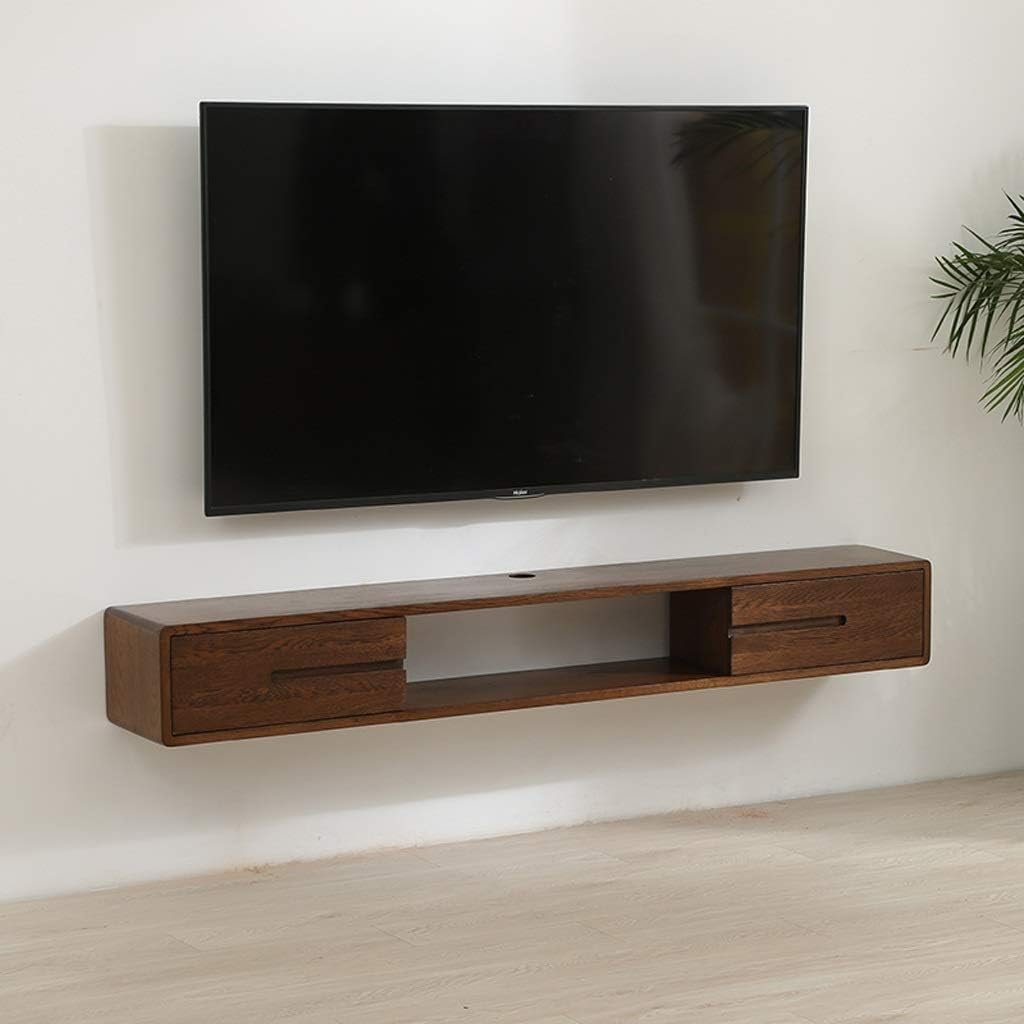
Floating TV Unit Wall Mounted Small Living Room
A floating TV unit — mounted directly to the wall with no legs touching the floor — is the single most effective space-saving solution available for a small living room. By removing the unit’s footprint from the floor entirely, the room visually gains floor space even though the same amount of storage is provided.
Floating units are typically mounted 35 to 45cm above the floor, low enough to sit comfortably below a wall-mounted television at the correct viewing height, but high enough to allow a clear sightline of the floor beneath — which is the visual mechanism that makes the room feel larger.
✦ PRO TIP: Choose a floating unit with a slim profile (under 35cm depth) for the most significant space-saving effect. Deeper units negate much of the visual benefit of floating, as they still project significantly into the room even without floor contact.
Idea 2: Wall-Mounted TV with No Unit at All
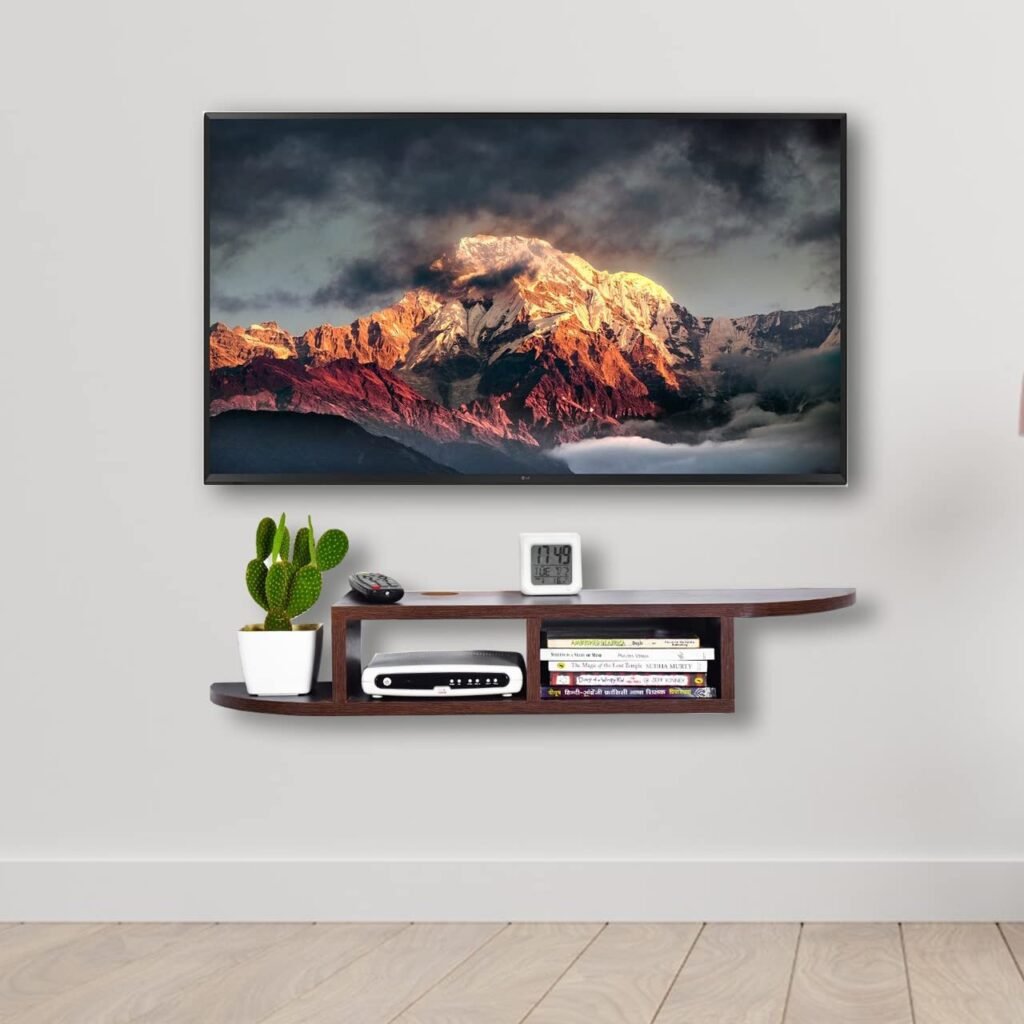
The most bare-bones and least space-eating way is to attach your TV right to the wall and to completely skip having a special TV cabinet, just use a thin floating shelf or two to hold the occasional bits and pieces (a streaming box, a small soundbar). This arrangement is especially good for rooms where mainly streaming is the source of listening and watching, with hardly any physical media or equipment needing to be stored.
Idea 3: The Slim Console TV Unit
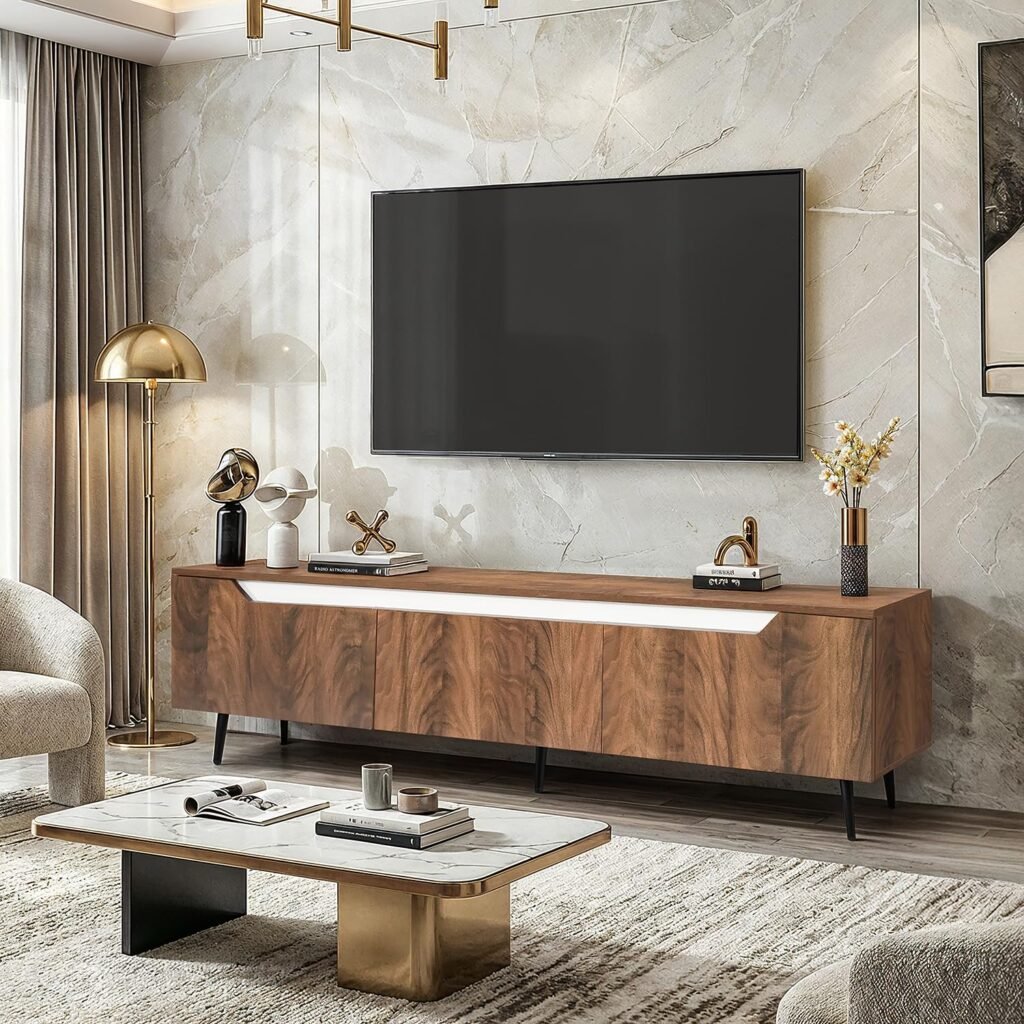
If your household prefers a floor-standing unit, opting for one with a very slim depth (30 to 35cm instead of the usual 40 to 45cm) will make the unit both visually and physically take up less space while still offering storage space. Slim console-style units combined with thin tapered legs (instead of solid plinths) additionally improve the feeling of floor area as they let the light go through under the unit.
Idea 4: The Corner TV Unit
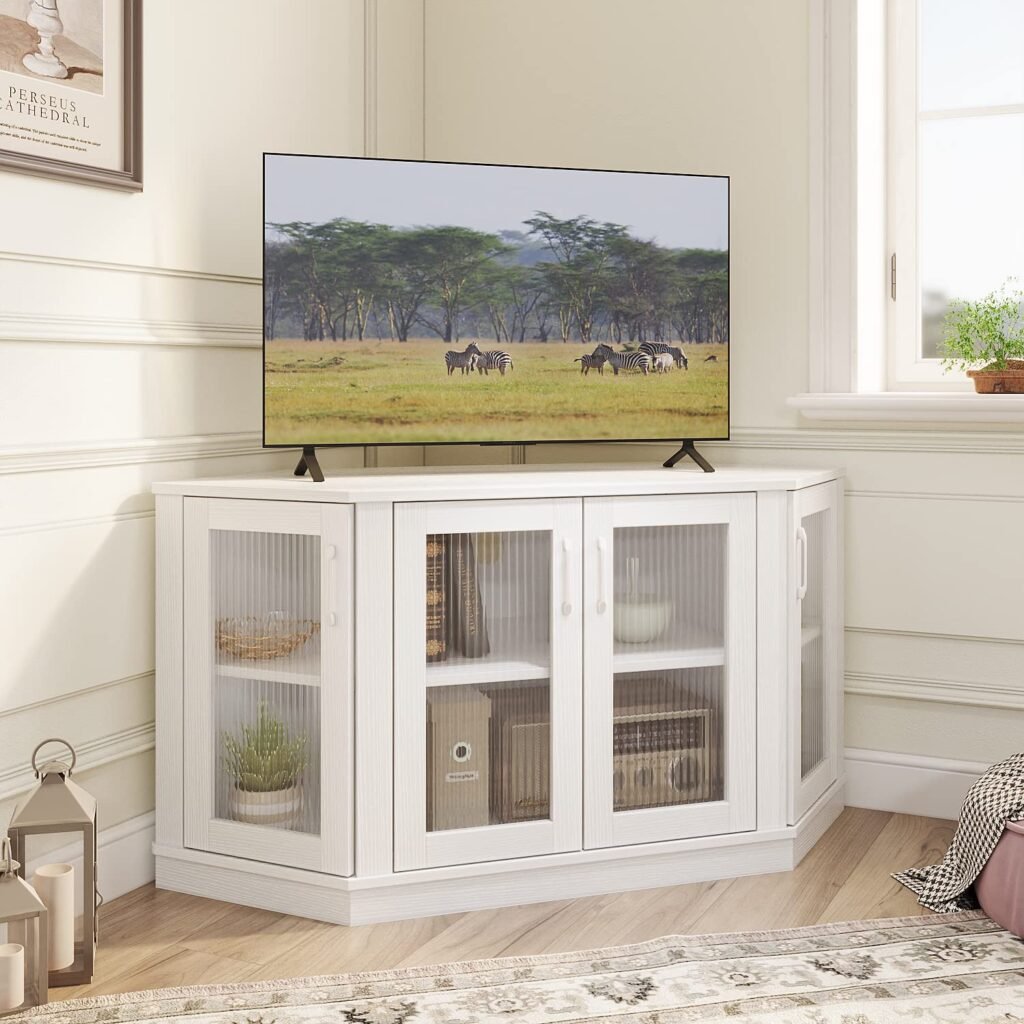
Corner TV Unit For Living Room
Instead of positioning the TV unit along a flat wall, placing it in a corner is actually one of the best space-saving tips for small or oddly shaped living rooms. Corner placement utilizes an area of the room that is usually left unused because corners are the hardest to fit with other furniture pieces, and at the same time, it opens up the main wall of the room for other things.
Idea 5: Built-In Alcove Shelving TV Unit
Built-In Alcove Shelving TV Unit
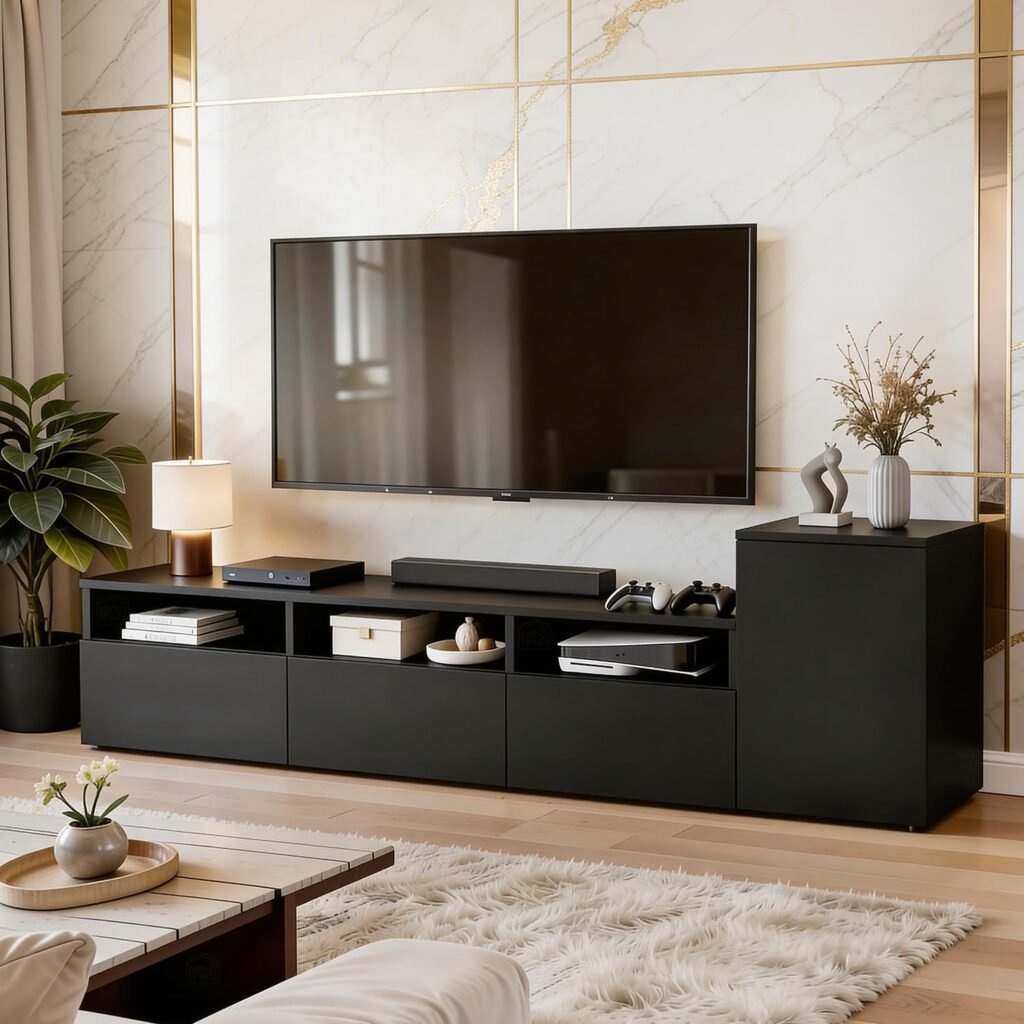
In period properties with chimney breast alcoves, built-in shelving and cabinetry fitted into the alcove space either side of the fireplace — with the television mounted centrally above the fireplace or within a dedicated alcove unit — makes maximally efficient use of space that would otherwise be awkward to furnish. This is a more significant investment than freestanding furniture but delivers the most architecturally integrated result.
Idea 6: The Hidden TV Behind Art
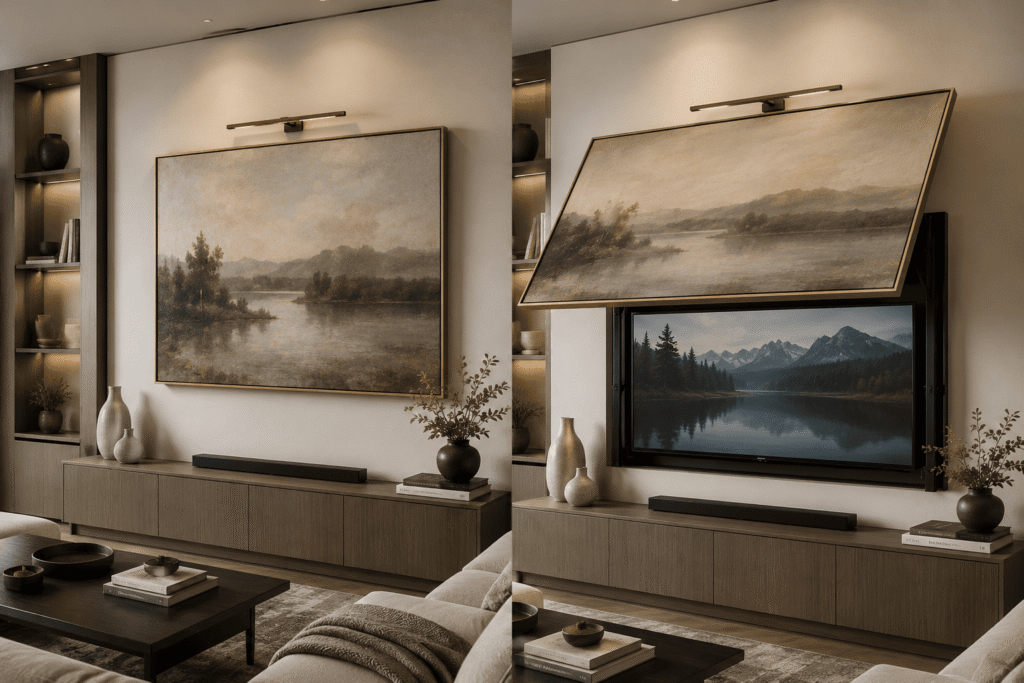
Motorized or manual art-frame TV covers — a printed canvas or framed print that slides or lifts to reveal the screen — allow the television to disappear entirely when not in use, replaced by a piece of art that contributes positively to the room’s design rather than dominating it. This is a premium solution but increasingly accessible as the technology has become more affordable.
Idea 7: Gallery Wall Integration
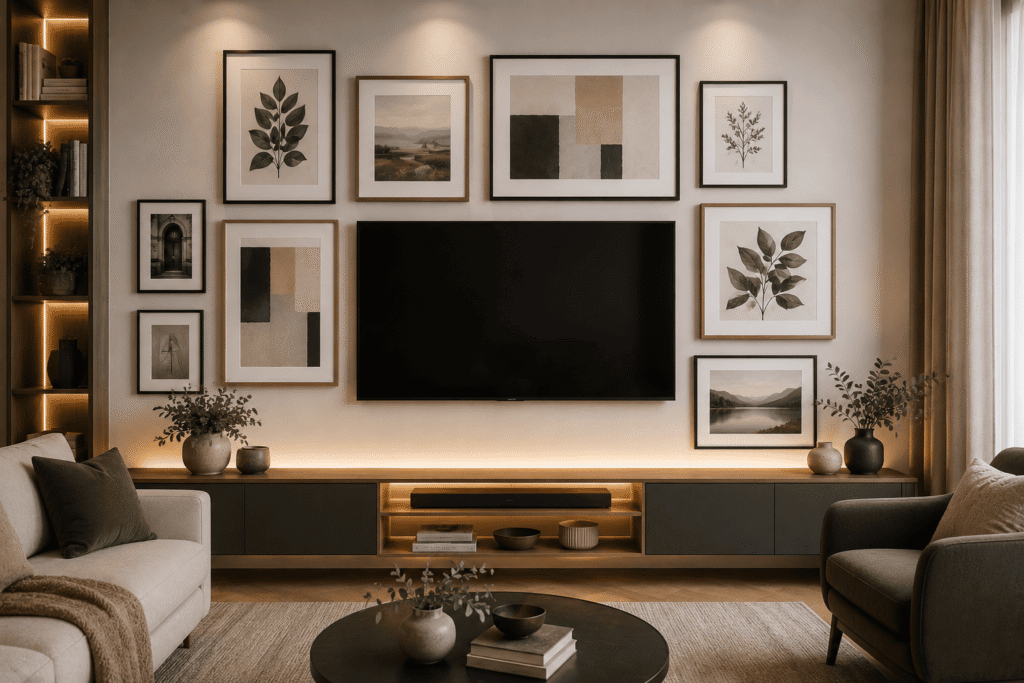
Incorporating the television into a gallery wall arrangement like gallery wall and accent wall combination — surrounded by framed art, photographs, and prints at a similar scale — reduces its visual dominance by treating it as one element among several rather than an isolated focal point. This works particularly well with contemporary TVs with thin bezels, which integrate more successfully into a gallery arrangement than older, bulkier models.
Idea 8: Storage Ottoman as Media Storage
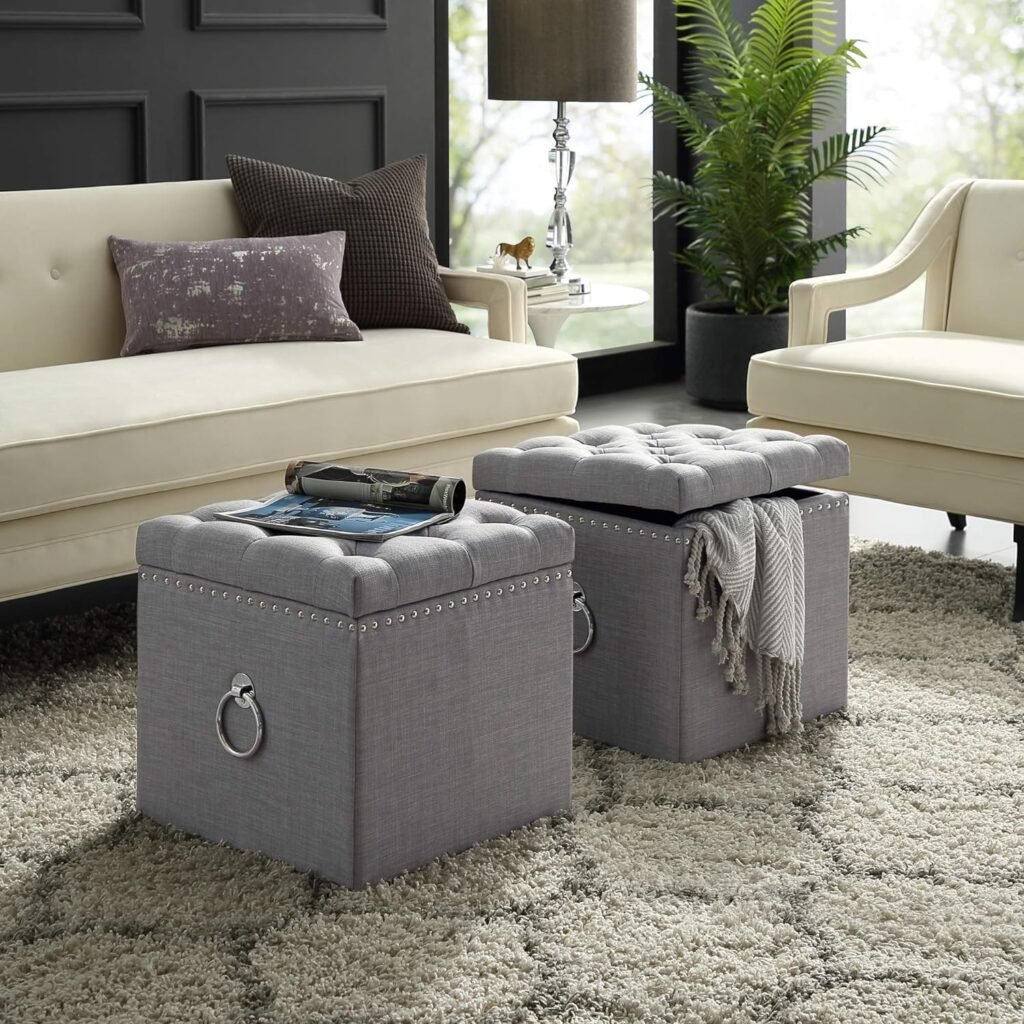
Storage Ottoman as Media Storage
In the tiny living rooms which do not have sufficient space for a separate TV unit, a single storage ottoman placed close to where the TV is can be used for storing remote controls, gaming consoles, and cables and at the same time can be used as a seating or footrest. This multifunction method helps to decrease the overall number of furniture pieces in the room.
Idea 9: Floating Shelves Either Side of the TV
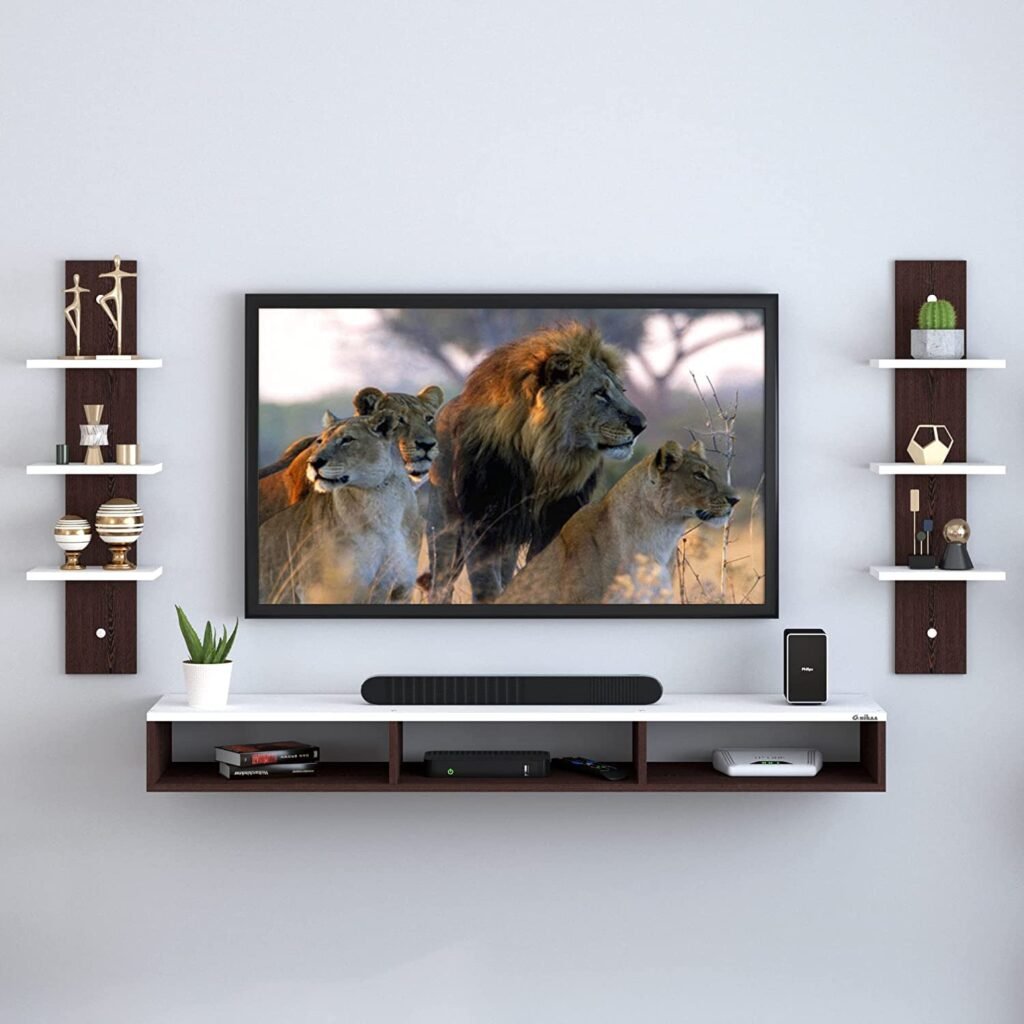
Floating Shelves Either Side of the TV
Instead of a single removable TV stand, two floating shelves arranged at the same level on the two sides of a hung TV will make a balanced, gallery-like arrangement for books, plants, and ornaments, and they will keep the wall behind and under the TV empty. This method works really well in a small room where every inch of floor is valuable.
Idea 10: The Low Media Bench
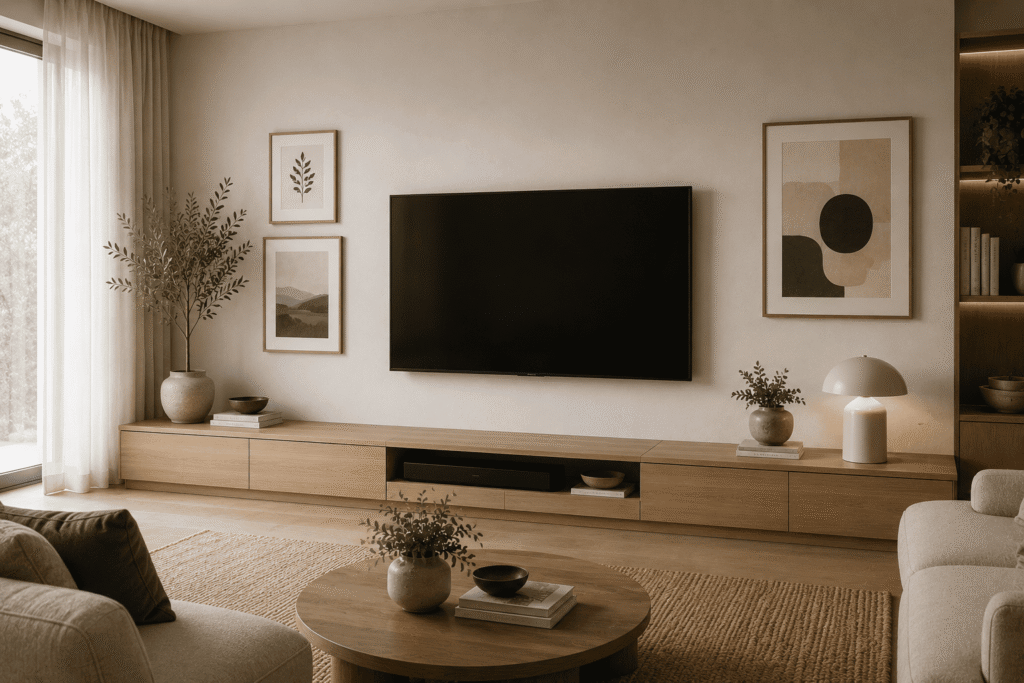
A long, low media bench (usually 30 to 40cm high) that spans the entire wall can offer plenty of storage and worktop space at the same time keeping a low visual profile that does not block sightlines across the room. Such a set-up is most suitable for contemporary and Scandinavian-influenced small living rooms.
Idea 11: TV Unit with Closed Storage Only
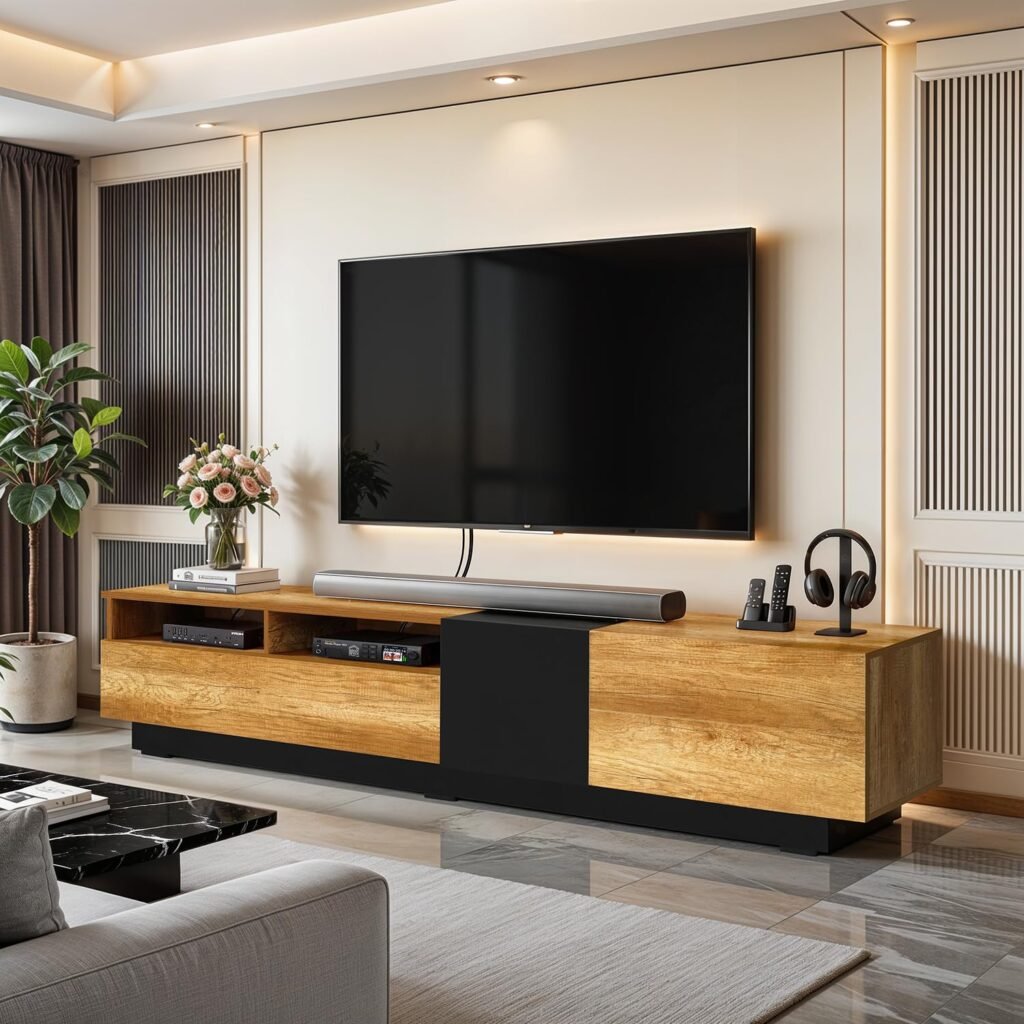
Picking a TV unit with fully closed cabinet doors in place of open shelves will give a more tidy and relaxing visual effect in a small room. This is because the clutter of visible cables, remote controls, and equipment can otherwise eat up the available wall space. The draw-back is that you get less air circulation for the gear, so you will have to refer your gadgets’ requirements.
Idea 12: Matching the TV Unit to the Wall Colour
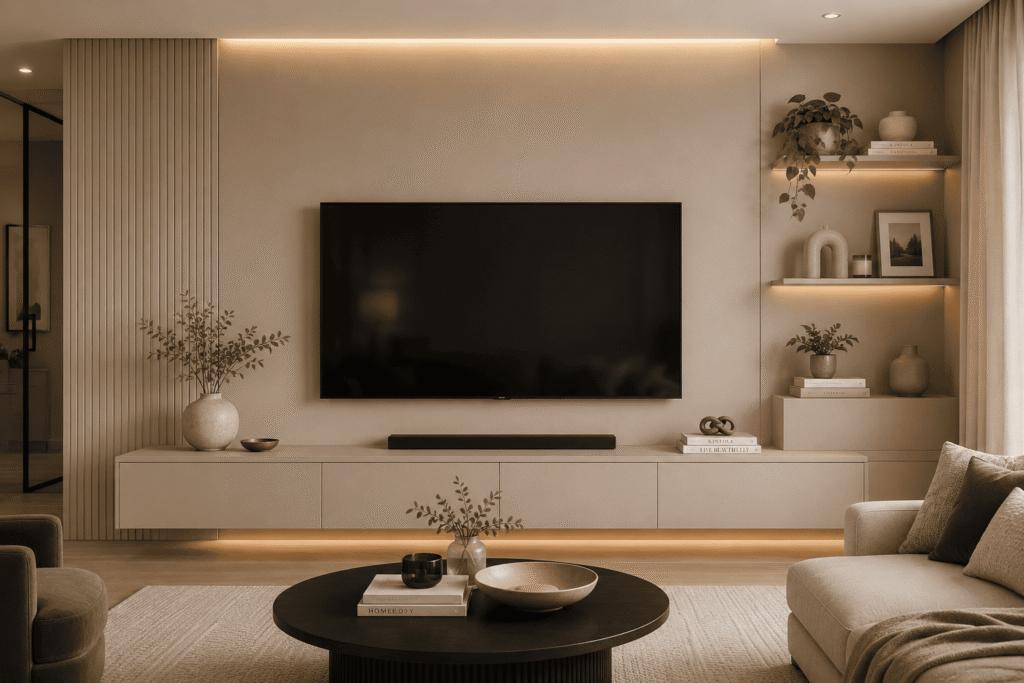
Painting or selecting a TV unit in the same or almost the same shade as the wall behind it will make the unit disappear visually because it will attract less attention itself and more to other items in the room. Such a method is perfect for built-in or custom-made units, where the color can be defined to match perfectly or say matching furniture to your wall colour.
Idea 13: The Open Box Shelf Unit
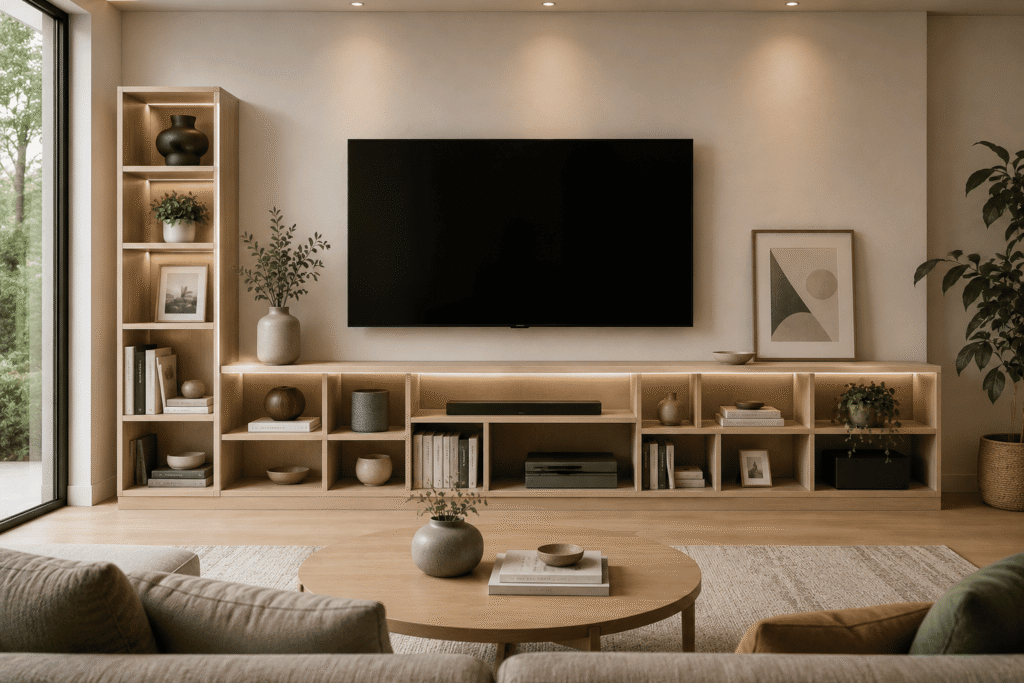
An open box-shelf style TV unit — a grid or asymmetric arrangement of open cubbies rather than a single solid cabinet — creates visual lightness and interest through its structure alone, even when fully utilised for storage. The varied cubby sizes also accommodate a wider range of items than uniform shelving, from books to decorative objects to equipment.
Idea 14: Swivel or Mobile TV Stands
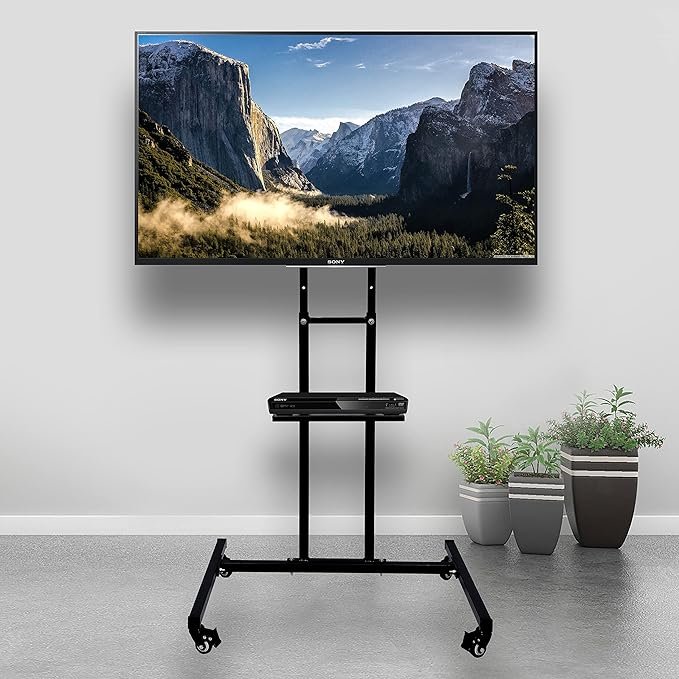
Mobile TV stands on casts are a very good solution for small homes and multi-purpose rooms as it can be moved around and repositioned according to the user’s needs. It can be put away when the floor space is needed, or the orientation of the TV can be changed to accommodate different seating areas. Such flexibility is a great match for studio apartments and open-plan areas where the living room is a multi-function space.
Idea 15: Disguising the TV Within a Cabinet
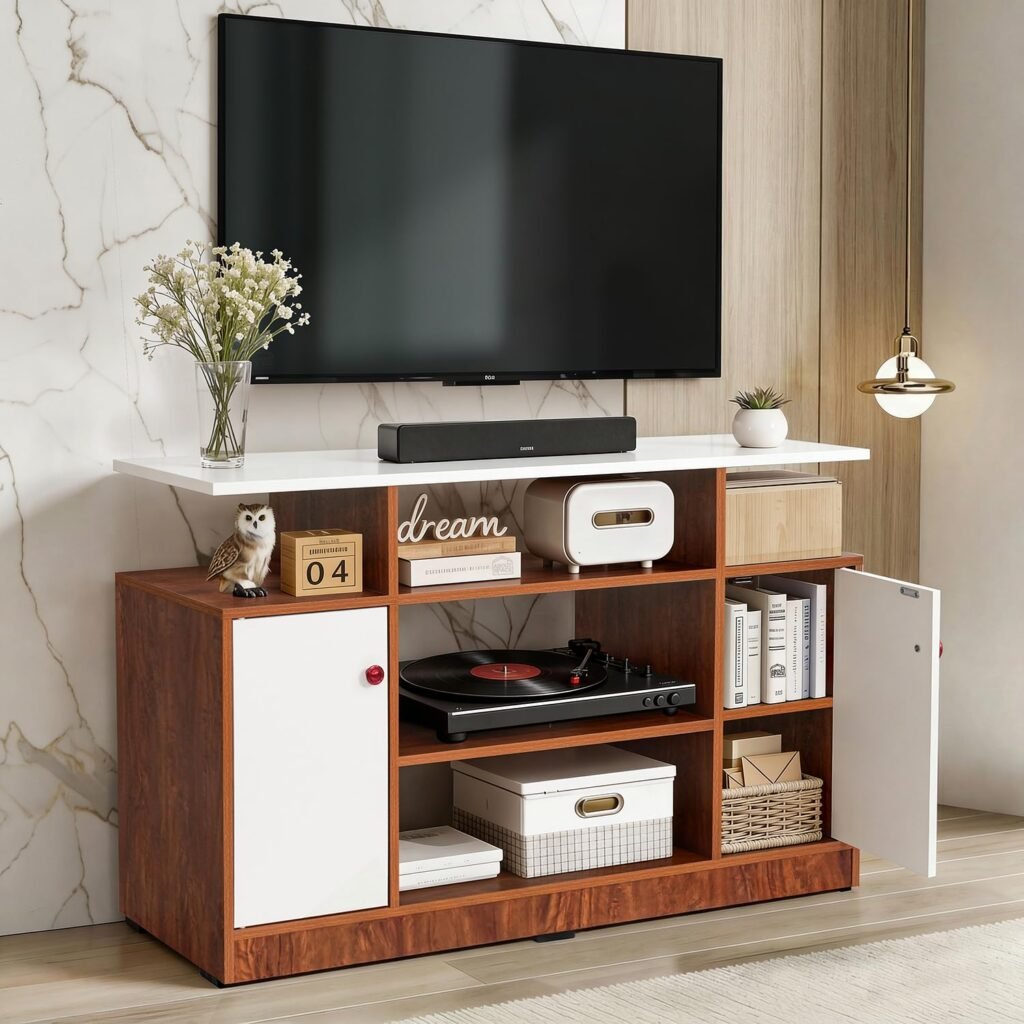
A typical armoire-era cabinet with doors that open to reveal the television, instead of a dedicated open media unit, enable the TV to be completely hidden when it is not being used. This method fits especially to traditional and period interiors, where a flat-screen TV’s modern look can be visually a contradiction to the room’s style.
Sizing Your TV Unit Correctly
Beyond the design approach, correct sizing relative to the television and the room is essential for the unit to look proportionate rather than awkward.
- Unit width: the TV unit should be at least as wide as the television, ideally 15 to 30cm wider on each side for visual balance, unless using a fully wall-mounted approach with no unit beneath.
- Mounting height: for a wall-mounted TV, the centre of the screen should sit at approximately eye level when seated — typically 100 to 115cm from the floor for a standard sofa height, though this should be measured against your specific seating.
- Viewing distance: the television size should be matched to the viewing distance — as a general guide, divide the viewing distance in centimetres by 1.6 to estimate the appropriate screen size in inches. A TV that is too large for a small room’s viewing distance becomes visually and physically overwhelming.
⚠ WATCH OUT: Don’t mount your television or TV unit high above the level of other furniture simply to clear them. When the TV is mounted too high, it results in an uncomfortable upward angle of view and it also tends to give the wall a top-heavy and unbalanced look especially in a room having a standard or lower ceiling height.
Cable Management — The Detail That Makes or Breaks the Look
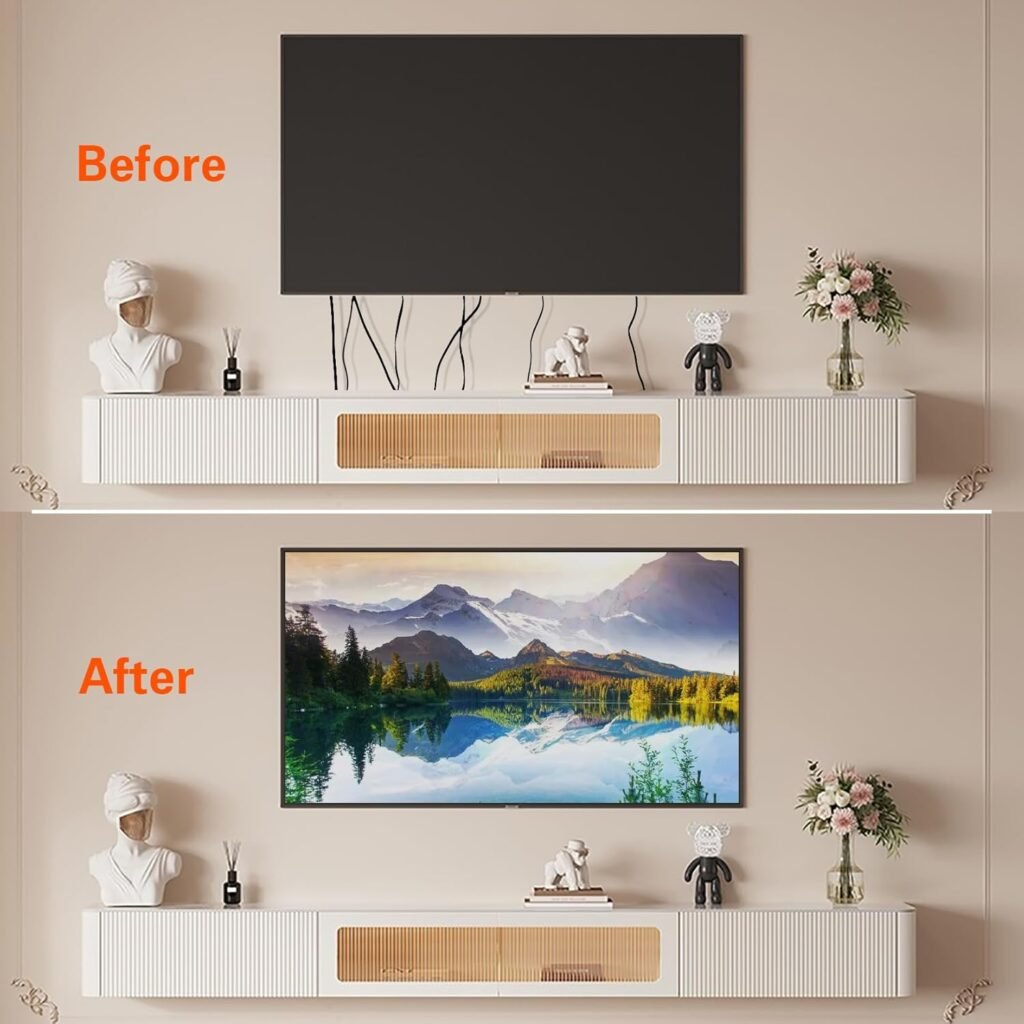
Cable Management Kit TV Wall Hide Cords
Visible power cords are a major culprits for making even nicely designed TV unit areas look untidy and incomplete. Concealing cables inside walls, using paint-color-matched cord covers that run along the walls, as well as cable management boxes that hide power strips and adapters, all go a long way in giving a neat, well-thought-out end product.
Final Thoughts
Television shouldn’t be the center of attraction in a small living room just because it is an essential part of the way the room is used. This guide presents 15 methods to prove that a well-proportioned TV, a suitable way of mounting, and paying close attention to little things like the organization of cables can make a TV a part of a small area without it taking over the look of a room.
One of the biggest changes that will have the most impact on small living rooms is replacing a floor-standing TV unit with a floating wall-mounted option. The extra floor space you get, even if you keep the same amount of storage, will be a noticeable difference to how roomy the whole space feels.
Frequently Asked Questions
Q: What is the best TV unit for a small living room?
A: Usually the best solution for a small living room is a floating wall-mounted TV unit as it totally gets rid of the unit’s footprint on the floor which results in a greater sense of free space than any floor-standing alternative. In case a family likes floor-standing furniture, a thin console unit (30-35cm depth) with slim, light legs can visually accomplish almost the same as a wall-mounted TV unit but at the same time it’s more practical for households that don’t have the wall-mounting option or in rented apartments.
Q: Should I mount my TV on the wall or use a TV unit?
A: Wall mounting the television, whether or not it is paired with a unit beneath, generally creates a more spacious and contemporary look in a small living room than a traditional TV resting on top of a floor unit. Wall mounting requires either a stud wall suitable for drilling or appropriate wall anchors for solid walls, and should always be installed at the correct viewing height. For rental properties where wall mounting is not permitted, a slim console unit is the next best alternative.
Q: How do I hide TV cables in a small living room?
A: The most effective options are: One option is an in-wall cable management kit for running your TV cables through the wall cavity, right from the TV to a power outlet near the floor (the cleanest result, but requires some installation work). Then there is the surface-mounted cord cover, which is painted or coloured to match the wall, that hides the cables running down the wall externally. Finally, another option is a cable management box, which gathers all visible cords, power strips and adapters into a single unit, located near the floor, and can be concealed.
Q: What size TV unit do I need for a small living room?
A: The TV unit should be at least as wide as the television itself, and ideally extends 15 to 30cm beyond each side of the screen for visual balance. For a small living room, prioritise unit depth over width — a slim unit (30-35cm deep) takes up significantly less visual and physical space than a standard depth unit (40-45cm), even at the same width. If using a fully wall-mounted television with no unit beneath, this consideration does not apply.
Q: Can a TV unit double as storage in a small living room?
A: Yes — and in a small living room, choosing a TV unit with built-in storage (drawers, closed cabinets, or open shelving) is one of the most space-efficient furnishing decisions available, as it consolidates media storage with general living room storage into a single piece of furniture rather than requiring separate pieces. Closed storage keeps clutter out of view, while a mix of open and closed sections allows for both display and concealed storage within the same unit.